• Skip to primary navigation
  • Skip to main content
  • Skip to footer

Teaching in Higher Ed

  • Podcast
  • Blog
  • SPEAKING
  • Media
  • Recommendations
  • About
  • Contact

Resources

Challenging My Thinking About Teaching

By Bonni Stachowiak | February 15, 2018 | | XFacebookLinkedInEmail

Photo by Jonas Jacobsson on Unsplash

I'm reading a book for an upcoming episode of the Teaching in Higher Ed podcast that has me reflecting on the choices I make in my pedagogy, particularly with regards to assessment.

The College Classroom Assessment Compendium: A Practical Guide to the College Instructor’s Daily Assessment Life, by Jay Parkes and Dawn Zimmaro

It's written from a highly prescriptive perspective. Each section starts out with the authors' recommendation regarding various aspects of assessment.

  • Should we give points for attendance?
  • Is extra credit a good practice?
  • Should late assignments be accepted?

Reflecting on Needed Changes

I have found myself agreeing with about 90% of their recommendations and wrestling with about 10% of their proposals. Each time I find myself mentally debating with them, I am able to revisit the rationale they give for their advice. Then, I discover that I am either more aligned with what they suggested than I originally realized, or I admit that I have some work to do in how I approach a given means of assessment.

Resources for Teaching Transformations

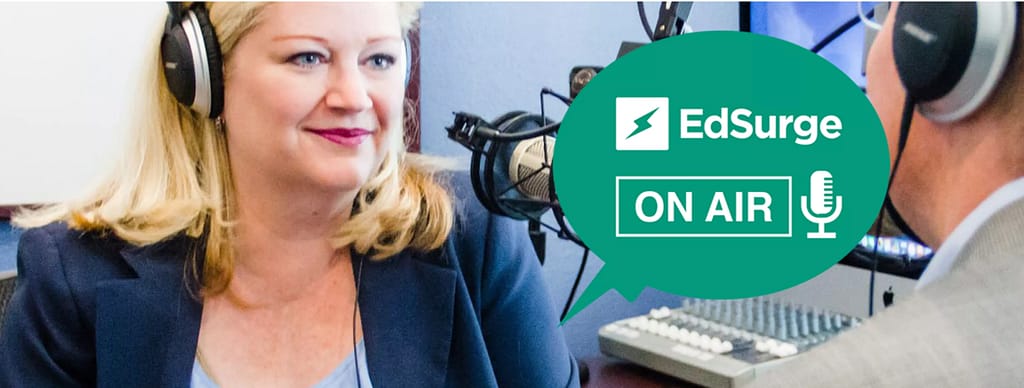
I was interviewed for the EdSurge podcast recently about how my teaching has changed since I first started the podcast back in June of 2014. I tried to discipline myself not to be too verbose regarding this particular set of questions. It would have been easier to answer how my teaching hasn't been changed from almost 200 conversations with such phenomenal educators.
I came across a number of articles in recent weeks that encompass a few of those transformational areas in my teaching that I wanted to share with you.

  • Open Education Resources Applications from around the world
  • Ten Key Points About Active Learning
  • Another Terrible Idea from Turn it In
  • Literature Review of Teaching

The more I learn about teaching, the more I discover the importance of being adaptable in our practice. Our collective humility is essential for becoming better able to serve our students.

Teaching in Higher Ed Transcripts

Episode 200 is coming in April. I'm excited to share a conversation with fellow educators about what we have changed our minds about regarding our teaching in recent years.

I was going to keep it a surprise until episode 200 airs, but have received such valuable feedback when I shared the news with others that I have decided to start spreading the news. The Teaching in Higher Ed podcast is going to have transcripts of every past episode and the ones going forward.
Teaching in Higher Ed podcast transcripts

We are still working out the precise user interface that will be available to access the transcripts, but hope that it will make the podcast more accessible, as well as having it be easier to discover. Here's a couple of transcripts to whet your appetite for what is to come:

  • Episode 92 with James Lang
  • Episode 98 with Stephen Brookfield.

If you have any input in terms of making the Teaching in Higher Ed podcast transcripts as beneficial for faculty as possible, please get in touch with me.

My husband and I had already begun to invest our own money in this important endeavor. However, when I recently asked for input on the transcripts on the POD Network listserv, we were able to discover an unexpected partner to support us on the financial end of things.

The West Virginia University Press Teaching and Learning in Higher Education book series’ editor, James M. Lang, has been a regular guest on Teaching in Higher Ed since the beginning. Jim was on episode 19, episode 92, and episode 146 (with Ken Bain).

Many of the other WVU Press’s Teaching and Learning in Higher Education authors have also been on the podcast in the past. The series is providing financial support to make the first 200 episodes of Teaching in Higher Ed available in transcript form.

As a part of our partnership, other authors will be visiting the podcast throughout the rest of 2018, about once every other month. I am looking forward to making the transcripts available to all of you and to share about the wonderful resources on how to make our teaching more effective with the books in the WVU Press’s Teaching and Learning in Higher Education series.

Discount Code for Preorders of My Forthcoming Book

As I shared recently, my new book is now available for preorder. Use the code TPOP20 to receive a 20% discount at checkout for:
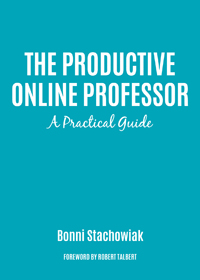
The Productive Online Professor: A Practical Guide

Bonni Stachowiak

Forward by Robert Talbert

Thrive Online Series

I will be doing some type of giveaway to those who preorder using the Stylus website, though I haven't quite figured out what that is going to be just yet.

Let's just say that Katie Linder's Academic Book Promotion Toolkit has given me plenty of ideas and resources to spark my imagination and then some.

Filed Under: Resources

Listener Question: Essential Reading on Pedagogy

By Bonni Stachowiak | January 30, 2018 | | XFacebookLinkedInEmail

James Lee got in touch on Twitter and asked me the following:

Hi, Bonni. I enjoy listening to your podcast. Do you have a blog post on what you consider to be essential reading for pedagogy in higher education? If not, what would you consider to be essential reading for those who want to become better college teachers?”

As I responded to James, I do not recall having written such a post, though the other day I inadvertently put some fresh strawberries “away” in the refrigerator only to have my husband discover them in a kitchen drawer. I may not be operating on all cylinders this week.

I did find a post about how I organize my physical books, but nothing containing a list of favorite books on teaching.

Your question is harder than it might seem. I love reading about teaching and have found pretty much every book I have ever read on the subject useful to me in my pedagogy. It is hard to commit to a ranked list. They all should be recommended since they have all shaped my teaching.

Since I need to pick up our kids from school in a couple of hours, I am going to limit myself to five, even though I could easily choose many more than that. James Lang wrote a list of his top ten books on The Chronicle of Higher Education that is worth a look. I forced myself not to re-read it until I finished this post since I suspect I might have been influenced by his selections.

I also know that I am completely remiss in not having yet read Parker Palmer's: The Courage to Teach: Exploring the Inner Landscape of A Teacher's Life. How I have not read it yet is beyond me… Even just the first few sentences beckon us to enter in…

Top Five Books on Pedagogy

Below are my top picks for essential reading for those who teach in higher education. I can already envision a part two needed for this post, as there are so many I am leaving out.

What the Best College Teachers Do, by Ken Bain

This is the first book I can remember reading about teaching in the context of higher education, specifically. It came out right about the time I started teaching (first as an adjunct – and then as a tenure-track professor).

Bain (2004) reports the restyle of a longitudinal study and outlines the following:

  • What the best teachers know and understand
  • How they prepare to teach
  • The expectations they have of their students
  • What they do while they are teaching
  • How they treat their students
  • The approaches they take to evaluate their teaching

Creating Significant Learning Experiences: An Integrated Approach to Designing College Courses (2nd Edition), by L. Dee Fink 

I remember being incredibly inspired by Bain (2004) and wanting to challenge myself even more in my teaching. Fink’s book on Creating Significant Learning Experiences caused me to think about how we should consider ourselves more as designers of experiences for our students in their learning. He presents a taxonomy of different types of learning experiences and which ones are more effective in particular circumstances.

I didn’t realize it at the time, but Fink had written the first edition of his book about designing learning experiences a year before Bain reported out the results of his study). However, I noticed that Fink has a second edition out and that is the one I am linking to in this post.

Effective Grading, by Barbara E. Walvoord & Virginia Johnson Anderson

It was not long before I realized how much help I needed with regards to grading. My background had initially been in corporate training and traditional grading was never a part of my teaching.

While this book was initially published in 1998, it still had timely advice for me regarding giving my students feedback on their learning. The appendix includes the AAHE’s Principles of Good Practice for Assessing Student Learning, which is known for having “aged” quite well. I noted a newer version than the one I had on my bookshelf and am linking to the 2009 edition here.

Introduction to Rubrics: An Assessment Tool to Save Grading Time, Convey Effective Feedback, and Promote Student Learning (2nd Edition), by Dannelle D. Stevens  & Antonia J. Levi

As I considered ways to make my grading more effective and to help students have a more clear sense of what was expected on a given assignment, I found myself in need of instruction on how to create a rubric. This short book gets a lot across in a short number of pages and provides plenty of examples.

There are many who criticize rubrics as representing too mechanistic of an approach to learning. I will admit to still wrestling with these critiques, while still finding benefits to using rubrics for some types of assignments. For newer faculty, I would still recommend becoming familiar with rubrics, especially to attempt to fight against the potential for subjectivity in one’s grading.

Small Teaching: Everyday Lessons from the Science of Learning, by James M. Lang 

A more recent addition to my books on pedagogy is James Lang’s book: Small Teaching. His approach in writing this book was to explore the small changes we could make in our teaching that would have a big impact. It can be so overwhelming to be a new teacher and this book provides a solid foothold for effective practices.

None of us who teach in higher education should be without a copy of Small Teaching.

The Skillful Teacher: On Technique, Trust, and Responsiveness in the Classroom (3rd Edition), by Stephen D. Brookfield 

Those of you who are counting can already tell that I could not do it. Limiting myself to just five would mean leaving out another book that has had a tremendous impact on my teaching. Even if you read one of Brookfield’s earlier additions, it is worth picking The Skillful Teacher up, again, to read the new chapters on:

  • Teaching critical thinking
  • Using play and creativity in the classroom
  • Teaching in teams
  • Helping students take responsibility for learning
  • Teaching about racism
  • Exercising teacher power responsibly

Your Turn

I already know I left a bunch of wonderful books out of this list. What essential reading would you recommend for those looking to become more effective at facilitating learning?

Filed Under: Resources Tagged With: books

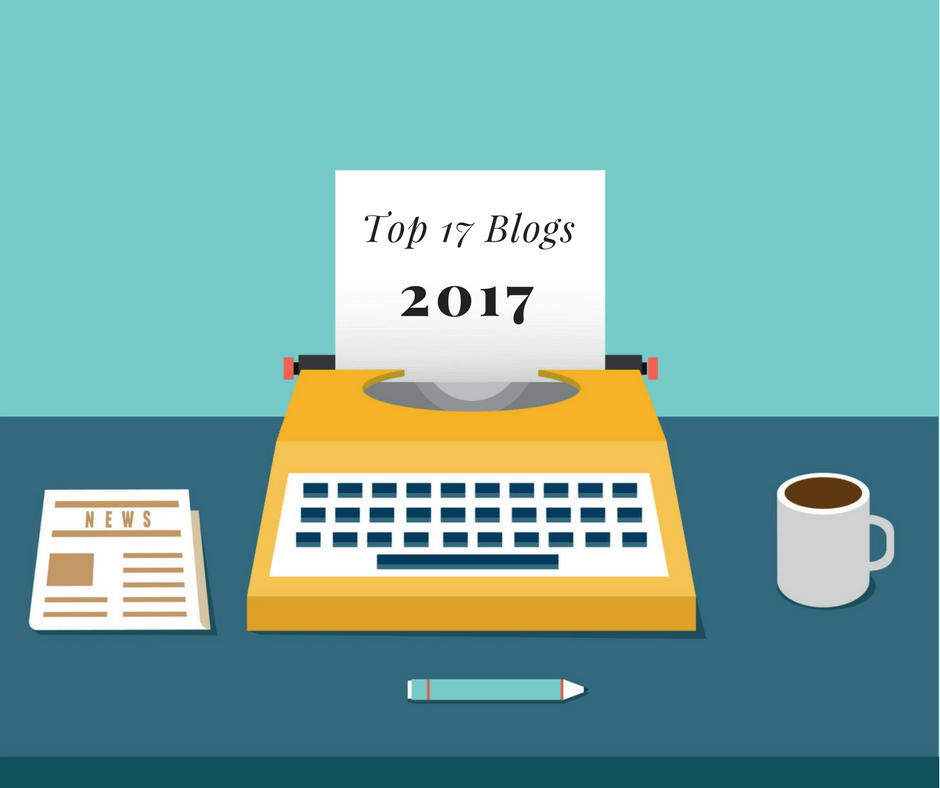
Top 17 Teaching in Higher Ed Blog Posts in 2017

By Bonni Stachowiak | December 23, 2017 | | XFacebookLinkedInEmail

I recently shared the most downloaded Teaching in Higher Ed podcast episodes that were recorded in 2017. I decided to take a look at which blog posts had the most reads in 2017 and share those in my final post for the year. Some of these posts go back all the way to 2014 but keep showing up in the analytics.

  1. Modern Professional Learner's Toolkit: Collaboration, Curation, Office Tools
  2. Ellen's Heads Up Game is a Lively EdTech Tool
  3. How to make a seemingly boring topic come alive
  4. When students give wrong answers
  5. Open Education Inspiration – Teaching in Higher Ed
  6. Top podcast episodes and recommended resources in 2017
  7. Find the right reference manager (Zotero, EasyBib, RefMe)
  8. 2 Persistent Myths About Teaching and Learning – Teaching in Higher Ed
  9. My Updated Personal Knowledge Management System – Teaching in Higher Ed
  10. Engaging Students Using Quizlet Live – Teaching in Higher Ed
  11. Low Motivation – 7 Resources for Addressing Low Motivation
  12. How to create a video for a class – Teaching in Higher Ed
  13. Choose your own adventure learning
  14. Creating Authentic and Explanatory Videos – Teaching in Higher Ed
  15. The danger of making assumptions
  16. Lessons in Curation from Maria Popova of Brain Pickings – Teaching in Higher Ed
  17. How to keep course files organized

2017 blog posts that did not make the list – but that I think are worth a look include:

  1. Digital Reading
  2. Determining Who We Are in Digital Spaces
  3. How to Create a Pencast
  4. Podcast Greats for 2017
  5. Post Sessions Experimentation Continues
  6. Hosting or Participating in Video Conferencing Sessions
  7. Leveraging the Benefits of a Current Projects List
  8. Tools for Travel

There is much to look forward to in 2018: My first book (through Stylus Publishing), teaching experiences, rewarding partnerships (grateful for the collaboration opportunities with ACUE), and being in community with all of you. Have a wonderful holiday season and a happy new year.


Filed Under: Resources

Top Podcast Episodes and Recommended Resources in 2017

By Bonni Stachowiak | December 11, 2017 | | XFacebookLinkedInEmail

As I round out the year in Teaching in Higher Ed podcasting, I am excited to share a few more conversations with you in the coming weeks. The podcast has aired every single week since June of 2014. It invigorates me to consider that in April of 2018, I will air the 200th episode of Teaching in Higher Ed.

The next few weeks have some serious sources of inspiration for me. Robin DeRosa and I talk about open education on episode 183. Pooja Agarwal comes back on the show to share retrieval practice research on episode 184. Finally, we look toward a new year with another visit with Christian Friedrich. He and I talk about privacy and safety in online learning on episode 185, the last week in December.

I am grateful to each of the guests who came on the podcast in 2017 and shared their expertise. If you have yet to visit the episodes page and browse through the taxonomy, it can be a helpful way to revisit older episodes that best meet your needs.

Top 13 Teaching in Higher Ed Podcast Episodes in 2017

Below are the top thirteen downloaded episodes of 2017:

  1. e137 – Teaching Naked Techniques with C. Edward Watson
  2. e159 – Dynamic Lecturing with Todd Zakrajsek
  3. e135 – The Spark of Learning with Sarah Rose Cavanagh
  4. e140 – Thinking Outside the LMS with Steven Michels
  5. e142 – Rethinking Assessment (and other reflections on the Lilly Conference) with Bonni and Dave Stachowiak
  6. e141 – The Danger of Silence with Clint Smith
  7. e164 – Setting Students Up for Success from the Start with Joe Hoyle
  8. e134 – Teaching Creativity with Hoda Mostafa
  9. e144 – Digital Literacy – Then and Now with Bryan Alexander
  10. e147 – Racial Identity in the Classroom with Stephen Brookfield
  11. e146 – Motivation in the Classroom with James Lang and Ken Bain
  12. e136 – Teaching Naked Techniques with Jose Bowen
  13. e138 – Yes, Digital Literacy, But Which One with Michael Caulfield

I was probably most challenged by the conversations about race that I had with Clint Smith and Stephen Brookfield. Mike Caulfield inspired me to continue to work to improve my own digital literacy and made me laugh harder than any other guest in 2017 (which is saying a lot).

I aspire to identify even more puzzles for my students to explore, through the modeling provided by Joe Hoyle. James Lang helped me try out a new format for the show. He took over the interviewing role and asked Ken Bain questions throughout the episode, while I sat back and enjoyed listening intently. Each one of these individuals have shaped my teaching in profound ways.

Top 13 Recommended Resources

Some of you have used the referral links I provide in the show notes to the books and other resources recommended by guests. Below are some of the most-purchased items from our Amazon affiliate links in 2017:

  1. Small Teaching: Everyday Lessons from the Science of Learning, by James Lang
  2. Doodling for Academics: A Coloring and Activity Book (Chicago Guides to Academic Life), by Julie Schumacher and Lauren Nassef
  3. Slide:logy: The Art and Science of Creating Great Presentations, by Nancy Duarte
  4. Getting Things Done: The Art of Stress-Free Productivity, by David Allen
  5. Teach Students How to Learn: Strategies You Can Incorporate Into Any Course to Improve Student Metacognition, Study Skills, and Motivation, by Saundra Nancy McGuire
  6. Teaching Naked Techniques: A Practical Guide to Designing Better Classes, by Jose Antonio Bowen and C. Edward Watson
  7. The New Education: How to Revolutionize the University to Prepare Students for a World In Flux, by Cathy N. Davidson
  8. The Teaching Portfolio: A Practical Guide to Improved Performance and Promotion/Tenure Decisions, by Peter Seldin, J. Elizabeth Miller, and Clement A. Seldin
  9. Make It Sick: The Science of Successful Learning, by Henry Roediger III and Mark McDaniel
  10. The New Science of Learning: How to Learn in Harmony with Your Brain, by Terry Doyle and Todd Zakrajsek
  11. What the Best College Teachers Do, by Ken Bain
  12. Spark: The Revolutionary New Science of Exercise and the Brain, by John J. Ratey
  13. There Is No Good Card for This: What To Say and Do When Life Is Scary, Awful, and Unfair to People You Love, by Kelsey Crowe and Emily McDowell

It may be worth noting that when you use an affiliate link, if you purchase other items during that visit to Amazon, we often receive some kind of commission. That must explain why the Audible recording of “The Subtle Art of Not Giving a F-ck” wound up showing up on our affiliates links. Someone will have to tell me more about this one at some point…

Many of you also continued to enjoy Julie Schumacher’s sense of humor. Her coloring book landed at #2 (Doodling for Academics), but her novel, Dear Committee Members, was very close to making it on the list, as well. If you haven’t read it yet; it is hysterical.

I suspect that I am not going to become a YouTube sensation. However, my How to Pencast video generated almost 800 views. I won't plan on living off my YouTube advertising fees anytime soon. First off, I don't show advertisements with my videos. Even if I did, I would be a long ways off from any serious income…

Your Turn

What has been a Teaching in Higher Ed podcast episode that has transformed your teaching in some way? What has been a favorite recommendation you heard about on Teaching in Higher Ed?

Filed Under: Resources

End of 2017 Reading

By Bonni Stachowiak | November 21, 2017 | | XFacebookLinkedInEmail


I am continuing to work toward my goal of having read 20 books in 2017. My progress gets tracked on Goodreads, which provides a fun way to see what friends (and partners) are reading, not to mention what others who are strangers, but who have similar tastes as me, are reading.

If you have been listening to the Teaching in Higher Ed podcast for a while now, you know that guests often recommend books. The list of books I want to read is long – and getting longer all the time.

I thought I would list the top ten books I want to read in order to see if there are any members of the Teaching in Higher Ed community who are also interested in reading them. We could put together an informal book club, maybe on the Teaching in Higher Ed Slack Group, to try to tackle one or two during the upcoming holiday break. Or, we could schedule a time or two to connect via a virtual conference to discuss a book or two.

In no particular order, here are ten books I am interested in reading:

  1. Sorting Things Out: Classification and Its Consequences, by Geoffrey C. Bowker and Susan Leigh Star
  2. Ignorance: How it Drives Science, by Stuart Firestein
  3. The Undoing Project: A Friendship That Changed Our Minds, by Michael Lewis
  4. Nonviolence: The History of a Dangerous Idea, by Mark Kurlansky and the Dalai Lama
  5. The New Jim Crow, by Michelle Alexander and Cornel West
  6. Emotional Intelligence 2.0, by Travis Bradberry and Jean Greaves
  7. Reality is Broken: Why Games Make Us Better and How They Can Change the World, by Jane McGonigal
  8. The Color of Law: A Forgotten History of How Our Government Segregated America, by Richard Rothstein
  9. Confessions of a Public Speaker, by Scott Berkun
  10. Enrique's Journey: The Story of a Boy's Dangerous Odyssey to Reunite with His Mother, by Sonia Nazario

If you would like to participate in an informal book club with others in the Teaching in Higher Ed community, please complete this brief survey.

2017 Books

  • This field is for validation purposes and should be left unchanged.
  • Choose up to three books you would be interested in reading with members of the Teaching in Higher Ed Community.
  • Which of the following ways would you like to use to participate in a discussion about the book(s)?
  • Which option best represents the number of books you would be interested in reading in late Dec / early January with the Teaching in Higher Ed community?

If the survey does not show up on your email client, you can respond on this blog post's page.

If at least ten people show interest, I commit to exploring the feasibility of pulling something together in late December / early January. Otherwise, I will enjoy some solitary reading and to hearing what you wind up reading over the break. Speaking of which…

What book(s) are on your list to read in the near future?

Filed Under: Resources

  • « Go to Previous Page
  • Page 1
  • Interim pages omitted …
  • Page 6
  • Page 7
  • Page 8
  • Page 9
  • Page 10
  • Interim pages omitted …
  • Page 17
  • Go to Next Page »

TOOLS

  • Blog
  • Podcast
  • Community
  • Weekly Update

RESOURCES

  • Recommendations
  • EdTech Essentials Guide
  • The Productive Online Professor
  • How to Listen to Podcasts

Subscribe to Podcast

Apple PodcastsSpotifyAndroidby EmailRSSMore Subscribe Options

ABOUT

  • Bonni Stachowiak
  • Speaking + Workshops
  • Podcast FAQs
  • Media Kit
  • Lilly Conferences Partnership

CONTACT

  • Get in Touch
  • Support the Podcast
  • Sponsorship
  • Privacy Policy

CONNECT

  • LinkedIn
  • Instagram
  • RSS

CC BY-NC-SA 4.0 Teaching in Higher Ed | Designed by Anchored Design