• Skip to primary navigation
  • Skip to main content
  • Skip to footer

Teaching in Higher Ed

  • Podcast
  • Blog
  • SPEAKING
  • Media
  • Recommendations
  • About
  • Contact

Resources

The Spark of Learning

By Bonni Stachowiak | June 7, 2018 | | XFacebookLinkedInEmail

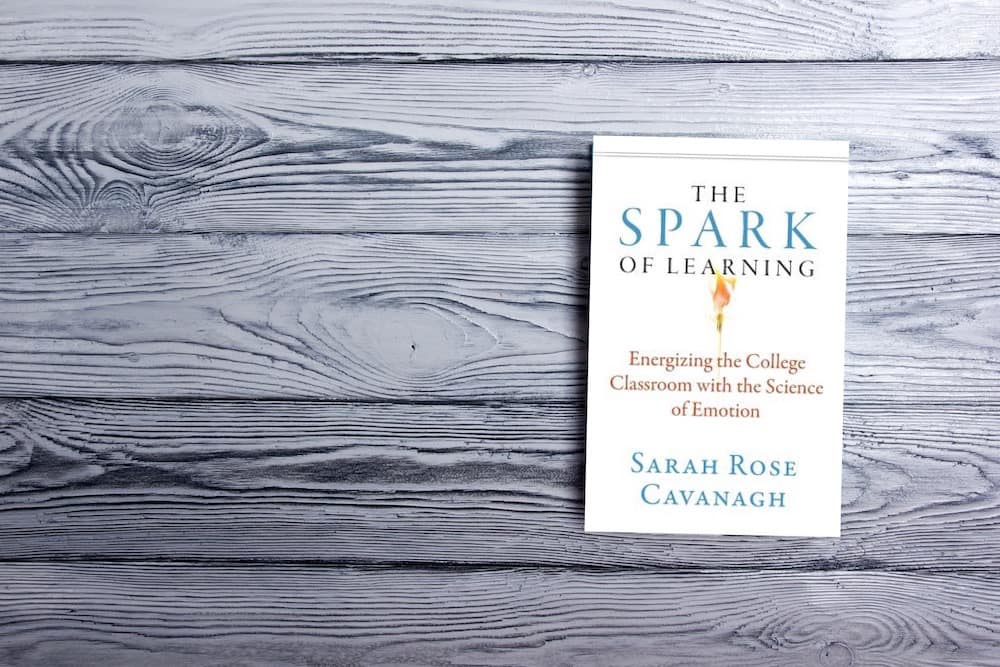
I recently have had the opportunity to revisit my reading of Sarah Rose Cavanagh’s The Spark of Learning: Energizing the College Classroom with the Science of Emotion.

The book is part of a series of books:

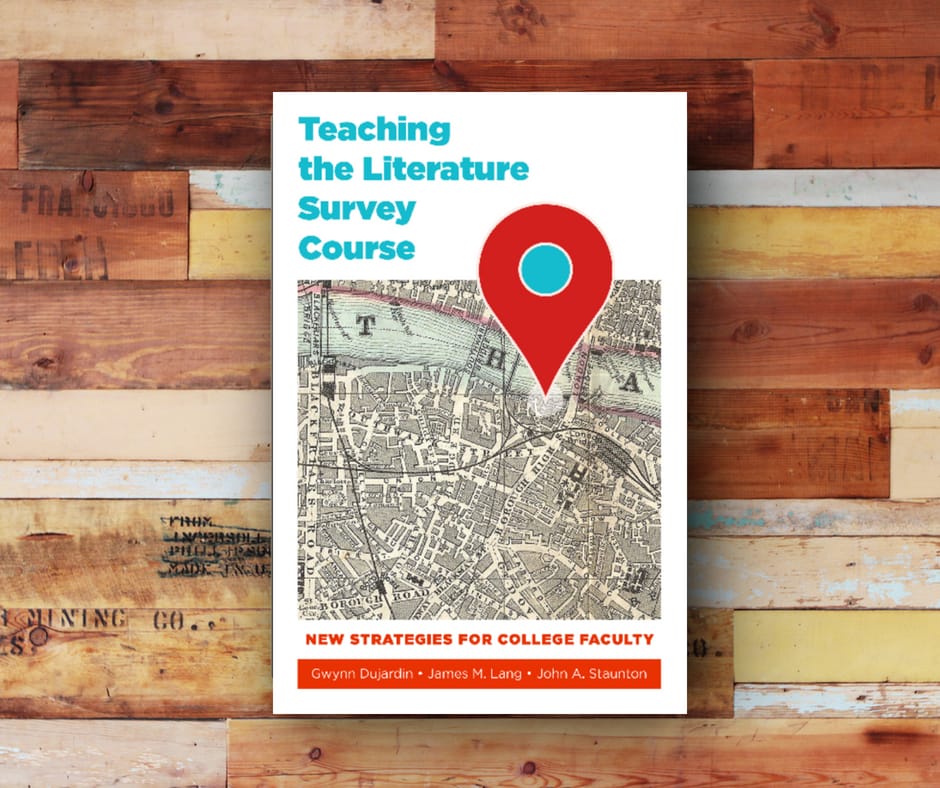
Teaching and Learning in Higher Education book series from West Virginia University Press, edited by James M. Lang

West Virginia University Press has sponsored the Teaching in Higher Ed podcast transcripts project. As a result, I get the honor of interviewing the series’ authors and the chance to read their books.

Sarah’s book is the first in the series and has much to say about how we can better facilitate learning for our students by considering the element of emotions. In this post, I share some of the ways that her book has stayed with me since reading it more than a year ago. Here are just a couple of practices that are still with me after my first read of The Spark of Learning.

Generate Curiosity

“When you burn to know what comes next, you are feeling curious” (Cavanagh, 2016, p. 121).

Dave (my husband) shared on a prior episode about his chemistry teacher who ended class on the first day by taking the lit candle that had been sitting on his desk, putting it in his mouth, and proceeding to swallow it.

You can bet that the class was wondering what was going to happen next for the rest of the semester. No, we don’t have to put our lives at stake by attempting the eating of a candle in our particular discipline. But, we can work to find ways to create a healthy tension between students’ current knowledge and what might be possible with further learning.

This might be something as simple as a puzzle, an activity more resembling a mystery, or even introducing a debate that explores two different viewpoints or options.

Encourage Mindfulness

We got to hear about some of Sarah’s and her colleagues’ forthcoming research on the effects of teaching students about mindfulness on episode #204. In The Spark of Learning, she reminds us of the detrimental impact of test anxiety and how the practice of transparency can assist our students in reducing stress and enhancing learning.

Sarah describes Brunye’s research on how learners with math anxiety experienced more of a sense of calm and better results on a math exam when engaging in breathing exercises as compared to other variables.

I’ve been finding big benefits when following a simple mindfulness practice introduced by Asao B. Inoue on episode #209 (airs 6/14/18). I’ll let you hear about it straight from him, but I hope this mention of it causes you to listen extra careful to episode 209’s recommendations segment.

Your Turn

What ways are you discovering to leverage The Spark of Learning in your pedagogy?

Filed Under: Resources

Communicating Across the Curriculum Reflections

By Bonni Stachowiak | May 16, 2018 | | XFacebookLinkedInEmail

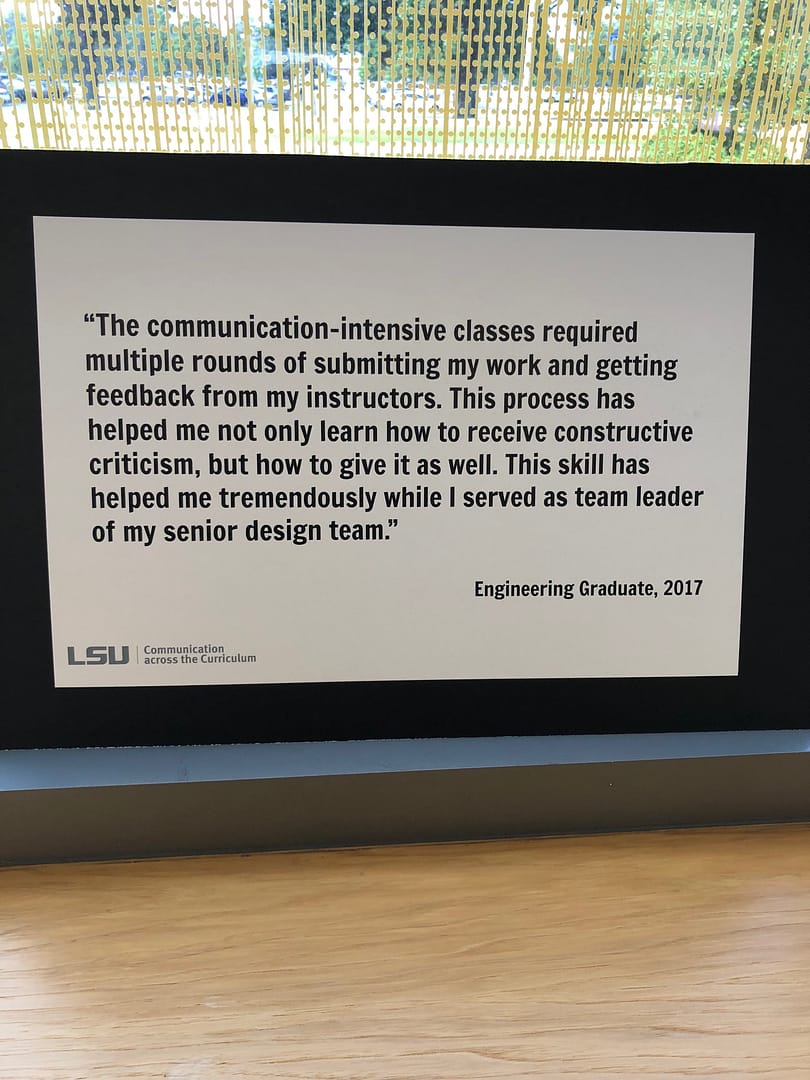
CxCsi Quote

I have spent most of my week in Louisiana. My primary objective was to facilitate two workshops for Louisiana State University’s Communication Across the Curriculum Summer Institute (#CxCsi). However, I also was able to attend the event as a participant. What a learning opportunity and a wonderful community…

Workshops

My hosts were interested in me sharing in two areas. First, they wanted me to talk about the ever elusive work-life balance. Finally, they asked me to share about educational technologies that support communication across the curriculum.

In this post, I’ll share some resources from my two workshops. I will also give some glimpses into some of my take-aways from the CxC summer institute.

Tips & Tricks

Balancing the work-life load as a teaching professor

You can view my slides from the workshop and also the responses from participants during the session on my CxC Summer Institute workshop resources page.

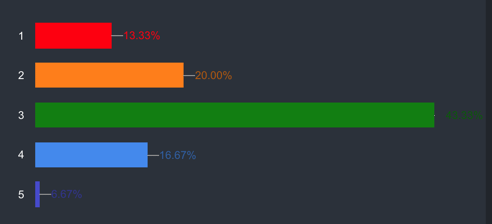
On part of the experience I really appreciated was how transparent some people were about their struggles and successes. I asked participants how well they would rate their own work-life balance and received responses that almost approximated a bell curve.

I encourage you to visit the section of the resources page for that session to see the ideas that people had around how we can: capture the commitments we have made, plan for how to execute on those plans, surrender to those inevitable times when things won’t go as we had planned, and how to unite with our partners in our lives when we need help.

My favorite part of this session came as a response to the question: What advice do you have about uniting?

Earlier in the session, I had shared about a poet that Maha Bali had recommended on episode 200. She suggested that we read the poems of Najwa Zebian, who also regularly shares her wisdom on Twitter.

I had a screenshot of her Twitter profile on the slide, including her words:

“These mountains that you are carrying, you were only meant to climb.”

One of the participant’s response to the question: What advice do you have about uniting didn’t miss a beat:

“These mountains that you are carrying, you were only supposed to admire from a distance.”

Did I mention that this is a terrific group of people? As of the time of me composing this blog post, we are still trying to discern who the witty poet among us is… 

Tech Tools for Teaching:

Communicating to Learn, Learning to Communicate

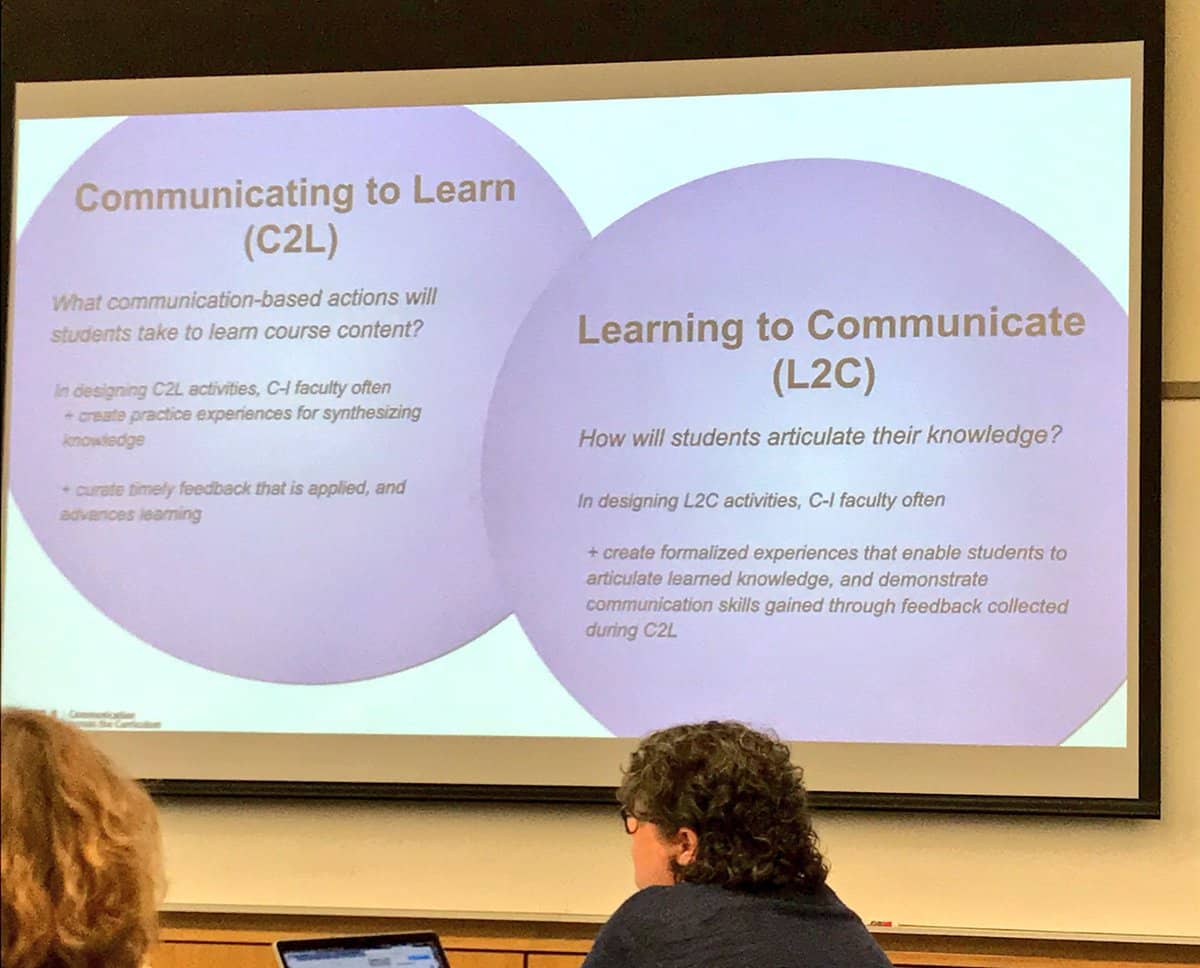
One of the areas of emphasis in the institute is that there are activities we can have our students do that will help them learn through their communication efforts (communicating to learn) and there are activities we can have our students do to demonstrate their learning through their communication (learning to communicate).

Slide presented by CxCsi faculty to define the C2L L2C continuum

In the Tech Tools for Teaching session, I shared more tools that provide students with a means for demonstrating their learning, though many of them could be used on either end of the continuum.

The participants' ideas for tools to help support students’ learning in spoken, written, technological, and visual communication are included on the Tech Tools for Teaching section of the CxCsi resources page.

Other CxCsi Fun

I really enjoyed the opportunities to engage with people one-on-one during the institute the most. The planning team for the event put forth such great effort in making our learning environment comfortable and welcoming.

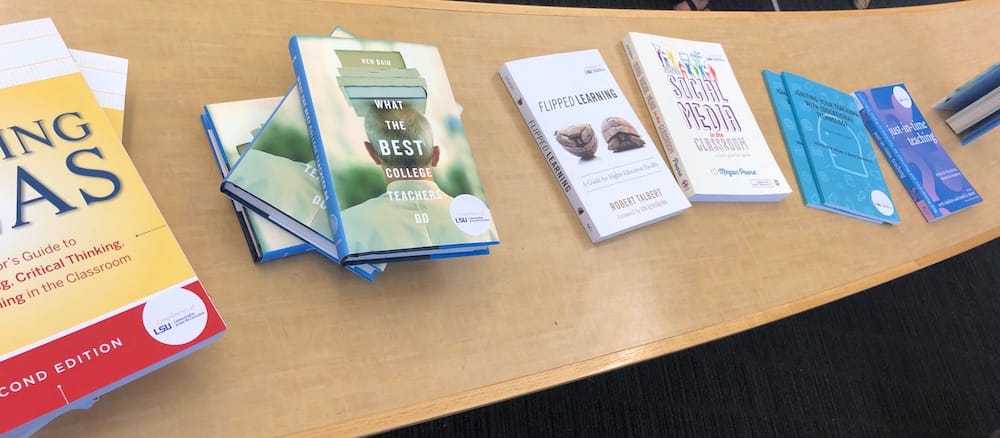
A few times a day, they did a raffle and gave away some of my favorite teaching and learning books and some that I wasn’t familiar with before attending.

Books at CxCsi

A few books I was excited would be getting in the hands of these faculty included:

  • Stephen Brookfield’s The Skillful Teacher
  • Robert Talbert’s Flipped Learning: A Guide for Higher Education Faculty
  • Ken Bain’s What the Best College Teachers Do

A couple of books that I hadn’t heard of before the conference and am now interested in reading include:

  • John C. Bean’s Engaging Ideas: The Professor's Guide to Integrating Writing, Critical Thinking, and Active Learning in the Classroom
  • Megan Poore’s Using Social Media in the Classroom: A Best Practice Guide

I have had a wonderful trip and am grateful for the opportunity to facilitate these workshop for LSU's CxC Summer Institute. I am also thankful for such fantastic hosts and getting to be a part of this community.

On the way out to Louisiana, I watched The King's Speech for the first time. If you haven't seen this movie, I highly recommend it. On the way home, I will probably try to restrict myself to reading, as I am a bit behind on the books I'm working on finishing.

My mind is mush. But for all good reasons.

Your Turn

Have you watched any good movies recently? Anything good you're reading? I look forward to hearing from you and adding to my list of things to watch/read. 

Filed Under: Resources

What’s New?

By Bonni Stachowiak | May 5, 2018 | | XFacebookLinkedInEmail

What's New?

Three things changed recently that seemed worth telling you about. In this post, I share about Todays Meet closing down, my hesitation to recommend Airmail anymore, and a bit about the Teaching in Higher Ed website redesign. 

Todays Meet Shut Down

Occasionally, I find one of my blog posts getting out of date sooner than I had hoped. About a day after I finished writing about open-ended poll questions, I saw a post by Richard Byrne announcing that Todays Meet is shutting down. Each time Stephen Brookfield has come on the podcast, he has mentioned his use of Todays Meet, whether that is to: 

  • Give introverts a chance to engage more in his classes
  • Avoid various types of bias
  • Afford students the opportunity to pose anonymous responses
  • Bring in a fictional character that is Stephen's alter-ego

Fortunately, Richard Byrne provided some alternatives that we can use, if we want to have a backchannel in our teaching: 

TodaysMeet Is Shutting Down – Six Alternatives to Try

I don't typically use a dedicated backchannel tool in my teaching, opting instead to use a polling service (like PollEverywhere) that has a backchannel as just many of the ways to engage. I also make use of presentation tools (like Glisser) to present slides, engage with polls, and use Twitter as a backchannel from within their web app. 

I Stopped Recommending Airmail

In episode #201 on Frictionless Systems, I recommended Airmail as an alternative email client on the Mac. I suppose to be more specific, I recommended that people look into what's available as an alternate to the standard email client on their computers and then mentioned that I had been using Airmail. 

I had too many problems with emails that I would delete in Airmail that then would immediately come back into the inbox. I thought it was just me, but then I saw on the Mac Power Users Facebook group that others were experiencing the same issue. I decided to go back to the built in email client on the Mac. However, quite a few people on the Mac Power Users group said that they have had none of those same issues with Airmail using an application called Postbox. 

I haven't had the opportunity to try Postbox just yet, as I'm wrapping up my doctoral class today and just had all the graduation-related events for my undergraduates this week. It's like my new toy, waiting on my desktop for me to have some time to play with it. I absolutely miss being able to read, reply to, and move emails without ever having my fingers leave the keyboard. Hopefully I will have more to report on future episodes of Teaching in Higher Ed. 

The Teaching in Higher Ed Website Redesign Rolled Out

The website redesign went live in April. The goal had been to have a home for the new episode transcripts, but it turned into much more than that. Some parts of the site you may want to visit include: 

  • Recommendations engine, where you can browse past recommendations by type
  • Redesigned home page, with information about my forthcoming book, curated content by topic, what podcast listeners are saying, and featured podcast episodes
  • Browse past podcast episodes by broad theme, specific topics, or by guest name
  • Episodes with transcripts include an option to read on-screen, or download a PDF

We are working on completing all the transcripts from the first 200 episodes and then keeping up-to-date from there. Thanks, once again, to the West Virginia University Press Teaching and Learning in Higher Education book series (edited by James M. Lang) for the financial support to get those first 200 transcripts produced. 

Your Turn

What's new with you?

Filed Under: Resources

On the Horizon for Teaching in Higher Ed

By Bonni Stachowiak | March 27, 2018 | | XFacebookLinkedInEmail

There’s a lot on the horizon for Teaching in Higher Ed.

Episode 200

Episode #200 airs on 04/12/18 with Maha Bali, Robin DeRosa, and Mike Truong sharing what they have changed their mind about regarding their teaching in recent years. I am thankful to each of them for telling such powerful stories.

Transcripts

We are busily producing transcripts for the first 200 episodes of Teaching in Higher Ed to coincide with that milestone. What started as a small update to the Teaching in Higher Ed website to accommodate transcripts has turned into a much-expanded project (as often happens during such seasons).

Our web developer, Anchor Design, is amazing and I can’t wait for you to see what they have come up with for the site.

To give you a taste of what's in store, here are a couple of episode transcripts:

  • Episode #92 with James M. Lang on Small Teaching
  • Episode #98 with Stephen Brookfield on The Skillful Teacher

Gratitude abounds around here for the financial contribution made by the Teaching and Learning in Higher Education book series from West Virginia University Press: Edited by James M. Lang to support the first 200 episodes’ transcripts.

Recommendations

If you have been listening to the show for a while, you know that each episode ends with the recommendations segment. We each recommend something that has had our attention in recent weeks. A book, a movie, an app, or even just some advice.

The site redesign will have a browsable view of all the past recommendations, to make it easier to go back and discover resources that were provided in past episodes.

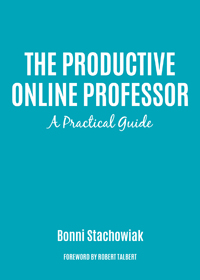
The Productive Online Professor

My first book is coming out in September, which I am really excited about. Robert Talbert wrote the forward and really captures the essence of the book.

This book by my friend Bonni Stachowiak is a splendid, useful guide for all of us in higher education — especially but not exclusively those who teach online — for getting our acts together and gaining control over our work that makes us fully present and therefore fully trustworthy.

In it, you’ll encounter many big ideas, such as the Getting Things Done or “GTD” system of productivity, which permeates the chapters and whose importance for educators cannot be overstated.

But part of the genius of this book is that while the big ideas are clearly and coherently laid out, they are also broken down into simple, practical, incremental steps that anyone can take, today. (If you are one of those people with hundreds or thousands of emails in your inbox and despair of ever regaining control, you are in for a game-changing experience.)

Then, you can use the book as a field manual — perhaps using some of the numerous digital and analog tools for productivity that the book details — to make those small steps habitual and aggregate more good habits as you journey towards being a truly productive, fully present professor.”

The Productive Online Professor book flyer has a discount code for 20% off,  if you preorder through the Stylus Publishing website before August 30, 2018.

Canvas LMS Conference

I’m excited that my institution is once again providing me with financial support to be able to attend Instructure’s Annual conference July 24-27, 2018. Most of their focus is on Canvas (their LMS), but with the addition of Arc Media and other products, there are always a few other resources to explore while you’re there.

If you are planning on being in Keystone Colorado for the conference, let me know and let’s see if we can find a time to connect.

Your Turn

What’s on the horizon for you in the next few months?

Filed Under: Resources

Challenging My Thinking About Teaching

By Bonni Stachowiak | February 15, 2018 | | XFacebookLinkedInEmail

Photo by Jonas Jacobsson on Unsplash

I'm reading a book for an upcoming episode of the Teaching in Higher Ed podcast that has me reflecting on the choices I make in my pedagogy, particularly with regards to assessment.

The College Classroom Assessment Compendium: A Practical Guide to the College Instructor’s Daily Assessment Life, by Jay Parkes and Dawn Zimmaro

It's written from a highly prescriptive perspective. Each section starts out with the authors' recommendation regarding various aspects of assessment.

  • Should we give points for attendance?
  • Is extra credit a good practice?
  • Should late assignments be accepted?

Reflecting on Needed Changes

I have found myself agreeing with about 90% of their recommendations and wrestling with about 10% of their proposals. Each time I find myself mentally debating with them, I am able to revisit the rationale they give for their advice. Then, I discover that I am either more aligned with what they suggested than I originally realized, or I admit that I have some work to do in how I approach a given means of assessment.

Resources for Teaching Transformations

I was interviewed for the EdSurge podcast recently about how my teaching has changed since I first started the podcast back in June of 2014. I tried to discipline myself not to be too verbose regarding this particular set of questions. It would have been easier to answer how my teaching hasn't been changed from almost 200 conversations with such phenomenal educators.

I came across a number of articles in recent weeks that encompass a few of those transformational areas in my teaching that I wanted to share with you.

  • Open Education Resources Applications from around the world
  • Ten Key Points About Active Learning
  • Another Terrible Idea from Turn it In
  • Literature Review of Teaching

The more I learn about teaching, the more I discover the importance of being adaptable in our practice. Our collective humility is essential for becoming better able to serve our students.

Teaching in Higher Ed Transcripts

Episode 200 is coming in April. I'm excited to share a conversation with fellow educators about what we have changed our minds about regarding our teaching in recent years.

I was going to keep it a surprise until episode 200 airs, but have received such valuable feedback when I shared the news with others that I have decided to start spreading the news. The Teaching in Higher Ed podcast is going to have transcripts of every past episode and the ones going forward.

Teaching in Higher Ed podcast transcripts

We are still working out the precise user interface that will be available to access the transcripts, but hope that it will make the podcast more accessible, as well as having it be easier to discover. Here's a couple of transcripts to whet your appetite for what is to come:

  • Episode 92 with James Lang
  • Episode 98 with Stephen Brookfield.

If you have any input in terms of making the Teaching in Higher Ed podcast transcripts as beneficial for faculty as possible, please get in touch with me.

My husband and I had already begun to invest our own money in this important endeavor. However, when I recently asked for input on the transcripts on the POD Network listserv, we were able to discover an unexpected partner to support us on the financial end of things.

The West Virginia University Press Teaching and Learning in Higher Education book series’ editor, James M. Lang, has been a regular guest on Teaching in Higher Ed since the beginning. Jim was on episode 19, episode 92, and episode 146 (with Ken Bain).

Many of the other WVU Press’s Teaching and Learning in Higher Education authors have also been on the podcast in the past. The series is providing financial support to make the first 200 episodes of Teaching in Higher Ed available in transcript form.

As a part of our partnership, other authors will be visiting the podcast throughout the rest of 2018, about once every other month. I am looking forward to making the transcripts available to all of you and to share about the wonderful resources on how to make our teaching more effective with the books in the WVU Press’s Teaching and Learning in Higher Education series.

Discount Code for Preorders of My Forthcoming Book

As I shared recently, my new book is now available for preorder. Use the code TPOP20 to receive a 20% discount at checkout for:

The Productive Online Professor: A Practical Guide

Bonni Stachowiak

Forward by Robert Talbert

Thrive Online Series

I will be doing some type of giveaway to those who preorder using the Stylus website, though I haven't quite figured out what that is going to be just yet.

Let's just say that Katie Linder's Academic Book Promotion Toolkit has given me plenty of ideas and resources to spark my imagination and then some.

Filed Under: Resources

  • « Go to Previous Page
  • Page 1
  • Interim pages omitted …
  • Page 5
  • Page 6
  • Page 7
  • Page 8
  • Page 9
  • Interim pages omitted …
  • Page 17
  • Go to Next Page »

TOOLS

  • Blog
  • Podcast
  • Community
  • Weekly Update

RESOURCES

  • Recommendations
  • EdTech Essentials Guide
  • The Productive Online Professor
  • How to Listen to Podcasts

Subscribe to Podcast

Apple PodcastsSpotifyAndroidby EmailRSSMore Subscribe Options

ABOUT

  • Bonni Stachowiak
  • Speaking + Workshops
  • Podcast FAQs
  • Media Kit
  • Lilly Conferences Partnership

CONTACT

  • Get in Touch
  • Support the Podcast
  • Sponsorship
  • Privacy Policy

CONNECT

  • LinkedIn
  • Instagram
  • RSS

CC BY-NC-SA 4.0 Teaching in Higher Ed | Designed by Anchored Design