• Skip to primary navigation
  • Skip to main content
  • Skip to footer

Teaching in Higher Ed

  • Podcast
  • Blog
  • SPEAKING
  • Media
  • Recommendations
  • About
  • Contact

Resources

What's Been Going On with Me and Past Podcast Guests

By Bonni Stachowiak | August 3, 2017 | | XFacebookLinkedInEmail

The Stachowiak's visit Keystone, Colorado

It’s been a few weeks since I blogged. That kind of a break hasn’t happened in years, but I’m happy to report that the podcast kept coming out each week during my blogging hiatus.

  • Teresa Chahine shared about Teaching Social Entrepreneurship in Two Worlds on episode 161
  • Kris Shaffer discussed What We Should Know About API’s on episode 162
  • Stacy Jacob revealed how she uses Games in the Higher Ed Classroom on episode 163.

In this post, I’m going to share a few updates from these last few weeks. I’ll also provide you with what some of the past Teaching in Higher Ed guests have been up to in recent months.

My Updates

I incorporated the input from those who reviewed my book and sent it off to the series editor and my contact at the publisher for their feedback. I had no idea that this would be such an emotionally exhausting process. It felt good to reach that milestone and I’m excited to share more with you about the book as we collaborate on a rollout plan.

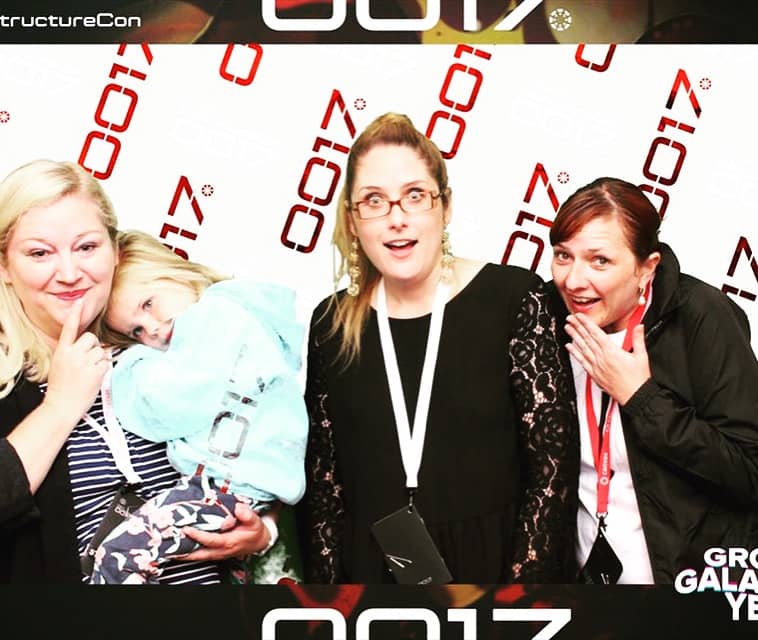
Our family traveled to Keystone Colorado, so I could attend InstructureCon (a conference that taught me a lot about our LMS, Canvas) and so our kids (and Dave, my husband) could have the time of their lives. Two colleagues also traveled with me. We are ready to share what we learned with our faculty colleagues and are completely jazzed with some of the improvements that have already been made to Canvas, or are on their way.

At the conference, Canvas released a stand-alone app for Teachers on iOS and Android. My favorite feature is that we can now grade using a stylus. This is going to make a big difference in my grading workflow and communication with students in the Fall. There's much more to share, but I'll hold off for more official communication channels at my institution.

What I'm Reading

I just dove into the book: No-Drama Discipline: The Whole-Brain Way to Calm the Chaos and Nurture Your Child’s Developing Mind. This is Dave’s (my husband’s) favorite parenting book and one he’s been nudging me to read for some time. Let’s just say our experience in Keystone with two very excited / wound-up / over-stimulated kids was enough to jump-start my reading when we got home.

I’m working on finishing Real Food / Fake Food: Why You Don’t Know What You’re Eating and What You Can Do About It. I’m only halfway through, but haven’t really felt much like I’m discovering practical ways I can avoid eating all the fake food I’ve discovered I’m consuming. Thus far, I’ve told Dave we can never buy parmesan cheese in a can, again, and that we need to use (or throw away) our olive oil within three weeks of opening it. I’ll never look at a bottle of extra virgin olive oil without great suspicion, considering how rare it is to actually receive what we think we’re buying when we purchase it.

I completed reading The Book of Joy: Lasting Happiness in a Changing World, a book comprised of interviews with Desmond Tutu and the Dalai Lama. From Goodreads: “Two great spiritual masters share their own hard-won wisdom about living with joy even in the face of adversity.” I highly recommend it.

A New Online Resource for Creating Videos

The Teaching in Higher Ed podcast has episodes that are featured on the newly-released Online Lecture Toolkit. From their website:

This project was developed to support the needs of educators who want to create effective online video content. The resources here are designed to make the application of evidence-based strategies accessible for educators and instructional designers at every level of technological fluency.”

Project Managers Judith Dutill and Melissa Wehler have done a tremendous job on the Online Lecture Toolkit and I hope you'll check it out.

Updates from Past Teaching in Higher Ed Guests

Now that I've shared some professional and personal updates, I thought I would pass on some of what former Teaching in Higher Ed podcast guests have been up to in recent months.

James Lang (episode 019, 092, and 146) completed his Chronicle of Higher Education series on The Distracted Classroom with a piece about Transparency, Autonomy, and Pedagogy.

From James Lang's Distracted Classroom series in The Chronicle of Higher Ed

Clint Smith III (episode 141) has started regularly participating in the news portion of Deray McKesson’s podcast: Pod Save the People. This podcast has quickly grown to be one I look forward to coming into my feed. I always move it up to the top of the list, enjoying their challenging takes on race, culture, social justice, and politics.

Sarah Rose Cavanagh (episode 135) wrote a piece for The Chronicle of Higher Education called All the Classroom's a Stage. I especially appreciate her emphasis on the vulnerability required to pursue teaching excellence.

Mike Caulfield (episode 138) has been encouraging us to develop our students’ (and our own) digital literacy by contributing to the Digital Polarization Initiative wiki.

Isabeau Iqbal (episode 131) curated journal articles on student peer assessment for a pilot project she is working on in collaboration with Dr. Amanda Bradley and Amy Ho in the faculty of medicine at UBC.

Robert Talbert’s (episode 110 and 120) book, Flipped Learning: A Guide for Higher Education Faculty, was released in the Kindle format.

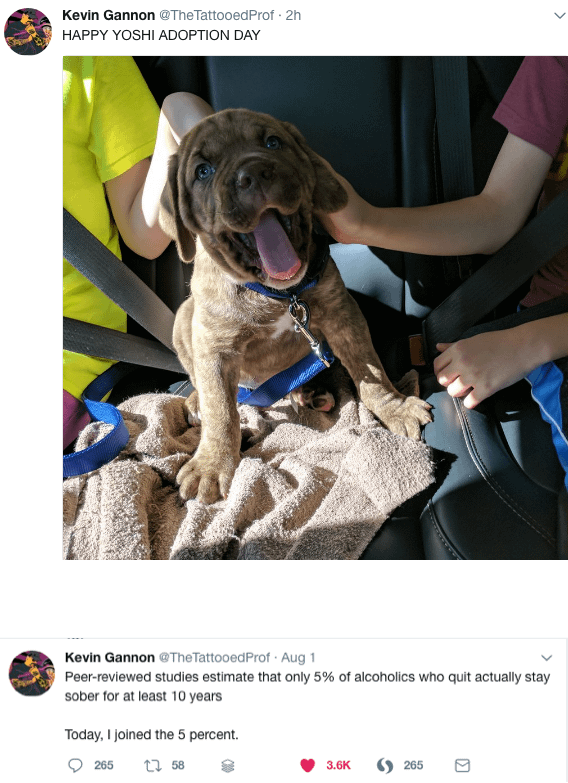
Kevin Gannon (episode 112 and 152) adopted Yoshi, an adorable new pup. He also celebrated 10 years of sobriety and beat the odds.

Kevin Gannon celebrates the adoption of Yoshi (the dog) and his achievement of 10 years of sobriety.

Rebecca Hogue (episode 149) reveals how she has stopped sharing her crisis, despite a recent cancer scare.

Therese Huston (episode 077) had a piece published in the New York Times about how men’s hormones impact their ability to reason. She poses the question, “How might men’s heightened testosterone lead to overconfidence?” She mentioned somewhere that she didn’t compose the headline of the article – and she also includes some limitations of the research she analyzed.

I'm sure I missed some updates. It seems that no one in the Teaching in Higher Ed community rests throughout the entire summer the way fictitious faculty do in movies and such. Please let us know in the comments what you've been up to these summer months, or what you're reading.

Filed Under: Resources

What’s Been Going On with Me and Past Podcast Guests

By Bonni Stachowiak | August 3, 2017 | | XFacebookLinkedInEmail

The Stachowiak's visit Keystone, Colorado

It’s been a few weeks since I blogged. That kind of a break hasn’t happened in years, but I’m happy to report that the podcast kept coming out each week during my blogging hiatus.

  • Teresa Chahine shared about Teaching Social Entrepreneurship in Two Worlds on episode 161
  • Kris Shaffer discussed What We Should Know About API’s on episode 162
  • Stacy Jacob revealed how she uses Games in the Higher Ed Classroom on episode 163.

In this post, I’m going to share a few updates from these last few weeks. I’ll also provide you with what some of the past Teaching in Higher Ed guests have been up to in recent months.

My Updates

I incorporated the input from those who reviewed my book and sent it off to the series editor and my contact at the publisher for their feedback. I had no idea that this would be such an emotionally exhausting process. It felt good to reach that milestone and I’m excited to share more with you about the book as we collaborate on a rollout plan.

Our family traveled to Keystone Colorado, so I could attend InstructureCon (a conference that taught me a lot about our LMS, Canvas) and so our kids (and Dave, my husband) could have the time of their lives. Two colleagues also traveled with me. We are ready to share what we learned with our faculty colleagues and are completely jazzed with some of the improvements that have already been made to Canvas, or are on their way.

At the conference, Canvas released a stand-alone app for Teachers on iOS and Android. My favorite feature is that we can now grade using a stylus. This is going to make a big difference in my grading workflow and communication with students in the Fall. There's much more to share, but I'll hold off for more official communication channels at my institution.

What I'm Reading

I just dove into the book: No-Drama Discipline: The Whole-Brain Way to Calm the Chaos and Nurture Your Child’s Developing Mind. This is Dave’s (my husband’s) favorite parenting book and one he’s been nudging me to read for some time. Let’s just say our experience in Keystone with two very excited / wound-up / over-stimulated kids was enough to jump-start my reading when we got home.

I’m working on finishing Real Food / Fake Food: Why You Don’t Know What You’re Eating and What You Can Do About It. I’m only halfway through, but haven’t really felt much like I’m discovering practical ways I can avoid eating all the fake food I’ve discovered I’m consuming. Thus far, I’ve told Dave we can never buy parmesan cheese in a can, again, and that we need to use (or throw away) our olive oil within three weeks of opening it. I’ll never look at a bottle of extra virgin olive oil without great suspicion, considering how rare it is to actually receive what we think we’re buying when we purchase it.

I completed reading The Book of Joy: Lasting Happiness in a Changing World, a book comprised of interviews with Desmond Tutu and the Dalai Lama. From Goodreads: “Two great spiritual masters share their own hard-won wisdom about living with joy even in the face of adversity.” I highly recommend it.

A New Online Resource for Creating Videos

The Teaching in Higher Ed podcast has episodes that are featured on the newly-released Online Lecture Toolkit. From their website:

This project was developed to support the needs of educators who want to create effective online video content. The resources here are designed to make the application of evidence-based strategies accessible for educators and instructional designers at every level of technological fluency.”

Project Managers Judith Dutill and Melissa Wehler have done a tremendous job on the Online Lecture Toolkit and I hope you'll check it out.

Updates from Past Teaching in Higher Ed Guests

Now that I've shared some professional and personal updates, I thought I would pass on some of what former Teaching in Higher Ed podcast guests have been up to in recent months.

James Lang (episode 019, 092, and 146) completed his Chronicle of Higher Education series on The Distracted Classroom with a piece about Transparency, Autonomy, and Pedagogy.

From James Lang's Distracted Classroom series in The Chronicle of Higher Ed

Clint Smith III (episode 141) has started regularly participating in the news portion of Deray McKesson’s podcast: Pod Save the People. This podcast has quickly grown to be one I look forward to coming into my feed. I always move it up to the top of the list, enjoying their challenging takes on race, culture, social justice, and politics.

Sarah Rose Cavanagh (episode 135) wrote a piece for The Chronicle of Higher Education called All the Classroom's a Stage. I especially appreciate her emphasis on the vulnerability required to pursue teaching excellence.

Mike Caulfield (episode 138) has been encouraging us to develop our students’ (and our own) digital literacy by contributing to the Digital Polarization Initiative wiki.

Isabeau Iqbal (episode 131) curated journal articles on student peer assessment for a pilot project she is working on in collaboration with Dr. Amanda Bradley and Amy Ho in the faculty of medicine at UBC.

Robert Talbert’s (episode 110 and 120) book, Flipped Learning: A Guide for Higher Education Faculty, was released in the Kindle format.

Kevin Gannon (episode 112 and 152) adopted Yoshi, an adorable new pup. He also celebrated 10 years of sobriety and beat the odds.

Kevin Gannon celebrates the adoption of Yoshi (the dog) and his achievement of 10 years of sobriety.

Rebecca Hogue (episode 149) reveals how she has stopped sharing her crisis, despite a recent cancer scare.

Therese Huston (episode 077) had a piece published in the New York Times about how men’s hormones impact their ability to reason. She poses the question, “How might men’s heightened testosterone lead to overconfidence?” She mentioned somewhere that she didn’t compose the headline of the article – and she also includes some limitations of the research she analyzed.

I'm sure I missed some updates. It seems that no one in the Teaching in Higher Ed community rests throughout the entire summer the way fictitious faculty do in movies and such. Please let us know in the comments what you've been up to these summer months, or what you're reading.

Filed Under: Resources

Second Tries and Popular Posts

By Bonni Stachowiak | June 19, 2017 | | XFacebookLinkedInEmail

As those of you who subscribe to the Teaching in Higher Ed update already know, a weekly email goes out with the most current blog post and podcast episode show notes. This is an automated process and doesn't always go off without a hitch.

Below are some links that take you to posts that didn't come through email very well, when they were originally sent:

  • How to Host or Participate in a Video Conference Session (lighting, audio, camera level, eye contact, information about Virtually Connecting, and my preferred video conferencing tool)
  • Our Five Year-Old's Review of NPR's Wow in the World Podcast, part of the Four Fruitful Distractions post (planet nine, Jupiter, planets eating other planets, why we should listen to Wow in the World, five year-old cuteness)
  • Interactive Transcript Example, part of The Trouble with Summer post (one more output option for transcripts, when using Trint)
  • Podcast Greats for 2017 (Inspired by Bryan Alexander's post of his favorite podcasts, categorized under teaching and other higher ed podcasts, shows that stretch my mind, business and management podcasts, in community with others, geeky podcasts and shows that are just getting started. One that came out since I wrote the post that I'm listening to is Pod Save America, hosted by activist Deray McKesson.)

Finally, here are some popular posts you may have missed or might want to reference a second time:

  • Going Public with our Learning (Post that was inspired by my episode #101 interview with Thia Wolf about public sphere pedagogy)
  • Sticking with Getting Things Done (David Allen's GTD is truly a remarkable system, if you can stick with it)
  • How to Create a Video of Yourself for Class (Practical steps to engage through video in your teaching)
  • Five Lessons in Teaching From Bobby McFerrin (Still one of the best videos illustrating gifted teaching I've ever seen)
  • My Updated Personal Knowledge Management System (Tools I use to seek, sense, and share my learning)
  • How to Increase Your Digital Literacy (Links to the various frameworks and experts)
  • How to Create a Pencast (What tools I use to create pencasts, along with a demo)
  • 2 Persistent Myths About Teaching and Learning (These myths just won't go away)


Filed Under: Resources

The Scholarship of Teaching and Learning

By Bonni Stachowiak | June 7, 2017 | | XFacebookLinkedInEmail

The scholarship of teaching and learning

Since I first heard about the scholarship of teaching and learning (SoTL), I’ve been intrigued by this area of research.

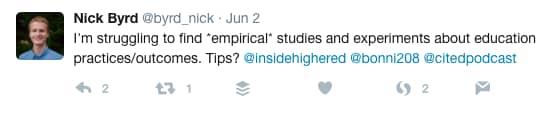
I was copied on a Tweet this week from Nick Byrd, asking about where to find empirical studies and experiments about education practices/outcomes.

Tweet from Nick Byrd regarding his search for empirical studies and experiments about education practices/outcomes.

Someone replied to his request with this article from The Association for Psychological Science, which seems like a helpful resource.

However, I had a much longer reply that has been formulating in my mind since he first inquired. In this post, I’ll explore the broad area of study surrounding the effectiveness of education, as well as some of the subdomains under the broader research area that I find particularly interesting.

The Scholarship of Teaching and Learning

The broad area of this kind of research tends to fit under the domain of The Scholarship of Teaching and Learning (or #SoTL on Twitter).

In researching items for this blog post, it would seem that #SoTL also has something to do with cigars (unrelated to our discussion of #SoTL). It can be unfortunate when a hashtag gets some overlap like that, but it was easy enough to skip over to focus on items of particular interest to me. To skip over any cigar references, the newly-established #SoTLchat hashtag is solely focused on conversations around the scholarship of teaching and learning.

Anyone interested in pursuing this research area may benefit from this article with “Advice for New SoTL Researchers” from the International Society for the Scholarship of Teaching and Learning (ISSOTL). Another good starting point is this related discussion on Good Practices in SoTL.

Getting a background on the ethics involved in conducting this form of research is also important. The University of Calgary provided this overview of their ethical review of their research on teaching and learning.

In attempting to answer Nick’s question, I knew that I would be insufficient to address the wide-ranging areas that this body of research explores.

I’m going to discuss some of the parts of the scholarship of teaching and learning that I’ve read the most about. I also encourage you to browse the current and past issues of the Journal of Teaching and Learning Inquiry to find those topics that provide the most interest for you.

Research on Learning

At the risk of oversimplification, most of us want to know whether or not what we are attempting to do in our teaching is actually going to work. Or, if we’re already convinced of the benefits to our experimentation, we may come across skeptics who want to know the efficacy of our recommendations.

Past episodes of the Teaching in Higher Ed podcast that most relate to these questions are:

  1. Episode #094 with Pooja Agarwal on retrieval practice. “When we think about learning, we typically focus on getting information into students’ heads. What if, instead, we focus on getting information out of students’ heads?” The Retrieval Practice website is full of resources for exploring the research behind this approach to teaching.
  2. Episode #072 with Robert Bjork on cognitive psychology also emphasizes retrieval practice, as well as the role that forgetting plays in our learning.
  3. Episode #132 with Saundra McGuire on how to teach students how to learn. Her background as a chemistry professor had her continually seeking ways to support her students in their learning. Her interview with ACUE helps us understand “what changed the trajectory of her research and scholarship.”
  4. Episode #069 with Meg Urry on correcting mental models shares approaches we can use to help our students grasp complex information. As a professor of physics and astronomy, she recognizes that “real learning takes time,” and offers a prescriptive checklist for solving problems to help students think more critically.
  5. Episode #135 with Sarah Rose Cavanagh on her book, The Spark of Learning: Energizing the College Classroom with the Science of Emotion discusses the role that emotions play in learning.
  6. Episode #062 with Rebecca Campbell on the power of mindset. She shares on the episode, “It isn’t about teaching differently, but about framing the conversation differently.” She also describes ways to help students achieve more of a growth mindset, based on the research.
  7. Episode #047 with Todd Zakrajsek provides similar information as the episode with Rebecca, only this time regarding metacognition. He describes it as “thinking about thinking; knowing when you know.”
  8. Espidoes #037 with Tine Reimers did a deep dive on the research that explores approaches to developing critical thinking skills. The show notes include Tine’s taxonomy of some of the critical thinking theories and suggestions for how to grow critical thinking in our students.
  9. Episode #016 with Josh Eyler looks at biology, the brain, and learning. On the episode, he provide a framework for a biological basis of learning and recommends resources from Harvard’s graduate school of education on the mind, the brain, and education.

Books Worth Reading on Related Topics

In addition to the books that were highlighted in the episodes, above, I also must mention two of my favorite reads related to teaching and learning.

  • What the Best College Teachers Do, by Ken Bain
  • Small Teaching, by James Lang

While both books are written in a less-formal tone than an academic journal article would be, they are based on extensive research on teaching and learning and have references to their primary sources, should you want to dive deeper than they do on any approach.

Your Turn

I know I have just skimmed the surface with this post, but it is time to get back to the writing I’m doing on my book. Now you probably know why I didn’t feel I could tackle this in 140 characters on Twitter, though.

What are others exploring about the scholarship of teaching and learning? How do you address those who are skeptical as to the effectiveness of some of our teaching methods? What resources did I miss that can help Nick familiarize himself more with this body of research?

Filed Under: Resources

Four Fruitful Distractions

By Bonni Stachowiak | May 30, 2017 | | XFacebookLinkedInEmail

As I've written about previously, I am writing a book this summer. It's my first book. I've written a dissertation, before, and there are certainly parallels. But, it's my first time having such a strict timeline to get it done, and to have my work be a part of a series of books.

Our academic year is over, and I'm officially into summer. While I find such joy in teaching, it is always a relief to have a break and be renewed for the next season of teaching.

In my process of conducting a monthly review, I always select a theme for the coming month. In May, it was writing. For June, I had also selected writing.

However, I am reconsidering.

As overused as the concept is, I'm starting to think that my theme should be balance. Yes, I need to write a book. And I want to write a book. But, I also realize this is a precious season for our children and I am fortunate to be able to spend a bit more time with them during the summer than I can during the academic year.

I write all of this to explain why I am working at not feeling guilty when I get distracted by something fun. I don't have to be constantly focused in order to achieve my goals for this season. The pace of my days doesn't have to be as relentless as it can often be during the academic year.

To that end, here are some wonderful distractions I've been experiencing in recent weeks. When I wasn't writing, of course…

Doodling for Academics

All the way back on Episode 17, Janine Utell recommended a wonderful book called a Dear Committee Members: A Novel, by Julie Schumacher. I devoured it right away and have since bought copies for multiple colleagues who I thought could use a more humorous look at parts of our work.

It made me all that much more excited that the author was coming out with an adult coloring book. Doodling for Academics: A Coloring and Activity Book allows Julie Schumacher to continue to keep us laughing and not taking ourselves too seriously. My mom bought me a copy and I have been enjoying leafing through the pages and chuckling over the common dysfunctional ways of our own institutions and of higher ed, in general.

HubSpot’s HTML Email Signature Creator

Another recent find involves less laughter and more beautiful design. I found HubSpot, a website that allows you to build a gorgeous HTML signature for your email for free. There are some paid services that do this for you, but I'm reluctant to pay a monthly subscription fee for something like this.

I wanted a signature that could live inside my email client and not on someone else's servers. One of the important questions to ask whenever something is supposedly free, is what am I giving up and exchange for this benefit I'm looking to receive.

I was asked to give up some demographic information and my email address in exchange for my new signatures. The company sells website and marketing services and I know I am potentially going to be marketed to in the future. They have sent one email over the course of the last few days with a link to a white paper. They do provide an easy way to unsubscribe from their emails and seem to comply with the Can-Spam Act properly.

If you have some basic HTML skills, you can make modifications to their code in your email client. In fact, you may be able to achieve the desired result us by typing directly in to the signatures text editor of your email client, after you copy and paste your signature.

Using a Different Email Client: In My Case – AirMail 3

When it comes to email, most people either stick with whatever email client their institution uses (such as Microsoft Outlook), or whichever one is the default on their computer (such as mail, on the Mac).

After listening to Katie Floyd and David Sparks talk about alternatives to email clients on Episode #303 of the Mac Power Users, I decided to finally take the plunge. I read a lot of articles, and finally landed on that using Airmail on both my Mac and on my iOS devices.

Forbes’ Anthony Karcz makes the case for why Mac users should consider using Airmail 3 as our email client of choice. I’ve been delighted at the gorgeous user interface and some of the small touches, like being able to send an email later (only works on certain email services, like gmail or Office 365), and the integration with my task manager of choice: OmniFocus.

NPR's Wow in the World Podcast

Dave (my husband) and I frequently joke that our kids are going to grow up thinking that every adult in the world has a podcast.

  • Daddy has Coaching for Leaders…
  • Mommy has Teaching in Higher Ed…
  • Mrs. Sandie has Ending Human Trafficking…
  • Mr. Stephen has Stephen Explains the News…

While the kids do get to listen to their fair share of music in the car, until now, they never knew of the existence of a kid-oriented podcast.

NPR launched their Wow in the World podcast about a month ago. It is entertaining for kids and adults and is a big hit for our family. They describe Wow in the world as:

…a new way for families to connect, look up and discover the wonders in the world around them. Every episode, hosts Mindy and Guy guide curious kids and their grown-ups away from their screens and on a journey. Through a combination of careful scientific research and fun, we'll go inside our brains, out into space, and deep into the coolest new stories in science and technology.” -NPR

Here is our son’s review of the Wow in the World podcast, in his own words:

He sounds like he is making a paid endorsement for Wow in the World. Trust me. NPR doesn't know we're doing this and with how good it is, they don't need our help.

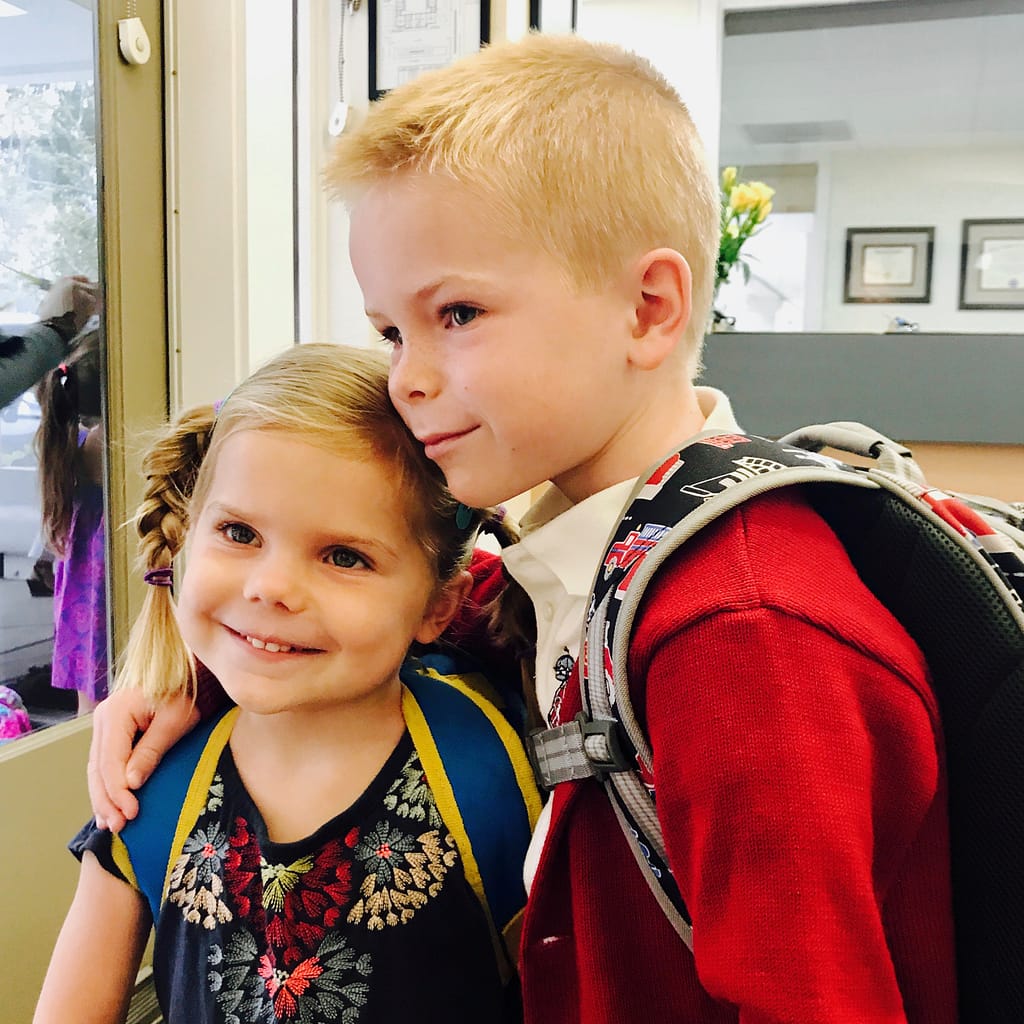
Thanks for reviewing the Wow in the World Podcast for Teaching in Higher Ed, Luke

Your Turn

What have been some fruitful distractions for you, as we head into summer? 

Filed Under: Resources

  • « Go to Previous Page
  • Page 1
  • Interim pages omitted …
  • Page 8
  • Page 9
  • Page 10
  • Page 11
  • Page 12
  • Interim pages omitted …
  • Page 17
  • Go to Next Page »

TOOLS

  • Blog
  • Podcast
  • Community
  • Weekly Update

RESOURCES

  • Recommendations
  • EdTech Essentials Guide
  • The Productive Online Professor
  • How to Listen to Podcasts

Subscribe to Podcast

Apple PodcastsSpotifyAndroidby EmailRSSMore Subscribe Options

ABOUT

  • Bonni Stachowiak
  • Speaking + Workshops
  • Podcast FAQs
  • Media Kit
  • Lilly Conferences Partnership

CONTACT

  • Get in Touch
  • Support the Podcast
  • Sponsorship
  • Privacy Policy

CONNECT

  • LinkedIn
  • Instagram
  • RSS

CC BY-NC-SA 4.0 Teaching in Higher Ed | Designed by Anchored Design