• Skip to primary navigation
  • Skip to main content
  • Skip to footer

Teaching in Higher Ed

  • Podcast
  • Blog
  • SPEAKING
  • Media
  • Recommendations
  • About
  • Contact

Poster Sessions Experimentation Continues

By Bonni Stachowiak | May 9, 2017 | | XFacebookLinkedInEmail

I tried doing poster sessions for the first time a year ago. Doug McKee had inspired me, though he was skeptical that my analog approach would be successful.

2017 Spring Consumer Behavior Poster Session Event

This semester, I decided to experiment more with poster sessions in my consumer behavior classes, with a few key differences:

  • Larger/outdoor venue: I was teaching two sections of the course and needed to find a venue to fit 50+ students, along with business professionals, students, alumni, faculty, and staff. We settled on an outdoor courtyard, with accommodated us well.
  • External audience: Inspired by public sphere pedagogy, I wanted to invite business professionals, professors, and alumni to attend.
  • Live event streaming: We experimented with Facebook Live, in an attempt to capture an even larger, external audience.
  • Give-aways and food: We decided to involve our guests and invited them to vote for their favorite posters with tickets. I had contemplated using some kind of technology (a colleague had used Mentimeter in the past to vote on student films), but in the end, we went low-tech and did a raffle. I like that everyone had a chance to win and the way the tickets re-engaged the guests with the people at the various booths, as they went back to award their favorite posters, by handing them tickets.
  • Professional photography: We were fortunate to have Taylor Gonzalez from TayJoy Photography in the class, so we could have all these wonderful photographs from the event.

I am thankful to have had a wonderful teaching assistant this semester, Jamie Jacob, who was instrumental in getting business professionals to attend and in locating some prizes for the raffle.

Emma McKay was our event planner and kept us on track with all the tasks that needed doing to make the event a success.

Emma McKay's LinkedIn Profile

Emma's LinkedIn profile says that she's an aspiring event planner, but I think it is more than safe to change that wording to present tense at this point. Read Emma's reflections on the poster sessions event on LinkedIn.

One of the students in the course who was scheduled to be a Facebook Live co-host came down with something awful right at the last minute. While it was disappointing to not have Adam Tyler there at the event, it is fun to get to share his reflections on the event with you now.

Consumer Behavior Poster Sessions, by Adam Tyler

The Consumer Behavior Class at Vanguard University, taught by the o-so-talented Dr. Bonni Stachowiak, put on an incredible poster session event Wednesday, April 19th. Unfortunately, I was not able to attend this event due to a horrid stomach flu that had me bed ridden for four days.

However, thanks to the incredible innovation of Facebook live, I was able to go back and watch all of the posters and the interviews that went along with them. Cathryn Lynch did an incredible job recording and interviewing, and now I will talk about some of the posters that stood out to me the most.

Consumers at Disneyland

The Disneyland poster was the first one of the night. It was very organized neat, colorful, and the Disneyland sign across the top represented exactly what the sign looks like at the Park. The Disneyland poster caught my attention just like they try to to do to you in the park with the sights, smells and sounds. Cathryn asked the question of how would a consumer misbehave at Disney, and the answer was that a lot of pass-holders let their friends borrow their pass and they dress to look just like them.

Take Me Out to the Ball Game

The entire baseball poster, representing the Los Angeles Dodgers, was made to look like a large baseball field. It was neat, organized, and definitely sporty. Misbehavior at a baseball game could include fans being rowdy, drunk, and loud. For promotions at baseball games, teams give out give-aways such as selfie sticks, towels, etc to attract fans. Baseball does a great job of advertising as well.

M&M Consumption

The M&M poster consisted of a large blowup of the main M&M characters as the background. The poster also included the stat that 100 million are eaten every day! They use the significance norm to describe the importance of M&M’s to consumers.

NCAA March Madness

This poster was done to simplicity as it was just black and blue, but had a lot of great information on it as well as a visual of a mini basketball hoop. The influences at a NCAA basketball game includes situational factors and hereditary influences.

Changes in Music Consumption

The music poster was set up very organized, colorful, and attractive. Some main points included how popular music streaming has become with Apple music, Amazon music, Pandora, etc. A misbehavior of music would be illegally downloading music or sharing passwords and services.

Super Bowl

The Super Bowl Poster was very green, big and eye catching. Some main points of this poster included how everything during the Super Bowl is amped up to a whole new levels including the game, advertisements and food. Marketing is so important to consumers and they fall completely in the trap during the Super Bowl. A misbehavior of Super Bowl could be the inappropriate commercials or ones that do not support fair trade.

Consuming Movies

The movie poster looked as if someone was actually going to the movies. It was dark and black with few lighting around the outside. People go to the movies for hedonic value. Friends, family and peers also have influence on what movies people see. A situational influence could be the smell of popcorn in the theatre or the advertisements of coke.

Social Media Poster

The social media poster had a black background with colorful writings and designs. Social Media has so much power over everything, especially marketing. Instagram uses its platform for celebrity marketing, and Facebook uses all kinds of marketing to pull the consumer right in. Social Media knows how to market to your area, what you like, and what you might buy. It’s a great business!

American Spending on Dogs

This poster was bright and white, and consisted of pictures of dogs and bones throughout the poster. Americans spend the most money on their dog of anyone. Americans are in the need for companionship, and there is no better answer than a dog. They are cute, cuddly, and Americans want to make their pet as happy as possible, which means spending money. Dog supplies are not cheap either!

Consumer Health Trends

The consumer health board was light, trendy and eye catching and almost looked as if I was dieting by staring at the poster. Some trends today include vegan, vegetarian, non-gmo, gluten free, paleo diet and more. A lot of eating trends that people develop are from celebrities, and people abuse this trend by developing eating disorders and anorexia.

Tailgating Poster

The tailgating crew had on music, food, and a good time for anyone to stop by. The vast majority of Americans who go to football games tailgate. In fact, some only go to the games to experience tailgating. Tailgating includes buying food, grilling food, having drinks, and having games. Tailgating is very influential among the sports community.

Social Entrepreneurship Resonates with Consumers

This poster was very neat, clean and white! It consisted of a bunch of facts, charts, and socio-responsible companies. Some included 31 bits, Krochet Kids, Warby Parker, Toms, and more! Toms and Warby Parker are a glasses and shoe company and both donate pairs to charity for example. Consumers are always looking to give or in this case invest in products with a purpose.

Conclusion

The poster session event looked like such a big hit to the Vanguard Community. There was a good amount of people not even in the class who attended this event. Everyone was having fun enjoying each others posters and enjoying some good consumer information.

Once again, it was such a bummer that I could not attend this incredible event put on by Dr. Stachowiak, but thank you technology for allowing me to experience so many wonderful posters in the comfort of my bed.

Filed Under: Teaching

Using Facebook Live in Higher Ed Teaching

By Bonni Stachowiak | April 21, 2017 | | XFacebookLinkedInEmail

This has been one of those extraordinary weeks in teaching. I have been edified by what I've observed about my students' experiences in my classes this semester. This week, my consumer behavior classes showed off our learning through a poster sessions event (originally inspired by Doug McKee’s experiences in his economics courses).

I’ll be writing more about the poster sessions event, overall, once the pictures are in from the photographer we used. In the meantime, I thought I would share about my first experience using Facebook Live, in conjunction with the poster sessions.

Facebook Live Successes

I’ll admit to being somewhat reluctant to try out Facebook Live. There was this feeling of trepidation (based on fears like: What is no one shows up? What if it doesn’t work “right”? What if (in this case) people are uncomfortable sharing in this venue?).

sample Facebook Live videos

It’s hard to look at these sample Facebook Live videos of Jane Goodall, Martha Stewart, Seth Myers, Adam Grant, and Amy Cuddy and not think that maybe this stuff is best left to the professionals.

But, I do enjoy experimentation and live video is becoming so widely used in education and in business, I decided to give it a try.

Here are some of my successes:

Selected a Great Host

Since I knew I would be busy facilitating the poster sessions event, I had found a couple of students who were dynamic and articulate.

Sadly, one of them got sick at the last minute, so we wound up with only one host. She was absolutely fantastic, though, and also had previously recommended a smart phone accessory that made needing a second host a bit less essential.

Purchased a Hand-held Stabilizer Accessory for My Phone

Our Facebook Live event host had suggested that I purchase a stabilizer for my iPhone. She found this one on Amazon for only $15 (at the time of purchase) and I didn’t hesitate.

It serves two purposes. You can hold it in what they call “pistol” fashion, so you can aim your phone in different directions, without having the wobbly, hand-held effect on the video. Or, you can separate the top section and turn it in to a small tripod.

I have an iPhone 7 Plus, which has some built-in stabilization. There didn’t seem to be anything on the accessory that was stabilizing the camera, but maybe this is just my not understanding how these kinds of accessories work.

Smartphone accessory for Facebook Live videos
This accessory was a lifesaver for our Facebook Live experimentation

All I can say is that this is the best $15 I’ve spent on a phone accessory in a long while and I would highly recommend it for anyone planning on doing some kind of Facebook live recording at a fair-type event, where you’ll be needing to walk around a bunch during your filming.

This video with all sorts of options for mobile LIVE streaming gear makes me think that I could just be getting started with my accessories for this sort of thing.

Just Went for It

Finally, I’m glad I decided to throw caution to the wind and just go for it. As you’ll see below, it wasn’t all roses and unicorns. However, I followed my teaching philosophy of experimenting and taking risks…

Facebook Live Failures

Despite finding a terrific host, having solid equipment, and being willing to experiment, I did make some pretty big mistakes for my first Facebook Live experience. I didn’t notice most of them until after I was done recording, which is kind of disappointing, since they were all correctable.

This post from Mashable with 15 tips for using Facebook Live would have been helpful for me to read before my first experiment, but has been now bookmarked for future reference.

Here are some of my Facebook Live failures:

Camera Orientation was Locked and Caused a Sideways Video

This was the biggest technical hurdle I experienced (and didn’t realize until about 75% through the event, when someone pulled up my Facebook account on their phone and showed me that the video was sideways).

Facebook Live in Higher Education Teaching
When your camera orientation is all wrong when using Facebook Live

It turns out that with an iPhone, as long as we start our Facebook live recording in landscape, it should theoretically work correctly. However, I had my lock orientation activated on my iPhone, which then meant it didn’t matter how we started the recording. I still wound up with a sideways view of the entire event.

I found this quick video super helpful in providing the answer to Why your Facebook LIVE videos are sideways and what to do about it.

Text Orientation was Reversed, Making All the Poster Sessions Unreadable

The other big technical issue that arose was that all the text was backwards to us, the viewer. There’s a way to fix this as you’re recording, but I wasn’t even aware that it was happening, so didn’t know that things were amiss until almost to the end of the event.

Facebook Live in Higher Education Teaching
Another Facebook Live Rookie Mistake: Text Was Backwards

The quick way to correct backwards text in your Facebook Live videos is shared on this post: Horizontally Flip the Camera to Avoid Backwards Text. If you go back and forth between your front camera and your main camera, you may have to switch this setting multiple times.

My Biggest Suggestion

You probably saw this coming, but my biggest suggestion to you, in terms of Facebook Live, is to give it a try. You can test it out by changing the privacy settings on your stream, which lets you keep your broadcasting to yourself, as you work out any kinks.

Let me know if you have started experimenting with live video in your teaching, yet, and how it has been helpful to you. If you have any stories of failure to share, as well, we can all contribute to others not having to go down the same paths we did.

Filed Under: Educational Technology

Exploring Teaching Philosophies

By Bonni Stachowiak | April 7, 2017 | | XFacebookLinkedInEmail

When I was preparing my promotion and tenure portfolio in 2010, the resource I used more than any other was the book:

The Academic Portfolio: A Practical Guide to Documenting Teaching, Research, and Service, by Peter Seldin and J. Elizabeth Miller*.

The first half of the book lays out a structure for how to approach documenting one's development in higher education, while the second half contains samples of portfolios from faculty in various disciplines.

While I am not actively working on a portfolio at this time, I have enjoyed continuing to read teaching philosophies that various faculty include on their websites/blogs.

Teaching Philosophy Inspiration

Ryan Cordell's teaching philosophy is inspirational, both in the way he describes his approaches and also from the examples he links to of how his teaching philosophy gets realized.

Jeffrey W. Murray asserts that we should consider non-traditional ways of developing a teaching philosophy, if we find ourselves too constrained by the standard format.

Adam Croom's talk on Openness Without Penalty cautions us to avoid thinking of every possible educational technology as a prescription for effective teaching. He states:

In fact, I would go further and say that not every technology is congruent with every teaching philosophy. As an instructor I’m not a neutral entity; I teach my subjects the way I want to teach them. Similarly, technologies are not neutral as they, too, have biases that have been implicitly or explicitly built into them and their uses.”

Elizabeth (Betsy) Barre takes the courageous route of articulating how love may even enter into our teaching philosophies. She also describes the ultimate benefit of a liberal arts education as she writes:

A truly liberal education, on the other hand, provides students the motivation, information, and tools necessary to “liberate” themselves from the dictates of authoritative truth—academic or otherwise. This means, incidentally, that I am just as concerned about avoiding proselytization as my colleagues. If my teaching philosophy prioritizes any values, they are the values that provide the foundation for intellectual diversity. Thus, the primary goal of normative debate in my classroom is to encourage students to learn how to think for themselves. In the end, they may accept the value of authority and continue to hold the positions they held when they entered the classroom. The hope, however, is that they will have secured better reasons for doing so. Put simply, my central concern is not what my students think, but whether and how they do so.”

Jeffrey Wiese describes in his statement of teaching philosophy how he went through four phases of a teacher, from trying to show medical students how much he knew to when he was able to follow his father's example and become more of a coach (which he describes further on episode #096 of the Teaching in Higher Ed podcast: The Clinical Coach).

Finally, one area of content that I didn't explore in my first academic portfolio that I hope to include in my one for full professor is regarding how my teaching philosophy has been shaped by others who have taught me. Gardner Campbell has modified his recent syllabi by adding a dedication. This is the way he acknowledges those who have been what he calls “a cloud of witnesses” around him in his teaching.

Gardner shares:

These are the people whose work has shaped me, and who have shaped my work. In the most intimate cases, these are people with whom I’ve broken bread. People with whom I’ve fought, and cried. People who’ve believed in me when I didn’t believe in myself, people who’ve encouraged me, people who’ve intervened at key moments. People who are with me as I think and write and teach and learn.

I have always felt that the courses I design and lead, at their best, do not deliver content so much as they mingle souls, as John Donne said letters do.

Your Turn

I know I have missed a plethora of wonderful examples of teaching philosophy statements that faculty have placed online. If you have links to share of other teaching philosophies that have resonated with you, please share them in the comments or via email.

Filed Under: Resources

Gratitude

By Bonni Stachowiak | April 5, 2017 | | XFacebookLinkedInEmail

Thanks to all of you who responded to my blog post about the stress I've been experiencing regarding a family member's dementia diagnosis, as well as to those who wrote in about the related podcast episode. I am grateful to be in community with you.

An Anecdote for Worry

I often share with my students that it is easy to become overwhelmed with worry, but that one of the anecdotes I have found for that is to think about things I'm grateful for…

Gratitude List

Just in the last week, I'm thankful for:

  • Dave's (my husband's) support in transitioning our family member into a safer place this past weekend
  • An inspiring webinar from the innovators at Hypothes.is about how to integrate their social annotating tool inside of Canvas
  • A Duarte webinar I couldn't attend (but enjoyed watching, afterward) called – Beyond the Cluttered Slide
  • Getting to catch glimpses of Maha Bali's OER17 keynote through social media
  • That James Lang and Ken Bain were willing to experiment with a new podcast format for episode #146 of Teaching in Higher Ed
  • This tweet regarding the best graph ever

Best graph ever. pic.twitter.com/fUg6y3xon4

— Academia Obscura (@AcademiaObscura) April 4, 2017

There's so much more I could write, but not in the five minutes I have to set up for a committee meeting I'm leading this morning.

What are you grateful for this week?


Filed Under: Resources

How to Manage During a Stressful Season

By Bonni Stachowiak | March 21, 2017 | | XFacebookLinkedInEmail

How to manage during a stressful season

As I share about in episode #145 (which airs on March 23, 2017), things have been more than a little hectic for me in recent weeks.

We're having a bit of a crisis with a family member who is experiencing cognitive decline. I've had some changes at work, but am still committed to my current teaching load for the remainder of the semester. And I've got a new writing opportunity that I'm plugging along on…

In this post, I'll share some tools that are helping me manage during a stressful season.

Reviews

This past Monday, I was having a really tough go of it. One of the people who cares for our children during the week had been unable to come for a couple of days during the prior week, because she was sick. I was unable to play catch up over the weekend, because of needing to attend to some urgent matters with the family member who is having mental health challenges. I arrived at work and felt all the stress of being so far behind on everything.

Initially, I made the mistake of opening my email (like it wasn't bad enough with all the stuff in my mind that I knew needed doing). 40-some odd emails flowed into my inbox and I started scanning the subject lines. My caffeine hit from the iced tea hadn't hit quite yet and I started feeling a bad combination of drowsiness and dread.

Then, I suddenly felt some sense coming to me. I quickly closed my email and opened up my task manger (OmniFocus). In it, I have a prescription of all the things I do each week to review where I stand. David Allen in Getting Things Done calls this the Weekly Review.

  • Read Robert Talbert's post on The Chronicle of Higher Ed on his weekly review process
  • Listen to me describe my weekly review process on Teaching in Higher Ed Episode #64
  • Listen to Robert Talbert and I discuss the weekly review and provide an overview of Getting Things Done on episode #120
  • Read Robert Talbert's post on GTD for Academics: Planning

I felt entirely different, once I had completed my weekly review. There was still a lot to do, I knew, but I was able to discern what most needed my attention that morning and what could wait until later in the day. I was able to capture all the worry I had in my head and translate it into actionable steps that could be attended to at the right time. The weekly review came through for me, once again, and I was ready to teach my class that morning with greater focus and sense of purpose.

Progress Trackers

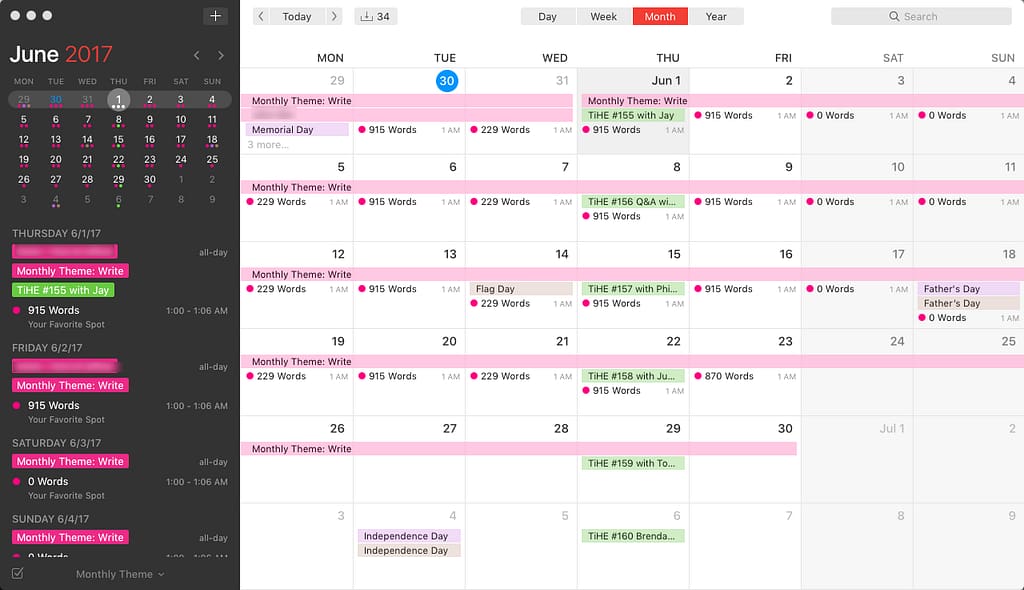
Since we had missed two days of child care during a week that was supposed to be fairly writing-intensive for me (it was Spring break at our institution), I was behind on my writing project. Thanks to a new tool I had found called Pacemaker, I was able to regroup this week and modify my writing plan to accommodate those missed days.

As you read this post, you can see where I am in meeting my writing goals.

It's a flexible tool, which I've grown to appreciate. I have experienced so many regular reminders of just how many unexpected events can occur in our lives, after we have made the best laid plans. I have Pacemaker configured to avoid having me write on the weekend, to write more words on my non-teaching days, and to keep up a steady pace until I achieve my final word count destination in the summer.

Another tracker I've been enjoying is the Productive app, which I recommended on episode #139 with Stephanie Lancaster. I still only have one habit that I'm tracking: stretching. But, the daily reminder to take some time to stretch has been incredibly helpful in managing my stress levels.

Updates

One positive thing that happened during the last couple of weeks is that my new role was announced at my institution. I'll be serving as our Director of Teaching Excellence and Digital Pedagogy, another topic I share more about on episode #145. It felt good to have concluded the process of recommending the modified role (the job description for the position did not initially have a focus on teaching excellence, but I made a case for coupling that function with the emphasis on technology), being interviewed by a search committee, and negotiating some aspects of the position.

I'm also looking forward to celebrating 150 episodes of the Teaching in Higher Ed podcast in April. Please consider being a part of episode #150, which will be made up entirely of recommendations from the Teaching in Higher Ed community.

  • You can leave a message via this webpage from your computer, or record your own audio recording and send it to me. Your message might sound something like, “Congratulations on 150 episodes, Bonni. I'm recommending ___ today, which I think will help people ______.”

If you've been listening to the show for a while, now, you'll know that these recommendations can be anything. Books, music, movies, slow cookers, technology, or even just a general recommendation about life.

Final Thoughts

As I reflect on this stressful season, two final thoughts come to mind.

First, when things inevitably go wrong, we can decide to fix them, or decide that it just isn't worth it to invest the time. I discovered that last week's email newsletter went out with a boatload of broken links. I was going to resend the email, but didn't want to fill people's inboxes with an additional email.

  • Please consider taking another look at last week's post: Podcast greats for 2017 (this time, with working links)

Finally, when things inevitably go wrong, we can decide to make the best of it. In the case of our kids' care giver calling in sick, I decided that it must be a sign that we were supposed to head to LEGOLAND that day. Instead of spending my entire Spring break trying to play catch up, “life” decided that we were going to get some unplanned adventures out of the whole deal. As you can hopefully tell, we all enjoyed this change of plans.

LEGOLAND visit with kids
Hopefully you can tell from this picture that the kids thought this was a good idea, as well.


Filed Under: Productivity

  • « Go to Previous Page
  • Page 1
  • Interim pages omitted …
  • Page 28
  • Page 29
  • Page 30
  • Page 31
  • Page 32
  • Interim pages omitted …
  • Page 69
  • Go to Next Page »

TOOLS

  • Blog
  • Podcast
  • Community
  • Weekly Update

RESOURCES

  • Recommendations
  • EdTech Essentials Guide
  • The Productive Online Professor
  • How to Listen to Podcasts

Subscribe to Podcast

Apple PodcastsSpotifyAndroidby EmailRSSMore Subscribe Options

ABOUT

  • Bonni Stachowiak
  • Speaking + Workshops
  • Podcast FAQs
  • Media Kit
  • Lilly Conferences Partnership

CONTACT

  • Get in Touch
  • Support the Podcast
  • Sponsorship
  • Privacy Policy

CONNECT

  • LinkedIn
  • Instagram
  • RSS

CC BY-NC-SA 4.0 Teaching in Higher Ed | Designed by Anchored Design