
• Skip to primary navigation
  • Skip to main content
  • Skip to footer

Teaching in Higher Ed

  • Podcast
  • Blog
  • SPEAKING
  • Media
  • Recommendations
  • About
  • Contact

How to Increase Our Digital Literacy Literacy

By Bonni Stachowiak | February 7, 2017 | | XFacebookLinkedInEmail

As I begin to compose this blog post, my browser has more tabs open than I think I've ever had open at one time before. I've bookmarked 30+ articles about digital literacy the past couple of years, with each post linking to a plethora of additional resources on the subject. My goal in this post is to increase our literacy about the topic of digital literacy.

My Quest

I want to write a post about digital literacy, as a means of recapping my conversation with Mike Caulfield that was published last week.

The Trouble

It is so challenging to even just begin by defining digital literacy, let alone to begin to discuss some of the criticisms of the more popular publications on the topic.

My Compromise

Instead of trying to give readers a thorough exploration of the topic (Mike Caulfield admitted on Twitter that his Digital Literacies: Which One? post was initially intended to be just a few hundred words, but before he knew it, quickly grew into thousands), I'm going to introduce a few places to get started with the subject.

Digital Literacy: A Definition

JISC defines digital literacy as:

Digital literacies are those capabilities which fit an individual for living, learning and working in a digital society.”

They go on to explain:

Digital literacy looks beyond functional IT skills to describe a richer set of digital behaviours, practices and identities. What it means to be digitally literate changes over time and across contexts, so digital literacies are essentially a set of academic and professional situated practices supported by diverse and changing technologies. This definition quoted above can be used as a starting point to explore what key digital literacies are in a particular context eg university, college, service, department, subject area or professional environment.”

Lest I leave you assuming that this is the agreed-upon definition for digital literacy, there are as many definitions as there seem to be publications on the subject. Belshaw cautions us about the ambiguity that emerges, when we refer to digital literacy.

Belshaw's TEDx talk on the essential elements of digital literacy provides a wonderful overview:

Essential Frameworks

There are a few frameworks that are critical to understanding the ways in which we might think about digital literacy. Some of these frameworks focus on domains, while others are more tool/skill-oriented.

  • Developing Digital Literacies from JISC
  • Digital Literacy: An NMC Horizon Project Strategic Brief (though also reading this critique of the brief is helpful)
  • ALL ABOARD: Digital Skills in Higher Education
  • The Essential Elements of Digital Literacies
  • Framework for Information Literacy for Higher Education from ACRL

While not specific to solely digital literacy, I do think Mozilla's web literacy map is worth exploring, as well.

Domain-Specific Sites

As Mike Caulfield asserted, a big part of increasing our digital literacy is improving our knowledge within the specific domain being evaluated. Here are just a few resources to help with that endeavor:

  • Politifact
  • SciCheck
  • Quote Investigator
  • Snopes

Next Steps

There are two specific ways I plan on taking action on what I have been learning about digital literacy. I plan on sharing the ALL ABOARD digital skills framework with the faculty development committee I chair, as a means of brainstorming on possible breakouts for our annual Fall faculty gathering. I also hope to introduce students to some relevant domain-specific sites that could support them in increasing their own digital literacy. Like Mike Caulfield, I also hope that these types of sites continue to grow.

What steps are you taking in developing your own or someone else's digital literacy?
Filed Under: Resources

2 Persistent Myths About Teaching and Learning

By Bonni Stachowiak | February 1, 2017 | | XFacebookLinkedInEmail

I just finished listening to a Teaching in Higher Ed podcast episode with Mike Caulfield on digital literacy that will air on Thursday, February 2.

Not to give too much away, but at the end of the conversation, we chat about the tooth fairy, and other childhood myths. I joke about how I have tended to stay away from controversial topics on the podcast, but that I couldn't resist sharing that my husband and I don't plan on telling our children that there is such a thing as the tooth fairy.

Since I have started down the path of breaking out of my “safe” topics pattern here on Teaching on Higher Ed, I thought I would share two myths about learning that are almost always cause for concern by people who have subscribed to them throughout their career as educators.

We all have one primary learning style that needs to be accommodated for in our learning

I bought into this myth for at least the first ten years of my corporate training career. Now, I'm confident that believing in this myth actually makes our teaching worse.

  • All You Need to Know About the ‘Learning Styles’ Myth, in Two Minutes
  • Letting Go of Learning Styles
  • Stop propagating the learning styles myth
  • One Reason the ‘Learning Styles’ Myth Persists
  • The Myth of Learning Styles

One take-away from the research that debunks this myth is to have multiple approaches for helping learners comprehend what you're trying to teach, instead of gearing the students' experiences toward their preferred learning experience. Consider ways of making your teaching visual, auditory, and kinesthetic, using more than one approach at a time.

I once posted about the learning styles myth on my personal Facebook page, having no idea the topic is as controversial as it seems to be… Please refrain from thinking that showing this myth for what it is (unsubstantiated) does not mean that people don't have learning disabilities. That's an entirely different domain. Yes, dyslexia exists, for example… and there are ways in which we, as educators, should be accommodating for that disability.

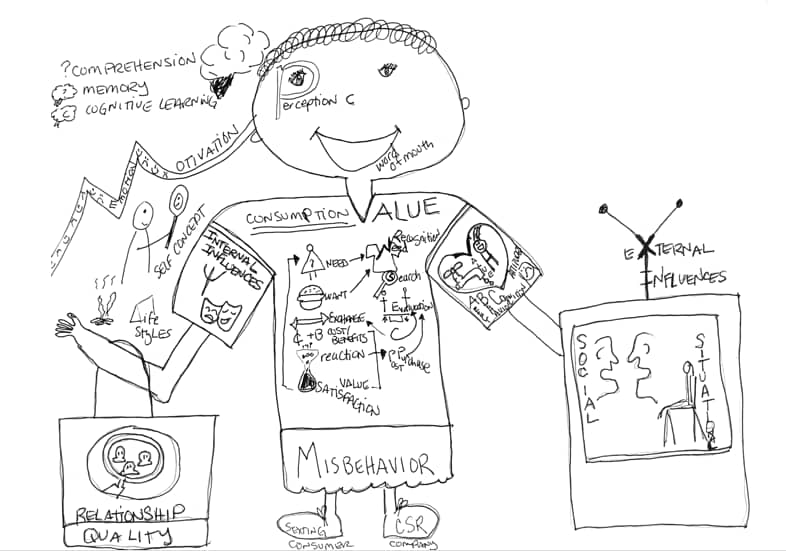
If we have learners “practice by doing,” they will retain 75% of what they're “taught”

This learning pyramid has also been propagated across multiple educational contexts. It is meant to encourage us to move up as high as we can on the pyramid, lest we leave people only remembering 5% of what we said. This is not to say that there isn't ample research to illustrate the effectiveness of active learning pedagogical approaches, but doesn't the “tidiness” of these numbers make you a bit suspicious?
  • Tales of the Undead…Learning Theories: The Learning Pyramid
  • Why the ‘learning pyramid’ is wrong
  • The diffusion of the learning pyramid myths in academia: an exploratory study
  • Five common but inexcusable learning myths about how we learn

Active learning can help motivate students and help them retain more information. However, the process of learning (and teaching) is far more complex than a diagram like this could ever convey.

Your Turn

What teaching and learning myths have you observed that have persisted for too long now?

Filed Under: Teaching

How to Create a Pencast

By Bonni Stachowiak | January 24, 2017 | | XFacebookLinkedInEmail

Pencast

I've found pencasting to be a tool that is aligned with my pedagogy and valued by my students. Many of you have asked for me to share about my process, so I've created a How to Pencast video.

How to Pencast Video

In the pencasting video, I describe:

  • What pencasting is
  • Why it is vital to my teaching and instructional design
  • Essential tools for pencasting
  • My pencasting toolkit
  • How I record and publish pencasts

Additional Resources for Pencasting

  • Apple Pencil
  • iPad Pro
  • Doceri
  • Mike Wesch's The Sleeper
  • LiveScribe (product I used for years, prior to switching to a tablet-based method)
  • The Sketchnote Handbook, by Mike Rohde
  • The Back of the Napkin, by Dan Roam


Filed Under: Educational Technology

Lessons in Curation from Maria Popova of Brain Pickings

By Bonni Stachowiak | January 10, 2017 | | XFacebookLinkedInEmail

This post is written to my #edd703 doctoral students, though the contents apply to all of us who are practicing what Karl Weick coined as sense-making… 

Maria Popova. Photograph by Elizabeth Lippman for The New York Times

We're starting to get further down the path of establishing a personal knowledge management system (PKM) for ourselves. One part that often gets struggled with the most is the sense-making piece.

I find people often want to spend much more time using Baskin Robbin's taster spoon style approaches to try to find another app that they can add to their PKM mix, or even decide to do away with one of the pieces of PKM, completely.

As Peter Senge and others explain:

Weick likened the process of sensemaking to cartography. What we map depends on where we look, what factors we choose to focus on, and what aspects of the terrain we decide to represent. Since these choices will shape the kind of map we produce, there is no perfect map of a terrain. Therefore, making sense is more than an act of analysis; it’s an act of creativity.”

Previously, I proposed that one way we can rid ourselves of the anxiety around sharing is to think of ourselves as curators. Today, I want to introduce you to a person who prefers not to think of herself as a curator, but whose life's work would fit well with what we have been talking about, in terms of PKM.

Maria Popova started her blog as an experimental email sent to seven of her coworkers. She eventually moved her content online and started Brain Pickings. Popova says that her blog:

…is a cross-disciplinary LEGO treasure chest, full of pieces spanning art, science, psychology, design, philosophy, history, politics, anthropology, and more; pieces that enrich our mental pool of resources and empower combinatorial ideas that are stronger, smarter, richer, deeper and more impactful. Above all, it’s about how these different disciplines illuminate one another to glean some insight, directly or indirectly, into that grand question of how to live, and how to live well.”

Popova is held up as one who is massively “productive,” in terms of the amount of information she consumes, makes sense of, and then shares on a daily basis.

In an interview with Krista Tippet for On Being, she was asked about the ways in which her work has been quantified by others.

Tippet inquires as to whether or not the rumors are true that Popova invests 450 hours on a monthly basis in her work. She also asks if Popova truly reads 15 books on a weekly basis, or writes between three and eight hours a day. Popova responds:

I think it’s actually a gross underestimate. I read and write from the minute I wake up to the moment I go to sleep at night and everything in between. Even those — I get around on bikes, so I commute. And whatever I listen to, that feeds in. That’s part of the reading. And so I would say the hours are probably a lot more.” [laughs]

It's tempting to get caught up in the numbers. I read 23 books in 2016, which felt like it required tremendous effort on my part. It's hard to fathom reading 15 books per week, even if it was what “paid the bills.”

It would be easy to glance at Popova's story and move on, since clearly we could never be her, in terms of her productivity. That's why what Popova says next in the On Being interview is so paramount:

…I want to say something important about that. Even if it’s factually true, I think the framing is a little bit misleading because it’s framed as a sort of productivity thing. Look at how much some random person in the world gets done, you know? And for me, it feels very purposeful. And I think what’s funny is that I used to marvel for a long time why my best ideas — and I don’t mean — by ideas, I don’t mean the ideas that — about what to write or all of that, but just insights on the truths of my experience, of the human experience, whatever.

Those ideas, the best of them came to me at the gym or on my bike or in the shower. And I used to have these elaborate theories that maybe there was something about the movement of the body and the water that magically sparked a deeper consciousness. But I’ve really come to realize the obvious thing, which is that these are simply the most unburdened spaces in my life, the moments in which I have the greatest uninterrupted intimacy with my own mind, with my own experience. And there’s nothing magical, at least not in the mystical sense, about that. It’s just a kind of ordinary magic that’s available to each of us just by default if only we made that deliberate choice to make room for it and to invite it in.”

Those of us who are more achievement-oriented can easily turn PKM into a numbers game. When we look to people like Dave Pell or Maria Popova, it's easy to tell ourselves that we won't ever be able to produce that much content, so this whole process must not be for us.

When I'm able to back away at the quantitative aspects of my own engagement online, there's a rich story being told about the opportunities I have had to be invited in to the human experience. As you continue to refine your own PKM systems, I encourage you to think about doing far less, but to make a “deliberate choice to make room for” the gifts that curiosity and reflection can bring.

I hope you'll carve out some time this week to listen to this conversation between Maria Popova and Krista Tippet for On Being. There's so much more than what I've posted here, in terms of “[Popova's] gleanings on what it means to lead a good life — intellectually, creatively, and spiritually.”

Ultimately, I pray you'll “build pockets of stillness” into your days this week, even if it seems impossible.

Filed Under: Personal knowledge mastery

Determining Who We Are in Digital Spaces

By Bonni Stachowiak | January 2, 2017 | | XFacebookLinkedInEmail

personal branding

The Question

I received this question from one of my doctoral students:

I really have no idea how to create a “brand” or how to create my blog to reflect who I am.  Do you have any suggestions on how to figure out who I am, in the land of technology?”

Her question was so powerful that I wanted to share my thoughts to a broader community and invite others to provide suggestions to her, as well. In my reply to her, I'll consider:

  • What is a personal brand and is that the “right way” to talk about our online presence?
  • How do our blogs and other social media help to reflect who we are?
  • How do we figure out who we are, when we're online?

My Response

Let me start by saying how glad I am that you're asking these questions. Part of what has gone wrong with social media in certain contexts is that others haven't pondered in this way, before engaging online. Those of us who are more present online rarely stop asking these questions. Recent examples of these kinds of reflections include:

  • My friend and his husband just adopted a beautiful baby girl. They are reflecting on how much they want to share about her online and in what context.
  • A friend from college just announced that after the worst year of her life, that she and her husband were now separated, as of New Year's eve. She shared that she usually prefers to keep all her posts on Facebook positive, but she knew people would want to be aware of this change in her life.
  • Many educators pondered how to return to the classroom, after the results of the Presidential election had been announced.

Personal Branding

The first time I remember having someone attempt to convince me that I was needed the same thing that my breakfast cereal did, was in a keynote talk given by Tom Peters in the early 90s. Cheerios needed help being identified and valued in the minds of consumers. And I needed help being identified and valued in the minds of current and future employers.

Tom Peters asserted:

Starting today you are a brand.

You're every bit as much a brand as Nike, Coke, Pepsi, or the Body Shop. To start thinking like your own favorite brand manager, ask yourself the same question the brand managers at Nike, Coke, Pepsi, or the Body Shop ask themselves: What is it that my product or service does that makes it different? Give yourself the traditional 15-words-or-less contest challenge. Take the time to write down your answer. And then take the time to read it. Several times.”

I was intrigued, but also wasn't sure that I wanted to be some big corporate brand. Peters also wrote about more of us being freelancers, and at that time, that idea scared the heck out of me. The idea of an A-Z guide for my personal brand seemed too inauthentic for whatever it was I might attempt to do online. Yet, I didn't want to leave the results of what happened whenever someone inevitably Googled me in the hands of others.

Blogging and Social Media as Reflections of “Us”

Finding a voice online is difficult in the same way that figuring out who we are and who we are becoming when we're in-person is hard. We can certainly opt to hide all sorts of things about ourselves when we're online, but we can do that when we're face-to-face, as well. Greg McKeown warns us that thinking of ourselves as a multitude of skills is dangerous and that rather, we should consider our one main distinctive that we want others to perceive about us.

For me, that answer took a long time to come by, but I'm a teacher. That's what I do. That's what I'm good at. That's what I think about, constantly. When I blog or participate in social media, my primary focus is going to be on teaching. These days, I often get to be a teacher of other teachers, which brings me great joy.

In one of my doctoral classes, our professor recommended that we think about who our “stick figure is…” That is, who is it that you serve? Who is your audience of one? Rather than thinking about a broad, target market, he proposed that we find one person who we can always consider ourselves “talking to” when we blog, or give voice to our thoughts in other ways.

Adding Value Online

Once we have started thinking about the primary way we might be able to serve others and who one of the people we provide value for might be, we then can think about how to express some of that online. It can be intimidating to do this for a whole host of reasons, including that it's hard to be authentic, because it requires such vulnerability.

  • What if I don't have anything to offer?
  • What if I'm wrong about something?
  • What if I wind up changing my mind about something, but now my old thoughts are still out there?
  • What if I wind up being bullied or trolled online, the way so many others have in the past?

One way to get started is to think less about creating original content and instead provide value by seeking out others' content, making sense of it, and then sharing it.

Become a Curator

The most extreme example of being an expert curator is Dave Pell. He makes his whole living reading the news and then synthesizing it for those of us who don't have time to read 75 news sites a day. While I suspect you won't have time to go to that kind of extreme, as you consider your primary distinctive, hopefully you're regularly consuming news, resources, and other information in that area.

Here's a less-extreme examples of curation around a personal brand. Mike Taylor is an expert in the training and development field who I've been following for years now. Mike's LinkedIn profile is reflective of someone who has done the work to articulate and refine the way others come to know him. In his own words, he is:

Exploring the intersection of learning, technology & social media”

As 2016 ended, Mike created a series of curated posts, all around the theme of 12×12. 12 posts that each contained 12 items. Here were a few that caught my eye:

  • My favorite learning quotes
  • Day 3 – books
  • 12 super useful job aids and cheatsheets

Next Steps

None of what I've described above is easy. This journey is best taken in small steps and with the realization that you'll never be done. I wish you the best as you start down the path and hope others will share their advice with you, as well.

Filed Under: Personal knowledge mastery

  • « Go to Previous Page
  • Page 1
  • Interim pages omitted …
  • Page 31
  • Page 32
  • Page 33
  • Page 34
  • Page 35
  • Interim pages omitted …
  • Page 70
  • Go to Next Page »

TOOLS

  • Blog
  • Podcast
  • Community
  • Weekly Update

RESOURCES

  • Recommendations
  • EdTech Essentials Guide
  • The Productive Online Professor
  • How to Listen to Podcasts

Subscribe to Podcast

Apple PodcastsSpotifyAndroidby EmailRSSMore Subscribe Options

ABOUT

  • Bonni Stachowiak
  • Speaking + Workshops
  • Podcast FAQs
  • Media Kit
  • Lilly Conferences Partnership

CONTACT

  • Get in Touch
  • Support the Podcast
  • Sponsorship
  • Privacy Policy

CONNECT

  • LinkedIn
  • Instagram
  • RSS

CC BY-NC-SA 4.0 Teaching in Higher Ed | Designed by Anchored Design