Follow the Teaching in Higher Ed Podcast
About this Episode
Katie Linder shares about blended course design on episode 113 of Teaching in Higher Ed.
Blended learning is not just a trend, and we’re starting to see technology integrated in really intentional ways.
Katie Linder
On episode 113 of Teaching in Higher Ed
Voices on this Episode


Show Notes + Resources
Blended Course Design Resources:
- Book site: The blended course design workbook website
- Order the book: The blended course design workbook (discount code = BCD20)
- Book handouts: The blended course design workbook handouts
- Handout: Aligned Blended Course Mapping
- Handout: Weekly Course Design Task List
- Handout: Choosing LMS Tools Checklist
- Handout: Template for Mapping Content and Documents
Other Resources:
- How to Design and Teach a Hybrid Course* by Jay Caulfield
- Michael Sandel’s Justice course
- Goosechase for scavenger hunts
- Journal Keeping* by Dannelle D. Stevens and Joanne E. Cooper
Checklists
Recommendations from this Episode
Transcript
Bonni: [00:00:00] Today on episode 113 of Teaching in Higher Ed, Dr. Katie Linder talks about blended course design.
Production Credit: [00:00:11] Produced by Innovate Learning, maximizing human potential.
Bonni: [00:00:21] Welcome to this episode of teaching in higher ed. This is the space where we explore the art and science of being more effective at facilitating learning. We also share ways to increase our personal productivity approaches so we can have more peace in our lives and be even more present for our students.
Bonni: [00:00:49] Dr. Katherine Linder (who goes by Katie) is the research director for the Oregon State University’s e campus research unit. She earned her bachelor’s in English literature and creative writing from Wentworth University and her master’s and Ph.D. in women’s studies from the Ohio State University. And I’m so excited to be talking to her about all the work that she’s been doing around blended learning and all the resources that we have available to us to learn from her. Katie, welcome to Teaching in Higher Ed.
Katie: [00:01:23] Bonni – thanks so much for having me on the show.
Bonni: [00:01:25] You are one of the few guests who I have actually met in person.
Katie: [00:01:30] Yeah it was so I was so excited to run into you at a conference because we’re both podcasters and you’ve been doing it for a lot longer than me. So I learned from the master and I love it.
Bonni: [00:01:41] Well I was so happy to have your podcast come out because it is a topic that gets mentioned a lot as suggestions for my show and I was kind of I think it’s really important when we have some vehicle to express ourselves that it should be something we’re really really passionate about. And I don’t wake up and get out of bed just thinking maybe if I could just do some research. It’s just never been me.
Bonni: [00:02:07] And yet I listen to your show every single week when it comes out. I completely love it and I’m finding that it may be something I have more interest in than I realized but just don’t have the confidence for it yet. So I love all the guests you bring on you make research in so many different areas just so accessible and then every show has some way I could go find out more information so I’m so glad that you’re doing it. And even though I’ve never asked for your permission I’d like to think of you as my sister podcasts.
Katie: [00:02:38] Absolutely. Well I think that you know the show it’s called Research in Action it’s on iTunes if anyone wants to check it out. It has a real goal of research literacy. And I there’s a lot of stuff we talk about on that show that I’m hearing about for like the first time and I’m qualitatively trained and we talk about a lot of quantitative stuff that I don’t fully understand. But like you’re saying I think a lot of us don’t necessarily feel as confident as we should about research. And so anyway we’re building a community over there of researchers and people who are interested in research and it’s a lot of fun.
Bonni: [00:03:11] I’ve had an idea about wanting to do some research around teaching and learning and in fact had in my task list for the summer and my goals was to work with them in writing a proposal for my IRP and getting that taken care of to kick something off in the fall and I’ll tell you I just got stuck.
Bonni: [00:03:28] And then one of your most recent guests talked about and you’ll have to maybe remember her name and institution because I. And I’ll I’ll put a link to it in the show notes but she talked about hey we’re doing this and we have a research tool kit for people that are doing research in blended and online both together.
Katie: [00:03:45] I know exactly you’re talking about it’s Tanya Joosten and she has she’s a co-director of the National Research Center for distance education and technological advancement and part of their work has been developing a toolkit and it’s great. It talks about survey design it talks about random control trial design.
Katie: [00:04:04] And I think those are kind of two of the harder things for folks to think about in a lot of detail. But the other person who is coming up that might be of interest to you is Peter Felten and he’s talking about scholarships of teaching and learning and he will be posting sometime in August I believe. He does a lot of work on how you can collaborate with students with research on teaching and learning which I find really fascinating. So that’s a great episode that is coming up too.
Bonni: [00:04:26] I can’t wait. I can’t wait. I’m so excited to see him pop into my part Katzfey. Thank you for all the work that you’re doing on that podcast. I know that today we are here to talk about something else that is really exciting to have coming out through all of the work you’re doing and that is on your forthcoming book Blended course design workbook A Practical Guide.
Bonni: [00:04:47] And before we start talking about the books specifically and what a wonderful resource it’s going to be for us. Tell me how did you first become interested in Blended Learning before you even knew you wanted to write a book about it.
Katie: [00:04:59] So you know I think kind of a funny thing about how the book began is that I actually really wasn’t interested in Blended Learning. I think I had the perspective that a lot of faculty may have which is maybe I can wait this trend out and not really focus on it. Yeah.
Katie: [00:05:13] And at the time that this kind of fell in my lap I was directing a center for teaching and learning at Suffolk University in Boston and we had a new president and he brought with him what he called a hybrid initiative and hybrid is just you know another word for that and he kind of said to me OK I’m bringing him this initiative. We want to do 20 percent of our undergraduate courses to be hybrid in the next couple of years and I want you to train the faculty about how to do that.
Bonni: [00:05:41] What was your impression at the time of what did that mean I mean because you said that that is a term that maybe didn’t sit with write what was the impression you had at the time.
Katie: [00:05:51] I think the impression was just it was a lot to do with technology and and also just a concern that I had that it was kind of trendy. And there were I mean as we all know there have been a lot of things recently involving technology trends for teaching and learning. Massive Open Online Courses are a really good example of that and it can be kind of hard to tell what’s the stuff that’s going to stick around and what’s the stuff that as kind of a professional and someone who wants to be a good teacher what are the things that I really need to learn about.
Katie: [00:06:20] And in some ways it’s kind of like the difference between a longstanding social media platform and one that is just starting up you know like To what degree do we need to invest in learning about Twitter versus snapchat. I mean we it’s hard to tell. How did you get to stick around.
Bonni: [00:06:35] How did you know what was those two. No joke. Those two were exactly in my head before you even said those words that’s hysterical.
Katie: [00:06:43] Well and I think you know who knows maybe snapchat is going to be around 100 years from now but I’m waiting it out a little bit. And you know I think so when it when it came to this request the president talked to me and we had a longstanding faculty development program called of course design institute and it was a multi-day program and we worked with faculty to backward design their courses.
Katie: [00:07:04] And so what we decided to do was to create a version of that for hybrid courses for blended courses and we wanted to simulate a hybrid environment. What would it be like. And so we had face to face meetings and then in-between those meetings we had online things for the faculty to do. And through those activities they created there. Their courses that were in a hybrid environment and we wanted to give them a sense of just what the students experience when they go through this.
Katie: [00:07:31] And as we were designing that program we started to look around for books. That was one of the ways that we incentivized faculty to attend was to buy them a book and you know we ended up finding a book and it was Caulfield’s how to design and teach a hybrid course which is a great book and I really like it a lot but I also just wasn’t really finding a practical kind of hands on text.
Katie: [00:07:53] And we ended up creating a ton of handouts and a ton of you know kind of activity based really interactive things for the faculty who went through this program and I thought you know let’s make this into a book because other people are going to have to do this. Other faculty developers are going to have to create this programming. And why should they have to recreate the wheel when we’ve already done this.
Katie: [00:08:15] And it’s based in research and we spent a ton of time you know putting together these activities and so that was really how the book came to be. And you’ll see that several of the chapters I have there is co-authors with and a couple of them are people that I designed that initial program with and that I worked with when I was at Suffolk University so it was you know something where it wasn’t what I expected to do for my second book but I’m so glad it happens because I think that blended is not just a trend. And we’re starting to see technology being integrated in really intentional ways that are helping our students learn.
Bonni: [00:08:50] If I’m thinking about getting into blended learning or if I already am in it and I want to assess how I’m doing. What are some of the fundamentals of blended to teaching and learning.
Katie: [00:09:02] I think that one of the key things and it’s actually maybe one of the harder things for people to think about is alignment between what you’re doing outside of the classroom and what you’re doing inside of the classroom.
Katie: [00:09:13] And it’s really typical I think for new teachers of blended to kind of pick the different activities and assign them and say I’m going to do science for homework and I’m going to have you know this happening in class but they’re not making direct connections between those things and so students will come into the classroom having done the activities you know over their homework.
Katie: [00:09:34] And there’s just no discussion of them. There’s no connection between kind of those active learning moments in class and stuff that happened online. And I think that that is a really fundamental thing about blended is that you have to be thinking about the relationships between those things and helping students to draw the connections between what they’re doing on their own and what they’re doing when they’re in the classroom with you.
Bonni: [00:09:56] What would be an example of because I’m chuckling. Begging. Guilty as charged. Not. Not as bad today because I’ve been doing blended learning for quite some time. Hopefully I’ve learned something about it. But certainly in my early early days doing it I completely did what you just described.
Bonni: [00:10:11] So give me some examples for how if this is a challenge for me now still how do I create more seams together between what’s been done outside and maybe if you have an example of a course that that you either taught or your family or someone else helping them design.
Katie: [00:10:28] One way to think about it is whatever you’re having students do online some kind of something is being collected there. So if you’re having them do a discussion board they’re writing posts on a discussion board and there’s there’s like an artifact of their learning or if you’re having them take a quiz or you’re having them do a survey or you know any kind of group activity where they’re kind of completing an actual task.
Katie: [00:10:51] Something is coming out of that. And one of the things that I recommend is to somehow tie that artifact in to what you do in the face to face classroom. So for example you might say when students come and meet with you face to face you know I saw that there was a lot of confusion last night on the discussion board around this particular topic.
Katie: [00:11:10] So I want to spend a few minutes talking about that and it helps students to know first of all that you’re paying attention to what they’re doing online and that it’s not like they’re just doing a bunch of stuff and it’s busywork and it’s not being upgraded but it also helps you to kind of clarify anything that needs to be clarified and to make that connection a little more concrete for them that what they’re doing outside of the classroom is impacting what’s going to happen inside the classroom. And it sounds like a really simple thing and it kind of is but it needs to be done intentionally.
Bonni: [00:11:43] One of the things that I’ve had so much fun doing is grabbing even just whatever method I’ve used for a particular course of having students introduce themselves is to either grab a screen shot of something that really stood out to me about someone’s introduction because they do know this is a public forum that everyone in the class has seen.
Bonni: [00:12:01] But then to just bring it into the classroom I think it especially when we’re early in the class creating that culture of I care about what you have to say you have a voice and your voice is really important to me and as you’ve said there isn’t just this. Sometimes the word gets used by students of this to this busywork. Oh no this is meaningful significant work that we’re doing.
Bonni: [00:12:23] And one of the things that really impresses me about the book that you’ve put together is to help us think a little bit more about the types of things that we’re doing and you sort of alluded to that earlier. And there’s a wonderful resource that I’ll be linking to in the show notes along with information about the book in general is this template for aligned blended of course mapping.
Bonni: [00:12:45] And this is some of the things that any of these things that we’re about to talk about could be done face to face and they could be done online. And there are ones that when people go to look at this resource they’ll see ones that I think of we could only hope will sound very much in common to people we have a goal for that week or that topic. We have objectives for that week or that topic.
Bonni: [00:13:07] We have some kind of an assessment is it a quiz is it the papers it’s something like that. And so those things will seem familiar but there were four that I think will really help us stretch our thinking about the kinds of things we can have people do online or the kinds of things we can help people do face to face. And I’m going to go through the four and then just would love to hear you share a little bit about what that means and then maybe an example so let’s start with direct instruction learning activities.
Katie: [00:13:36] Yes so direct instruction are activities where you are. And one of the things I guess I should say about the book is we differentiate between pedagogy and andragogy in that book. andragogy is a term that we use really broadly and we don’t necessarily always think about the fact that it’s actually associated with teaching children whereas andragogy is a kind of similar word but it’s about teaching adults.
Katie: [00:14:03] And so one of the things that you could think about with direct instruction is direct instruction is actually something that’s relatively common in a lot of us still do it when we’re teaching children we give them very specific things to do. We give them directions we might give them worksheets handouts things that we want them to be completing that we’re really actively engaged in telling them what to do and not giving them a lot of choice.
Katie: [00:14:27] And this is actually something that can be really effective to do especially with first year students who are just transitioning into college and may not feel confident about their ability to learn in ways that that are going to be effective for them. So direct instruction might be things like giving students lectures or giving students direct content delivery mechanisms through videos or in-class lectures or something like that.
Bonni: [00:14:51] One of the things I have found helpful in coaching and mentoring other faculty is to help them distinguish that face to face direct instruction learning activities look vastly different than the online. If we think about the context with which we all work on a computer distractions are going to be higher. Our attention spans are going to be lower and it cracks me up because sometimes they’ll think Oh I could just fill my 50 minute lecture I’ve been given that 50 minute lecture for decades now and it’s brilliant.
Bonni: [00:15:22] I have the dust on my notes to prove it. And that’s going to work wonderfully online and we know that’s not going to work wonderfully on Mahim. It’s not going to have even if they’re just this brilliant best lecture I think often about one of the best lectures that I’ve ever been able to witness I only witnessed him online ironically is the guy Michael Sandel and he teaches one of Harvard’s most popular courses and it’s called Justice.
Bonni: [00:15:48] And I’ll put a link in the show notes to the justice. I mean it’s a magnificent Web site but you watch it and they make it look so easy because the videos are generally 30 minutes which is really long for an online video. And and so you think well gosh if he can do it can’t I do it too because he’s wonderful he teaches with the Socratic Method. He’s got this room just filled every seat filled in this room and it seems like he’s just having one on one conversations with them and then come to find out.
Bonni: [00:16:19] I think that the class is actually a three hour class if my memory is serving right that they then whittle down and edit down to 30 minutes and there’s this whole production team behind the scenes that’s making sure that the camera angle was perfect on that person who just seemed to just naturally ask the question. And that kind of work most of us don’t have the time to redo what was in a classroom experience and make it thrive and be engaging online.
Bonni: [00:16:47] So that’s just something for people to be thinking about. I find it much more effective to design with online delivery in mind if that’s what it is that I am trying to do I save a lot more time than if I tried to record a lecture and then edited the way.
Katie: [00:17:00] Absolutely. I’m so glad you brought that up and there’s actually a chapter in the book that is specifically about creating multimedia for your course and I talk about videos and I talk about podcasts as being two options for that. But the other thing too that I think people maybe don’t always think about is that you can find resources that are already out there and maybe not have to create your own videos. It’s possible that there are other kinds of direct instruction where interactive activities that might already be existing and there’s a chapter on that as well. How do you find those things.
Bonni: [00:17:30] Fabulous. I can’t wait to get my hands on as we are recording that I cannot get my hands on. I’ve seen the table of contents which people listening can as well and I’ve seen the handouts and it’s just phenomenal. Next up we have guided inquiry learning activities.
Katie: [00:17:45] Yes so this is something where you kind of add in a layer of I mean you still might be given instructions to your students but you’re really letting them have a little bit more autonomy and independence and guided inquiry is definitely more associated with more and more logical methods.
Katie: [00:18:00] And so even if you were to say to your students I’m going to give you an activity to do and I’m going to lay out some guidelines for it but I’m also going to give you quite a bit of freedom and that we see these kinds of activities where maybe you assign a paper to your students and you give specific criteria for what needs to be in it but they get to choose the topic.
Katie: [00:18:17] So you’ve given a little bit of guidance to them but you’re also letting them kind of go and do that inquiry on their own and this is a pretty common thing to happen in blended classrooms because everything that gets done for homework for students is typically guided inquiry. I mean you’re asking them to kind of go out and follow some instructions that you’ve given but then they also have the freedom to kind of explore and learn in ways that are going to be most effective for them including choosing when they learn and how they learn and how many times they might watch a particular video or that kind of thing.
Bonni: [00:18:49] Can you give us an example of guided inquiry at work or should I say play let me think about that.
Katie: [00:18:58] I mean I think you know a good example might be. And actually there’s an example of this in the book. So one of the things that we talk about in a chapter for open educational resources which is resources that you can find for free online to including your course as we get a scavenger hunt.
Katie: [00:19:12] And so we say go out and find you know certain kinds of things like go find a TED talk or go find a podcast episode or go find an assessment that you think might fit your class but it’s really about you going out and finding something that fits what your objectives are for helping your students learn.
Katie: [00:19:29] And so everyone is going to go out and look for those things in a really different way and they may also make choices about their classroom. That would also heavily impact the kinds of objects that they might choose in response to that scavenger hunt.
Katie: [00:19:42] So it’s one of those activities where you have a lot of freedom to go out and kind of look in the places that are really going to that you’re drawn to. So maybe you love podcasts and you’re going to kind of focus on that or maybe you love videos or maybe you want to look at interactive activities like quizzes and so I think those kinds of activities where there is some structure and you’re trying to give students a structure to really think about how to piece together the kinds of information that you’re giving them and the kinds of content that they need to learn. But they also have that freedom and autonomy to do it in a way that works best for them.
Bonni: [00:20:16] I’m so excited that you mentioned the scavenger hunt. I’d love to share about something we’re doing at our institution. I am the chair of our faculty development committee I should say at least I was this past year.
Bonni: [00:20:28] We always elect new chairs at the start but the first kickoff event we have is called Our faculty gathering and it’s one of those interesting sort of political things. And I use political here in a positive way being the chair because over the summer time a lot of things come up from staff that they would like to share with faculty remind them about this remind them about this and a lot of it’s coming from wonderful services that our students can take advantage of that are just important to make our faculty aware of.
Bonni: [00:20:56] And then things from even campus safety and the important things we need to be aware of of keeping our students safe and oh gosh there’s just so much there and what typically happen in past years is of course people asked to give a presentation at that event. This faculty gathering and then it’s another presentation and another one and they just keep layering and layering in what do you have then is two days of lecture and you have two days of lecture of some people who have worked there for 30 years and some people it’s their very first time teaching in higher ed in general let alone at our institution.
Bonni: [00:21:28] So we’re using this year a scavenger hunt tool that you can put on your cell phone it’s called goose chase. And I heard about it at the online learning consortium conference actually got to play a goose chase game. We were there and it’s so much fun because now I got to reach out into our campus safety officers and say hey how would you know what’s really important for faculty to be aware of. Well in our classrooms there’s this red binder that has all the information about if there is an emergency there’s a key that you can use to lock the door or even have to try to barricade it.
Bonni: [00:22:00] And all of these things that would become important they didn’t even think about fire extinguishers but they wrote back and suggested fire extinguishers so it’s just so fun when you do this guided inquiry because I suspect that we’re going to have an experience where even the most experienced faculty who’ve been on our campus for decades are going to get something new out of this experience and experience our campus and the community in a whole different way. So that’s so fun to hear you talk about that. And then to think about how we can do these things for our faculty as well.
Katie: [00:22:28] Absolutely I think goosechase is such an excellent example of that. I’m glad you brought that up.
Bonni: [00:22:32] Social presence learning activities. How about this one.
Katie: [00:22:36] So social presence is one of those things where a lot of social presence in our face to face classrooms have happen instinctually. Part of it is just the connections you have with your students and the connections they have with each other.
Katie: [00:22:48] So think about that time you know before class starts where people are chatting about their weekends or movies that they’ve seen or other kinds of things going on and they’re they’re building relationships with each other.
Katie: [00:22:58] And in the online environment those kinds of things can happen. They just need to happen more intentionally. And so there are ways that you can build and social presence activities into a blended classroom both face to face and online that are really encouraging interactions between you and your students and between your students and each other.
Katie: [00:23:16] So there’s a ton of different examples and there’s a whole chapter on this in the book that really gets into especially how do you transition something from Face-To-Face to online. What would it look like if you were trying to kind of do an equivalent activity online but thinking about for example in Face-To-Face you have office hours online you might have online office hours in Face-To-Face you might have small group discussions online. You might have a discussion board.
Katie: [00:23:42] So what are the different kinds of ways that you’re just encouraging your students to interact with you and with each other and how can you build an app. Civies to make sure that’s happening and a community is being built.
Bonni: [00:23:53] And what would be an example of a way that you’ve seen this take place in the class.
Katie: [00:23:58] So I think that there’s a ton of examples because there are so many different tools now that allow this to happen particularly online. Social media I think is one example that a lot of people turn to because it’s more familiar for them.
Katie: [00:24:11] And you know creating for example a Twitter hash tag for your class and having students engaged with that Twitter hash tag and talk with each other. But another one that I’ve seen that I really like is actually creating what’s called just a water cooler discussion board and that’s allowing a space for your students to have conversations that are not directly tied to of course content.
Katie: [00:24:31] And we have that happen in the face to face classroom. But it’s also important to think about how that could happen online as well. Where do students you know where are they and able to have conversations about the movie they saw over the weekend. So creating a watercooler space online is also a great idea.
Bonni: [00:24:46] I love those ideas. And just thinking that when we do these social presence learning activities it isn’t about us always being first in line to have that interaction. They would call that the one to many but also finding ways to have more of the many to many like the water cooler that you described. How about the last one we’re going to talk about in this particular worksheet for aligned blended course mapping which is metacognition reflection.
Katie: [00:25:14] So this one is actually my favorite because it’s really tied in with what we know about the brain and how people learn. And one of the things we know is that we do not reflect naturally. And you can think about it is we’re still kind of in the desert trying not to get eaten by a lion. We scan our brains naturally scan.
Katie: [00:25:34] And one of the ways that you can kind of see this is online we typically scan online in the shape of a capital F pattern and if you go to a site like CNN you’ll see that their site is set up in a capital F pattern because they know that’s how you’re looking.
Katie: [00:25:51] When you look around at news information and when you’re taking in more information. And so because we don’t naturally reflects it means that we have to build in reflection intentionally for our students because if we don’t they won’t do it. Their brains will focus on other things. And so reflection activities are really key component of the blended environment especially because students are doing a lot of their learning autonomously and independently. And so if they’re making choices about how to learn they may not naturally make those choices to reflect.
Bonni: [00:26:23] One of the things I love about you mentioning this is that we know as we record this that by the time it airs the redesign for the teaching in higher ed Web site that I’ve been sharing about for a couple of weeks now will have actually it’ll actually be that people go to visit it.
Bonni: [00:26:39] And one of the things I was really surprised by is I built this taxonomy to help people better discover episodes that were of interest as how many episodes that we’ve had about reflective practice. If you had asked me to predict and write down what categories I thought existed that would not be one that I would have had on my list anywhere.
Bonni: [00:26:58] And yet as I looked at and built out this taxonomy there’s a lot of wonderful masterful educators that I think could only have become as good as they are by this discipline of doing it. And you’re so right that we don’t do it unless we just carve out and make it intentional.
Katie: [00:27:15] Absolutely. And I think you know a really easy way to do this especially in the online environment is to have students do something like journaling and to set up in your course site. A lot of the learning management systems have a journaling tool and it’s automatically private just between you and that student. And there’s also a really wonderful resource by Dannelle Stevens a book called Journal Keeping and it’s about how to build and a journaling practice in your teaching but also for your own professional development. But it includes activities that you can use with your students so that’s a great resource I would recommend.
Bonni: [00:27:48] It’s great. Well there’s another handout that we want to make sure that we talk about before we go on to the recommendations segment and that is we went from one that comes earlier in the list of handouts to one that is at the end of the appendix which is where it gets you save the best for last right. The weekly course design task list can you describe this to people so we can get them to go to the show notes and check it out.
Katie: [00:28:12] Absolutely. So the way the book is structured actually at the end of every chapter is a task list based on what you learned in that chapter and the kinds of activities that you would have completed in that chapter to build your course and the task list is actually broken out into kind of them more teaching and reflective and activity based things that you would do.
Katie: [00:28:32] And then there’s a separate section for what you might do in your learning management system because you’re setting up kind of the course design components of the course but also the technology components of the course.
Katie: [00:28:42] And so as you work your way through the book you can check off these things. But also in the appendix we’ve included a all list. So if you wanted to just take the entire list and work your way through it or get kind of a more holistic understanding of what it would take to redesign a course in a blended way you can look at this list and these handouts too are available on the book web site.
Katie: [00:29:03] So if you want to just kind of take a glance at what’s in the book at the table of contents is definitely available there’s a sample chapter online as well. But you can also go and look at these handouts. And so the handouts are on the book web site and that’s BCD for blended course design workbook dot com. So BCDworkbook.com.
Bonni: [00:29:25] Wonderful. And I said I was that was the last thing I was going to ask about but I’m going to be selfish for just a moment. I wanted to comment that you have a chapter that talks about learning management systems and our institution is just switching to a new one in the fall.
Bonni: [00:29:40] And you have a checklist in the handouts here about choosing a learning management system and then also a template for mapping content and documents.
Bonni: [00:29:47] I could pretty much just talk to you for hours about topics that you have here. Is there any other ones you mentioned before we get to the recommendation segment or anything else about the book.
Katie: [00:29:57] Well I think you pointed out something really important which is there’s a ton of checklists in the book and templates for things. And I think that this is a thing you know that was one of the components that was really important to me to build into the book was people can read about how to do this but it doesn’t mean that they’ll understand how to do it.
Katie: [00:30:12] And so we really wanted to include a lot of different kinds of resources and you can see some of the checklists on the Web site as well if you want to just take a look there. But it’s really meant to give you a step by step guide of how to design one of these courses so I’m really hoping that it will be practical and useful for faculty. I also hope that faculty developers will find it useful as well as they’re trying to design programming for our faculty and when it isn’t going away. We’ve got to figure out how to do this in a in a really practical way that makes sense for faculty who have a range of comfort levels with technology. And so the book was really designed for that as well.
Bonni: [00:30:46] You mentioned that it didn’t start with you wanting to write a book about this. It started with you receiving a directive about training faculty. So I’m curious that when you started to write the book and you got into book writing mode what was one of the biggest surprises that you had at that point.
Katie: [00:31:03] Well one of the components of the book is every chapter starts out with a section called What do we know about you know that particular topic. And it’s a research based kind of a little mini literature view about you know what are the what’s what does the literature say. What does the research say about these kinds of components of blended learning.
Katie: [00:31:21] And one of the things that did surprise me when I first started reading the book was how little research we had unblended learning and there still clearly a lot of work to be done about what do we know that works and what do we know that doesn’t.
Katie: [00:31:33] And a good example of this is actually we there’s a section where I talk about flipped classrooms and a lot of people conflate blended with lips and you can get kind of confused about them but they are different and you can have blended without flipped and you can flip without blended.
Katie: [00:31:48] But there’s very little research on flipped classrooms. A lot of the research that’s used to back up flipped classrooms is just research on lack of learning. And so there’s this that was very interesting to me to find out kind of where are the gaps and definitely in the current position I have right now where I direct the research unit for a distance education program at Oregon State University. It helped me to shape what were the kind of priority areas that we were going to be looking at because there is still quite a bit of work to be done.
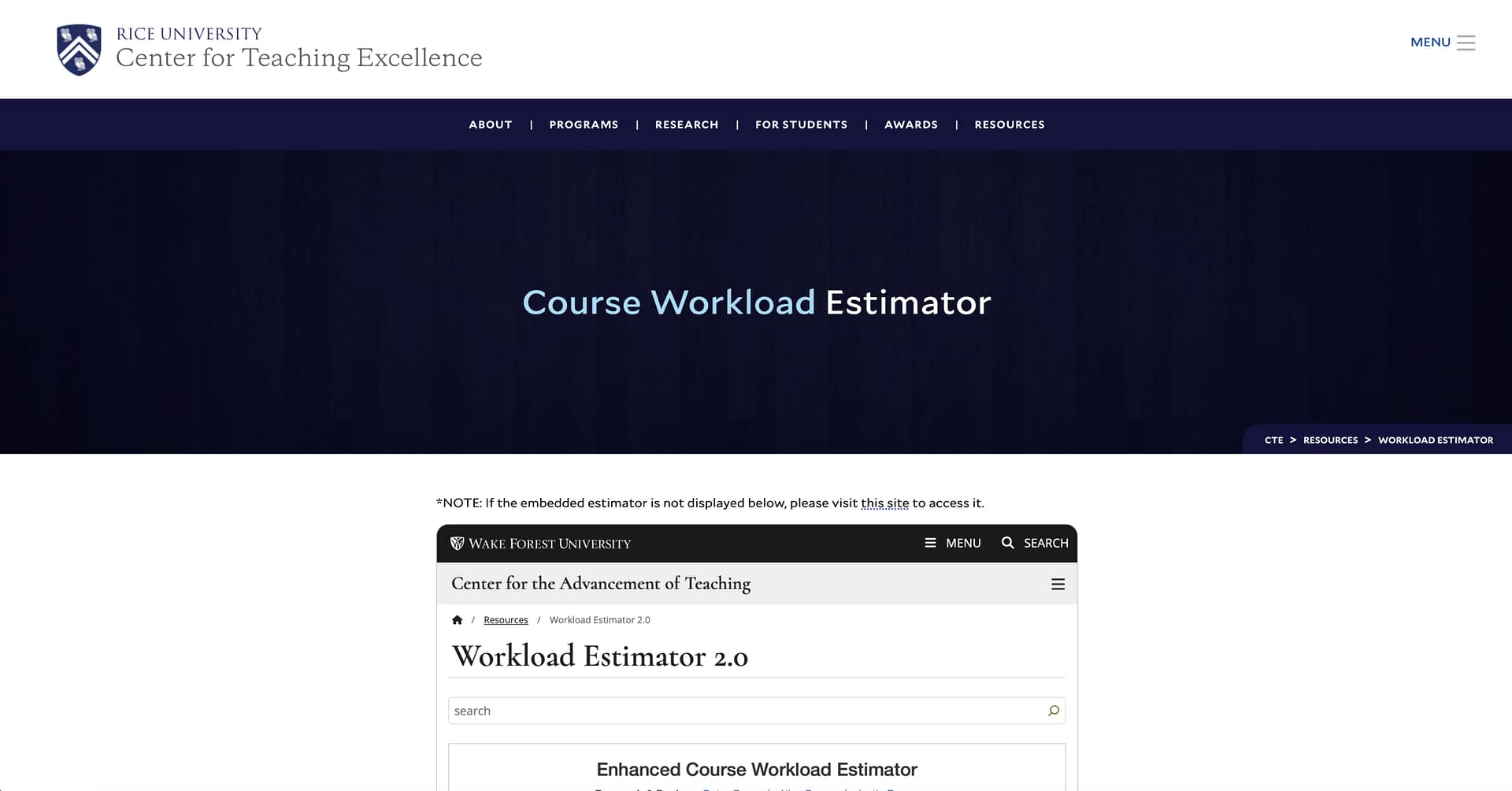
Bonni: [00:32:17] This is the point in the show where we each get to give recommendations and I am so excited to be able to share about Betsy Barre’s course workload estimator and Betsy – people might remember – has been on the show before it her episode was on the research that’s been done on course evaluations and it is always in the top three episodes that have ever been listened to of teaching in higher ed so I know it’s of interest to people who are listening.
Bonni: [00:32:45] And she works for Rice University’s Center for teaching excellence and anything that she writes is worth reading at least as far as all the evidence I’ve read both the gother so far and including this so what it is is a blog post that she wrote where she talks about the framework that they used for developing this tool. It’s an online tool that will help all of us accurately estimate how much work we’re asking students to do outside of class. And this might be helpful to us just in terms of having a better context. One of the things she talks about in her blog post is just how inaccurate we are. And as I read through I thought wow ok I do that. Yep done that too.
Bonni: [00:33:26] One example that comes right off the top of my head is I know I over I guess I underestimate how long it’s going to take students to read things because I’m thinking how long it would take me to read their textbook and their textbook. I teach a lot of fundamentals or principles classes and so that I intentionally choose textbooks that aren’t really heady. And I think well how long would it take me to read chapter one. I would just kind of skim along I wouldn’t have to read every word because well wait a minute. They’re just being introduced to this material and I get a read by you reading plus to read faster than a lot of people do anyway.
Bonni: [00:33:59] So this is a really great way to stop ourselves and become more aware of what we’re expecting of our students. But another thing is a lot of our creditors ask for this information as well and I could see definitely using this tool. And then just grabbing a screenshot of it and having real evidence that thought has gone into the kind of work that’s expected.
Bonni: [00:34:20] Especially as we’re doing more fully online classes or we’re doing more blended courses this is a great tool to be able to assess that for again program review and assessment and accreditation that type of thing so that’s the course workload estimator and I’ll be posting a link to that in the show notes and just a quick accolade to the center for teaching excellence at Rice and just all the wonderful work that you do we were talking about before we pressed record how much both of us get out of their materials.
Katie: [00:34:50] I love this tool. I’m so glad you brought it up because one of the challenges of creating a blended course is what some people call the Course now syndrome which is you just add the online components and you forget to take away that least of these components and you end up with way too much and it’s too much for your students and it’s too much for you. So this is a great tool to make sure that that doesn’t happen.
Bonni: [00:35:10] What do you have to recommend for people today.
Katie: [00:35:13] Well one of the things I wanted to recommend and this is a new product I’ve been working on I wanted to let people know I think one of the most important things for teachers in higher ed and just for higher education professionals as well is to be kind of reflecting as we talked about on their own work and practices.
Katie: [00:35:29] And so one of the things I’m developing right now is the new podcast it’s called You’ve Got This and it will be launching soon and it’s a space for higher education professionals to think about how to increase their confidence in their capacity for juggling the day to day demands of an academic life. So I would definitely recommend folks check that out.
Katie: [00:35:48] And then the second thing is I have a weekly newsletter that gets delivered to your inbox every week it’s called Learn Like a Boss. And it’s really about how do we treat learning like it’s our job. Because it is and we should be focused on how can we help our students learn and how can we be better academics and professionals. So both of those things can be found at my web site Kiddieland or not work. And hopefully they will be of use to people.
Bonni: [00:36:11] Oh I’m so excited I’m really looking forward to listening. And now I have another podcast wonderful podcast to add to the queue. And if people want to just look at all the resources that we’ve talked about today including a link over to Katie’s Web site you’ll be able to access that at teachinginhighered.com/113.
Bonni: [00:36:27] Thank you so much for being a guest. It just feels so nice talking to you. And I know this is hopefully just the first of many times that we’ll continue these conversations because I know before we even pressed record we had all kinds of things to catch up on.
Katie: [00:36:42] Yeah well thank you so much for inviting me Bonni, this is really fun to talk with you.
Bonni: [00:36:46] I don’t know if you could tell when listening to the episode but I’m a big fan of checklists. If you’ve been listening to the show for a while you already know that in fact I will be linking in the show notes to some posts that I wrote about checklists because we’re getting into for many of us the start of a new academic year and I find that really helpful to have those checklists in place and also a post by Grant Wiggan’s who talks a little bit about checklists and templates for instructional planning.
Bonni: [00:37:14] And I love the idea that the book that Katie Linder shared about today has a lot of checklists has a lot of guides for really making this practical and if you have an interest in purchasing the book if you go to the stylist’s Web site and use the discount code BCD20 you’ll get free shipping and 20 percent off.
Bonni: [00:37:39] I hesitate to even put this in there. Katie was a little hesitant didn’t want to sound like an infomercial. I don’t I don’t make anything by recommending the book other than I am so looking forward to getting my own hands on it and to get to use some of these tools she has for people who do purchase the book in the preorder period an offer which blows my mind every three 30 minute consult.
Bonni: [00:38:04] And you can find out all about that as you go and look at the information about the book so thanks so much to Katie again for being on today’s show and thanks to all of you for listening.
Bonni: [00:38:14] As always if you have yet to subscribe to the weekly e-mail that’s going to give you a chance to have all the show notes come through into your e-mail box including the discount code that I just talked about so you don’t have to remember to write it down when you’re not driving or walking around the lake or whatever it is you do while listening you can subscribe to the weekly update at teachinginhighered.com/subscribe.
Bonni: [00:38:39] And you’ll receive the newly updated educational technology essentials guide where you’ll find out about 19 tools that I use in both my teaching and productivity. And if you have an older version of that book I’m figuring out the best way to get that out to a new revised one but if you haven’t seen that come through your email yet feel free to shoot me an email and I’ll send you over a copy of the latest version I made some updates to some tools I use a little bit more. Thanks so much for listening and I look forward to seeing you next time.
Teaching in Higher Ed transcripts are created using a combination of an automated transcription service and human beings. This text likely will not represent the precise, word-for-word conversation that was had. The accuracy of the transcripts will vary. The authoritative record of the Teaching in Higher Ed podcasts is contained in the audio file.