Follow the Teaching in Higher Ed Podcast
About this Episode
Todd Zakrajsek discusses laptops – friend or foe? – on episode 187 of the Teaching in Higher Ed podcast.
Laptops weren’t the problem to begin with — attention was the problem.
Todd Zakrajsek
On episode 187 of Teaching in Higher Ed
Voices on this Episode


Show Notes + Resources
Recommendations from this Episode


Transcript
Bonni: [00:00:00] Today on episode number 187 of the Teaching in Higher Ed podcast, Todd Zakrajsek talks about laptops: friend or foe.
Production Credit: [00:00:11] Produced by Innovate Learning, maximizing human potential.
Bonni: [00:00:20] Welcome to this episode of Teaching in Higher Ed. This is the space where we explore the art and science of being more effective at facilitating learning. We also share ways to improve our personal productivity so we can have more peace in our lives and be even more present for our students.
Bonni: [00:00:49] If you’ve been listening to this show for a while, today’s guest is maybe already familiar to you. Dr. Todd Zakrajsek is the former Executive Director of the Academy of Educators in the School of Medicine and an Associate Professor in the Department of Family Medicine at UNC-Chapel Hill.
Bonni: [00:01:06] Dr. Zakrajsek is the immediate past Executive Director of the Center for Faculty Excellence at the University of North Carolina at Chapel Hill and prior to his work at UNC, he was the Inaugural Director of the Faculty Center for Innovative Teaching at Central Michigan University and the founding Director of the Center for Teaching and Learning at Southern Oregon University, where he also taught in the psychology department as a tenured associate professor.
Bonni: [00:01:34] I get to see him usually about once a year now at the Lilly Conference out here in Southern California and that’s always a great chance to connect in person and he has been on the show a number of times now. Today we’re going to get to have a conversation about the controversial issue of laptops in the classroom. Are laptops a friend or foe? And let me just welcome Todd into the show. Todd, welcome back to Teaching in Higher Ed.
Todd: [00:02:02] It’s great to be back Bonni.
Bonni: [00:02:03] I feel like we get to now see each other or talk to each other three or four times a year, it’s kind of fun. You’re a regular.
Todd: [00:02:10] I love being a regular. I love the program and just honored to be on it again. Thank you.
Bonni: [00:02:14] Well I know I was looking forward to talking to you about some upcoming books and we already have tentatively set those aside. But I just couldn’t wait to have our next conversation and today we thought we would have a conversation about a super safe topic. You know, you talked about lecturing last time and that can be controversial. So we thought this time, we’ll go with an easy softball topic.
Todd: [00:02:38] Great idea.
Bonni: [00:02:38] Laptops: friend or foe?
Todd: [00:02:41] Excellent.
Bonni: [00:02:42] So I will start out with a false choice that I will present to you. Laptops: friend or foe?
Todd: [00:02:51] Yes. The answer is yes. [both laugh] Do you have another question Bonni? You know better than that.
Bonni: [00:02:56] Nope. Thanks for coming on.
Todd: [00:02:57] Thank you all for listening. It’s been a fabulous show. I appreciate the opportunity to be here and perhaps we could come back again next time. Let’s no, let’s play around with this just a little bit. The human brain is set up that we have to put things into categories, that is the only way we can actually survive. When we get ready to leave to go to work, we think about our cars. When we need to buy a new car we think of certain concepts of what we want.
Todd: [00:03:20] And when we think about friends, they get into certain categories. I like it when people do this. I don’t like it when they do that. We do categories all the time. Then we step into things like higher education where of course we’re going to do the same thing. How many times have we heard faculty members say “oh I like it when my good students do this.”
Todd: [00:03:40] Or “students these days, they don’t do this.” And so we again are throwing them into categories. How many times have you heard somebody say “my students say they just don’t wanna learn. My students today they just don’t really have the commitment that they did when I was a student.” Again throwing into categories.
Todd: [00:03:55] So, laptops why not? Why not throw that into the same category? Should we have them in the classroom? Some say yes. Some say no. I’m really getting tired of this. We live in a better system of thinking than dichotomies. There are times when laptops should be in the classroom. There are times when laptops should not be in the classroom. There are times when they facilitate learning. There are times when they do not facilitate learning. And we can spend a little bit of time over the next half an hour or so and we’ll sort this out.
Todd: [00:04:21] But let’s start right out of the gate. Just taking off the table that concept though should you ban laptops in the classroom? And I’m going to say absolutely not. Because as soon as you say should we ban laptops in the classroom you’ve just thrown it into our category and it’s a non-systems level thinking. This concept that laptops are distracting our students, so let’s get rid of this distraction. Once the distractions gone, they’re going to pay attention. Once they pay attention, they’re going to take better notes and they’re going to learn more.
Todd: [00:04:52] You know what laptops wasn’t the problem to begin with. The attention was the problem. So let’s start there and think about how can we help the students to attend better. You notice I say help the students to attend better, not get them to attend better. And as soon as we can do that, then we can start hitting us.
Todd: [00:05:09] But the last thing I’ll do on my little opening tirade and then we can start with some questions and chat back and forth is I find this fascinating. I’ve done tons of workshops and I’ll ask people how long before the average student gets bored in the lecture? And numbers come out immediately, six minutes, five minutes, 12 minutes, three minutes, two minutes, 30 seconds. And we laugh and go through those numbers. Then I’ll pause and say okay average 19 year old they start to read a book. How long before they get bored reading a book?
Todd: [00:05:36] And invariably right out of the gate some will say well wait a minute. What book? Depends on the book. And then all of a sudden I’ll say well what does it depend on? They’ll say it depends on things like the size of the font and the topic. Is the required reading? Is a student tired when they’re reading? Are there pictures and images? Is the writer a good writer? Do they tell a good story? Do they connect with the students? Did the students understand the content? And their list all these things.
Todd: [00:06:02] All of those things could be listed for the lecturer as well. But the reason I tell you this quickly is because when I say how long before they get bored in a lecture? They give me numbers. How long before they get bored when they read? It depends on the book. People walk out of movies and they’ll say that was a stupid movie. They’ll buy a book and they’ll put it down and they say that boring, the plots too slow.
Todd: [00:06:22] But all of a sudden when you’re talking about a faculty member or myself lecturing to a group, if they’re not paying attention, it’s their problem not my problem. Unless of course we faculty members are the ones in the audience then it’s the person on the stage’s problem. But we shift this over to the student’s issue very quickly. So let’s try to play around with a little while today and think about this from a different perspective.
Todd: [00:06:45] If we didn’t say it was the students problem, if we said instead it was a learning situations challenge, how would this all change? And I think we can go in that direction.
Bonni: [00:06:57] I completely concur with you. And one of the shifts that I have had because really it comes up a lot, “laptop bans.” I’ve got to ban the things that would cause distractions. And as you’ve already said, I still remember when we were kids and there were things called slam books when I was little and you’d like write your name on the first one and the number and then it was like what’s your favorite color? What’s your favorite movie?
Bonni: [00:07:18] We just got obsessed with these things. I mean far before there were technology distractions, there were all sorts of reasons why we might get distracted. And then talking about the perspective that we take, and anytime we create this divide between our students and us- just having that in our heads is going to affect how we approach teaching and learning.
Bonni: [00:07:40] And we just create this distance and we create this animosity. And I have just found, especially in very recent years, I delight in them. And before you know them, I delight in them because there will be something that I don’t know about them yet but that I’ll learn about them this semester together that will be amazing. And just going into a situation anticipating that there are all these amazing human beans that you’re going to get a chance to work with that you’ll teach them some things and they’ll teach you somethings. So going into it without that animosity.
Bonni: [00:08:15] Because one of the things I have just shifted the conversation from a ban on laptops to an invitation. Because I say if you’re going to say put the cell phones away, put the laptops away. It better be good. What is it that you’re inviting them to experience that’s better than Instagram? Because have you looked at Instagram? It’s pretty amazing. Lately I’m really getting into National Geographic has an Instagram account. Oh my gosh. Like I better up my game because whatever it is we’re about to do- I don’t mean that we need to compete for entertainment sake. But I better take a gravely the responsibility that I have to design an experience that is transformative.
Todd: [00:09:08] I jump in and say I do agree with most of what you’re saying. I say say most, that comes up when you say “not be competitive.” We do need to be competitive.
Bonni: [00:09:15] Yeah. Yeah.
Todd: [00:09:16] So I know what you’re saying too is it’s not all entertainment. And yes, you are not going to compete with the photos that National Geographic has for photos. But those photos are about something. You can take amazing, good quality photos of something that I have no interest in and you’re not going to, I’m not going to be amazed by those photos.
Todd: [00:09:35] So I do think that we have to compete for their attention. And I don’t think it needs to be dancing and everything else. If I’m presenting information in my classroom and I say OK everybody- I’ve done this in some workshops and so I love to play around with this, it’s like OK we can learn about classical conditioning. *clears throat* *begings to talk with an unenthuastic tone* Classical Conditioning is when you unconditioned stimulus unconditioned responds pairing. You take an unconditioned stimulus you pair it repeatedly with a neutral stimulus and that neutral stimulus will come to elicit a new response that’s different in quantity but not in quality from the unconditioned response. This new responses can be called a conditioned response. We now take a new neutral stimulus and pair it with that conditions stimulus… [snoring sound effect] and then we’re sleeping.
Todd: [00:10:16] So if you present the information in that kind of deadpanned and just giving out there and the students have access to all that information, of course it’s going to be boring. On the same token what I could say is if you’re going to sell your house. And I can ask you this Bonni. If you’re going to sell your house, have you ever heard of one thing you should do with respect to cookies or bread or something?
Bonni: [00:10:37] Oh yes bake them.
Todd: [00:10:38] You bake them. And why would you bake them?
Bonni: [00:10:40] That wonderful smell that feels like home. I’m conditioned that that smell represents home.
Todd: [00:10:46] That does. That’s exactly what it does. If you grew up in a loving household, it does. If you grow up in a loving household, essentially what happens there is that over time that loving household is paired with Grandma baking cookies or mom baking bread.
Todd: [00:11:00] And then you get to a point where you smell fresh baked bread and you go Ah. We have taking a neutral stimulus. We paired it with something that means something to us and it comes to elicit a new response. We didn’t feel that way toward bread originally. We got there.
Todd: [00:11:14] Now, if I’m going to talk about bread and cookies and selling homes and classical conditioning, my students will listen to me. If I’m going to sit there and give them definitions of operant and classical conditioning, they will tune me out.
Todd: [00:11:28] So I am competing for their attention and for the faculty member who says look that’s not my job, my job is to dispel information or dispense information. I’m going to say right now another thing I have played around with is if students suddenly had a computer chip implanted in their brain that gives them that access to all the information that’s in the world, do you still have a job?
Todd: [00:11:49] And if you believe you do not have a job anymore when students have access to all information just by thinking about it then I suspect you’re going to have a lot of problems with laptops in the classroom. Because the problem is that we’re going to have as it’s a way of dispensing information of putting it out there because you see essentially students are not there far from having the chips implanted in their brain.
Todd: [00:12:11] They’re already in their hands. All we need to do is get them wired into the brain. And so again back to the laptop ban, if I ban laptops and basically give information in a very static way that’s just the information people could look up and I haven’t heard people talk about this but I think it’s important, the students are still going to be distracted more so than under different types of classrooms because the individual who is banning the laptops thinks that education’s about dispensing information.
Todd: [00:12:42] The fact that it’s not means the students are going to be bored when they’re listening to it and they’re just going to think about bacon and you can’t ban bacon thoughts. So the problem we’re going to have is it is more than just banning it. Banning the problem doesn’t change the attention to you, it changes it to something else.
Bonni: [00:13:00] I’ve got to have a wonderful conversation with Paul Blowers from the University of Arizona and he teaches in STEM fields. He created such a vivid picture of his classrooms and I don’t get the opportunity to teach in classrooms like they have there, but they’re the pods of four and all these things. And he talked about bringing in a current news story and then this and this and he doesn’t ever talk for more than five minutes and he actually times himself on the on the PowerPoint slides and has a whole system for it.
Bonni: [00:13:27] But as I reflect back on that conversation, what never came up a single time was telling students what to do or what not to do with laptops or cell phones because I could totally picture myself in his classroom. Where would I have the time? Because they’re completely enthralled in this mystery that he’s created for them.
Bonni: [00:13:54] And they’re all talking to one another and he uses clickers and polls and the whole thing. But when you have experiences like that, for me it’s a really fun game on Quizlet. Quizlet as a flashcard app. There’s many of them out there, that’s one that I use. And they have Quizlet live. And when you tell your students, first of all they get delighted when you tell them to take out their phones and then type in this little code that plays this game. Nobody is on Instagram. Nobody is. It’s completely enthralling.
Todd: [00:14:27] It is. Well if I can jump in here quickly too and explain. One time I was at a campus doing a workshop and it was for graduate students. There must have been 200 graduate students, maybe 225 graduate teaching assistants in the room. And I was doing the kickoff at the beginning of the year and it was kind of a teaching, here’s some tips in the classroom. And one of the questions was about laptop or cell phone use in the classroom.
Todd: [00:14:48] So I tried something just on the fly. And I said “OK everybody I’ve got an idea. Get out your cell phones. Everybody get them out.” And of course there was that people shuffling back and forth and looking around like is he serious? And I said “yep, yep get them out.” So I said “OK you’ve got your cell phones out. Now very quickly I want you to text somebody who is important to you and say who is your favorite teacher and why?” That’s it. Just who is your favorite teacher and why?
Todd: [00:15:12] And so they started texting a little bit and then I just stood there and a few people looked at me kind of surprised that I would just be standing there because I only had like an hour to talk but I knew it wouldn’t take long. And about 30 seconds later I heard the ding off the side and someone raise their hand real fast and said “I got one!” I said “OK what is it?”
Todd: [00:15:29] And I have to make this part up because I don’t remember the details of it but it was something like “I texted my brother and he said Mr. Jones, my third grade teacher because he really pushed us.” Ding somebody else said “oh I got one! Mrs. Smith my sixth grade teacher because she really cared about us.”
Todd: [00:15:44] Oh somebody else’s “I got one! I got one!” And then there were hands started going up and I called on about 20 different people and I pointed out something I said “By the way, did you notice? We never asked for names or what grade. We said who was your favorite teacher and why?” But suddenly we were getting names and grades. And I said “I find that fascinating but here’s what I want you to do next. Get into groups of four and what I’d like you to do is compare your text that you’ve got and find out how or what are the common characteristics you’ve seen from these people who said here’s my favorite teachers and then come up with one or two ways you could instill those concepts into your own teaching.” And they did that in groups of four.
Todd: [00:16:24] Then I started having them report out I said “OK what did your group come up with? What did your group come up with?” And after about three groups reported out I paused and said “wait a minute. How many of you are still on your phones?” And they all stared at me for a minute. And I said “I want to point out hundreds of you in the room. First of all you were all on your phones and now none of you were on your phones. Why?”
Todd: [00:16:46] And someone said “because this is so engaging and so interesting” and it was content related, it was related to the content of good teaching. If you’re teaching physics that could be the same thing. It would have to be done differently. The point is when they’re engaged, they’re there. Come up with something that’s exciting and and brings up the information a new way send people out on webquests. Get into groups of four and go find out whatever you can about this topic.
Todd: [00:17:09] But there’s ways of doing those types of things that I think we shouldn’t be banning laptops in the classroom, we should be using laptops in the classroom. Now I’m going to say a quick shift of gears here. That said, there are times when you want to talk to somebody and they’re texting their friend.
Todd: [00:17:28] You may be trying to chat with your children and they might be texting their friends. And there comes a point, let’s just drop this back to my own children if I’m talking to my kids and they’re texting their friends and I know they’re not hearing two thirds of what I’m saying, if that. So when I’m telling them I will pick you up at this time at this place I know they’re not going to be at that place at that time and they’re going to say “oh you never said that” because they’re busy texting.
Todd: [00:17:53] So there are times in the classroom where I do believe it’s important for us to say “OK tech free time” and we might want to say “for the next 10 minutes everybody turn your devices off. If it has a battery, turn it off. Now let’s talk for 10 minutes.” And now what you’re doing is exactly what you said before Bonni, which I love. Now I’m going to invite them into a conversation and say for the next 10 minutes we’re going to talk about this.
Todd: [00:18:17] And the reason I think that’s important, and this is why I’m going to really try to demonstrate I don’t believe in one or the other. I think we should be right down the middle on this. There are times when students are very distracted by their phones and they can’t stop it. They just get hooked into the candy crush game, or they’re texting with their friend, or they’re doing something and they just can’t stop. And we need to be the ones who say “OK for right now, at this time, for this reason, let’s stop.” When we assign papers, we might actually say to students I want you to come up with a topic by the first Friday. I want to have an outline by the second Friday. I want you to have a first draft by the third Friday. And I want to see a second draft by the fourth Friday. I want it peer edited by the fifth Friday and we have this all laid out. And we do that because without a structure, the students will not be successful.
Todd: [00:19:06] And we do that to help the students to be successful. I think we should think how do we help the students in the classroom with respect to technology to be successful? We wouldn’t say because my students tend to have papers in late, you know what I’m not going to papers anymore. I’m banning all papers.
Todd: [00:19:23] They don’t come in on time. Let’s just not even do them. But instead what we do is we figure out how do we help the students to be successful in writing. So the research that comes out that says students don’t don’t know as much. I’ve seen a couple of studies. They don’t know the material as well or they take the notes on the laptop versus paper and pencil. You know what, some of the research is not that great but let’s just assume for a minute that it’s true. If it’s true that the laptop notes do not lead to better learning. In fact they lead to worse learning than paper and pencil notes. That does not mean we ban the laptops. It means we figure out why is the learning not as good with laptops. And then how to make it better.
Todd: [00:20:03] What I’ve seen over and over. I have read a couple these studies and what I’ve seen multiple times, one of the most consistent findings as students will write more with the laptop than they will with paper and pencil. If they’re actually able to type 60, 70, 80 words a minute but they can only write like 20 or 30 words a minute.
Todd: [00:20:21] What they’re probably doing with their writing is making sure to get the major concepts down, synthesizing and writing down those concepts because they know they can’t write everything. If you can type 80 words a minute now you can come closer to just reproducing whatever it is that’s being given. So what we’d have to say to students is “I know you can type a lot more stuff, don’t do that. Stop, think about what you want to type and then type it into a structure.” At that point what we’d actually be doing is taking care of this whole finding that they don’t learn- they learn better with paper and pencil than taking computer notes.
Todd: [00:20:56] And we would teach them how to do it. Then the question becomes what did they do with the extra time? If I could type those 20 words really fast that I would be writing and taking more time, now I would have some more thinking time. So it could very well be that once- and somebody please do this study- once the students are taught how to take notes better, the laptops become more effective ways of taking notes. But if we step back and just say oh look laptop notes are not as effective, let’s ban them. That’s just a problem.
Bonni: [00:21:27] There is a really interesting article in Medium by Seth Godin which side note I did not know that Seth Godin was writing on Medium so this was news to me because I always just read his blog that’s on SethGotin.com. No Laptops in the Lecture Hall and he puts “how about this instead? No lecture hall.”
Bonni: [00:21:47] And he goes through and he talks about one of the more controversial studies the recent New York Times op ed by Susan Dynarski a professor of education public policy and economics at the University of Michigan. She describes why she’s banned her students from using laptops. And he’s much more a proponent of being critical of a traditional lecture. And if what we mean by lecture in this case is me talking at people and them taking notes and it being more of a one way communication.
Bonni: [00:22:21] And he puts in here that that’s like performing a new episode of Star Wars for every audience every night from scratch, it doesn’t make a lot of sense. So he really advocates creating vibrant dynamic video content that can be watched at people’s own pace and then transforming what that college experience looks like. And at the very very end he says “the solution isn’t to ban the laptop from the lecture, it’s to ban the lecture from the classroom.”
Bonni: [00:22:48] And I know you and I have had conversations about having trouble with a definition of terms. What does it mean to lecture? And you don’t advocate passive lecturing. But he is really stressing just how do we spend that time when we are the precious time when we are together in a room here versus what would be the what would be the best result? I’m going to let you respond to his and then I want to ask a few more questions too.
Todd: [00:23:09] Sure. Well his I’m going to actually say the same type of thing. I say if somebody says we should ban the lecture I would say no, we should actually not ban the lecture. We should use the lecture when it’s effective. We should not use it when it’s not effective. When we do use the lecture, we should use it effectively.
Todd: [00:23:23] We shouldn’t ban the laptops in the classroom. We should let the students use them when they’re helpful and we should teach them how to use them helpfully. I think this is really and by the way I just want make sure to get those in there once again as cognitive load. I’m just loving the cognitive load these days. When we think about when a person’s brain is just full for a for a period of time you or we all feel this we all have done this.
Todd: [00:23:47] If you’re putting together the IKEA bookshelf and someone walks in and says hey where do you want to go on vacation? We say not now. I’ve got all these parts laid out. I can’t think about anything else right now. If we’re driving on a slippery icy road and someone says you know where do you want to have lunch tomorrow? We say Whoa. Not now. I’m kind of concentrating on this thing. When we fill up, we’re full.
Todd: [00:24:07] If you take a real knowledgeable person and start lecturing to students who are novices after about eight to 10 minutes they should experience this wow I’m full right now. They are attending. They’re trying hard, they’re really working hard at this. But they’re full. At that point, we don’t give them a break to do something else. We don’t stop lecturing as a break, we stop lecturing so they can consolidate their information.
Todd: [00:24:31] So what I’m really trying to go for these days instead of calling them lecture breaks, let’s call them lecture consolidation times. We can lecture for 5 or 10 minutes and then have the students do something with that information. If the laptops are in the classroom, I could actually tell my students look everybody just stop looking at your devices. Don’t take any notes don’t do anything for five minutes let me explain to you what classical conditioning is. Give a couple of examples.
Todd: [00:24:56] Now after that five minutes maybe seven minutes say get into groups of four go online and you’ve got 10 minutes, go find me some good examples and then figure out what spontaneous recovery is and oh by the way figure out what extinction is. You’ve got ten minutes. Figure that stuff out. Now we’re going to talk about it. Now what I’m doing is I’m taking care of that cognitive load component. I have filled them up with information for five to seven minutes. Then let them do something with it.
Todd: [00:25:23] And so I think that’s how we should use this stuff effectively. So and boy do I ever agree with the lecturing the whole class period. There is no way a person who is actually learning at the level a student typically is can hang in there for 50 minutes. You know who could? A colleague. I find this fascinating. If I sit in on somebody’s class for 50 minutes and say that was fascinating. I am an expert in the field listening to an expert in a field talk about that field.
Todd: [00:25:52] It is fascinating for an expert. It is not fascinating for a novice. So we just, we do have to look at- Kevin Gannon, Jim Lang, some wonderful other people, Josh Isler, there some people have written some really good stuff on this. And it really comes back down to we have to really think about the teaching component. Let’s bring it back to the teaching and not talk about just get rid of the technology.
Bonni: [00:26:15] One of the things that I feel guilty about in terms of how my teaching approach has evolved in this. I don’t feel that guilty because I’ve changed. But I mean I wish I could go back and tell my less experienced self a thing or two. One is just that the way in which I used to think about banning laptops, put it away was very discriminatory in nature because I don’t have a learning disability and I was not aware enough of the ways in which I will distance and in some cases even shame people who have learning disabilities in my class by saying OK everyone, no laptops put them away take notes by hand.
Bonni: [00:26:58] It’s it’s a scientific fact that is proven that taking notes by hand is wrong. Oh but if you have a learning disability then go ahead and talk to me on the side and if it’s documented. By the way, I never did- I’m exaggerating this.
Todd: [00:27:11] Oh I’m going to jump in and tell you I talk to a lot of students now when I go to campus was I had a student tell me recently that a faculty member first day of class said I do not allow laptops in my classroom unless you have an accommodation. And if you do you may use them.
Todd: [00:27:29] And I mean when I heard that I said to the person I said well did the factory owner also say by the way if you have a note taker please raise your hand so that you can show me who your note taker is. If you need extra time, could you please make sure to stand up when the class starts so I can see who the people are who need extra time. I mean these types of things are awful.
Todd: [00:27:51] But faculty, some, there are a few. Again I don’t believe in saying all or none, I don’t like the big boxes there. There are a few faculty who do this and I think it’s because they don’t understand it. But here’s one I want to just throw out there too as we often again boy the dichotomous thinking happens to us all the time we talk about people with disabilities and accommodations and those without.
Todd: [00:28:11] But keep in mind for just a second. For everyone out there. If you’ve got a group of individuals who have been tested and they’re documented to have a disability that says they need the laptops. And lets just imagine for a second we catch all people who meet the criteria so that the laptops would be considered okay to use or an accommodation to use. There’s going to be people who just missed that criteria and the laptops will help those.
Todd: [00:28:36] Then there’s going to be people who missed the criteria by more, the laptops would still help them a little. Then there’s people going to miss the criteria by a lot in the laptops may still help them just a touch. So there isn’t just a yes or no. There’s juthisst gradation where we say the laptops is actually very helpful because of ADD or something else you have. And little by little it helps you, helps you, helps you and when you pass a certain point then you can have an accommodation.
Todd: [00:29:01] But we have lots of students who do struggle with different things. The best thing to keep in mind is there’s a lot of students in the classroom who use the laptops for note taking, upload their notes to the Web onto the cloud, organize their notes, augment the notes, they go online to look for they go online to look for clarifying components. You say something I don’t understand, so I look it up. And they use this as an interactive process, an interpretive process if you will where the lecturer telling the person something and then a person going up and looking up their stuff and it all comes together and then it comes crashing down the moment we say put those away because they look distracting to me.
Bonni: [00:29:39] Yeah and that it can be difficult to be in a room where you don’t feel like you’re connecting. And I don’t want to dismiss that because I don’t want people to have to try to stuff the feelings before they’ve processed them if you know I mean like that is a real feeling to think oh my gosh I really worked hard at this and I’m really trying And I’m failing; I’m trying to connect with this group of people and I just I can’t do it.
Bonni: [00:30:07] And I want to just make sure that we’re sort of meeting all levels of people where were they just really might be struggling with this. What would be a way to kind of start to dip my toe into this? Because it’s not always going to be smooth sailing. I think it’s kind of a safer route to go with the 50 minute lecture and do you share your PowerPoint slides? Do you not? Do you use laptops? Do you not? But just that traditional thing, that’s how I was taught. That’s how it’s been taught through the ages. How do we start to make some of these changes? Because it’s going to be difficult.
Todd: [00:30:40] It is going to be difficult. The first thing you do of course is run out and get yourself a copy of Dynamic Lecturing by Christine Harrington and Todd Zakrajsek. But the concept is that if a person is typically lecturing quite a bit and that is their standard pedagogical approach, then I really think it’s important you pick out one or two things in a class period, do a quick think, pair, share halfway through, do one quick Web quest, lecture for 20 minutes and then have an assignment that you tell the students “ok everybody pull out your devices and go look for this thing” and then report out for another five or ten minutes and then do a ten minute closing lecture.
Todd: [00:31:12] I think there’s ways of playing around with that where we can break the class up really well. I think we can also talk to our students right out of the gate on the first day of class about being an active civil participant in a community. If I’m lecturing, if I’m talking to you for five or 10 minutes and I really believe this is important stuff, there’s ways for you to be an active civil participant in this.
Todd: [00:31:37] You can nod at me periodically, you can smile. There’s a reason that face to face communication ia so much easier than a telephone as I can tell when a person is bored when it’s face to face. So if you’re sitting there looking bored while I am trying to lecture, that’s not a civil environment. That’s not an environment that’s conducive to learning.
Todd: [00:31:57] So I like to talk to students. And I think faculty should talk to students and say “look when you ask questions, I will pay attention to you and I will listen to you and I will give you non-verbal feedback that lets you know that I care about what you’re saying. Could you please do that too?” Because when you stand up here in front of 20 people, 40 people, or 100 people, 200 people I mean you’re living and dying and what the facial expressions look like and if you’re all buried and laptops and on your phones and sitting back like you hate everything, that makes my job really hard and my job is to help you learn stuff that’s going to help you. And so I think we can talk to the students about how they can be better listeners at times.
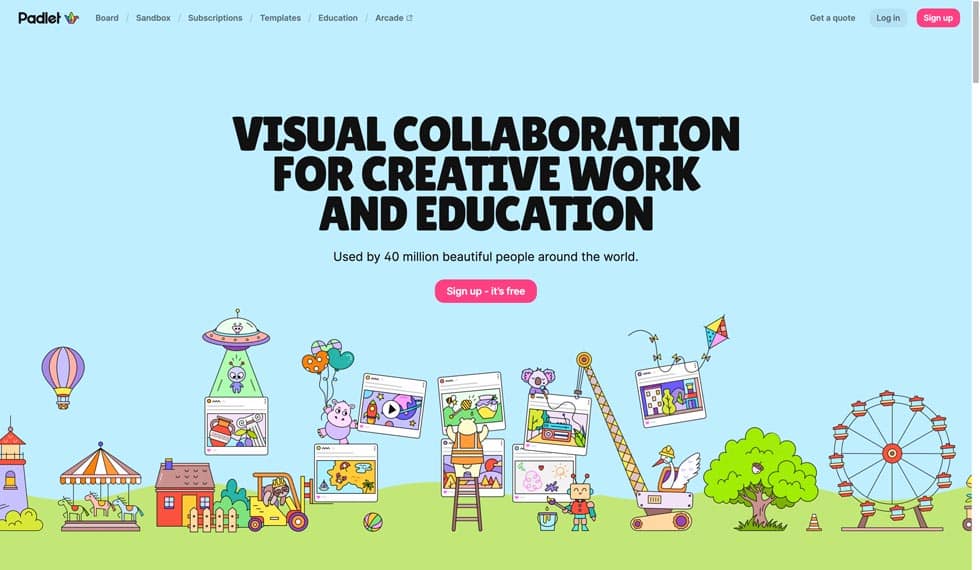
Bonni: [00:32:39] This is the point in this area where we get to give some recommendations. And you mentioned about breaking students up into groups and having them look at stuff online and then share stuff. And one tool that I’ve really found successful is called Padlet. There’s many of these virtual corkboard but Padlet is pretty easy to use. You create a little virtual corkboard, you tell students to take out their cell phones or devices, they type in a little code and then they can post links to videos, they can post images, they can post text and it’s just a really nice way- there’s different ways you can arrange it like a grid or where they can just drag them around however they want them to be. And that’s been for me a nice way of then sharing and then being able to curate some of the resources that they found.
Bonni: [00:33:21] And then you also talked about some articles that have been written on this subject. And James Lang did really write a nice piece on this. So my other recommendation is going to be to go check out James lang’s piece about using laptops and I just like how we’re all- I do get bored sometimes with a conversation in terms of “this again??” but I do think it is, I see maybe starting to evolve people’s thinking and we’re challenging each other and making ourselves ultimately better educators.
Todd: [00:33:52] Well I think we are. And I think the most important thing moving forward is that we try not to think about this in a dichotomous way. If we instead start thinking about the why behind. It is that why would we ban a laptop? What is really the the essence of it? And this is a huge, huge issue. I think we can all really really attend to or work toward is if we stop and say the reason that there is a problem or I don’t like laptops in the classroom is because the students are disengaged.
Todd: [00:34:19] We’re not talking about laptops really, we’re talking about engagement. If we talk about late papers coming in, “I really don’t like late papers.” Why? Is it because you can grade them? Because sometimes if papers all come in the very last moment, I can’t get through them in time. So maybe it’s about you grading them.
Todd: [00:34:34] If it’s about fairness. Well let’s not fair if one person turns it into Friday and somebody else turns it in Monday. Is it about just equity in general in the system? You know that’s a deadline we should respect deadlines. You figure out why it’s a problem and then you address that you just don’t say no late papers.
Todd: [00:34:50] And so that concept again is every time in the classroom when somebody says to me “you shouldn’t lecture” I say “OK what kind of lecture?” What’s the problem with lecturing? If the problem with lecturing is a cognitive load, let’s look at cognitive load. If the problem with lecturing is because students just get disengaged because they lose attention, less talk about attention. If we shouldn’t lecture because it isn’t an effective way of presenting material, which actually it is, but then we address that. So the point is what’s the one just go down at least one layer, what’s the issue you’re trying to address? And I think we can do that.
Todd: [00:35:23] And the big one is- I’ll finish with this one because I know we’re running out of time- it is student learning and it’s teachers teaching. I’m a big fan not of learner centred teaching and learning. People talking about learner centred. I like learning centred. I think we have faculty members who are doing everything they can to try to change the way that a whole generation out there thinks about stuff.
Todd: [00:35:48] I think we’ve got a phenomenal bunch of students out there who really do want to learn or earn. Now I think we have some great content if we take into consideration the teacher, the student, the content, and the pedagogy and put those four things together then we can make a difference. But you can’t just pull one out and just say oh that student does this, and oh that teacher does that, oh and this strategy doesn’t work, oh that content is hard. We’ve got to get away from that. Teacher, student, content, strategy.
Bonni: [00:36:19] Before we hop off the phone together, I know you have at least one quick recommendation for the recommendation segment.
Todd: [00:36:26] Well the tricky spot is you just Padlet is like one of my favorites, I love Padlet so I-
Bonni: [00:36:32] I can give you Padlet because I had James lang’s article.
Todd: [00:36:34] Well we will, tell you what Bonni we were sharing. This is all good. Here’s my one recommendation. I’m going to do two too. I’m going to cheat a little bit. My first one is going to be take a quick look at Padlet but also just go out there and do a quick web search, do your own quick Web quest.
Bonni: [00:36:49] Yeah.
Todd: [00:36:49] Find out how can you engage students in the classroom by having them contribute content. And it could be Wikipedia kind of things, it could be Padlet kind of things, it could be back channeling. I mean there’s lots of different ways, but how can you get the students to get their stuff out there? So that’s the number one. And it’s not a real recommendation it’s more of a recommendation for action.
Todd: [00:37:08] And the other one is you always do ask for one and I’ve just been using HoursTracker for a while. And I would say if you can find an app that keeps track of where you’re spending your time when you’re working. Mine has been fascinating, areas that I thought I was like working way too much, I found out I’m not working nearly as much as I thought.
Todd: [00:37:28] There was one day that I was exhausted at the end of the day, felt like I’d worked a ton and I was doing a really good job of click it on when I worked. They have these systems where you just like one tap it starts, in one tap it stops and you can adjust start times and stop times when you need to.
Todd: [00:37:43] But I was exhausted the other day and I looked at it I had worked like six hours and I realized that I was just tremendously inefficient. I’d been interrupted by phone calls. I had done different things. But the point is I realized that I there were three or four days in a row at different times when I barely could log eight hours and then I started watching that carefully and I got better at it.
Todd: [00:38:03] And so now it’s easier for me to- my goal is to see how fast I can log 8 legit hours of work and then stop. If I’m really effective I can do it and maybe about eight and a half to nine hours because I’m going to take a lot of time off to eat and everything. If you’re terribly inefficient it may take you 12 to 15 hours to get eight hour hours of working. That’s it.
Bonni: [00:38:25] Todd, it is so great to get a chance to talk to you again today. I know you’ll be back on the show soon because you’ve got more books to talk to us about. But thank you for your time today and I really enjoyed this conversation.
Todd: [00:38:37] Thank you again for letting me participate Bonni. Always love chatting with you and look forward to the next time we get to do this again.
Bonni: [00:38:43] It was great getting to have another conversation with Todd today and I look forward to the next one. Thanks again to Todd and thanks to all of you for listening. I’m so excited to report that I asked in a recent episode if you would just take a couple minutes to go and write a review or rate the show on whatever podcast service it is you use to listen.
Bonni: [00:39:05] I told you I was trying to crack 100 reviews and I did crack a hundred and maybe by the time you’re listening it’s even higher than that just thanks to those of you who took the little bit of time out of your day to do that and to spread the word about the show,.
Bonni: [00:39:17] If you’d like to stay connected more with what’s happening in the community, you’re welcome to subscribe to the weekly update. That’s at teachinginhighered.com/subscribe. It’s just a single email each week with a blog post about teaching or productivity and with the show knows to the most recent episode. Thanks so much for listening. We’ve got lots of great guests coming up and I’ll see next time.
Teaching in Higher Ed transcripts are created using a combination of an automated transcription service and human beings. This text likely will not represent the precise, word-for-word conversation that was had. The accuracy of the transcripts will vary. The authoritative record of the Teaching in Higher Ed podcasts is contained in the audio file.