Follow the Teaching in Higher Ed Podcast
About this Episode
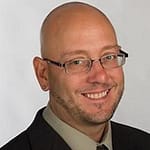
Paul Blowers discusses active learning in STEM courses on episode 179 of the Teaching in Higher Ed podcast.
My goal is to know every student name by the first week of class.
Paul Blowers
On episode 179 of Teaching in Higher Ed
Voices on this Episode

Show Notes + Resources
Recommendations from this Episode

Transcript
Bonni: [00:00:00] Today on episode number 179 of the Teaching in Higher Ed podcast Paul Blowers discusses active learning in STEM courses.
Production Credit: [00:00:10] Produced by Innovate Learning, maximizing human potential.
Bonni: [00:00:20] Welcome to this episode of Teaching in Higher Ed. This is the space where we explore the art and science of being more effective at facilitating and learning. We also share ways to improve our personal productivity so we can have more peace in our lives and be even more present for our students.
Bonni: [00:00:47] Today’s guest comes as a part of Teaching in Higher Ed partnership with ACUE, the Association of College and University Educators. Every single time ACUE recommends a guest for Teaching in Higher Ed I’m completely blown away by the person’s teaching excellence. Today is no different as I have a chance to introduce you to Paul Blowers. Paul is a University Distinguished Professor in the Chemical and Environmental Engineering Department at the University of Arizona for the past 18 years.
Bonni: [00:01:18] Paul has taught introductory and upper level chemical engineering courses and has deeply integrated an active learning approach to his classroom with great success. As you’ll hear about so much in this episode he also has many academic involvements in the university like being a CO-Principal Investigator on an NSF project to help other faculty be successful in the collaborative learning spaces that have been built at the University of Arizona in the last several years. He is focused on improving education and helping facilitate faculty learning communities to improve student retention through scalable and low-cost interventions that any faculty member can deploy. His other academic interests involve using Lifecycle Assessment Research to identify how to reduce environmental footprints of nearly every aspect of personal decisions. Paul, welcome to Teaching in Higher Ed.
Paul: [00:02:12] Thanks for having me.
Bonni: [00:02:14] When I heard about your classroom and your whole philosophy and methodology of teaching the first thing I was hoping we could spend a little bit of time talking about is how did you first get interested in active learning then. And is it kind of a dramatic before and after story or was this always something that you kind of thought about as you started teaching.
Paul: [00:02:38] So interesting question. I did my Ph.D. and I was required to be a teaching assistant several times and I was a very talented explainer. I didn’t really engage students in the process very much and I moved to my faculty position here at the University of Arizona and I was a very gifted lecturer.
Paul: [00:02:57] And I had two students fail my class the first time I taught the sophomore chemical introductory class and I took it very personally. I must have failed somehow to have created a designed experience for students that they were not successful in.
Paul: [00:03:13] And so I met with each of those students intensively the next year when they attempted my course. They were patient and they my classes only offered once a year and one of them went on a spectacular failure again.
Paul: [00:03:25] And then the other one I was figuring you know that he really benefitted from small discussions very small pieces of information that he could reflect on and incorporate and he did very well the second time and it was about this time that I was part of a workshop by Rich Felder. He’s the chemical engineering education guru.
Paul: [00:03:46] And he talked about active learning and I decided I was ready to jump in. I saw one student benefit greatly by transforming the experience into small little pieces that he could integrate into what he was thinking. Then I would try it with everyone that was the impetus to students failing and this workshop.
Bonni: [00:04:06] I’m hearing a couple of things in your story one that really piqued my curiosity was it actually involved my dissertation. I promise that I won’t go too long. One of the things I studied was called the locus of control locus of control is how we explain what happens to us and of course this is a very very complex body of research.
Bonni: [00:04:27] But if I’m going to completely oversimplify it there’s internal locus of control that says these two students failed my class and there must have been something that I could have done differently to change the outcomes for them.
Bonni: [00:04:39] And then there’s external locus of control. Two students failed my class. Probably they weren’t prepared. Probably they didn’t try very hard and I’m hearing one theme from you is an orientation toward what you could have done differently in your teaching and then I’m also hearing another theme which is so vital I think which would be that you found a mentor or you found some kind of a model just just another approach that perhaps hadn’t you hadn’t come across before in terms of your teaching.
Bonni: [00:05:08] Does any of that resonate with you do you. Do you have that sense of is that something you tend to do a lot where you think like yes I mean it could very well obviously you’re a scientist you understand really complex things but sometimes it helps because what could we have done differently as educators.
Paul: [00:05:25] Right. So yes I have read about a locus of control and how I try to foster that in students the internal locus of control is something that I’ve thought about a lot and you know I’ve never really thought about myself in that way.
Paul: [00:05:40] But when a student fills an exam I try and get them to focus on what they could do differently and that they can just pick themselves up and do better I’m never more proud than when a student fails an exam and then takes control instead of saying it was the exams fault. No it wasn’t. There are things that they could have done hopefully and then do really well in the next exam.
Bonni: [00:06:00] That can sound pretty harsh to someone who doesn’t naturally have that type of reflection going on. I mean I could imagine what the faculty same way if you bombed your course evaluations. Well that is probably your fault.
Bonni: [00:06:13] Let’s talk about how. How do you soften that. To have it not sound so harsh to students who this might be the first time that they’ve had even the opportunity to think differently about this exam the exam is no longer the enemy. What are some things that you do especially in that first exam to help them with that transition.
Paul: [00:06:33] So I am very open about my own failures so I dig out the first exam in chemical engineering that I received a failing grade on now as a transport phenomenon and I was a sophomore taking a junior level course and I got a D on ttha exam and I dig that out and I showed to students and then I talk about how I fumble my way to retrieval practice distributed effort and distributed practice and all of these things have emerged recently in the Learning Sciences.
Paul: [00:07:06] I did them all accidentally because I didn’t have time to do anything differently. I started doing an extra problem every day for 15 minutes every day.
Paul: [00:07:15] And I did that seven days a week I started going to office hours and I was very open with students that I change what I was doing because failure was not something I was really happy with and I tell students right up front I will not be defeated and I try and get them to that same mindset.
Bonni: [00:07:30] Can you describe how that first test might be different than any subsequent tests or are they all about the same terms of points distribution or opportunities for feedback. The first one look any different than the rest.
Paul: [00:07:44] The first in the sophomore course is a review of prerequisites. So it has almost no new content or the course and it’s offered I typically do four five midterms per 15 week semester and so the first one is review and then it reads.
Paul: [00:08:01] And after that it’s cumulative and it just keeps adding more chapters of content and they’re typically just one question long after the first exam and four points. For instance on the last exam students didn’t do as well as I hoped.
Paul: [00:08:17] They kept pushing the homework due date back and back and I let them until it was due the day before the exam so there is no reflection time for the students.
Paul: [00:08:25] And I really regret that I wish I would have insisted that the homework be due on Friday and then the exam be on Monday so those students have had time with solutions.
Paul: [00:08:34] So it was my fault I messed up and so I’m offering a fifth optional exam. And the students don’t know this if they watch the podcast or listen to this and in trouble I’m going to drop out of there now five exams and everyone’s lowest. They don’t know that but my intent is.
Paul: [00:08:52] Any student can have a bad day and I will allow them to drop the lowest one will do a whole in class. No one ever votes against this and it gives them the safety net for the day they had the flu whether it was the first exam or the fourth exam it doesn’t matter if they have an off day. It just goes away.
Bonni: [00:09:11] I’m really fascinated by that because I came to the same realization that it sounds like you’ve come to in terms of my exams albeit I teach quite different classes than you do but just that ability to drop the lowest score because I would find that so often they would just take that first exam as if well you know doesn’t really matter if I do well or not.
Bonni: [00:09:36] I mean actually it might be more like that. It is going to be what it’s going to be and then they would learn so much from that first experience taking the test that they would then carry through them so I actually do way more testing now. I started with three exams per class and now it’s five exams per class. The first one is not a past looking comprehensive like you described but it’s a forward looking comprehensive piece I teach a lot of foundations courses.
Bonni: [00:10:03] So it’s like an instructional design they call this whole part whole teaching. So the first test is on the whole you’ve got to understand what is the big picture concepts in this class and it does actually go through the entire textbook. They would have to read the couple of introductory paragraphs for each chapter to get that sense and then they take a test on that.
Bonni: [00:10:25] If they don’t do well it’s not going to penalize them too much because it will be their lowest drop score but a lot of them want to then save it up it almost becomes they want to strategize around that doesn’t really seem good because well if like you said I do get sent later on or what if another one doesn’t go well.
Bonni: [00:10:40] So I see a lot higher motivation. The other thing that I started doing which may or may not work well for people that are listening but I did start to say if you do well on that comprehensive whole test that’s in the beginning I call them not so final final because they have been going about week three of a 15 week course.
Bonni: [00:10:57] If you do well on that and you score above a 90 percent that will be your score for your final exam and that really kicks in again wouldn’t work well. I’m not giving advice to you specifically Paul or to two people but just in case one of the themes I see you and I both reach is just the power of dropping that lower exam and then perhaps in my case having more exams more opportunities to demonstrate learning.
Paul: [00:11:22] Oh absolutely. You know I work with chemical engineering students who are really really bright and I used to tell them across the syllabus I will drop your lowest.
Paul: [00:11:31] And I would have all these awesome students do well in the first and exams and then when we got to the end plus one last one they would just throw it away because they did well in the other ones and so then they went into the final totally unprepared on the comprehensive.
Paul: [00:11:45] And so this is why I don’t tell the students ahead of time I’m going to drop one because my students like most really good students are going to gain that system yeah yeah they certainly do.
Bonni: [00:11:55] And as we would do it’s not like they’re so different from us because we would do the same thing.
Bonni: [00:12:01] So tell me a little bit about why you find so vital the opportunity to get your students engaged. I know that’s something that you value a lot.
Paul: [00:12:12] So I had taught in a lecture hall for most of my career until U of A University of Arizona, built these collaborative learning spaces are rooms that see students at tables of in groups of four their screens all around it’s almost impossible to lecture in this space because the students are looking at me.
Paul: [00:12:33] There’s not even a writing surface that I can use very easily and so I I wanted to move in the spaces because when I was in a lecture hall I would have students that would isolate themselves in those middle seats of a lecture hall.
Paul: [00:12:45] They would intentionally grouped together in a space where I could not get to them and probe their understanding and some of them would sit together. Every day I called it islands of incompetence. They would not be doing the homework they would not be doing the quizzes they would show up.
Paul: [00:13:00] And they would go on a spectacular failure together and I couldn’t get to them into this lecture hall Nehlen teaching in a space where I can get every student I can crouched down right next to them and I can say what are you thinking right now and if the student says I don’t know what to think I’ll ask them to read the statement outloud that they’re thinking about or the task that I’ve given them and I’ll asked them if there are no words or if there are any words they don’t understand and I try to engage them and as a result you know I’ve not had a student policy in my class at all since I moved into these clever of learning spaces ever. When I see a student yawning it’s because they are physically exhausted not because they’re tired or checked out.
Bonni: [00:13:41] Oh that’s really interesting. And you said tables four. Can you describe other elements of what a collaborative learning space looks like the ideal ones and even I’d like to know how many total students because I’m sure part of the considerations are really maximising the space that you have there.
Paul: [00:13:56] Right. So the room I mean was just constructed this past summer it seats 132 students I have about a hundred eight students in there. I recruit seven preceptors for about that number of students and sort of me just learning a system could be another term that people are familiar with instead of me just sending out an email.
Paul: [00:14:16] And saying I want learning assistance to help in the room I intentionally email out to students who are struggling in my class and really moved from a D to a B because they’re going to be growth mindset they’re going to be talking about that with students I want them to be credible when they’re talking about the struggles it took to be successful.
Paul: [00:14:34] I try and get as diverse a group as possible. I always recruit someone who has a learning disability that allows me to introduce them as someone who has one. I’m trying to build all these vicarious mastery experiences by choosing the right team to be in the room with me and so I will launch off into a lecture.
Paul: [00:14:55] And I put air quotes around lecture because I talk for maybe 4 eight minutes out of every 50. That’s it. My goal is to create a series of tests and questions that force even the best students to make tough choices where it’s a misconception that everyone has always gotten wrong and I put it out there as a question they have to vote on using clickers and my response rate on clickers is typically around 80 to 95 percent. My attendance hovers around 95 percent every every class and those students have done Chri work where they’ve read a short section of the book.
Paul: [00:15:31] They’ve done a pre quiz that is informational and definitional and maybe some practical retrieval from something a couple of weeks ago that we’ll need. But then we launch off and we are doing the heavy lifting of constructing their knowledge together as we work through the series of tests that I might have 18 questions in a 50 minute period.
Bonni: [00:15:52] And with ninety five percent attendance is that something that is a portion of their grade or is otherwise required in any way.
Paul: [00:15:59] Yes attendance is depending on the class 5 or 10 percent of their grade.
Bonni: [00:16:04] And you talked about 80 percent or 85 percent participating on clickers. What are the mechanism are they actually physical devices or is there some on the smartphone.
Paul: [00:16:14] So originally I was doing voting cards. The head of a b c or d. And because I hadn’t burned by technology early on I tried the clicker technologies and it was a spectacular failure. So I just walked away from it.
Paul: [00:16:27] And then two years ago I coated with a colleague of mine who is a new instructor in this large classroom environment and she would use clickers before so she taught me to use turning technologies. I’ve also used top hat more recently but I like the ability of it being anonymous and I like that it’s unfiltered by me not putting my spin on their answers.
Bonni: [00:16:53] I have actually a set of Turning Technologies clickers that fills their quite dated I don’t I don’t know to what degree they have upgraded their device is actually the last time I looked it looks very similar if not identical to the ones I had.
Bonni: [00:17:05] But it is really nice because it’s a simple about credit card sized device. Mine have zero through nine numbers. I don’t have any any letter input just the number. Well I suppose the numbers have just like phones have letters underneath them so you could select anay or 1 or whatever but not like you’re actually typing out words or anything like that.
Bonni: [00:17:24] Yeah really seamless as far as that goes although I will tell you I think I have 60 of them. So changing the batteries was never Phanom because the batteries you know they’re never going to all go out at the same time and then a little bit to then reconnect them back to the main hub. I forgot what it’s called.
Paul: [00:17:42] So things have progressed so our students are required to buy them as freshmen. And they might never use them. But I use them heavily and I also enable them to use response where if they’re on their laptop or their phone or their iPad they can get the same kind of responses as they would on that device. And so the students are bringing their own. OK. So yeah. All that is just I show up and they have them.
Bonni: [00:18:08] Whether whether it’s the credit card sized device or whether it’s the software on their phone or the tablet. Oh that’s wonderful. And tell me a little bit. Actually I want to I want to just rewind for a second. My curiosity was piqued when you said a test has one question.
Bonni: [00:18:23] Can you. Obviously you’re not going to tell me all your test questions because we’re really going to be over it. Can you give me an example of what a test question looks like. I’m trying to figure out how that would be enough to prompt them to demonstrate such a body of knowledge.
Paul: [00:18:38] Yeah. So I’ll use one that I use now as an in class example it’s coming up in about two weeks so my wife and I give each other unusual Christmas presents so one year she give me all the pistachios from one tree from this farmer’s field.
Paul: [00:18:51] And I savored those over almost nine months I would like to pistachios in an evening while I was working and I was throwing away the packaging and said are pistachios are dried to seven point seven percent moisture content.
Paul: [00:19:04] And I said fascinating. I wonder what percent you start with and they start with about 31 to 33 percent wisher content and so they Googled. The largest the world’s largest pistachio crop comes from Iran.
Paul: [00:19:17] And so the question I grow is Iran’s pistachio crop. Last year was blank billion tonnes. And those nuts have 33 percent moisture content and they’re dried to approximately seven point seven percent moisture content.
Paul: [00:19:32] What would be the volume of air that would be required to dry all those pistachios. State all assumptions. So it involves knowing the ideal gas law. It involves knowing Raoult’s law, which is vapor liquid equilibrium involves doing a mass balance involves doing unit conversions. It is six chapters of content.
Bonni: [00:19:51] Wow I absolutely am so glad I asked this question in my head. I was thinking I do try to be logical with the order I ask questions that I was so glad I got rewarded for asking a little bit of a tangent or backtracked question so thank you for that.
Bonni: [00:20:05] Now I just want to talk about pistachios for the conversation.
Paul: [00:20:08] First it was fascinating because you know I passed out this exam and this ripple goes through the room I was in a lecture hall it’s like OH it’s one question and people did really well on it though.
Paul: [00:20:20] Once they settled down and realized how all the pieces were integrated and how it was pulling things in. And I love also that the real world practicality of really pistachios are related. My major.
Bonni: [00:20:34] No that’s what I love about. And then it just connects me with you. And that’s so now we know something more that makes you more human. And as a student I would feel this guy he’s married he’s got such a creative wife and they have these cool Christmas.
Bonni: [00:20:47] But you know it would just make you seem way more approachable and then like you said that the contents more relatable. Could you talk a little bit about that you rattled off a number of concepts that they need to demonstrate and therefore state their assumptions.
Paul: [00:21:02] Yes.
Bonni: [00:21:02] What what would it look like if I were to take your exam and maybe either forget to mention one of the assumptions that I used. Or is it even possible to answer the question without using all of them. And so how does grading work and how do you make your evaluation as objective as you can.
Paul: [00:21:21] So I have a very elaborate grading rubric the exam that the students just took on this past Monday had 32 or 33 discrete decisions that they had to make all to get to one number at the end.
Paul: [00:21:36] And so when I did all of them I could just sit down with the rubric and I could do all that as our program tripled in size. Now we graduate 26 and our graduate 88 because we have been very successful at retaining students through these active learning strategies.
Paul: [00:21:52] Now I recruit a team of my learning assistants and we all sit down together and I buy two large pizzas and we grade for about three hours. And there’s a lot of questioning back and forth. How do you interpret this. If the student used the fact that they assumed the atmospheric pressure was one atmosphere when they used Raoult’s law does that count as stating it explicitly.
Paul: [00:22:15] And what evidence of student learning and mastery is buried in that mess that they give us the end of the 50 minutes and so there’s a lot of questioning from my grading team and in real time as we trying to evaluate. And then there’s also the safety of a regrade process where if a student sees the solution and they felt their work showed something that we didn’t see then we address it at that point. A lot of partial credit.
Bonni: [00:22:41] Yeah that whole process that you described I think the technical term that they use in some accrediting bodies used for this. I think they it calibration grading calibration. Yeah. Yes pretty sure. And just by doing that in a group helps to coach and shape the people who are participating in the grading and they can even probably help you sometimes see where I might be being too hard on this or you might be.
Bonni: [00:23:06] Sometimes I will get I’ll see what’s called a halo effect where oh because they started out really strong then I start to look for things that aren’t there sometimes and so that must really be helpful to have a group of people participating.
Paul: [00:23:20] And it’s way more fun you know greeting solitary and alone you get frustrated and you know when we’re sitting there and we all exams are identified and they have an ID number on them.
Paul: [00:23:31] I don’t know who they are. The students the present learning systems don’t know who they’re grading could be their best friend. It could be a sibling you don’t know. And you know we were sitting there grading as a team were like oh come on come on. He’s going to do stuff the last minute and it’s so much fun grading when we are kind of celebrating the successes or we’re commiserating. Man this person didn’t even start anywhere man. We need to get them help.
Bonni: [00:23:56] So what is it that they’re taking or is it a paper exam that they are writing on. OK. And then how do you go about making sure that we don’t know who’s grading his test and grading.
Paul: [00:24:07] So I printed out 120 cover sheets that have won through 120 now and that becomes their ID number and they put their name on that piece of paper and then we collect that before we even collect any of the exam so we have all the cover sheets are given out.
Paul: [00:24:25] Every student has a unique ID number that they’ve then put on their exam and then they take their exam on paper with pen or pencil with calculators. It’s open book open note. They really need to know how to use all their resources and then they turn in their stapled copy of all of their work with their sheet. With that ID number on it we don’t even know what it was because we already collected that.
Bonni: [00:24:50] Interesting interesting. And I want to now fast forward now that I have gone on that fun adventure with you. Let’s fast forward.
Bonni: [00:24:59] We were talking about the active classroom and you started to describe your learning spaces to us. Could you talk a little bit more you mentioned speaking just about seven to 10 minutes per 50 minute increments in your class. Tell me what that looks like I’m in your class I’ve got a clicker or I’ve got my phone with the software on it. Describe that hour or 50 minutes to me.
Paul: [00:25:22] So the first 30 seconds to 45 seconds literally have a time stamp on my PowerPoint in my head. The slides are going to take one minute the slide is going be seven minutes because this is a longer activity.
Paul: [00:25:35] And so I have this time stamp on my slides that tells me how how fast I need to be going to get done at the end. So the first slide is a word scramble. It’s the topic that’s going to be that day. And so tomorrow’s topic is equilibria or in the middle of vapor liquid equilibrium or equilibria.
Paul: [00:25:53] And cue is going to throw him off the ground fill in some blank letters and figure out what the word is then describe the objectives for the day and I try and make them as concrete as possible. So for instance an objective tomorrow would be to be able to identify which streams are in vapor liquid equilibrium for different pieces of equipment and then later on when we actually accomplished that objective I’ll put that objective back up on that slide when we were done with that.
Paul: [00:26:21] So students know. Yes I have met that objective after we do objectives I pick a news article on tomorrow’s article is about the Legionnaires disease outbreak that happened at Disneyland. That involves vapor liquid equilibrium because their cooling towers are evaporating water and that makes the water colder and then that gets recirculated and so the topic of the news article will try and fit with the topic.
Paul: [00:26:44] After that we share an internship and the students have to look up either a skill or detail tomorrow to tell me the time commitment that the company is looking for. Then students register their teams so we’ve game of hide the clicker questions and they’re in teams thereabouts.
Paul: [00:27:00] Five teams in tomorrow’s class and they don’t know necessarily all the other people who are on their team but they will register into those teams and then every question after that is worth points at the end we show which team won. Sometimes there’s candy sometimes it’s not. There’s always almost almost always a round a high fives and right a 50 minute class and the students are jumping up and doing high fives. But that doesn’t happen. Yeah.
Paul: [00:27:28] And then after we do the internship tomorrow I will say on a white board define what equilibrium means with your team. Then I’m going to have them exchange boards and write corrections and then we will do a full class debriefing where I will cold call. Actually it’s not me. I have a phone app that will randomize and my phone will pick two or three students who’ll de-brief the class and then I actually lecture.
Paul: [00:27:53] There’s a slide where there are three things I have to explain to them that we didn’t quite get in a class last week and so I need to call it out very concretely and clearly and so I my slides there’s a big red box around these statements that are so fundamental and so important that I’m calling them out specifically and I am going to lecture about them.
Bonni: [00:28:15] Would you mind sharing what the phone app is that you share a colleague shared with me.
Paul: [00:28:20] It’s apples oranges to last out and I found a way to download the student pictures and affiliate those into a flashcard database with their names. And so actually before class even starts the beginning of this semester I said about a month and a half studying their pictures and learning names.
Paul: [00:28:40] And so when I walked into class on the first day I would walk up to someone and say Philip it’s very nice to meet you. Thank you for responding to my e-mail last week about the question you had and then I go round and I. My goal is to know every student’s name. By the end of the first week of class and I will call them by their first name.
Bonni: [00:28:59] I was going to mention that if people have not been listening for a while I use an app that sounds very similar in nature to what you just mentioned it’s called Attendance 2. And the developer has been really good even though it’s just one guy that I think even might teach high school and he but he’s kept it up today.
Bonni: [00:29:17] Every time there’s a new operating system this is specifically on iOS but there’ll be an update there and it does allow me to through dropbox sync over photos of students. One of the things I really like about it is if a student says oh what’s my attendance in the class it’s two clicks to be able to e-mail it to the student.
Bonni: [00:29:35] And I like that a lot but also has a lot of random features so things like randomly calling on students like you used or even just randomly having groups of students you a number of groups or a number of students per group and it’ll do all that work for me. Yeah.
Bonni: [00:29:49] And it could be maybe groups of students who are present. So if I took attendance in the beginning then I can have at randomise groups of people who were present or only call them people who are present which is really a good one. So people listening you might want to check that one out too.
Paul: [00:30:02] Yes. Perfect. Yeah.
Bonni: [00:30:04] And let’s talk about just as we close this part of our conversation I get so excited talking to people like you. By the way I could talk for hours and hours but probably we need to keep our show similar to people’s commute time.
Bonni: [00:30:19] I wonder if you would share for someone who this this would just be a complete 180 in their teaching there like you who was an excellent lecturer. They’re really really good at lecturing. They want to start this but what would be some low hanging fruit. Opportunities to get started with this and especially I would love it if you would share. How would I know if I was doing it quote unquote right. I get that it’s hard. Yeah.
Paul: [00:30:44] Yeah. So I’ll use my first example of active learning and it comes up next semester when I’m teaching the next time in class. And it’s called the psychometric charts. It has seven axes that are jammed into two dimensions onto one piece of paper.
Paul: [00:31:00] And there’s a lot of detail there. And I used to lecture on this and then I would solve a lot of example problems and students never really got how to use this very powerful diagram.
Paul: [00:31:13] And so the first time I did active learning I picked the psychometric chair and I put it up on. Yes I know you’ll show me the overhead projector and I just asked the students how many axes are on here.
Paul: [00:31:27] And I wasn’t doing formative assessment back then I just wanted engagement but now I realize now in the ME and this time frame almost 20 years later that I was doing formative assessment. People were saying what is an axis like wow I didn’t even know that they didn’t know that access was given. How do you identify what an axis was.
Paul: [00:31:48] And you know we went through and then explain each of the axes that I showed with a ruler where things were and I showed them where the words are and how you identify that this actually is different from that word by the shape of the line being deferred or dashed or not.
Paul: [00:32:05] And I knew I was doing it right. When I was working with seniors after they’d had that course two years ago and I gave them a chart I used for my research and I said Oh you want to use this. They said stop stop talking.
Paul: [00:32:21] And then the students huddled together. And what they did is they talked themselves through with the Accies were with the units were. And once they had identified the important information in their finger the new one that they’d never seen.
Paul: [00:32:34] I knew a ton of transferable skill. And it’s like wow I never realized that’s what I was doing when I was asking them to identify axes. I just wanted to engage them with them. The figure.
Bonni: [00:32:47] One of the things that often happens when people start having this realization is lecturing thing telling is not teaching. I need to start asking. It can feel really really awkward to ask a question in the class.
Bonni: [00:33:01] And so people get almost punished for having done it and then it reinforces their belief that really telling is teaching. And I wanted to mention this has been talked about at least a couple times on the show but we’ve been at this since June of 2014 so I don’t expect everyone to listen to all the episodes.
Bonni: [00:33:17] It’s called the eight second rule. When you ask a question whether it’s a group of faculty you’re speaking to a group of college students. You ask a question you count one 1000 to 1000 three 1000. All the way to eight. It is incredibly rare that I will ever get to eight seconds in fact most often it’s because students know about it and they’re just messing with my head because I think it’s fun to do.
Bonni: [00:33:41] But because there’s a number of things that students have to go through processes in their head right first have to process what does Paul mean what way. Like you said what is an axis there and there might be and you might even find if you started to pause someone answering your question with a question I can’t tell you how many axes are here until they know what one is.
Bonni: [00:34:00] So you might find even some engagement by if you left enough space and quiet that you start to uncover where where their questions are that they never used to ask you before.
Bonni: [00:34:11] But it really does take some time and discipline and what you’re actually doing is conditioning your students. Oh he actually wants an answer from me. Oh wait a minute I have to think in here. Oh this silence is uncomfortable. I don’t like this silence. I think I have an answer but I’m not sure I’m right. Is it safe for me to share an answer. I’m not sure if it’s right.
Paul: [00:34:31] Right exactly. So lots of stuff there. So clickers help a lot because I see how many students have responded. The other thing I’d like to do I looked at you just said uncomfortably long. I will say to students I’m going to pause an uncomfortably large amount of time. And I want you to ask me any questions you have. Yeah.
Paul: [00:34:54] And it makes it fun for me. It makes it comfortable for me because now I just told them yes it’s all it’s going to be awkward. But. Use this time.
Bonni: [00:35:04] Oh that’s great. I love how you’re explaining it to them and helping him through that. This is the point in the show even though I could talk for hours and hours with you. This is the point in this show and we each get to give some recommendations and I get asked often whether it’s on the podcast or people emailing me about Imposter Syndrome.
Bonni: [00:35:23] It’s one of those funny things that I thought were like this must just be me. And then I realized there’s a whole sisterhood and brotherhood of people out there that struggle with Imposter Syndrome. And there was a really good blog post it’s very short so I’ll just read it that’s from Seth Godin.
Bonni: [00:35:38] Seth Godin is famous in the marketing entrepreneurship space. I’ll read it to you and then Paul I’ll pass it over to you. You’re also welcome to comment on Seth’s Imposter Syndrome post. So here it goes.
Bonni: [00:35:51] “It’s rampant. The big reason is that we’re all imposters. You’re not imagining that you’re an impostor. It’s likely that you are one everyone who is doing important work is working on something that might not work and it’s extremely likely that they’re also not the very best qualified person on the planet to be doing that work. How could it be any other way. The odds that a pure meritocracy chose you and you alone to inhabit your spot on the ladder is worthy of dunning kruger status. You’ve been getting lucky breaks for a long time. We all have. Yes you’re an imposter. So am I. And so is everyone else. Superman still lives on Krypton and the rest of us are just doing our best isn’t doing your best. All you can do dropping the narrative at the impostor isn’t arrogant. It’s merely a useful way to get your work done without giving in to resistance. Time spent fretting about our status as imposters as time away from dancing with our fear from leading and from doing work that matters.”
Paul: [00:36:58] Interesting. So yeah I hear that. I’m thinking a lecture I gave last week where I had this big mathematical error in the middle and you know I’ve taught this with these slides for 3 years now and the student calls me out. And you know I’m in the middle of trying to monitor what they’re saying while keeping on track. And I realize that the student is right. I just added a number I needed.
Paul: [00:37:24] So you know I’m recording this in Panopto – in real time – and I just say Nick thank you so much for pointing out a human failings in front of everyone. Thank you so much. I just laugh and the students say yes and I apologize and I say this is wrong for the rest of today. I’m sorry.
Paul: [00:37:44] It’s on every single flight and just being resilient and being able to not get done like buried in this. I’m an impostor but you know I’m human. I’m fully in growth mindset and so if I had a recommendation for a faculty member who wants to really engage with what it’s like to be a student pick something really hard at that they want to do and start doing it.
Paul: [00:38:10] So I just started learning the piano and rock climbing in the last two years. Rock climbing. I’m terrified of heights so that’s giving me a whole new growth mindset and you know I can go into class and I show students pictures of me going from trembling next to the wall and not being able to climb it all.
Paul: [00:38:29] To me making it 35 feet up and rappelling down and that was the first time I went rock climbing and then asking the students to think about their own experiences and whether their fixed mindset whether I was just lucky or I was born good at this. Or did I have to create a safe space and become successful by becoming comfortable and getting students to really reflect on that.
Paul: [00:38:52] So if a faculty member wants to really read learn what it’s like to be a student pick something hardly I’ve always wanted to do and start doing it.
Bonni: [00:39:01] It has been such an honor to get to talk to you today and I really appreciate the team over at ACUE for introducing us. This is the first in our formal collaboration together and I knew you’d be great from the second that they passed dream over but you even exceeded all expectations.
Bonni: [00:39:17] I’ve been so energized by our conversation and I’m also looking forward to being able to read their deep dive with you and learn even more from you.
Paul: [00:39:26] Thank you so much for asking me really cool questions that I love thinking about other people start to think about the same things and realize that we are the ones who designed the experience that allow students to be successful.
Bonni: [00:39:41] What an energizing conversation I’m going to be the rest of the day just thinking about. All of the ways in which Paul described really transforming his classrooms and bringing that learning alive. So thank you Paul for your time and just for being willing to share with all of us what you do in your classrooms.
Bonni: [00:39:58] And thanks to all of you for listening. If you have yet to subscribe to the weekly e-mails and you want to get the links to the things that we talk about on these episodes as well as a weekly blog post about they’re teaching our productivity you can subscribe at teachinginhighered.com/subscribe.
Bonni: [00:40:16] And I’m looking forward to the next couple of months. I’ve got great guests coming. And I’m sure there’ll be some spontaneous ones too and just thanks to all of you for being a part of this community and to listening and looking for opportunities to improve your teaching. See you next time.
Teaching in Higher Ed transcripts are created using a combination of an automated transcription service and human beings. This text likely will not represent the precise, word-for-word conversation that was had. The accuracy of the transcripts will vary. The authoritative record of the Teaching in Higher Ed podcasts is contained in the audio file.