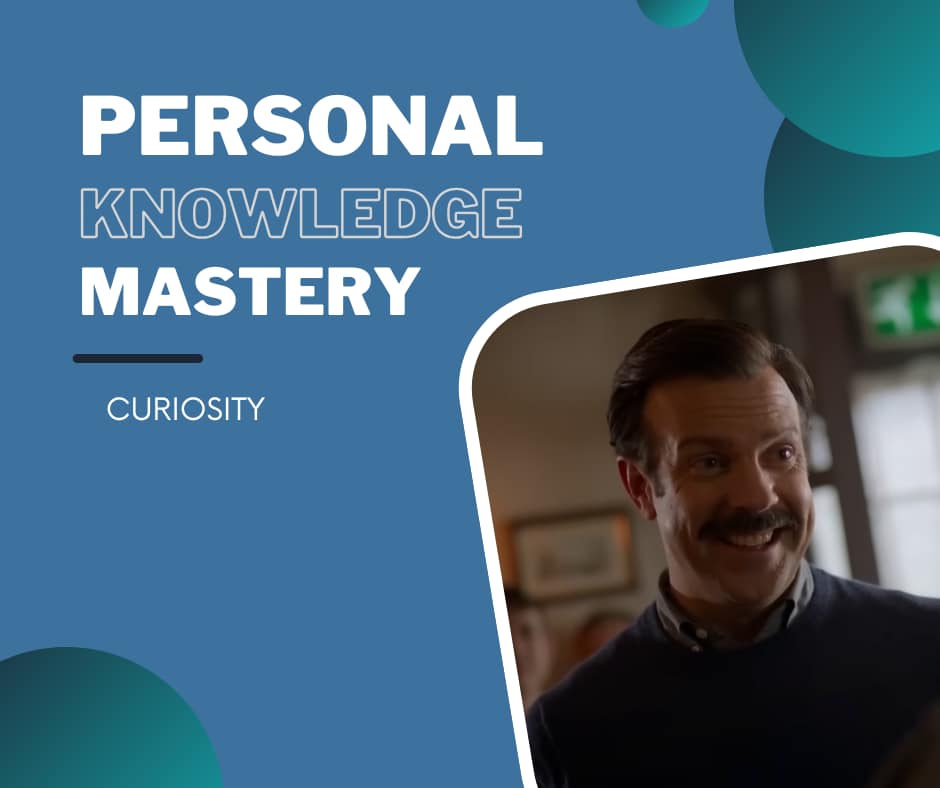
I've been curious about curiosity for a long while now. That foundation made it that much more rewarding for me to see it as the current topic for Harold Jarche's PKMastery workshop. There's a vulnerability that comes from allowing ourselves to be curious. Yet what that yearning allows for is unparalleled and well worth the costs.
Lifelong Learning
When we are curious, our learning never ends. Getting to work at a university, being invited to speak at many other institutions for higher learning, and having kids who are both in middle school, affords me a never-ending buffet of learning. Sometimes, it can get overwhelming and I need to resort to bookmarking things that seem interesting, but that I may not have time to look to deeply at in the moment. Tagging those bookmarks allow me to uncover resources in the future, when they will be most relevant to something I'm curious about then.
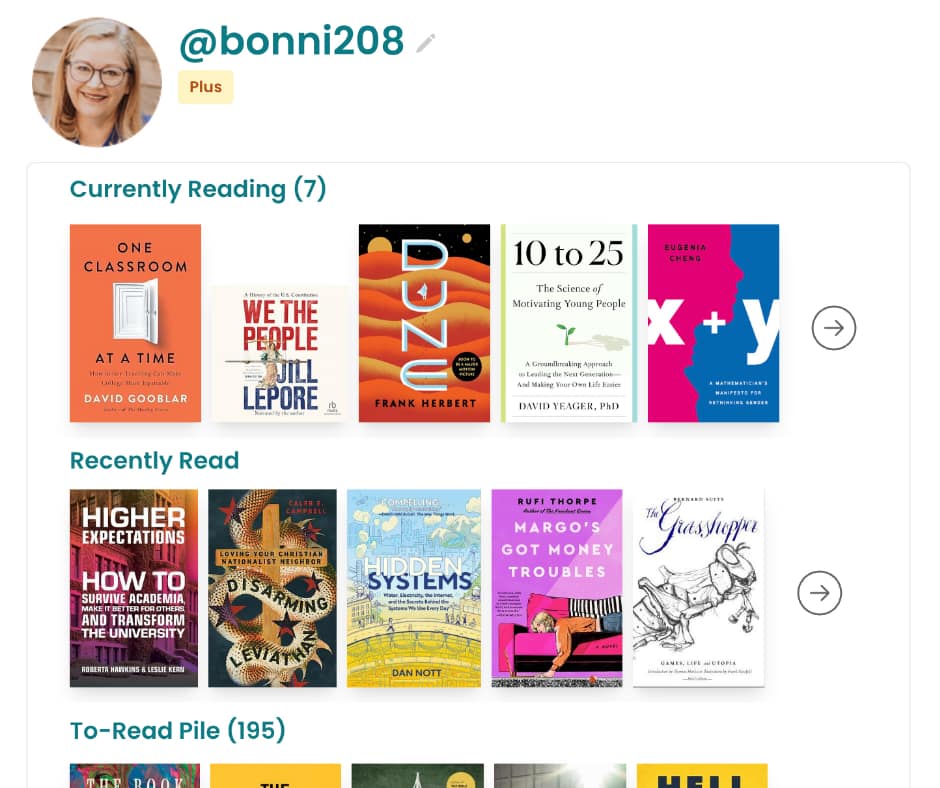
I like tracking my reading in a service called StoryGraph. Setting a minimum goal for books read in a year helps overcome my natural tendency toward my attention going to RSS headline and short-form reading. Most years, I'm struggling to reach the goal, come December. However, my focus on listening to more audio books has allowed me to already have surpassed my 2025 goal.
Healthy Human Relationships
When we focus on being curious about what others thing and having empathy for them, the possibility for having healthy human relationships emerges. It's easy to focus on “winning” as the sole pursuit of our interactions with others. However, when our focus is on being right, instead of initially on curiosity, we limit the potential for solutions that are geared toward the common good. Covey writes:
Next to physical survival, the greatest need of a human being is psychological survival—to be understood, to be affirmed, to be validated, to be appreciated. When you listen with empathy to another person, you give that person psychological air. And after that vital need is met, you can then focus on influencing or problem solving.
I smiled, as soon as I saw that Jarche had included this beloved clip from Ted Lasso in his writing about curiosity. At this point in the show, Rupert, is “winning” at humiliating his ex-wife (the blonde woman whose expression you can see throughout many of the camera angles during the clip). She doesn't want to see Ted Lasso also be humiliated by Rupert and is concerned that is exactly what's about to happen.
However, curiosity wins the day, as does kindness. Lasso says at one point:
Don't mistake my kindness for weakness.
Curiosity is a powerful aim and one that is infectious. When we resolve to continually fuel our openness and getting better, together, we unleash a powerful problem-solving potential.
Cultivating Curiosity
Jarche writes about curiosity and resolve. He describes the need for a “constant dance between bigger groups of ideas and smaller groups of people working together,” and how necessary both cooperation and collaboration are to effective problem solving and creativity.
In this week's reading, Jarche reminds us of how needed a human set of skills are today:
The skills required to live in a world dominated by complex and non-routine work requires — creativity, imagination, empathy, and curiosity.
He also stresses the unbounded potential for creativity that we posses, when we focus on curiosity:
While the industrial economy was based on finite resources, a creative economy is not. There is no limit to human creativity. We have to make a new social contract — not based on jobs — but rather enabling a learner’s mindset for life.
Until next time… And until then: Let's all stay curious.