Follow the Teaching in Higher Ed Podcast
About this Episode
Maha Bali, Mia Zamora, and Clarissa Sorensen-Unruh share lessong about community and joy from MYFest on episode 431 of the Teaching in Higher Ed podcast.
What educators need most right now is to come together as a community and learn in ways that are different than we ever have before.
Maha Bali
On episode 431 of Teaching in Higher Ed
Voices on this Episode



Show Notes + Resources
- Online Does Not Mean Isolated, by Maha Bali, George Station, and Mia Zamora for Inside Higher Ed
- MYFest 2022 via Equity Unbound
- FOMO
- Padlet
- Jamboard
- Karen Costa
- Ungrading track
- Digital literacies pathway
- Daily Create
- Equity Unbound
- Community building resources
Affiliate income disclosure: Books that are recommended on the podcast link to the Teaching in Higher Ed bookstore on Bookshop.org. All affiliate income gets donated to the LibroMobile Arts Cooperative (LMAC), established in 2016 by Sara Rafael Garcia.”
Recommendations from this Episode
Person
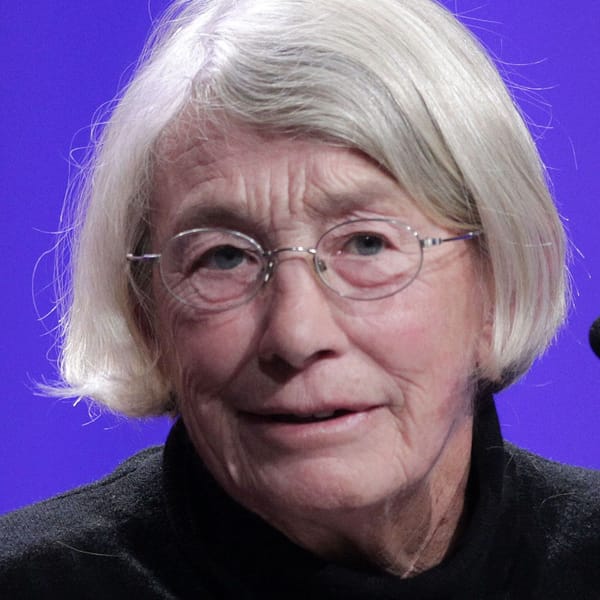
Mary Oliver
Resource
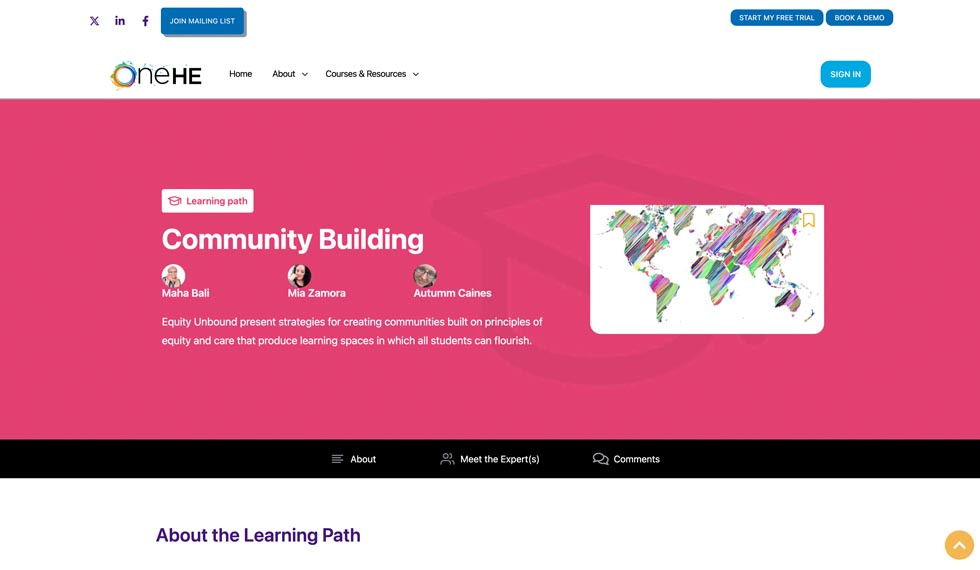
OneHE Community Building Online
Article
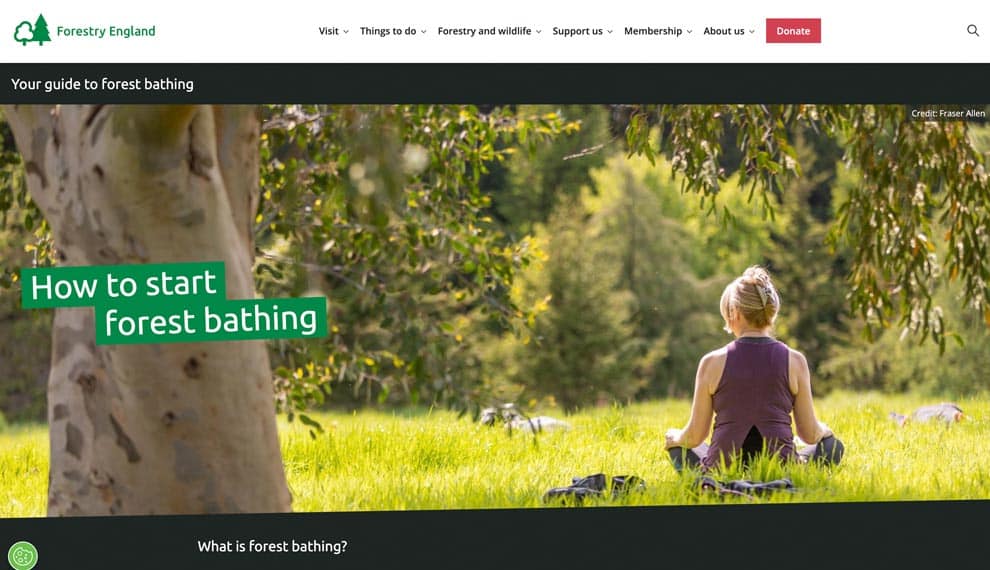
Forrest bathing

Idea
Pay attention
Book
Emergent Strategy by adrienne maree brown
Book
Holding Change by adrienne maree brown

Idea
Pull your ear lobes
Resource
Radio Garden
Article
Teaching About Social Justice and Race
Resource
Game Changers Academies
Transcript
[00:00:00] Bonni: Today on episode number 431 of the Teaching In Higher Ed podcast, community and joy lessons from MYFest with Maha Bali, Mia Zamora, and Clarissa Sorensen-Unruh.
[music]
Welcome to this episode of Teaching In Higher Ed. I’m Bonni Stachowiak and this is the space where we explore the art and science of being more effective at facilitating learning. We also share ways to improve our productivity approaches, so we can have more peace in our lives, and be even more present for our students. It is with joy that I invite three guests back to the podcast today.
If you’ve been listening for a while, you know these names, even if you haven’t been listening for a while, these three individuals are tremendous at building community, especially across geographic lines and across what sometimes are called mediums, which I realize is a super clumsy word, but doing it really well in person, but also especially online. The first guest I’d like to share about is Maha Bali. She’s a professor of practice at the Center for Learning and Teaching at the American University in Cairo. She has a PhD in education from the University of Sheffield United Kingdom.
She’s co-founder of virtuallyconnecting.org, a grassroots movement that challenges academic gatekeeping at conferences, and co-facilitator of Equity Unbound, an equity-focused, open, connected, intercultural learning curriculum, which has also branched into academic activities, community, Continuity with Care, Socially Just Academia, a collaboration with OneHE, Community-building Resources, and MYFest, which we’re going to be talking about a lot today, an innovative three-month professional learning journey.
She writes and speaks frequently about social justice, critical pedagogy, and open and online education. The second guest, I welcome back to Teaching In Higher Ed is Mia Zamora, PhD. She’s a professor of English and Director of the Masters in Writing Studies Program, and the Writing Project at Kean University in Union, New Jersey, United States. Zamora is a digital humanist, a connected learning advocate, and a scholar of electronic literature.
She recently received the Kean University Professor of the Year Award. Dr. Zamora’s commitment to equity, digital, and data literacies, and intercultural understanding is clear in both her scholarship and leadership work. As a leading voice for the practice of open networked education and a winner of the Mozilla Foundation Open Leaders award, she has co-founded several global learning networks, including Equity Unbound, and networked narratives. In addition, she’s proud to have recently co-launched Equity Unbound’s imagining a socially just academia project.
The third guest I’d like to reintroduce to you is Clarissa. She goes by Rissa Sorensen-Unruh. She has been a full-time chemistry instructor at Central New Mexico Community College in Albuquerque since 2002. She now teaches statistics as well. She’s a dual degree graduate student. Master’s in statistics, a PhD learning sciences at the University of New Mexico, where she’s also listed as an adjunct faculty for chemistry and chemical biology department. Her first book, Communicating Chemistry Through Social Media in which she’s both the main editor and a chapter writer was published by ACS Books in 2018.
She contributed a chapter, which I read by the way, and is very good on her experiences with ungrading in the classroom to Susan Blum’s Ungrading: Why Rating Students Undermines Learning (and What to Do Instead). Rissa employs ungrading blogs and encourages open and engaged pedagogy in her classroom, mainly through critical pedagogy and active learning techniques. She embraces teaching techniques, many of which she has learned from her friends on Twitter that promote student agency, social justice, and dynamic learning. Rissa Sorensen-Unruh, Maha Bali, and Mia Zamora, welcome back to Teaching In Higher Ed.
[00:05:09] Mia: Thank you.
[00:05:09] Clarissa: Thanks for having us.
[00:05:11] Maha: Thanks for having us again, Bonni.
[00:05:13] Bonni: As we get into today’s conversation where we’re looking at lessons from something called MYFest, lessons about community and joy, Maha, would you start by telling us what on earth is/was MYFest?
[00:05:30] Maha: All right. MYFest stands for Mid-Year Festival. It was a three-month long, choose your own learning journey, recharge, and renewal experience. This happened in June, July, August. We called it the Mid-Year Festival because it’s the middle of the year and it’s summer sometimes for some people in the Northern hemisphere and winter in the Southern hemisphere, right?
A group of us, the organizers of MYFest, realize that what educators need right now in this– we don’t really know that this is the post-pandemic or whatever time it is we’re in now, what we need most more than anything else is recharge and renewal, we need community, we need joy, we need to come together, and learn in ways that are different than any way we’ve learned before.
There was this gap, I think in professional development that we’re experiencing where we’re not getting that community and joy from either the face-to-face conferences coming back, or the hybrid ones, or the digital ones. This is sort of what we came up with, we’re like, “Why do we have to squeeze online conferences in two or three days and then not be able to go to work or attend to family while we’re attending a conference? Why don’t we spread it over three months so that people come in whenever they can? We don’t have to have overlapping sessions, people aren’t traveling for two days they’re online, they can come anytime. We don’t have to have too many sessions in one day and create Zoom fatigue.”
We came up with this approach and we said, “There would be no FOMO, no fear of missing out because we’re not scheduling things at the same time, so you don’t have to choose between them if the time zone obviously works out for you.” Honestly, with Equity Unbound, Mia and I, over the years sort of thinking, “What does the world need right now that we can offer?” Honestly, it’s also what we needed. I think MYFest helped me survive these three months. It was a difficult three months that the joy of MYFest, and the community, and everyone who participated made it special as well. Mia, what would you like to add to that?
[00:07:26] Mia: Yes, no beautifully summed up Maha. I would just add that we took this renewal and recharge sensibility very seriously, and it’s a part of the design, the intention, and the practices we wove throughout. I really feel transformed by it personally and I know that I’m not alone in that. We hope that some of those lessons we can share with the rest of the world at this urgent and pivotal time in terms of thinking about higher education as we move forward.
[00:08:02] Bonni: Today’s conversation is going to be looking with a lens of what lessons we might draw from MYFest to be able to use in learning environments. I suspect that also, we’re not going to be able to move through this conversation with also what lessons we just might personally draw from it. To that end, I’d love to have one of you share a little bit more about how you really started to notice the element of this fear of missing out, this FOMO, as being an important thing to bring into a community like this.
[00:08:39] Mia: I’ll jump in here and just say that I think as educators, as learners, as people drawn to an academic orientation very early on, we learn about evaluation, self-assessment, assessment from the institutions that we’re a part of, and it drives a sense of productivity that has become the first and foremost impulse internally. The result of that is moments of self-judgment that are very difficult to manage internally, so you know you should be in a certain place at a certain time, or you should be helping out colleagues in a certain way at certain moments, but then life gets even more complicated as we evolve as humans.
We have families to attend to and in my personal case, I have aging parents who need my attention, at the same time that I have children that are just about to be launched into their own higher ed journeys, a senior, and a sophomore in high school this coming year. I’m in that sandwich generation and I know many colleagues are experiencing that as well. All I can say is that there’s something about this no FOMO kind of pronouncement and commitments that helped me recalibrate. Because it helped me keep at bay, that internal self-judgment piece that creeps up when you feel like you should be doing just a bit more, and so many people in academia they are wired in a similar way as what I’m articulating.
They want to do more, they want to get it right, they want to do it well, and so they either fold and don’t participate in something, because they feel they can’t do it the right way. The perfect way is another way to put it. Or they do their best to sign on, and then tend to feel a lot of [laughs] residual complex feelings of not quite hitting the mark the way they’d like to. I really feel like this summer was a lot of work towards dismantling that impulse internally.
[00:10:49] Bonni: I so appreciate Maha and Mia bringing up the elements around the feelings. I can tell you so much as somebody who participated and continues to participate in MYFest, that really drew me to it. That I could engage in community without the guilt and without the shame. I’d like us to spend a few minutes thinking about how FOMO sometimes shows up in educational environments, and I also include in that faculty development where thinking that if I can’t be there, everything should be recorded. We see that all the time of like, “Oh, I can’t be at that super intimate conversation where people are going to reveal all the challenges that they’re having in very transparent and vulnerable ways. Are you going to be recording that?”
No. Not going to be recording that. We’ve had panels with people sharing about mental health challenges, and we’ve had panels about people disclosing things about themselves that as soon as you press record changes that dynamic. So trying to remove that feeling of just because everything under the world gets recorded, you’ll never have enough time to go back and revisit all of that.
I don’t know if any of you have anything to add either from a class dynamic, that tension of sometimes people wanting to, or institutions wanting to record every single thing that ever happens thinking that that’s the way to address that dynamic or just anything else that you have to say about the logistical side of the fear of missing out in addition to those feelings?
[00:12:27] Clarissa: I think for me the recording piece is a really important piece. I chose not to record because I feel like it stifles conversation and discussion quite a lot, but I actually was going to say something about the logistical piece of FOMO which is I brought up a little bit of the argument of you don’t want the guilt and shame around FOMO. Like that’s very important to make sure that that doesn’t happen, but you actually want a little bit of FOMO, folks to feel a little bit of– Because then they’re like, “Well, I want to go to that.” [laughs]
Maybe that would prompt someone to say, “I would like to see that again in the future,” or, “I would like to have that conversation in a different way.” Maybe asynchronously or in another modality that allows that conversation to continue with new voices, and so that was important for me to think about.
[00:13:27] Bonni: Clarissa that is so important. I’m really glad that you brought it up. I tend to bring this up a lot with health-oriented things, the difference between, oh yes at some point today I’ll go outside for a walk, and me telling you at 10:00 AM today I’m going to go out for a walk and even better if I say, “Can we either meet in a park and go for a walk together? Or can we even just call each other on the phone and be in each other’s ears as we walk?”
We do that a lot with my colleagues, but I think that’s such an important thing that you’re stressing there. That if you don’t have any sense of urgency, then a lot of the literature I’ve seen then you’re going to get a lot more people who just– It’s a human nature thing. If there isn’t that sense of urgency to be progressing through a learning experience, it really can have some significant downside. Thanks for bringing it up. We want a little bit of FOMO, but not so much that it gets into the guilt and shame which is not helpful.
[00:14:23] Maha: Then a teaching context, it’s really important. You don’t want students to want to miss out on your class, but then it’s that element of you also don’t want them to be shamed or guilted if they really have circumstances that make them have to miss something. I was thinking recently about this, because for me you want to be understanding that there may be reasons why students have to miss your class or to miss an assignment or whatever, but then you also don’t want them to miss out on the learning, or to feel like they can’t catch up.
The fear of missing out isn’t just about missing out, it’s the fear of never being able to catch up because you’ve missed out for a week or whatever. One of the things that I was thinking about recently is I used to have students do more writing reflection on what we had done in class that they missed out on, but I realized they’re missing out on a conversation. They’re not just missing out on content, and so instead of asking them to just write a reflection, I was thinking of asking them to interview a couple of students who attend the class.
Normally, they would say, “Oh, what happened in class that I missed?” But I’m like, “What if we formalize this?” That we remind them to talk to each other about what happened in class and to have them share with each other that conversation, then they haven’t just recapped the content, but they’ve also listened to someone’s reflection, and they’re also helping the other student who was there go back and reflect and having this reciprocal responsibility for what’s happening in the class. That’s something that I think some people did at MYFest. Someone who shared the slides from the session. Then someone would say, “Oh, this is one of the things we did.”
Not all the sessions were recorded, and for the reasons that you both said, but that could be a way to do this in a class where if you teach a class like mine, it’s very discussion-based it doesn’t make sense to record it really, and there is a lot of personal sharing, but then you get that opportunity to still get a sense of what you missed and reflect on it yourself as well and then share back.
[00:16:15] Bonni: Mia, I know we’ve talked about FOMO at this point, and we’ve talked a little bit about some of the approaches used in MYFest, but I know another really key element for you and your collaborators has been around slowing down. What can you tell us about that?
[00:16:31] Mia: Yes. The slowdown is such an important part of the MYFest values that emerged. I will link this actually in my brain when Rissa was talking about a little bit of FOMO is good. I was thinking to myself the reason why a little bit of fear of missing out is good is because it draws us to pay attention to what’s going on within us and within the world around us, just enough to place value on certain things, and to want and desire certain things.
Opposed to that or intention with that, might be this value of slowing down, but in the end, there is this beautiful synchronicity between the two things, because what it helps you do is refine your lens and know what you are drawn to and to pay attention more profoundly and pay heed and even prioritize the things that you think instinctually will set you on the pathway towards growth, and ultimately what we’re talking about is learning through experience.
The slowing down is definitely something that I’ve taken away from MYFest, paying attention to the rhythms that I live and think by, and even I would say activate by. Like the intentions I’m taking to the work I do are a lot more I think action-oriented or action-based in the end, because I’m paying attention to the choices that I’m making, not just with I’m going to the session or not, but every aspect of how I move through my day with intention.
There’s a lot of mindfulness, like the value of being mindful behind what I’m saying, but it’s certainly an important part, I think, of the recharge and the renewal. That’s an important hallmark of MYFest. That, and I think one addition is reflection. The word reflection has come up a little bit in writing as a practice of reflection, but I do think that if we don’t take the time to process and reflect upon the things that have happened to us and the things that have left impact on us, we lose them or they aren’t as clear in terms of affecting how we move forward in the present. The slowdown and intentional reflection through different practices is very much a hallmark of the things that happened in MYFest.
[00:19:02] Bonni: We’ve looked at FOMO, we’ve looked at slowing down and Mia I so appreciate– [laughs] In case you can’t tell this about me, I don’t slow down very well, but if you tell me that the purpose of the slowing down is to pay attention and to name and really take those moments, that really resonates with me with my personality, so I appreciate that you added that piece into our conversation, but I know another piece that we really want to explore here today has to do with agency. What were some of the lessons that we can draw from MYFest around agency and learning?
[00:19:39] Mia: It’s a great question. I’ll just start us off, I think that everybody will probably have a little to add there, but for me, I learned quite a bit about pacing. That agency is connected to our experience of time and our pacing through the world, as I mentioned earlier, so I felt like more significant things could come of the way I used my time and the places in which I paid particular attention, by having the chance to breathe a little and figure it out. Bonni, I’m absolutely like you are. [laughs] Meaning someone who books too much and has a hard time saying no, because I’m so enthusiastic about so many things and just love the invitation to join in so many things that are worthwhile.
For me, the hard thing is slowing down in order to crystallize and find that superpower with the focus. [laughs] I would say, for me, one of the things I’ve learned about the process of learning through MYFest is the power of pacing in getting to where you want to be, and being able to see what it is you want in the growth. I’m going to pass it to my wonderful colleagues now.
[00:21:01] Maha: The choose your own learning journey element, I think, it foregrounds agency, right? This is a thing you’re welcome to do whatever you want with it. Now, again, in our classes, there’s usually some way in which we cannot do that, but I think there are also a lot of ways in which we can do that. There’s a lot of room and a lot of, especially humanities and social science courses, where you can open that up for your students. If you need to do something that’s, for example, intergenerational, they could talk to a grandparent, they can talk to a child.
There’s a lot of– just think about all the ways that you can give students choice. That’s also part of a trauma-aware approach, especially these days with the way that for the past two years, a lot of us have had a lot of decisions being made for us because of the health situation because of the way governments have been dealing with it. What can you put in the hands of students to make decisions about in ways that they don’t feel overwhelmed by too much choice too?
The thing is with MYFest, there were no parallel sessions. Parallel sessions is decision fatigue. You have to choose, and sometimes you have to choose really quickly and you make the wrong choice, and then it’s too late. Helping students understand the different choices. I’ll give you an example of something. I already have an assignment in my digital literacies course, that’s to choose your digital literacies pathway.
How do you want to learn about digital literacies? You want to learn it hands-on, or do you want to learn it by reading articles or do you want to get self-paced modules? But I don’t give them a chance to experience one of each first before they decide. Some of them just get sucked into one and they don’t give themselves enough time. One of the things I’m trying to– I think I’m going to do this coming semester is get them started with one of each early on so that they know what it’s like, and then they can choose what they wanna do next.
[00:22:45] Bonni: That is just so essential to me, and it’s– I used to be, I sort of vacillated between being what I think ends up being too flexible, because it can be overwhelming. Then so much of it we’re trying to help ourselves and students unlearn what the educational system has taught them about having to check a whole bunch of boxes off and until enough of us get together and start to really help unlearning happen en mass, that could be a real challenge. Just the opportunity to prescribe a little bit more than some of us might by nature, such that people at least try something.
I wanted to connect it to what you said about intergenerational learning. Because one of the things I have found very helpful is to invite students, to answer a question as if they were talking to an eight-year-old, and that’s often hard for them to do because no one has ever really asked them to deconstruct this really formal language that they’re reading into really simple language in order to then be able to write in that way.
I was recently rereading James Lang’s Small Teaching because sometimes that can seem overwhelming, whether it’s for the student who feels overwhelmed. I don’t have time this week to interview someone. He talks about, in his book, and I had forgotten that it was in there that we can even use imaginary audiences. So, if you’re gonna extend your audience and do some open education approaches, and if you feel like as a faculty member, you’re just not able to at this juncture, get the guest speakers to come in and hear your students give presentations, could you start with an imaginary audience of an eight-year-old or an expert [laugh] or someone in the healthcare context or whatever, and then eventually build your way up to actually then having those audiences be part–
I just wanted to mention you were reminding me a little bit of that. Well, is there anything else that each of you would like to share about one final lesson from MYFest? I know it’s not fair to ask you this because you’re bursting [laughs] with all these lessons, but one thing you’d each like to share before we get to the recommendation segment.
[00:24:46] Mia: I’ll just pick up Bonni on your foregrounding, the intergenerational learning thing, because that was one of the great serendipitous qualities of MYFest for me, was at a certain point in time, my sons participated in MYFest and then on the latter end, my mom started attending, especially the micro-fiction sessions that I did with Laura Gibson and Alan Levine.
What was so joyful about it was the serendipitous quality of the curiosity and then the sharing of a sensibility that was so outside of the bounds of an academic frame. When we can really start to think of the way we learn as something that’s human and universal and not just rooted in, a university or institutional context, then we’re really soaring in terms of goals and pathways for our learning. I just love that and thank you for reminding me of that.
[00:25:49] Maha: This actually goes really nicely into what I was gonna talk about next, and Rissa reminded me of this before we started. I agree all learning is choose your own adventure, but then there are spaces that seem welcoming and spaces that don’t, right?
[00:26:01] Bonni: Yes.
[00:26:02] Maha: There were particular spaces in MYFest that we called for all ages, because my daughter said, “I’m not a child,” even though she’s 11. We didn’t call it, bring your children, we called it for all ages. That actually opened it up to also someone like Mia’s mom. Of course, she could have come anytime, but when you call something for all ages, you open it up in that way. There was the MindFEST that our kids did with Dave. There was the Readers’ Theater where Laura Gibson had written little fables as plays and children and, someone James [unintelligible 00:26:34] brought like, I don’t know, six grandkids into it, it was awesome.
This no strand of intentionally equitable hospitality is when you plan something like this, yes, assume people have agency, but also assume that some people won’t be as comfortable. How can you build community throughout? Not just at the beginning, not just every now and then not just for 10 minutes at the beginning of a session, not just at the beginning of an event like or a class, throughout.
[00:27:00] Bonni: You just totally help solve a problem for me, Maha. Because at my institution, I am friends with people who are single and they talk a lot about feeling discriminated against because of that. Because there’s so much emphasis on families and bringing your spouse or whatever. I love this idea of for all ages. Because to me that can– we have some community building events coming up, and it can convey what I want to convey is which is if you have children, please they’re free to come on the hike with you. But I’ve been resisting saying that, until people ask me like, “Oh, is the pathway of the hike, is it suitable for a stroller? [laughs]
I’m like, “If I had just said all along for all ages, I don’t have to be unkind and unwelcoming to my single friends and colleagues while at the same time could be letting people know that their family members would be welcome.” Thank you for that wording, and please thank your daughter for that as well, because that’s good. I’m going to be taking that lesson from today’s conversation and Rissa, I know you have something you’d like to share.
[00:27:58] Clarissa: Well, I was just thinking about what Maha and Mia were both saying about the lessons learned and the intergenerational learning, and just as a side note, I just love the way that Maha absolutely effortlessly asset frames, almost everything, which is a real point [laughs] is harder for me as a STEM person. I am really grooving. I feel like to come full circle, the personal transformation, that part of the reason we did MYFest was because we needed it.
I think the personal transformation for me, which was coming out of severe burnout and some of the pieces that I hadn’t even recognized I was in, really were important while also really having a transformative effect on like, for instance, my sister’s approach to her own dissertation, which was really a wonderful piece in terms of moving that forward into how it can be used by others in a conceptual and in a tangible way.
Definitely in an emotional way, because it’s all about grief [laughs] and positive psychology. I really, I think that tying it back to, we did this thing because we needed it. We perceived that others might need it. In that journey actually found something fairly transformative. I think it’s an important lesson in terms of what could happen in your classroom as well.
[00:29:35] Bonni: Before we get to the recommendations segment of today’s episode, which you’re not going to want to miss. I just want to take a moment to thank today’s sponsor and that is TextExpander and Hannah’s here today to thank them as well. Would you like to say thank you real quick, Hannah?
[00:29:50] Hannah: Thank You, TextExpander.
[00:29:51] Bonni: There we go. Hannah has not quite gotten to the point where she installs TextExpander on a new device every time she gets one, but I sure am. What TextExpander does is it allows you to create these really easy series of characters. For me, one that I like to use a lot are website links. L-I-N-K, and then T-I-H-E automatically expands what they call a snippet, those few characters, it expands it into the full link. I don’t have to type H-T-T-P-S:// T-E-I, you get the idea.
It automatically allows you to super easily set up these snippets and expand them and really reduce the amount of time you have to spend doing repetitive typing, and you can even get essentially what are dictionaries from other people and add them to your TextExpander. Some of these are as simple as autocorrect.
If there are words or phrases, you regularly mistype they can fix it for you, but it really goes way beyond that. I use it a lot for fillable types of things like the show notes for every episode, always have an episode number. They always have a guest, they always have a description and a date that that episode is going to publish. Essentially what I get is an on-screen fillable form that as soon as I type in that information when prompted, it fills it all in, and I’ve got a ready-to-go customized set of show notes to use for every episode.
TextExpander has been an essential part of my productivity toolkit, and I continue to anticipate it will do so. If you head on over to textexpander.com/podcast, you can find out more about TextExpander and also receive a 20% off discount off of any subscription. Thanks once again to TextExpander for sponsoring today’s episode. Now we’re on to the recommendations. Thank you all so much for those final thoughts.
This is the time in the show where we each get to share our recommendations. I have two, one of them is pretty darn silly, but I discovered that if you go, it depends on your browser, but for me, I was doing it on my phone. If you go to your browser, just to the Google search engine and you type in the word cat, and again it did not work on Safari on my Mac. I’m sure it probably works in other browsers, but on my phone, I type in the word cat on the Google browser and a little paw print shows up and you tap on the paw print, and all of a sudden you’re going to start to get some meows going and a little paw print’s going to come up and start playing with your thing.
That’s my recommendation to you is take out your phone or try it on your computer browser, see if it works. Type in the word cat. Then the second thing I’d like to share, and these both are in the theme of playing with technology. The second thing is I have been playing around a little bit with using video in slide decks. One of the things you always want to be careful of is you don’t want your media to create more cognitive load for people.
I learned this very early on with regard to online learning way back in the day. It would be, don’t put a big distracting picture. The picture should be enhancing, whatever it is you have to share, not distracting people from it. You got to be careful with video, but what I like about the video I’ve been experimenting with is it’s and it goes back to what Mia was saying earlier of how do you get people’s attention? I loved James Lang’s book, Distracted. Because rather than thinking, you’re going to get people to pay attention a 100% of the time that is an impossible task for anyone to do.
It’s just about guiding people back. What I like about is the way that some of these slide deck programs do is the videos just bringing your attention back. I gave a talk at a conference recently and, Maha, I was so glad she was there. She knows what I’m talking about. It would be like, my cover slide would say something about imagination and the– it’s just a video of clouds going by and a sunset.
It’s very subtle, like I said, not terribly distracting, but it’s like, “Wait, that slide is actually moving.” Toward the end of my presentation, I just want to mention this. It’s actually from James Lang’s book, he cited it as well is a part of Mary Oliver’s poem instructions for living a life. She talks about pay attention, be astonished, and tell about it, which is so much of our conversation today, which is why I’m mentioning it.
Then in the next slide, I read from Mary Oliver’s poem, Wild Geese, and I have the words and I’ll read them in just a second, but I have the words on the screen, but very. very subtly playing behind the words are geese flying. Like I said, it’s not terribly distracting like, “Wait, what is going on here?” It’s like, “Oh my gosh, she’s reading words of a poem about geese, and there are geese flying in the back of the video.” I thought it was so fun. I’m having so much fun playing around with this feature.
I’m just going to read the little bit of the Mary Oliver, wild geese poem, and then I’m going to pass it over to the next person. Here is from Mary Oliver’s, Wild Geese.
“Whoever you are, no matter how lonely,
the world offers itself to your imagination,
calls to you like the wild geese,
harsh and exciting over and over,
announcing your place in the family of things.”
I will say to my three friends joining me on today’s episode, I just feel like you are so good at this, helping us be able to feel and sense and experience our place in the family of things. Thank you to all three of you for all the work that you do in doing that for us. I am now going to pass it over to Maha for her recommendations.
[00:35:41] Maha: Thank you so much for your recommendations, Bonni. One recommendation I have, which is a site I’ve known for a long time but I went back to it today and I loved it so much. It’s called Facing History and Ourselves. It has a lot of really interesting resources and lesson plans about teaching, about social justice and race, and things like that. It influences the way I teach my course, but I haven’t looked at it in a while.
When I notice they do now, is they do something where they give you a lesson plan and then they tell you how to do it in person and how to do it remotely, which is really nice. I think it’s a new thing because of the pandemic. It reminded me of our OneHE site, which maybe the last time we talked the equity OneHe Community Building resource site. I also just wanted to let people that we’ve updated that because during MYFest, a lot of participants had activities to contribute to it.
Those are coming up there as well. If you haven’t been there for a while, there are new activities there. In our conversations, a lot of times we talk about how to do it online versus basically– and the other recommendation I have relates to the book Emergent Strategy by adrienne maree brown, which I heard about around the time we were conceiving of MYFest like just before we conceived them MYFest, and it has influenced us a lot of the way we design our interaction with each other as organizers.
They’re 14 of us organizers from four different countries. This embracing of emergence was such an essential element of even like how we did our graphic. Our logo comes from that notion of emergence. If you haven’t read that, if you haven’t read adrienne maree brown, I would definitely recommend that. I know there’s another book of first coming up in a minute and I have one teeny-weeny little thing that’s a wellbeing thing that I learned about just the other day that if you pull your earlobe, you’re going to feel great.
The person who told us to do this at the beginning of a session was like, “Children already know this.” I talked to my daughter, I’m like, “Hey, try pulling your ear.” She’s like, “I feel great. I already know that. How do you not know that?’
[00:37:40] Bonni: [laughs]
[00:37:43] Maha: It feels amazing. I’m doing it right now. It’s just, I’m going to do this in my class. Every class. It just feels good. Anyway.
[00:37:51] Bonni: I’m laughing so hard because I always think about the number of times these days that our kids will say, “Mum, I already know that.” [laughs]
[00:38:00] Maha: That they do. [laughs] Oh my God. I tried to explain to my daughter today that it’s not nice that she tells me, “Duh.”
[laughter]
She’s like, “that’s not rude.” I’m like, “Yes, it is rude.”
[00:38:09] Bonni: I will say that when I showed one of our kids about the kid who likes cats they were very surprised. You can get them every once in a while, but a lot of times it’s like, “I already know that.”
[00:38:18] Maha: Every once in a while.
[00:38:18] Mia: Exactly.
[00:38:20] Bonni: Of course you do. [laughs]
[00:38:21] Mia: It’s tough. I have two teams now and it just gets more and the bar gets higher and higher. [laughs] I don’t know if they know about those paws. I love that so much, Bonni.
[00:38:32] Bonni: Maybe you can surprise them.
[00:38:34] Mia: Picking up on recommendations, I will say this. First of all, shout out to Mary Oliver who is a soul sister in my heart. Thank you so much for bringing her up. I often read her poems at the end of my writer’s retreats, as I bid a due to my young writers who are going out into the world and trying to sustain the practice of being a poet in the world. Because paying attention is everything. It’s the source of the energy that’s unique within us centering it enough to hear the rhythm of one’s heart and the heartbeat of the world at the same time.
I’ll just say this, that my recommendations come from MYFest. The first one is a wonderful site, like a online site called Radio Garden. This was showcased by one of our wonderful participants called [unintelligible 00:39:59], but in just type into Google Radio Garden. What you can do essentially is fly around the world and land in any variety of places on the globe and listen to the radio locally. It’s just amazing. It’s like traveling and taking a small taste of the local culture, wherever you go. It’s a very– If you’re curious about anything, culturally speaking in the world, it’s a wonderful. That’s my first recommendation. My second recommendation comes from Christy Albright’s session on renewal and taking care of oneself and that kind of thing, right? She talked about forest bathing, the Japanese tradition of forest bathing, which is something I was unfamiliar with, but realized that it’s in me already and it’s just now linking it to a broader cultural practice.
It’s when you essentially step into the woods and really focus on the things right under your feet or right before your nose or right next to you and you see the vastness of the ecosystem as much as you see the very minutia in front of you all at once. Those are my recommendations, all in the spirit of the recharge and renewal theme of MYFest. This is going to wrap us up with her recommendations.
[00:41:01] Clarissa: I actually have three. The first one is, of course, the edited volume by adrienne maree brown, Holding Change, which I found many chapters that were so important, but Malika’s [unintelligible 00:41:17] chapter on Grief is Change was just absolutely important to me in terms of re-envisioning how ungrading can happen in the classroom and what kinds of grief we feel when we go towards emancipatory pedagogies. The second one is not actually from MYFest, but I actually used it a bit in MYFest. It was from an NSF moment that I did, that was on, it’s called Game Changers Academies.
It was the first time that I had really looked at cognitive biases as much as I have in the past. The Cognitive Bias Codex, you can just spend hours getting lost in that. There’s so many cognitive biases that we come in and what if we don’t even know that the grades are undermining the learning of our students? That is how I was phrasing it. Then the last one is a personal one, which is a shout-out to my sister’s dissertation, which is about storytelling and grief and reenvisioning grief in terms of positive psychology. Thinking about it in terms of hope, efficacy, resiliency, and optimism. Hopefully, by the time this podcast airs, we’ll actually have a link for you.
[00:42:40] Bonni: Oh, wonderful. Well, thanks to all three of you for joining me in community once again, on today’s podcast. Throughout the parts of MYFest, I’ve been able to guilt-free participate in, and again, just thank you for what you do for the world and for higher education.
[00:42:57] Clarissa: Thank you so much, Bonni, for having us.
[00:43:00] Maha: Thank you.
[00:43:01] Mia: Thank you, Bonni. Always a pleasure.
[00:43:07] Bonni: Thanks once again, to Maha Bali, Mia Zamora, and Rissa Sorensen-Unruh for joining me for today’s episode. Today’s episode was produced by me, Bonni Stachowiak. Podcast editing was provided by Andrew Kroeger and podcast production support by Sierra Smith. Thanks to each one of you for listening to today’s episode. If you would like to engage in one more way on a weekly basis with Teaching in Higher Ed, I encourage you to head over to teachinginhighered.com/subscribe, where you can start receiving the weekly update via email. What that will do for you is make sure that the most recent show notes with the recommendations show up in your inbox so you don’t have to go looking for them. Head over to teachinginhighered.com/subscribe, and we’ll see you next time on Teaching in Higher Ed.
[00:44:05] [END OF AUDIO]
The transcript of this episode has been made possible through a financial contribution by the Association of College and University Educators (ACUE). ACUE is on a mission to ensure student success through quality instruction. In partnership with institutions of higher education nationwide, ACUE supports and credentials faculty members in the use of evidence-based teaching practices that drive student engagement, retention, and learning.
Teaching in Higher Ed transcripts are created using a combination of an automated transcription service and human beings. This text likely will not represent the precise, word-for-word conversation that was had. The accuracy of the transcripts will vary. The authoritative record of the Teaching in Higher Ed podcasts is contained in the audio file.