• Skip to primary navigation
  • Skip to main content
  • Skip to footer

Teaching in Higher Ed

  • Podcast
  • Blog
  • SPEAKING
  • Media
  • Recommendations
  • About
  • Contact
EPISODE 616

(Re)Orienting the Scholarship of Teaching and Learning

with Nancy Chick, Katarina Mårtensson & Peter Felten

| April 2, 2026 | XFacebookLinkedInEmail

https://media.blubrry.com/teaching_in_higher_ed_faculty/content.blubrry.com/teaching_in_higher_ed_faculty/TIHE616.mp3

Podcast (tihe_podcast):

Play in new window | Download | Transcript

Subscribe: Apple Podcasts | Spotify | RSS | How do I listen to a podcast?

Nancy Chick, Peter Felten, and Katarina Mårtensson share about The SoTL Guide: (Re)Orienting the Scholarship of Teaching and Learning on episode 616 of the Teaching in Higher Ed podcast.

Quotes from the episode
What I usually say when I speak to colleagues and academics who are sort of starting a SOTL journey is to start small, small steps, and whatever is a low threshold.

We see SOTL as simply inquiry into teaching and learning for the purposes of improving teaching and learning in context and then contributing to what we know about teaching and learning in support of the broader aims of higher education.
-Nancy Chick

What I usually say when I speak to colleagues and academics who are sort of starting a SOTL journey is to start small, small steps, and whatever is a low threshold.
-Katarina Mårtensson

I can't go through this book and say who wrote this sentence or this section or whose idea this part was, because it really is a product of the three of us.
-Peter Felten


Resources

  • The SoTL Guide: (Re)Orienting the Scholarship of Teaching and Learning, by Nancy L. Chick, Peter Felten, and Katarina Mårtensson
  • Human Synergistics
  • Dan Bernstein, Nancy Chick, Pat Hutchings, and Gary Poole Share Strategies for “Going Public” with SoTL
  • Book Resources (Including a Reading Guide)
  • I Lost My Job, by Robin DeRosa
  • Harold Jarche’s PKM Posts
  • A Systematic Literature Review of Students as Partners in Higher Education
  • Drawing Digital: The Complete Guide for Learning to Draw & Paint on Your iPad, by Lisa Bardot
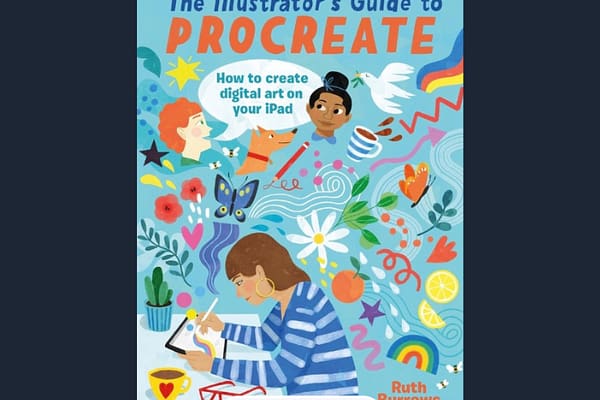
  • The Illustrator's Guide to Procreate: How to Make Digital Art on Your iPad, by Ruth Burrows
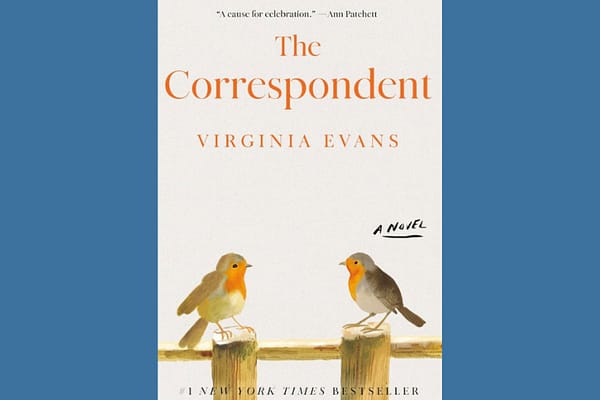
  • The Correspondent: A Novel, by Virginia Evans
  • The Academic Imperfectionist
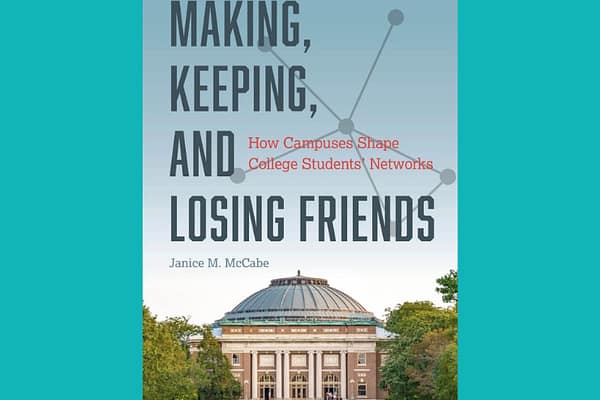
  • Making, Keeping, and Losing Friends: How Campuses Shape College Students’ Networks, by Janice M. McCabe
  • Poll Everywhere

ARE YOU ENJOYING THE SHOW?

REVIEW THE SHOW
SEND FEEDBACK

ON THIS EPISODE

Nancy Chick

Nancy Chick is a SoTL scholar, scholarly teacher, and faculty developer. In 2011, she left full-time faculty work as an English professor to focus on the scholarship of teaching and learning (SoTL) and faculty development first at Vanderbilt University, the University of Calgary, Rollins College, and now Texas Woman’s University, where she is the Executive Director of Teaching, Learning, and Scholarship and Professor of English. Nancy has taught undergraduate courses on American literature, women’s and gender studies, and how learning works in higher education, as well as graduate courses in literary pedagogy and feminist pedagogy. She has authored and co-authored numerous articles and book chapters on the results of SoTL projects and on the field of SoTL. (See her CV for a full list of publications.) Nancy also has an extensive editing background, serving as founding co-editor, with Gary Poole, of Teaching & Learning Inquiry, the journal of the International Society for the Scholarship of Teaching and Learning/ISSOTL (2011-2020). In 2017, she was presented with an ISSOTL Distinguished Service Award, served on the ISSOTL Presidential team from 2019-22 and (with Chng Huang Hoon) as President in 2020-21, and was the Society’s inaugural Historian until 2024.

Katarina Mårtensson

Katarina Mårtensson is professor of higher education and academic developer at Lund University in Sweden. Her work includes supporting educational, academic and organisational development through leading programmes on teaching and learning in higher education, scholarship of teaching and learning, and educational leadership. Her research focuses on the role of social networks, academics’ professional development, academic microcultures, and educational leadership. She has led a professional development initiative for educational (faculty) developers, called “Strategic Educational Development” in Sweden, Iceland, and Singapore. Katarina is a founding member of the EuroSoTL Network, past Co-President of the International Society for Scholarship of Teaching and Learning, and previously a co-editor of its journal Teaching & Learning Inquiry. She has received the ISSOTL Distinguished Service Award (2019) and the Spirit of ICED Award (2025).

Peter Felten square photo

Peter Felten

Peter Felten is executive director of the Center for Engaged Learning, assistant provost for teaching and learning, and professor of history at Elon University. Peter has published six books about undergraduate education including (with Leo Lambert), Relationship-Rich Education: How Human Connections Drive Success in College (2020). His next book, a student guide to relationship-rich education, is co-authored with Isis Artze-Vega, Leo Lambert, and Oscar Miranda, will be published by Johns Hopkins University Press in early 2023 (with an open access online version free to all readers).

Bonni Stachowiak

Bonni Stachowiak is dean of teaching and learning and professor of business and management at Vanguard University. She hosts Teaching in Higher Ed, a weekly podcast on the art and science of teaching with over five million downloads. Bonni holds a doctorate in Organizational Leadership and speaks widely on teaching, curiosity, digital pedagogy, and leadership. She often joins her husband, Dave, on his Coaching for Leaders podcast.

RECOMMENDATIONS

Drawing Digital: The Complete Guide for Learning to Draw & Paint on Your iPad, by Lisa Bardot

Drawing Digital: The Complete Guide for Learning to Draw & Paint on Your iPad, by Lisa Bardot

RECOMMENDED BY:Bonni Stachowiak
The Illustrator's Guide to Procreate: How to Make Digital Art on Your iPad, by Ruth Burrows

The Illustrator's Guide to Procreate: How to Make Digital Art on Your iPad, by Ruth Burrows

RECOMMENDED BY:Bonni Stachowiak
The Correspondant

The Correspondent

RECOMMENDED BY:Nancy Chick
The Academic Imperfectionist

The Academic Imperfectionist

RECOMMENDED BY:Katarina Mårtensson
Making, Keeping, and Losing Friends

Making, Keeping, and Losing Friends

RECOMMENDED BY:Peter Felten
Woman sits at a desk, holding a sign that reads: "Show up for the work."

GET CONNECTED

JOIN OVER 4,000 EDUCATORS

Subscribe to the weekly email update and receive the most recent episode's show notes, as well as some other bonus resources.

Please enter your name.
Please enter a valid email address.
JOIN
Something went wrong. Please check your entries and try again.

Related Episodes

  • EPISODE 335Trauma-Informed Teaching and Learning
    Mays Imad Square

    with Mays Imad

  • EPISODE 456Mobile-Mindful Teaching and Learning

    with Christina Moore

  • EPISODE 412Teaching and Learning with Refugees
    Céline Cantat headshot

    with , Céline Cantat, Ian M. Cook, Prem Kumar Rajaram

  • EPISODE 206Inquiry-based Learning
    Jeffery Galle

    with Jeffery Galle


EPISODE 616

(Re)Orienting the Scholarship of Teaching and Learning

DOWNLOAD TRANSCRIPT

EPISODE 616: (Re)Orienting the Scholarship of Teaching and Learning

Bonni Stachowiak [00:00:01]:

Today, on episode number 616 of the Teaching in Higher Ed podcast, Reorienting the Scholarship of Teaching and Learning, with Nancy Chick, Peter Felten, and Katerina Mårtensson. 

Bonni Stachowiak [00:00:17]:

Production Credit: Produced by Innovate Learning, Maximizing Human Potential. 

Bonni Stachowiak [00:00:27]:

Welcome to this episode of Teaching in Higher Ed, I’m Bonni Stachowiak, and this is the space where we explore the art and science of being more effective at facilitating learning. We also share ways to improve our productivity approaches, so we can have more peace in our lives and be even more present for our students. Three scholars, three institutions, and three very different contexts, and a book so genuinely collaborative that, as they’ll tell you in a moment, none of them can trace which sentences belong to whom. Nancy Chick is the Executive Director of Teaching, Learning, and Scholarship at Texas Women’s University, founding co-editor of Teaching and Learning Inquiry, and one of the field’s most thoughtful voices on what the scholarship of teaching and learning actually is, and why it matters, and I’m so excited to have her as a guest. She’s been a longtime prospective guest on my list, happy to have her here.

Bonni Stachowiak [00:01:35]:

Peter Felten is a returning guest and assistant Provost for Teaching and Learning, the executive Director for the Center of Engaged Learning at Elon University, professor of history, and the author of many books on undergraduate education, including work on the relationships that shape student learning. Katarina Mårtensson is professor of Higher Education and academic developer at Lund University in Sweden. A founding member of the Euro SOTL Network, and a past co-president of the International Society of the Scholarship of Teaching and Learning. Together, they’ve written, and are here to talk to us about today: The SOTL guide – Reorienting the Scholarship of Teaching and Learning. And we’re going to be looking at those two letters in the front of that word, the R and the E the  REorienting in that subtitle, and why it’s relevant in their work. We’ll be looking at what makes a SOTL question really meaningful, what traces of learning open up for us that data isn’t always able to do, and what it looks like when three scholars across three totally different contexts look like when they come together to collaborate. And of course, as always, we’ll have our recommendations segment, which is a great one this time. And before that, a polling tip made possible by my partners over at Poll Everywhere, Nancy Chick, Peter Felten, and Katarina Mårtensson. Welcome to Teaching in Higher Ed.

Nancy Chick [00:03:23]:

It’s great to be here.

Bonni Stachowiak [00:03:25]:

Let’s begin with curiosity. Curiosity for me always lights up the imagination, and I’d love to hear from each of you. When you think about the scholarship of teaching and learning. I want you to think about maybe something recent, or perhaps even from long ago that really sparked your curiosity in your own scholarship of teaching and learning, and kind of what that says about how you’re being shaped today. And, Nancy, why don’t we begin with you? What are you curious about or long ago got curious about that is still fueling you today?

Nancy Chick [00:04:01]:

Oh, so much. I think back to, oh, gosh, 10, 20, no, probably 20 years ago, when some colleagues, Holly Hassel and Chuck Ryback, and I, were doing a SOTL project that we thought was about how students learn figurative language. And so we developed this project and taught this lesson in our classes, and found that the students didn’t learn. Didn’t learn much about figurative language. And so that was my first experience with what we might call a failed SOTL project. But what that did was it illuminated for me something I was feeling in my gut about what had drawn me to SOTL, which is that gap between what we think we know, what we assume about what’s going on in the classroom, and what’s really happening. And I just- so much of what I’ve learned over the years is that we’re so often wrong.

Nancy Chick [00:05:07]:

And so what we did, what Holly and Chuck, and I did in that project was we looked at all of this failed work that our students did that actually wasn’t a failure after all. They showed us so many of the novice practices and ways of thinking in literary studies that we learned so much about that gap, and how to support students in that gap. And so that’s just been one of my perpetual curiosities, which is, what is it that we assume? And then what’s really happening?

Bonni Stachowiak [00:05:47]:

There is so much in that story, and I promise listeners and friends here talking to me today, I will not be telling a lengthy story about my dissertation, but the short version is, yeah, a failed dissertation. That all the things that I had spent so many years laboring over, and all the things that it’s just like now, it’s like, well, it didn’t work the way I thought it was going to work. But how these failures can contribute in such meaningful ways over such a sustained amount of time. I’m so curious now to hear Katarina’s story about something you’ve been curious about or long ago.

Katarina Mårtensson [00:06:27]:

Very, very long ago, in, well, beginning of the 90s, I was an undergraduate student in speech therapy and pathology, and. And my teachers decided to redesign the whole curriculum from quite a subject and discipline based into a problem-based curriculum. And I loved it, the change. But my fellow students, some of them were really, really upset. And that actually triggered my own curiosity into why is it that we learn differently? and why is it that some ways of learning are preferred to some people vers versus not preferred to others? And that actually led me into the academic development work, where in a job interview, and this was in 1999, I got a question by my then and later on colleague Togney Roxa. How do you change a university in terms of developing teaching in particularly a research intensive context? And that has been my curiosity since then. Working as an academic developer, using SOTL in different ways, supporting SOTL in different ways. What is it that makes teachers want to develop their teaching in ways that support student learning in better ways? And how do we know what that is? So it’s like a constant curiosity with a multitude of answers and still not one answer.

Bonni Stachowiak [00:08:03]:

There’s so much literature around the ways that emotions are contagious. And I’m finding myself just feeling completely stimulated by how curiosity can be stimulated, and the examples that you’ve given. I’m not really deep into the research, the way each of you have been over all this time, but even as you were talking, I was thinking, oh yeah, then preferences, and then sure enough, preferences. Preferences versus actually what might work for us. But how to talk about that in a way that’s not totally condescending to the learner, as if, you know, that’s not a problem slash opportunity for all of us. Well, Peter, I mean, my goodness, I cannot wait for your answer on this one. What’s coming to mind for you?

Peter Felten [00:08:45]:

Well, two things. First, it’s like it’s such a privilege to work with brilliant people like this. So one is, I feel really fortunate about that. They both spoke about the past, so I’ll speak about something that I’m really curious about right now. Which is not it’s about AI, but it’s not what I’m hearing other a lot of other people talk about. So much of the conversation about AI is about learning, and what does AI do and how is it shaping learning and all this. I’m really curious coming out of some of my personal experience and witnessing thing what students are feeling about AI and how feelings related to AI and learning are going to shape higher education. So back to curiosity. Bonni.

Peter Felten [00:09:31]:

I became a history major as a student. I didn’t go to college intending to be a history major, but I had a class, and I was so curious and so interested, and so engaged with that that I just kept following that path. If I had AI doing my work, that work would have felt exactly the same as all my other classes. So how are students going to choose what to pursue and where they’re curious. And what they’re proud of? Or what all those sorts of things. So I think there’s this huge affective part about learning in a time of AI that I don’t feel like I have a handle on at all, and I’m sure is as varied as Nancy and Katarina are talking about. But still, it feels like we’re missing something in the conversation that’s really fundamental, which isn’t about what the AI can do, or even about what it means to learn. It’s like, what does it mean to feel proud of your learning? Or what does it mean to feel excited and curious when there’s a machine sitting right there that will do what you’re prompted to do?

Bonni Stachowiak [00:10:40]:

What’s so inspiring about your example here, too, is just looking at all the ways in which interdisciplinary thought and means, ways of knowing, can come together to provide such nuanced ways. And that’s why I know collaboration has so much at the center. Nancy, let’s start a little bit more around, especially for people who may be newer to the scholarship of teaching and learning, which, by the way, for listeners we will sometimes refer to as SOTL, just to make our words a little bit more efficient on today’s episode. So if we say SOTL, we mean scholarship of teaching and learning. Tell me, even just about the subtitle of your book, your choice of the word (re)orienting. The scholarship of teaching and learning versus Orienting. Why the word choice? What does the RE need to do for us, as you were thinking about SOTL in this endeavor?

Nancy Chick [00:11:35]:

That’s such a great question. The word reorienting didn’t come to us until quite late, when we were again, like, oh, what do we call the- this thing in the subtitle? But the idea was there, I think, from the very beginning. We, we’ve all been involved in this work, since very early on, and have followed so many great colleagues doing great work, and we didn’t want to kind of diminish any of their work. But we did want to do something that felt, to go to Peter’s point, about how does it feel? We wanted to go and do something that felt different from how our colleagues, and even we have been talking about SOTL, doing SOTL, helping others learn about SOTL. And so we wanted to do something different and ourselves learn how to do it differently. So we see SOTL as simply inquiry into teaching and learning, for the purposes of improving teaching and learning in context and then contributing to what we know about teaching and learning in support of the broader aims of higher education. And we don’t spend a lot of time on that definition because what we want to center in the book and in every chapter is the human in the work, the person doing the work, the people involved in the teaching and learning, and the people who will be reading about, and thinking about, and applying the work.

Nancy Chick [00:13:18]:

So we shift, and we think about the role of the human in every step. We also didn’t want to do kind of a stepwise book or a stepwise guide, but instead a way of rethinking where we begin, how we ask questions, how we think about ethics, how we think about the lit review, how we think about going public and reframing or reorienting each of those moments again to center the human and the human relationships.

Bonni Stachowiak [00:13:57]:

Peter, one of the things that Nancy mentioned in her gorgeous definition that is so inspiring and challenging in the best ways was in context. In context. and if there’s anything that I’ve learned after 12 years of doing this podcast is just that I have to have that at the centerpiece of my mind in every conversation, every way that I attempt to partner with other faculty colleagues and my own work, etc, talk about that context a little bit more. Three co-authors across very different institutional contexts, and even different countries. Tell us a little bit about how that collaboration surfaced, that if it was a solo authored project, the book could have potentially missed.

Peter Felten [00:14:45]:

Yeah, our context is really interesting to me because it’s so different and our contexts are so different. Our collaboration, I mean, we’ve known each other for a long time, but we sort of started, each of us, I think, by admiring the other person, and being intimidated by the other people. And then seriously. And then it’s like, oh my God, Nancy, Chick just emailed me. And then, you know, and then, getting to know each other not just as scholars, but as colleagues and friends. And so one of the ways, actually the way the collaboration started with an email, the title of which usually quote titles of emails, but it was do you want to come out to play? And it was, let’s think about doing this together. And one thing I think is- I don’t know what the right word is. 

Peter Felten [00:15:39]:

Magical feels like the wrong word, not heavy enough and not clear enough. That’s beautiful about the conversations we’ve had that led to this work is that I think the book is OUR ideas. It’s not a sequence of Nancy’s idea, and then Katerina’s idea, and then Nancy’s idea, and then Peter’s idea. And I’m not saying individuals of us didn’t bring certain ideas, perspectives, or things like this. But I can’t go through this book and say who wrote this sentence or this section or whose idea this part was, because it really is a product of the three of us. And I know I could not have written this book alone because I could not have come up with many of these ideas on my own. I think they really emerged as Katarina’s work.

Peter Felten [00:16:25]:

Research has taught me in conversations, deep conversations with significant colleagues, that’s where the ideas come from. Not from me or Nancy or Katarina.

Bonni Stachowiak [00:16:38]:

Katarina, what’s coming to mind for you as you think about this powerful collaboration?

Katarina Mårtensson [00:16:43]:

Well, I just want to agree with Peter, but also say that I think one prerequisite for this was the playful invite. And also that we knew each other not only as scholars, where we admired each other’s work, but we had done some previous work together in different formats, and also got to know each other as persons, as whole individuals, as people. And that’s, I think, where the trust is created. And I just also want to say it’s not only the book that has come out of this, and the product in ways that has been collaborative, but I also learned so much in this process that I now can use sort of as my own product back in my own work that I couldn’t have done or learned in any other way than through this. I actually just looked it up. The email that arrived in my email box is almost five years ago, in April 2021. So there you have it also, it’s a long process.

Bonni Stachowiak [00:17:49]:

I want to make sure that we get a chance to talk about meaning, specifically, how do we think about what makes a question meaningful? Nancy, what do you have to teach us about that? How do we think about questions, and making them meaningful?

Nancy Chick [00:18:07]:

I love the way you asked that question of what do I have to teach us about that? And I’m going to go back to someone who taught me about that. Years ago in Wisconsin, Tony Sacconi, a colleague in the University of Wisconsin system, was offering a statewide SOTL program that I was part of. And for five days in the summer, all of us from around the state went down to Madison, where Tony led us in a workshop all week. And I want to say, three of those five days he spent just on our questions. What were our SOTL questions that we were just starting to think of; three days focusing on- it was about 30 people- just workshopping our questions. And what he taught us and what we share in the book is a set of characteristics of what he called meaningful SOTL questions. And you can see the five characteristics, but kind of in a nutshell, they arise from our experiences.

Nancy Chick [00:19:19]:

So that might go back to your point about curiosity. They are consequential, and Tony always used that word deliberately. Consequential questions, important, significant, meaningful. They make us look at something newly, with fresh eyes, and they typically raise more questions than they answer. So there’s this wonderful complexity in these questions that’s not a simple question answer or question solution, but a real attempt to understand something that’s happening. And I’ll go back to an old colleague, Gary Poole, who also in another place, wrote about how our goal in SOTL is not to achieve necessarily generalizable simplicity, but instead to, as he wrote, represent complexity well. And so I think meaningful SOTL questions, in some way, first of all, help us understand what’s really happening, because, again, we’re so often wrong. And then honor the complexity of what’s happening in teaching and learning, in whatever way that shapes our questions.

Nancy Chick [00:20:45]:

And if I may just say something about why I keep mentioning names. Earlier, we talked about the generosity of the SOTL community. And in the book and elsewhere, we are trying to be generous and acknowledge the humans in the work by tracing where our ideas, where our heritage as SOTL scholars comes from. And so naming these people who’ve influenced us is just really important. So I just like to frame those stories and those names of appreciation with that intention.

Bonni Stachowiak [00:21:24]:

What’s wonderful about that, too, is you take us to those places. I mean, you talked about naming the heritage of this history. I felt myself in Wisconsin. I felt that I was with you. And I found myself getting so curious about what that experience was like, and who else was there, and what were the questions that sparked other ideas. And I mean, just to think about all that’s transpired since that time. And, Katarina, I want to ask you.

Bonni Stachowiak [00:21:58]:

Hearing from people like you can be so inspiring. I’m ready to. I’m ready to leave this conversation and just spend the rest of the day just soaking in all that you’ve shared already. But part of the challenge can be for those of us who are more novices. Okay, then, where do I start? Because here they are.

Bonni Stachowiak [00:22:19]:

They’re so far- Oh, my gosh, I Wasn’t in Wisconsin! So how, you know, how am I ever gonna. So we can. We can limit ourselves because we don’t have that foothold for where to start. So in terms of these questions, for coming up with meaningful questions, what are some good first steps for us to begin?

Katarina Mårtensson [00:22:40]:

What I usually say when I speak to colleagues and academics who are sort of starting a SOTL journey is to start small, small steps, and whatever is a low threshold. So don’t have the ambition that this is a project that’s going to end up necessarily in an international journal in the end. But start with what is right in front of you. What is it? Back again to curiosity. What is it in your teaching, or your supervision that makes you curious? Where you want to know more about your students, about their learning, about their learning trajectories, about their struggles. To go back to Nancy’s point earlier about there are so many things that we assume but we actually don’t know. And mentioning again the same Gary Poole, our colleague, he has written a beautiful chapter in another book edited by Nancy, about how we often make decisions in our teaching based on our gut feelings, our intuition, what works, what might not work. You know, it’s a gut feeling, and that’s important, of course.

Katarina Mårtensson [00:23:57]:

And then we maybe talk to colleagues. We build and create, like, anecdotal stories and narratives about the teaching, what works and what might not work, and about our students as well. But SOTL helps us to actually scratch that surface, if you see what I mean, and try to figure out what is really going on. How can I find out? By perhaps talking to my students or looking more systematically into some of the artifacts that they create, or whatever is right in front of you, that’s already there. That’s what I would say is a good place to start. And also remember that even if there’s research out there that has already looked at some of the phenomena that I’m interested in, then it’s the context again, that matters. It’s my teaching, it’s my students in this particular course or program in this particular institution. And nobody has probably looked at that before. So that’s what makes it relevant and significant as well.

Bonni Stachowiak [00:25:00]:

All right, we’re going to do two quick round robins. I told these authors that I could talk to you for hours and hours and just be getting started. So we’re going to do two quick round robins. The first round robin is going to be anybody who wants to share a tidbit about lit reviews or if there’s anything that’s particularly inspired you that you think is worth a look. We’ll certainly link to that in the show notes. I know Peter has one to share there. And then our second quick round robin will be about evidence. What’s an underused or overlooked kind of evidence? So let’s start with our first round robin.

Bonni Stachowiak [00:25:35]:

Any advice that you have about lit reviews, any ways you’ve rethought them, or any lit reviews we should go check out that might be particularly inspiring?

Peter Felten [00:25:46]:

So let me start with an important a story that’s sort of embarrassing to tell. But when I was new in SOTL, I was super self-conscious about lit reviews, because I come out of the discipline of history and in GoT PhD in history, we didn’t talk about lit reviews, we talked about historiography, which is what historians mean by literature talking to each other. But so then I start going to SOTL conferences and things like this, and people are saying lit reviews, and I’m saying I don’t know what that is, right? And so now I’m supposed to do one of these, and I have no idea. And it took me quite a while to figure out that historiography is a way of thinking about a lit review. And so maybe I have some relevant training and experience. And one thing I like about historiography is the frame there is that scholarly work is always in conversation with other work. So it’s not about like lining up.

Peter Felten [00:26:41]:

This paper says this, and this paper says that. But like, how are these scholars talking to each other is what really matters. So one of the, one of the really powerful experiences I had the privilege of being part of in my SOTL journey is in, let me get the year right. In 2017, a group of 10 of us from Australia, the US, and Canada did a systematic review literature review about what was known about students as partners at that point. What’s the literature say? And it was part of what was wonderful is a couple colleagues, Lucy Mercer Mapstone and Kelly Matthews from Australia led this project, and they knew what they were doing around lit review, so they could teach people like me about how to do this. And then we had this really amazing project of reading a wide variety of literature and, you know, narrowing down, finding, and narrowing down findings. And so in the end it turned into a series of conversations about what are these scholars finding and what are they saying?

Peter Felten [00:27:51]:

So in the end, I found my home through that paper, in thinking about lit reviews. But it was not natural or comfortable to me to begin.

Bonni Stachowiak [00:28:01]:

So good. All right. When it comes to evidence, what is an underused or overlooked kind of evidence in projects as we start to get curious about these things?

Nancy Chick [00:28:10]:

I’ll say I think we could learn a lot by looking at student annotations. So how they annotate whatever they’re reading. I think back just very quickly to a project in which we looked at how students annotated a single poem they read. And that was where we really got a glimpse into how they were making meaning as they were reading the poem. So annotations, whatever they’re annotating in your class, capture those.

Bonni Stachowiak [00:28:49]:

Anything else coming to mind? Peter or Katarina?

Peter Felten [00:28:52]:

Let me say one, Katarina, you close this out with a brilliance. There’s some of the most influential SOTL work on me was done by a couple colleagues at North Seattle Community College a long, long time ago. And what they did, with permission, is they video recorded student groups solving problems, and then they transcribed those. This is before AI could do this. And they looked really carefully and really closely at how students were coming to the decisions, and to the learning they were having. And it’s fascinating work of slowing down student conversation and seeing what’s happening there. And so I think again, with lots of permission and with lots of care, paying really close attention to things like student peer conversations can be really powerful.

Nancy Chick [00:29:50]:

Just a quick follow up to that. Notice our examples are not the final products of student work, but they step back to those intermediate processes. What Randy Bass and Brett Ainan talk about as the work that ends up on the cutting room floor, that we may not capture, but that can be these really significant moments of the learning process. So the artifacts, the data, the evidence that I think we can learn the most from, that’s the material that might end up on the cutting room floor, in our regular day-to-day teaching.

Katarina Mårtensson [00:30:30]:

And maybe I’m just inspired by a webinar I attended just yesterday about AI in teaching. I mean the current hot topic, and this person advocated that we can use AI, and encourage the students with good sort of instructions and guidelines to use AI, for instance, in producing texts and writing responses to essay questions, and so on. But also having them attach whatever conversation, whatever we call it, they have had with the AI, together with a meta reflection about why this prompt and what did I get out of it, and what is my own thinking in relation to the response I got from the AI. So sort of having encouraging meta reflections and including the AI prompts and responses and everything. And I think that can be a very useful source for learning, both we as teachers and our students learning how to navigate this, how to use it, and what to learn from it, and what to be very careful and cautious about.

Bonni Stachowiak [00:31:43]:

Before we get to that recommendations segment, I want to take just a moment to thank Poll Everywhere for the partnership that we’ve established together. And part of that partnership is sharing a tip with you a couple of times a month. Today’s comes from a recent keynote that I gave for Rutgers University. I had so much fun celebrating the incredible educators that are there, and so many of the creative” ways that they are facilitating learning, including Tatiana Rodriguez, who is “Tatiana teaches over on YouTube. I shared a wonderful video short that I encourage you to go watch about her public speaking informative speech podcast. So she takes a communication class that she teaches and completely, at least as far as I can tell, makes it come alive. And I was talking to a colleague, sharing some real trouble where sometimes it seems like people aren’t always paying as much attention to the other students who are presenting. So I really encourage you to get these ideas from Tatiana.

Bonni Stachowiak [00:32:51]:

But I also want to encourage you to think about what a polling service like Poll Everywhere could do for you. You could set it up to have, in the case of Tatiana, she has them vote for who’s the class choice for particular awards. You had a list of seven or so. I could be off by one or two awards. So, as students are presenting or after they present, you could use a polling service to look at what’s the one word you’d use to describe the core argument of their presentation. So it could be more content-based, or you could make it more fun or do both where you’re having them, you know, make awards or give observations. And it’s just a wonderful way to help people support their colleagues as they’re up there presenting and really give them that chance to engage and be held accountable and establish some really good norms. So thanks once again to Poll Everywhere.

Bonni Stachowiak [00:33:51]:

I encourage you, if you’ve not checked it out already, head over to polleverywhere.com and see what it might be able to do for you in your teaching. This is the time in the show where we each get to share our recommendations, and I am going to recommend books in general. No, I’m somewhat kidding. But listeners, if you’ve been listening for a while, you may have heard me make mention of enjoying coming brand new to digital art. I’ve been taking some classes. I bought this membership where I can pretty much have all the classes I could ever hope for around an app called Procreate, and I’ve been enjoying watching the videos. But I’ll tell you there’s something like an old-fashioned book. So I ended up, I have a birthday coming up as of this recording.

Bonni Stachowiak [00:34:34]:

So I get, I allowed myself to gift myself a couple of books, and I’ll be sharing these of course in the links and in the recommendations. So I’ve got a great starting point is a book called Digital Drawing: The complete guide for learning to draw and paint on your iPad. And this author is Lisa Bardot and she’s the same one who I bought her courses in a year long membership where I just keep. It’s the gift that keeps on giving where she’s constantly producing new things and helping me try things. So I, I really, I had learned from other people that this was a great starting point, and especially because I already sort of know her and have heard her in video form, that was fun. But then I saw someone recommend a great subsequent book is called The Illustrator’s Guide to Procreate: How to create digital art on your iPad. This one is by Ruth Burrows, and what I liked about it particularly, and it’s wild to me how much of my recommendations today is so tying in with our conversation.

Bonni Stachowiak [00:35:31]:

But what I liked about this one is it’s geared around projects, and I do tend to be a pretty achievement-oriented person. I like checking the box off, you know, that, that I could have, oh, I could make a tote bag that you could actually get printed. You know, you could have your art that got printed on a tote bag. And I thought, well, that would be such a fun gift for my mom, who loves more analog things and, and she’s enjoying seeing the art that I’m creating on my iPad. But how fun that could be a gift for her. So I’m just loving these books, but I’m also loving how this fits with our conversation today, because I feel like it’s my own little SOTL project around my own ineptitude with art. I was telling my mom last night over text, I keep trying to draw a self-portrait. That’s what I’m the worst at right now.

Bonni Stachowiak [00:36:14]:

And so I’m finding out from other people. She used to teach, she was an assistant art teacher at a community college. And so she knows. And so I said, my gosh, I just tried it again, and it’s even worse than the last one. And she’s like, that’s kind of how it goes with art. And so it’s fun when you have, when you’re in community with other people, thinking about context and all the things we’ve been talking about how much this is telling me about learning universally, but then also my own learning. And it’s just, it’s so fun for me how much these two books that I wanted to share today are really so perfectly fit for today’s conversation. I thought it would be sort of a off topic, but it is. It feels very, very much on topic. So, Nancy, I get to pass it over to you for whatever you’d like to recommend.

Nancy Chick [00:36:58]:

I love how you talked about reading some books about digital art. I’m gonna go kind of at the other end of the spectrum and say I just finished The Correspondent by Virginia Evans, which is an epistolary novel about an older woman writing letters and emails and receiving letters and emails. And I just turned 58, and so I’ve been craving stories by and about older women. And so I was drawn to this book and just fell in love with her, and fell in love with letter writing again. So I highly recommend it for the three of you who haven’t read it yet.

Bonni Stachowiak [00:37:37]:

I’m cracking up, Nancy, because I’ve told Nancy this off-air, but I feel like I should tell everyone else. Nancy has been on the list of people I would love to invite be a part of CGI Red for so long now. And this book has also been- I feel like I put this book on my to-read list probably the day it came out. Cause, I mean, there’s been a lot of people that have celebrated it, and of course, Nancy, you’re just getting me. I gotta bump that up. I gotta bump that up. Absolutely.

Bonni Stachowiak [00:38:02]:

All right, Katarina, what do you have to recommend today?

Katarina Mårtensson [00:38:05]:

Okay. Since this is a podcast, my mind went out to other podcasts that I listen to as well. And I want to recommend one, which is called the Academic Imperfectionist. It’s by run by Rebecca Roache, at the University of London. And she’s had, according to her, her own story and narrative, a less-than-straightforward career in academia. And she brings forward everything that is about our own vulnerabilities, the imperfectionist in all of us, despite being in a very perfectionist-oriented environment. And it’s so liberating to hear about how to struggle with procrastination, or writing blocks or perfectionism. And it’s just, you know, reminding us of that we’re all human beings. And I just love that podcast. It makes me feel not alone in all of those feelings. So, strong recommendation.

Bonni Stachowiak [00:39:10]:

It sounds amazing. And she’s come up with such a brilliant title for a podcast. I mean, you said those words, and I mean, I don’t even have to take notes. I’m going to remember that title because it’s one that resonates with so strongly. Thank you so much. And Peter, would you please close us out with whatever you would like to recommend?

Peter Felten [00:39:28]:

Yeah. My recommendation ties to themes we’ve talked about today, about collaboration and friendship and making things like this. And it’s a newish book. It came out last fall by a scholar named Janice McCabe. And the book’s called Making, Keeping, and Losing Friends. How Campuses Shape College Students Friendships Networks. And I’ve been an admirer of McCabe’s work for a long time. And this book is really, really smart and really, really interesting about how important friendships are for students learning and well-being in college, and how what we do in our teaching, how we design our programs, how the institution works can really shape how students connect with each other, or not.

Peter Felten [00:40:19]:

And then one other benefit of this book that I’m going to not talk forever about, is I learned some things about friendship and my own experience as an adult. Like, to me, this book explains what happens when you move as an adult, which is you’re in what McCabe would call a secondary friendship market. You meet lots of nice people, they are very nice. They’re just not looking for new friends. And so you find them and you’re like, let’s be friends.

Peter Felten [00:40:47]:

And they say, we’ll see you in eight weeks, because I’d really like to get together with you again, but I have a life. And so, McCabe’s not writing for that. But it taught me things about my own experience, and it has a lot of smart, inspiring, and practical things we can think about doing to help our students connect with each other in ways that are going to help them learn and thrive.

Bonni Stachowiak [00:41:12]:

It has been such a joy to get to read your work, to get curious with you, to hear about your collaboration. And it’s so wild to me just how perfectly this all goes together. And I’m feeling so filled with hope and inspiration. And I’m truly challenged to go out and read some books, and get curious, and start to find where I might find potential collaborations. Thank you so much for everything. It’s just been a joy to talk to you today.

Katarina Mårtensson [00:41:41]:

Thank you, Bonnie.

Nancy Chick [00:41:42]:

Thank you, Bonnie. This was lovely.

Peter Felten [00:41:44]:

Really fun.

Bonni Stachowiak [00:41:47]:

Thanks once again to Nancy, Peter, and Katarina for joining me on today’s Episode. Today’s Episode was produced by me, Bonni Stachowiak. It was edited by the ever-talented Andrew Kroeger. I want to thank you for listening and encourage you, if you’ve yet, to sign up for the weekly update coming from Teaching in Higher Ed. Head on over to teachingin highered.com/subscribe. You’ll start receiving the most recent episodes show notes in your inbox once a week, as well as some other resources that go above and beyond those show notes. Thank you so much for listening, and I’ll see you next time on Teaching in Higher Ed.

Expand Transcript Text

TOOLS

  • Blog
  • Podcast
  • Community
  • Weekly Update

RESOURCES

  • Recommendations
  • EdTech Essentials Guide
  • The Productive Online Professor
  • How to Listen to Podcasts

Subscribe to Podcast

Apple PodcastsSpotifyAndroidby EmailRSSMore Subscribe Options

ABOUT

  • Bonni Stachowiak
  • Speaking + Workshops
  • Podcast FAQs
  • Media Kit
  • Lilly Conferences Partnership

CONTACT

  • Get in Touch
  • Support the Podcast
  • Sponsorship
  • Privacy Policy

CONNECT

  • LinkedIn
  • Instagram
  • RSS

CC BY-NC-SA 4.0 Teaching in Higher Ed | Designed by Anchored Design