Follow the Teaching in Higher Ed Podcast
About this Episode
Jeffery Galle discusses inquiry-based learning on episode 206 of the Teaching in Higher Ed podcast.
Being an actively engaged student is not easy.
Jeffery Galle
On episode 206 of Teaching in Higher Ed
Voices on this Episode


Show Notes + Resources
- Inquiry-Based Learning for the Arts, Humanities and Social Sciences by Patrick Blessinger*
- Expert Dive: Empowering Students Through Inquiry-Guided Learning on the ACUE blog
- Ways of Inquiry: The Distinctiveness of the Oxford College General Education Program by Jeffery Galle, Brenda Harmon, Alicia Ory DeNicola, and Bridgette Gunnels in Inquiry-based Learning for Faculty and Institutional Development: A Conceptual and Practical Resource for Educators. 2014, 121-146
- Small Teaching by James M. Lang*
- Nancy Chick
- AAC&U Essential Learning Outcomes
- AAC&U Value Rubrics
- Kool-Aid (purple)*
- How To Make a Simple OREO Vending Machine With Card
- Hunger by Roxane Gay*
- Tara Westover on Twitter
- When Open-Ended Polling Gets Rocky
Recommendations from this Episode

Transcript
Bonni: [00:00:00] Today on episode number 206 of the Teaching in Higher Ed podcast, Jeffrey Galle discusses inquiry-based learning.
Production Credit: [00:00:10] Produced by Innovate Learning, maximizing human potential.
Bonni: [00:00:20] Hello and welcome to this episode of Teaching in Higher Ed, I’m Bonni Stachowiak and this is the space where we explore the art and science of being more effective at facilitating learning. We also share ways to improve our productivity approaches, so we can have more peace in our lives and be even more present for our students.
Bonni: [00:00:47] Today’s guest is part of my partnership with ACUE and their course in effective teaching practices. Jeff Galle serves as associate vice chancellor for academic affairs in the University System of Georgia. He comes to USG after 10 years with Emery’s Oxford College where he led a number of faculty development initiatives including the Institute for pedagogy in the liberal arts, which a number of faculty from Georgia institutions have attended.
Bonni: [00:01:18] Early in his career, he developed workshops as the director of first year writing and later as the chair of his university’s English department until his departure from Emory in 2008 when he became the founding director of the Center for Academic Excellence. Galle’s scholarly writing includes a number of books on innovative pedagogy. He’s the co-author of How To Be A HIP Campus: Maximizing learning in the undergraduate education and the co-editor and contributing author of two volumes of essays that emerged from the IPLA teaching pedagogy and learning and re vitalizing classrooms. Jeff, welcome to Teaching in Higher Ed.
Jeff: [00:02:02] Thank you. I’m glad to be here.
Bonni: [00:02:04] I am thrilled to be connected with you and we have such a funny twisted way that we’re connected in all these ways. You know many of the former guests who have been on Teaching in Higher Ed and we discovered some of those common friendships and collaborations that we have. And then we also have a connection now with ACUE. And ACUE once a month brings me a guest and it’s just so fun to get to talk to such experts. But this time I got to pass you over to them because I thought you’d be a great person to write for their CUE blog and I know that you’re in the process of doing that so thanks to them for that relationship that we have.
Jeff: [00:02:45] Wonderful collaboration. Yes thank you. I’m glad to be here and I think it’s a great collaboration that you develop or network you develop with a lot of different kinds of higher ed folks.
Bonni: [00:02:54] It is really fun and one of the things that you said in an email that really rang true that you and I have in common is just this love for teaching and love for learning. And I wondered if you would share first off a little bit about some of the things that you find important in terms of collaboration in your own teaching and in your own work.
Jeff: [00:03:15] Yeah I think that it was pretty much an instinctive thing. Years ago, a long way back. But it’s become something more of an articulated theory. And so this idea of you know we are guides maybe is it no matter what you’ve done or what degree you earned or books you’ve written. The idea is that we are together in this, whatever it is, the discipline, the course, the subject or life.
Jeff: [00:03:41] And so students or colleagues or strangers on the street people you talk to in the diner you know they are colleagues in a way. So for me the idea is just being ready to open the door to a conversation and to be able to ask questions but to listen really closely and try to respond to what was actually said not to what is going through my brain. And so that tends to result in all kinds of hared collaboration.
Jeff: [00:04:13] Most of the projects that I’ve done with students have been co-presenting at conferences with colleagues we’ve coedited or coauthored books, team taught, presented with scholars together. We are just naturally kind of, it naturally happens that people who join together have a stronger voice and it’s richer, it’s more complex, it’s more like life. I mean I really do. That just the instinct and maybe the approach is social collaborative kinds of learning on the scholarly level that the classroom level and you know in life.
Bonni: [00:04:52] One of the things I’ve noticed that holds some people back from that is just how vulnerable you really have to be to collaborate. Stephen Brookfield, who has been on the show a number of times now, he shares about how much he’s gotten out of, for example team teaching. But he also says how hard it is because that impostor syndrome comes and says, “I can’t. This person’s going to see what a fraud I am,” and it’s uncomfortable but he still just pushes through the discomfort because of the benefits that that collaboration can bring.
Bonni: [00:05:24] One of the things it can keep us from is being able to be more creative in our teaching. And I wonder if you would just spend a few minutes talking about how creativity has played a role in your own teaching and what benefits you’ve seen.
Jeff: [00:05:38] Creativity comes about, for me, it comes about more as a need of the moment so it’s more like, “OK we’re moving toward a certain point and this is not working. This is not working. What I’ve planned and spent so many hours planning, it is not working.” So I just kind of like there’s a pause. And I think the students, or a colleague, someone in the office or wherever we are can see that I’m really working with this and something just starts to happen.
Jeff: [00:06:07] It could be reaching out in desperation. It didn’t matter what the feeling is, it could be something where you’d just like see a different track. Example, best thing to do is an example, between my masters and and Ph.D., I taught high school while my wife and I were taking care of her parents. And of course I didn’t have any standing in that high school, I was brand new and I got to teach something for which I had only a few hours. I was teaching algebra. I mean I had a master’s in English lit but I had an almost a major in math. It was legit but I was teaching algebra and consumer math. And so the algebra classes took an ordinary routine, a rhythm.
Jeff: [00:06:58] The consumer math class was the class where they placed students who could not do math. And so first day these students didn’t want to be there. They had no interest in learning consumer math. So I struggled with what to do and about the third or fourth week in, I just put the book down closed it and put the eraser down and said, “What’s going on?”.
Jeff: [00:07:22] And the students started talking about athletics. They started talking about a revival that they were having in their community. And I said, “revival?” Because I was a chaplain’s kid. And I said, “What is that? What does that involve?” So they started talking about different ways of enjoying their church and their revival. And I said, “well can we have a revival in math class?” And they just went crazy and so we created a revival consumer math class. And so the guys that were totally disconnected and misbehaving not paying attention, the ones that sat in the back, they were supposed to say things like “amen,” or “bring it on up,” or something I can’t remember it’s been years.
Jeff: [00:08:06] But we did more consumer math problems over the next few days while the revival metaphor lasted. And so I mean it’s just like something happened that solved that problem that you need in the moment. Sometimes it’s not quite a dramatic fashion in a lot of different ways with books substitutions, syllabi modification, changing a scholarly project, writing an editor or a publisher, working with a colleague through a particular challenge. Creativity for me comes about not like a gift, it’s more like an unnecessary bit of work to create something that works better.
Bonni: [00:08:47] It’s interesting to me that you would have framed it that way because I just recently wrote a blog post, and I’ll put a link to it if anyone wants to take a look and didn’t have a chance, but a colleague of mine used a polling system for the first time with some open ended questions. And I asked him if he wouldn’t mind sharing how it went afterward, which he did, and one of the things that happened was that there was NFL scores that were going up there on that little back channel chat and there were links to YouTube videos and things like that. And I did understand the challenge, that’s an example of something not going the way he had planned. And I did share some techniques that you can use and I do understand that things can go so far off that it may not be helpful to the learning process. But One of the points that I did make was you know one option is to just go with it. Which it sounds like you did. I mean you weren’t connecting.
Jeff: [00:09:52] Yeah. There are scripted and unscripted things. And sometimes having it unscripted lead you back to where you want to go and sometimes where you want to go it’s not as good as where that conversation takes you if you just suspend the plan for a minute. So to me there’s just that suspension of the plan, the lesson, the idea, the concept, the term is just to spin that and then go with where the student mind is. I mean you can end up in pretty good places.
Jeff: [00:10:23] But one of the courses that I taught is the memoir. And so the memoir is a portion of a person’s life that meant a lot, that amounts to a good bit. And so every semester I would teach a course in that and I would choose four different memoirs every semester to keep me alive and fresh and engaged so I wasn’t just teaching a book but I was teaching more or less decisions that someone had made in telling a portion of her life that really meant a lot.
Jeff: [00:11:03] And so that connection to the students in my class is just right there it’s just hanging there, it didn’t take a lot of creativity to see that if someone is selling a certain kind of story and leaving things out, the whole invitation is to explore perhaps what’s been omitted and why or what’s included and why or who’s being loyal to whom or disloyal to whom.
Jeff: [00:11:28] So the way the book is constructed just automatically sparks conversations that go all over the world and back and the students who write creative, nonfiction, essay, biographical essays of their own really enjoy that particular genre because it’s so vital to the way that they live and make decisions on their own.
Bonni: [00:11:48] One of the ways I know you’ve used creativity in your teaching is through the development of courses that fall under the umbrella of inquiry guided learning. What can you tell us about what this method is?
Jeff: [00:12:01] Okay, how much time do we have?
Bonni: [00:12:04] You have six hours, go.
Jeff: [00:12:06] In the nutshell version, just in two sentences. It took a faculty at a small liberal arts college approximately two years to come to a definition. So we, and largely this was a process, not beginning with a definition by Virginia Lee or those at Texas A&M or Penn State or Miami of Ohio or Florida State who have legitimate, strongly developed inquiry programs. We started with our best practices and so at Oxford College at Emory we say, “OK we’re doing some pretty cool stuff but we don’t have a name for it.” And then one of the scholars at the college said, “well Emory’s a research institution, it should be about inquiry. And so when we said inquiry, it took us to a vision statement that President Wagner had on the website. This is the president of Emory before Claire E. Sturk became president.
Jeff: [00:13:07] And it talked about inquiry driven, inquiry focused, you know ethically driven, it’s this idea that ethics and inquiry went together. And the same scholars, a professor of religion wrote the original document after a Saturday morning retreat, that’s how devoted and crazy we were, that he wrote a two or three page description of what he saw as being the qualities of inquiry. He called it Waves of Inquiry and he attached some bullets, criteria or qualities and essentially it’s about using the discipline to invite students to explore how knowledge is created in that discipline. And so that’s it. That’s not the Virginia League definition that came out of work at North Carolina State or the other institutions that I mentioned. But it was for us, challenge students to examine a specific problem to which there may be no single answer, through the lens or through the practices of the discipline.
Jeff: [00:14:15] And so for me, as an English professor, it was like, “OK I’ve got to stop and think. What are the forms of literary scholarship? How do we produce knowledge? How is knowledge constructed in my discipline?” And you know I came up with three or four different sub sort of specialties and I looked at what I taught when I was in a previous institution and some of the courses just would not fit with active problem solving. So I came up with three of like a half dozen courses and began to tinker with them. But essentially that core moment of looking at a problem through a disciplinary lens and using the practices of that discipline.
Jeff: [00:15:02] So we used to say, our mantra was, “students would learn to think like a biologist,” or “students would learn to think like a literary scholar.” And we specified all kinds of outcomes. One of our goals was to encourage students to be able to articulate the differences so they could speak about multi-disciplinary approaches to complex problems. But that’s the short version. Sorry, I probably took too long but that is as short as I could make it.
Bonni: [00:15:33] Not too long at all. I was going to say that my kids have been passing cold’s back and forth and so yesterday I had an unplanned day with my son who is 6. He is just such a curious learner and already has bypassed me in many disciplines I’m afraid to admit. And one of the things he really wanted to do was build something out of this cardboard box that he just he knew something great could come out of this.
Bonni: [00:16:01] So we go on YouTube and I found something that just captivated him, a vending machine, a cardboard vending machine that you can make. And I’ll put some links in the show notes because I can’t believe some of the stuff that’s out there. I do not have a lot of gifts in spatial intelligence or engineering, but at the same time my son really wanted to do this. And so I could just stop myself and say, “I’m not good enough to to do this. That’s not my area of expertise.” Or we could dive in and learn together. And it was really fun.
Bonni: [00:16:32] But as you’re talking, it feels like at some point in our educational institutions too many of us turn that off in our classes. We stop thinking of our teaching, we think of it as in, “I’m going to tell you, maybe at best, how knowledge is created.” I don’t know that we can necessarily tell and you use the word invite. Can you talk more about how we invite students to explore how knowledge is created?
Jeff: [00:17:04] So I taught at a regional university Louisiana Monroe for 20 years and 10 years at Emory. And so I know the feel of different kinds of students of different ages, at different kinds of points. Without exception, students get excited when they’re confronted with problems when they have the confidence to explore. It’s just that simple, that’s it.
Jeff: [00:17:28] And so if they have this feeling that they’re going to be overwhelmed, that the professor is something way beyond something that they could ever do, that’s not going to work. It’s got to be something like I mean you can have the fellow who wrote the definition of inquiry for us on Saturday morning had written six books in religion.
Jeff: [00:17:49] But he didn’t talk about, “these are my six books.” That’s not it. He said, “let’s look at what they’ve been saying about St. Paul through the ages.” And so that’s kind of like a really seductive way of coming into scholarship. Like, “what do you mean?” Well there is this this and this. And so he’s just spanned four centuries with one sentence and invited students to examine original and secondary articles about thought about a specific religious figure.
Jeff: [00:18:18] Same thing in literature. It’s like inviting students in a really good open way to accept the rigor and complexity into their daily lives. And they can do a lot more than we think they can do if we invite them. And so the other side of inquiry is called scaffolding. So, there you go. So when they stumble, what did you do? Or when you’re introducing a mystery that’s really hard to understand, what do you build around that mystery? It has to be some sort of structure that they can climb in order to peer in the windows or climb in order to understand how to think about a certain thing.
Jeff: [00:19:07] The balance between the support that we give them, or equip them to think with certain concepts, that’s vital. If you give them too much, you’re talking and lecturing. If you give them too little, they’re lost.
Jeff: [00:19:15] And so for me, that’s it. Teaching and learning are dynamic. It’s not something that you can just get up and go do and come home. It’s more like action reaction or something like that where what I say is partly conditioned by what the students have said and vice versa all the way through the whole semester, the whole particular class day.
Jeff: [00:19:47] One of the disappointing moments that I had when I first began to try this in literary criticism class, one of my students who had come from a very gifted high school, he had great academic profile. This was an Emory student, straight A’s, really really bright. He was used to having things packaged for him. And so he was good at memorizing. He didn’t want to have to think and so he said, “well Dr. Galle, since I’m going to have to teach myself literary criticism…” That was the first part about it. I said, “Oh no, it’s not like that. We’re doing this together.” And so I kind of like just probably turned beet red and just listened to him and then talked to him later and I said “you know you really had a really great insight. It does mean you’re doing a lot of self teaching but I’m with you.” You know it goes back to asking the questions asked a question and we’ll go there. But he was frustrated. Inquiry or being an actively engaged student, it’s not easy. But it seems to be more vital to what your child, your young son was doing with that cardboard box. If that gets in to the mix then it’s going to be a good thing.
Bonni: [00:21:01] You have some great examples of what this might look like in different disciplines so could you talk a little bit about I know some of your colleagues that you’ve collaborated with and natural sciences, social sciences, yourself in literature and also in language?
Jeff: [00:21:17] Ok. That was the 2014 chapter that you were talking about that came out. Patrick Blessinger’s book on inquiry-based learning. But these friends of mine came together to actually create an assessment project. This is 2014 and we started as a college in 2009 to 2011, those two years I was talking about.
Jeff: [00:21:40] And so at 2014, we were already three years and we were thinking you know what we’re doing really cool stuff we don’t know how to fix it. We don’t know how to measure it. So these four, the four of us came together, I was the director of the teaching center, and so I didn’t tell them that I had learned of an RFP for this book but I wanted to see how the assessment effort was going. It was going really really well, I thought we could do this if we wrote blah, blah, blah, and we got accepted we could do a chapter together for parts and frame it as Oxford colleges efforts in inquiry.
Jeff: [00:22:17] And so that’s how it came together. We spent one day a week, one afternoon, an hour a week talking about our own courses. And so what one of them was doing, I don’t want to use their names because I have not asked their permission to talk about them as people. But one is an anthropologist. And the thing that she, she’s done many different inquiry projects, but the one that comes back most clearly to me is she thought of a central metaphor of games and game making and she had this student. And I may be misremembering the one that she used in this chapter, because there are three or four different courses that I’m familiar with tend to run together.
Jeff: [00:22:57] But society and social groups of distant times compared to modern day. She was trying to find some way to bring them together. And so she came up with this idea of “what is a game?” What is a game? And the students were challenged to study these cultural practices through the lens of a game.
Jeff: [00:23:22] And each student could pair up, most of the time they did it in small groups of two and three, they developed- like monopoly. They made their own game. They made their own parts, their players, their rules, the board. And they presented it at a conference in the library and it became like “the game of social practices,” something like that. The game of social forum. So it’s all really like cardboard box. But it is serious and that it had to have rigor that would be understandable by a Ph.D. professor from Emory whose specialty was cultural anthropology. So she was doing things like that.
Jeff: [00:24:00] This Spanish professor- so how is language taught? A lot of times you just do conjugations and memorization. This professor wanted to take language learning a little bit farther. And so she played with the idea of deconstructing stereotypes. And she said we have a lot of stereotypes that we carry about each other, certain groups, social groups, underfunded minorities, whichever group. And so she said Spanish speaking people face a lot of stereotypical actions, reactions, language.
Jeff: [00:24:38] And so as she was teaching this course, she would have photographs that she would play in different- maybe one day or two days out of the week- and she would say let’s analyze this photograph. These students were probably second semester third semester so they were required to speak Spanish, they had to speak in Spanish. And they had to deconstruct the stereotypes that the photograph displayed by using Spanish.
Jeff: [00:25:09] And so she said we lost a lot of hair, a lot of students were pulling hair but students who write about her courses do so with the fondest affection and appreciation of the rigor of the social justice component that’s in there. And a lot of it is much farther beyond just conjugating verbs and things like that.
Jeff: [00:25:34] The third one, the chemistry professor had the coolest [one]. She came into class- I love this lady. She came to class with a packet of Kool Aid and she put it out on the lab table at the front. And she had purple Kool Aid. She said, “What does it mean to have purple Kool Aid? What is the color and the chemical and how do we separate them?” So she concocted this whole inquiry project with Kool Aid and students learning how to in chemical ways… I’m coming out of my depth here, I’m not really sure how to explain this. And you know that kind of problem, so they have a problem this is Kool Aid. How do we separate this out? If you look at Kool Aid you really can’t see individual white and purple grains. It’s kind of all blended together.
Jeff: [00:26:26] And so the task of the students were to create a lab procedure that would enable them to explain in chemical terms what the color purple really was. And that’s probably not really well explained. But that’s it. So the idea of the commonality that we all shared- mine was literary criticism and I had thought that at the master’s level for a number of years and I knew that just covering successive schools of literary criticism would put the students to sleep. But ok can I redesign this as an inquiry course, a problem, a central challenge of complexity that has no single…
Jeff: [00:27:11] So let’s just put the theory book on reserve in the library. I would reserve that and a few other handbooks and save several, maybe 20 or 25 PDF short essays that were really clear and to the point of a theoretical nature. So Aristotle’s Poetics, the short version, just a part of that. Or something from Cicreo, just a paragraph. And then I would pull out the theory that I thought would be most essential, left the full Norton Anthology of literary theory on reserve and then say, “We’re going to start with a set of classic short stories. Read the first story, go home, write a set of questions that that story raises and let’s go from there.”
Jeff: [00:27:59] And so we essentially, the question that we were raising in that literary criticism class: How did the story mean? What does this story mean? How does a scholar make an interpretation or make meaning through either reading or through analysis or both? And so what I wanted them to do, and they did by the end of the semester, was we retired the classics collection from Hawthorne and Walker and Hemmingway and all those and we picked up a recently published, only 2 years old, an anthology of modern worlds short stories.
Jeff: [00:28:32] And these students had learned enough psychology, linguistics, historical, deconstructive, structural, sociological, feminist theory to choose a story in the new anthology and write a ten to twelve page research paper which essentially became the first reading of the stories that were just published.
Jeff: [00:28:53] So the way that inquiry works is the duty to do the work in the discipline to produce some artifact that’s authentic so whether it’s a game or purple Kool Aid or a literary reading. The idea is that kind of thing. And it can get really exciting. So, it’s not boring even though it sounds boring.
Bonni: [00:29:13] It doesn’t sound boring at all. These examples are fascinating and I just keep being impressed or just really inspired by the theme of relevance throughout all of them. I mean even though I’ve never had- I don’t want to sound like a victim here. But in terms of my own lack of scientific abilities, it often is because that relevance was missing. I didn’t understand why are we doing this lab? Like how is this relevant to me? But wrapping it in a mystery, wrapping it in a problem where I’m actually going to be part of trying to solve that sounds like a real way to engage.
Bonni: [00:29:55] And I wonder if you could maybe talk about if this felt too large for someone to undertake around a whole course. Are there ways to use in Jim Lang’s phrasing some small teaching around this? Can we use some enquiry in smaller ways to get some practice and make some mistakes early and then make it larger?
Jeff: [00:30:19] Jim Lang’s book Small Teaching points out strategies of using short assignments, major assignments to modify a moment or a unit where you would be telling. I’m just going to tell you this. You know there it is. Or can we construct an assignment to where the students would be challenged to discover that theme or to apply or to create. So it can be just like a simple assignment.
Jeff: [00:30:49] When I was working at the faculty developer with faculty who were newly hired and they were going like “what the heck is this inquiry thing that you could talking about?” And everybody. I mean everybody. It’s in the water. And so I ask, “Well, the class that you taught when you were doing your Ph.D. was what?” And it is usually an introductory class. What were that moments in that class, in that course that gave the students the most problems? “Oh you want to go there?” Yeah. Give me a problem that the most significant to them. You know they would come up with something that required students to do a lot of memory work or the concept is really profound and complex and so I said “can we take moment and create an assignemnt where the students would explore maybe bits and pieces of that? Just breaking it down.” And so they said that would be hard. Yep, that is inquiry.
Jeff: [00:31:43] And everybody as time went on, more and more people had really cool examples of short and long things, whether they were classroom based, or like a homework thing, or a research project. And so we had this list of best practices that everybody got a chance to know over time. So people who were newly coming to Oxford College, they would have colleagues or mentors who would say “Yeah don’t try to do your whole course, forget that.” Don’t define the courses as an inquiry course, you may get the sticker that the curricular signification that you’re teaching inquiry but the gospel truth is start small and then work outward from there.
Bonni: [00:32:25] And this is the point in the show where we get to totally shift gears and recommend some things that may or may not have to do with the episode. And mine, it’s funny because I feel like we’re sojourners, you and I, because you had mentioned in an email that we both have such a passion for our teaching.
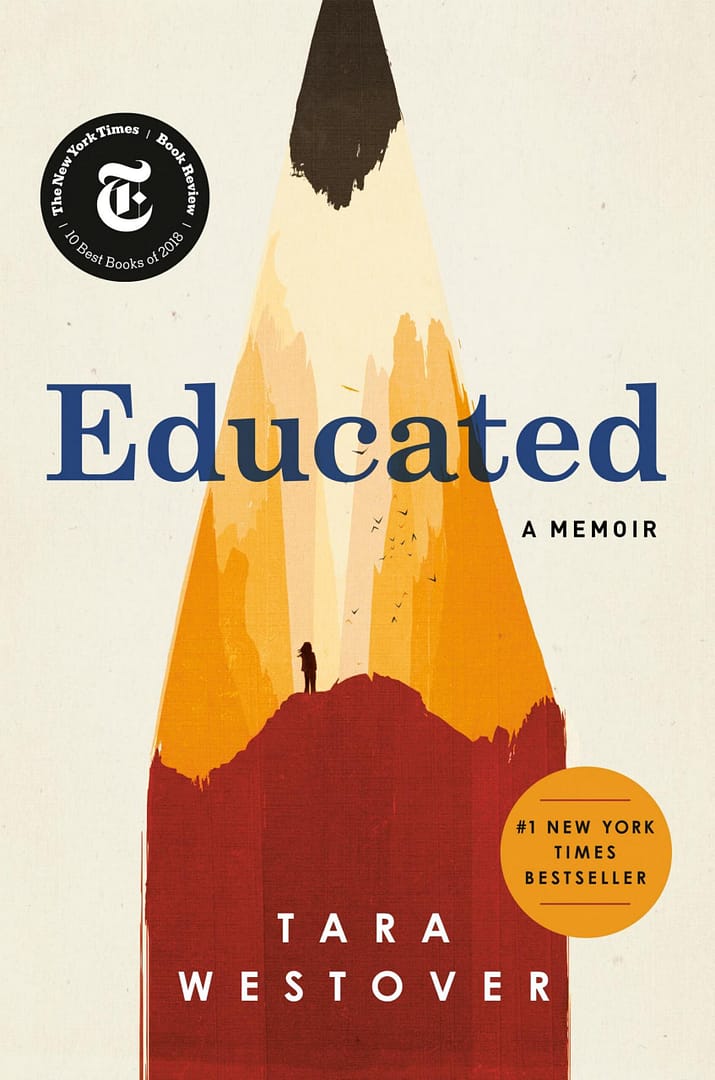
Bonni: [00:32:41] Well I didn’t know that mine was going to relate to the episode but it kind of does because I’m going to recommend a memoir today. The memoir is called Educated, a Memoir and it’s by Tara Westover and I actually heard about it from Katie Lindor at Oregon State. She had it on her e-mail list of books that she wants to read this summer and I was instantly captivated by this idea. This woman, she was 17 years old when she first set foot in a classroom and her family are a group of survivalists in the mountains of Idaho and she’s from her childhood stockpiling home canned peaches and preparing for the end of the world. It was very trepidatious for her family, the millennium – the change from 1990 to 2000, they were convinced that was going to be it for the world.
Bonni: [00:33:30] And spoiler alert it was not for the world. She ends up with… I don’t want to share this in the book description so I’m not giving too much away but she ends up eventually going to Harvard and to Cambridge University and just is a remarkable story. Talk about resilience. And it’s just absolutely wonderful. It made me think about so many things in terms of our own teaching and not knowing in fact- I don’t think I’ll give this away but I’ll say that in her very first history class, she doesn’t understand a word and when she tells the professor she doesn’t understand the word, he assumes that she is being racist and rude because everyone of course knows what that word means. And everyone doesn’t know what that word means. Then that just taught her that she should never ask any question because she didn’t understand what social norm she had broken. She just learned don’t ask questions, you’ll create and stir so much up. There’s just so much that I thought of and read in her story and I devoured it in about two or three days. It’s just a wonderful book. She’s a brilliant writer. And Jeff, what do you have to recommend today.
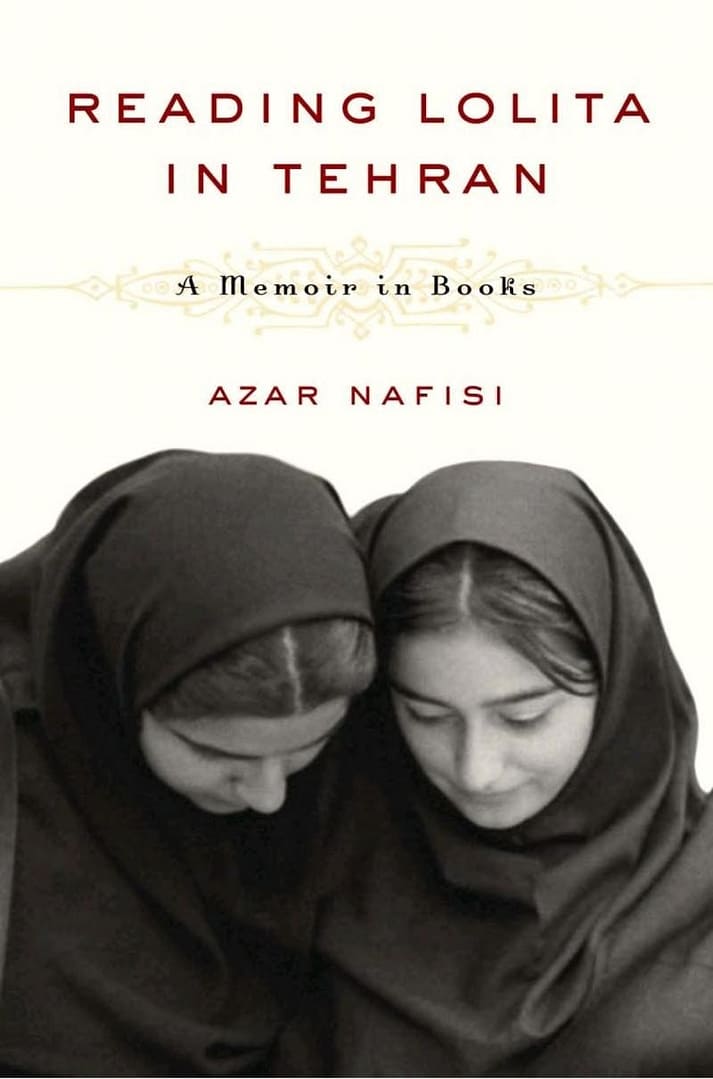
Jeff: [00:34:41] Probably one but people are more familiar with. For me, it speaks to being a teacher. It’s a book called Reading Lolita in Tehran. Published in maybe early 2000’s, 2003. But it was one of the memoirs that I used one semester. It really changed the conversation in class, the classes that we have there are really diverse. So we have a high number of students from around the world, many different countries. The challenge is to negotiate difference and then hopefully with the goal of celebrating difference, if we’re good, we can get there.
Jeff: [00:35:23] This book is set in the time when Tehran was changing power, changing hands politically and the revolution and the radicals were rising to the top. And this woman Azar Nafisi is the author and she was the teacher and she taught girls and she wanted to read taboo literature and so like Lolita – you know – Nabokov’s Lolita. And so she contextualizes the reading of this story, a forbidden relationship in a country where a lot of things were forbidden in a kind of totalitarian way and the undercurrent survived all the challenges of that era was this bond that the girls had with their teacher and they had to each other and the love that she had for them. So it’s really it’s better than Goodbye Mr. Chip, it’s really cool stuff, Reading Lolita in Tehran: A Memoir.
Bonni: [00:36:27] Oh it sounds like a wonderful book. We didn’t even plan this and we are both recommendeding memoirs.
Jeff: [00:36:33] Yes. Memoirs,. I’ve got a lot in my brain there. I love it. I love that genre.
Bonni: [00:36:39] I did forget to mention when I was talking about the book that I recommended that- a spoiler alert for next week’s episode, it just so happens I don’t always record the episodes exactly in a row and I already know that she’s going to recommend educated again next week. But it’s that good when I have people that recommend books over and over.
Bonni: [00:36:59] In fact, one book that was recommended three times in a row I think was by Roxane Gay and that was her memoir called Hunger. And people that have been listening to the podcast for a while know that I didn’t tell the person “no you need to choose something else.” I thought this is a book that has been transformative for three guests. We leave it in so you’ll hear educated mention on next week’s podcast as well.
Jeff: [00:37:23] Excellent.
Bonni: [00:37:23] Yeah. And I never tell the person like oh that’s been recommended before because I mean it’s not relevant.
Jeff: [00:37:31] You can’t say that. You can’t love that book.
Bonni: [00:37:32] Yeah Exactly. You have to love another one. I already took that one. But I believe this is the first time this book’s ever been recommended, I’ve never even heard of it. It sounds wonderful.
Bonni: [00:37:43] Well Jeff, thank you so much for coming on Teaching in Higher Ed and giving us all these things to think about and ways that we can challenge ourselves to have our courses become more inquiry-based. I Just really appreciated getting to know you and I hope this is just the beginning because we have a lot in common as we’ve already discovered.
Jeff: [00:38:02] Thanks for inviting me. This has been a great afternoon for me. Appreciate it.
Bonni: [00:38:10] Thanks once again to Jeffery Galle for an invigorating conversation and I really appreciate the partnership that I have with AQUE and their course in effective teaching practices that enable us to collaborate together and introduce each other to people like Jeffery and that’s excited about where that has been and where it is headed as well so thanks to you. Thanks to all of you for listening. If you have not subscribe to our weekly email you can get the links to the show notes and also an article about blogging or teaching in your inbox each week without having to lift a finger. You can subscribe at teachinginhighered.com/subscribe. Thanks so much for listening and I’ll see you next time for episode 207.
Teaching in Higher Ed transcripts are created using a combination of an automated transcription service and human beings. This text likely will not represent the precise, word-for-word conversation that was had. The accuracy of the transcripts will vary. The authoritative record of the Teaching in Higher Ed podcasts is contained in the audio file.