Follow the Teaching in Higher Ed Podcast
About this Episode
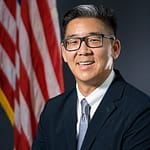
Jeff Kim shares how faculty can use video in our teaching and make it sustainable on episode 631 of the Teaching in Higher Ed podcast.
You raise what you praise. So through these vlogs, you'll see me not complaining, but actually praising a lot.
Jeff Kim
On episode 631 of Teaching in Higher Ed
Voices on this Episode

Show Notes + Resources
- Dr. Jeffrey Kim, Irvine Unified School District Board of Education
- The EdFamily YouTube Channel
- E222: How to create YOUR YouTube Video in 5 Easy Steps
- EdFamily with Dr. Jeff Playlist: Cambridge Virtual Academy (CVA)
- EdFamily with Dr. Jeff Playlist: Education for Love and Wisdom Book
- EdFamily with Dr. Jeff Playlist: Understanding the Roots of Saigu
- EdFamily with Dr. Jeff Playlist: BTS — Behind the Scenes on the School Board
- Mendez Freedom Trail Ribbon Cutting Ceremony, April 14, 2026 (Sylvia Mendez Day)
- E427: Seoul Station to Busan, Korea by KTX Train (Day 8) — Jeff’s Most Viewed Video
- Cambridge Virtual Academy, Anaheim Union High School District
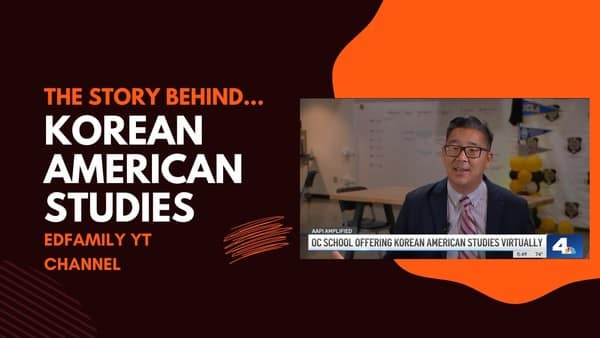
- Korean American Studies Course at Anaheim Union High School District (EdSource)
- Mendez Freedom Trail Brings Landmark Desegregation Case to Life for OC Students (OCDE Newsroom)
- Mendez Tribute Monument Park and Freedom Trail (City of Westminster)
- Sylvia Mendez (Britannica Biography)
- Mendez v. Westminster: The Final Ruling, 75 Years Later (OCDE Newsroom)
- OCDE (Orange County Department of Education)
- Education for Love and Wisdom: Effective Teachers for Challenging Times, by Jeff Hittenberger, Pamela Tupy Scott, Andrew Ntzouras, Renee Rose, Alexander Lin, Jeffrey Kim, Joanne Van Boxtel, Megan Chaney, Rebecca Spady, Glen Warren, Christine Hittenberger-Corbin, Seon Chun-Burbank
- Education for Love and Wisdom Podcast
- Love, Wisdom, and Human Flourishing in Education, with Jeff Hittenberger (Teaching in Higher Ed Episode 541)
- Vanguard University School of Education
- California State University, Fullerton — College of Education
- Faith and Community Empowerment (FACE)
- Asian Pacific Islander School Board Members Association (APISBMA)
- Think Media on YouTube
- Alan Levine — CogDogBlog
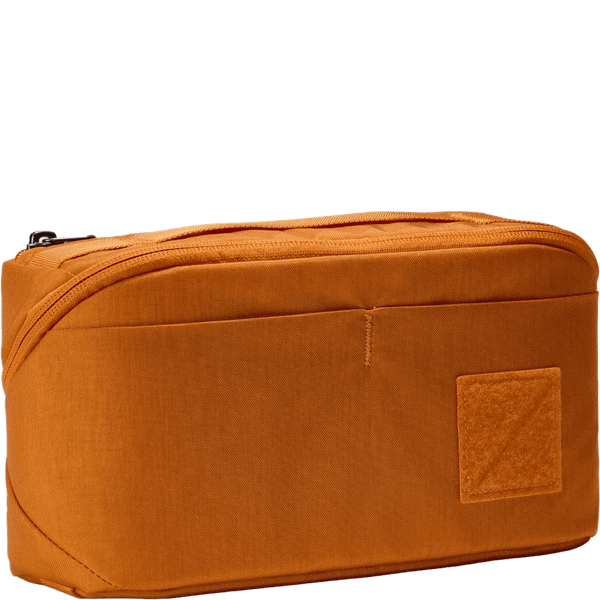
- Civic Access Pouch 2L (Evergoods)
- POD Conference Fumbling and Evergoods Access Pouch (YouTube)
- Poll Everywhere
Transcript
EPISODE 631: A Faculty Guide to Teaching With Video with Jeff Kim
Bonni Stachowiak [00:00:00]:
Today on episode 631 of the Teaching in Higher Ed podcast, Pause, Reflect, Record: A Faculty Guide to Teaching with video, with Dr. Jeff Kim.
Bonni Stachowiak [00:00:15]:
Production Credit: Produced by Innovate Learning, Maximizing Human Potential.
Bonni Stachowiak [00:24:]:
Welcome to this episode of Teaching in Higher Ed. Hi, I’m Bonni Stachowiak, and this is the space where we explore the art and science of being more effective at facilitating learning. We also share ways to improve our productivity approaches so we can have more peace in our lives and be even more present for our students. Doctor Jeffrey Sue Kim has spent 24 years in education as a teacher and administrator, an instructional coach, and a civic leader. He authored the nation’s first high school Korean American ethnic studies course in the Anaheim Union High School District, and he teaches future educators as an adjunct professor at Cal State Fullerton, and Vanguard University. He holds a doctorate from USC, is a National Board Certified teacher, and currently serves as board president of Irvine Unified School District.
Bonni Stachowiak [00:01:30]:
He’s also the founder of The Ed Family YouTube channel, where week after week he uses video to capture moments, lift up promising practices, and tell the stories he doesn’t want forgotten. On today’s episode, as you’ll hear, Jeff and I talk about why he reaches for video, how he approaches it more as a hobby rather than a profession, and how your phone and whatever software might have come with your computer can become a way of saying thank you. Jeff Kim, I’m excited to talk to you today, and I’m going to invite you to take us on a little bit of a trip. Would you take us to and for many of our listeners, this will be a city they might not be familiar with. Would you take us to Westminster and let us know what we would see there if we were to visit that city and why it’s so relevant to you and your work and the work of so many here, not just in Orange County, California, but really all over the United States?
Jeff Kim [00:02:32]:
Well, I know in Westminster, Orange County, California, it’s kind of close to Disneyland, actually. For those of you listening outside of California, it’s a very important place that impacted the history of the United States. So if you go to schools all across the United States, most likely they’re not segregated. And the reason why that’s the case is because there were some cases that happened. You’re probably most familiar with the 1954 Brown vs Board of Education, which desegregated schools at the Supreme Court level. But before that case, in this little city of Westminster was Sylvia Mendez’s family, and a case called Mendez vs Westminster that was talked about in 1947, which actually then paved the way for the Brown vs Board of Education case. And it was basically this family that was told, you can’t go to your local school because it was not for children of Mexican descent. They had to go to this other school that was for children of Mexican descent. And they said, you know, we disagree with that.
Jeff Kim [00:03:39]:
And so what ended up happening was that they won that case, the Mendez v. Westminster case, which would then pave the way for the 1954 Brown vs. Board of Education case. And many people don’t know about this case. So that’s why I think it’s so important to know this city. And I’m so thankful for like Vanguard University and Orange County Department of Education, which helped provide some mind work around how to create a space to remember. So there’s a monument there if you were to come out to Westminster, small monument that looks at the Sylvia Mendez family. And then, very recently, you saw the video of the opening of the special trailhead.
Bonni Stachowiak [00:04:16]:
And I have been there at least once or twice with you. We’ve gone and done the tour, and we are able to walk in the very same steps that Sylvia Mendez walked to school. And it’s just something else we talk about: place-based education. Well, this is one of the finest experiences I’ve ever had with place-based education. And they had a special ribbon-cutting ceremony, and I wasn’t able to be there. But you were, and you captured it for us, and I’ll include a link in the show notes for people to go and watch your video. But you’re going to give us a look today at some behind-the-scenes. How did you capture this? How did you do this? And we’re going to talk about video and why you find this an interesting and useful medium in your work.
Bonni Stachowiak [00:05:10]:
Would you talk first about the medium of video? Why video? What’s compelling to you about it? And we’ll look more in detail at how you approach creating a video.
Jeff Kim [00:05:23]:
So, Bonni, if I were to create and author, a book, you know, there might be some people who read it, and I hope they would read it. But if I were to create a video, many people watch videos. Many people go to YouTube. There might be thousands, even hundreds of thousands that look at videos, millions even. So it’s a very powerful medium for sure to get content out, especially, I think, in the 21st century as well. And I remember being kind of inspired by my own students as a professor at Cal State University, Fullerton. I was working with students getting their administrative credential, and then I signed some vlogs where they were talking about some projects that they were interested in. And as I watched those vlogs, I thought, I am so inspired by my own students.
Jeff Kim [00:06:05]:
I’m learning so much from them. And then I kind of challenged myself, maybe I could do something similar. So I made the goal every week to create one video, and then by the end of the year, I would have 52 videos. Right? So that was my goal. And here we are just a couple of years later, and I have over 1000 videos. And here’s why I use that approach. First of all, when I create these videos, it’s great for me because it gives me the opportunity to talk about complex issues, and make sure that I’m able to say these complex issues in the public space. Also, I find it as a form of transcendent thinking.
Jeff Kim [00:06:45]:
So oftentimes, people move from experience to experience to experience. And then when you ask, ” Oh, what did you do today? Or what did you do this year?” They might actually struggle to have some highlights. But if you took a moment to pause, reflect, record, now you have a record of amazing things that you’ve had the chance to do. And so for myself, if no one watched it, it was just for me. I’m not doing it for the views, then it would have been beneficial for me. However, if it has an impact on others, that’s also another reason why I do it as well. So I feel like vlogs are a way to tell the story. And I feel like in my various roles, it’s helpful for me to tell the stories because I get to be in the front row of so many different places, whether it’s as a teacher at Cambridge Virtual Academy, where we launched the first Korean American Studies course, or whether it’s as a professor at Vanguard University in Cal State Fullerton, or whether it’s as the president of the school board in the Irvine Unified School District.
Jeff Kim [00:07:41]:
I’m in these front rows in so many places. A lot of people, they’re looking in from the outside and wondering, how does it work on the inside? And so I’m happy to tell the story in these spaces as well. And then when I create these videos, and I think that that’s the way we actually connected, it’s a way to say thank you, too. So if I attend an event or there’s something that really was amazing, like, for example, Cadence Park had an amazing career day, and I made a vlog on it. It’s a way to honor them, honor their work. And so the person who was at the event, they’re, like, so pleased that I was able to capture that event, because sometimes in the midst of it, even the person who’s running the event, they might not see all the components that I was able to see. And they definitely value feeling appreciated. Also, in that thank you, maybe there’s other leaders that have a chance to see that video or other educators or other people.
Jeff Kim [00:08:34]:
And if you want to bring about change, change in our world today, many people think you have to complain, right? You have to talk about what’s not working and then elevate that. But in my opinion, that’s not an effective way to bring about change. I think you look for what’s going right, and then when it’s going right, you talk about it. It becomes a promising practice. The concept behind that is, like, you raise what you praise. So through these vlogs, you’ll see me not complaining, but actually praising a lot. And being in higher education, these vlogs that become kind of like promising practices in the field. So many of our educators today, in higher education, sometimes, they’re a little disconnected from our schools.
Jeff Kim [00:09:16]:
They’re not actually in the schools. They’re not leaders in the schools. They’re kind of doing research. Sometimes they’re connected with the schools. But this is a wonderful opportunity to share about promising practices as an educator. And then finally, let’s say the vlog is with another individual. It’s actually a networking opportunity. So people feel like, wow, this is a person that told our story so well.
Jeff Kim [00:09:37]:
Let’s see what more work we can do, just like we’re doing on this higher education channel with yourself, Dr. Bunny- We’re connecting because of that video, and it wouldn’t have happened without that video. So those are. Those are some of my whys.
Bonni Stachowiak [00:09:50]:
That is fascinating to hear you talk about, and again, when we’ve been in the same place at the same time before, it’s always kind of disconnect. I mean, we’ve been introduced, but we didn’t really get to know each other. And it really is through the video that I thought, “Oh, my gosh, I was so disappointed that I couldn’t be there for this special ribbon cutting”. And I felt like I was there. And all these things that you’ve just described, I got to experience, in addition to the infectious way that your positivity, but positivity with a purpose- toward greater civic life, toward, you know, spreading that.
Bonni Stachowiak [00:10:26]:
That kind of method of changing minds and changing hearts is really, really compelling. One thing that I know can hold us back sometimes, and I suspect for listeners, you might be feeling this way, is that it can just seem so difficult to do something like that. I go, and I look at that video and go, oh, my gosh, you know, it’d be hard to do something like that. So I’m excited about the next parts of our conversation where we can, I suspect, realize it’s not as hard as we think. Especially, I didn’t know you had a thousand videos. It has to be easier than you make it look, Jeff.
Bonni Stachowiak [00:11:00]:
So let’s get started with kind of the essentials. So when we think about hardware and software, I’m going to invite Jeff to share, broadly speaking, the general kinds of tools we need when it comes to hardware and software. But then, yes, I am going to ask him to get specific about what tools he uses, because, of course, those of us that might want to start doing this, that’s sometimes a good starting point. But so we’ll go- We’ll start with general, and then we’ll go to specific. Let’s start out with hardware. What kind of gear do we need to take with us to wherever we might go to in order to capture the kinds of stories that are compelling in video form?
Jeff Kim [00:11:38]:
You know, I’m in so many different places, and sometimes I’m in the role itself. It’s not like I’m going there as the videographer. I’m going there as a leader. I’m going there as a school board member. I’m going there as the teacher. I’m going there as a professor. So I can’t be carrying all this equipment around me and then also using that equipment in that space. So I just keep it simple, and I keep it low cost for myself. I just use my iPhone, nothing fancy.
Jeff Kim [00:12:02]:
That’s usually the tool that I use to record. And I edit on iMovie, which is a free program on my computer, and then I upload it to YouTube, which is a free place to upload. Now, I do have a YouTube video where I talk about how to create videos quickly in five easy steps, if that’s helpful, and how I do it so quickly. I basically record on my iPhone. I have the footage on there, then I’m able to airdrop it onto my computer, and then from there it’s just drag and drop into iMovie, and then, voila, we got a video. And once again, I’m not expecting it to be Spielberg quality. In my mind, I’m trying to do these vlogs very frequently to tell the story, and it doesn’t have to be perfect. And many people have shared, it has a more authentic feel because of that as well, if it’s not overly produced.
Bonni Stachowiak [00:12:51]:
Oh, that’s interesting that you would say that. I would have predicted from watching it that you would have been doing something to augment the iPhone’s microphone that’s raw into the iPhone. You don’t have any sort of an external microphone going on now?
Jeff Kim [00:13:06]:
I do have an external microphone that I very rarely use. I find that just the regular Microsoft on the iPhone is enough to capture most of it. And if it’s not perfect, once again, the audio quality is not perfect, or the video quality is not perfect, I’m just okay with that too.
Bonni Stachowiak [00:13:21]:
I actually just, as of us recording today, have signed up for a conference. And you so inspired me to go and start experimenting. And I think we hear so much in terms of the podcasting world, how important audio is. And I think there are some differences between audio and video in terms of people’s desire to tolerate… We can sometimes call it authentic sound, and sometimes we could just call it not great sound. But what I’m hearing is that video, we might- People who watch videos might be a little bit more forgiving of that sound.
Bonni Stachowiak [00:13:57]:
And I’m also hearing what you’re not saying, which is you’re editing. So if the sound on one particular part is really, really bad, then you edit that part out. Do you ever go back and add any commentary in after the fact too, where you realize you wanted to set the stage a little bit more than what you were able to do on site? Or is the speed just that much more important where you don’t really find yourself needing to or wanting to go back and add any additional audio, intro, or outro?
Jeff Kim [00:14:27]:
There might be a certain situation, for example, like, let’s say the event happened, but I realized I didn’t capture the why, or I didn’t capture kind of the how I was feeling in the moment. Or I didn’t capture, kind of, like what it is that they said. Then I might actually create a recording where I do include that so that I can put it; I could bring that audio in.
Bonni Stachowiak [00:14:46]:
One thing I know is important for me, as I continue to want to learn more about video, is that it helps if we can think about not always trying to do things in chronological order. I will tell listeners that, for the most part, this podcast, for all of these years, is chronological. It is edited. You hear me say that at the end of every episode, the ever-talented Andrew Kroeger edits. But for the most part, I’m going to go 99.5% of the time, he is condensing, yes, he helps fix my mistakes and others’ mistakes, but he’s not altering the chronological order that the conversations happened. Now, what we see with the kinds of video that Jeff has done is, he is not necessarily telling these stories in the exact chronological order. So if you think about this Sylvia Mendez event that we started talking about, the ribbon cutting, he has to think about what he might need as far as video assets to tell this story. Not, we started at 5 o’ clock and then 5:15, this happened, this kind of a thing.
Bonni Stachowiak [00:16:03]:
Talk about how, what advice you have for us to shift our minds from thinking of that strictly chronological order, to what’s possible with video, and how you think about things and building those assets, and what you might need or might not need, what might land on the editing floor later on.
Jeff Kim [00:16:22]:
You know, when I took journalism in high school, I remembered that you want to begin with, like that first paragraph needs to be interesting and capture the reader’s attention. And I think the same is for YouTube. You don’t want it to be starting off with something that makes somebody think, I don’t want to watch this. You want to begin with something very interesting. So at the ribbon-cutting ceremony, it might actually be the moment where they’re cutting the ribbon. Everyone’s saying, applause, and people are like wondering, okay, what happened at this event? Right? And then it kind of draws people in that want to see the rest of the story, because the message is important. But sometimes you need something to kind of like capture the attention. So at the very beginning, I think capturing the attention is a very important part of the process.
Bonni Stachowiak [00:17:03]:
And anything else, as far as the little glimpses that you give us throughout your videos and how you may approach gathering what is sometimes called B-roll, or I don’t know if there are other fancy terms that we might use to describe those particular assets?
Jeff Kim [00:17:19]:
That’s a good way to frame it. So, you know, there’s maybe certain portions that you’re recording. But then I also want my audience to kind of feel like they were there too. Like see the audience, see the ribbon cutting, see the moments, hear different, like, cheers. So that they could almost be there with me. And I want them to- So then what I’ll do before the event is I’ll do a little bit of research, like what exactly is happening at this event? What am I hoping to see? What am I hoping to get out of it? So just kind of thinking about some of these things in advance, maybe even recording it in advance. And then when I get there, I might ask people, like a key stakeholder who helped put on this event, what’s happening? What are you excited about? What are you learning? What are you feeling right now? What are your thoughts? What’s your takeaway from this experience? And then that will also give a lot of content as well.
Jeff Kim [00:18:08]:
And so you got the talk, right? The great snippets. The essential pieces of most of my videos are three minutes or less. So you got the essential pieces of the content, but then you got a lot of B-roll of the event itself while the person’s talking. So you’re not just looking at the person just talking. Although I do have some blogs like that in the background. You’re kind of seeing the story unfold visually as well.
Bonni Stachowiak [00:18:29]:
And do you take photos while you’re there too? And do you do mixes between photos and video B-roll, or is it mostly B-roll? How do you think about that?
Jeff Kim [00:18:39]:
Yeah, so a little combination of both. So sometimes I’m doing the video, and then if you push the photo button, you could actually take pictures while you’re also doing video at the same time. Once again, I’m just using my iPhone, nothing fancy. Every iPhone does this. And then if I want a little bit of a higher-quality photo, then it’ll just be that photo that I take. And once again, it’s on my iPhone as well. So both.
Bonni Stachowiak [00:19:01]:
And so you’ll mix in photos, and you’ll mix in B-roll. Do you have a general sense of, “Yeah, you want to be about how many seconds of B roll when you’re, when you’re creating the videos”. So do you think about that while you’re filming to make sure that you get not too much, but not too little, that you’ll be able to use later on?
Jeff Kim [00:19:20]:
You know, I just, sometimes I, I go to these spaces, and I just try to capture what I can in the moment. I’m not overthinking, like, some type of formula because then I’m not going to be able to get this video produced. So because there’s so many different events, and then I have my full-time job. This isn’t my full-time job. This is just a hobby that I enjoy doing it, and it seems to like bless and benefit a lot of people. So that’s why I do it.
Jeff Kim [00:19:44]:
But I need to do it quickly. So I just think of ways where I could do it quickly, try to capture a lot, and then I’M able to upload. Sometimes, actually capturing too much can make it harder because now you got a lot of video to edit through. So sometimes less can be more too in my style of vlogging.
Bonni Stachowiak [00:20:01]:
That is all so helpful. You’re reminding me of this conversation I’ve been having online with a guy named Alan Levine. And he was talking about, he really, he, he would fashion himself as an old school blogger, and he misses the days where there was a lot more conversation from a person’s blog, not on some platform but an actual blog to other blogs. He misses those days of more authentic blog-based conversation. I’m probably totally not representing his position well here, but what we’ve been conversing about is, I let him know at some point along that I had shut down the comments in on, on my blog. It just got to be where every single time I would log into my website, there would be a handful of comments, and you get sometimes the spam messages up there, and then you get some messages from people who are well-meaning, certainly, but who want something. Oh, can you send me this? Or the guest said this. Can you tell me more about that? And I’m thinking I talked to that guest four months ago, and I’m not in regular contact, and I don’t really have-
Bonni Stachowiak [00:21:06]:
Like you said, I would say it’s more than a hobby for me, but it’s certainly not a job in the sense of like, people would normally think of a job. So I just didn’t have the bandwidth, and I decided that for my particular project with the podcast, I’m not going to have comments open because it just, it didn’t bring me joy. So what I’m hearing you say is, do it where you- it can be sustainable. So if you’re going to do video, make it sustainable. And I’m also hearing you say, if you’re going to do video, less is more.
Jeff Kim [00:21:37]:
It’s kind of like a little haiku of the event, you could say.
Bonni Stachowiak [00:21:40]:
Yeah, that, that to me feels really good. You’re also helping me take some of the pressure off in terms of just get what you get, find out- I have something else that does tend to make me feel uncomfortable, that maybe you can alleviate some of this discomfort. I get uncomfortable taking someone’s picture or videoing them without asking for permission. But I think I might- I mean, I do think we should do that, by the way.
Bonni Stachowiak [00:22:07]:
I’m not suggesting that we don’t, but do you have a way of kind of, if you don’t already know the person? How you ask them? What that looks like for you? What, what seems to fit with our culture as far as video and photos today? What, what do you do as far as approaching that potential for maybe asking permission or setting a stage there?
Jeff Kim [00:22:27]:
Kind of depends on the situation, but very frequently I’ll say, “Hey, is it okay if I post to my social media and social posts?” So I’ll ask for permission oftentimes. And then sometimes, if it’s a very public venue, you know, it’s kind of a public space as well. And if it’s a public event, then it’s all. It’s probably being recorded in a public way anyway. So in that kind of situation, I feel like that permission is already given because it’s in a public space. But if I’m. And then, you know, if it’s kind of like I’m getting some B-roll once again.
Jeff Kim [00:22:56]:
Oftentimes, you won’t see a close-up, a picture of someone’s face, or something like that. Would just be kind of a distant view, and that allows me to capture the moment of the people that want to tell the story as well. And I was thinking it’s also a trust that’s built, too. So people know my channel, they know the kind of things I talk about, they know my approach. And so while I know some people can feel a little bit wary about being in social media, they know that the way that I’m going to produce the video is going to be in such a way that’s uplifting.
Bonni Stachowiak [00:23:27]:
That is so helpful. I was thinking about the time that I’ve seen you at these events with Sylvia Mendez. One of the times there were news reporters there with the, talk about gear, the giant cameras. They had everything between the giant old school cameras, as I think of them. And they were actually, they had some rigs that were set up with iPhones, too. I was fascinated by it.
Bonni Stachowiak [00:23:47]:
But you do figure, if you attend an event like that and there are news reporters there, then yeah, you’re like, it’s kind of by the fact that you’re there, you might anticipate that you could be. I remember Jeff asking us if we would be willing to be in a photo that wound up in the cover. By the way, Jeff, Dr. Jeff Hittenberger, I’m going to put links to the episodes that we’ve talked about some of these things on in the past, so you can link to his. Both audio work that he has done, audio storytelling around it. Lots of references there, in terms of Sylvia Mendez. But I remember him asking, “hey, if you’re going to be in this photo”, it turned out to be the COVID photo for a book that he and the colleagues in the School of Education wrote together.
Bonni Stachowiak [00:24:32]:
And I remember him asking, “Would it be okay if your kids were in this photo too?” So I think if it’s something like, that’s gonna be on a book cover, yeah, probably gonna need to ask. And, but also, there’s a little bit of a gray area, is what I’m hearing you say. That if it is a large celebration like that and there’s lots of cameras, I did not, for example, ask Sylvia Mendez if it was okay that I posted the picture that I took of her, because she had seven cameras that were on her, and she very well knew that she was being photographed and, and, and videoed in that particular celebration that I remember being at. Alright, so how do you think about- you’ve kind of talked about this a little bit, but are there any other pieces of advice that you want to give us for thinking about what makes for good video? Anything in terms of the length of the video? You already talked about, kind of, drawing us into the story. What other ideas do you have for us to think about? What good means when it comes to video?
Jeff Kim [00:25:29]:
You know, a vision that I have for my channel is helping students to find out what they’re good at so that they can do good with it. So a lot of the work is around helping other people, or uplifting stories, or uplifting educators, or giving support and tools. So, kind of having a vision for what it is that you want to do. And there’s actually this phrase that I think is so powerful. It’s: Whatever is true, whatever is honorable, whatever is just, whatever’s pure, whatever is lovely, whatever is commendable; think upon these things. And for me, I think upon those things, and then I tell that story. So what’s spoken and we see, and this is why, once again, so many people are so nervous about social media, is because there’s so many things that are said in fear and anger. But I believe in, you know, being an influence for good and doing it with love and wisdom. And so, I’m telling stories that I hope are going to uplift the community and uplift others.
Bonni Stachowiak [00:26:29]:
I love that so much. Whatever is true, whatever is lovely, whatever is right, whatever is noble. What a good list for us. I’ve done that to reset my brain sometimes. If I find that I am excessively worried about something… We are also told not to worry, but I’m really good at it. So then I start to go through the list, and that helps calm my mind and my heart a bit. So we’ve done a little bit of the behind-the-scenes look at this video that you produced that got us to have today’s conversation. I’m curious if there are other video creators that you look to for inspiration or creative ideas, or if this mostly comes from your own experimentation.
Jeff Kim [00:27:09]:
I would say a lot of it is experimentation. And so, I’m just trying lots of different kinds of things. So I’ll have content like you mentioned, of the ribbon-cutting ceremony. But then, like tonight, there’s going to be an honoring of Irvine Unified School District of retirees, who have served so many years in education, that could be another type of venue. And IUSD is already recording it through, because it’s a public meeting through their own system. So it could be that footage giving credit to IUSD once again. It could be going to the beach, and going on a walk, and showing a new place that can help a person. It could be a bike ride and reminding people to be physically fit.
Jeff Kim [00:27:50]:
Or it could be like a lunch with my mom, and encouraging people that try different places that they’ve never tried before, and to do it with loved ones. And so I really encourage like, just a lot of different kind of experimentation to see what your style is. I know like, some content folks give very specific advice, like you should have a very specific theme for your channel, and if the goal is to get maximized on the views and monetize and things like that, that probably is, you know, good advice. And there’s so many content creators like Think Media, for example, I give some great advice on that. But for myself, since that’s not my primary goal, you know, I’m just going to try a lot of different things to see what it is, what story I’m supposed to tell. And then in certain situations that might benefit this group. In another situation, it might benefit another group. Who knows what that could look like in the future if I might have more focused kinds of channels.
Jeff Kim [00:28:42]:
But right now it’s kind of a little bit loose. I’m trying a lot of different things, and I’m enjoying the work, and I’m trying to make it enjoyable. For me, this isn’t- I don’t think of it like a job. I think of it, this is my hobby. Just like some people might go home and journal a little bit, because they want to reflect and think about some of the things that they’re proud of that they got to experience. It’s kind of like that, but I’m kind of opening it up to others to also experience what I experienced for their benefit. But also as I do it, I’m being benefited as well. But once it becomes like a chore for me, then I don’t want to do it anymore.
Bonni Stachowiak [00:29:12]:
What I hear you saying in that, which resonates so much with the work I do on the podcast, is to remember why we’re doing it in the first place. And boy, those numbers can sometimes be playing with the voices in our head to kind of get addicted to it. And I will really try desperately hard not to bore listeners. But my goodness, if someone was really into their metrics in the podcasting world, everything changed about a year or two ago, such that we have friends of ours that make a lot of their income on podcasts. And if you were so reliant on those kinds of numbers, everything changed. So when, when you’re, when you kind of lose sight of why you’re doing it in the first place, but also if all of your eggs are in one basket, metaphorically speaking, those numbers aren’t always going to pay off the way that they once did. And I just don’t want to rely on that. I don’t want to rely it from a why am I doing this standpoint? I’m not doing it to get the hits or the clicks or the eyeballs or the, or the ears, the ear, the share of the ear, as they call the ear share.
Bonni Stachowiak [00:30:15]:
I want to be doing it for something else because that’s more sustainable, more connected to my sense of purpose. That’s such a good reminder for us. Thank you for that. I’m going to tell listeners I’m going to put in the show notes a link to you doing, I think it was a 2-minute-ish video about a camping trip. And since I do live here in Orange County, I’m like, I think I’m trying to remember my husband is more likely to take our kids camping than I am. Which he’s laughing when he’s listening to this later on because he’s like, she doesn’t ever take our kids camping. But we do have a fairly new ish in the last couple of years SUV that I could put a little mattress pad thing in the back of that. We could go camping while Dave’s off on a trip this summer.
Bonni Stachowiak [00:30:58]:
And I was kind of thinking that’d be the kind of trip to take, you know, because it’s so local and you made it look so appealing. So I’m going to put a link if anybody wants some creative camping ideas, either wherever you live, because he has some other tips or things to share there. I don’t want to give it away, but also something local for people here too. In case you couldn’t tell, I’m fascinated by the idea, but not probably as practiced as I would like to be, of going in a different order than the planned one. And I want to take this moment to both thank Poll Everywhere for the partnership that we’ve established together but also for this amazing way that we can do just that. I want to thank Poll Everywhere for your sponsorship and for your incredible tool that lets us present a poll to learners and let them decide where to go next. Think of it like a grand choose-your-own-adventure. You can pull up a poll and let people decide where they would most like to begin or perhaps where they want to go into more detail.
Bonni Stachowiak [00:32:05]:
Give them that sense of choice, adventure. And it’s nice because it can help people realize that they can have a say. And it also gives you some real-time feedback for where most of the curiosity lies. It doesn’t take that long to set up. I would say hardly any time at all. And it makes for a wonderful way to engage learners. I encourage you, if you’ve not tried Poll Everywhere in terms of bringing that kind of engagement and spontaneity to your teaching, I highly encourage you to sign up and get some experience using it. It’s a phenomenal way to really draw people back in.
Bonni Stachowiak [00:32:48]:
Just go to polleverywhere.com to learn more, and I would love to hear about your experiences if you try this or maybe you’ve already done it, and you’ve got some tips to share with us, please feel free to contact me at feedback@teachinginhighered.com. I would love to hear what you’re experimenting with using polling in your own teaching. All right. Anything else you want to share before we get to the recommendation segment?
Jeff Kim [00:33:14]:
Well, I was thinking of the recommendation segment.
Bonni Stachowiak [00:33:17]:
Oh, are you ready?
Jeff Kim [00:33:19]:
I’m ready.
Bonni Stachowiak [00:33:20]:
Okay, let’s go. Why don’t you start, and then I’ll share mine?
Jeff Kim [00:33:23]:
So I, I am going to recommend the channel, it’s called Ed Family with Dr. Jeff, and I want to specifically direct you to certain playlists, which does kind of curate and organize some of the information. So very few people get the behind-the-scenes story about what it’s like to be on a school board. Like, do we know another place like this that has this information? So I have a school board story playlist. So in all my different spaces, where I have a chance to tell the story of what it is that I’m seeing in Irvine Unified School District, 38,000 students, 45 schools, one of the largest, most influential school districts in the United States. You know, I’m telling the story there. Or it’s at Cambridge Virtual Academy, according to Niche, the number one public online high school in the United States, I’m oftentimes telling the story there.
Jeff Kim [00:34:10]:
I have a speaker series where I invite different people from all over the world to come in and share wisdom with our students, but then I share it back out with the community. So, we’re getting the benefit of the world, and we’d like to also call it world pollination: pollinating the world with many wonderful things as well. And then also at Cambridge Virtual Academy, we have our Korean American Studies course, the first in the United States of America, which we launched out of here. And so, it’s wonderful to see those kinds of stories as well. So if you look at the playlist, look for something that’s interesting for you. That could be a good place to get a more curated file of some of the vlogs, because there’s so many in there now.
Bonni Stachowiak [00:34:48]:
You know, when it’s so great, I cannot wait to link to these because, you know, I’m going to get so distracted, too, and have such a fun time seeing all of these examples of your vlogging at work. The playlists, to me, as someone much newer to this environment than you are, Jeff, are a nice way to be able to guide people to things without feeling like it all has to be perfectly polished. You were talking about encouraging us to be more, experimenting with our videography, and I’ve just found, if I just kind of get some videos up there… and then, yeah, you’ll eventually find that they might fit in some playlists. But maybe you want to take one out of a playlist, because maybe it’s not something you really want to showcase. Maybe the information’s a little bit more dated, or you’ve done a better one, but still, just to live up to, like, having it up there and living our lives and our learning. Sharing our learning out loud is what that expression is, is just such a healthy thing to do. So I cannot wait to link to these things.
Bonni Stachowiak [00:35:45]:
And I’m curious about this experience of you being on a school board. I have one friend who’s on a school board, too, and I need to catch up with her because it’s been too long since we’ve had a good sit-down together. And I can use your experience there to see it.
Jeff Kim [00:36:01]:
And Bonni, just talking, it kind of reminded me of a playlist that I recently created. It was actually last year; it was on Saigu, that’s Korean for 49. 34 years ago, there was the LA civil unrest, which brought so much pain to the community. And I talked to somebody who I thought told the story so well. It was a five-series podcast that became a part of that playlist. And then what did we do with that? Well, this year I worked with that organization. It’s faith and community empowerment.
Jeff Kim [00:36:29]:
And we ended up creating a scholarship to understand what are the roots of this very difficult experience. And then what are some of the fruits 34 years later, if there are any, what are some that have perhaps emerged from that painful experience? And so from that content, we’re actually able to work with this nonprofit organization to launch out a nationwide scholarship that is bringing- now students are creating two-minute vlogs on this topic to help bring awareness to this. And then, just one that’s fun, Bonni. I am planning with my family to go out to Korea this summer. So, you know, wouldn’t be surprised if I have a playlist. Actually, you know, Bonni, my most viewed video, believe it or not, is this train from Seoul to Busan. Like, once again, I didn’t know that that was the video that would be the one that would be the most watched.
Jeff Kim [00:37:21]:
I would- I’m not so sure that was the video that even recommended me the most watched, but that’s just what ended up happening. So, you never know.
Bonni Stachowiak [00:37:28]:
Mm, that’s so good you’re getting. We’ve got some summer travel planned as well as a family, and you’re just making me so inspired to do less. I mean, I know that sounds weird, but, exactly, I’m going to look forward to listening back to this episode to try to just scale it down a little bit in my mind because I love this idea of all the fruits that can come out of it. Before I share my recommendation and we close down the episode, I am curious. I mentioned about what you say to people before you were to record them. You talked about that, but is there any tips that you have just in terms of the networking that you try to do? I know for today’s conversation, for example, you did a reply all and then emailed out your vlog to everybody who was copied on the invitation from Jeff Hittenberger to that ribbon cutting.
Bonni Stachowiak [00:38:14]:
But is there anything else that you try to think about with regard to networking, such that it makes that a little bit easier when you are either recording or after you’ve produced a video?
Jeff Kim [00:38:24]:
So just this past weekend, I was at the dual language immersion for the Vietnamese American Experience Conference. And so once again, it’s an opportunity to connect with some of the leaders of Orange County Department of Education, who helped to build out that program. I also had a chance to talk to all the workshop leaders of all the workshops that I had a chance to attend at that conference. And then there were like these groups that were tabling. So I think I’d stop and talk 10 minutes to each one and just see what they’re all about. I’d just go up and say, hey, tell me a little bit about your organization, your program. And once again, what this can become is it could become a networking opportunity to bring benefits back to our school or to the community, because I’m learning about a resource that I had not known about previously. So there’s so many spaces that we can go to make these connections.
Jeff Kim [00:39:16]:
And people are oftentimes wanting to share their story, they’re wanting to talk about, but they just want to know that they trust you too. So that’s why I think it helps to have something in place where they go, “yeah, I trust this guy”. When he’s recording me for an interview, I know that it’s going to be presented in such a way that’s going to be honorable.
Bonni Stachowiak [00:39:33]:
And do you have? Do you ever have, like a card or a sticker or something to tell people where to find you, or you just that it goes word of mouth?
Jeff Kim [00:39:43]:
You know, it’s a little bit of a word- I do have like, a little like, sticker, actually, that my wife created for me. It says EdFamily, but usually it’s just more of a word of mouth. EdFamily, with Dr. Jeff.
Bonni Stachowiak [00:39:53]:
Oh, so good. Well, my recommendation is for something that I shared on a gift episode before, but I looked and did my research, and it didn’t officially show up in the recommendations. And it is something that, every time I use it, it bring brings me joy. Like, I sound like I’m in the, I’m in the bag for this company. It is such a great thing. It is the Civic Access Pouch from Evergoods. And it is a very unique tech pouch I have found in the past when I have had pouches for my technology, some of them have,
Bonni Stachowiak [00:40:29]:
You might have seen these ones that are the size of maybe a paperback book or something like that. But the pockets are just so open, and I find that before long, all my cords are all twisted around and they’re just not… I have to like, I’ll be done presenting or done teaching, and I’m jamming everything in there. It just is not a good experience. And we heard about, in a recent episode, how important structure is. And this bag, this tiny pouch, has a lot of structure to it. So it has zippered pockets. It has little pockets that you can just place things into, but they’re very structured, and everything has a home in there.
Bonni Stachowiak [00:41:07]:
My power brick has a home in there. USB-C, cords have a home in there. I mentioned about the microphone that I really enjoyed using in the past. It’s the Hollyland Lark M2, and that always has a little home in there. And I just find that it also has an interesting zipper where you open it up and it flips open, and then it itself has- It’s almost just like putting down a little shelf for, oh, here’s all the equipment. And if I’m getting wrapped up and ready to go.
Bonni Stachowiak [00:41:40]:
Since everything has a home, if any of those slots are empty, that means I forgot something on the table, and I need to make sure and grab it. So I’m just going to really encourage. It is pricey for a pouch, but for me, it’s worth it to have paid a little bit more because it’s going to last forever. And it also just, it also means I’m not going to leave my bricks behind that are really expensive. They’re about twice the cost of the pouch if I ever leave one of those bricks behind. So, I’m just going to encourage people to, to check it out.
Bonni Stachowiak [00:42:08]:
And even if you’ve already got one that you really enjoy using or you don’t want to spend the money right now, think about creating a home for each little- Where does the, where does your particular cord go in what section? And just try to have it where- I get so scatterbrained after I’m done presenting or done teaching that I need something like this to give me a little bit of structure. So that is my suggestion, and I’m so excited that we got this opportunity to chat today. Jeff, so great, thank you for all these suggestions.
Bonni Stachowiak [00:42:37]:
I’m so inspired to start doing some vlogging myself. And I suspect, Jeff, you probably want to, like, if people do it, do you want to hear from them and see what they come up with? Do you want to hear from listeners who might try following your advice on this stuff?
Jeff Kim [00:42:51]:
Yeah, I would love that. You know, the goal of what I do is to really inspire other people to be their best selves, you know, and to give- inspire them. So if I heard that this, like, podcast had an impact on someone’s practice, I would love to hear those stories.
Bonni Stachowiak [00:43:06]:
All right, everyone, so that’s our challenge for the next few months. If you come up with any vlogging, would love to have you share it with me, and I’m happy to pass it along to Jeff as well. Thank you so much for this time together.
Jeff Kim [00:43:17]:
It was a pleasure.
Bonni Stachowiak [00:43:21]:
Thanks once again to Jeff Kim for joining me on today’s episode. Today’s episode was produced by me, Bonni Stachowiak. It was edited by the ever-talented Andrew Kroeger. If you’ve been listening to Teaching in Higher Ed for a while and you haven’t signed up for the Field Journal, now is your opportunity. I recently, somewhat recently, revamped the email format and would love to have you subscribe. You head over to teachinginhighered.com/subscribe, you’ll start receiving the emails with what I wondered about what I read. All kinds of good stuff. I’m getting great feedback on it and hope to have you join in the conversations that are happening there.
Bonni Stachowiak [00:44:06]:
Thanks so much for listening, and I’ll see you next time on Teaching in Higher Ed.