Follow the Teaching in Higher Ed Podcast
About this Episode
Paul Eaton shares about transformative inclusion on episode 330 of the Teaching in Higher Ed podcast.
There are times where you can be more real with students.
Paul Eaton
On episode 330 of Teaching in Higher Ed
Voices on this Episode


Show Notes + Resources
Recommendations from this Episode

Transcript
[00:00:00] Bonni Stachowiak: Today on episode number 330, Paul Eaton joins me to talk about transformative inclusion.
[00:00:09] Production Credit: Produced by Innovate Learning, maximizing human potential.
[music]
[00:00:17] Bonni: Hello, and welcome to this episode of Teaching in Higher Ed. I’m, Bonni Stachowiak, and this is the space where we explore the art and science of being more effective at facilitating learning. We also share ways to improve our productivity approaches so we can have more peace in our lives and be even more present for our students. I’m joined today by Paul William Eaton, who is an assistant professor of Educational Leadership at Sam Houston State University.
Paul’s research interests include inquiries into digital technologies in education, digital pedagogy and learning; post qualitative, complexivist, and post human inquiry; curriculum theorizing-philosophy in the realms of postsecondary education and student affairs; and the work of James Baldwin. At Sam Houston State University, he teaches courses such as diversity and culture in higher education.
The college student, higher education curriculum, student services in higher education, academic affairs in higher education. He’s also taught seminars in the undergraduate honors college, including James Baldwin, race queerness and social critique, and understanding white privilege. He serves as assistant editor for the higher education section of the journal of Curriculum Theorizing, and on the editorial review board of the Journal committed to social change on race and ethnicity. Paul, welcome to teaching in higher ed.
[00:02:03] Paul Eaton: Thank you so much for having me. I’m glad to be here.
[00:02:06] Bonni: It is pretty surreal I joked with you that we met approximately 67 years ago. I got to come to your campus and see you doing the work. You were at a table for an organization that you not only support, but I believe you’re an advisor for.
[00:02:21] Paul: Yes, we were tabling that day for actually an organization we started, the LGBTQI faculty and staff network, and we were helping, that, of course, was our annual teaching and learning conference on campus. We were helping folks to understand that we’re there, and that we’re able to support queer, faculty, and lecturers and other teachers as well as staff on campus. I was glad you got to see me in my queer elements, as I say, even though I wasn’t able to attend all parts of the conference, because I was doing that.
[00:02:56] Bonni: We were introduced by your friend, Rick, who’s been on the podcast before. I loved it because, I was joking by the way, for people listening that don’t know to not take me literally, it wasn’t 67 years ago, was it? Oh, it’s nine months ago or something like that, but he gave me his business card and then, it’s got- on the back, it has your name, and then all these different things that he thought I should talk to you about. It was really fun just to see someone really admire their colleagues work so much. I literally was like, “I got to hang onto this. I got to talk to this guy.”
It took me a little while because the pandemic hit us all very hard, but I’m a big digital collector of things, so I don’t still have the physical business card, but I hung on to it. It’s like, “I got to talk to him.” I’m so happy to be talking to you today.
[00:03:42] Paul: Well, likewise, and I know that Rick loved being on the show, and we’re a big fan of the podcast. I do listen. I am somebody who is an avid listener and learn a lot from the show myself. Good to be on finally.
[00:03:57] Bonni: Yes. I thought we could just start from my own failures, that we just go right there, don’t even have any sort of transition from the friendly banter to, “Wow. This is something I’ve struggled with.” Today, we’re talking about inclusion. One of the biggest things that I struggle with, it’s that I know that I’m doing it, but I can’t interrupt the thought yet. I can interrupt the response to the thought, but I can’t interrupt the thought yet.
That is that, when people who I am attempting to influence to be more inclusive in their thinking, when they say something that is just so off base, so rage inducing that I have that fear that I can’t seem to get rid of where it’s just like I’m going to unload on them, and that doesn’t help anything. First of all, let me start there. Does it help to unload on people when they are racist, homophobe? Have you ever seen that being helpful to just like, let the rage out or, am I right about my first assumption there?
[00:05:01] Paul: I think that has to do a lot with, what is our relationship to the person that we might have to unload on? The reason I say that is because, I teach in a cohort based program. I oftentimes will get to teach students in more than one class, and we’ll develop rapport over time. There are times where you can be more real with students or scholars as I call them, if you’ve been able to develop that rapport.
I think another thing that we have to think about when we’re talking about unloading on people is that, I do think that sometimes it is okay to just state things how they are, because sometimes we don’t have the space or the capacity to be able to do the fully developmental thing where it’s like, we’re going to get someone to go from this place over here where it’s a very misinformed to this place over here through a loan process.
We might only have a little bit of time. It doesn’t mean, curse the person out. It doesn’t mean doing things in a way that’s going to make them feel belittled. I think that sometimes we can say, “Well, no, that’s a racist thing that you said, and let me explain to you why it’s a racist thing.” We can then talk about whether you disagree with my unpacking of why it is, but sometimes that is helpful and sometimes it’s not, it just varies.
[00:06:26] Bonni: I really appreciate that distinction that you just made, because I am realizing as you’re saying that, that I have done what I am describing as unloading in really healthy ways. I can remember, I was an advisor for a student club, and these are students I knew for four years. I remember, I’m trying to think of, it had to have been around something around a presidential election, like big time for politics discussions and things like that.
We were all having dinner, and one of the students, we just saw things very differently, but I was in the middle of a class, we were all just having these conversations. I can still remember saying, “I want you to be better than this. You are better than this.” We went back and forth and back and forth, and we are still friends to this day. He’s long since graduated, more than 10 years ago, but that particular interaction I think helped us both grow.
One of the things that also helps me in these thoughts around it is that this whole thing is a continuum. We can’t look at racism, homophobia, whatever it is, sexism in binary ways. I mean, we can, but it’s just not very helpful to look at it in super binary ways. So, can we be moving ourselves along a continuum closer toward our own ideals, and then can we be helping other people to do it too? Yet, when it’s those times, it’s generally when I first met them, it’s the first class I’ve ever had with them. We’re three weeks in, I don’t have any idea about their background or how they form their opinions.
I do think in my teaching experience that, when they’re not part of a cohort, and this is their first year at college, that if I humiliate them in a whole group of people of their peers, I’m going to pay for that as an educator, because I can’t ever get them back after that, but also like what that does to another person. I also think cohorts can be so healthy because, you get past a lot of that, and then generally, oftentimes, cohorts are maybe a master’s program. I know you teach in a doctoral program, that kind of thing, which is a different dynamic. Although, not to say that people don’t bring their own baggage into those environments as well.
[00:08:34] Paul: I also think about like, there are different mediums in which you could call somebody out. Like, I have had the experience where I’ve followed up with a student and said, “Hey, could we set up a time to talk? I would like to process something with you.” Again, I’m not cursing that person out, but I might say to them in a follow up meeting, “I want you to understand why when you say something like this, it can come across as violent, or it can be create violence in the space. I want you to understand that if you bring that into your administrative role, or you bring that into your classroom role, whatever you’re going to do, that that’s anti-black, it’s anti LGBT, it’s anti Muslim,” whatever the topic is.
I think sometimes people also don’t even have the ability to understand that something that they’ve said might be anti-black, or that it might be violent. Until someone comes and says to them explicitly, “This is what you’re doing. This is what this language does to people of color, to black people, to queer people, to Muslim people, to Jewish people,” whatever the topic is. Sometimes, we just have to be explicit with people because, we don’t have a lot of space and time in most of our curricula, in most of our programs to be able to always get people like I was saying, along the continuum.
You have to really be direct sometimes and just say, “f you bring this into your classroom, your administrative role, it will be creating violence or recreating violence, and you need to disrupt it.” I like what you said about, you’re better than that, or I need you to be better than that. Like, we all need you to be better than that.
[00:10:23] Bonni: I have a colleague who is starting some intercultural coaching, and she shared with me her reflections that she wrote as just part of their initial meeting. I thought, “Wow, what an amazing ability that she has to be able to see herself from outside herself.” Part of that is, what you’re doing is enabling students to do that in a safer way than if you decided to take them down in front of all their colleagues right in the moment. That’s one of the things that I try to think about too is, when these potentially explosive things happen, if I fail in the moment and don’t handle it the way I wish I would, and most of the time, by the way, if I go back and I play the video again in my head, I go, “Wow, why didn’t you just stop and ask others what they thought?”
Because I always try to, like, you are not a savior in this situation. You are not a hero. You cannot control that this might get out of control, because it already is out of control. Allow the others in the community to share their perspectives and you might be surprised what you find out, but that’s always my failure if I repeat those things. By the way, it’s not like this happens every week, but I have very high standards for myself, and I carry those with me, and I want to carry them with me in forward movement. When I press the replay button, what I wish I would do more is to pause, and then turn and look to some others and say, “I just want to get some other perspectives. What do some of the rest of you think?”
[00:11:53] Paul: Yes. I think also, another thing that I will do is, because I’ve had these experiences where I’ve said something and then I play it back in my head and I go, “Oh my goodness.” Even though you teach this stuff, you’re mired in the theory, you’re doing the work like you said. It’s hard to unlearn all of this socialization and you still will screw up. Even, I think sometimes a really important tactic that teachers should do if they’re trying to build inclusive classroom spaces is that, when you screw up, take responsibility for the fact that you screwed up, it’s okay to go back to the class the next time and say, “Hey, I wanted to talk about this incident that happened and how I could have handled it differently.
I’ve had time to reflect on it. I’ve had time to think about it. I’ve talked to my colleagues, my faculty mentors,” whoever it is that you soundboard off of around these things, “My social justice group, whatever, and I need to apologize for not responding to this in the right way. I need to apologize for anybody who felt like this created violence or hurt or pain for them in the classroom space. I take responsibility for it. This is how it should have been handled.”
Students will then see that it’s safe to do that, because so much of what happens in education is that, people think the teacher knows everything and the student doesn’t know anything. Well, we’re learning too, and we’re constantly unlearning things. When you screw up, just take responsibility for it and then, be able to move forward in community with everyone else.
[00:13:31] Bonni: You talked about how hard it can be to unlearn all the socialization, and instantly I went to, as a woman, and of course, as a girl, we’re taught not to bring our anger. We’re supposed to be sweet and nice and kind and not make people feel uncomfortable. I was reflecting back on, this has obviously been going on for generations, but one of the earlier cases that went viral of a black man who was unarmed being murdered by a police officer, I brought that anger and that rage into the classroom. I did not know it until years later, but I offended one young man specifically who was in that class who carried his anger toward me.
“How dare I not also bring a love and affection for law enforcement into the room with me that day?” The reason that memory is important to me is that I’m sitting here telling you that the students will never get over it. He still signed up for classes with me. He still was able to maintain a relationship with me in which he could confront me of his anger from a couple of years ago that he didn’t like how I brought anger in without also bringing appreciation into our classroom that morning. Our mistakes, we need to be able to admit them. We also need to recognize that even if we didn’t even know we were making a mistake at the time, that we can carry it with them.
Oh, by the way, I don’t actually think that particular morning was a mistake, I think that was, “Wow, we’re not used to a woman having a lot of anger. She just is raw and open,” and that, I made someone uncomfortable and I’m not at all ashamed or feeling like that was a failure. That probably was good for him to say that. Every time we make others uncomfortable, of course, it doesn’t mean that we have failed. Sometimes, that’s the greatest success we could ever hope to have.
[00:15:24] Paul: Well, I’m also thinking about the way that that story helps me to think about this concept of, what does it even mean to care for our students, to love our students? How has that gendered and sexed in particular types of ways because, why does love and care and concern always get typecast into this like, “Oh, you’re soft-spoken, you’re touchy, feely,” like this kind of feminine way that we think about how love happens and all of that.
Not that love needs to be harsh or anything like that, but I’m thinking of, I think it might be Tony Morrison who said, “Sometimes love does require us to be angry, and it does require us to bring into the space a certain amount of energy.” I’m just thinking about like, “Would students have a chance to even reflect on that as like, it wasn’t anger, it was love for humanity. It was righteous anger if it was anything right. It was anger towards justice,” and how do we think about those things and help students to understand that love and care and concern can also exist on a spectrum
[00:16:40] Bonni: When you and I were first created, and I first got to receive that business card from Rick with all the things that we might talk about. I was involved with just these ideas in which you bring nontraditional assignments into your classes. I think the first one I might like to talk to you about is your photo elicitation project. Would you tell us about that? What the goal of it is, what it’s all about and how it’s worked for you so far?
[00:17:07] Paul: Yes, so, I created this idea around a photo elicitation project. I was reading an author, Tasia Cole, and he has this book called Known And Strange Things. One of the things that he talks about in that book is this idea of the way that images can help us to capture and process information differently than we would if we were reading or writing about something. Also, the way that images can sometimes lose their effectiveness.
The example he gives is he says, “You sometimes, if you were looking at war images, for example, you might sometimes become immune to the image.” The image of a dead body, for example, or like a contemporary way that I’ve been thinking about this is, we see all these videos of people getting gunned down by police, and in some ways, that is no longer a helpful visual. It’s violence recreated anyway, but it’s also no longer a helpful visual for us because, it’s so happenstance now, we just see it all the time.
The idea behind the project is that, each week in class, students would have to take an image that would capture some idea, concept, question around whatever it was that we were looking at that week around issues of diversity, equity and inclusion. That could be a very representative image, or it could be an image that was more abstract. Then they would have to title the image, write a caption, all of this.
They did this every week. It’s a different way of processing information, and then at the end of the term, we had each student in the class pick two images. We then had a photo gallery. This was pre COVID. We did a photo gallery opening. The scholars were able to talk to people from the community about what they had learned in the class, and explain their images, and the images, again, ranged everything from like very abstract to things that were very concrete and easy to understand in terms of symbolic representational-ism.
[00:19:20] Bonni: Did you find that any of the students had a challenge with taking this idea of the image and then applying it to some of the content? Were there struggles there that were helpful to them to stretch them maybe a little bit in their learning?
[00:19:36] Paul: Yes. I think at first, students have a really difficult time trying to wrap their head around how they can do something as an abstract conceptualization. They tend to be very concrete and I think this is part of the result of just growing up in an education system that teaches people so much that like you have to be literal. You have to be strictly representational. I’ll give you an example, is like, the first unit we had done was on ableism in higher education, and how do higher education institutions perpetuate ablest ideologies in all kinds of different ways? A lot of the images that I got were images of stairs. That’s because, it’s a very easy thing to understand that from a physical perspective, people who have a physical disability on a campus with lots of stairs or lots of hills might have particular types of challenges. Of course, that’s something that we should be concerned about and we should be worried about.
I also participated in the project and what I tried to do was to help students understand that, you could pull different concepts and you could represent that in a different way that wouldn’t be evident to people when they first looked at it, but it would help to articulate a particular point. We had been reading this book by, I think that the author’s name, his last name is Dulmage, it’s called, Academic Ableism, and one of the things that he talks about in that book is he talks about the ways that higher education institutions have created this discourse that students with disability are a financial drain on the institution.
We don’t provide enough funding, for example, to disability services offices. We tend to pass a lot of those costs on to students who are disabled. They have to pay for their testing. They have to pay for their accommodation, all this kind of stuff. Rather than the institution changing the structure so that that student would be able to be successful in the environment. The abstract image I took was, I went out and I took pictures of all these different drains. I did like a bathroom drain, a sewer drain, a gutter, all these different ways that you could think about things draining.
A strainer, all this stuff, and I turned it into a photo collage, and I just labeled it, financial drain. The idea was, how do institutions label students as a financial drain? This is an abstract way of conceptualizing a concept that happens every day in our institutions. As the term went on, students got better and better and better at thinking about this. At first, that you do have to coach them or brainstorm with them or encourage them that it’s okay to do that kind of abstract thinking in terms of applying concepts.
[00:22:32] Bonni: Yes. That’s such a challenge for some of them, like you said, that we have to unlearn because so much of our educational systems have been quite literal and things have right and wrong answers. All of a sudden now you’re asking me to do something that doesn’t, probably, I’m guessing from knowing you as I already do that, you probably don’t have a 14 bullet rubric with like the precise absolute way to earn an A. That’s probably not what it’s about for this particular thing. That’s really hard, I have found, for people to unlearn in some of the contexts, and even for me, teaching at those higher levels at doctoral levels is where it comes out the worst. I don’t know if that’s been your experience as well.
[00:23:13] Paul: It’s hard because, students want to know, what do I have to do to get the good grade? Now, what really drives students crazy sometimes is when I say, “This is just going to be–” and that assignment actually is an example of this. I purposely did not assign points or grades or anything to that assignment. I just simply say, “You get credit. You get credit for doing it. Now I need you to engage with it. I’ll talk to you if you’re not engaging, but you just get a check mark, you just get that you did something.” That can be either or in terms of like how scholars respond to that.
I think it’s better than me being the person who then has to assign a point value to whether your picture is, “I’m not a photo person. I’m taking a concept and I’m applying it in the classroom in a particular way to enhance all of our learning.” It was very effective. The images are amazing. The things that the scholars thought about was really amazing, and now those images are hanging. This was another part of it, was that I worked with our Dean in our college, all those pictures now, they were professionally formatted and I got funding for all this kind of stuff.
We had the little captions professionally printed on the cardboard and stuff, and now they’re all hanging up in the college of education at my university. It then also becomes a kind of living museum for people who are walking through the building who will stop and look at those pictures and then they’ll get educated about these issues that the scholars were taking up in that particular term. It was everything from undocumented students to ableism issues, to race and gender and sexuality and just everything that you would cover in a DEI course.
[00:25:02] Bonni: A former podcast guest, Laura Gibbs has talked about this practice that you just described, and I’m doing it this semester as well. That is doing the assignments along with our students. Could you talk about what that’s been like for you, something you’ve done for a long time, or have you started it recently, and what are the benefits to it and what are some of the drawbacks?
[00:25:21] Paul: The benefit is that it deconstructs this dichotomy that I don’t like that I’m the knower and the student is the learner. I always go into all of my classes. I put it on my syllabi that, I’m learning alongside of you, and I want to learn alongside of you. The benefit of doing this kind of thing for me is that students see me as a co-creator of knowledge. They see me as somebody that’s also learning and unlearning as I go along. That creates a certain type of space where I think students then feel comfortable with challenging you with understanding that it’s okay to not always know what the answer is.
It helps me to continue my own professional becoming. My own becoming human, as I say, because, I want to keep growing and learning, and outside of professional development that I would do, the classroom space is still a space where I’m able to do a lot of that work and a lot of that learning and unlearning. The example that I can use from this term is that we are– I’m using Abraham Kennedy’s text, How to Be an Antiracist.
What we’re doing with that is, each week, we have like a shared Google document, and each week, everyone is putting in a concept, a quote, something from the text, and then we’re looking at, how does that concept play out in higher education specifically in terms of racist, policy, procedure, whatever practices, and how could we imagine that playing out differently if we were building an anti-racist college university?
How would the policy look different? How would the procedure or the practice look different? I’m doing that alongside the scholars to show them that, I too am having to think about these new ideas and really critically dive into what’s going on in higher education that makes it racist, and how do we think about making it anti-racist?
[00:27:24] Bonni: I have gotten as far as to have purchased the ebook of, How to Be an Antiracist, but it’s very close on my to be read list. I did see recently, and just was struck once again by this notion that so many of us will think that we are being anti-racist when we talk about using our platforms and our influence, whatever privilege we may have to try to make those things better. What I was really struck by was like, “Oh no, we got to deconstruct the systems that are allowing the racism to persist.” Is that something that comes out of his work or they’re two very different things?
[00:28:03] Paul: No, his work is very– it is about systems. I think the conversation we’ve been having in class is that, Kennedy’s texts is taking this up as a duality. He says in the introduction that, policy, for example, he says, “Policy is either racist or it’s anti-racist, there is no kind of like neutral ground.” A lot of the things that he says in the book might be considered controversial, for lack of a better word. There are a lot of things that he says that it’s like, “Huh, that’s really hard to think about.”
What I’ve been trying to do with the scholars is I’ve been trying to say, like, “Okay, if we’re going to build an anti-racist world, if we’re going to build an anti-racist college or university, that means that the systems that are in place now, because the world right now is racist. It is white supremacist, that we have to imagine something different, and we can’t get there until we imagine that something different first.” It is hard to get people to think outside of just individual behaviors.
Now, individual behavior is very important. If you use the N word or you are– there’s a whole slew of examples that we could use. Obviously, those things are racist, and we should call those things out. I think one of the problems we’re having in education and society at large is that we spend way too much time focusing on the individual acts and not enough time focusing on the system, we’ve got to fix the system. That is much harder work because it’s harder for people to think about tackling this big giant, sometimes seemingly amorphous thing that’s been developed over 500 years, a thousand years, 10,000 years, how do you deconstruct that? Very complicated.
[00:29:57] Bonni: Part of it too is, if I work on myself as an individual, I don’t really have to give up that much. If I learn different language, that’s more respectful of people who are different than me like, “You had to learn a new word.” Or, “You had to break a habit of a way that you used to describe that thing like, pat yourself on the back, your work is done.” Generally, when we look at the system’s level, people who had privileged in the past aren’t going to have it going forward, and so, that can be the harder and also more impactful work, so I love that idea. I know you have a podcast mini series, is this something that you’re working on now with your current class?
[00:30:33] Paul: Yes. This is the big project for this term, is that what we’re doing is we’re taking the ideas from Kennedy’s book. Each scholar is going to develop a 30 minute podcast episode, and we’re going to then edit those and get them all professional and stuff and we’ll release in the spring, a podcast miniseries, building the anti racist college and university. Each of them will look at more specifically, one concept or area or something that strikes them as important, and then think about that idea of the anti racist University, and how we might begin to build it.
That’ll become an educational resource for people in the field, and it will, hopefully, add to a lot of other conversations that are going on. There’s many podcasts now, there’s many YouTube videos and other things happening, but this is also a way for them to think about contributing to a knowledge base and a practice base outside of just writing journal articles or presenting at academic conferences, thinking about, what can we do that harnesses new technologies in a way to– and that I think, it’s an increasingly important skill set for scholars to develop in this second decade of the 21st century.
[00:31:53] Bonni: What I love about the practice too is that, it doesn’t even detract from building up one’s academic skills, because in order to build a podcast miniseries, then presumably, Kennedy’s book also has quite its own list of references, et cetera. We’re reading scholarly works, we’re seeing how things are cited and we’re starting to build this web of knowledge around this. We’re learning how to do it in a more conversational way. I mean, not all podcasts are conversational, but they’re going to be more conversational than an academic journal article, I’m going to guess. [laughs]
[00:32:28] Paul: They’re being asked to go out and they have to interview experts. Exactly what you said, right? You still have to go read empirically based research, you need to choose the experts in the field that are going to help inform your episode. You need to develop your research protocol, you need to use the technology to do it, and then we edit it down. I think that last part is the part that I’m most intrigued about, because, I’m trying to help them understand that just like when you’re writing an empirically based journal article, when you’re doing a podcast episode, you’re telling a story, you have 30 minutes to get from, “Here’s the introduction to what I’m trying to do to here’s the conclusion,” and how do you do that?
It’s much more challenging than people think it is. It really is like the highest level of critical thinking because they’re having to do all of the work in order to make that episode be something that’s educationally substantive for other people in the field of higher education.
[00:33:27] Bonni: When I think back to my most valuable classes in my own doctoral program, it was taking very dense, very academic work, being able to deconstruct it in my own mind, and then write about it in a less formal way. You were mentioning this check-mark as a means of, you did it or you didn’t, and that was in my ethics class that I took, that we’d have to read something from a philosopher and then write about it more free form. I think it was a couple of pages, and that was it, you got a check or a minus.
[00:34:01] Paul: That’s it.
[00:34:01] Bonni: That was it. I always felt very motivated, not solely because of the check. Although I will be candid to say that I didn’t want to get a minus and I didn’t ever get a minus. I wasn’t certainly interested in that. It helped a little bit, just some accountability that says, “I’m going to read this, I’m going to synthesize and communicate it,” but I went beyond what I ever thought was necessary to obtain the check because I was so challenged in appropriate ways. It invigorated me that it was hard and not everything was hard. This is a perfect example where the professor was very encouraging, very supportive, but also really challenged us and yet, all it was was a check.
[00:34:42] Paul: I think the other thing that I’m doing with that particular project, because it’s never been done before, I went to my department chair in the summer and I said, “Okay, here’s my project idea for this year, I’m always trying to like these new things.” He’s like, “I don’t really know, we had to get this podcast form, who owns the podcast? Is it the university? Is it, my intellectual property.” Whatever. Anyway, I’m also mentoring the students through it, right?
These types of projects do require faculty members to take on extra labor sometimes in terms of, I’m going to meet with each of these scholars for multiple hours to help them understand everything that they need to do. But, again, that’s work that I’m willing to do because I do think that it then challenges them to create something that they will be much more proud of than if they just sat down and collected 10 articles and wrote a term paper or whatever the case is, that no one’s ever going to read.
[00:35:47] Bonni: Absolutely. They absolutely will. Before Paul and I get to our recommendations for today’s episode, I wanted to take a moment to thank today’s sponsor, and that is TextExpander. What TextExpander lets you do is establish what are called snippets. You type in a few characters that you establish a little abbreviation, and you press your spacebar and before you know it, TextExpander has done the rest of the typing for you. You can use it as an individual, you can use it across Mac, Windows, Chrome, iPad, iPhone, you also can use it as a team.
If you want to have less repetition, fewer errors and greater consistency across a team, it is an awesome tool to help you do that. I’ve been using TextExpander for long before they were a sponsor, it’s an essential part of my productivity. I use it for little things like email addresses or phone numbers, all the way up to something like establishing some of the common items that show up in a letter of recommendation.
I love getting more ideas. They have a whole community where you can get other ideas from people and even download other people’s snippets to use on your version of TextExpander. If you go over to TextExpander.com/podcast you can get 20% off your first year. Just be sure you let them know that you heard about it from Teaching in Higher Ed. Thanks so much for sponsoring today’s episode, TextExpander, and for being such a great partner and a contributor to my productivity.
This is the time in the show where we each get to share our recommendations, and by the time this airs, of course, this particular event, a two day event will have been long over, but the resources from it still live on, so I still wanted to share it with you today. There was on September 8th and 9th, a scholar strike, and a number of institutions took a couple of days not off, but did teachings around race and ethnicity.
There was a wonderful project led by Ramy Collyer from CU Denver’s School of Education, and also Dr. Robin Branda Hoff, also from CU Denver, and they put together, if you’ve been listening to the show for a while, you will have heard of Ramy collyer, because he’s come on a number of times, including an episode talking about social annotation. This was a social annotation project, they had four different articles that addressed racism, policing, mass incarceration, and other symptoms of racisms tool in America. What I liked about it, I already have a hypothesis account, and I already felt comfortable with that method of engaging, but even for those who wouldn’t, it’s very well-laid-out.
If you clicked on the link that I’ll have in the recommendation segment, it’ll tell you right away, how could you create a hypothesis account, and essentially, you’d be able to highlight and make comments if you wanted to, in public ways, so that other people could see what you had commented. You could also make private comments if that’s your preference, and be able to save the resources for later on.
I find social annotation very intriguing because, it allows for you to see– it’s like getting a used book from a used bookstore and being able to see someone else’s notes in the margin. It’s really cool to be able to do that digitally, including that one of the articles that they had was about black social workers and something having to do with their faith and I don’t have the link right in front of me, normally I do. A clumsy podcasting day, I guess.
It brought up, it was a lyrics from a song that I remembered being able to see performed in the melody, instantly when I read the words, that the melody just came instantly into my mind. It was, Soon, I’m going to be done with the trouble of the world. It’s like a soul old spiritual melody that just kept coming and coming. I was able to find a choir performing it, and pasted the video right in, and on hypothesis, instead of it just showing a little clunky YouTube link, you could see right there the poem, Soon, I’m going to
be done with the trouble of the world. Then the video of people singing it right next to one another.
It’s just really cool to be able to do mixed media like that. I think it’s a nice entry point, both for social annotation, but even if you already feel comfortable with social annotation. This is just a really nice set of articles that encourage people to go over and engage. What I really appreciated about Ramy’s invitation was when he sent me a private message. He said, “Whether or not you’re.” I’m not even going to be able to say it like he said it. I just thought, “How welcoming, how inviting?” Because he said, “I’m not sure if you are able to participate, but even if not.” As in, “I’m not sure if you’re striking.” Is what he was implying. [laughs]
I don’t know if you are literally taking the two days off, but even if you are not, here’s a way to engage. I thought, “What just an inclusive way to invite someone else into a conversation.” I felt so good about just engaging in that way and reading those authors. Some of which I was not familiar with before. In one of them, in the last article, it talks about, “Learning is listening to the space between the quotes. An experiment in imagining just worlds and education.”
Basically, the whole article was just lots of different quotes about education. Including the last one from Audre Lorde. “When I dare to be powerful to use my strength in the service of my vision, then it becomes less and less important whether I am afraid.” I just loved that. I’m going to encourage everyone to go over, look at these articles. By the way, even if you’re not into the social annotation aspects of it, you could just go read the article [laughs] and check them out. They are really good resources. I just thank Ramy and his colleague, Robbin for their curation on this project.
[00:41:47] Paul: That’s amazing. I love hypothesis, actually. I’ve used it in class. It’s a great tool.
[00:41:54] Bonni: I would rather use it personally as part of a cohort program because, if you are in an eight-week class and you are introducing other educational technology, I find some of them just the idea of installing an extension, maybe their district has locked down their computers and they are not able to– The idea, if it was something that was embedded across multiple conversations such that it felt as natural as it felt for me when I went to participate. I had very low barrier of entry. It’s already there, I’m already logged in, off I go. [laughs] I love that, I love your sharing about your cohort experiences because there are so many affordances that you get to have when you carry them through.
[00:42:35] Paul: Oh. Absolutely.
[00:42:36] Bonni: Paul, what do you have to recommend today?
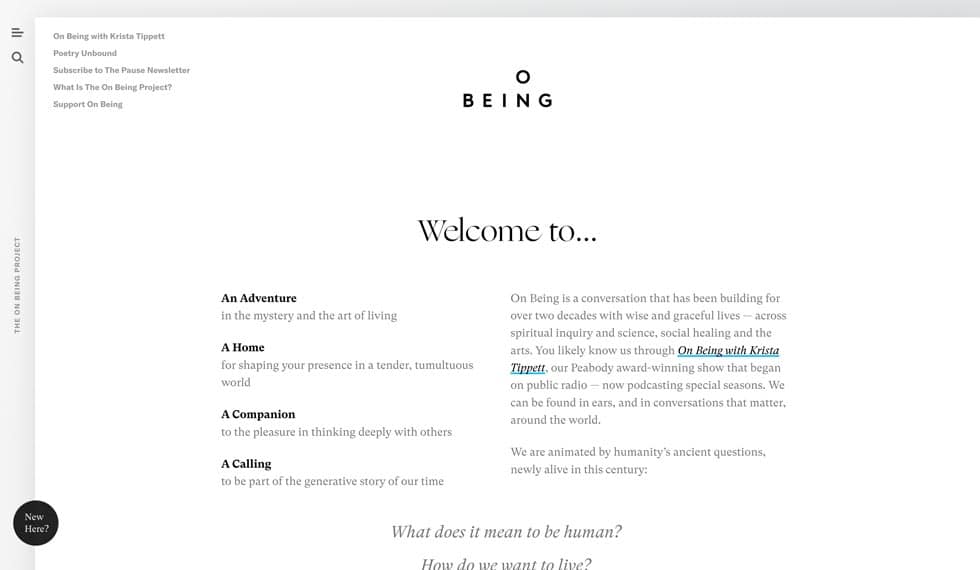
[00:42:38] Paul: Well, I want to recommend to folks, it’s not just something that’s been on my mind the last few weeks. It’s been many years practice. I listen to this podcast called On Being. I don’t know if anyone has ever recommended that before, but, today we were talking about justice and equity. I think they’ve done a really nice job in the last 12 months of redesigning their website so you can do library searches of episodes that link together.
If you’re really wanting to hear people, thought leaders, spiritual leaders talk about these issues, that that’s a really excellent podcast to dive into the complexities of what it is that we’re talking about. None of this is easy work, and you can search by topic. You can search by speaker. It’s equity stuff, but it’s also just, we’re in pandemic times and I think sometimes being able to even just listen to a nice, calming conversation about what we’re going through is really helpful. That’s a weekly practice I have. Tied to that, I just thought I would share this.
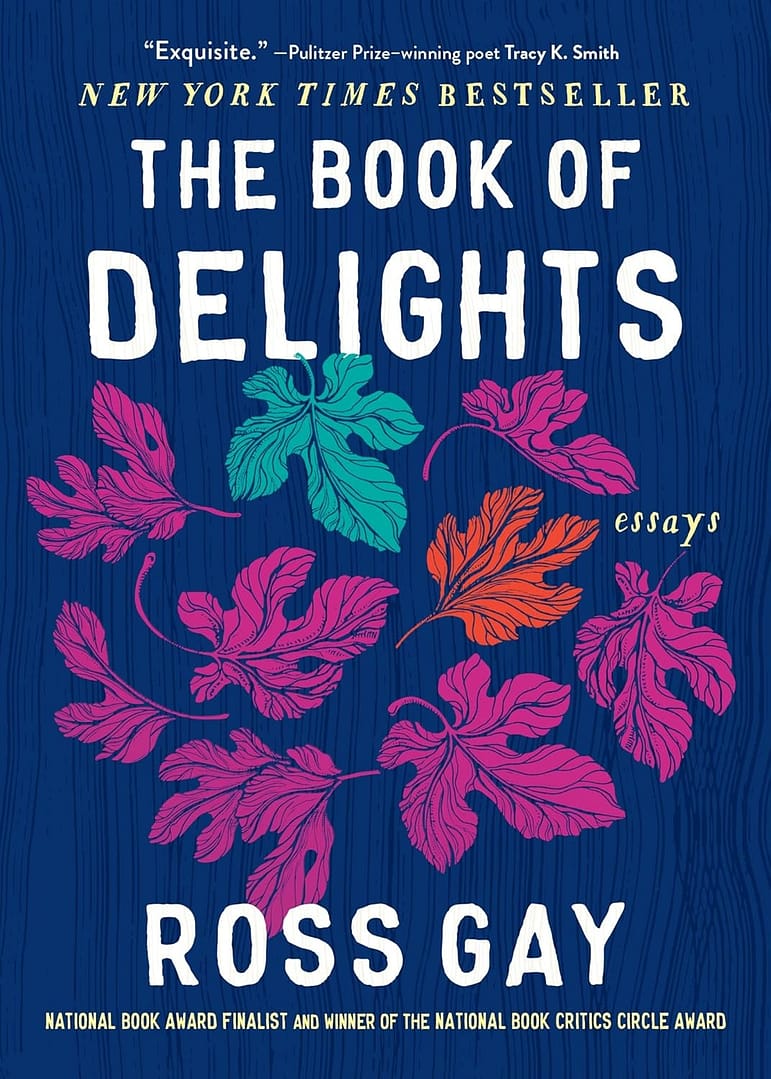
My partner and I have started a practice just in the last couple of days of reading from this book by Ross Gay called, The Book of Delights. We’ll just read one or two chapters a night, and the idea behind the book is that on his 42nd birthday, Ross decided that he was going to spend a year writing a short essay everyday about something from his day that he found delightful.
I think that right now, with everything going on in terms of politics, climate change, racial injustice, pandemic, all types of really stressful things happening in the world, we need to still remember to take time out of our day and pay attention to the things that bring us joy and happiness, and love and light, and even on the days when that’s really hard. This book helps me to remind myself that that’s an important practice as part of our day as well.
[00:44:52] Bonni: The thing I loved about that book is that, all of the preconceptions that I had about what it would be were broken because, he does what you just described while still bringing his anger, while still having days he finds wretched, while still having frustrating situations that he doesn’t try to ignore. I’m really intrigued right now about, let’s not numb ourselves right now, let’s not pretend like this is anything but awful. How do you not pretend that what we are experiencing collectively is anything but awful, at the same time, seeing the joy that is there is a really hopeful and also challenging juxtaposition. He does it so beautifully.
[00:45:39] Paul: Yes, and it’s really hard because you can so easily get mired into despair and into pessimism. Even depression or giving up. I think that it’s okay to be in all of those places. Trust and believe. Some days, I just scream. My mom, I’ll call her and I’ll scream into the phone. I think just being able to find these little moments everyday where you can just say, “Despite all this crap that I had to deal with today, this was something that was delightful.”
[00:46:13] Bonni: Just yesterday, my son came up. Usually, they don’t “Bother us” while we’re doing our work because they’re doing remote school, and so they do their things and we do our things. Yet, when they do, I don’t want what they remember about this time to be that it was, “Shhh” every time or, “How dare are you?” That the first reaction they would remember would be one of anger. That how dare you interrupt my very important things that I’m doing. My son did come upstairs and he doesn’t normally do that. He was very animated as he was coming up.
I thought, “Okay.” It was a less formal thing anyway, with my colleagues. “Let me just see what he’s got going on.” All of them have met him before, so they were excited to say, “Hello.” I switched from my little earbuds over to the speaker so they could hear him too. He had a little bowl, a little Tupperware bowl with him, and there is a paper over it. I’m like, “Okay, [laughs] what do we have here?” He had found an exoskeleton of a praying mantis in our front yard.
[00:47:16] Paul: Oh, yes.
[00:47:17] Bonni: Of course, my colleagues want to see this. He picks it up with its leg, and so, he is holding it up to the webcam and it’s right over my keyboard. I’m going, “Oh no, no, no, no. Please don’t break off the leg. I don’t know how fragile these things are.” I was just picturing shards of dead insect that I could never–
[crosstalk]
[00:47:35] Paul: Leg exoskeleton all up in your keyboard.
[00:47:38] Bonni: [laughs] I’ll never get out of my keyboard no matter how hard I try to clean it, but it did remain intact, and he was just so full of joy, and how fun it was for me even today. A day later, he was so excited that he shared that with his teacher and all of his classmates. Whether they are on campus or whether they are at home right now. He is not one to normally be expressively sharing a story like that. Normally, he’d wait until he was asked. Actually, I didn’t even ask him if he was asked, but it was just so fun upstairs earlier where I got to hear him tell that story. It reminded me, that would be something Ross Gay would have written about in The Book of Delights.
[00:48:15] Paul: Absolutely.
[00:48:15] Bonni: Even though I wasn’t terribly delighted, I still delighted in the joy that it brought our son.
[00:48:21] Paul: That’s a wonderful story, I love it.
[00:48:25] Bonni: I am so glad to have been connected with you, and I just want to say right now, let’s have this just be the first of many conversations.
[crosstalk]
[00:48:32] Paul: Oh, I would love that. I would love to keep coming back. I love talking about teaching and learning and thinking and becoming. All of these types of things.
[crosstalk]
[00:48:42] Bonni: So glad to be connected.
[00:48:42] Paul Eaton: Please, invite me back anytime.
[00:48:44] Bonni: Absolutely. Thanks for your time today and just sharing so much rich thoughts around Becoming.
[00:48:50] Paul: Well, thank you so much.
[music]
[00:48:55] Bonni Stachowiak: I’m thankful for the opportunity today to get to speak to Paul Eaton. Thanks once again to Rick for connecting us way back when, and for making sure I have lots of ideas about what we could speak about today. Today’s show notes are over at teachinginhighered.com/330 if you’d like to have a look there. You also can sign up for the occasional update at teachinginhighered.com/subscribe, and when you subscribe, you’ll receive a free ebook with 19 tools that will help you both with educational technology, and also with personal productivity. Thank you so much for listening. I’ll see you next time on Teaching in Higher Ed.
[music]
The transcript of this episode has been made possible through a financial contribution by the Association of College and University Educators (ACUE). ACUE is on a mission to ensure student success through quality instruction. In partnership with institutions of higher education nationwide, ACUE supports and credentials faculty members in the use of evidence-based teaching practices that drive student engagement, retention, and learning.
Teaching in Higher Ed transcripts are created using a combination of an automated transcription service and human beings. This text likely will not represent the precise, word-for-word conversation that was had. The accuracy of the transcripts will vary. The authoritative record of the Teaching in Higher Ed podcasts is contained in the audio file.