Follow the Teaching in Higher Ed Podcast
About this Episode
Jackie and Rob Parke share about empathy toward greater inclusion on episode 126 of Teaching in Higher Ed.
When I am thinking of readings for a course, I really want a diverse body of voices represented.
Jackie Parke
On episode 126 of Teaching in Higher Ed
Voices on this Episode



Recommendations from this Episode

Article
Invisibilia: Flipping the Script
Resource
The Memory Palace
Resource
Code Switch

Idea
What Kind of Asian Are You?
Book
Whistling Vivaldi by Claude M. Steele
Transcript
Bonni: [00:00:00] On today’s episode of Teaching in Higher Ed number 126, Jackie and Rob Parke share about empathy toward greater inclusion.
Production Credit: [00:00:12] Produced by Innovate Learning, maximizing human potential.
Bonni: [00:00:22] Welcome to this episode of Teaching in Higher Ed. I’m Bonni Stachowiak and this is the space where we explore the art and science of being more effective at facilitating learning. We also share ways to increase our personal productivity approaches so we can have more peace in our lives and be even more present for our students.
Bonni: [00:00:49] I was really honored to get to do a workshop for a group of people from Iraq looking into strategies for developing women’s leadership in higher ed in the Middle East. And after I did so my friend who coordinated the program, Dr. Sandie Morgan, who’s been on the show before said “You gotta talk to Jackie Parke, you’ve got to talk to Jackie Parke, she was phenomenal,” because she gave a workshop for them as well. And she is here today, joining me for the show. Jackie thanks for coming on to Teaching in Higher Ed.
Jackie: [00:01:21] Thanks for having us.
Bonni: [00:01:22] Jackie is a licensed clinical psychologist and she maintains a practice in Fullerton and also teaches as an assistant professor, where I teach, at Vanguard University. And Jackie said, “Hey, I’d love to be on your show but I’ve got you one better.” [laughing] She told me about her husband Rob. Rob teaches in information technology at the University of Southern California. He has a lifelong love of technology from the technical to the creative and experience in software development, information technology, web design, audio engineering- which he is loving being here in the actual podcast studio right now, and TV production and digital media. Rob, welcome to Teaching in Higher Ed.
Rob: [00:02:09] Thank you so much for having me.
Bonni: [00:02:10] Well it has been so fun to be connected with both of you and it feels like today is just a continuation of a dialogue that at least Jackie and I began and Rob has been joining us in. And as you shared some of your stories, we really realize that one thing that was coming through in all of the stories and in what you wanted to share today was really about empathy.
Bonni: [00:02:33] And if we even take it a step further really about love and we we thought we might start with each of you sharing a story of where you really didn’t experience empathy either through your teaching or perhaps even just through works with colleagues or in your role and who would like to go first? Dun dun dun…
Jackie: [00:02:54] I’ll go first.
Bonni: [00:02:55] All right Jackie, tell us us about a horrible experience that you’ve had. Just to cheer us up here.
Jackie: [00:02:58] We’ll just really kick it off and start off strong. So I thought of an example I guess in higher ed. And this was at a previous institution I had been working at where the faculty knew me really well and I’m sure really liked me and appreciated me as a colleague, but I applied for a job within the same institution and I wasn’t going to apply for it. I only did it because a mentor was encouraging me and really believed in me to do it, gave me that shot of confidence that I needed because I didn’t feel qualified for it. I’m now learning is not uncommon for women.
Jackie: [00:03:31] He had encouraged me to apply so sort of put myself out there and applied and hadn’t heard back yet from the faculty about application and I was actually sitting in a staff meeting with everyone and they were talking about how excited they were to interview another person for that position this upcoming Monday and I was sitting at the table while they said that.
Jackie: [00:03:52] And they’re just totally oblivious that I had applied for this position and so I think for me, that was just a feeling of being so invisible. And so as we talk about love I’m noticing that when there’s a lack of love I think it’s when we feel unseen or we don’t feel heard. And then love kind of makes us feel the opposite, I think, you feel seen where you feel heard by people.
Bonni: [00:04:13] Yeah. Thank you. Rob, your turn to depress us more.
Rob: [00:04:20] So I have a story that Jackie will probably remember. So you can’t see it in podcast land but I am in a wheelchair. And there’s a host of funny stories and stories that are less funny about that. But I was interviewing for a job and it came out that I was married and the person interviewing me- so there’s already a power differential in this said “oh that’s great you are married,” which in and of itself is a strange- you know.
Bonni: [00:04:49] Yes.
Rob: [00:04:50] OK. That’s fine. So “it’s great that you’re married. Is your wife in a wheelchair too?” And so many things went through my mind at that time. But I obviously was applying for a job and so I was like “no, actually she’s not.” The gentleman said “that’s great, wow!”
Rob: [00:05:10] And we just sort of sat for a moment in an awkward silence and then went back to talking about the job. I think nothing malicious was meant. But it’s super awkward and uncomfortable and probably just as we had talked about earlier, just doesn’t really know what to say or how to how to dance around something it’s really awkward. And I get it, they don’t encounter people with certain disabilities all the time and so it’s just maybe being awkward but, yeah that was my story.
Bonni: [00:05:44] When you talk about unconscious biases- and I was even sharing with the two of you that I had an unconscious bias that when I heard that Rob teaches at USC, I had just assumed that you lived somewhere distant more toward that University and we are way down here, far away.
Bonni: [00:06:00] There’s all these things that can happen where we can have unconscious bias that can inadvertently show up. And all three of us sitting around this table today know that we do it as well. And it’s tough I think sometimes thinking about something that you can see about another person.
Bonni: [00:06:17] I was not aware that you were in a wheelchair until it became pertinent for me to know what would be are you actually going to be able to enter our house? Jackie was very gracious in terms of us communicating around that.
Bonni: [00:06:29] But I think there are so many things too that come up that either are not as obvious and can’t be seen, ways in which we are able to love our students the way that we wish that we could have the kind of empathy for our students that we wish we could.
Bonni: [00:06:43] And then also even just in the hiring process how things can come up in the hiring process that would perhaps even dissuade people from coming into our institutions because of things that we can’t yet see about them because we basically turned them away before they can have a chance to apply.
Bonni: [00:07:01] And Rob, I know you have had a few experiences being on different search committees and also looking to be more inclusive in your field in information technology, of course we know that that is primarily male- so talk a little bit about some of the ways you’re trying to change the language and help your colleagues be more inclusive even just in the hiring process.
Rob: [00:07:23] Yeah. So it’s something I’m learning more about, the disparity of genders is pretty apparent and something that we as I think a faculty try to strive to improve. But I think some of the mechanisms to do that is something that I’m learning about.
Rob: [00:07:38] And so I’ve been fortunate to be able to to help rewrite some of our job postings. And sort of just doing research on what what people have found about what sort of language you can use in the job postings, they can be- I think there are studies where the information technology technologies so we do computer programming software development things like that, it can say like oh we’re hiring a coding ninja or this person is going to be a chief hacker. And those are kind of like oh cool, edgy terms. But what they’ve found is they end up basically perpetuating like a culture for lack of a better word, a male dominated sort of even like bro like culture.
Rob: [00:08:23] And so certainly USC’s job postings are not like that. But more broadly it’s languages of of like community building and inclusion and we are like a collaborative team of faculty. Things like that. And just sort of reading what studies have been done that’s one thing that I found. The other thing that Jackie and I talk a lot about is the other studies about if you have 10 job requirements on an application, for example. On average if a- and the numbers might be slightly skewed so don’t quote me on these- but if a male applicant meets 4 of 10 let’s say, they’re going to apply. And if a female faculty might be closer to six or even higher. And in fact I had two students just this week, we had this conversation about it and they proved it to a point where the students like a male student said I if I see like 2 up 2, I’ll just apply what does it hurt? And the the female student was like well even if I meet all of them, I feel like I shouldn’t really apply.
Rob: [00:09:25] And so we’ve worked to sort of add accurate descriptions of jobs because I think there’s a there’s a culture of like well we’ll just add extra, people will apply anyways and then we can filter them even though they they don’t technically need it. But it’s like no, no, no you can’t- if you want to apply that actually meet these that don’t cut out, particularly women, then you have to be accurate.
Bonni: [00:09:49] Jackie, tell us about how you have seen a lens of diversity come in even just in terms of the readings that you have your students do.
Jackie: [00:09:58] Yeah, this is something that Rob and I talk a lot about and we sort of brainstorm strategies in terms of how do we have a more representative diverse voice or body of voices in a classroom? And that includes the readings that students will do. Typically I think for many of us we just have the textbook for the class.
Jackie: [00:10:15] And historically, that’s what I’ve always done for classes. That have the textbook. When I’m creating my syllabus, I have chapter readings from the textbook but I’m becoming more conscious of the fact that when I’m thinking of readings for a course, I really want a diverse body of voices represented.
Jackie: [00:10:30] And so sometimes that might mean that I need to go out and actually look for readings that are representing a different angle in my field of psychology. So it’s a little bit of a joke in our field but there is actually a book called Even the Rat was White. And that’s talking about the history of psychology and that it has been more of a mainstream cultural voice that’s been represented there. And the history and the domain theorists who have contributed to our beloved field.
Bonni: [00:10:55] This is something that I really need to improve on. I was mentioning that I have never even gone to look at the authors of the textbooks that I assign. And like you said, it doesn’t necessarily have to mean that you change a textbook but how do you then provide other means for students to be able to see their own faces and their own cultures exposed in what we share with them? How would you suggest- and either one of you- in terms of if we know we’re not there now? I know I’m not there now. What would be some different things that I could do to maybe move myself a couple of steps along the path?
Rob: [00:11:34] I think the most important thing is that you’re asking that question. The fact that you care enough. And even if you’re like oh I’m not on the path yet, but that you care. That’s the first step. Right. I think that’s that’s the first place I would go.
Bonni: [00:11:48] One of the things I’ve shared on the podcast before is that in my intro to business class in the very beginning I share about that businesses don’t typically get started because someone starts with the solution, but they start with a problem to be solved. And I have found some success at diversifying the examples that I use there. I give some medical examples.
Bonni: [00:12:07] But I also give, I guess I suppose this is still a medical example, but there was I believe it was a Stanford student but I’ll link to it in the show notes in case I’m wrong. But who invented some plates and utensils for Parkinson’s patients. And they also happen to work well for different uses such as children. But she really talks about the problem of Parkinson’s and they’re shaking hands and how they have trouble sometimes getting enough food in. And if they find that there’s more color on a plate then I guess that we’re all more likely to consume more.
Bonni: [00:12:39] And to me, that just helps bring a different lens on how all of our students might be able to start in their own lives with the ideas that emerge into their minds and things they want to create to become more inclusive. And I know Rob you have a story to share about your assignment you give for some of your reluctant app developers.
Rob: [00:13:01] So yeah. Yeah. Thank you, Bonni. One class that I teach is building apps, Android apps. And so it’s sort of a third semester programming course, students have some experience. And they’re very entrepreneurial at USC, it’s a big great spirit for that. But I was consistently getting apps that were either dating apps, like we’re going to build a Tinder clone.
Bonni: [00:13:22] Because one’s not enough. Sorry I never even used it, but I feel like one’s enough.
Rob: [00:13:25] Right. Right. Or when literally there were multiple, every semester like finding events and finding parties at USC. And I would just joke that how hard is it to find a party at USC? Right? It is very like outgoing sort of celebratory school to say.
Rob: [00:13:45] And so after just getting fed up, I was like OK your app now has- it can be whatever you want, but it has to have a theme of social good. And I very much wanted to not impose my own agenda or my own feelings on it. So I was like it’s whatever you want, you have do some sort of research just like one page and say OK what’s the need for this? And I was like it can be ecology, it can be social justice, it can be it civil rights, or whatever it is you want to do it. I don’t want to say like this is what I care about, you have to do it.
Rob: [00:14:18] And students were… reluctant, I think. Because they came in with like but I want to build dating app. But some of them are really cool. At the end of the semester, some of them were- one of them was like a learning app for inner city high school. One was like a walk, two actually walk home safe. apps So like your leave and go party and you set a beacon and it would tell your friends like you’re walking home and I’m going to keep doing that despite some reluctance because I think it’s as you talked about the empathy part it’s like the whole point would be design an app that will benefit people that are not you and just just take that perspective. You have all your life to start a billion dollar unicorn app that’s going to set you for the rest of life. But let’s just try taking someone else’s perspective for four months and see how it goes.
Bonni: [00:15:05] That ability to both have empathy for your students but not to let the empathy overtake the importance of challenging them. I mean that we can all three think about times when we were challenged in college and what that has meant to us as people as we sit here today. And I’ve regularly had my students I ask them especially as they get into junior and senior level classes where they are- I’m going to ask them to research something that they don’t initially have interest in.
Bonni: [00:15:35] And I’ll tell you the grumbling, it comes. It comes like nobody’s business. And my TA who has been in a number of my classes came to me about three weeks ago and came into my office, he’s all full of energy says you’re right! You were right! You had us research that, I totally wasn’t interested in it at all. And I got on this interview and I’ll be darned if that’s all that we talked about.
Bonni: [00:15:57] But how many times our students need to be prepared and equipped to go out into the world and as you said Rob take a perspective of someone who is not them. I mean how much more fortunate will they be just in terms of the ability to contribute in diverse environments.
Bonni: [00:16:15] But then also in information technology, in business, in psychology, we’re regularly going to be- our students, we hope, are going to be exposed to things that are new to them. And they’ll continue to learn and be ready to take on those challenges if we sort of don’t just cater to their wishes- it’s really a balancing act I think.
Bonni: [00:16:35] Jackie, can you talk a little bit about how sometimes that women, especially our young women students, how they can have a feeling that they don’t really belong where they are?
Jackie: [00:16:47] Yeah. That’s a great question. And it’s something that I am becoming more aware of, both with the young women students I’m seeing in my classroom and then I’m just sort of growing in my own personal awareness and self-awareness about how this might affect me or what this looks like for those of us who work in academic settings.
Jackie: [00:17:04] But I can really see, I think especially with my training as a psychologist, when I just walk into the classroom- and of course when you walk in, we are thinking about getting plugged into the projector, and getting our PowerPoint slides up, and do we have handouts we need to pull out of our bag, and all the logistics that we go through of teaching.
Jackie: [00:17:19] And I think sometimes I can get so focused on that task mode of getting set up that there’s also this level that I’m becoming more aware of recently of just what is going on in the social dynamic of my classroom when I just look a look around? And so there was a class that I was teaching last year at another institution and it was a very small seminar style class where we all just sat around one table. And this was a doctoral class. And I just started to notice all of a sudden every week that the two males always sat right next to me.
Jackie: [00:17:53] No matter if they were the first ones that came to the classroom, if they were the last ones who came into the classroom. And I just started to think about what does this look like in terms of who sits where in the classroom? Who feels comfortable raising their hand in the classroom? Who never raises their hand even if it looks like they may know the answer? Who feels comfortable challenging me as a professor? Which at times I appreciate and I need in respectful ways, but who would never do that even if they were right and I was wrong? So noticing a lot of the I guess I would say the unspoken dynamics. And oftentimes it’s with female students that we can notice some of those power dynamics female versus male students, the gender dynamics. But also in terms of ethnic or racial background. That I’ve sort of noticed particularly with some of the demographics of students that come through our institution, there are some students who need to be almost acknowledged and called out more in the classroom setting.
Jackie: [00:18:50] And so I’ve just tried to challenge myself a little bit whether it’s a moment before class or a moment after class that students who seem like they don’t feel like they belong or don’t feel like their voice is important.
Jackie: [00:19:00] I’m trying to go out of my way just to connect with them more personally and just go and kind of crouch down at their level when they’re sitting at a table and just look them in the eye and ask them how they’re doing or how is their weekend or how are they doing with the class.
Bonni: [00:19:15] And Rob, I know you have experience with this as well seeing actually I mean- there are lower numbers of females in your classes, correct?
Rob: [00:19:25] There tend to be, yeah. Although,, because I do technology for non-engineers it is a little bit more even but they’re definitely not it’s not parity.
Bonni: [00:19:35] So you’ve noticed some things in your teaching too about how women show up in the class?
Rob: [00:19:39] Yeah. I’m fortunate to teach technical computer programming classes for non-engineers primarily. And what I like is I get to interact with history majors, jazz majors, communications majors, across the university.
Rob: [00:19:55] And so what I get, especially in the intro classes, is a lot of students male and female who was thought oh I can never be a programmer or I could never do this, my family member does it or my roommate does it but I’m not smart enough to do it.
Rob: [00:20:09] And it’s definitely across all gender and ethnic racial lines but more often than not I see a lot of female students who don’t feel comfortable. They don’t feel like they belong in this technology/ programming environment.
Rob: [00:20:27] And it’s both because they weren’t encouraged necessarily maybe in math and science and technology younger or the studies that show girls have a huge drop off around junior high in math for various reasons.
Rob: [00:20:44] And so they get here to my class and I’ve had multiple every semester students where both the gamut of like students as Jackie said that know the answer, like I know that they know the answer but they only feel comfortable if no one else will say anything and five seconds of silence passed and then they kind of raise their hand.
Rob: [00:21:05] And that happens enough I’m like oh, I try to encourage them outside of class and say hey, I know that you always know the answer. And not to pressure them to speak up but to actually say like hey do you want to take other classes in this field? Because it seems like you really you both really enjoy it and you’re good at it.
Rob: [00:21:22] And I’ve had other students that I have come to me crying, female students and they’re like I don’t belong here. I want to drop the class. And so you know what we’ll talk I’ll talk to them privately and say it seems like I know it looks as though other people know this better than you do. But to be frank some people are boasting as we talked about earlier or they’re they’re also insecure and so that comes out as wanting to show me how much they know. And so kind of normalizing that a little bit for them. And not necessarily talking about gender dynamics with them because I think you know at 18, it might not be a conversation they’re having but just encouraging them that like you’re getting this, like I can externally validate that you understand this. And like I’ve seen a lot of students and your of the kind that you should consider more of this if you if you like it if it’s fun.
Rob: [00:22:08] And generally when those students continue to take classes or I see them again, they’re enjoying it and they’ve gone past that first class where they felt insecure and they like to kind of belong. That is super heartwarming to me and I mean I kind of downplay it a little bit with them because I don’t want to them to feel uncomfortable but it means so much to me that they’ve overcome something and whether they do this as a career or not, ,I just think it’s really cool that they got to experience that they can take on a new challenge where I feel like I’m not going to do very well than I do and hopefully that gives them confidence in everything in life hopefully.
Bonni: [00:22:45] I’m realizing that if we had just agreed before today that we were going to talk about empathy, I’m realizing as each of you is sharing your stories that I tend to think of that word is a passive word if you say that someone showed empathy toward you.
Bonni: [00:23:01] I picture you going to them and them responding with empathy. But what I’m hearing from both of your stories is that empathy needs to be really active and intentional in terms of engaging and having a more inclusive environments. Does that resonate with either of you in any of the stories come to mind or examples?
Jackie: [00:23:20] Definitely. I think- I really feel a part of that conversation we’re having really is about empathy and perspective taking in light of inclusion and diversity and also I think about love. I don’t know how often we talk about love in higher education, but certainly we talk about loving our colleagues and loving our students.
Jackie: [00:23:37] What do we really mean about that in terms of how we care about them? It has to be active. I’ve heard this quote that says love is an action, not a feeling. Because I think part of the conversation about diversity and inclusion at a higher level tends to be about tolerance, which isn’t bad, but in some ways I think that just sets the bar too low because we’re not just necessarily aiming to tolerate people and be OK with being around them. It seems like there’s a lot more to that that’s possible.
Bonni: [00:24:08] We are going to end this portion of the show on a more hopeful note. You each began by depressing us, but only because I asked you to, with with the story in which you did not feel empathy, you did not feel love. And I would just love to hear from each of you now a time where you really did feel love.
Rob: [00:24:27] I would say when I was younger, much younger in grade school, there’s a point when I had to have a surgery and I remember that my principal at the time donated blood and that was just kind of like a selfless kind of unnecessary act. I mean necessary in that I needed it but he didn’t have to do that. And so yeah that’s what came that came to my mind.
Jackie: [00:24:51] You know I guess most educators don’t walk around thinking their students are literally going to have their blood, sweat, and tears. But I had a memory of one of my very first days in my first year of my doctoral program. And this is far before I was ever thinking about who I was in the classroom as a student in terms of being female or being biracial as I am, multiracial actually. But I remember the professor was just going around it was just an icebreaker activity and I think something typical maybe was to say one thing that was interesting about ourselves and I don’t remember what I said but I said something really basic and I said I think a cushioned it afterward and said Oh it’s really boring, I mean that’s kind of the only thing about me that’s interesting. And I remember he just looked at me and he said you know what, I’m sure there’s so much more about you that’s interesting.
Jackie: [00:25:45] And for whatever reason like it just really stuck with me. You know he didn’t have to say that. He could have laughed at my self-denigration but I really remember that but he meant it and he saw a lot more to me than perhaps I saw in myself as a student at the beginning of my doctoral program.
Bonni: [00:26:00] Yeah. Thanks for sharing those stories. It’s the part of this show where we each get to recommend some theme and I’m going to go first and then I’ll pass it over to Jackie and we’ll let Rob conclude because I know Rob has more on his list.
Bonni: [00:26:15] I’ve been duly prepared. And this was actually a video that was tweeted at me by one of the listeners, Tracy Joseph tweeted this video over to me and it is What Kind of Asian Are You? And she said “listened to the recent podcast about the presumed incompetent and this clip came to mind regarding micro aggressions and flipping the script.”
Bonni: [00:26:39] And I went into it this morning when I went to watch it and thought like OK serious, this is going to be very serious. And so here we go I’m just going to play a very, very brief part of the clip and then encourage you to go listen or I should say watch.
What Kind Of Asian Are You?: [00:27:01] “Hi there. Hi. Nice day huh? Yes, finally right. Where are you from? Your English is perfect. San Diego, we speak English there. Oh no. Where are you from? Well I was born in Orange County, but I never actually live there. I mean before that.”
Bonni: [00:27:26] You get the general idea. And let me just say that there is an unexpected twist that I don’t want to give too much away but it will make you laugh, it’s not one that leaves you depressed. It’s when that leaves you cracking up at some of the things that hopefully we all recognize that we have a potential for doing and that just remind us to keep getting better, keep asking questions, keep challenging ourselves. And really exposing ourselves to people that are different than us on a regular basis. So I would strongly, strongly, strongly urge you to check out the link to this video, which I’ll post in the show notes. And there’s going to be some other good things too including Jackie’s recommendation.
Jackie: [00:28:03] So when you said flipping the script, that was really funny because right before we were recording this I thought, you know what I do have a recommendation is from an NPR podcast called Invisibilia. And the name of the episode is Flip the Script. And I had a friend who texted me and said “You have to listen to this episode, Jackie. I totally thought of you when I listened to it.” And the episode is all about the power of love.
Jackie: [00:28:30] It’s also about how when you get to know someone as a human being, how powerful that is in terms of breaking down barriers. And it’s also a little bit about countering violent extremism and radicalization which is something I’ve taken a recent academic interest in. So I’d highly reccomend Flip the Script is the name of the episode, the podcast is Invisibilia by NPR.
Bonni: [00:28:54] Thanks. And Rob how about yours.
Rob: [00:28:56] I will be quick. So.
Bonni: [00:28:57] Oh it’s ok.
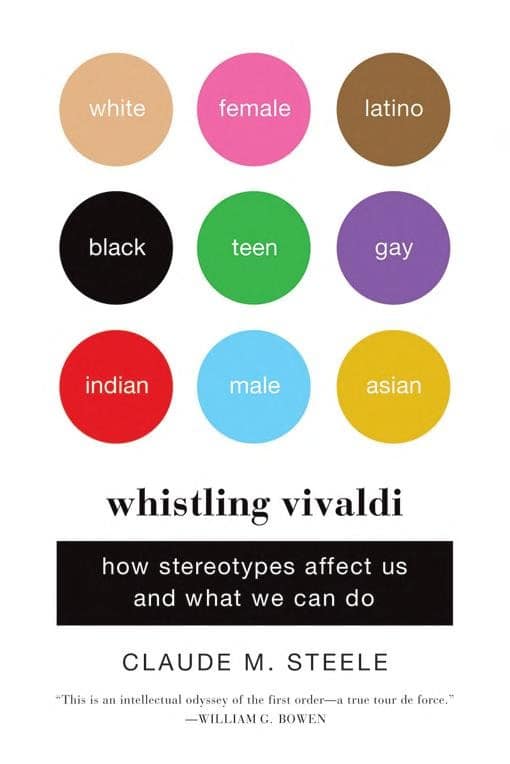
Rob: [00:28:59] So given the theme that we were talking about, I have three things to recommend. One is a little bit easier to digest I suppose. The first is a book that my outstanding friend Sarah Schwartz recommended and it’s called Whistling Vivaldi. It’s just it’s a fascinating academic look at the stereotype threat, which if it’s not something you’re familiar with, it’s the idea that the extra cognitive load that you face by trying to be afraid of confirming the stereotypes people believe about you. And it’s fascinating because it’s all the academic studies in a sort of a narrative form that cross all sorts of ethnic gender lines and you can induce that fear into someone and then they’ll perform significantly worse on whether it’s in the track and field or math tests or whatever it might be. I mean even if you make up fake sort of stereotypes that they then believe about themselves. But obviously it has much broader implications about societal stereotypes so it’s really fascinating.
Rob: [00:30:04] The second one which I’ll challenge people with is the NPR podcast, Code Switch, which is fascinating challenging look at race issues in America.
Bonni: [00:30:16] Someone recommended Code Switch on the slack channel for teaching in Higher Ed and it was in reference to I believe the recent episode about presumed incompetent. I think that was the juxtaposition. How funny is this thought I thought. Oh it’s a technology podcast that just happened to have one of their episodes on race- didn’t know until you are sitting right here, it’s not going like that. It’s a different kind of coding I guess.
Rob: [00:30:43] Yes it is it’s it’s a Code Switch in the sense that people have multiple identities and based on within the context that your and you code switch from your own-
Bonni: [00:30:55] I’m loving that I don’t I didn’t get it. I’m learning all the time on this podcast thing. I’m telling you, I’m a good student of the podcast and of the slack channel too. I got it now. Got it. Now I want to listen even more even though I still wanted to listen back when it was a technology podcast that had one episode about race. Yes.
Rob: [00:31:13] Yeah, they’re all about race.
Bonni: [00:31:15] I got it. I got it.
Rob: [00:31:18] The last one I will leave you with, which really does fit the other theme today. I have a long commute. So I listen to a lot of podcasts as many of us do. It’s called The Memory Palace and it is an outstanding short series about essentially about American history but it’s told it’s a little vignettes of people’s lives who aren’t necessarily famous people from history told in this beautiful narrative way that I think really does engender empathy for other people’s perspectives.
Rob: [00:31:48] And so I would I would encourage that, they are definitely not all about race issues. Certainly not, but just in taking in perspective taking. It’s beautiful, there’s times when I’m often moved by the end because the stories are so beautiful. And they’re very short too.
Bonni: [00:32:06] Thanks to both of you for being here. And as we close our time together, my stomach’s rumbling. We’re about to enjoy some BBQ chicken. And you brought ice cream and cookies for the kids which they are going to be very focused on then we’ll make sure they eat enough of the nutritious stuff to get to the treats after.
Bonni: [00:32:23] And I really appreciate your time. I’m hoping this is just the beginning of a great relationship and it’s not the first dinner and not the first podcast visit. So thanks so much for investing your time and it’s fun getting to correspond to and seen how you experience episodes I think those are just a fun way to build this community.
Bonni: [00:32:40] So thanks so much. And thanks to all of you for listening. If you have yet to subscribe to the Teaching in Higher Ed e-mail list, that’s a weekly update that’ll come on all of these links that we just talked about, including a podcast that is not about coding, that can come into your inbox and once a week and get the links to the show notes and also a blog post written by me about teaching and productivity. You can just go to teachinginhighered.com/subscribe.
Bonni: [00:33:10] And I hope you’ll consider giving the show a rating or review on whatever podcast app it is that you use to listen to the show. It makes us grow this community even larger and allow for future barbecues to include even more of you. So if you’re down in Southern California. Thanks for listening and we’ll see you next time.
Teaching in Higher Ed transcripts are created using a combination of an automated transcription service and human beings. This text likely will not represent the precise, word-for-word conversation that was had. The accuracy of the transcripts will vary. The authoritative record of the Teaching in Higher Ed podcasts is contained in the audio file.