• Skip to primary navigation
  • Skip to main content
  • Skip to footer

Teaching in Higher Ed

  • Podcast
  • Blog
  • SPEAKING
  • Media
  • Recommendations
  • About
  • Contact
EPISODE 621

The Public Scholar with David Perry

with David Perry

| May 7, 2026 | XFacebookLinkedInEmail

https://media.blubrry.com/teaching_in_higher_ed_faculty/content.blubrry.com/teaching_in_higher_ed_faculty/TIHE621.mp3

Podcast (tihe_podcast):

Play in new window | Download | Transcript

Subscribe: Apple Podcasts | Spotify | RSS | How do I listen to a podcast?

David Perry shares about his new book, The Public Scholar, on episode 621 of the Teaching in Higher Ed podcast.

Quotes from the episode
Teaching is the most important form of public engagement that any of us do.

Teaching is the most important form of public engagement that any of us do.
-David Perry

If we are really practiced at teaching, and as we develop our skills as teachers, those are the skills that can also take us into other spaces outside of the classroom.
-David Perry

Academia is structured around all kinds of failure. Once you recognize that, and then bring yourself into another context where you're going to experience rejection, you already have the skills to cope with it.
-David Perry

I think all writers, and certainly in academia, worry a lot about our worst faith readers. How do we not get ripped apart? You have to write for your best faith reader. You have to really shift your focus.
-David Perry
Resources

  • The Public Scholar: A Practical Handbook by David M. Perry
  • Tressie McMillan Cottom
  • Kevin Gannon — The Tattooed Professor
  • Irene Maweu
  • Higher Love
  • Pluribus
  • The Drop Kick Murphys
  • ‘Streets of Minneapolis’: 32 protest songs inspired by the Twin Cities’ ICE resistance
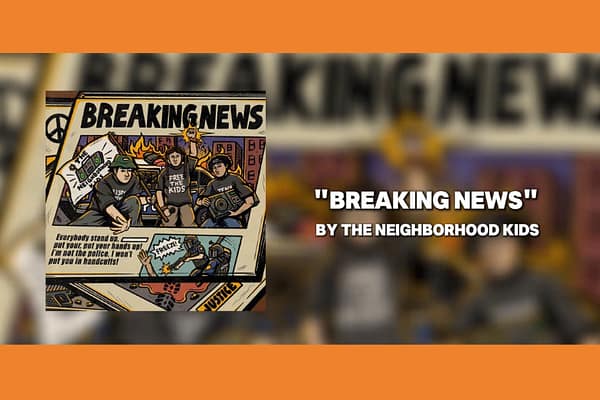
  • The Neighborhood Kids, “Breaking News”

ARE YOU ENJOYING THE SHOW?

REVIEW THE SHOW
SEND FEEDBACK

ON THIS EPISODE

David Perry

Associate Director of Undergraduate Studies in History

David M. Perry is an author, journalist, and historian. He is the author of The Public Scholar (John Hopkins University Press) and the co-author of Oathbreakers: The War of Brothers that Shattered an Empire and Made Medieval Europe and The Bright Ages: A New History of Medieval Europe, both from HarperCollins. The New York Times called Oathbreakers “A real-life Game of Thrones,” while The Boston Globe said The Bright Ages was “incandescent and ultimately intoxicating.” Over the last few years, Perry’s work on history, parenting, disability, and politics has appeared in The New York Times, The Washington Post, The Nation, The Daily Beast, Smithsonian, Slate, CNN, and many others. Perry was a professor of Medieval History at Dominican University from 2006-2017. His scholarly work focuses on Venice, the Crusades, and the Mediterranean World. He’s the author of Sacred Plunder: Venice and the Aftermath of the Fourth Crusade (Penn State University Press, 2015). Now he works for the University of Minnesota, convincing students that studying history is good for them and good for their careers (it is!). Perry and his wife Shannon, a food scientist, live in the Twin Cities area. Together, they are raising two children, one of whom has Down syndrome. Perry also plays in a Midwestern Irish Rock band – Purgatory Creek. Lately, he’s obsessed with brisket and ribs and going fishing.

Bonni Stachowiak

Bonni Stachowiak is dean of teaching and learning and professor of business and management at Vanguard University. She hosts Teaching in Higher Ed, a weekly podcast on the art and science of teaching with over five million downloads. Bonni holds a doctorate in Organizational Leadership and speaks widely on teaching, curiosity, digital pedagogy, and leadership. She often joins her husband, Dave, on his Coaching for Leaders podcast.

RECOMMENDATIONS

Higher Love - Ndlovu Youth Choir(Steve Winwood 1986 and then Whitney Houston in 1990 cover)

Higher Love - Ndlovu Youth Choir(Steve Winwood 1986 and then Whitney Houston in 1990 cover)

RECOMMENDED BY:Bonni Stachowiak
Pluribus

Pluribus

RECOMMENDED BY:Bonni Stachowiak
The Drop Kick Murphys - Irish Rock Punk Band -

The Drop Kick Murphys - Irish Rock Punk Band -

RECOMMENDED BY:David Perry
‘Streets of Minneapolis’: 32 protest songs inspired by the Twin Cities’ ICE resistance

‘Streets of Minneapolis’: 32 protest songs inspired by the Twin Cities’ ICE resistance

RECOMMENDED BY:David Perry
The Neighborhood Kids, “Breaking News”

The Neighborhood Kids, “Breaking News”

RECOMMENDED BY:David Perry
Woman sits at a desk, holding a sign that reads: "Show up for the work."

GET CONNECTED

JOIN OVER 4,000 EDUCATORS

Subscribe to the weekly email update and receive the most recent episode's show notes, as well as some other bonus resources.

Please enter your name.
Please enter a valid email address.
JOIN
Something went wrong. Please check your entries and try again.

Related Episodes

  • EPISODE 271The Missing Course by David Gooblar

    with David Gooblar

  • EPISODE 327Misconceptions About Hyflex
    Man with a beard and short hair wearing a tan blazer smiles at the camera

    with David Rhoads

  • EPISODE 427Learning in Uncertainty
    Dave Cormier Square

    with Dave Cormier

  • EPISODE 101Public Sphere Pedagogy

    with Thia Wolf


EPISODE 621

The Public Scholar with David Perry

DOWNLOAD TRANSCRIPT

EPISODE 621: The Public Scholar with David Perry

Bonni Stachowiak [00:00:00]:

Today, on episode number 621 of the Teaching in Higher Ed podcast, the Public Scholar, with David Perry. 

Bonni Stachowiak [00:00:11]:

Production Credit: Produced by Innovate Learning, Maximizing Human Potential. 

Bonni Stachowiak [00:00:19]:

Welcome to this episode of Teaching in Higher Ed. I’m Bonni Stachowiak, and this is the space where we explore the art and science of being more effective at facilitating learning. We also share ways to improve our productivity approaches so we can have more peace in our lives and be even more present for our students. On today’s episode of Teaching in Higher Ed, I’m so excited to be joined by David M. Perry, author, journalist, historian, and the writer of the Public Scholar. He’s also the co-author of Oath Breakers, The War of Brothers that Shattered an Empire, and Made Medieval Europe, and the Bright Ages: A New History of Medieval Europe. Over the last few years, Perry’s work on history, parenting, disability, and politics has appeared in the New York Times, the Washington Post, the Nation, the Daily Beast, Smithsonian, Slate, CNN, and many others.

Bonni Stachowiak [00:01:27]:

Perry was a professor of Medieval history at Dominican University from 2006 to 2017. His scholarly work focuses on Venice, the Crusades, and the Mediterranean world. He’s the author of Sacred Plunder: Venice and the Aftermath of the Fourth Crusade. Now he works for the University of Minnesota, convincing students that studying history is good for them and good for their careers. He tells me it is. In this conversation, we explore what it looks like to bring scholarly habits of mind into the public square. David shares stories of responding as a historian to moments of crisis in his own community. We talk about constraints and why they can be beautiful.

Bonni Stachowiak [00:02:13]:

We consider how teaching itself may be our most important form of scholarship. And we discuss what it means to move fast when your expertise suddenly interacts with the new cycle. If you’ve ever wondered whether your work belongs outside the classroom or how to even begin, this episode is your invitation. David Perry, welcome to Teaching in Higher Ed.

David Perry [00:02:38]:

I’m so happy to be here.

Bonni Stachowiak [00:02:40]:

I am so happy to have you here. And we’re going to start with story time. Can you tell us about what public scholarship looks like in practice before I get too far into asking you more questions?

David Perry [00:02:54]:

Yeah, I mean, I have a lot of stories I could tell, but I really want to talk about the last couple of months in Minneapolis and St. Paul, the Twin Cities where I live, because obviously, you know, by the time this airs, hopefully things will be better than they are right now when we’re talking. But they’re, and they’re better right now than they were a couple of weeks ago. But they’re not great, and they’re not going to be great. And when the occupation by Homeland Security happened at the beginning of this year, I really, I was doing some writing about Medicaid policy and about Social Security. I mean, social services and other policy issues I’m really interested in. And one of the weird parts of my career is that I’m a medieval historian who writes about Medicaid policy for mass media. 

David Perry [00:03:36]:

But then, this terrible thing started happening in my home, and there were lots of things I could do, but I wasn’t sure what to write about. I didn’t know what to do as a writer. I knew what to do as a neighbor and as a fundraiser and as a friend, but not as a public scholar. And so one thing I did is I helped other people who knew what to do, and I helped them write, and I helped them connect people. But I just sort of sat there, and finally, a couple weeks into it, I thought, what I need to do is operate in this moment of crisis as best I can as a historian, as someone who thinks about history and how it works. And that can mean writing about long history. And I have written about, say, the concentration camp in 19th-century Minnesota that housed Dakota people and that now has the building, the Whipple Building, where Homeland Security has set up shop. But actually, a friend of mine, a colleague who works on indigenous history, wrote that piece, and I connected him with an editor, and that was great.

David Perry [00:04:33]:

He was a great person to write that piece. I just thought, what do I see when I look at this moment as a historian? I wrote a number of different pieces. I wrote a piece about Holocaust analogies and how to rethink about the work that analogies do. But I also wrote a piece just about the formation of the Department of Homeland Security as a thing that happened in a historical moment. A very specific 2001, 2002. I wrote about the October and November of 2002 when the bill was passed. And I just went into that moment as a historian. Now, I’m not a historian of 21st-century America.

David Perry [00:05:09]:

It’s not what I work on, but I use the skills that I have developed as a long career as a humanist and as a historian to apply to this moment and hopefully say something useful. So I can’t come up with a better example than that because it’s not about the content except for when it is, but it’s about the practice and about the ways of thinking and doing the work, and then sharing what you find.

Bonni Stachowiak [00:05:30]:

Part of what I’m hearing in your example, and it doesn’t surprise me, because I have followed your work for so long, is things you care about. Things you care about, things that either you care about, and you feel that through the anger and the wretchedness of the moments. And I know you don’t only do rage writing, but I mean, you do all sorts of different types, different things that get us activated in our lives that we care about. You’re talking now to people who care deeply about teaching, and that we’re- I loved hearing you describe, even though of course, I’m familiar with your scholarship. But it’s just funny when we try to describe, you know, the things that we’re interested in and how they kind of come together. But why, why, broadly speaking, might it be important for those of us who just feel such a sense of identity, purpose, meaning, significance in teaching want to also care about something like public scholarship?

David Perry [00:06:25]:

So that is a great question, and one of the reasons I’m really excited to be on this particular show, talking to you right now. And I have like five different answers, but I’ll try to, I’ll try to rein them in, but I have a lot of them. First of all, teaching as my friend Kevin Gannon has said, is the most important form of public engagement that any of us do. And that’s just, that’s just true. And we all do it.

David Perry [00:06:46]:

Every one time we step in the classroom, we’re doing a kind of public engagement that is distinct from when we are writing internally within scholarly communities, which I also support. I’m a big believer in specialized scholarship within communities, and I never want my work of this kind to be put in opposition. They are, they’re part of the whole piece. But teaching. So teaching is is the public engagement then. The second thing is that if we are really practiced at teaching and as we develop our skills as teachers, those are the skills that can also take us into other spaces outside of the classroom.

David Perry [00:07:17]:

That it is the classroom skills, more than anything else, much more for me anyway, than my scholarly skills. It is the classroom skills that has pushed me to think in all kinds of different ways. And I do talk about this in the book at length, and I think it’s true. One of them is when you’re in a classroom, you’re talking to kind of a semi-interested, semi-informed audience. That’s the classroom. And I say that with love. I love students. They’ve come into my classroom.

David Perry [00:07:44]:

That’s great. Hopefully, they’ve done some thinking and reading ahead of time. That’s great. But they haven’t learned everything. And I hope they haven’t because they’re in my classroom. There should be some learning that happens there, either from me or, better yet, in community. And so, if you’re thinking about public writing, that is a very analogous process where you’re working with hopefully, a semi-interested, enthusiastic audience, but maybe not. You’re also working under constraints.

David Perry [00:08:06]:

And if the constraint in my teaching this semester is that it’s Thursday from 2:30 to 3:45, and if my constraint in my local newspaper is that it’s 900 words and it’s due by Friday at 5 pm at the end of the day, those are different constraints, but again, they’re constraints. And the other thing is, constraints can be beautiful. They can really free you up as a teacher, as a writer, because you have to think, all right, I only have 50 minutes, I only have 900 words. What is the work that I can do here? So what I’m saying is that people who are committed to teaching, good teachers, have already done so much of the thinking process that they’re ready to do the work. So it’s public engagement, ready to do the work. And then finally, you get to teach on a mass scale. And you know, sometimes I have written for 100 people, sometimes I’ve written for a couple thousand. I have a few pieces that have hit the millions, maybe as high as 10 million.

David Perry [00:09:00]:

Now, I’m not saying all 10 million of those people read it to the end, but even if, you know, 1% of them read it to the end and learned something that day, that’s a really good day’s work. And so, people who care about teaching and want to think about how to expand that more broadly can already do it. And finally, finally, I think it’s only four, but still, finally, I started doing this practice while as a professor at a teaching school with a fairly heavy teaching load. And this work fit within that life, work, life structure in a way that I’m a medievalist by training. If I need to sit down and read a medieval manuscript or even a just medieval Latin that’s printed so I don’t even have to do paleography, it takes me a couple hours just to get my brain into the right space to really think in that way and do that deep work, it is not something I can do in between my morning and afternoon class, just sort of by the by. But this is work that I could do as someone who was very busy teaching, but wanted to continue to write, wanted to continue to try to get my ideas down into documents, and then maybe have someone read them, but just to write, to be a writer. And in a teaching job, this was just much more doable for me than other kinds of academic work.

Bonni Stachowiak [00:10:09]:

I love that you mentioned constraints, and I’m going to need to revisit the notes, of course, to type them up, but I’m also going to revisit what you said about them being beautiful. But I’d like to just ask a question when they’re not beautiful, those constraints that we potentially put on ourselves. I know that you’ve talked a lot about this, you do workshops, and of course, you write a lot about it as well. What are some of the ways that those of us in either research and teaching-oriented or maybe more teaching-oriented things? What do we tend to do where we might be holding ourselves back from being able to pursue public scholarship, and be able to experience some of those benefits you just illuminated for us?

David Perry [00:10:51]:

Yeah, I mean, we are, I want to use the word indoctrinated, but maybe a culture, you know, enculturated. I’m not sure what the right word is, but we are, when we go through advanced training in graduate school, we are taught something about knowledge that is true, but it is not the only way to think about it. So we’re taught to narrow ourselves, to really look in very- to get smaller and smaller in the space of expertise that we claim. So, you know, I am a medieval historian, and I might introduce myself to you or to, you know, anyone as a medieval historian or even just a historian. But in a group of medieval historians, I’m going to say I work on Venice from the late 12th century to the early 13th century, or really only until the 1230s, although I have some expertise until the 1260s, right? I mean, that’s a kind of- that’s not how people understand me as a historian, but it is how graduate school teaches me to only claim expertise in fairly narrow spaces, narrow genres, narrow types of documents.

David Perry [00:11:47]:

And that’s appropriate in some contexts, but it isn’t actually how we interact with the world. And that’s again, why teaching is good, because none of us get to only teach Venice from 12, you know, 1190 to 1260. That even people at elite research schools are not only teaching in a narrow frame. And certainly those of us at teaching schools, you know, I taught from Plato to NATO and, and that’s not my, I did not come up with that. But it’s also, it’s also true. And, you know, so, so there are other ways of thinking about it. We’re really taught to do a very. And to valorize a very small kind of work in very specific ways.

David Perry [00:12:22]:

And even in public scholarship, I can’t tell you how important it’s been to me to write for local papers, to write for local outlets, to write in my community. To write for weird nonprofit newsletters that I value as much as writing for the New York Times. But we have kind of, we’re status-obsessed in academe, and so we focus on certain kinds of high status. But the biggest thing is that we, I think all writers and certainly in academia, we worry a lot about our worst faith readers. How do we not get ripped apart by the people who come at us with the worst possible faith? And I do think this has gotten a little better. But academic book reviews are full of worst-faith responses. In the hyper-stakes competitive world of grant writing and people in grant fields, again, those committees are just looking for reasons to reject you. And often not out of best faith competitiveness, but reading with hostility.

David Perry [00:13:19]:

If we write for our worst faith readers, we mostly just don’t write, and we certainly don’t write well. And you have to write for your best faith reader. You have to really shift your focus. And I think that’s when I am at my best, which is not all the time, but when I am at my best, I am thinking about my best faith readers and how to serve them, rather than trying to defend myself preemptively from the people who are going to come at me with the worst possible faith.

Bonni Stachowiak [00:13:42]:

I had a performance review when I was about 23 years old.

Bonni Stachowiak [00:13:47]:

And I am now in my mid-50s, so it has been a minute since receiving this feedback. But at the time, he told me that I hadn’t failed enough in life. So I was getting dinged down my performance review for not having failed enough, and I chuckle. I actually still would have a way to reach out to him. I should reach out to him and see if he would still have the same feedback today. 

Bonni Stachowiak [00:14:06]:

I don’t mean to me but, like how important he sees failure. But I certainly see it as failure, I mean, I kind of know what he was probably trying to say at the time, now after all this time, for the lessons that we can draw. But as you are describing some of the reasons why we might hold ourselves back, I want to sort of test just more of a personal example from my life. I know that I’ll hold myself back out of a fear of failure, and that I’m curious for you, what you would say to people like me who maybe might wish to pursue more public scholarship,

Bonni Stachowiak [00:14:41]:

but for whom, that inner voice of like, but what if, what if I fail? Or what if I get a rejection? Or what if, what if, what if that, that is what holds us back. Anything that you want to give us advice for?

David Perry [00:14:52]:

Yeah, I mean, one of my whole mantras is that academics, anyone who has made it into academia at any level, just making it into sort of an advanced study, advanced scholarship, has gone through almost- eventually you go through cycles of failure, no matter how successful you are. You know, I applied to a lot of grad schools, I got into one. I applied for a lot of fellowships, I got one, I applied for a lot of jobs, I got two, which, you know, that’s a big number. And I continued to apply for lots of other jobs, I got none. You know, I, that academia is structured around all kinds of failure and that almost everyone has. And so, it’s just, if once you recognize that and then, bringing yourself into another context where you’re going to experience a lot of rejection, hopefully you, you already have the skills to cope with it, or you wouldn’t have made it to where you make it.

David Perry [00:15:41]:

I just don’t think any of us, or very few of us in any discipline, have not had cycles of rejection and failure that we’ve managed, if we’re still doing it, to get through in some capacity or to adjust our focus. You know, one of my biggest moments as a public scholar was in, I think, it was March of 2014. I was coming up for a sabbatical when I was still, still a faculty member. It’s the only sabbatical I ever have had, and it was for the next year. And I had a half-year at full salary or full year at half salary, fairly normal. I could not afford a full year at half salary, you know, I have kids, and I applied for lots and lots and lots of funding. I didn’t get any of them.

David Perry [00:16:18]:

And there was a really good job at a more prestigious school that I didn’t really want to take, but it would have been more convenient for my family and, and it would have been a different kind of R1 job. And I didn’t even get a first-round interview. And that same month, I had some essays that people read and were talking to me about having read. And I had a university president who called me, and he was nervous because he was talking to the press, and that was kind of weird. I had someone who worked for the White House telling me that she was passing one of my essays around the building, which is kind of mind-blowing, right? And there was this real clarity of, well, I have success in this area, not in this other area, and lean into the space where I seem to be making it work. And it takes a while sometimes to figure that out.

David Perry [00:17:03]:

It’s not always such a clear sign as Rebecca calling you up and saying, David, I like your work, I’m passing it around. But there are usually signs of sort of where it’s working and where it’s not. And so that’s the other flip side of coping with failure is to, well, okay, this isn’t working. What else can I do? Where else can I make something happen?

Bonni Stachowiak [00:17:21]:

You’ve given some examples, and thank you for all these wonderful snapshots of your work, about having to do with your scholarship in being a historian. But I also know that you argue that our personal experience is a legitimate subject for public writing. And would you describe, especially for those who may not be familiar with your work yet, would you describe for us what does that look like in your public scholarship? And how might you tell us that autobiography could actually help us and play a role in our own public scholarship?

David Perry [00:17:55]:

Yeah, I think this is really important and in part because of my own experience, but also because in the now 11 years of doing workshops around the country, about half the people I encounter want to do some writing. They think of themselves as writers. They want to be writers, but not about the thing, not only that they study, but not about the things they teach. And they kind of want permission to write about other things. And I would like to give everyone permission to write about other things, but by applying the same tools and skills that we have applied to become knowledgeable in other areas. Anything we’ve, you know, the things we live, our lived experience, we are expert in those things. 

David Perry [00:18:36]:

But we also- this is part of why the public scholar, becoming a scholar in one thing gives you tools. And we tell our, I tell students all the time, you don’t need to know anything about whatever it is I’m teaching, but the skills you’re using today, you’re going to use again and again and again throughout their lives. It turns out that’s true. We’re not just saying it, it turns out it’s true. And I have used it again.

David Perry [00:18:56]:

And the example that changed my life is, in January 2007, my son was born. He was diagnosed with Down syndrome a few minutes after birth. I didn’t know anything. The words Down syndrome had only a sort of evoked a collage of things that aren’t true, of stereotypes, of biases, of fear, just things that aren’t true. And I’m not mad at myself for not knowing in that moment the things. But I was ignorant. But I had all these tools to become less ignorant, and I put them to work. I made a reading list.

David Perry [00:19:26]:

I then read the reading list, and I did what you do in grad school, you start reading. If it doesn’t work, you read something else. But if you read something that’s good, you read who they read, and you read who read them. And you, you do, you do the kind of knowledge-building creation that I think graduate school teaches us how to do. And I applied that to my life and I thought of, I thought of things, and then I saw a disconnect between the ways that other people were talking about, in particular, Down syndrome. And I recognize my own ignorance and that disconnect, and I’m a teacher. So what do you do when you see ignorance? You try to think about how you might engage that.

David Perry [00:20:02]:

And not just engage it by saying you’re wrong, but engage it by going to where a person is and trying to move them in a direction, which is certainly how I go into a classroom and how I go into an essay as well. Different people’s lives support different kinds of writing. There are very casual experiences that I wouldn’t want to write. There’s a lot of, well, I encountered this person, I want to tell their life story. That’s possible, but that can lead you into some touchy spaces. But I just do think that if you apply the rigor and discipline in trying to know things and understand things and then teach things the way we would in other parts of our lives, that then public scholarship can really open up different types of writing, different types of expression, which is why right now I’m writing about Irish rock music today. 

David Perry [00:20:49]:

That’s going to be- I have an interview later today with an Irish rock musician because, you know, that’s not- I play Irish rock music, but I’m, you know, I’ve got these skills to, to talk about the discipline, talk about this music and the way it works. And I’ve doing a lot of reading, and I’ve got 25 years of musical experience, and I’m going to do that. I’m glad I feel free enough to do that and to, to, to enjoy getting into something and trying to say useful things.

Bonni Stachowiak [00:21:14]:

There’s another aspect that hasn’t come up yet in our conversation, and that is the speed with which we move. And you were talking earlier just about some of the characteristics of how academia may or may not have conditioned us for failure. How about moving fast? Do we tend to move fast in academia? And how might we want to think about speed differently if we were going to pursue these kinds of opportunities?

David Perry [00:21:38]:

Yeah, so there’s, as always, a couple different things. One of them is that the easiest way to break in to the kind of writing that I do is when news happens that you know something about, and you move quickly to either put a full essay or a really well-crafted pitch. And I spend a lot of time in my book, and in my workshops too, talking about these six, seven, eight sentence pitch emails that are the secret genre that supports this kind of work. And of course, there are lots of secret genres. The grant application is a kind of secret genre. The book proposal is a kind of secret genre. And by secret, I just mean there’s the end product that is public, the essay, the book, the study, whatever, and then there’s the things you have to write to get to that. And you could just learn how to do them, as we all have in various other aspects.

David Perry [00:22:28]:

And the pitch email is the one that I really think, if I have one major training contribution, it’s my focus on these emails. Because also, to write a pitch email, you have to do the thinking. And if you can do the thinking and articulate it this concisely, you’re ready to write the essay anyway. News happens, you move quickly, you have something to say. That is the easiest way to break in; it is not the only one. But you do usually have to move pretty fast when news happens, if it’s something disastrous, often a weather catastrophe that you have something to say about, or an act of violence. For me, it was the Pope retiring in 2013 that there was a very specific medieval history story I wanted to say, and it’s not such a great story, but the Pope retiring was news.

David Perry [00:23:15]:

And that means that editors need commentary. And if you can provide expert commentary fast, then you have an opportunity to jump in in a way that isn’t true at other moments. But also, it’s just another skill, and I’m thankfully going back to teaching again. I don’t know about you, but when I started teaching, every single class required hours of preparation. I would make laborious slideshows, I would write lectures or really detailed notes. I would read and read and read and read, and I would have doubts. And it would take me forever to prepare for class.

David Perry [00:23:53]:

By my sixth, seventh year teaching, including grad school, and early on, it did not take me that long unless it was something really difficult, or something new, right? Sometimes you actually do have to do a lot of prep, but mostly like, okay, it’s Tuesday, what am I doing? Ah, I’m doing the Carolingian Empire. Great, I need about 30 minutes. Pull up my PowerPoint, take a look at it, okay, I’m ready to go.

David Perry [00:24:11]:

I’ve done this a lot. For me, essay writing is like that most of the time. I just know, I know the moves. I’ve done all the moves before. It’s going to be the same moves, different content. And I’m ready to go because I’ve practiced, and writing is a practice, and you have to build a writing practice.

David Perry [00:24:26]:

And it looks different for different people. But I just think we do get faster at the kinds of work that we do outside of public scholarship, and that this work can become faster, too, if that’s your goal.

Bonni Stachowiak [00:24:38]:

When I was reading this part of the book, I was also resonating with that ability. But really, it is a practice, I think, rather than thinking about it as a skill, perhaps it’s a skill that gets developed through practice. And I had mentioned sometimes my aversion to risk-taking, although friends that I have are always like, ” Who are you describing here?” Because sometimes I think I just feel scared, but then I’ll do it anyway. And I was reflecting on- there have been a couple of times when, most of the work that I do is not fairly controversial, although I really used to be able to say that with more confidence than I can sitting to you, talking to you today.

Bonni Stachowiak [00:25:16]:

But there were a couple of times when I was talking to reporters. Once it was from a journalist from the Times Higher Ed, who was asking my thoughts. It was not the interview was not about this, but asking my thoughts about our current administration’s effect on Higher Ed. And then the second one was talking to a Chronicle reporter, asking me questions about grade inflation. And like I said, the first one wasn’t related to the interview, the topic, and, you know, but it was a question that was asked. And then the second one definitely was, and I pushed myself, and I let the person know I had-

Bonni Stachowiak [00:25:47]:

I had actually spoke to them a few times over the last few years. So I said, I’m not an expert at grade inflation, I mentioned a few people that I do knew and made sure to connect her. But I did really want to take those risks to talk to these people, because I care about some of the inequities that I see. And if something that I said could have informed, that would have been helpful. The good news, I think for me, on both of these stories, David, didn’t have negative effects. There was no quote from Times Higher Ed about what I think about the current administration. And I wasn’t thankfully, quote, in the great inflation, because I certainly am much happier that the people who this is their work got quoted in that piece.

Bonni Stachowiak [00:26:26]:

All this to say, you quote Tressie McMillan Cottom, who warns us that public scholarship will anger people. And you have some really good advice for what happens when and if we get that kind of rage.

David Perry [00:26:43]:

Yeah. So the most important thing, and I want everyone to know this, that if you find yourself at the nexus of sort of an Internet rage storm of some sort, email, just log off. And maybe that’s really obvious, but I, I don’t think people do. And I especially think people who love teaching think, oh, this is a teaching opportunity, it isn’t. I mean, an individual angry email could potentially be a teaching opportunity, it probably isn’t. But 100 or a thousand or 10,000 angry posts or emails, calls to your office, this is not a teaching opportunity. And you need to log off.

David Perry [00:27:18]:

And then the next thing you do is you have someone trusted log on and put up filters. If you’re getting certain kinds of threats, you need to log for law enforcement. Again, you don’t have to read that, and it’s bad for you to read it, and it may be bad for a friend, and their friend may have to tag out, but you can log off. And the other thing though, is that essay I quote from Tressie, which I quote all the time, and so it made it into the book, is from, I think, 2015. And I just want to assure people that in general, our higher ed institutions are better at handling kind of bad-faith Internet rage than they were 10 years ago. There are huge exceptions, but those exceptions come from our institutions themselves being bad-faith actors. Like the story of the TA in, I think it was Oklahoma, who there was an Internet rage storm, and then who graded an essay, gave it a bad grade, and then there was a whole thing about whether it deserved it.

David Perry [00:28:25]:

I mean, that person, it seems to, we still have all the details, experienced negative consequences internally, but it wasn’t because our institutions didn’t know what to do. It’s because the institution was staffed and run by bad-faith actors themselves. And that’s a real thing that happens, it’s happening across a lot of America and higher ed right now, and that is a problem. But 10 years ago, what would happen is your institution would get a thousand emails, and they would panic, and they would start quickly issuing statements or even saying, oh, this person isn’t teaching here anymore if they didn’t have tenured protection immediately because they didn’t know what to do in the face of bad faith hostility. And so we’re in a place where the bad faith actors are sometimes inside the house, but at least there is more knowledge institutionally. And the example I talk about, when there was a petition to try to get me fired, my communications, the University of Minnesota communications team, just handled it.

David Perry [00:29:22]:

They let me know what was going on, but they’re like, yeah, we’re getting these emails, just thought you’d like to know. We’ve got a response saying that, you know, thank you for writing us, but we’re not listening. This has no bearing on David’s professional life, and they just, they just sort of carried on. And yeah, I work at a good institution, but I don’t know if that would have happened in 2013, because they wouldn’t have known how to respond to it. So I do think there’s sort of both good news and bad news as it comes, as it comes to these issues. But you can do most of this work without significant public blowback. Doesn’t mean people won’t say negative things about you or mean to you.

David Perry [00:29:52]:

But without the kind of high-profile rage and harassment cycles that no doubt people have heard of, that mostly doesn’t happen, but it can happen. And when it does, you log off. That’s your first step. And then you seek help from people who are ready to give it.

Bonni Stachowiak [00:30:08]:

Earlier, we talked about things that we might do to hold us back from engaging in this work. I don’t think this came up, oftentimes there’s just not enough time or not enough confidence or not enough, not enough. Could you shrink it for us a little bit? If this is a newer idea for people and they want to dip their metaphorical toe into these waters, what’s your advice for a way to start small?

David Perry [00:30:30]:

I would look for something in the news that you have a thought about, and that that thought comes from something you consider your expertise, you feel really comfortable about. Now it could again, be your life, it could be something you’ve experienced, but it could also be something related to your teaching or to your scholarship. And just, I, I just think that most, most of us who have really studied something, when we encounter it in public culture, we have a response. It’s often a negative response because we see things that aren’t in the broader conversation, that’s certainly been true with me. And that’s a moment to sit down and think, all right, well, how, I’m coming into class, and this thing has happened in the news that relates to my class, and I’m going to say, “hey, did anyone here see that news story?” And then your students haven’t because they’re not reading the news. And so then you need to tell them a little bit about it, and tell them what it makes you think about in relationship to the thing you’re teaching. Do that in writing, do that in a paragraph, do that in two paragraphs and see, see where that takes you. And then if you just have a comment about it, well, that, that’s fun, that’s fine, I put those on blog posts and newsletters, and I just sort of have a comment.

David Perry [00:31:35]:

But if you have an argument, if you have a point you want to make, if there’s something you want to say that would help teach, help clarify, help explain, help shift directions, maybe help persuade, or help activate is often what I’m often I’m not trying to persuade people who disagree with me, but activate people who might agree with me but might not know it. Then you’ve got an essay, and then, I mean, honestly, then you should email me, and I’ll help you. And if 10,000 people do that tomorrow, I might have to retract the offer. But you need to find people who can help you, and that could be me. But you could also just follow the templates in my book, and they will work. They won’t work 100% of the time, but I can promise you they work.

Bonni Stachowiak [00:32:14]:

Oh, that’s so helpful. This is the time in the show where we each get to share our recommendations. I have one musical one, and I was thinking about you, David, because I’ve listened to some Irish music, but I don’t even know if I’ve listened to Irish rock. So I can’t wait to explore that. But anyway, I’ve got a musical one, and then I’ve got a non-musical recommendation, and then I’ll pass it to you. So the musical one comes from someone named Irene Maweu, and I know her from Equity Unbound. And people, if you’ve been listening for a while, you may have heard of the organization Equity Unbound or the things that they do called the Mid-Year Festival, otherwise known as My Fest. This has been an annual event for a number of years now, and she is a host of many of the sessions there, and I love her work.

Bonni Stachowiak [00:32:55]:

One of the things she does to bring us so much joy and so much community is bringing music together. And I tend to not, I tend to, if there’s things I really, really treasure, like music. She made a playlist, by the way, for some of us that work together in Equity Unbound, and collaborate. Rather than share the whole playlist, I gotta dole it out a little bit at a time, cause it’s so good. So the song that I’d like to share today is called Higher Love, and I thought that that song was first sung by Whitney Houston, and I was wrong.

Bonni Stachowiak [00:33:28]:

So I have fact-checked my own musical recommendation. It was first done by Steve Winwood, and I certainly remember having experienced his music too. But you might remember the Whitney Houston Higher Love song, she did a cover of that in 1990. But this is an African youth choir, I’m not sure I’m going to pronounce it right, the Ndlovu Youth Choir.

Bonni Stachowiak [00:33:53]:

And it’s Higher Love. And I love it because it’s a familiar melody to me, but the African influences on the music just bring a whole different feeling to the song. And of course, the voices of the youth. This is a time where hope is so needed and that uplifting of just thinking about younger people, and the way that music can shape and form us. It’s just a beautiful piece, beautifully done. The second one is a show, and as David mentioned, we’re recording this pretty early.

Bonni Stachowiak [00:34:22]:

I’m so glad that I get to talk to him today. But we’re working around his publisher’s schedule and, wanting to make sure we hold off before, you know, that book is available. But it doesn’t matter because if you haven’t seen this show, I’m really going to encourage you to do it. And even if you have, I think you might be like me, and just have fun to get to talk to people about it or hear about it again. So the show is called Pluribus. And Pluribus, it has an actress at the center who I loved because she was in a show called Better Call Saul. She played the character Kim Wexler. And so that this character’s name is Carol Sturka, the actor’s name is Rhea Seehorn.

Bonni Stachowiak [00:35:00]:

Pluribus is a post-apocalyptic science fiction television series, and it was created by Vince Gilligan for Apple TV. And what I love about it, I don’t tend, I will say this, and then I’m like, who are you? At some point, you can’t say you’re not the kind of person who does something, because if you keep doing it over and over, at some point you flipped into doing it. But it is dystopian sci-fi, but it also is a dark comedy. So I found myself watching this show sometimes just laughing and laughing at the absurdity of it.

Bonni Stachowiak [00:35:35]:

But it also has that suspense going, and it has a really intriguing premise. And I’m going to read to you now just a little bit about the premise, because I can do it more concisely. Pluribus follows Albuquerque author Carol Sturka, who is one of only 13 people in the world immune to the effects of what’s called the Joining, an event in which an extraterrestrial virus transformed the rest of humanity into a peaceful and content hive mind known as the Others. And it is so fascinating, I’m not going to tell you too much more. By the way, what I just shared with you, the premise, you see that in the preview, so I have not ruined the show. I promise you I would never do that to you. I would never do that to you.

Bonni Stachowiak [00:36:22]:

But it’s such an intriguing premise. I would say as I was watching it, I had so many reflections, thinking about, we’re having so many conversations, so much discourse around what does it mean to be human? What is uniquely human? And thinking about the, I guess the philosophical principles of what is right and what is wrong? and what is a life? I mean, it was, it’s just a really fascinating premise. And as I said, I also enjoyed that there was the humor mixed in with my, oh, my gosh, what is going to happen next? Very, very intriguing premise. I loved it from start to finish. And I can also tell you that they’ve already renewed it for a new season, which I’m glad about.

Bonni Stachowiak [00:37:04]:

But I’m going to have to be patient because it doesn’t come out, I think it doesn’t come out until 2027, so that’s kind of a bummer. But, you know, lots of other television for us to watch in the meantime. So I’m going to pass it over to you now, David, for whatever you’d like to recommend.

David Perry [00:37:16]:

Thank you. Yeah, I haven’t watched Pluribus yet, although it’s been on my radar. So I’m interested to hear your thoughts about it. Well, I’m reading right now a book called, and I just want to make sure I get it right, it’s called You Dreamed of Empires by Alvaro Enrique, a Mexican author. And I’m reading it for class, and I mean, theoretically, I assigned it, but I have a co-author who is an expert in Spanish literature, and so this was one that came from her. So I haven’t read it before, but we assigned it, and it’s not, we’re not reading it to the end of the semester, but the desk copy showed up, and I just sat down and started reading it, and now I can’t put it down.

David Perry [00:37:54]:

It’s a retelling of the conquest of Tenochtitlan, taking the chronicles of Hernan Cortez and rewriting it in ways that are fairly subversive, and written by a modern Mexican author. And it’s for this class we’re doing, in which we take medieval stories, then and we read them, and then we read modern reinterpretations or echoes of these stories. And I didn’t, I just, I don’t know what to say about it yet, other than I highly recommend people pick it up and read it. It was a celebrated book, so it’s not like I’m unearthing a gem that no one’s heard of. But if you haven’t heard of it, if someone has, I just, You Dreamed of Empires. It’s really, it’s really holding me. 

David Perry [00:38:34]:

And then the other thing is, because I’m now taking advantage of your model. It’s been one of the things about being the center of this global news event, and terror, is that there’s been a lot of music created around, and in relationship to what’s happening in Minnesota. And then other music not actually created around us, but that has been related to things going on. There was a wonderful article in one of my local outlets by MinnPost that just listed something like 30 different songs, and the famous ones, you know, Bruce Springsteen is the one that people have heard, and that’s fine, it’s a good song. But there’s just a lot of stuff, and that led me into a San Diego- I mean, I just want everyone to know I am an old white guy.

David Perry [00:39:14]:

I like Irish music, I like Irish rock music. I like country music, I like bluegrass. I listen to some classic rock. I’m kind of, there’s not a lot of surprise in my musical taste. But there’s this San Diego hip hop band called the Neighborhood Kids that are just, I don’t know, they have this song called Breaking News that was included in the list that just, I just keep listening to it, and I’m listening to other things they’re doing. They’re just, they’re just incredible. And I feel like, you know, that it’s not, they aren’t, they aren’t writing it for 52-year-old Midwestern white guys. That’s not, I’m not, I don’t think I’m the audience, and that’s delightful, too.

David Perry [00:39:48]:

Because there’s plenty of other stuff that does cater to me as a market. But in this list of songs, I just sat there clicking on this list of 30 songs, and that’s the one I just keep coming back to. So look up Breaking news by the Neighborhood Kids, and hit play, and then just see if it, see if it moves you a little bit.

Bonni Stachowiak [00:40:04]:

Oh, can’t wait. That’s going to go right into the, right into the ears when, after we hang up. Thank you for going with my parallel to recommend something to read and something to, something to listen to, that is so great. And I can’t even tell you what a delight it is to have gotten to talk to you and to read your book. I hope it goes without saying to people definitely need to pick up this book. 

Bonni Stachowiak [00:40:23]:

I found myself realizing how much public scholarship that I had already done without really realizing it could go under that. And it brought me some confidence. But also you helped challenge me to think about how to push myself a little bit further with some of the things that you talked about, the tools and techniques. And I really, I’m just really energized and I can’t wait. We’re actually gonna be doing a book club using that at my institution in the coming year. And I did, I. As soon as I put it down, I was like, we need.

Bonni Stachowiak [00:40:51]:

This is exactly the kind of thing that we need. So if you’re interested in this kind of work, I can promise you this is exactly the kind of thing that you need, and that will just put you on such a good track. So thank you for your generosity of time. I’m excited that I, we got to adjust to an earlier time so that you could still do your interview. But I still got to talk to you today, what an absolute gift it was.

David Perry [00:41:10]:

Yeah, just a thrill. Thank you.

Bonni Stachowiak [00:41:15]:

Thanks once again to David Perry for joining me on episode 621. Today’s episode was produced by me, Bonni Stachowiak. It was edited by the ever-talented Andrew Kroeger. I want to thank you for listening, and if you haven’t yet signed up for the weekly update, you can get the most recent episodes, show notes, as well as some other resources that go above and beyond. Head over to teachinginhighered.com/subscribe to get signed up today. Thanks for listening, and I’ll see you next time on Teaching in Higher Ed.

Expand Transcript Text

TOOLS

  • Blog
  • Podcast
  • Community
  • Weekly Update

RESOURCES

  • Recommendations
  • EdTech Essentials Guide
  • The Productive Online Professor
  • How to Listen to Podcasts

Subscribe to Podcast

Apple PodcastsSpotifyAndroidby EmailRSSMore Subscribe Options

ABOUT

  • Bonni Stachowiak
  • Speaking + Workshops
  • Podcast FAQs
  • Media Kit
  • Lilly Conferences Partnership

CONTACT

  • Get in Touch
  • Support the Podcast
  • Sponsorship
  • Privacy Policy

CONNECT

  • LinkedIn
  • Instagram
  • RSS

CC BY-NC-SA 4.0 Teaching in Higher Ed | Designed by Anchored Design