Follow the Teaching in Higher Ed Podcast
About this Episode
Dave Cormier talks about his work in helping students learn in uncertainty on episode 427 of the Teaching in Higher Ed podcast.
We aren’t trying to solve the problem, we are trying to understand the issues we have a little bit deeper.
Dave Cormier
On episode 427 of Teaching in Higher Ed
Voices on this Episode


Show Notes + Resources
- Future Challenges Initiative
- SSHRC Future Challenges
- Futures Activity – ebook written by University of Windsor’s coop students
- Saltaire
- Expert Chess Memory: Revisiting the Chunking Hypothesis, by Gobet and Simon
- Future of Education Speaker Series Episode 1 – Students Thinking About Future Skills
- Teaching for Uncertainty vs Teaching the Basics
- Billion Oyster Project
Affiliate income disclosure: Books that are recommended on the podcast link to the Teaching in Higher Ed bookstore on Bookshop.org. All affiliate income gets donated to the LibroMobile Arts Cooperative (LMAC), established in 2016 by Sara Rafael Garcia.”
Recommendations from this Episode



Transcript
[00:00:00] Bonni Stachowiak: Today on episode number 427 of the Teaching In Higher Ed podcast, Learning in Uncertainty with Dave Cormier
[music]
[00:00:11] Production Credit: Produced by Innovate Learning, maximizing human potential.
[music]
[00:00:20] Bonni: Welcome to this episode of Teaching In Higher Ed. I’m Bonni Stachowiak, and this is the space where we explore the art and science of being more effective at facilitating learning. We also share ways to improve our productivity approaches so we can have more peace in our lives and be even more present for our students.
[music]
Dave Cormier is a learning specialist for digital strategy and special projects at the University of Windsor. He cares about how our educational systems, our teaching practices, and our concepts of learning contribute to a more pro-social society. His path through this conversation is by thinking about the ways in which we think about our challenges and how we teach them to others and learn them from others. Dave Cormier, welcome to the show.
[00:01:20] Dave Cormier: Thanks, Bonni. Great to be here.
[00:01:22] Bonni: You have been on my list for quite some time as a desired person to have on the show. You sent over a suggestion telling me a little bit of the research you’ve been doing on ambiguity. As a very loyal note-taker, I just put that into my– here’s the thing we could talk to about Dave, and I came to a– I revisited it this week, and it landed really heavy on me because what you’ve been researching is ambiguity.
[00:01:50] Dave: Yes. Just the whole concept of uncertainty and how it actually is at the root of what we’ve always been doing. It’s funny because where– COVID, like for many of us, struck me and gave me new perspectives on how things were happening. I’d started working on a book right before COVID started. I thought that what I was trying to do was unveil the uncertainty that actually lived underneath all the work that we were doing and then COVID hit and then everybody was suddenly aware. It made this transition.
The last three or four years has been this process of trying to unveil uncertainty under the system, and then now, how do we deal with it? How do we adjust to it? How do we come to terms with the fact that it lives in the midst of all of our lives now and how do we help people prepare for it? That’s the big thing. How do we get there? Ourselves, certainly, but our students, how do we adapt our classrooms? How is it impacted by the different environmental impacts on our classroom? Whether it be information abundance, whether it be the ways in which the narrative of our universities has become less clear and has become part of a political landscape. Lots of different things.
[00:03:02] Bonni: It seems so simple at the time yet. Again, revisiting it this week, just landed pretty heavy. I do think it’s important to acknowledge it’s a pretty normal human tendency to want there to be something that we can predict and want there to be something we can cling onto.
I can remember I had worked for the same company for 11 years, and it was actually the job that I took the day after I graduated from college. I didn’t really have a practice time getting to navigate ambiguity after college. It was you go straight to work and then you do that same thing. Don’t take a lot of vacation. Don’t really suffer a lot from a lack of ambiguity in terms of my work life. Then in a 15-second layoff speech, all of a sudden, I got to experience that really radical transformation of having that part of my identity really ripped away.
Of course, many decades later looking back, I just know when I think about COVID and I think about all the trauma that– I mean, so many people were already experiencing such trauma, but those in more privileged positions were– it was a lot of their sense of identity ripped away. Yet so much is just– I got invited to this interview, and the first question was, how do we get back to normal? I just oh my God–
[laughter]
We’re not getting back to normal. I guess I’m curious for you, whether it’s someone, either yourself or someone in your family or others that you’re close to, what types of things have you seen yourself or others do that were that attempt to get something, some part of your life back to normal, the sock drawer or anything like that come to mind for you?
[00:04:37] Dave: Yes, for sure. We tried to travel as a family this summer. Just the whole process of doing it. The process of going out in public, the idea of sitting on an airplane, the masks and how we do it and how we navigate around other people, and how we renegotiate the new social contract. I think when we talk about uncertainties and how we confront them, the new social contract of how we interact with each other in public is a great example. You can’t go– I mean, we were in Scotland and we were here in Canada and we’ve been in the states, just being in line in a grocery store. Some people are leaving more distance between others. Some people are consciously not doing so.
The social contract that existed that we all understood inside of our culture before that, before COVID, was simple. We lined up. We had ways of doing it. There are people who wouldn’t line up, but we knew they weren’t doing it right. Whereas now, we have this uncertainty in the midst of us in terms of– Even such simple things as that like, how do we line up? How far am I supposed to be from that person? The ways in which we address people in line even. Like looking somebody in the face and talking to them. Am I somehow potentially infecting them by talking to a stranger face to face?
There’s all of these micro uncertainties in our lives now which make that return to normal, whatever that means, this journey of confronting uncertainty in small ways and obviously in big ways too when we look at ourselves on a more of a cultural basis.
[00:06:07] Bonni: Yes. You talk about traveling. That, at least in my experience in my younger years, would be an opportunity for me to rethink some of these things because you mentioned eye contact and there would be certain cultures where I would need to avoid making as bold of eye contact as I might here in the United States. Then other ways of where you sat at a table that actually did have to pay attention to things like that. That was an opportunity to experiment with different kinds of social contracts, but it does definitely seem more– When it’s happening in your own very neighborhood and places, that started to feel normal to you.
I know another way that us as educators can sometimes– we can fall into a trap of trying to cling to some form of certainty or constructing things more precisely. Has to do with the kinds of questions we tend to ask our students.
[00:06:57] Dave: Sure. For me, at the core of the work I’ve been doing for the last couple of years, I come back to the same story from the same student. I was fortunate enough to have 70, 75 co-op students work for me during the pandemic. They were students who were in engineering, they were in kinesiology. They were students who legitimately should not have been in my office. Their idea of a co-op work term was not working with me, but because of the pandemic, they couldn’t get into the workforce in the same ways that they would have otherwise. I put them through–
I’ve been working with students and training students for probably 15 years now, so I have a whole process that I go through and whatever. This was online, so you don’t get that same– A lot of the tools that I would’ve used to make people comfortable are not the same tools from an online perspective. There was a difficulty in getting started. There was a a challenge that I’ve always seen with younger students where if you ask them a question, they tend to try to give you– They either don’t know how to respond or they try to give you a single answer or they continuously ask you to repeat the question. What exactly do you want? Can you tell me more about what you want? They don’t seem to be able to take their own initiative.
Brandon, my one student, we were about a week and a half into– I think it was the second work term I was working in. He puts up his hand in the middle of the call. There’s eight other students in there, and he goes, “Look, I have to apologize to you.” I said– He’s a lovely kid, really nice kid. I don’t know what’s going on. He goes, “For a week and a half, you’ve been saying that you wanted my opinion, and I assumed you were lying.” I’m like– I looked at him strangely and he goes, “No adult has ever asked me a question without already knowing the answer, and I assumed you were doing the same thing, but it’s occurred to me finally that when you ask for my opinion, you actually want it. Now I’ve just got to reorganize my brain and figure out how to respond to you that way.”
That was the light bulb moment for me in terms of what we were doing as a system with our question asking and how it actually frames the epistemic framework of a student. They believe that knowledge is something that involves there being a question, and anybody who asks a question clearly knows what the answer is. My process is to discover the answer that you have.
What Chi and Glasser in 1985 called a classroom-style question versus a real-life question. That classroom-style question is one that is contained. It’s certain. It lacks ambiguity. It’s one where– Then this goes back to the ’60s and ’70s into the old chess research that Simon was doing back then. You know the question, you know the process by which you want the question addressed, and you know what the answer is. Those classroom-style questions are also the source of things that respond to AI too. To that robotic system that allows us to do automated grading, … stuff, clear question, clear process, clear answer. Also, response to clear objectives. I know exactly what we’re going to learn today. You set up this clear thing.
In a lot of ways, we look at these things as positive parts of our educational system, but underlying it, the hidden curriculum underneath that is, if there is a question, then there is an answer. The person who asked me is in a power position to know the answer, and my job as a student is to guess what the answer is, or have paid attention and know what it is because I heard them say it in class or whatever else, but that whole framework fundamentally creates a place where our students are not prepared to actually live their lives.
We’re working against them being able to confront uncertainty to do what Rittel and Webber would call deal with wicked problems, for instance, in that framing. That ability to address the climate, to address political strife, to deal with oil in a nuanced way. Oil is bad or oil is good. No. As a Canadian, we need heating in our houses. Are there paths towards getting past it? Yes, but it’s not a simple question. It doesn’t have an answer. There’s nuance. There’s uncertainty there. There’s no right answer, but we’ve prepared them, given the way we framed our system, to think that there are right answers. Wow. That was a lot longer than I expected to explain that.
[00:11:24] Bonni: Oh, I loved it. I absolutely loved it. It’s also making me think about all of the reading and thinking I’ve done about imagination. Much of the time– I used to teach in a doctoral program, a technology in leadership class, which is a funny– Talk about a broad set of topics right there. One of the things I really realized I could do for them if there was nothing else coming out of that class was to convince them to stop saying that they just weren’t technical people and that there really isn’t such a thing.
That technology is so huge, and I’ll be darned if I could just barely get myself on a WiFi because it’s one of those things my husband’s always taking care of me. We have quite the exquisite internet set up in our home. I used to teach eight different eight-hour Excel classes so I can get my way around in a spreadsheet a lot better than he ever could too. To get them thinking about that. They are becoming a person who uses technology for and just to help them reframe that language. In that same way, I explain that often what we’re lacking is an imagination. It’s not the how-to. If you have an imagination for what’s possible, then you’re often going to be able to navigate your way into finding that information.
It reminded me as I was looking through your research and reading the work of your students and watching the interviews that you’ve done with them that you seem to be intentionally trying to expand their imagination or maybe having them expand your imagination. I don’t know. Did you think about these? Did imagination come into this work as well?
[00:12:55] Dave: I was framing it as creativity. I think it comes down– I think we’re talking about the same thing. I think we’re in the same ballpark. At the same time, I got asked by the OECD to do a curriculum for integrating creativity into the K-12 classroom. Probably I was the wrong person for them to ask, but I took a run at it. The whole time I was doing this with the students for these two years, I was doing this piece for the OECD at the same time. Creativity was never far from my head.
The start of that work and the place where I presented back to them when they asked me to at the beginning where I assumed I would lose the contract was where I told them that creativity is the most annoying thing that you could ever have in a classroom. Pitching creativity, it’s a hilarious thing, given our K-12 system, for instance. The university systems on a whole lot different because that brings the uncertainty. True creativity is really annoying. What you want is control of your classroom.
Actual creativity, where you’ve created an environment where you don’t know what you’re going to get from your students, where you’re legitimately giving them the resources, the time, the deconstructed power structure, all of those things where you’ve opened things up, or you can do it, then you legitimately don’t know what you’re going to get. You can spend a week working on something and not get something out of it if what you’re looking for is an “outcome.” For me with those students, I’m always thinking about that, that creative process like that where I don’t really know what’s going to come out of it.
You took a look at that work. It got pretty dark. The work with students, we’re looking at trying to think about possible futures. If you’re a 22-year-old right now and you’re looking at the future, 25 years ago in a reasonably affluent part of Canada, your future was uncertain, but the idea of buying a house, the idea of the climate being secure. Those things were not things that were a concern. You might not currently have the money, but the pathway to having it was there.
Now that uncertainty that lives in different parts of the world that have not influenced us here in the global north in the same way has now started to spread into it a little bit further across. Now my students are like, “Well, I don’t expect I’ll ever buy a house. I don’t know whether or not we’re going to be able to live in this city along the coast because it might be underwater.” You’ve got these kinds of uncertainties that maybe mirror the cold war, nuclear uncertainty, but that was such a big monolith of a problem. This is a myriad of different problems, all of which we have some impact on. Whereas the arms race was not something that was ever about us. Whereas the climate, all of these things were in it.
It’s not a distant, terrible fear. It’s a very present one. When the students started doing the futures activity that we did just kept coming up dark. I was trying to leave them the space for that, but at the same time, if you introduce somebody into a creative activity that brings them to a dark place, you’ve taken on a responsibility. That’s the other thing about creativity in a classroom, is that– This wasn’t a classroom. They were students who were employed by me, but still, when we bring people into those kinds of spaces, you got some responsibility to bring them out, or at least show them some paths back to– It was scary there for a while, frankly, but they did. I thought it turned out really, really interesting.
I certainly did not expect the kinds of outcomes we got. I was legitimately surprised by some of the paths they took. Again, the whole thing was just a process of deconstruction of going, “No, guys. Look, I really don’t know what you guys are going to do. I do not have an outcome described. There’s a process, but I want you guys to pull this out from your own experiences and stuff. It was really interesting. It was an interesting process.
[00:16:59] Bonni: You and I might go dark for just a little bit in terms of exploring these different types of problems. How did you have them go and look at these issues in the world, and then to what extent were they surprised or not surprised by what they uncovered?
[00:17:14] Dave: In Canada, we have something called SSHRC, that’s Social Scientist and Humanities Research Council. They have 16 future challenges that they had up. We use that as a framework to work upon. It’s probably four years old now. I know I’ve talked to them. They’re actually working on the new set, but it’s a reasonable place to start, created a bit of a structure for us to work with.
They know. There were no surprises there. Particularly remarkably, it was great. The students I was working with are really smart and really aware. No, they’re very well aware. There’s a whole undercurrent of dark humor going through this age. The people I’ve spoken to who are this age right now, they know that some of these problems are not a distant concern, but rather an upcoming concern.
I think this is why the uncertainty piece is so important. If you think of– I don’t want to jump ahead here, but if you think that preparing students with the answers of yesterday is going to prepare them for– I’ll keep talking about the climate, for dealing with the climate, you are solely mistaken because the climate challenges we’re facing do not have answers. There is no solution. If you go in it trying to solve it, you’re going to be disappointed, you’re going to get disenchanted, and you’re going to give up.
If you look at it more like a tug of war, where as long as you’re pulling, you’re helping your side a little bit, and if you let go, your side is hurt a little bit, then you’ve got the right frame of mind for dealing with these gigantic, with these wicked problems, with these societal problems that we’re looking at. Poverty is the same, food security is another good example, all of these things, you don’t solve them. You never solve them.
You look at students who start doing advocacy when they’re younger, they’ll get into advocacy stuff, and then they’ll get really engaged. It’s good for six months or a year or two years or three years, and then eventually, they get good enough at it that they realize there’s a whole system stopping them from making change and then they give up because they were going trying to solve a problem because that’s the way they see the world and that’s the way they’ve been taught to see the world.
We can bring them into this conversation from an uncertainty perspective, acknowledge that these problems don’t get fixed, but they can get better. They can get better if we work on them like things that get better, like a relationship. My relationship with my partner, also Bonnie, doesn’t ever solve itself. We’re never done. It’s a process of constantly working on it, reconnecting, trying to find spaces where things make sense. I think if everybody is honest with themselves, the vast majority of the things that are important to them in their lives are exactly like that, and yet we teach as if things are true and false as if there are answers.
It’s like an engineering design model. I was working for a government. We’d had some people come in from a consulting firm to talk to us. We’re working on healthcare, doing some work in the healthcare system. They were talking about failing fast. `The example they were using was linen. We stopped. The consultants were like, “You realize we’re talking about a hospital.” “Yes, that’s how Lululemon made all their money.” Whooo. These are humans in a hospital. Failing fast is going to go bad for those individual humans who actually happen to be in the hospital.
In your mind, there is a way of measuring success, it’s money, but you have this way of measuring success that allows you to win the game that you’re playing. Those of us living in real life know that that’s not how it works. Yes, you could say people not dying or people getting better, but do people get better? They don’t get best. They don’t get finished. They improve. Sometimes they improve in different ways.
I was managing a med school a couple of years ago, and I started asking this question to all the doctors I was working with. If you could have all of the knowledge of all the medical things, you could have one superpower, you can know everything, or you could get your patients to do what they’re told, which one would you pick? 100% of the time, they pick patients doing what they’re told. It’s never about the content. It’s always about the communication. It’s always about people making changes in their lives. It doesn’t matter where you look at it, all those things that are important to us, at some level, they end up being uncertain, they end up being difficult, they end up being a process.
[00:21:59] Bonni: Boy, it’s really powerful what you said about the problems not getting fixed, but they can get better. It reminds me of, on a recent episode, my friend, Rob, was talking about living with a disability. We know how to grieve with people who are injured and then they’re better and everything is okay or someone gets a divorce, but now you’re back in love or back out on the field or whatever that looks like. We don’t really do well with things that are ongoing. I hadn’t really applied it to these scenarios. Of course, that’s an important lens for us to be able to put on.
Like I said, I haven’t done a lot of reading in the wicked problems area, just a couple of books read. Yes, you definitely do have to reevolve how you’re thinking and approaching those things. You had students go out and look at these very, I would say depressing set of problems, and that’s something that’s going to be important for them. This is reality. For them to be able to look at them and explore them, what was the process that they went through from that point on once they had in their set of hands, here are the challenges, what did they do next?
[00:23:09] Dave: I use a reasonably standard futures thinking model. You go out and you find the trends that are impacting the world. With a group of 20-year-olds, they’re not expert enough in their fields to be able to develop the trends. If you and I are working together with a group of people who we could name who we’ve been in the field with for 20 years and we brought them all together to talk about education, I would get those people to pull the trends out. When I’m working with 20-year-olds, not that they aren’t smart, but they lack that 20 years of experience that allow them to sift through their field to pull it out. I use those to skip the first step of trend development and allow them to use an existing trend.
From there, what you do is you– There’s a variety of ways of doing it, but you look for overlaps and ways in which different things come together into themes that start coming out of there. Again, a variety of ways. One of the things I like to do is tension pairs and organize things into detention pairs and break it down into three or four or five potential ways in which things could go.
One of the things you might talk– Actually, I did this a few years ago. One of the things that had come out of it was a future of education that was entirely connected to the corporate world where corporate funding into universities directly funded students and then they had specialized training so that when they got to the businesses, they were already trained to work in that business. This was following on trends where businesses are doing less training inside the business, they expect people to do more training when they come. The influence of corporate sponsorship into universities was pulling those trends together to come up with this future.
At that point, you go out 20 or 25 years and imagine what that future could look like. Imagine what if you followed that trend and they kept expanding to their natural conclusion, what does that future look like? It’s not prediction process. I’m not saying this is what the future is going to look like, but rather, it’s dragging those trends through a different lens. If we argue about trends right now, we get into factionalism, we get into all kinds of messy places, but when you take it out into this future space, you get a chance to really dig into those trends and talk about what they mean and what their implications are.
We went through that process over probably three weeks with those students. Again, I just happen to have them in place. We’ve done a bunch of work before, so they were prepared for that work. People can go and take a look at the– I won’t try to describe the whole process, but if you go and take a look at the website that they put together, the video presentation they put together all the rest of that stuff, you’ll see where they ended up, what futures they chose, and how those features allowed them to think about what the possible implications of those trends are. The final step is, now that we’ve thought about those trends deeper, what does that mean in terms of what we can do now? What does it mean we need to develop now?
I find it a really, really helpful process. It’s a long process. It’s not a half-day activity, but it was a really useful process for me. Then the whole uncertainty journey that I’m trying to run over the next year really did want to start with students and to think about to really ground myself there before I move into some of the other people out there who have been doing this work. It struck a chord. I’ve heard back from a number of people who have looked at it and gone, “Oh, we’re doing something similar to this in Australia,” “We’re doing something similar to this in the Netherlands, and we’ve gotten this group of people who are starting to form around this.” It’s worked out really well.
[00:26:55] Bonni: That first one was the one that shocked me the most. I am remembering correctly that you and your partner, Bonnie, have lived in the United States and you’ve lived in Canada both, correct?
[00:27:04] Dave: Not the United States. No. We’ve lived in Korea. We’ve lived in Slovakia. We’ve lived– Where else we’ve lived together? Different places, but not the States.
[00:27:12] Bonni: That was the one because since it comes up first in the research and it looked at the company town and how the company partnering with education. I have never lived in Canada, but I spent time there as a baby because my dad had been drafted during the Vietnam and had time in Alaska as a bookkeeper. When they were driving back from Alaska to the United States, there was some medical challenge. My mom had to stop by, and so she’s saying, “Oh, where do we pay our bill? How do we handle this?” Since he was in the service, “How do we get this bill?” They’re, “No, you’re fine. Go. Be well. Take care of the baby and all that stuff.”
I thought when you said the future of education is entirely connected to the corporate world. In 20 to 25 years, what will that future look like? I thought hospitals wanting to look more like Lululemon.
[laughter]
The profit motive is something that so many young people seem to have assumed as necessary in order to have successful medical enterprise. I say successful dripping and air quotes there, but– I was surprised in that one. I didn’t see necessarily– Comparing it to the lower acts, maybe the problem is I need to go back and read the lower acts again because they did compare it to that. That story is, for those who haven’t read it, is Dr. Seuss, which does look at the problems of corporatization of, in this case, the environmental– what is it? The trees, right? Gosh, it’s been so long since I– Our kids never really got into Dr. Seuss, so I still miss revisiting a lot of stories.
[00:28:48] Dave: The Truffula trees.
[00:28:49] Bonni: There we go. Yes.
[00:28:52] Dave: It’s funny because in that process, one of the things that they ended up doing was bringing back the books and movies. It’s something that I wasn’t expecting. It’s where they went with it, which is great, but with the company town, I ended up having to push them towards a positive outcome. The negative outcome was easy to talk about.
You’re looking at the dark satanic mills in the UK. Those of you who– Have you ever looked at put in Saltaire? S-A-L-T-A-I-R-E maybe. It’s just outside of Leeds. It’s an old company town. We used to call them the dark satanic mills where they’d have the children working inside the mill. The distance of your house from the mill showed where your status was. The houses were bigger and then smaller and then smaller as you went away.
Like in the states with the mining towns where you’ve got the company store, where basically your pay went to the company store and it didn’t come to you at all because you were indebted and it kept you in there. That negative part is easy to talk about. If the company is actually– If there’s a shortage of– You see this with Google. They’ve been doing this for years, good and bad. I’m not making a positive or negative judgment and how they run their stuff. I’ve never worked there, but they do a lot of things to bring in certain kinds of talent.
If you were, I don’t know, in Palo Alto, just to pick a random place, and you were trying to, I don’t know, find a place to live, it would make sense at some level for you to create a compound where you could bring in people and they could actually live where they could afford to live. They’d be closer in. It starts to create a lot of advantages, and there’s a lot of synergies that you can build into there. There’re places in the States right now where those company towns are being built and are positive, negative, but it’s not about it being right or wrong. It’s about what are the implications of it?
We’re not trying to solve a problem, we’re trying to understand the issues we have a little bit deeper. What are the implications of corporations getting more into our day-to-day lives? Well, there are economies of scale there that make things cheaper, I guess. Broadly speaking, I’m going to be against corporations being more involved in our lives. I’m working hard here to try to find the positive end of it.
That was the journey that the students went on. Trying to push them to some of the positive outcomes was interesting. Then telling stories. That’s where the difference between teaching, in that I know what curriculum I’m going to have at the front end to guiding it. I tell stories about 19th century England from stuff that I’ve read before or how communities can come together to learn together, or whatever it happens to be. I don’t know necessarily what they’re going to learn but it still requires the expertise on the front end to be able to respond to the work that they’re doing at least.
[00:31:40] Bonnie: One of the other challenges, of course, is our tendency as humans to think in dichotomous terms. What you’re describing seems like such a way to bring about a more unnatural, but necessary, way of thinking in terms of those implications. Rather than deciding right off the bat if something’s right or wrong, having more of a sense of those implications seems like a great amount of wisdom to be able to give young people as they will be attempting to navigate these really difficult possibilities.
[00:32:10] Dave: I understand it’s hard to do at a systems level. Just on Twitter today, I was talking to a colleague from the UK, and he said, “I challenged the civil servant in charge of the ed tech strategy why there was no mention of the word learning in the whole strategy. Her reply was, ‘It’s too vague a concept to measure.'” At a systems level, I understand why what I’m saying is not appealing, because it’s hard to be able to have a minister lift something over their head and go, “Look at what we’ve improved,” because you can’t measure it.
In this case, we’re not going to worry about learning because we can’t really measure it. I appreciate the fact that she knows we can’t measure it because I would agree, I don’t think it is a measurable quality, but the solution there can’t be just not to care about it.
[laughter]
[00:32:56] Dave: I appreciate the realization that learning can’t be measured, another position I hold that is unpopular. Again, do I think you can track people’s ability to memorize things? Yes, I do. I don’t think that reaches the bar of learning.
[00:33:12] Bonnie: Well, this is the time in the show where we each get to share our recommendations and my, oh my, do I wish I had a great transition for this, but I totally don’t [laughs]. Both you and I are recovering from being unwell in different ways and so-
[00:33:27] Dave: [inaudible 00:33:26].
[00:33:28] Bonnie: -the best transition I can make is that both you and I might have benefited from, in our recent unwell times, of having a place for stuff that you want to consume when you just are– in this case, the app is called Sofa, so it’s named after your leisure time, how are you going to spend it. In general, I’m going to recommend that people have a home for those kinds of things, TV shows you want to watch movies, books you want to read, podcasts you want to listen to, and all of that.
I had recently recommended using a references manager. Actually, that turned into a whole episode of its own, so now I’m going to recommend having a Sofa manager for the things that you might want to do on your leisure time. I’ll tell you what? It really did pay off this time. Now every time that somebody might recommend something good, I’ll just go to the– Again, the app is called Sofa. It is an iOS-specific and a Mac-specific app, but even if you don’t have that, you could use Google Keep or another tool like that to track those kinds of things.
I really do like Sofa’s visual elements. I can put a widget on my tablet and be able to see the little tiny icons of all these things that people have recommended to me. It really did help me do a little bit of self-care during my recent downtime. Those are my couple of recommendations. Dave, I’ll pass it over to you for whatever you’d like to recommend.
[00:34:47] Dave: Sure. I’ll actually take that up. I watch a lot of instructional videos on YouTube, and I end up necessarily wandering into other things that are less instructional when I’m there. I took an hour and went through all the YouTube videos and turned off– unrecommended all the stuff that was not productive for me to watch. I spent a whole hour going all the way through, and then I would refresh the page and go through them again and refresh the page and go through them again.
It has done wonders for my YouTube recommender engine. I have come across so much wonderful music that I didn’t know about. It rejuvenated my joy of the randomness of the internet. It does take a lot of time, and you don’t have to take as long as I did. It has been a really great change for me. To take control of some of these recommendations, to take control of– I’ve done the same thing. I’ve done this more over the years, but in terms of silencing people on Facebook who aren’t healthy for me to read and just taking that time to curate my space. Rather than turning it off completely go, “I’m not going to do that anymore,” and then eventually getting in and doing it again, taking that active curation and trying to do the job. I recommend that. It’s been really, really good for me.
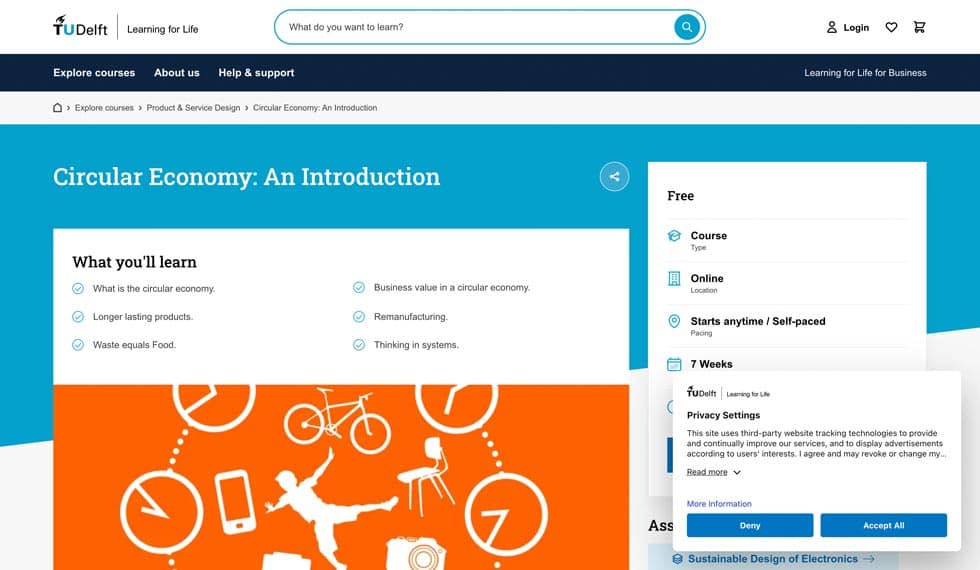
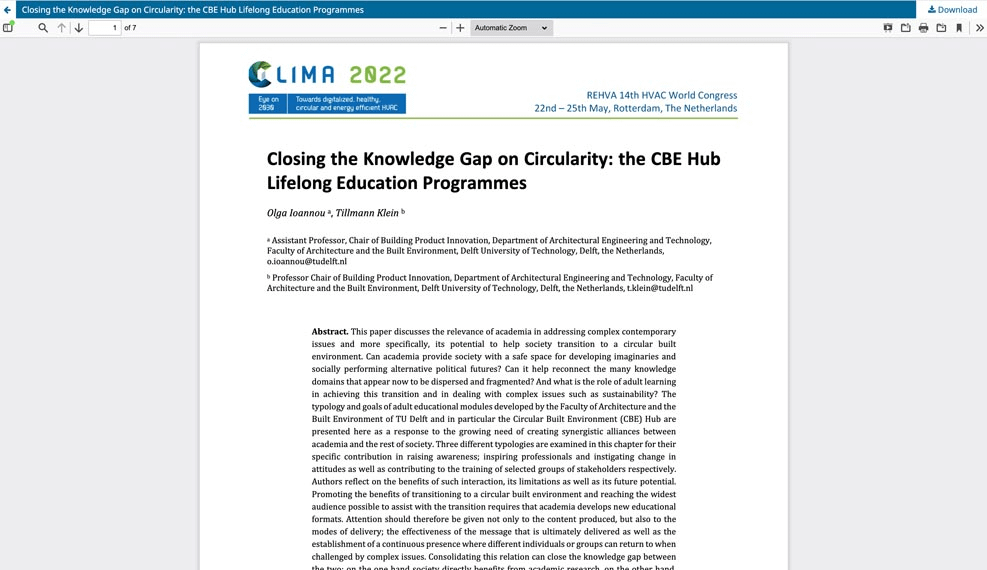
I also recommend something a little bit more technical that I came across through the uncertainty work. I got a call out of the blue from somebody who works at TU Delft in the Netherlands who was talking about circularity. It was the first time I came across the term. I may be the only person who has not seen it but-
[00:36:25] Bonnie: [laughs].
[00:36:25] Dave: -it was the first time I came across it.
[00:36:26] Bonnie: I know … Dave. [laughs]. Oh.
[00:36:31] Dave: It is about designing in a holistic manner. There’s a whole field out there right now that talks about, rather than recycling, which is do the thing we normally do and then try to find a way to bring it back and reuse it, but rather, change the way we build things and do things so that we don’t have to. Re-changing our concepts of engineering to being things and valuing the ways in which they fit into the overall system.
The link that I’ll send along is to some of the research. I’m fortunate enough to go over and work with them in November. Talk a little bit about the work that they’re doing. It’s another way of confronting uncertainty. For me, it’s a place of hope inside of this. It’s like looking at the Billion Oyster Project in New York City, which is one of my favorites. If you guys aren’t familiar with that, they’re replanting oysters in the Hudson Bay. That’s the one in New York City?
[00:37:27] Bonnie: Yes.
[00:37:28] Dave: It used to be that oysters in the ’20s, or whatever else, in New York City were a huge thing. It’s been years since anybody can eat anything coming into the harbor. Oysters are an amazing cleaning system. They’re filters. They filter all this stuff. They’re planting billions of oysters back in the harbor to clean it up. It’s just one of those projects that I’m like, “Here’s somebody’s taken on one small thing– well, big thing, but taking on a thing and sticking with it for years and just allowing it to get better.”
My recommendation in there is just to try to find those pieces inside of this process where people have actually found ways to make small productive change and to resist that urge that says, “That’s not going to solve the problem.” That’s the whole message of this uncertainty thing. We’re not solving the problem, we’re making it a little bit better where we can. These projects are all to me examples of people making part of this better in ways that they can, in ways in which we can contribute to those things. We can help fund them, we can help participate in stuff. Try to find those things where people are trying to make those small changes and see them as that positive light that they are.
[00:38:41] Bonnie: Dave, I had no idea that I would leave today’s conversation so hopeful and uplifted. I had to leave. I had no idea. [laughs]. As I said earlier, I know both you and I had been a little under the weather, and you have completely brightened my week.
[00:38:55] Dave: Oh, I’m happy to hear that.
[00:38:56] Bonnie: Thank you for leaving us all with so much hope today.
[00:38:58] Dave: Have a great day.
[music]
[00:39:01] Bonnie: Thanks once again to Dave Cormier for joining me on today’s episode of Teaching in Higher Ed. Today’s episode was produced by me, Bonnie Stachowiak, and was edited by the ever-talented Andrew Kroeger. Podcast production support was provided by Sierra Smith. These podcast episodes are just one Teaching in Higher Ed resource. If you’d like to receive the weekly email updates, you can subscribe at teachinginhighered.com/subscribe. When you do, you’ll get all of the show notes from the recent episode and you’ll also get a peek at the upcoming episode and some recommendations that are not shared on the podcast. Head on over to teachinginhighered.com/subscribe.Thanks for listening. I’ll see you next time.
[music]
[00:39:58] [END OF AUDIO]
Teaching in Higher Ed transcripts are created using a combination of an automated transcription service and human beings. This text likely will not represent the precise, word-for-word conversation that was had. The accuracy of the transcripts will vary. The authoritative record of the Teaching in Higher Ed podcasts is contained in the audio file.