• Skip to primary navigation
  • Skip to main content
  • Skip to footer

Teaching in Higher Ed

  • Podcast
  • Blog
  • SPEAKING
  • Media
  • Recommendations
  • About
  • Contact
EPISODE 627

How College Students Make, Keep, and Lose Friends with Janice McCabe

with Janice McCabe

| June 18, 2026 | XFacebookLinkedInEmail

https://media.blubrry.com/teaching_in_higher_ed_faculty/content.blubrry.com/teaching_in_higher_ed_faculty/TIHE627.mp3

Podcast (tihe_podcast):

Play in new window | Download | Transcript

Subscribe: Apple Podcasts | Spotify | RSS | How do I listen to a podcast?

Janice McCabe shares her research on campus loneliness and college friendship networks on episode 627 of the Teaching in Higher Ed podcast.

Quotes from the episode

Something I hear from students a lot is just this appreciation for taking friendship seriously in students' lives. And so that's something that professors, teachers, college administrators can do.

The previous surgeon general, among others, have declared a loneliness crisis facing the United States, and, in fact, the highest rates are among young adults.
-Janice McCabe

Many people that I interviewed told me how they felt like everyone else either had more friends than them, had better friends than them, was having more fun than them, along those lines.
-Janice McCabe

Something I hear from students a lot is just this appreciation for taking friendship seriously in students' lives. And so that's something that professors, teachers, college administrators can do.
-Janice McCabe

Students often say they don't really like group projects, but then, that was a place that many of the friendships that formed in classes that I saw formed.
-Janice McCabe

Resources

  • Making, Keeping, and Losing Friends: How Campuses Shape College Students' Networks by Janice McCabe
  • Connecting in College: How Friendship Networks Matter for Academic and Social Success by Janice McCabe
  • Janice McCabe at Dartmouth
  • What Friendship Network Type Are You? (PDF)
  • I Study Friendship. Here's How You Make Lasting Friends by Janice McCabe, The New York Times
  • The Friendship Advice Experts Swear By by Catherine Pearson, The New York Times
  • Our Epidemic of Loneliness and Isolation: The U.S. Surgeon General's Advisory on the Healing Effects of Social Connection and Community
  • Community of Inquiry framework
  • Propinquity (Wikipedia)
  • Homophily (Wikipedia)
  • Peter Felten
  • Network Weaving as an Antidote to Imposter Syndrome
  • Dear Nina: Conversations About Friendship podcast

ARE YOU ENJOYING THE SHOW?

REVIEW THE SHOW
SEND FEEDBACK

ON THIS EPISODE

Janice McCabe

Associate Professor of Sociology at Dartmouth College

Dr. Janice McCabe is an associate professor of sociology at Dartmouth College, the President of the Sociology of Education Association, and the author of two books: Making, Keeping, and Losing Friends: How Campuses Shape College Students Networks and Connecting in College: How Friendship Networks Matter for Academic and Social Success. Her research has been covered, among other places, in the Washington Post, Time magazine, NPR, The New York Times, and the Boston Globe.

Bonni Stachowiak

Bonni Stachowiak is dean of teaching and learning and professor of business and management at Vanguard University. She hosts Teaching in Higher Ed, a weekly podcast on the art and science of teaching with over five million downloads. Bonni holds a doctorate in Organizational Leadership and speaks widely on teaching, curiosity, digital pedagogy, and leadership. She often joins her husband, Dave, on his Coaching for Leaders podcast.

RECOMMENDATIONS

Network Weaving as an Antidote to Imposter Syndrome

Network Weaving as an Antidote to Imposter Syndrome

RECOMMENDED BY:Bonni Stachowiak
Dear Nina: Conversations About Friendship podcast

Dear Nina: Conversations About Friendship podcast

RECOMMENDED BY:Janice McCabe
Woman sits at a desk, holding a sign that reads: "Show up for the work."

GET CONNECTED

JOIN OVER 4,000 EDUCATORS

Subscribe to the weekly email update and receive the most recent episode's show notes, as well as some other bonus resources.

Please enter your name.
Please enter a valid email address.
JOIN
Something went wrong. Please check your entries and try again.

Related Episodes

  • EPISODE 264Serving Hispanic Students

    with Melissa Salazar

  • EPISODE 256Creating Wicked Students
    Paul Hanstedt

    with Paul Hanstedt

  • EPISODE 257Engaging Students Using FlipGrid
    Ramesh Laungani

    with Ramesh Laungani

  • EPISODE 202Supporting Students Who are Veterans

    with Kevin Jones


EPISODE 627

How College Students Make, Keep, and Lose Friends with Janice McCabe

DOWNLOAD TRANSCRIPT

EPISODE 627: How College Students Make, Keep, and Lose Friends with Janice McCabe

Bonni Stachowiak [00:00:00]:

Today, on episode number 627 of the Teaching in Higher Ed podcast, I’m joined by Dr. Janice McCabe, Associate professor of sociology at Dartmouth College, and president of the Sociology Education Association. 

Bonni Stachowiak [00:00:17]:

Production Credit: Produced by Innovate Learning, Maximizing Human Potential. 

Bonni Stachowiak [00:00:26]:

Welcome to this episode of Teaching in Higher Ed, I’m Bonni Stachowiak, and this is the space where we explore the art and science of being more effective at facilitating learning. We also share ways to improve our productivity approaches so we can have more peace in our lives and be even more present for our students. Janice is the author of two books on student friendship: Connecting in College: How Friendship Networks Matter for Academic and Social Sciences, and her newest, Making, Keeping, and Losing: How Campuses Shape College Students’ Networks. Her research has been featured in the Washington Post, Time Magazine, NPR, the New York Times, and the Boston Globe. As you’ll hear in our conversation, Janice helps us sit with a paradox.

Bonni Stachowiak [00:01:27]:

Students are surrounded by potential friends, yet ages 18 and 19 are now the peak years for loneliness. We talk about her typology of friendship networks, tight knitters, compartmentalizers, and samplers, and what each pattern offers and costs students. And we close with practical moves we can take to help students build the kinds of connections that support both their academic and social lives. Here’s my conversation with Dr. Janice McCabe. Janice McCabe, welcome to Teaching in Higher Ed.

Janice McCabe [00:02:08]:

It’s great to be here with you.

Bonni Stachowiak [00:02:10]:

Can we start with a paradox? A paradox having to do with loneliness? And your central puzzle that you help us to maybe not solve, but to begin to try to think about, is around potential friends and how much potential access we might have to them, especially our college students, maybe ages 18 to 19. And yet the research would seem to indicate, are often at the peak of loneliness. What can you tell us about that paradox?

Janice McCabe [00:02:45]:

Yeah, that’s right. There, you know, the surgeon general, the previous surgeon general, among others, have declared a loneliness crisis facing the United States. And some of the worst rates are among young people. In fact, the highest rates are among young adults. And it’s interesting when you think about college, because there’s no time in people’s lives, no other time, that they’re more surrounded by potential friends, by people who are of similar ages with somewhat similar interests. And so it was curious to me that both of these things could be true, that people are feeling incredibly lonely, or at least some people are feeling incredibly lonely, while they’re also surrounded by potential friends in the classrooms that they’re attending. You know, if it’s a residential college, in the dorms, in the cafeteria, in the library, on the walkways around campus.

Bonni Stachowiak [00:03:46]:

One of the things that you talk about is how a mindset can hold back from those friendships from forming. And the mindset is this idea that everyone else has already made friends. Tell us about that part of your research.

Janice McCabe [00:04:02]:

Yeah. So many people that I interviewed told me how they felt like everyone else either had more friends than them, had better friends than them, was having more fun than them, along those lines. So as a social psychologist, I was really attuned to that fact. And, right, it can’t be true that everyone is having more, but it’s related to this idea that kids are often told that college is one of the best times of their lives. It’s where you make these lifelong friends.

Janice McCabe [00:04:35]:

And there’s a lot of expectations that people place upon themselves, to be making those friends. And also, social media is a piece of it too, that people typically aren’t posting that they’re in their dorm room alone. You know, instead they’re showing a certain version of themselves having fun, having friends. And so students are often comparing themselves to people, not just those down the hall, but their friends from home, their friends on other campuses, and having this, the self-comparison.

Bonni Stachowiak [00:05:10]:

One of the frameworks that has really informed my teaching, it’s both inspired me, but also made me feel like a failure sometimes, it’s the Community of Inquiry framework. And it involves the relationships between the content itself or the disciplinary knowledge, and then the relationship between the professors and students. And this is the one that gets me: The relationships between students, between learners, and other learners. And that can be very, very difficult for us to achieve. And I was thinking about that as you help us explore, not only thinking about the ways that this loneliness epidemic could be looked at through the lens of individuals, and perhaps if we bring it into our classroom context, it’s sort of our job to fix this, this loneliness, and get these people to have that potential for friendships. You want us to think about it differently? Tell us a little bit about thinking of this as an individual problem versus a systemic one.

Janice McCabe [00:06:13]:

Yeah. So I take a social network perspective in the book and in a lot of my work, and that involves when we often think of friends, we think that people need a friend or a certain number of friends and, you know, individual friendships are important, yet people are also embedded in these broader networks, both friendship networks and the broader campus community, both in terms of when ties are present and when they’re not. So in my work, I’ve developed this typology of friendship networks that are based on both the interviews that I do, so hearing people’s stories, but also the mathematical principles behind them in terms of social network analysis, like densities, and how many friends are connected to each other. Or other scores that can get a little technical, thinking about modularity or community scores or things like that. But essentially this typology are, I think that students and people in general fall into these three categories: tight knitters, compartmentalizers, and samplers. And tight knitters might be what people picture visually. It looks like a ball of yarn where almost everyone’s friends are connected to each other. These are the types of friendships that a lot of TV shows and movies show, and movies show, and people tend to compare themselves to.

Janice McCabe [00:07:46]:

I even had a few people that I interviewed, like apologized to me for not having this friendship network type, which again, as a social psychologist tells me, there’s a norm there. There’s an expectation that people should that people are feeling that they should have this one group of that almost all knows each other. And they can offer a tremendous amount of social support too, for people. But those dense ties also perform what sociologists often think of as social control functions, in the sense that they monitor people’s behavior and attitudes within those networks much more closely. Academically, this network type was quite divided because it depends not only on the structure of the network, but what happens within it. So if you have a dense group of friends that are all studying together, talking about intellectual ideas, encouraging each other to do their homework, they academically pull each other up. It’s like positive peer pressure.

Janice McCabe [00:08:52]:

Whereas if again, that dense group of friends are instead encouraging each other to go out or hang out instead of studying, or none of them know the answer to a question, they could be passing along like wrong information too. And it flows really well within those tight-knit networks.

Bonni Stachowiak [00:09:14]:

And then, how about for compartmentalizers, what does that one look like? And what are some of the pet benefits to those types of relationships and the drawbacks?

Janice McCabe [00:09:25]:

Yeah, great, it’s both of those things. Because each of the network types have both positives and challenges associated with them. So that’s an important piece of that. So the compartmentalizers look like a bow tie, essentially. So they have two to four, sometimes five groups of friends where they’re tightly connected within the groups, but not across them. So for college students, often they’re friends from home, friends from campus, or friends from my dorm, friends from my sorority, friends from my job, or friends from my major. So often they’re activity-based like that, students typically, you know, across the three campuses that I studied. So in my most recent book, I focus on students at Dartmouth College, at University of New Hampshire, and at Manchester Community College.

Janice McCabe [00:10:19]:

So there’s a wide range of institutions there. Students across the board would tell me about, they had social and academic goals for college. They wouldn’t normally phrase it that way, but they would say things like, ” You know, I want to graduate and make friends”, or “I want to get good grades and feel like I belong”. And the compartmentalizers are often able to achieve those two goals with different groups of friends. So they often have one more academic group and one more social group, too. And the challenges of that are time and identity pressures, in the sense that if you have two groups, it’s not too hard to balance them. But if you get into three or four groups, plus you have classes, a job, maybe family responsibilities, it starts to get a lot to be able to manage all of that. And then with the identity pressure piece, sometimes with having one group be, or having groups be divided between academic and social friends.

Janice McCabe [00:11:24]:

I had one student, I remember talking with him who told me, ” You know, I’m such different people with these different groups. I sometimes even wonder, like, who am I really?”. In the sense of, you know, as college students, young adults are often trying to figure out who they are in general. And when they’re torn in such these different ways that compartmentalized networks can sometimes facilitate, that can be challenging.

Bonni Stachowiak [00:11:51]:

And then what about the third one, the samplers? What can you tell us about samplers?

Janice McCabe [00:11:57]:

Yeah, yeah. So the third group are the samplers, and they visually look like a daisy flower, where they have as many friends overall, but the person that I interviewed is in the middle of that. And then each of their friends are a pedal, if you think about it like that. So they have mostly one-on-one friendships. And I call them samplers because many of those students would talk about picking up a friend or two, at different places around campus or throughout their day. So they’d make a friend in class, a friend in a club, a friend at their job, a friend in a dorm. But they didn’t have these groups of friends. So instead, there were a lot of one-on-one friendships.

Janice McCabe [00:12:41]:

And they were, out of the three types, the most likely to express, like loneliness or isolation, because again, dense networks provide that social support too. So, samplers were often academically and socially successful in spite of their friends rather than with their friends’ help, the way the other groups were.

Bonni Stachowiak [00:13:06]:

And then for the samplers, how about the pros and cons of this kind of a way of making and keeping friends?

Janice McCabe [00:13:14]:

Yeah. So I mean, so the cons are that sense of isolation and just the sense that each of these friendships have to be maintained individually in order to, you know, in the book I talk about not just making friends but keeping friends over time. And it’s much more efficient to keep friends when you have one group that you can just send a group text to, for example, and connect with all of your friends. Like, if you are a tight knitter or you go hang out with them as a group or the compartmentalizers, you’ve got a couple of different groups, but not nearly as many of these separate friendships, too. So they’re more like fragile, more often short-lived than are the other types.

Bonni Stachowiak [00:14:02]:

On episode 616 is when I first heard about your book, and Peter Felton recommended it. And if listeners heard that episode, they might remember that he reflected not just on how much he learned about students at the ages that you study and their friendships, but his own friendships. And I’m curious what your reflections are for the friendships in your lives as, as in your life, as you’ve all this research. How do these three different types kind of make you think about the way that you form, maintain, and perhaps even end friendships?

Janice McCabe [00:14:36]:

Yeah, I’ve been thinking about them a lot over time and I’ve can, I’ve been having a longitudinal project too, where I’m interviewing people over time, and I’m curious how these network types change or don’t over time also. And my working hypothesis is that part of it is personality and our prior friendship experiences that we have, like what feels good and works well for us, and part of it are the structural circumstances we find ourselves in. So I find some differences across the different institution types that we can talk about. But I’ve also found, as an academic, I have these different kind of pockets of friends from, you know, friends from graduate school, friends from my first job that I had, friends from different, you know, activities that I do now. So I’m a compartmentalizer too in that way. And so just for me, it reflects these ideas about both which friendships are meaningful to me, or why are they meaningful to me too, and making sure that I invest time in them rather than, seeing friendship as something that kind of fills the cracks in our leftover time.

Bonni Stachowiak [00:15:59]:

One thing that’s come up for me a lot in my friendships, I’m curious if you have anything to speak into, is that I’ll, I, I tend to be one that really enjoys going deep. You talked about personality types. I once met someone, and the first time I met him, he said, oh, if I ever had dinner with you and your husband, then I would just move you, and we wouldn’t see you until at least eight months because there would be so many other people who were in the row. And I mean, I wasn’t offended by it, but I was amused that he didn’t know that maybe the first time you’re meeting someone, not to lead with that, which sounded, you know, a little bit transactional to me, but it is just so much in contrast. I love the deep conversations! And therefore, if it’s been a really long time since I’ve talked to someone, I have trouble with that reconnection because it feels like it’s supposed to be as monumental as past conversations, and it’s hard to think about investing that kind of a time. Do you have anything that comes up for you, either a practical thing or just from your research?

Janice McCabe [00:17:02]:

Yeah, no. I think people come with different orientations, you know, as you bring up, to friendship. And I have a lot of thoughts about that, one is just the term friend has so many different meanings, and people use it in such a wide range of ways. And some people consider “acquaintance” to be like a rude term. And so they’ll tell me, like, I would never call someone just an acquaintance.

Janice McCabe [00:17:27]:

They’re kind of easily a friend. And then, there are some other people that in order to be considered like, a real friend, you need to cross a certain threshold in that way. And some people talk about a best friend or something like that, but other people think that sounds like something you have when you’re in third grade, rather than something that when you’re an adult. So we often struggle with the language to talk about this, which can lead to mismatched expectations, too, and what people want out of individual relationships, too. And we don’t have the same markers we do in romantic relations or family relationships to indicate when you’ve made it to the next, I don’t know, level or something.

Bonni Stachowiak [00:18:14]:

Your comments are reminding me of a funny thing. I just think it’s funny to joke about when you get to that point in your friendship, where you exchange cell phone numbers, which I realize, for the age that I am, is quite different than for younger people, but it’s getting me to want to have you talk a little bit about phones and the way that phones play a role in loneliness and connection.

Janice McCabe [00:18:40]:

Yeah, no, I mean, our phones and technology in general can be a great way to stay connected with people that we’re physically far apart from, and people can fall back on them in a range of ways. You know, one that comes to mind is feeling like you know people because you see their updates on social media or something like that, rather than having kind of personal connection, whether that’s in person or you know, a phone call or video chat or, or as the case may be, and students, as we just had like admitted students weekend, maybe two weeks ago or a couple weekends ago at Dartmouth here, and students were telling me how they had connected with each other online, even before they decided to enroll there too. And they saw some people that they already knew, which I put in quotes from online. And just what that then looks like. Sometimes that can give people an opportunity to connect in real life, also in order to get past that, those feelings of anxiety or uncertainty that can come up, but only if you make it past that, like little bump.

Bonni Stachowiak [00:20:05]:

Yeah, and that, that gets me to two things. One is the desire to be different than others or the desire to conform, and even the differences between self-professed desires and what actually the behaviors look like. And then you had this “air quotes” for I knew that person, and I know that your research looks a lot at if I feel like, especially as a student, if I feel like oh, I might know someone who’s going to be there, how that can change the dynamic. So let’s start with the first one. To what degree do people, in terms of making friends, tend to want to be different from others and find that really resonates with them as “oh, I want to find someone who’s different than me”, or to what extent might, might your research tell us that we’re looking for people that have some similarities? 

Janice McCabe [00:20:55]:

Yeah, like, a large body of social science research finds two main drivers of friendship. So this is just isn’t my research, but across decades of work, and those are what’s called propinquity or proximity. So the idea of coming into contact with the same people over and over again, which is something that can happen in classrooms too, you know, in college classrooms as students take classes together or live together. It’s also why we’re more likely to be friends with the person who has the office next to us than the one who has the office down the hall, or the floor below, or the building over, because over time we see each other and little there’s so many more opportunities for conversations to start and restart in those ways. So that’s propinquity. And the second is homophily, which is our similarities. And this isn’t across the board that everyone’s looking for similarities, but it is a big driver of friendship.

Janice McCabe [00:21:58]:

And researchers talk about both identity-based homophily and interest-based homophily. And out of both of those, some of them, we can tell right away whether we share things in common with people that are visible, and others are not. We can only figure out over time that we share a love for basketball or, you know, whatever the case may be. And also, people have multiple identities and multiple interests. Right? That are intersectional. And there can be ways that we visibly connect based on some shared interest or identity. But as we get to know each other better, we figure out, oh, you know, we’re really not as compatible as we first thought, too. So it’s really a process over time.

Bonni Stachowiak [00:22:45]:

And the second thing that we were looking at is this idea that comes out of, if I feel like I might know someone who’s going to be there, what role does that play in getting me to those more structured experiences, where friendship might get initiated?

Janice McCabe [00:23:01]:

Yeah, and so some of that differs by friendship network type also. So, some people are much more comfortable going to a place where they don’t know anyone. And I think it’s not just related to whether you’re introverted or extroverted. But I found samplers, for example, were very comfortable going to a meeting, a club, an event by themselves. They were open to meeting another person, another flower petal on their daisy, and thinking about the samplers, whereas compartmentalizers, and especially, tight knitters often felt much more comfortable going with a group they already knew. I interviewed a couple of tight knitters who told me that, even like, they didn’t want to come to class without- they would wait outside the classroom, or wait outside the building for their friend to arrive, and then they would walk in together too, because that felt much more comfortable to them.

Bonni Stachowiak [00:24:00]:

One of the things that comes up in a lot of books and research about teaching effectiveness is the idea that we don’t have to change everything. Like, we get that actually, really small things can drive really big results. Is there anything that comes up in terms of your research on friendships? And also, I mentioned to you earlier, so many of us have this desire to help friendships be able to be formed, specifically perhaps in a class-type of environment, or mentoring kind of environment. What advice do you have for how to make it small? Maybe in a structural way, but something that doesn’t feel like I have to start an entire first-year experience program at my university, for maybe how to make that a little bit better.

Janice McCabe [00:24:45]:

Yeah, a couple of thoughts. So first, in thinking about, kind of the orientation one, I think, is just to recognize that friendships are important, of course, like academics are important and coursework is important. Learning in the classroom is important also. But so are the connections that people make. And, our students’ lives, like we can’t separate out their academic lives from their social lives. They’re really intertwined in so many ways. So if things aren’t going well socially, it’s really hard to be academically as successful for our students as they would otherwise be. So that’s something I hear from students a lot, is just this appreciation for taking friendship seriously in students’ lives.

Janice McCabe [00:25:32]:

And so that’s something that professors, teachers, college administrators can do. And then in terms of logistical things, I think structuring in opportunities for students to get to know each other in our classes is really valuable, because that, I had mentioned before, propinquity. So students are already coming together in our classes, but if they’re just sitting side by side and not interacting with each other, they’re not getting all of those benefits of the potential connection that they can have. And it doesn’t mean always assigning big group projects or things like that. You know, that’s one way to do that. But another is to just get students talking to each other and often assigning groups too, so that people don’t feel left out. So there’s ways, you know, you can count off your students in different ways and say, you know, now all of the A’s get together, all of the B’s get together. It gets people up and moving, too, which can shift the dynamics in your classroom.

Janice McCabe [00:26:45]:

But I find otherwise, sometimes there’s the one person that’s pretty quiet anyway, that doesn’t quite find a group. But not relying on people’s willingness to join a group or the pre-existing connections that they have to each other. But building those in can be really powerful.

Bonni Stachowiak [00:27:06]:

I like to share an anecdotal observation that I’ve had across a couple of decades now, and then just get your reaction to it. I notice when people will try things like that, maybe they’ll try for the first time to use a little bit less lecture and they’re going to build in some structure into their classes to have students get to know each other. That their earliest couple of attempts at that don’t go well in their mind, and they’ll, they’ll give up really, really soon. And I’ll want to encourage them to say that sometimes we have to create a group norm, and norms take a while to get established. And that sometimes, and I’ll even say this from my own point of view, when I will go, either to an online session, and then they’re about to put you into breakouts. I’m not like, wahoo, I can’t wait to go into the breakout room, or wahoo, if I’m at a conference or something like that, I can’t wait to talk to this person I’ve never met next to me. But it’s that expert facilitator who can have the confidence to get us past our initial reluctance or perhaps even resistance. And they know what’s on the other side.

Bonni Stachowiak [00:28:22]:

What’s, what’s your reaction? Because again, my, my, my evidence is primarily anecdotal. What’s, what’s your response in terms of a research, also, of course, through your teaching experience as well?

Janice McCabe [00:28:32]:

Yeah, I would, I would agree with that as well. You know, often it feels, it feels a little uncomfortable. You know, you’re put with people you don’t know. And that’s why it’s really useful to be given a concrete task too, to do, you know, not just to talk to each other, but the more, even more challenging within reason that it is, I think the more you can really like rely on each other, too. And either they can be groups that are static and with the same people over time, that’s better for bigger projects, or they can be things that, as I mentioned, that change up over time also. And you get to know more people in that way. So you can figure out that you have certain, either interests in common or some other, maybe you live in the same dorm for students, and they hadn’t realized that until they then saw each other the next day in that way.

Janice McCabe [00:29:36]:

But it does take getting past that. Students often say they don’t really like group projects, but then, that was a place that many of the friendships that formed in classes that I saw formed. It took, often a little bit of asking, or a little bit of kind of digging in my asking for students to tell me where they met their friends. Because often they’d say, ” Oh, you know, I didn’t know. Or I met them in class” and I was like, you know, when in class, like where? And it wasn’t just usually sitting beside each other or something like that. There were these more structural interventions that had played a role.

Bonni Stachowiak [00:30:14]:

These are such good things for us to be thinking about. I’m a huge fan of teaching with sticky notes, be they analog or digital, and I have this vivid memory, early 2020, the concrete task had been to, every week, they were used to come in and put down on a sticky note. Something you saw in the news, this past week, that had to do with the class. And that was a way to get them reading more news than they might have otherwise.

Bonni Stachowiak [00:30:42]:

And then we would see patterns together. So they were used to, okay, we’re going to write down on the sticky, then we’re going to put it on the wall, then we’re going to look at patterns and, foreshadowing there to, early 2020, one can imagine that the first week, one mention of the coronavirus came up on a sticky, the next week, I mean, I don’t need to tell everyone what happened from there, but so a concrete task and then something that’s challenging within reason. They did know I was going to expect them to do this. It wasn’t really an option to just be like, I didn’t do it. It was within reason if they hadn’t looked at the news. I saw some of them looking at their phones and trying to prepare their sticky note at the last minute.

Bonni Stachowiak [00:31:21]:

It didn’t get in the way of the objective of the exercise and, but it’s that it was that structure, I think, that helped, that they knew this is something we’re going to do and take some time on. I have a question, also, you were talking about having students understand how important friendships are, and then also, also, by way of our actions and our words, showing that we also appreciate how important friendships are. Could you talk about, perhaps, a lesser, lesser-known, or lesser emphasized thing in terms of friendships ending?

Janice McCabe [00:31:57]:

Yeah, so my book is called Making, Keeping, and Losing Friends. When I started the project, I did not expect to write a whole chapter on losing friends, but I found it’s a quite common experience, and it’s one that has a good bit of stigma. And I felt like by talking about it, and showing how just normal it is, that it, you know, it happens in people’s lives, that that would be really useful. And not to suggest that it, you know, by saying it’s normal, not to suggest that it’s easy, because it often feels bad. It feels bad when we are no longer connected to someone that we really appreciated or had a deep connection with. But there are a lot of reasons that it happens, you know, a lot of times related to propinquity again, to people’s schedules, changing, people moving, someone graduates, and later in life, the different kind of milestones that people have, different times that people couple up or, you know, have kids or those kinds of things as well, can also shape friendship. And I talk about friendships, both breaking up and fading away, and much more common were just those fadeaways.

Janice McCabe [00:33:21]:

And they, at first, I thought that the breakups were going to be the more painful experience that people had. And sometimes they were, but the fadeaways, when they weren’t reciprocal. We had talked before about expectations, and one, you know, if one person was more okay with that and then another person was, you know, kept trying to keep that friendship going, that could relate to, you know, a lot of hurt. And it just doesn’t feel good to feel like you’re not chosen, too. That’s something about friendship, is this chosen relationship that we feel like someone else like wants, wants us, wants to be our friend too. And so when it ends, we have that opposite feeling.

Bonni Stachowiak [00:34:10]:

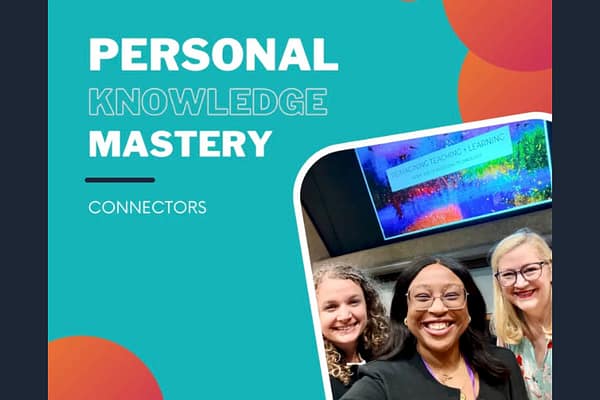
Thank you so much. I have so many more questions, but it’s probably time for us to get to the recommendations segment, and I have something I wanted to recommend. Generally speaking, my recommendations aren’t quite on the nose, but this one really feels like it. I’m going to suggest to people that they read a post that I wrote when I was part of Harold Jarche’s Personal Knowledge Mastery Workshop. And he introduced us to a topic that was new to me at the time, but I’m sure Janice is quite familiar with, called “network weaving”. And I was doing a lot of reflection on what, and mostly just wondering, by the way, but what role might network weaving play as an anecdote in some ways to those that may struggle with imposter syndrome? And I was just having a conversation with someone yesterday who was talking about how, when he transitioned from getting his undergrad degree and his master’s, he tends to be still today more of an independent person, likes to work, achievement-oriented. But by the time he got to earning his PhD, he said: “I had to realize I can’t do this alone and I need to be good at asking for help”. And I was thinking about, there’s this wonderful video which I do share in this post from June Holley, and it’s from a long time ago.

Bonni Stachowiak [00:35:33]:

The video quality isn’t there, but it doesn’t matter. She talks about Network Weaving is where we’re connecting people, ideas, and projects. And to me, a lot of people that I talk to, especially I think in higher education, they bristle at the idea of networking. And that just feels like something either too transactional, or it feels like something people perceive themselves as not being good at. And once that I realized, in my life, that networking doesn’t have to be this transactional thing, I get such a kick out of, I mean, I really love that Peter Felton is the one who introduced me to Janice, into her book. And then, I’m just the kind of person I’m reading her whole book, and it feels like a conversation with her, albeit one-sided, that I’m also having with Peter because I associate now him saying that he thought about his own friendship. 

Bonni Stachowiak [00:36:28]:

So for me, it’s really fun. Peter had recommended another book, I can’t remember if it was just in an email to me or on the show. But then, now that he knows I liked that book, he goes, “oh, if you like that book, then you might like this one too”. And that, for me, I love the idea of being able to think about the networks of people that I’ve met, not as transactions, but as ways that would enrich other people’s lives. And the last thing I’ll say about this is that Harold Jarche also introduces us to the definition that comes from Krebs. But it sounds so much to Janice, and I’m sorry, Janice, I don’t have all of your citations memorized. So I might be, might be just like on anyone’s literature review, Krebs name shows up. But I want to just read this from Krebs, because it again ties in so well with Janice’s book and also with our conversation today.

Bonni Stachowiak [00:37:20]:

So I’m quoting Krebs here, and Krebs describes: A triangle exists between three people in a social network. An open triangle exists, where one person knows two people who are not yet connected with each other. X knows Y and X knows Z, but Y and Z do not know each other. A network weaver, X, may see an opportunity or possibility from making a connection between two currently unconnected people. A closed triangle exists when all three people know each other. XY, XZ, and YZ. I should also mention, as I’m saying this, that in Janice’s book, she has a lot of these kinds of diagrams.

Bonni Stachowiak [00:38:06]:

So she talked about the bow tie earlier, and she talked about the petal. And throughout the book there are different, there are different figures that show these relationships in a visual way that really helped cement it for me. But I love it, you can tell Janice, I just love when I can, and this is new to me, I have not studied, you know, friendships before. So when you can connect your emerging knowledge with other things, but do it even in a sloppy way, it’s just fun for me to connect people and ideas in terms of my own learning and my own network.

Bonni Stachowiak [00:38:38]:

So that’s what I wanted to share. And I really do recommend watching that video from June Holley. I like I said, it was from a long while ago, but my gosh, it was just really a great way of thinking about friendships and relationships and the positive ways they can impact our work, and our lives, and the communities where we live. So I’m going to pass it over to you. Feel free, Janice, if you want to respond to anything that I said, because that was a lot. And then I’m excited to hear whatever you have to recommend.

Janice McCabe [00:39:05]:

Yeah, no, that sounds fantastic. And it’s fun that Peter Felton was the network weaver that wove the two of us together in this way. I know, I think a lot about the triangles too. And yeah, closed or open, and how networks not only are close ties, but what are called weak ties often expose us to new ideas, new opportunities, bring new things into our networks.

Bonni Stachowiak [00:39:34]:

So helpful. Yeah, thanks. And then what do you have to recommend today?

Janice McCabe [00:39:38]:

Yeah, well, as you were talking, I changed my mind about what I was going to recommend. I’m going to recommend another podcast, which is called Dear Nina: Conversations on Friendship, if people want to get more in-depth into friendship. And the podcaster, her name is Nita Badzin, and she talks about a whole range of topics related to friendship.

Bonni Stachowiak [00:40:00]:

Oh, that sounds fabulous. Well, it has been so delightful to get to read your book, to be. To get to be a part of network weaving and to learn so much about friendships. And excited for the next book that you’re working on, you mentioned, the longitudinal study. I’m just excited to have met you, and thank you so much for your generosity and for all of this work.

Janice McCabe [00:40:21]:

Oh, it’s fantastic to talk with you today. We could talk for so much longer.

Bonni Stachowiak [00:40:24]:

We absolutely could. Thanks once again to Janice McCabe for joining me on today’s episode. Today’s Episode was produced by me, Bonni Stachowiak. It was edited by the ever-talented Andrew Kroeger. Before you go, if you haven’t yet subscribed to the semi-new Field Journal, I’d love for you to join us. It’s the weekly email with notes on learning and teaching, where I share what I listened to, what I read, what I noted, what I tried, and what I wondered that week. And then you write me back with an answer, or a thought, or a reflection on what I wondered. The whole email used to be something I dreaded putting together every week, and now it has become one of the most joyful parts of my weeks.

Bonni Stachowiak [00:41:16]:

Head over to teachinginhighered.com/subscribe to start getting the Field Journal this week.

Expand Transcript Text

TOOLS

  • Blog
  • Podcast
  • Community
  • Weekly Update

RESOURCES

  • Recommendations
  • EdTech Essentials Guide
  • The Productive Online Professor
  • How to Listen to Podcasts

Subscribe to Podcast

Apple PodcastsSpotifyAndroidby EmailRSSMore Subscribe Options

ABOUT

  • Bonni Stachowiak
  • Speaking + Workshops
  • Podcast FAQs
  • Media Kit
  • Lilly Conferences Partnership

CONTACT

  • Get in Touch
  • Support the Podcast
  • Sponsorship
  • Privacy Policy

CONNECT

  • LinkedIn
  • Instagram
  • RSS

CC BY-NC-SA 4.0 Teaching in Higher Ed | Designed by Anchored Design