Follow the Teaching in Higher Ed Podcast
About this Episode
Bonni Stachowiak shares about her new book – The Productive Online and Offline Professor on episode 290 of the Teaching in Higher Ed podcast.
If you can proactively create the space and systems before it hits the breaking point, it opens up the doors to do so much more and enjoy the journey so much more.
Dave Stachowiak
On episode 290 of Teaching in Higher Ed
Voices on this Episode

Show Notes + Resources
- The Productive Online and Offline Professor: A Practical Guide, by Bonni Stachowiak*
- Full Focus Planner* (affiliate link)
- The 7 Habits of Highly Effective People: Powerful Lessons in Personal Change, by Stephen Covey*
- Getting Things Done: The Art of Stress-Free Productivity, by David Allen*
- Episode 34 with Natalie Houston – Practical Productivity
- Episode 93 with Natalie Houston – Strength Through Habits
- Essentialism: The Pursuit of Less, by Greg McKeown
- Michael Hyatt Productivity Tips (including the big three)
- “With creativity, open loops are precious gifts, incubating solutions to creative problems in the background”
- How Open Loops Can Lead You to More Aha Moments
- Find Your Creative Groove, by Todd Henry for Harvard Business Review
- Coaching for Leaders (Dave’s podcast)
Recommendations from this Episode
Book
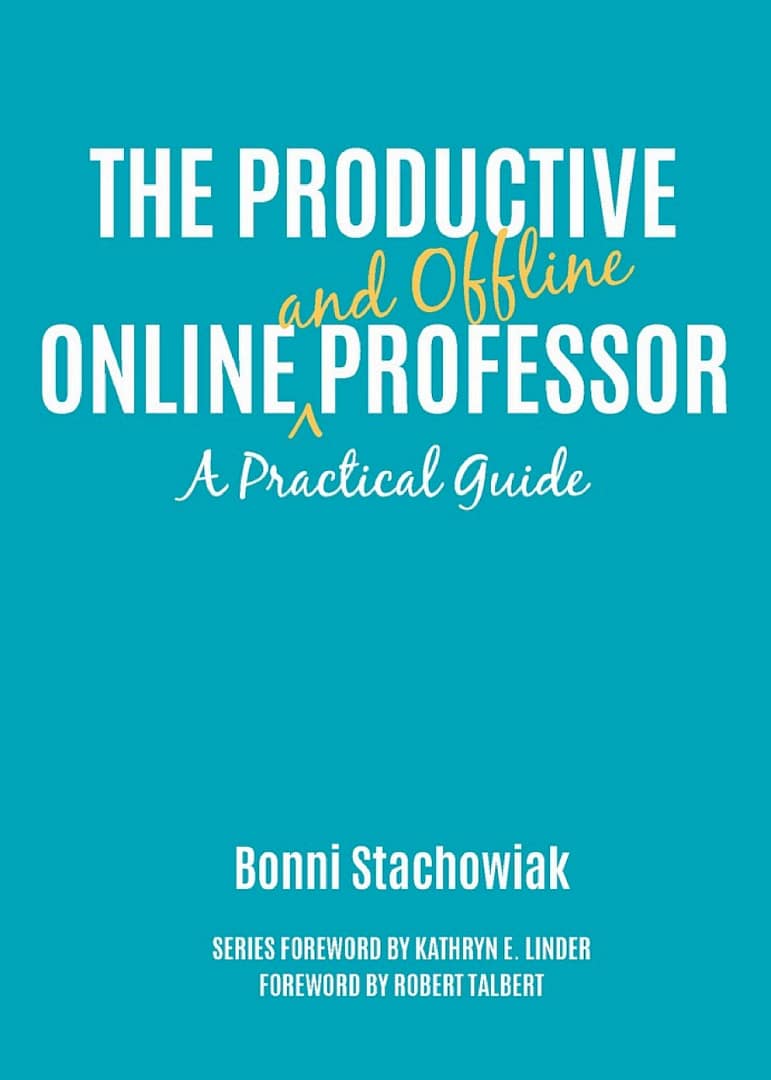
The Productive Online and Offline Professor by Bonni Stachowiak

Resource
Full Focus Planner
Resource
AcuityScheduling
Transcript
[00:00:00] Dave: Today on episode 290 of the Teaching In Higher Ed podcast, I turn the tables on Bonni to interview her.
[00:00:08] Production Credit: Produced by Innovate Learning, maximizing human potential.
[00:00:18] Dave: Welcome to this episode of Teaching In Higher Ed. I’m Dave Stachowiak and this is the space where we explore the art and science of being more effective at facilitating learning. We also share ways to improve our productivity approaches so we can have more peace in our lives and be even more present for our students.
[music]
Today’s guest is no stranger to you. She is normally, the host of this podcast, she is also a business professor and dean of teaching and learning at her institution and she is the author of the book, The Productive Online and Offline Professor and I’m turning the tables on her today so we can discover more about her wisdom from this new book. Hello,
[00:01:10] Bonni: Hi Dave, I was about–[laughs] I’m so used to being on your podcast and being your guest and saying, “Thanks for having me here”, but actually I think that’s not how this one worked out. [laughs]
[00:01:19] Dave: Yes, it’s a little different workflow but this is so exciting. You’ve been working on this for so long and now we’re here almost, depending on when this airs.
[00:01:28] Bonni: Depends when you’re listening, it’s either–
[00:01:30] Dave: It’s either very close or already out or maybe-
[00:01:33] Bonni: It’s been out for years and we’re so glad you found the show.
[00:01:36] Dave: That’s also a possibility from picking this up later so we have a whole bunch we can discuss around it. First of all, big picture, what’s driven the interest in productivity for you because this didn’t start with this book. We’ve talked about that all along here on this podcast since it began.
[00:01:51] Bonni: I promise this relates, Lee Skallerup Bessette, has been on the show before and has a whole blogging life and scholarship of her own. Had mentioned in recent months that The Far Side was coming back. This is a comic, I mentioned it on another recent episode. Did you grow up with The Far Side thing?
[00:02:09] Dave: I did, I remember reading The Far Side when I was a kid.
[00:02:12] Bonni: I think as of this date, as of our recording, we had come out with at least one or two or three new comics. I think he’s going to do it on a weekly basis. Anyway, I have actually the The Far Side calendar from me being in college and I have an inside look at how I managed my time and I didn’t manage things like when classes were held, that kind of thing because my weeks pretty much looked the same.
I did work about, just depending on the year, but about 30 hours a week. It was right across the street from our school and it just integrated really well with my life. It wasn’t a stressful thing to work that many hours and it was at a school. It was actually a continuing high school. That’s for students who were having a little trouble sometimes with the law or other kinds of trouble that required a different type of a school environment.
I would put down things like when papers were due and it’s just such a simple life to go back and look at, but I did always want to fulfill my commitments. I took that very seriously, I was always the kind of person who’d show up early to work and was very responsible. I have had this idea of us all having a finite amount of time and thinking about how I was going to spend it, but certainly back in my college days, things look very much the same on a week-by-week basis. Not too much different.
Then same thing in the summers too. I was a camp counselor and eventually, a camp director and those weeks pretty much looked the same and our calendar was just what site we were going to be visiting that day. Were we going to the zoo or what have you? Then things changed dramatically once they started getting into working in a business context. We were a global organization, we were in 40 different countries so a lot of travel, a lot of time zone differences and a lot of different roles that I would play and a lot of expectations people had for me too.
I was supporting people as they were opening up and running and growing their businesses and had a team of support people that would go out and visit them, so it wasn’t just my time but others people’s time that I was managing and their projects too. Then now we get to our lives today. Dave, you and I– I keep calling them young children and I think at one point, “Do not call them young children anymore. They’re five and seven.” I don’t know when you stopped doing that, but they certainly don’t drive yet.
I think they’d like to but they don’t. [laughs]
[00:04:26] Dave: They would.
[00:04:28] Bonni: We’ve got children to navigate. As you mentioned, I’m a Dean of Teaching and Learning, so that means that reporting to me our student success initiatives like a tutoring center, writing center, and supplemental instruction. I’ve got the library that I work with as well and then our Institute for Faculty Development and then I do teach too. There’s that which brings a lot of opportunities for connections with students but a lot more complexity.
[00:04:55] Dave: You just wrapped up a class on personal leadership and productivity. What reflections are coming up for you in that most recent interactions?
[00:05:05] Bonni: I feel like once you really get to teach a class– I think this might’ve been my fifth time doing it, I just loved that I have the advantage of knowing what didn’t work in the past. A lot of times it was kind of trying to rush through things. Although I certainly rushed through things this time too but I can slow myself down a little bit, I’ll give you an example.
I taught them something called inbox zero which of course does relate to productivity if you want to think about how to manage your email, your email does not make a great task manager, in fact, it’s a pretty terrible one so we talked about that and I had an assignment for them. They all had to go into their email and clear it out which meant putting it in an archive which just freaked them out.
It freaks out, by the way, anyone that you have to do just like, “I have 7,000 emails, what if I need to get back to one of those people?” We’re not doing anything except just moving it to another– It still– You just click on either the archive folder or if you’d like to call it “stuff I’m sure I’m going to get back to someday’ if that makes you feel better, create a folder called “stuff I’m sure I’m going to get back to someday”, but it really freaked them out and what I really didn’t realize was I didn’t say and then what? Once you’ve done that, what do you do next? How do you manage that as it comes in?
Then a couple of weeks after that I actually brought in some of my own emails and I had them like, “What would you do if this was your email and you saw this? What kinds of ways are you going to integrate it with the different things that I told you was really cool?” Anyway, part of it wasn’t a surprise because I’ve taught it so many times and because college students a lot of time they’re doing things last minute. They’re just reacting to what other people think they should do. I’ve got this syllabus, the dates are built, I don’t get to decide when that’s due and a lot of times they’re deciding through oftentimes necessity to do things at the last minute.
Dave, you have a great story that I need to actually capture, not necessarily at this very moment but I want to capture it for my students. This story about when you were in college and you waited so long on working on that paper. Would you just share that briefly? Give us some background on that. Do you remember the class you were taking?
[00:07:14] Dave: I do, it was a class on African history. It was a requirement at our institution to take a non-Western course which was great, it should be a requirement at every institution. There was a term paper we were supposed to have been working on the entire semester. Of course, I decided I would start 7:00 PM the night before the paper was due in December, whenever the last week of the class was. I went to the library at seven, spent four hours finding all the books and the articles, went back to wherever I was living at the time and spent the next three or four hours reading and writing and crafting the paper and I think I finished it at like 5:00 AM and then the class was at eight or 9:00 AM.
Anytime I’ve told the story, I ask, “What do you think happened? How do you think I did on this paper?” I thought, turning it in I’m like, “I’m going to get a C on this, it’s going to be awful.” Sure enough, I get the paper back and I got an A. I realized, “Wow, I could–” I certainly got rewarded for waiting until the last minute but I also realized then the amount of stress that I had been leading up to that entire time.
For me, even though I got rewarded with a good result, it wasn’t worth it and that was the point that I actually started changing a lot of my behavior just on how I planned and did things a little bit more proactively. It wasn’t the ending point but it was definitely the starting point for me being better at my time management.
[00:08:34] Bonni: When I tell stories like this, I really try not to make this about our students. I see faculty members do this kind of thing all the time. As you described, Dave, that lesson that you draw from that experience, of all the times that you thought about, “I should be working on that paper, I really should be working on that paper, I should be working on that paper.” The mental energy and stress that it took, this is not restricted to students and we have to be very careful about that.
The other real big reflection that I have from this most recent time I taught these topics in a class, is just my own continuing not being able to instinctively understand the context that my students are working in. We read two books for the class, we read the book, The 7 Habits of Highly Effective People by Stephen Covey and we read the book, Getting Things Done by David Allen. David Allen’s kind of– I really love his book, and by the way, if you have not read the 2015 edition, that’s the one. He made it much, much better, much more accessible, easier to follow what that system looks like.
He talks about label makers, my students are not going to go buy label makers, that much I knew. Manila folders are not as big of a part of our students’ lives as they were our parents’ lives but the ways in which their lives are affected by family situations and by a different socioeconomic status than I live in, just continue to echo.
One of the assignments that they had was they had to show sort of a before and after look at their workspace. One of the things that David Allen is careful about saying, and I was careful about emphasizing is, a workspace may not be like literally a desk, a workspace can be a coffee shop, a workspace can be a library and that can mean that our workspace gets carried around with us in our backpacks and what have you.
Just the stories that the students would tell of, “Well, grandma and grandpa moved in because grandpa’s sick now, he has cancer”, or there was another one, someone’s got Alzheimer’s so the family– “I have to make sure I’m there certain hours, take care of grandma.” I’m just like– Then actually two of the people lost their desks. They used to have a workspace they could work at in a quieter space where they lived and then their family members– I just like, “Oh my gosh.”
I guess one of the things I think about in terms of productivity is we really have to make these systems work for us. We all live in such different contexts and I don’t ever want to lose sight of some of the privilege that I have. You and I both have a home office. Not shared one, but we have separate home offices, and most people that would be in circumstances wouldn’t have that. I try to really emphasize that you got to find something that works for you.
[00:11:24] Dave: Speaking of that, what advice do you have when someone comes to you and says, “Hey, I’m working on being more productive. What’s the starting point?”
[00:11:34] Bonni: A big mental shift. I was talking about that chaos. A big mental shift is we got to back away for that chaos. We have to carve out times in our lives where we reflect, where we plan. Part of that reflecting too, and part of that planning is looking backward. A regular practice for me is to look at this past week’s calendar. Are there any, what are called, open loops? Did I go to a meeting and I should have caught it, but I’m just now realizing that I need to follow up with that person as something’s not going to move forward if I don’t?
Those kinds of opportunities to sit back and not do, do, do, do, do chaos, chaos, respond, respond, respond, allow people, allow us to dream. They allow us to grieve, they allow us to regroup. How are we going to handle this now going forward?
You and I sit down every week, Dave and we talk about our calendars and, boy, the number of things we have solved by looking at our calendars together, including not having our children be picked up because somehow it got left out of the calendar. [laughs] That’s a really good opportunity for us to stop doing, doing, doing and just sit together and take some steps back and look forward. We also talk about finances too. A big thing is to stop that.
Then in terms of the open loops, I just wanted to mention something. I tend to think of open loops as bad. Open loops bad, you got to squash that loop Dave, you got to squash it just like a bug. I was reading an article, and if I can find it– Candidly, I don’t think I’m going to find it, but I’ll try/ If I can find it, there was an article about, “Yes, open loops, you want to close them when it comes to productivity, but when it comes to creativity you actually want to leave space and room for those open loops.”
I realized that I did that. I’m doing more speaking and if I’ve got a keynote coming up, I have a place. In my case, it’s in Evernote, but I have a place where if I just have an idea that’s my open loop and there’s a place as a wonderful blank slate for me to go and just capture those ideas as I’m having them. Speaking of privilege, I have an Apple watch so it even has drafts on there. If I’m driving or if I’m walking around, I can just tap on it and it immediately starts recording and I can have that place for open loops for creativity and just allowing those ideas to really bloom and blossom.
I thought that was really wonderful because again, I tend to just think of open loops as, “Got to close it, got to get that follow up or take care of that thing.” Get that thing done, so that the loop is all closed and you can check the box.
[00:14:10] Dave: One of the things I’m hearing you say is creating systems and space to do that and being intentional about that because one of the things that– I know I still fall in this trap once in a while, and that story for me writing that paper 20 years ago is, the kinds of people who listen to this show are pretty smart people. They figured out the system, they’ve gotten really good at thinking on their feet and you and I both know a whole bunch of people in Higher Ed who react to things all day long and they’re pretty good at handling stuff as it’s coming at them because they’re really smart, talented people and they’re stressed out a lot because they’re so smart.
They’re so good at handling things as it comes at them that the necessity of creating the space hasn’t emerged and if you can proactively create the space before it hits the breaking point, create the space and the systems and the reflection time that you just talked about and allowing for those open loops, it opens up the doors to not only do so much more but to enjoy the journey so much more along the way.
[00:15:10] Bonni: I was thinking about as of this recording, we’ve had quite adventures going on in my work. [laughs] We’re trying to advocate for a change and it’s a complex change and involves so many different people, so many different moving parts and pieces. My last couple of days have felt pretty chaotic. Plus, our kids had some things at school that were going on that we’ve got to go see, but that was a different schedule for us.
Just all kinds of different things, but we have the margin both in terms of time, but also in terms of relationships, because as I was trying to navigate this complex change at work, I’m trying to influence, I’m trying to push this piece down the road and it’s so difficult. I had a chance, one of the big things I was able to move forward. It’s someone that I’ve had a relationship with for like 13 years and we’ve built up so much trust that this doesn’t have to be the first time we’ve had a hard conversation together.
We trust each other and we know that we want what’s best for our students. We want what’s best for our institution. However, we might see this situation differently, we have enough of what Stephen Covey calls, “The emotional bank account.”
That I don’t have to go in and have a relationship where there’s not trust, have a relationship where there’s not that sense that we respect each other and we want what’s best. It really helps on margin. Not just in terms of time, but margin in terms of relationships, because those relationships if the only time we’re approaching people is in that chaos mode where we’re inevitably asking them for something or we’ve let them down, they asked us for something and we’re late or we didn’t get it to them, that’s no way to live.
I really don’t think that’s any way to live. We can live in that in some seasons of our life, but that just is not going to be a great way to live. I say this at start of every show. We aired the first teaching in Higher Ed episode in June of 2014 and that intro hasn’t changed. We talk about productivity in addition to teaching because we can have more peace in our lives and be more present for our students and that piece to me is really important.
I remember when I had Natalie Houston on the show, she wasn’t necessarily– That piece didn’t really resonate with her. She used the word ease. It can be easier. It’s just a way of working that is just over the long haul, far more sustainable. I’m just going to say one more thing quick on this. I had Rebecca on the podcast previously to talk about her book Agile Faculty, practical strategies for managing research, service, and teaching. I learned a lot from her book, but I just saw on Twitter right before I came down to record that she just had her proposal accepted for a new book on faculty burnout.
She didn’t share a ton about it, but it sounds like she has experienced some burnout herself and that’s part of what the book will be about. Sharing her experience as well as others. We talk about it not being sustainable. I’ve been in higher education now for 15 years and yet there’s been really difficult times, but one of the ways I think I avoid burnout and still am passionate and joyful about the work that I am privileged to get to do is because I have that margin, is because I’m not just constantly going, going, going, going, going, going, going.
[00:18:26] Dave: Creating margin also means say no, and I know that’s a big thing for you. Tell us about saying no, how do you think about that?
[00:18:35] Bonni: One of the big things that’s been influential to me in this area is Greg McKeown’s book called Essentialism and that book is all about saying no to things so that you can say yes to some really important, the most essential work that you do. He’s a little bit too extreme for me. I think it’s unrealistic to think that I’d be able to navigate my life if I were following his prescription 100% but he really does challenge me.
Part of it is really a gendered thing for some of us. This idea that we’re supposed to be good girls as we’re little and we’re supposed to be helpful and part of being helpful is saying yes when you’re asked to clear the table or whatever it is. That what they often, with boys, call leadership with girls, they don’t use that same word to describe those behaviors. We’re supposed to be helpful, so when we’re asked to be on a committee, we’re asked to provide some other sort of service around our racial identity or other kinds of identity like that, we’re supposed to say yes.
Again, by the way, I’m not saying that men have always an easy time saying no to things too. I just know for myself and my identity, I feel this pressure to behave myself. I can work past it, but I do have this thing where my first instinct is to go, “Oh, but I should say yes.” Then I have to start asking myself, “Well, why should you say yes?” If it doesn’t tie back to something that’s right there in the core sense of purpose and priorities for myself, I have learned how to say no better.
Sometimes no means suggesting someone else. The times when I’ve done that, Dave, I can’t think of a time when I didn’t say no and then suggest someone else that they didn’t end up turning out better than I would have anyway. That provided some perspective I couldn’t have, or it all just worked out better. Sometimes we tend to think of that first reaction is like, “It must be me.” No, it doesn’t have to be me and sometimes, someone’s going to be way better.
There’s also this idea that we’re supposed to say yes to every wedding invitation that comes, we’re supposed to say yes to every birthday, every baby shower, lots and lots of things around social obligations. I don’t say yes to all of those things. In fact– [laughs] You’re laughing.
[00:20:45] Dave: You don’t say yes to most of them. It’s rare that we go to a– I can’t remember the last time we went to a wedding. It’s not because we don’t like weddings or don’t like people or celebrating, but it’s just there’s only so many hours in life. What is most important? Getting back to that essentialism concept of, “Where do we want to spend time? Is it at a large celebration with hundreds of people and maybe we’ll see someone for a couple of minutes? Or would we rather go to dinner with someone and really just have that quality time together?” Yes, that’s something both of us are pretty intentional about doing.
[00:21:20] Bonni: I had a funny conversation with someone that is the mom of a boy who’s in our son’s class and a girl who’s in our daughter’s class. It was after the little program that the kids did the other day. We were talking about that she adores me because I don’t go to the kids’ birthday parties like that. Then it was funny because we were both talking about, “Yes, that only works, though, if you’re married to someone who is actually willing to go to them.” This whole formula that we’re explaining here, the part we have left out until this moment is that Dave goes to the– I was going to say the vast majority, like 99.7% of the birthday parties that our children attend.
[00:21:57] Dave: I do and I have more joy about it than you do, although occasionally I don’t have joy also.
[00:22:03] Bonni: Yes. [laughs]
[00:22:04] Dave: What about tools for productivity? This is where oftentimes people begin the conversations. What’s the task list manager or how do you help people think about tools?
[00:22:15] Bonni: You mentioned task list. If there were one thing to just say, start out with a task list, which also to me means a project list. I use one called OmniFocus. OmniFocus is strictly on the Mac and iOS devices. There are better tools for those of you on Windows. To-Do List is another one, but just a tool where you can have projects and then underneath those, what are the steps it’s going to take to accomplish those goals?
Too many of us, try to use our calendars for that kind of thing. “There’s a meeting to talk about such and such a project.” We’ll just have the calendar guide that. Once the meeting has come and gone, you’re not going to really be able to go back and remember what all those next steps are. A calendar is not a great tool. Then, as I mentioned previously, emails are terrible way of managing that, too.
Having a list– I report to the provost at my institution and he’s like, “How do you do this?” It’s like I’m a genius, Dave, and I’m not a genius. Every time a new project comes up, that’s going to fall either directly that I’m responsible for or someone who reports to me, I have a place for it. I’ve got a place where projects fall. Again, if it’s somebody who reports to me, that’s a different way that I set that up, but then always wanting to be moving those things forward. Then if I’m waiting on someone else, if there’s a dependency on someone else or something else to happen, I capture those things, too. Just having a list of all the projects, all the tasks in one place is an unbelievably powerful tool.
Stop getting the email to try to do that for you, it won’t. Stop trying to get the calendar to do that for you, it won’t. Have something that was designed from the start to be able to manage projects and tasks. That has just absolutely helped me on so many levels. Another big question that people have has to do with, “Well, I don’t really like technology, so I’d rather use pen and paper.”
We tend to think about this too much in a binary way. I will include myself when I say we. I tend to be mostly digital but recently I purchased the Michael Hyatt’s planner. We’re going to talk about it a little bit later on. It’s called the Full Focus Planner.
A big part of me I’m really finding is helpful is to identify, what he calls, your daily big three and then your weekly big three. What are the three most important things that I’m going to get done? If I have that, either if I’ve blocked out time on my calendar or if I have it somewhere on my task list, there’s nothing the same to me as having that planner set open on the desk and it’s on that page and those three items are sitting right there. If I get interrupted, if I just need to get centered, there’s the pressure that I feel of checking off those three boxes and only three for that day.
I would say that those of you that feel like you’re not technical, like, “I just don’t like to use the digital tools”, at least try it for something like a calendar. Our time today, it changes too much and there’s too many other people involved that just having an up-to-date calendar, it feels nearly impossible to me to do that on paper. If what you like is to be able to see it because there’s that visual element to it, just like for me writing down the big three, that certainly could be digital as well.
There’s a wonderful year-long planner that fits on one poster-sized page that I’ll link to in the show notes called The NeuYear. New spelled N-E-U. That one’s great because it’s really nice, the entire year fits there tightly on that one page and can help you see more visually what’s going on. I encourage those of us that lean more toward digital. Think about what paper tools, analog tools may help us. Those of you that are real strict about, “I only use my planner. I only use a paper calendar”, think you’re missing out on some opportunities that the digital can help you with keeping your calendar and other things like that up to date.
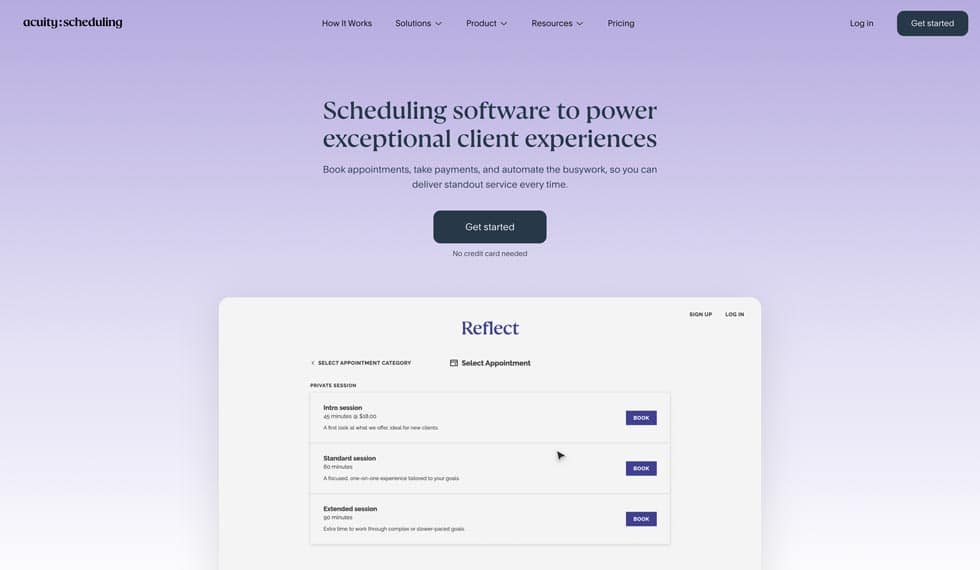
[00:26:14] Dave: This is the time in the show when each of us get to give our recommendations and I have two recommendations for us today. Both directly related to this conversation. One tool that you and I have both used, Bonni, over the years that has been a game-changer for both of us on scheduling and using time, is a tool called Acuity Scheduling. We have an affiliate with them and they have been incredible in helping us to manage our calendars. What it is, is it is a software service that connects up to our calendars and we have it set up so that there are certain times in our calendars that we allow it to see and open up space.
I use it for all of my client conversations, business scheduling, the academy groups that I facilitate virtually. All of those are done through Acuity. When someone wants to set up a time with me, I can send them a link. There’s all kinds of different versions of links within the service that I can send them. I can send them a link for 20 minutes or an hour or however long that I’d like to set up a time. Then they can go onto my calendar and schedule time whenever they want to. Then it automatically sends them reminders, it can even send them text messages to remind them of the meeting if they want.
It integrates with Zoom, so can set up the video piece for those of us who use those conference tools. It also sets up the group sessions that I do and helps to do all the reminders and automates all of that. It’s been very powerful for both of us. Bonni, you use it for office hours, don’t you?
[00:27:46] Bonni: Yes, I use it for office hours. We also use it for registrations for our events in the Institute for Faculty Development. I also use it for my podcast. Another thing that we have really worked out well in there, Dave, is that if I were to schedule a podcast interview, it obviously puts that in my calendar. It actually puts that in my work calendar and my teaching and Higher Ed calendar. It also puts it as the resource called the studio so that someone trying to book a podcast interview with you can’t book it at the same time as mine. We only have one podcast studio here at home. I know that’s shocking. [laughs]
[00:28:23] Dave: Which is one more than anyone else in the world has.
[00:28:25] Bonni: Yes, but that has helped to save us because otherwise trying to coordinate– We used to have to really limit our time a lot more than we do now. Already our schedules are busy enough to limit them as they are. Now just having that freedom where we let the system take care of it. It’s really amazing. It’s an amazing tool. They have helped us too. If you need to really trick something out, you need some help.
[00:28:44] Dave: It’s a good solution for, I think, some of the resources you’re building at your institution right now. If you have a limited resource, and there’s only one room or one availability for students to book that and automatically not make that time available to others, so you don’t end up with double bookings and all that. The number of hours it saved both of us is really incredible, so that’s a great tool. If you’re looking for something like that to help automate some things, so you can spend more time talking to people and doing the things that you don’t want to automate versus spending time going back and forth on time and schedules and all that.
The second of two recommendations I have is to purchase the book, The Productive Online, and Offline Professor. We’ve been talking about that in context to this conversation. Bonni has spent the last– Gosh, last year to really detailing out, not only the resources, but the philosophy behind how can you, as a instructor, as a teacher, as a faculty member, really be able to use your skillset more effectively and efficiently through productivity and to focus on the things that are most important?
Whether it’s available now when you hear this or if you are inclined to preorder it, I’m really excited to see your work get out in the world, even more so and for folks to learn from it and to take the next step from what they learn in the book. Congratulations on this book.
[00:29:57] Bonni: Thanks, Dave. In case it’s not obvious, I didn’t know he was going to do that, and I was sort of chuckling, Dave, because Lee Skallerup Bessette, who I mentioned earlier, she on Twitter, either yesterday or today– She was so funny because she’s like, “All right, listen up. We are all this year going to get out there and promote our stuff. You tell me what you’re doing.” It was just like, really, she was trying to break down this barrier that we have around self-promotion, we don’t share what we’re doing and really spread it very well. It’s not always necessarily a comfortable thing for us to do, so I was going to recommend my book, but you did it for me, so that’s great.
[00:30:29] Dave: Yes, good.
[00:30:30] Bonni: I still think it’s a great– I think it’s a good resource. I really enjoyed that Robert Talbert wrote the foreword, and I started weeping when I read it because it really represented so much of what I wanted to do with this book. The subject of productivity can sometimes be tough because people see it like, “Oh, you’re just going to hack your way through the problems of being an adjunct.”
That I don’t want to say that we don’t still have systemic issues of our workforce and how we staff our courses and our various institutions. Those problems are still there. There’s still the problem of women, and then it gets even worse with women of color, and how much we’re expected to provide additional service that men statistically won’t be asked to perform. Those systemic things don’t go away because you have a great task. I really wanted to create a book that didn’t center on those things, because that’s not what the book is about, but that–
I do talk a little bit about– I have an aunt who has dementia, and so talking a little bit about that in relation to my weekly review because that felt very chaotic. Speaking of chaos in our lives, it’s been chaos for you too at times, I know Dave. Anyway, thank you for recommending it. I’ll echo in that. I hope you do take the opportunity, those of you listening to order it or preorder or whatever’s going on when you happen to listen to this episode.
My second recommendation is to order the Full Focus Planner, and I talked about that earlier. This is from Michael Hyatt. Michael Hyatt used to be in the publishing business, and now, as a really well-known leadership, blogger and podcaster, and author and has been just a wonderful resource to me on a number of friends and the planner, it is not the cheapest planner that you’re going to find. The reason for that is it’s actually if you were to subscribe for a year, it’s actually four planners, so it’s like a size of a regular planner, but they have daily pages in there instead of just a week.
For me, I need a daily page. Then they have some blank pages in the back and they have some different things that integrate with their planning systems. Something that’s silly, Dave, is it has two bookmarks, little ribbon bookmarks. I love that it has two bookmarks. It also will lay flat on your desk when you open it. I was mentioning just having those three big wins sitting out there on my desk.
That planner sits out there, unless I go to a meeting, it’s sitting on my desk. It’s saying “Hey, have you done that one yet? Have you done that one yet?” It’s just really well thought out. It’s also very flexible that they do recognize many people use a paper planner with a digital set of tools as well, so it’s really flexible that way. It comes with a whole bunch of videos with them sharing their expertise on how to get the most out of it.
Again, it’s not a cheap planner, you’re going to spend some money, but my gosh, I don’t regret it for a moment, it’s been really essential from the moment I got it. I just got my second one, so this is my second quarter using it and I cannot tell you how excited I am to fill in those dates and get started on the one that’ll start in January, which I will have already started it by the time you’re listening, so I’d suggest–
As a side note, it is an affiliate relationship that we have with them. I actually bought the planner before the affiliate relationship was there for the planner, but we do make it a little bit if you do make a purchase. I just want you to be aware of that. We’re not going to make millions. That’s not what’s going to have me retiring early, I can assure you. [laughs]
[00:33:49] Dave: If that happened, that would be a much higher number of people using analog planners that I think we had anticipated were listening to the show.
[00:33:56] Bonni: Yes, and I guess there are more people listening to the show in general. [laughs]
[00:33:59] Dave: That also as a larger point.
[00:34:01] Bonni: Be the number one podcast –
[00:34:03] Dave: It’s pretty much.
[00:34:04] Bonni: -in the world. [laughs]
[music]
[00:34:08] Dave: Thank you so much for joining us today, Bonni. Thank you so much for your perspective on productivity and helping all of us including me over the years to get better at this. I’m grateful for it.
[00:34:17] Bonni: Thanks, Dave.
[00:34:19] Dave: If you have not yet hopped on to the teachinginhighered.com website, all the links will be up there, of course, that we’ve mentioned today. In addition, if you go over to teachinginhighered.com /subscribe, that will give you access to get the weekly message from Bonni. She often writes an article each week and also sends out the notes from every episode, so you don’t have to go track it down. Each week online, it’ll just show up right in your inbox with all the resources she’s recommended and all of the expert links, and we’ll see you back next week for the next conversation. Thanks so much, Bonni.
[00:34:54] Bonni: Thanks, Dave. See everyone next time.
[00:34:56] Dave: Take care.
[00:35:04] [END OF AUDIO]
The transcript of this episode has been made possible through a financial contribution by the Association of College and University Educators (ACUE). ACUE is on a mission to ensure student success through quality instruction. In partnership with institutions of higher education nationwide, ACUE supports and credentials faculty members in the use of evidence-based teaching practices that drive student engagement, retention, and learning.
Teaching in Higher Ed transcripts are created using a combination of an automated transcription service and human beings. This text likely will not represent the precise, word-for-word conversation that was had. The accuracy of the transcripts will vary. The authoritative record of the Teaching in Higher Ed podcasts is contained in the audio file.