Follow the Teaching in Higher Ed Podcast
About this Episode
Lindsay Doukopoulos talks about teaching with artificial intelligence on episode 489 of the Teaching in Higher Ed podcast.
Learning is exceptionally difficult to really assess in a meaningful way at scale.
Lindsay Doukopoulos
On episode 489 of Teaching in Higher Ed
Voices on this Episode


Show Notes + Resources
- Auburn Online’s Teaching with Artificial Intelligence Course
- Auburn University Biggio Center for the Enhancement of Teaching and Learning Announcement About New Course
- DeElla Wiley, Lindsay’s Colleague
- Inciting Joy, by Ross Gay
- Teaching in Higher Ed Episode 375 with Betsy Barre
- AI x Education Conference: Driven by Students, Dedicated to Educators
- “If AI is the Answer, What is the Question: Thinking about Learning and Vice Versa” Dr. Chris Dede
- What I Found in a Database Meta Uses to Train Generative AI, by Alex Reisner for The Atlantic
- Life101 Podcast, by Mike Wesch
Recommendations from this Episode
Podcast
Episodes with David Hutchins
Article
Grade Gaps Reflect Course Problems; Not Student Shortcomings by Jessica Blake
Podcast
Coaching for Leaders
Resource
Story Deck
Article
Why Person-First Language Doesn’t Always Put the Person First by Emily Ladau

Idea
Josh Eyler’s Tweet
Podcast
Episode 566 with Amishi Jha
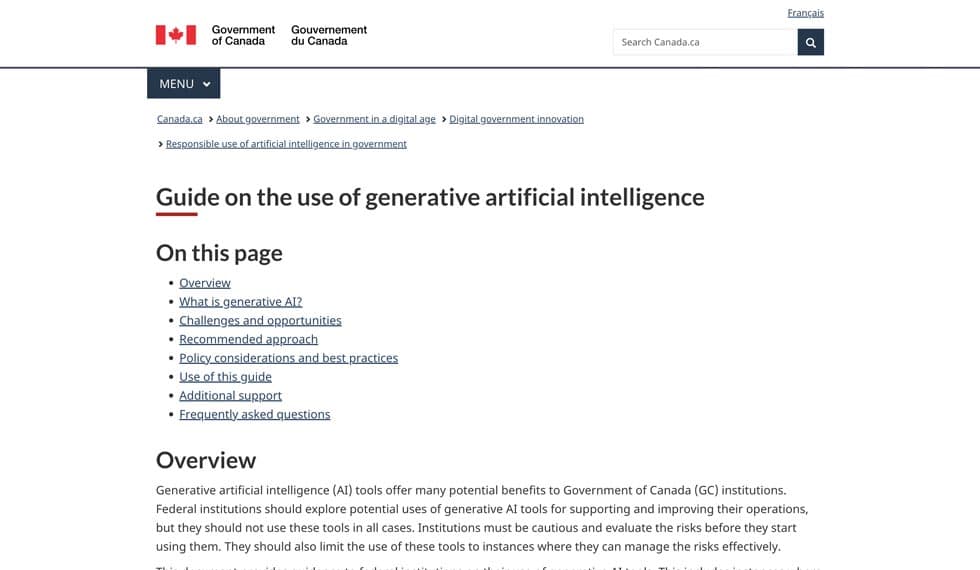
Article
Guide on the use of Generative AI – Canada.ca
Transcript
Bonni Stachowiak [00:00:00]:
Today on episode number 489 of the Teaching in Higher Ed podcast, Teaching with Artificial Intelligence with Lindsay Doukopoulos. Welcome to this episode of Teaching in Higher Ed. I’m Bonni Stachowiak, and this is the space where we explore the art and science of being more effective at facilitating learning. We also share ways to improve our productivity approaches so we can have more peace in our lives and be even more present for our students. I’m thrilled today to be joined by Lindsay Doukopoulos. She’s the associate director for educational development at the Biggio Center For the Enhancement of Teaching and Learning at Auburn University. She’s passionate about building community around teaching and learning so that all faculty feel supported and empowered to innovate and inspire. Building capacity for faculty to achieve our teaching and learning goals in rewarding and sustainable ways, and building dignity around the profession of teaching.
Bonni Stachowiak [00:01:17]:
Lindsay Dukopoulos, welcome to Teaching in Higher Ed.
Lindsay Doukopoulos [00:01:22]:
Thank you so much. I’m excited to be here.
Bonni Stachowiak [00:01:24]:
I am so excited to be here as well. Thank you for The invitation to engage in this fascinating artificial intelligence course, which for listeners, spoiler alert, we have linked to in the show notes, and we’ll be talking about a lot. We’ve had so many episodes about this topic and even more already scheduled. This was the hardest thing about interviewing you, figuring out what we were gonna talk about. So I’m gonna start with a super easy question, I say, full of All of the sarcasm I can present to you. What is learning, Lindsay?
Lindsay Doukopoulos [00:02:00]:
Yeah. I think learning I mean, Essentially, learning is a change in your brain, and I think it’s important to emphasize that there are physical changes that show up if you have sophisticated enough Technology that shows new dendrites and things like that. I think it’s easy to sort of gloss over Teaching and learning as sort of one happens and there go the other happens, but I like, you know, the definitions of learning that really focus on the fact that learning is something that Students do. It’s not something done to students. And I think when we’re we’re getting at the heart of teaching and learning, especially in this age of AI, The real concern is that with all of these fancy new tools that generate outputs that resemble or, you know, in the past have been the proxy for whether or not learning had happened, we’re really starting to get into this idea that Learning is exceptionally difficult to really assess in a meaningful way at scale. And so I think that this is really Holding out and making apparent that for a long time, higher ed has focused on what Somebody should be able to do if they have learned rather than the process of learning itself.
Bonni Stachowiak [00:03:19]:
I I love the way you’re framing that, How difficult it is. Could we even say impossible to measure at scale? What ways when we think about just down to an n of 1, What what kinds of learning tend to be relatively easy to measure versus the other types of learning that Many have come on this podcast before and argued those things are impossible to measure. So what what ways might you sort or group or think about the kind of learning that is easier to measure as you’re looking at an individual and the kind of learning that becomes harder to gauge.
Lindsay Doukopoulos [00:03:53]:
You know, I like going back to Bloom’s work. Edward Blum from the 19 fifties, he’s given us, of course, the taxonomy that we’re all well, most folks in in higher ed and those who Who work with faculty are familiar with, which is the taxonomy of cognitive learning. So it starts with the baseline is At the very minimum, I have to remember. This is and I think, you know, when we think about knowing people’s names, That’s a good little proxy for for the learning process. Like, I know I know that person. Then it starts with a c. I know I can see where they sit in my classroom. There’s a lot of things that show that we’re on the pathway to learning maybe who our students are or their names, but we’re not quite there yet.
Lindsay Doukopoulos [00:04:35]:
So at the lower level, you understand I I I remember that face and then you recall their name, and then perhaps you remember them because of what they’ve Produced in your class or the interactions up to the highest levels of knowing a person or learning a person, which are you know, you really Connect, understand, predict what they’re able to say. And then there’s other kinds of learning though, and I think Bloom’s work, he had, The 3 domains of learning. There’s cognitive learning. There’s psychomotor learning, so your physical kind of skills and abilities. Then there’s that third domain of affective learning. And I think that that’s a piece where we’re gonna see, hopefully, a lot more movement and traction about the importance of The fact that people have to care, they have to engage, they have to feel these senses of belonging and safety before they’re willing to risk In different ways, you know, the kinds of things that it takes to change your mind about things. And I feel like that’s the area where when we’re talking about AI tools, I’m hopeful that they can Help us more quickly get to those types of learning experiences. I think they’re forcing them in a lot of ways.
Lindsay Doukopoulos [00:05:45]:
So now that we can’t We can’t trust that our students are not going to use AI tools to create content. How do we help motivate them in a way to care that that’s Something they’re doing or not, you know, missing the opportunity for doing this really deep thinking that leads to to the writing And vice versa. I come from a writing background, so I’m always thinking about writing as thinking and thinking as writing.
Bonni Stachowiak [00:06:11]:
Mhmm.
Lindsay Doukopoulos [00:06:11]:
But writing is also a tool. It’s Something that the more quickly we can sort of output it, the more we can focus on other things. So I’m very interested in both of those kinds of dimensions.
Bonni Stachowiak [00:06:23]:
These 3 domains that you just talked about, I I touched on those as recently as last evening. And I’m gonna hearken back and I’ll put this in the show notes It’s to an episode that I did with Betsey Barre, and she does the workload calculator. I don’t know if her she’s, Lindsay’s nodding her head. She’s familiar with the word vocabulary.
Lindsay Doukopoulos [00:06:43]:
But I Rice University?
Bonni Stachowiak [00:06:45]:
Yeah. And I’ve talked about it.
Lindsay Doukopoulos [00:06:47]:
I love that tool.
Bonni Stachowiak [00:06:47]:
Yeah. And I think it started at Wake Forest and then went to Rice, or maybe I have a I have a I have a I think I have it reversed. It started at Rice and then moved to Wake Forest or some different versions. But, Anyway, I I I talk about often that if I go back and revisit that calculator, I almost A 100% of the time will realize I have underestimated how long it will take a student to do things. And in terms of writing as thinking, thinking as writing, For me, it’s not always writing, but whatever that assessment is, I often I mean, close to a 100% of the time that assessment is whatever that is as a form of learning and then as a form of assessment, and they just dance with each other and and smaller stakes assignments. But So I was sitting with a group of people. I tend to often do what I jokingly call after parties. And during that time, instead of thinking as a individualistic We’ll look at the assignments that are coming up, and we might tackle 1 or 2 of them together and work on them.
Bonni Stachowiak [00:07:43]:
And so this week, it was looking we’re building up to a personal mission statement and a personal leadership and productivity class that I’m teaching. And so the assignment to me felt so easy. Go and use some kind of mind map software, or they were welcome to hand draw something. It didn’t matter to me if it was digital or analog. And then think of 5 roles that you play in your life, and this is all off the reading we’ve been doing the last 2 weeks and everything, and some kind of an image that’s Representative of that, and then write a goal, a smart goal that’s associated with and one of The young men stayed afterward. We ended up having this whole conversation, and I saw these cognitive things. The psycho motor, maybe I’m stretching it, but in terms of She using the technology he had wanted to use a tool or whatever, and then the affective learning, which all of those were getting potentially ignited in this particular assignment. And just all of the ways that I got to hear him run into trouble.
Bonni Stachowiak [00:08:44]:
So he could only think of 2 roles. And then he said something about this, he really likes to do these esports, and he does he competes. And I was thinking like, who has told you that that’s wrong? But that’s not the right answer I was looking for. How could I author your life for you and tell you that this thing that you spend time, passion, energy, and you’ve Peteydin isn’t worthy of being on here, so it reminds me of the affective. But anyway, you’re you’re dividing it up into those 3 ways, I think is really really helpful. And then whenever we can do what we can to kinda get inside the other person’s experience, but I mean, I’m telling you, Lindsay, I would’ve I would have missed it if he wouldn’t have hung around a bit, if he wouldn’t have experienced that challenge. And I I I won’t spend more time on this, but there are so many areas where I just thought, oh my gosh, just was so illuminating. And it’s just this challenge that we’re we’re experiencing, But we think it’s just related to AI, but it’s related to so many other aspects of education which makes this so hard.
Bonni Stachowiak [00:09:48]:
So speaking of another easy question to ask you, What are some ways that learning is currently being impacted by artificial intelligence? I know I just touched on a couple and you already have it.
Lindsay Doukopoulos [00:10:00]:
I I think yeah. I think that’s a perfect example because it sets up, you know, like, learning is always what can you produce, what can you do with it, what are the What are the skills or the ideas or the capacities that that knowing more, being able to do more, having more experiences with unlock for you? And I think one of the things that’s really important with students and and learning is making sure that we’re giving them that space. I mean, you gave them that space outside of the bounds of the normal classroom. And I feel like one of the advantages, just absolutely Unbelievable kind of limitless wide open spaces for us to think about as educators is that these tools can help ensure that we are Creating those spaces more intentionally within the design of our classes. And what you can do is go to these AI tools and give them your lecture notes and say, how do I incorporate space for a student to connect to this topic in a meaningful way? And it can generate a case study. It can generate an example. It can generate a story like you’ve just shared here of of this story, which unlocked for me a way of thinking about it. And I think that having this tool, if we as faculty are willing to kind of understand How learning works or how we can have the most potential impact with students in the limited sacred time we have together, face to face or online, whatever the modality is.
Lindsay Doukopoulos [00:11:28]:
These can help ensure that we are maximizing that as opposed to just hitting at those really low levels of the cognitive. I think even hitting at the high levels of the cognitive, if you’re not addressing the students’ lived experience or how they feel Within the design of the learning experience, then you’re I mean, think about how we feel when we’re told to do something and given absolutely no context. As professionals, we start pushing back. Well, why? Help me understand. Why am I supposed to do this work? You know, we as professionals typically don’t just Except assignments, we push at them, but students don’t know to do that. So I think this gives us the opportunity without taking up more of our time To be more intentional with the design of learning that really addresses the fact that students are complex people who like courts who have lives outside of the classroom and who aren’t necessarily motivated by the things that motivate us. I mean, a lot of students will say they’re there to get a degree or they’re there to become a particular profession, but that’s not what gets them out of bed in the morning. You know, it’s the fear or the hope of seeing some particular person or having an interaction.
Lindsay Doukopoulos [00:12:43]:
And for a lot of students, it is feared. You know, the fear of Letting their families down, a failure, and I think the more we can take that into consideration as we’re designing assignments, The more likely it is we’re gonna create assignments where students care about producing the thing themselves, the authentic product, As opposed to just checking off a box using an artificial intelligence tool or something like that.
Bonni Stachowiak [00:13:12]:
This does sort of get us to the next question, but I imagine we’ll be dancing between teaching and learning for some time in our conversation now. But I’d like to have you explore what are some ways teaching is being impacted by AI, and specific to what you just said, Depending what day you catch me or depending on what day you might catch a colleague, sometimes it starts to feel and I don’t I don’t use this analogy lightly, But it starts to feel a little bit like an arms race, and I take arms races very seriously, in terms of the generation I was born into. I don’t again, I’m not trying to make light of it, but just where you fight something with another thing and you fight it. And and and that we would use the same kinds of tools to attempt to fight against students wanting to use the same kinds of tools. How are you thinking through that sort of Rustin, does this occur to you? If we catch you on a certain day, does it ever start to feel that way or has it felt that way? Is this resonating at all?
Lindsay Doukopoulos [00:14:13]:
Yeah. I and I think that’s it’s an important question to ask. And I’ll say, you know, when we think about how these tools are affecting faculty, I’m working In my position, I help faculty from across our institution. We’ve got, I think, 1500 faculty from all different kinds of disciplines, and there’s there’s a lot of Difference and unique perspectives on it. But one of the things that we’re seeing again and again oh, so we started designing this course in January started trying to, you know, offer some support and engage faculty in conversations. And pretty early on, I would say around March, I started hearing like, Chat, GPT. I’m done with that. I’m done with that conversation.
Lindsay Doukopoulos [00:14:50]:
Let’s move on. Let’s talk about something else. And it’s it’s Absolutely understandable, and it led us to think about when we’re trying to help faculty think about these tools and their impact on learning. The first thing we have to acknowledge is that This is a big transition, and it sucks. You know, we we don’t have the the luxury kind of like the The pandemic, you know, it’s kind of forced on us as professionals. And because we have an obligation just like with a new breakthrough in our disciplines, This new breakthrough in the technology that impacts teaching and learning, we’re responsible to learn it for taking our our job as professionals seriously. And I think it is it is a real drag to have to add that onto our already busy overworked plates. And so the the big thing that we focus on with faculty is Stop and just acknowledge how you’re feeling about the tools because we’ve seen, you know, early on 2 pretty divided reactions.
Lindsay Doukopoulos [00:15:46]:
I’m gonna stick my head in the sand and pretend like this is not happening and hope it goes away. And on the other hand, like, more like the way I’m talking about, look at this amazing potential. So these tools are gonna change everything. And I think, you know, both both responses are valid, but both responses are limited. We don’t know a lot about these tools. We don’t know how it’s gonna impact the future. And so one of our our big approaches with faculty has been to kind of Wherever you’re at in the short term, it’s kind of like the the process of grief. You know? There’s that denial and then the anger and then the bargaining, And then slowly, you’re moving into this kind of more accepting sort of phase.
Lindsay Doukopoulos [00:16:24]:
And so we’ve really tried to advocate for faculty to hold space for both of those reactions. In the short term, if it doesn’t align with your workload and where you’re at, ignore it. Do what you can to mitigate students cheating with it. Here’s some strategies to help with that. But then also think about the long term. And in the long term, these tools, what they afford us these capabilities, they’re they’re only gonna grow. They’re gonna get more sophisticated, And we will have to deal with those, but I think giving faculty the space to have both of those things simultaneously Has been the the kind of strongest approach that we’ve found to have any having the conversation about it.
Bonni Stachowiak [00:17:03]:
I know that we have both Been around sometime in higher education, and sometimes when I think about these conversations about artificial intelligence, If I wasn’t reading as much, listening as much, trying to soak in everything I can as much, it could easily sound like, oh, well, they said this about the MOOCs, And they said this about the learning management systems. And long, long ago, they said this about newspapers and printed words and that kind of thing. Are you running into that With your work where you’re feeling people tired of the it’s the next it’s the oh my gosh. I’m forgetting the name of it where we were gonna all have our clocks, the dates got all messed up. What was that?
Lindsay Doukopoulos [00:17:38]:
Oh, yeah. Y two k.
Bonni Stachowiak [00:17:40]:
Yes. There we go. People are screaming out at their podcast players saying the answer right now. Yeah. Y two k. You know, because if you’ve if you have been around long enough to have experienced the fear and the concern over things like that that didn’t end up coming to fruition to be as scary as the headlines would have had us believe at the time. How does this one feel different to you? Because I’m guessing it does Feel different today.
Lindsay Doukopoulos [00:18:03]:
I think so. That reminds me. I I watched attended this amazing student led conference That happened over the weekend a couple weeks ago. Students out of University of Illinois, Urbana Champaign, and Stanford collaborated to create this AI Education kinda it was amazing. But one of the keynote speakers, I will not pronounce his name correctly. It’s Chris Dede. He’s out of Harvard. He runs their AI institute there in FS funded.
Lindsay Doukopoulos [00:18:31]:
Gonna have to check all the details.
Bonni Stachowiak [00:18:34]:
Well, at least you know what y two k was. You got that going through.
Lindsay Doukopoulos [00:18:40]:
But he, he was sharing, you know, his kind of research and his feeling about where we’re at with this. And he cited the fact that the 1st academic article on artificial intelligence came out in 1971. Mhmm. And since then, he said we’ve gone through about 9 or 10 hype cycles Where it’s AI is coming. Everything is they were predicting me in back in the 19 seventies of higher education and learning and everything as we know it. And I found that really helpful, I think, for contextualizing. There is absolutely a lot of hype right now about these things. But there’s also there’s also a lot that faculty need to to reflect on in terms of the design of their assignments.
Lindsay Doukopoulos [00:19:22]:
One of our big goals with our AI efforts here at our institution, and I think broadly speaking, others who are leading these conversations at their institutions is just Encouraging faculty to try these things out. There is a huge gap between hearing about these things And seeing them in action. And that would be you know, that’s the main outcome for this course is to have faculty Really experiment or at least be open to experimenting with the tools and talking to their students. And those are the 2 pieces we hope Everyone gets onto it sooner rather than later. And I think for faculty who we have a lot of colleagues right now who are rightly very concerned about the copyright infringements and the intellectual property issues in terms of how these things are being trained. Just about an hour ago, I got an update from The Atlantic about this database of a 183,000 books that were kind of illegally gotten, and then they use this to train Meta and some of the other AI tools. And now you can search. The Atlantic offers a tool You can search and see if the a book you wrote or a book you know of is is one of the one-sided.
Lindsay Doukopoulos [00:20:35]:
And, I forget the the journalist doing most of Alex Rightner is the one publishing a lot in the Atlantic on this topic, the kind of intellectual property Issues related to how these things have been trained and the the the copyrighted work of authors that have been Taken by them. So I think those things are hugely important, but I think it’s also a separate issue about what these tools can do in terms of generating Responses, creating, writing, and things like that. So I I also am helping faculty try to separate those 2 issues. They’re they’re both important, but our approach to them needs to be a little bit different.
Bonni Stachowiak [00:21:16]:
What you’re sharing is reminding me so much of how hard this can be. I can hear the empathy in your voice and the way that you’re speaking with such care and nuance. I remember I had the honor of talking a couple times to Mike Wesch. And Mike Wesch, for people not familiar with that name, one of the things he’s really well known for, there are are many people who have Gone the same route is to try new things. And that seems so trite, but he literally, like, he has documented his trying to learn how to do headstands and succeeding by the way at doing head stands. And the beautiful piece of audio work, which I’m so sad there was only ever 1 episode of to date of his Life101 podcast where he has students him how to do things and sort of reteach him how to dance. And, I mean, it’s a beautiful audio story that had 3 different lessons that he was having students Teach him how to do and including jumping across buildings, which I always think like, I don’t think I’m ever gonna have a student teach me to jump across a building, but we’re probably not gonna get to cover my fear of heights With students for all the things they have to teach me. But so I anyway, I think that trying to get in touch with that playful spirit, that curiosity, And maybe all of us have gotten a little stuck in in certain areas, and so you’re encouraging us to do that.
Bonni Stachowiak [00:22:29]:
And one way you might encourage us even more is to tell us a little bit about What you have found with how students are currently using artificial intelligence.
Lindsay Doukopoulos [00:22:38]:
Absolutely. So we at our institution in early March, Late February, somewhere in the spring semester, we created a survey and sent it out all over the place. We got about 600 undergraduate student responses from From all over the institutional kinds of majors. And we ask them, have you used these tools? Do you know someone who’s used these tools? How are they using these tools? How are you know, so how are you using them? How are you feeling about them? And we also, you know, looked at our faculty on a much smaller kind of sample size, and we’re seeing a lot of of data along those lines come in from from these courses that we’ve been offering. But what we’re finding that’s kind of Pricing, I think, for a lot of faculty when we share it with them, is that students are almost exactly at the same place faculty are in terms of their Skepticism and anxiety about these tools. A lot of them are are very worried that their peers are gonna use these tools to cheat And get ahead. They’re worried about what the future of their professions are gonna look like. Myself and my colleague, DeElla Wiley, have been doing A lot of class sessions with our communications and journalism students with some of our faculty in there to talk about how AI tools might Impact that profession specifically and in particular.
Lindsay Doukopoulos [00:23:40]:
But there’s a lot, I think, that that faculty are opening up on it because they’re seeing Students are not just jumping both feet in to use these things to cheat, or at least that’s when they’re they’re Sharing through these surveys and and focus groups and stuff that we’ve been doing with them, they are concerned about the use of the tools. They all know people who are using them to cheat. Very few or a smaller number are admitting to using the tools in inappropriate ways. But the big thing is that students are absolutely as sort of flabbergasted by these things and anxious about how it’s gonna impact not just their educational experience in higher ed, but also their lives in terms of their their professions. And I think that that’s a piece where for faculty who are struggling With the ethics, with the idea of these tools, with the all the newness that this transition is kinda pushing us into, For those who are able to to focus on their students, we’re seeing a lot more growth and open mindedness because they’re taking that empathetic Posture towards their students and asking them more about what they need to learn, what they need to know, and that’s been helpful to see that there’s not A huge divide where the students are just trying to figure out how to cheat the system, and faculty are trying to police the system. I think that that’s been really helpful to open up that conversation and see that most students are cautious about these just as most faculty are.
Bonni Stachowiak [00:25:15]:
And what are you seeing for yourself or for fellow colleagues as far as how you are or they are making use of artificial intelligence?
Lindsay Doukopoulos [00:25:23]:
So last semester, I taught a playwriting workshop for the department of theater here at our our institution at Auburn. And it was interesting. I was asking these students I had a group of about 15, just wonderful dynamic, mostly theater majors. There were a few from different disciplines, engineering and English. So early on in the semester, I asked if they had heard of it. None of them had. Around the mid semester point, we started using Chat GPT in class to create some basic scripts, and we started showing how changing different aspects of the formula of the prompt would generate different dialogue. And that’s something that ChatGPT is the one that I was using anyways at the time.
Lindsay Doukopoulos [00:26:04]:
It was pretty good at writing dramatic dialogue If you were able to give it the prompt with the right motivation and subtext and incorporating kind of all the nuances, I guess, in the prompt itself. We also tried it for poetry and nonfiction and fiction, some of the other chapters of creative writing, and it was absolutely disastrous. So I feel like the poets are safe for sure. But it’s it’s interesting. You know, when we teach playwriting, the first Lessons are playwriting is formulaic. Aristotle and the poetics pulled out the formula 2000 years ago, and not much has changed Beyond the kind of intentional skewing of the formula theater of the absurd and some of the other 20th century experimental artists Kind of push it, but they react to the formula that exists. And I think what these generators are showing us about writing, Language is mathematical. It’s predictable.
Lindsay Doukopoulos [00:26:58]:
It’s formulaic. There’s patterns. And the more sophisticated the math gets and combining these Tokens or, you know, ideas, the more sophisticated the writing appears. It’s not actual. It’s not having ideas. It’s not innovative. It’s not creative. And I think it helps us move the conversation forward on, well, what is creativity? What is innovation? If not the appearance of it in sophisticated sounding text, how do we understand it? And I really love that kind of more Philosophical sort of idea in, this course that we’ve designed, one of the really fun activities.
Lindsay Doukopoulos [00:27:36]:
I think it’s fun. It’s one of my favorites in The looking to the future of AI. We have folks complete what we call a taxonomy of sentience. So we give a Couple different kind of riffing off of Bloom’s taxonomy of cognition, understand, remember, critique. We talk about this truly advanced kind of Sentient activity. So having a sense of humor, making moral judgments, experiencing boredom, I think, was one of them. We’re you know, it’s not a super scientific tool that tool that we’ve put together, but it’s meant to sort of help us think about the things that aren’t replaceable. They’re they’re mimicable.
Lindsay Doukopoulos [00:28:14]:
You can write prompts that get it to mimic or or put on like it can experience these higher order sentient kind of activities, But they can’t truly replicate it. And I think that that helps us understand where our value is as humans and certainly as teachers and learners.
Bonni Stachowiak [00:28:31]:
In my experimentations, I’m so echoing the sense of humor. I just have not found, rich sources Some of you are from artificial intelligence, and I mentioned this on the podcast a few months ago when I read Ross Gay’s Book, Inciting Joy, Rosgate, for those listening as a as a spoken word poet and English professor. And I do think I do concur that the poets are safe for some time to come because it is really that novelty that that can only come from the human mind. So anything else that you’re Thinking of before we get to the recommendation segment about what’s coming in the future and the kinds of things we wanna be aware of in the continued emergence of artificial intelligence.
Lindsay Doukopoulos [00:29:13]:
Yeah. I mean, dovetailing off of that that what we’re just talking about, this idea that AI’s, they’re not really good at artistic creation. They’re not very good at jokes if you happen to tell you
Bonni Stachowiak [00:29:24]:
a joke
Lindsay Doukopoulos [00:29:24]:
or whatever. But I think, you know, that’s not really what’s important. What’s important is that It can’t last at my jokes. There’s no real connection there. And I think what we’re seeing certainly in our conversations is the greater importance on true connection, being with people. If we can’t trust what we see anymore online, we can’t trust what we hear with all these AI sound creators and they’re gonna be able to generate our images at some point, What it’s going to do is push more emphasis and credibility into the interactions and the connections we have with each other. So I think face to face learning will become even more important in certain ways and in certain kinds of context. So I feel like that’s a place where It’s worth doing some thinking.
Lindsay Doukopoulos [00:30:12]:
The other piece, you know, assessment, course design, those aspects of designing a course that are not Just your content expertise, but rather how do you create a lesson plan? How do you visually design your slide decks? How do you make sure that The test questions are pitched at the right level of Bloom’s cognitive taxonomy. I think those things are gonna be really streamlined. I think all Faculty are gonna be lifted by the capabilities of these tools to create more meaningful activities, assessments, and questions to help students Help ensure that what they teach is what they’re testing students on and vice versa. So I’m I’m seeing a lot of A lot of interest on our campus about using AI to create multiple versions of test questions and more sophisticated test banks. We have a a testing center here. We’re talking with, Emily Camp who who manages that. She was saying a lot of these pro metric testing, SATs and ACTs, They’re doing more they said SAT is going to a fully online version now, so students will bring their own laptops Into a moderated space if I understood correctly what she was saying, and then each test will be generated To to each individual. So everyone will have a different kind of test, and they’ll be graded immediately.
Lindsay Doukopoulos [00:31:34]:
So I think there’s a lot of innovation that’ll happen there certainly in the short term, But then long term, you know, I’m really excited about the possibilities of these tools in terms of their helping faculty redesign the curriculum. So how students progress through the pathway of a major and especially how they progress through the constellation of different courses that they teach or take any given semester. And so I’m imagining, like, using these AI tools to look at a student’s individual, Which class did they have at what level with which teacher and pulling content from that to generate really individualized assessments or Reflective interviews or questions. And I think there’s a lot of potential there to tailor learning to individual students, which, I mean, that I I think that’s really exciting because then you you have a better system that’s gonna be a lot more equitable, a lot more inclusive, And offer a lot more pathways for different kinds of people to succeed in ways that right now are big, blunt edge sort of assessment practices and And pathways through the curriculum don’t really allow for.
Bonni Stachowiak [00:32:40]:
Oh, it’s so fascinating, Lindsay. And I’m I’m cracking up at myself. I have a, What could best be described as a ridiculous legalism around the recommendations, and I don’t recommend something I have not Actually finished. So I have not finished the course, but this is foreshadowing for listeners that I absolutely will be recommending the Teaching with AI course in the future. So, if this conversation didn’t get you thinking, to go check it out, I hope you’ll I hope you will, and then know that there’s more to come because I’m so looking forward to finishing, but it really did have so many aspects. So I was blown away at the number of people that worked on this with you. That is quite a both large list and diverse list in every sense of the word. And it it just all the care and effort and expertise and thoughtfulness and creativity is so evident with the the 2 modules I’ve gone through So far, I’m really, really enjoying it and excited to earn my badges along the way.
Bonni Stachowiak [00:33:41]:
Yes. So, Know that that’s coming
Lindsay Doukopoulos [00:33:43]:
to our system. Your digital badge in person someday.
Bonni Stachowiak [00:33:46]:
Oh my goodness. How would that happen when I hold my phone up?
Lindsay Doukopoulos [00:33:51]:
Probably. We will find a 3 d printer and creator.
Bonni Stachowiak [00:33:54]:
I like that idea a lot. I like that idea. So I am gonna transition this now to the recommendation segment, although I know this conversation could continue for so much longer. I have 3 recommendations I wanted to quickly make. All of them have Something to do with language, although maybe not necessarily always in each case, the language related to this large language models. The first one is I get so much out of Josh Eyler’s work, and Josh Eyler linked to an inside higher ed story that he says is well worth reading 100% of the time if Josh Eyler tells me and everyone else that something’s worth reading, it always is. But one of the things he points and I will link to that, by the way. I’ll link to I’m not even gonna bother linking to his tweet because tweets are not as accessible The as they used to be, but I will link to the Inside Higher Ed piece that he was referring to.
Bonni Stachowiak [00:34:48]:
But in his tweet, he says that The studies mentioned that in this story that I’ll be linking to represent progress, but he pushes back a little bit on language. And so my 1st language related theme relates to what Josh admonishes us and encourages us to change our habits with. He says, I wish our higher ed media would stop using, quote, achievement gaps and switch to equity gaps or opportunity gaps in order to use an asset based lens to talk about performance. So again, I’m gonna be linking to the Inside Higher Ed story with Josh which Josh says is worth a read, and also encouraging all of us to be adopting the language of equity Gaps or Opportunity Gaps. And I recently had on the podcast, Sarah Silverman. I hope you had a chance To listen to that, if you haven’t, it’s a great listen. But she spoke about her experience and and gave us an introduction to neurodiversity. And someone on one of the social media had asked about her thoughts on person first language, And she corresponded with that person and linked to an article that she recommended for further discussion.
Bonni Stachowiak [00:36:05]:
It’s by Emily oh, I’m not sure how to pronounce this, Ladow, l a d a u. And this is titled why person first language doesn’t always put the person first. So Sarah Silverman said in terms of the discussion of person first language, this to her is a really good entry point for people that are Asking those kind same kinds of questions, and not not to oversimplify it, but ultimately, what she said was we should ask People how they would most like to be referred to, and that’s always gonna be the best. And my last recommendation is from Canada. All of Canada had no. From the Canadian government, a guide on the use of generative artificial intelligence. And this was just to me. I really like pieces where you can come in and and get some definitions, what are some of the challenges and concerns, What is the Canadian government recommending in terms of our approaches? What are their policy considerations and best practices? And some frequently asked questions.
Bonni Stachowiak [00:37:07]:
It’s just a really brief read. I mean, it’s amazing how much they’re able to cover in a relatively short guide, and I think it’s worth a read. So those are my language related recommendations, and Lindsay, I’m gonna pass it over to you for yours.
Lindsay Doukopoulos [00:37:21]:
Alright. So I have been waiting for this moment to Recommend this thing on your podcast for several years.
Bonni Stachowiak [00:37:27]:
I can always I don’t
Lindsay Doukopoulos [00:37:28]:
think anybody else has recommended yet. But I’m going to recommend somebody who’s very close to you does a podcast. So your husband, Dave Zahovyak, leads the Coaching for Leaders podcast, and that, no offense, is my favorite podcast. Yours is second. Uh-huh. And the reason is not because of the the quality or anything. It’s both amazing, but because I learned so much from the lens of looking at Teaching and learning through the lens of leadership. Mhmm.
Lindsay Doukopoulos [00:37:54]:
Certainly, as I’ve moved into more of an administrative role in my own institution, managing people, managing projects, those Things have come up a lot more, but there are so many episodes and so many guests where he has, you know, unpacked things like I remember Amishi Jha was on last year when I was teaching a learning how to learn course for our honors college, and her Book what was it? Peak mind, I think, that on my bookshelf now, was about the science of attention. We had had some topic planned that day, but I made them all stop and we listened to the first half hour of that podcast, and then we started discussing how attention is such an important resource and the most Important kind of first step to to learning. But I think there’s there’s so many things that I’ve learned from that podcast that I really wanted to take a moment and Both recommend it, but also recommend that you to collaborate on something like a coaching for leaders and education episode, but I think it’s just it’s really helpful to think about you know, at the beginning, you asked me what is learning. Learning is change. And leadership, the definition that that, they use on that podcast is about leading change. You manage people, you lead change. And I think that teaching so much of what great teachers do is really employed the science and the the techniques of leadership as opposed to just being excellent at their their expertise. So I really recommend that.
Lindsay Doukopoulos [00:39:23]:
And in particular, I would recommend the the episodes with David Hutchins, who is An expert on storytelling, and I think using stories more intentionally in our teaching is such an important way to bring Our full selves into the classroom, which I think is something that a lot of us are really hesitant to do. It’s it’s scary. It’s difficult. But I think the faculty that we work with when we use some of those techniques, we have as leadership story deck, and we do story circles and things like that. It’s really transformative. Once they start thinking about their experience in terms of stories or framing their lectures Through a narrative format as opposed to just chronology or content or something like that. So those those would be my recommendations.
Bonni Stachowiak [00:40:11]:
I am cracking up so much. I do believe you are the 1st person to ever recommend it. And not only have you recommended it, and then some specific episodes, which I’ll link to those as well around David Hutchins. I am picturing Dave’s face right now. He’s not a told I told you so kind of person. He’s just not. But but, like, He has after he interviewed Amishi, he forwarded her to contact like this. You absolutely should have this This person and this is years ago, and I have not followed up.
Bonni Stachowiak [00:40:43]:
I do have a very long list of perspective guests that I constantly Feel like I’m not kind to myself. It’s just impossible to keep up with how many amazing people, but so I I should definitely take this as a as another sign. I should get Invite her and see if she would like to come on the show. And then we were talking about storytelling in the university where I work, And Dave was really recommending that that story deck specifically that that might be a good way to begin some meetings and stuff and just continue to grow our skills individually and collectively. So thank you for these wonderful recommendations, and I’m getting such a kick out of picturing his face right now. He’s got a smile on. He’s happy. And With
Lindsay Doukopoulos [00:41:21]:
whom he has a big fan Yeah. Down in Auburn, Alabama.
Bonni Stachowiak [00:41:25]:
I totally will. He has the opposite thing happened to him where I have apparently some Big fans over there in his in his neck of the woods too, so it’s really, really fun. But I
Lindsay Doukopoulos [00:41:33]:
love that. I’ve heard you come up several times with his his fans, so it’s only fair.
Bonni Stachowiak [00:41:38]:
Well, thank you so much for not just this conversation, but you and I have known each other for a while now, and I just feel very edified by our relationship. Cannot wait to dive back in the course, get my badges, all of the things, and I can’t wait for other people to discover it as well. And just thank you so much for your and being here today and always.
Lindsay Doukopoulos [00:41:58]:
It is really a professional dream of mine to be on this podcast, so I am Absolutely thrilled to get to talk to you today.
Bonni Stachowiak [00:42:05]:
Oh, and I’m so glad that you’re here. Thanks once again to Lindsay Doukopoulos for joining me on today’s episode of Teaching in Higher Ed. Today’s episode was produced by me, Bonnie Stachowiak. It was edited by the ever talented Andrew Kroeger. Podcast production support was provided by the amazing Sierra Priest. Thanks so much for listening. And if you’ve yet to sign up for the email list, the email update from Teaching in Higher Ed, Head on over to teachinginhighered.com/subscribe. That way, you’ll receive each week In your inbox, the most recent episodes show notes as well as some other resources that don’t show up in the regular show notes.
Bonni Stachowiak [00:42:52]:
Thanks so much for listening, and see you next time.
Teaching in Higher Ed transcripts are created using a combination of an automated transcription service and human beings. This text likely will not represent the precise, word-for-word conversation that was had. The accuracy of the transcripts will vary. The authoritative record of the Teaching in Higher Ed podcasts is contained in the audio file.