Follow the Teaching in Higher Ed Podcast
About this Episode
Karen Costa shares about climate action pedagogy on episode 488 of the Teaching in Higher Ed podcast.
Some folks are starting to use these renewable resources like solar and wind to power servers.
Karen Costa
On episode 488 of Teaching in Higher Ed
Voices on this Episode


Show Notes + Resources
- adrienne maree brown
- Emergent Strategy, by adrienne maree brown
- Holding Change, by adrienne maree brown
- Pithari, example from Sandie Morgan’s life
- Regeneration’s Nexus
- All We Can Save
- Venn Diagram
- OneHE Climate Action Pedagogy Co-Working Session
Recommendations from this Episode

Transcript
Bonni Stachowiak [00:00:00]:
Today on episode number 488 of the Teaching in Higher Ed podcast, Climate Action Pedagogy with Karen Costa. Welcome to this episode of Teaching in Higher Ed. I’m Bonni Stachowiak, and this is the space where we explore the art and science of being more effective at facilitating learning. We also share ways to improve our productivity approaches so we can have more peace in our lives and be even more present for our students. I’m delighted to be welcoming back to the show Karen Costa. She’s a faculty development facilitator specializing in online pedagogy and trauma aware higher education. Karen loves leading faculty learners through fun, interactive, and supportive professional development experiences. Karen’s first book, 99 tips for creating simple and sustainable educational videos, focuses on helping faculty and teachers to make creative use of videos in their classrooms.
Bonni Stachowiak [00:01:15]:
Karen is involved in various faculty development initiatives, including as a facilitator for the online learning consortium, online learning toolkit, and Lumen Learning. She spent 4 years as a regular writer for women in higher education. Her writing has also appeared in Inside Higher Education, The Philadelphia Inquirer, On BEAN, and Faculty Focus. Karen graduated from Syracuse University with a BA in sociology. She holds an m ed in higher education from the University of Massachusetts Amherst and a CAGS in educational leadership from Northeastern University. Karen has a professional certification in trauma and resilience levels 1 and 2 from Florida State University, a trauma informed organization’s certificate from the University of Buffalo’s School of Social Work, and a certificate in neuroscience learning and online instruction from Drexel University. Karen is also a certified yoga teacher and level 1 yoga for arthritis teacher. She lives in Massachusetts with her family.
Bonni Stachowiak [00:02:30]:
Karen Costa, welcome back to Teaching in Higher Ed.
Karen Costa [00:02:34]:
I’m so excited to be here. I’ve been looking forward to this. I am just eager to have this conversation. So thank you for having me.
Bonni Stachowiak [00:02:42]:
You’re one of those people who, anytime I get an opportunity to talk to you about anything, I know I’m gonna walk away edified and challenged in some really good ways. And today’s topic is such a vital and necessary one in the world. Let’s just begin by you telling us how did you first Get Interested in Climate Action?
Karen Costa [00:03:04]:
So it was like many people, this has been on my mind for a very long time, and I wasn’t quite sure what to do about it. But I came to a crossroads. It was around November of 2021. So we had gotten the vaccines earlier earlier in the year, and there was sort of some optimism after that. And then if y’all remember, The omicron variant showed up around November. And I was just like, this is This isn’t good, and certainly, I’m able to connect pandemics to climate change, and I was feeling that connection and just felt Completely overwhelmed with despair. So I went to therapy that day and I said to my therapist, I’ve decided I’ve got 2 options. The first is I can pretend like everything is okay.
Karen Costa [00:03:58]:
I can delude myself because, clearly, things are not okay, so I can pretend that they are. Or I can accept reality, which is that everything is terrible and the world is ending, which feels awful. I can I can just be in despair or hopeless? So I said to my therapist, what’s your professional opinion? Which of those is my better option, delusion or despair? And Therapists, you know, like to reframe things. So she said, is it possible that there’s a third option or maybe even a 4th. So that’s what we talked about that day. And we talked about focusing on what I can do instead of what I can’t. And she also reminded me that day that there are millions of people who are working to turn this thing around, and That was something I hadn’t been paying attention to. So she gave me some homework to listen to some podcasts on climate action and climate change, and I did.
Karen Costa [00:04:56]:
And one of the things that comes up in the climate action field is this idea that all jobs are climate jobs, and I’d never heard that before. I thought that I in order to do something that I needed to go to to another part of the world and and to To go to protests and to be a climate expert and a climate scientist, which I am not. I am trying to figure out what is for dinner. Like, I don’t know. I can’t do it anymore. Or I’m trying to get through the day. Right? So how am I supposed to become this climate expert? So I heard this phrase, all jobs are climate jobs. And that night, after my therapy appointment, I wrote down this model climb for climate action pedagogy because my job is faculty development in higher ed.
Karen Costa [00:05:41]:
So, okay, that means that my job is a climate job. What does that look like? And that I can do. Right? That I that I love to do. That I’m confident in. That that’s my wheelhouse. So I wrote out this model, and it was about helping faculty to realize that their jobs are climate jobs. And my kind of tag addition to that is all courses are climate courses. So all jobs are or climate jobs in all courses or climate courses.
Karen Costa [00:06:08]:
So helping faculty figure that out. So that’s, yeah, fair despair and overwhelm and just feeling utterly hopeless and lost is where this began.
Bonni Stachowiak [00:06:20]:
That’s such a thank you for sharing about that experience with Dear therapist, I I’d like to meet this person. So many of the challenges we our brains trick us into thinking in dichotomous ways. And those 2 options that you had presented to yourself seem very unkind to you and, you know, unkind to the world, but we’re so susceptible to that kind of thinking. And I don’t think we wanna guilt ourselves or shame ourselves. I think just naming that and and having
Karen Costa [00:06:48]:
No No guilt at all. It’s it’s always the the naming it is always where we start, and, you know, we start where we are. That’s the only place we can art. So if folks are feel the the faculty that I have since worked with, many of them are feeling like, I don’t I don’t know what to do. Like, I’m not a climate scientist, and I’m not even that great at recycling. And so how can I show up in my class in front of my students and say we need to just talk about climate action? And that’s the perfect place to start, right, be because it’s the only place you can start. That’s where you if that is where you are. And and from there, all kinds of interesting things can happen, and we can have those conversations with our students.
Karen Costa [00:07:31]:
And we can say just what I just said to our students and and do this work and learning with them.
Bonni Stachowiak [00:07:38]:
Over the course of this summer, I participated a few times in some of the Myfest, that’s for people listening to the midyear festival opportunity to renew and restore, and I think draw sources of hope. And I was in they do a lot of breakout sessions, so I was in 1 with just a couple of other people. And And I I feel like I met another person just feeling despair that day, and and I expected that we would not share this despair. I work at a which what I always feel It’s like a super unique, university to me, but then I’m just as soon as I say those words, people will be like, what are you even talking about? I I work at a small religiously affiliated university. And then oftentimes, I will speak to people who work at very, very large public funded, you know, that that that kind of an institution. So we were in such different places, but our despair was meeting, and it was right around actually vaccines. And since we’re not talking about vaccines today, but you use that as an example, that’s swimming around in my head. Because I thought some of the things that I had encountered, you know, during these past few years, I would not share in common with someone at are one.
Bonni Stachowiak [00:08:53]:
And and for people who are not familiar with what that means, lots and lots of research dollars going toward things like vaccine research. We’re at an institution Like mine, that is not the case. So I’m I’m bringing this up, Karen, because, yes, there’s a lot to Gus around action. And I I I want us to get to the action piece. But before we can even get there, why this feels so challenging for me to wrap my head around is that I don’t expect to be in classrooms whether it’s at my very small university or at an enormous one, where 100% of the learners, and I include myself as a learner always, are experiencing the same kind of despair. We cannot agree as a society as to either the gravity of what is happening as well as whether or not anything should be done. And so then I I start wrestling inside of what do I know about how minds get changed. And it it that’s where I I just I get in this vicious loop of feeling inadequate.
Bonni Stachowiak [00:10:03]:
So both The gravity of this problem coupled with the gravity of we’re not sitting there agreeing. I can’t even go off of that base Line point. It feels really overwhelming. So
Karen Costa [00:10:16]:
Well, this is a really interesting point in conversation. We need we need a 3rd meeting together, but I I wanna I wanna say something about this. So, yeah, it’s very There is this storyline of polarization and around throughout American culture and in a ver and it plays out in a variety of a variety of areas including this topic of climate action or climate change. And this question of how do you, And certainly vaccines and the pandemics are are connected to very closely connected to climate change. So This question of how do you get people to change is a really interesting one. And Here’s what I do. I’m I’m gonna be very honest. I yeah.
Karen Costa [00:11:08]:
Folks probably expect that. I’m not worrying I’m not worrying too much about Climate deniers. There’s some there are folks who are doing that work. So there’s a climate science communication, think tank out of Yale University, And they’re doing lots of studies around climate communication and, where folks fall on the spectrum of folks who are deeply concerned and folks who are in denial. And that’s really important work. My feeling is I could and this this comes, you know, I’ll I’ll pull back the curtain a little bit. This comes probably from my Being somebody who’s sober for six and a half years, have been in a lot of recovery spaces, and folks who are sober And, and in recovery, get really clear about where we have power and where we don’t. And that is something that absolutely influences my work in higher education.
Karen Costa [00:11:59]:
So what I do is I focus on where I have power. And I focus on working and Supporting people who are who understand that this is incredibly serious and urgent, the this climate crisis, ends with people who are sort of in the middle, but are willing are willing to learn and are willing to do this work. To be honest, I invest Nothing. No. I don’t I don’t think about the people who are not willing to have that conversation or do that work because I don’t have any. If they aren’t willing, then I have no power there, and that’s just burning through my energy, that could be put to other uses. So I would invite people to to focus on doing this work and to finding, you know, where they have their power. Some people are called to work with those Climate deniers.
Karen Costa [00:12:50]:
And if that’s you, then and that’s where your power is calling you, then absolutely. But I do think that the rest of us can, in classrooms can can hang our hats on the facts of of what’s happening, and we’ve got lots More data than we know what to do with. It’s not a problem of data. It’s a problem of of will and getting people on board. And I think that one of the ways that we can do that is all jobs are climate jobs. I think one of the reasons people resist this conversation is because they’re they’re embarrassed or overwhelmed or Scared or not sure how to contribute. So I I think we have a lot of power in all jobs are climate jobs, all courses are climate courses. And I I’m I could keep going, but I’ll I’ll zip it for There.
Karen Costa [00:13:32]:
I think I answered your question.
Bonni Stachowiak [00:13:33]:
Oh, it’s so helpful though. It’s so helpful just because it when whenever things become too big, then we give ourselves full permission to do nothing. And that’s a self reinforcing thought, and those thoughts lead to actions or, in this case, a lack of action. So Thank you for that. I feel like I could apply that to so many aspects of my life. And so just thank you for the gift. I’m so glad I’m typing as you’re talking so I can make a little if I knew how to embroider, I would embroider that. I’ve been thinking a lot about where we spend where I spend my energy.
Bonni Stachowiak [00:14:08]:
And it yesterday, I had a good energy day where I just I left. I left and I thought I felt so free. It’s so free when we’re disciplined in those ways. And thank you for the freedom that comes from that. I know that you are a a big proponent. You’re in fact the one who introduced me to adrienne maree brown’s work. And the whole small is all. So now that now that we’ve sort of I I I gotten some some thoughts for you.
Bonni Stachowiak [00:14:36]:
You’ve freed me a little bit, and I suspect so many of the people listening from where we do focus that energy. That’s very freeing. Can we talk a little bit about as small as all, and and how that might approach are action, the the action part of climate action pedagogy?
Karen Costa [00:14:54]:
Absolutely. So I have set up 3 sort of pillars for climate action pedagogy. The first is accessibility. The second is emergent strategy, which is adrienne maree brown’s work, And the 3rd is learning experience design. So briefly on accessibility, we have to we have to design these offerings that we’re gonna bring into our classrooms with our students with accessibility first rather than accessibility as an afterthought. So 1 we’re what we’re not gonna do is leave anybody out of this movement. We’re not gonna leave anybody behind. And we’re we’re we’re not gonna do that because that’s the right thing to do is to include everyone in climate action, And also because I I want folks to think about how disabled folks and marginalized folks are our world’s leading experts on adapting under challenging circumstances with very few resources.
Karen Costa [00:15:50]:
So accessibility is 1. The second is what you referenced before, Small is All, which comes from the work of adrienne maree brown, Emergent Strategy. And I I pulled this quote out so that I I sometimes botch it, but I got it in front of me. adrienne maree brown and her work In the book Holding Change, which if folks are listening to this, they’ve probably read that because I’ve talked to yes. I am have happily, I hope, sold many of, Adrienne’s books. And in holding change, adrienne cites the work of an activist named Sage Crump, and I love Sage Crump’s definition of emergent strategy. Sage says emergent strategy is amplifying the importance of the incremental to impact the monumental. So we amplify those small actions, and we we raise them up.
Karen Costa [00:16:42]:
We celebrate them. We highlight them. We point them out to each other. Higher ed will tell us if if we can’t immediately scale something to this massive enterprise that it’s not worth it. And guess what? That keeps and protects power. Right? People in positions of prow power are protected by that idea that you’ve got to immediately scale. So adrienne maree brown writes, small is good, small is all. So one of the things I say to to faculty and other educators doing this work is play the game of small.
Karen Costa [00:17:14]:
So if you’re coming to this and you start to go, woah, I’m starting to feel overwhelmed. Right? Like, this feels too big, plus I’ve got, you know, my life challenges going on and I’m stressed out at work, this feels too big, then you get smaller. So how small can you make the next step that you’re going to take for climate action? So maybe it’s sending an email. Maybe it’s reading a book. Maybe it’s listening to listening to this podcast is one of those small actions. So for me, I went to therapy one day and said, I’ve got 2 choices, despair or delusion. Right? Higher ed says, what is that? That doesn’t count. That doesn’t matter.
Karen Costa [00:17:54]:
We we gotta scale that. Right? That small action is why I’m here today talking to you about this, is why hundreds of faculty have already gone through this offering I’ve created Because I went to therapy that day and said this is how I feel. So play the game of small, get smaller. And then the third thing I’ll mention briefly is learning experience design, which is a design methodology grounded in empathy, which I love. So learning experience designers say, Who are my learners, and what do they want, and what do they need, and what is the context in which they are learning? And then what I’ve tacked on to my model of learning experience design is, who am I, and what do I want, and what do I need? So that idea of taking care of ourselves and each other as educators because we are humans too, and that will help us to take care of our students. So those 3 pillars are are what Climate Action Pedagogy is grounded on and seem to be resonating with the people who are who are doing this work.
Bonni Stachowiak [00:18:58]:
What I heard you talking about earlier wasn’t only the small is good, small is all. I mean, it was. It’s a it’s a both and. I also heard you talking about the ways in which we can align these things to our strengths. I have a friend who is involved in ending human trafficking. Yep. And she spent 10 years in Greece a couple decades ago, and they have the large pieces of pottery there, and this, like, goes back in ancient times called the Pidade, and it’s designed to hold a 1000 pounds of grain, and molded into this giant piece of pottery are the handles. So she’s she attempts to help us what you were talking about earlier, Karen, to break it down to the smaller piece.
Bonni Stachowiak [00:19:47]:
And so it’s what is my handle? So I’m not try and you mentioned, like, is it not, you know, we’re taking some big thing and you I think you said the word protest and and those kinds of things. Is it is it something different because I am a good writer, or is it something different because this is the way in which I can influence? So would you talk a little bit more about this idea of, Yes, make it small. Also make it what I might be able to creatively give this world.
Karen Costa [00:20:15]:
Absolute yeah. So starting where you are. So where you know, all jobs are climate jobs and all courses are climate courses. So one of the starting points can be, what’s my job? And that might be a parent or a community member or part of a spiritual community, a caregiver. Those are places where you can start taking climate action. Right? So just starting from that space of where am I already investing my time, Where am I already investing my power or my finances, for example, and how can I turn attention To that through the lens of taking action to heal this very broken relationship that we have with Life on this planet? Right? That is sort of what’s beneath all of these conversations is that The ways that we have been living are out of alignment with the the rules and the laws of life. And there are Ways that we can learn from tribal and indigenous cultures and peoples, from nature itself. There are ways that we can learn to come back into alignment.
Karen Costa [00:21:25]:
And we start by just, You know, one of the other things this is another recovery mantra. It’s keep your head where your feet are. So I don’t know about you, but, like, my head will go My head is 4 years from now when my son’s going away to away to college, and I’m crying because he’s right? And I say, woah. Woah. Woah. Woah. Woah. Where are my feet right now? And right now, my feet are in my office talking to you on this podcast, Bring my head back where my feet are.
Karen Costa [00:21:54]:
So where are your feet in in your life? Are they in your spiritual community? Are they in your workplace? Are they in your kid’s school? So identifying a space where you feel a sense of confidence and power and the chance to start these small actions and raising your hand and starting there. Do it sending an email, googling something related to whatever your Area of power is and climate action. Finding the people who are already doing that work, watching a YouTube video, maybe reading a book, listening to a podcast, And then you do the next thing, and then you will be led and these breadcrumbs will connect you to the next thing and the next thing. And that sort of course of action through these small steps. You know, 18 months from now, you’ll be looking back and, like me, you’ll be like, Woah. How did this happen? This is really cool. It’s because you just kept doing the next best thing right where your feet are.
Bonni Stachowiak [00:22:51]:
Speaking of the next best thing, it’s really transformative to think about what that looks like when we change from thinking about it as individual efforts to collective action. And when we couple that with collective action where we are learning as we are acting, and then we are learning as we are acting, and we are learning as we are acting. What examples come to mind for you, perhaps from a few different disciplines of the ways in which people are incorporating, naming things, challenges, problems, but also some of the ways in which we’re actually then able to act and show these small is all kind of actions within a class or some sort of learning in context?
Karen Costa [00:23:31]:
Yeah. I’ve got a couple examples that popped into my mind. So those are ones that apparently want to be heard today. So Mhmm. The first example is so we’ve been running I’ve been running these live workshops on climate action pedagogy in partnership with One Higher Ed. They’re a a faculty development and support, business. And the last we’ve done 2 of them, and we have a third one planned. And Out of that, faculty who’ve gone to that have started sharing some of their experiences with me, which is very exciting.
Karen Costa [00:24:04]:
So One of the things we’re seeing is that these the collective actions can take place with our students in the classroom. So one of 1, person who went through the workshop works in information technology. Not a field I know a ton about and Had brought this discussion and this topic of climate action into her class after going through the workshop. And One of her students she had her students use a website that I recommend called Regeneration based on the work of project Regeneration. They’re a climate action organization, and they have a great website that’s extremely well organized, easy to use, accessible for faculty. And she had had her IT, information technology students, use that website to investigate Climate action in the context of information technology. And she kept it really broad because she’s not an in this. So she just said, let’s let’s research this.
Karen Costa [00:25:04]:
What can we find out? And one of her students had learned about smart smart grids to power servers. Right? So if you’re like me, you think the Internet is just like this magical thing that It just happens, but they’re all apparently, all these servers that are, right, that are powering the Internet, And guess what they use? They use energy, including, right, ultimately fossil fuels, which are all roads all roads point back to fossil fuels. So Some folks are starting to use these renewable renewable resources like solar and winds to power servers. So her student had had done the work on that. So this these communities can take place in the classroom with our students with us learning beside them. Another example that comes to mind is the the 2nd, iteration of the workshop that we just ran. Some of the faculty said, Karen, we want to help Folks make this into open educational resources, OER. And I’ve directed people to how to do that, but I haven’t.
Karen Costa [00:26:06]:
I’ve been very I’m very careful about where I invest my energy. That’s not an area of expertise. So I had some OER folks come to the last session and connected them with Creative Commons, and they kinda took off and ran with that as a project for them to work on over the fall term to contribute to a next step. So we have all these little next steps bubbling up out of these workshops and groups of people who are meeting each other, and we have faculty doing this with their students. So when when I started this, I said, I want 10,000 to go through climate action pedagogy. That was my goal. Because think about, how many students 10,000 faculty work with in a year. And if they do this year after year, right, this is this is how we change things, just little by little by little, and it grows and grows, and we keep bringing this into our classrooms.
Karen Costa [00:27:02]:
Imagine if all courses were climate courses. Right? The world would the world will when that is so. The world will look very different than it does today, and we will be be making some really positive movements. So That’s what I’m working towards, that collective piece, and it’s happening.
Bonni Stachowiak [00:27:18]:
When it gets collective like that, it’s so fun when we think about the ways in which the collective can spark these things. I’m hearkening back to when my friend, Rob Park, was on the podcast, one of the recent times. He teaches information technology at the University of Southern California. And he was very careful not to disparage students, but he mentioned that he found that when he was having them develop apps for a course that he taught, they tended to have the same theme to them that they were dating apps or something like that. And again, he was not disparaging students. I think sometimes we can just ask the right questions, and set the right parameters, and really light that collective imagination. And so he just invited them ever since to have it be something that brings some good into the world in some way. And that little tiny, I mean, it’s not even a full sentence, but just that phrase.
Bonni Stachowiak [00:28:06]:
And I’m experimenting with that a little bit with a class that I’m teaching as well. I teach a personal leadership and productivity class, and it can especially toward the end of the semester, to all of us feel a little bit it’s really hard to instill these habits of of creating more structure in our life so that we can experience less stress. It just gets tough because when that pressure, you know, The the pressure cooker comes at the end of a semester, and so I do have them doing what I consider and anticipate will be an incredibly small group project, and they can even select group members who aren’t even in our class. But just because the idea of doing it collectively and bringing some good into the world, And you’re making me think about that could be a small thing where I just put a website up there. Maybe it’s this website that you mentioned or something. Mhmm. Not gonna tell them that it has to necessarily be that, but it’s these small things where we’re sort of having some small constraint. The group project needs to use the skills and habits and tools that we are learning about in this class, and put some good out into the world, and involve other people in terms of this effort.
Bonni Stachowiak [00:29:13]:
So anyway, it’s really really sparking my sparking my imagination here.
Karen Costa [00:29:17]:
And to follow-up on that, Bonni, you know, I think first of all, finding your soulmate is putting good in the world. So I’m all for the great dating apps. But, you know, an example of what folks can do. So this regeneration website that I’ve mentioned has dozens of climate related topics. So I have it up in front of me. It’s got plastics, the nature of cities, microgrids, insects, grass Slants, heat pumps. So it’s got a wide variety of issues, and then each page is organized in a very similar organizational structure. So it also it includes things to read, things to watch, things to listen to.
Karen Costa [00:29:58]:
So one of the things that that instructor could have done is is encouraging students to design a climate action app And direct them to this website and provide them that constraint. Constraints are great for creativity to focus their their app on one of these topics. There’s a gorgeous Amount of variety on this website that I think anybody would be able to engage with. So that that’s you know, I give Folks who go through these curated resources, one of the one of the things I wanna sort of caution folks about is to protect themselves and their students against overwhelm. So there are a lot of resources and information about climate action. But as we’ve talked about, sometimes we shut down in the face of an overwhelming amount of resources. So I have 3 primary websites Sites that I recommend for faculty, and I really, challenge myself to to stick to that. I really encourage faculty to keep it simple as well, and it’s it’s really easy to get overwhelmed.
Karen Costa [00:30:57]:
So whether it’s the websites I recommend or Just find your favorites that work really well with students that are accessible, that are engaging, and stick to them. Right? Really protect and guard ourselves but against overwhelm.
Bonni Stachowiak [00:31:10]:
Yeah. And there can be even just that. To me, there’s a difference between it actually is overwhelming, or it just appears overwhelming. And then even if it weren’t overwhelming, we we we sometimes if it’s visually cluttered, We’ve we don’t provide the simplicity of how we decide to structure that information and that kind of thing can just just can be so important. Yeah. That’s And
Karen Costa [00:31:32]:
a lot here’s where we get you know, A lot of the climate science, websites are developed by climate scientists. And we we love our climate scientists and we need them, But they perhaps are not designers or pedagogical experts. So I spent months reading everything I could on this topic, And there was a lot of great resources, but if it wasn’t easy to read, well organized, accessible, and something that I knew would engage People immediately, I I set it aside, and I came back to these these 3 resources that I recommend to faculty. The second one is the work of an organization called All We Can Save, and the third is a Venn diagram tool that faculty can use with students to help them sort of identify their area of power and interest in climate action. And I maybe we can link to those in the show notes for people. And just being really mindful of choosing resources and information that we share with our students that’s that’s well designed and that will Engage them and be accessible for their learning.
Bonni Stachowiak [00:32:37]:
Before Karen and I get to the recommendations segment, I just wanted to take a quick moment to thank today’s sponsor, and that is TextExpander. TextExpander is the longest running sponsor on Teaching in Higher Ed and also is one of the first things I ever install on a new computer. It’s like it doesn’t work if it doesn’t have text expander. What text expander does is save time, typing, and also helps to increase consistency and have all the information that we need right at our fingertips. How it works on a simple basis is you set up what they call snippets, and they can be little short keyboard things like t l d r, I have set up to not only type those initials, but link to a definition of an online dictionary for people who may not know what that nomenclature means, that’s a simple one I have set up. Or I have one that is z v u phone to type my work phone number because that’s not something I remember very often. So they’re very easy to set up, and you can even though take advantage of further features such as I have the show notes set up where a box will pop up. It’ll say what’s the episode number, who’s the guest, and it’ll populate a show notes page that I can then type into while I’m talking to the person and link to the resources that they’re sharing.
Bonni Stachowiak [00:33:58]:
TextExpander has an offer for podcast listeners for Teaching in Higher Ed, where you can redeem 20% off your order. So head on over to textexpander.com/podcast to learn more, and thanks once again to TextExpander for sponsoring today’s episode. This is the time in the show where we each get to share our recommendations. I have a podcast and I have a quote I’d like to recommend. First, I like the podcast that’s called, In the Bubble. And this particular episode I wanted to recommend is about how to talk to your kids about climate change. And I sort of listened to it. I feel very comfortable talking to our children about climate change, so I was less really wanting to listen from that, but really thinking about students that I have the opportunity to work with.
Bonni Stachowiak [00:34:47]:
I was gonna be very careful. I did not refer to students that I teach as kids, but Also, in many ways, we’re all kids. Right? So that was the lens with which I was listening to it, and I really enjoyed it. And specifically, it was an interview with the environmental philosopher, Elizabeth Cripps. And she mentioned something that I I’d never heard of before. She talked about earned hope, and this is a participatory kind of hope versus the kind of hope where we sit on our front porch in our rocking chairs, And we go, look at all the young people doing all the things. I’m so filled with hope. And I just that really resonated with me.
Bonni Stachowiak [00:35:24]:
And actually, throughout our whole conversation, I keep thinking about You, both for yourself, you’re modeling this for us, Karen, and then also you’re encouraging us to live in this way, earned hope. But not guilt, shame, earned hope, but just yeah. Let’s get in the game. Let’s create the these small opportunities. I’m really looking forward to following up on the resources that you mentioned. This Venn diagram sounds very intriguing to me. And the quote I wanted to mention, I always laugh because when I bookmark things using my digital bookmark. And not only, of course, as someone in terms of my own scholarship want to cite my sources, but I also like to use what in social media is often called a hat tip.
Bonni Stachowiak [00:36:07]:
And so my hat tip goes to Maha Bali, who was hat tipping over to a keynote given by Anne Marie Scott, who was quoting Rebecca Solnit. Rebecca Solnit writes in her book, Hope in the Dark. Hope locates itself in the premise that we don’t know what will happen, and that in the spaciousness of uncertainty is room to act. And Karen, thank you for giving us reminders of all the room that we have to act and for the reasons for hope, and of course, the reasons for despair. Because despair, if it is motivating us toward action, ain’t always such a bad thing to experience unless we sit there in it and do nothing. So thank you so much, and I wanted to pass it over you for whatever you’d like to recommend.
Karen Costa [00:36:55]:
Yeah. I I have to say something about those amazing, words. Absolutely. We I think many of us are feeling despair and naming that is a great place to start. And just repeating that, we we don’t know what’s going to happen. That’s one of the things I say to myself When my my amygdala thinks in my brain is quite sure of what’s going to happen and and bless it because it’s trying to protect me, but we we don’t know gonna happen. So we can adrienne maree brown talks about shaping change. So we know that change is going to happen.
Karen Costa [00:37:26]:
That we can be sure of, but we we don’t know what is going to happen. So we all we can do is is attempt to shape it for good. So my recommendations, Bonni, I said to you earlier, I was just Just gonna see what popped into my head. I love that. I love that. So I’m gonna I’m gonna give this this I don’t know if this will win the weirdest recommendation on on your podcast award. Bonni’s scared now.
Bonni Stachowiak [00:37:50]:
No. I’m I’m giddy. I’m I’m ready.
Karen Costa [00:37:54]:
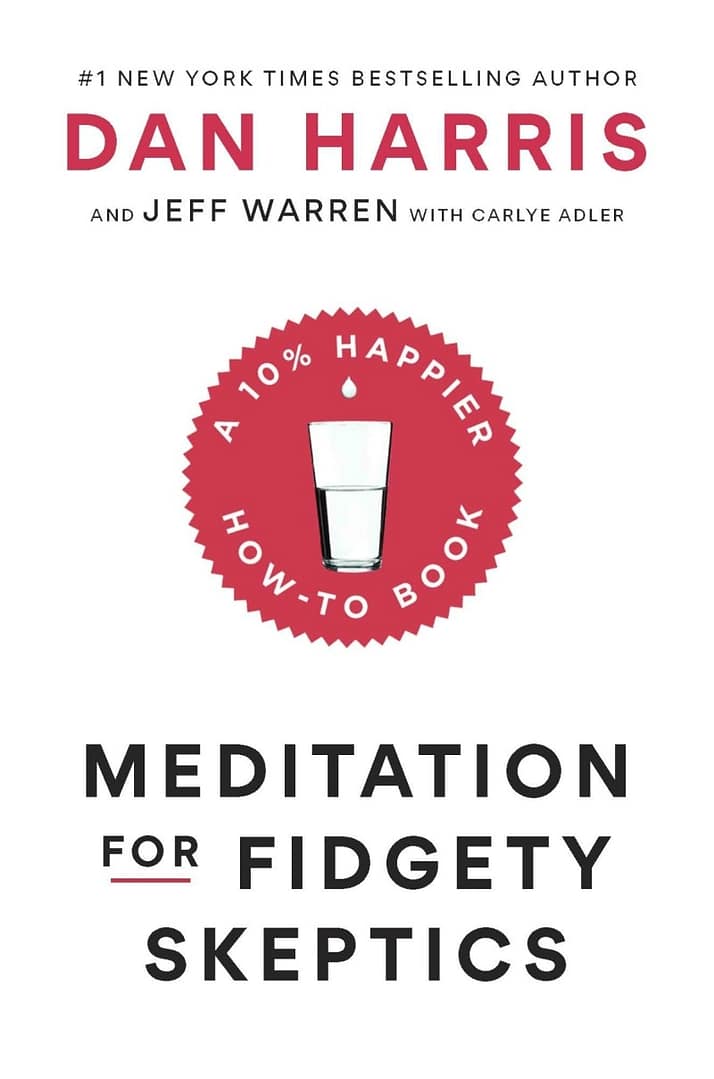
Well, I’m gonna I’m gonna recommend a meditation book and a meditation app, but I I think one of the things that we do a disservice to folks when we, Well, you know, I for me, the recommendation that’s been working for me, I don’t really like to give advice. So I’m just recommending this as something that has worked for me is a combination of medication and meditation. And I just wanna sort of pull back the curtain and be transparent about that that I’ve had some really rough anxiety, this year and am supporting that and treating that and getting correct care for that through medication, which has helped To me, be able to meditate. Medigate and meditate. They’re working. They’re complimentary. And the book that I started reading once my anxiety settled down is called Meditation for Fidgety Skeptics. Folks probably know did I talk to you about ADHD? I can’t remember what.
Karen Costa [00:38:51]:
Yes. We talked about ADHD. Okay. Good. So your listeners there’s another episode on ADHD. Yeah. I have it. So this book is written by Dan Harris, who’s an ABC News correspondent, and he cowrites it with a meditation teacher who has ADHD.
Karen Costa [00:39:04]:
And meditation is notoriously challenging for us ADHDers. And so it’s written with that in mind and is just really accessible, and there’s an app called the 10% Happier app. And the course I did that got me hooked, I’ve I’ve been meditating my whole life, but I I start and stop and start and stop. The course is with an amazing teacher named Joseph Goldstein. So When you get on the app, look for the basic meditation course. It’s 7 days and the meditations are about 5 minutes, so we can do it. The ADH fellow ADHDers, we can do the 5 minutes. And Joseph Goldstein is the real deal and, yeah, meditation for fidgety skeptics, getting correct care and medication support if you need it, and checking out that app.
Karen Costa [00:39:51]:
So I I’m on an 8 week streak of meditation, probably the longest in my life. And, those 2 resources have been really supporting me because it’s wild out there. We gotta take care of our nervous systems. So that’s how I’ve been doing it. I hope that I hope that’s helpful to folks.
Bonni Stachowiak [00:40:08]:
I suspect that it will be. You mentioned the episode that you did on ADHD. That one gets passed around and passed around and passed around. It’s such a wonderful resource, and part of why it is is due to your own transparency and relatability. I I absolutely love that about you and it’s I treasure that. I I’m chuckling because I’m I was almost thinking that this morning I would be able to finish a second cast episode. I do not recommend things that I haven’t either read or listened to or what have you. There’s a Ezra Klein.
Bonni Stachowiak [00:40:38]:
I have recommended his podcast in general, But sitting in my queue right now is another one about climate action that looked like it was gonna be really good. And what’s so funny is the very next episode from the Ezra Klein podcast is with this person, Dan Harris, and 10% happier and all this.
Karen Costa [00:40:56]:
I mean, it literally We love a sign. Oh, yes. Serendipity. Thank you, universe. Yep. I’m on the right track.
Karen Costa [00:41:04]:
I’m like, okay. Dan Harris is is kind of like a He he refers to himself as an anti sentimentalist, I think. So I think a lot of folks in higher ed would perhaps agree with that. So I think a lot of a lot of you who maybe haven’t found other a good fit for meditation will find us a good
Bonni Stachowiak [00:41:26]:
Karen, Costa, thank you for this most recent conversation and for all the conversations that you have in public with us and just for learning out loud and allowing us to kinda come alongside you and, partner up with you where we have opportunities. Just such a joy to get to talk to you today and always.
Karen Costa [00:41:44]:
Thank you.
Bonni Stachowiak [00:41:47]:
Thanks once again to Karen Costa for joining me on today’s episode of Teaching in Higher Ed. Today’s episode was produced by me, Bonni Stachowiak. It was edited by the ever talented Andrew Kroeger. Podcast production support was provided by the amazing Sierra Priest. Thanks to each of you for listening. I would like to suggest that if you’ve yet to sign up for the weekly updates from Teaching in Higher Ed, head on over to teachinginhighered.com/subscribe, and you’ll get the most recent episodes show notes as well as some other goodies that don’t show up during the regular episodes or on the dedicated show notes pages. So head on over to teachinginhighered.com/subscribe, and I look forward to seeing you next time on Teaching
Teaching in Higher Ed transcripts are created using a combination of an automated transcription service and human beings. This text likely will not represent the precise, word-for-word conversation that was had. The accuracy of the transcripts will vary. The authoritative record of the Teaching in Higher Ed podcasts is contained in the audio file.