Follow the Teaching in Higher Ed Podcast
About this Episode
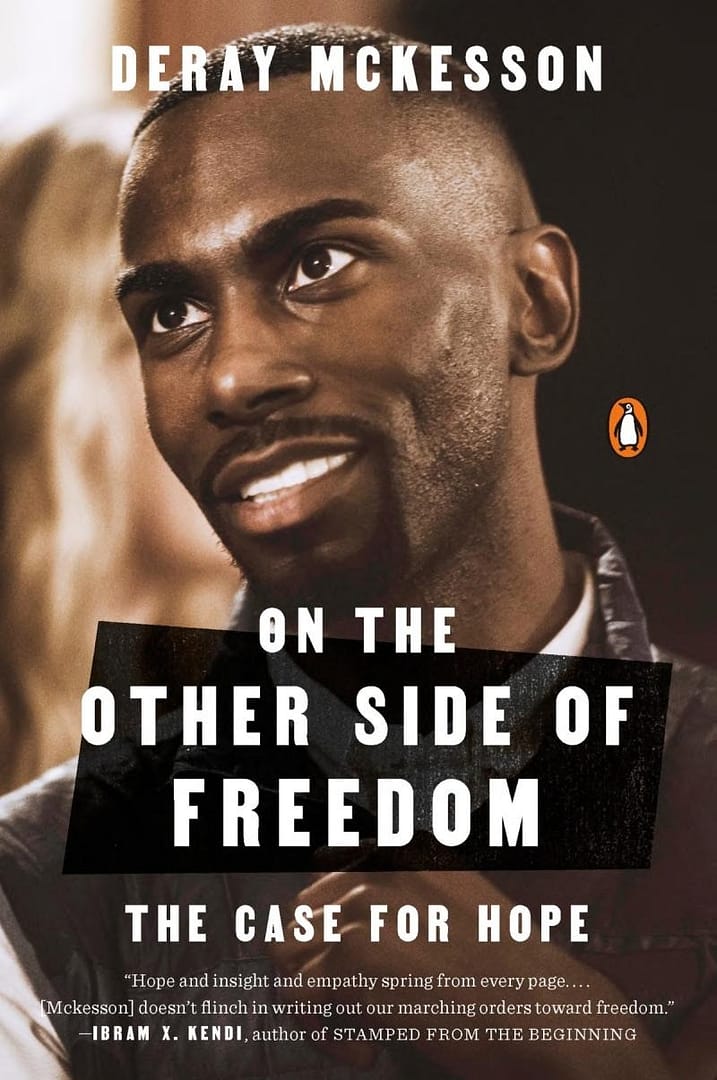
DeRay Mckesson shares about his new book, On the Other Side of Freedom: A Case for Hope, on episode 221 of the Teaching in Higher Ed podcast.
We should talk about the things that are true as simply as possible.
DeRay Mckesson
On episode 221 of Teaching in Higher Ed
Voices on this Episode


Show Notes + Resources
Recommendations from this Episode


Transcript
Bonni: [00:00:00] Today on episode number 221 of the Teaching in Higher Ed podcast, DeRay Mckesson shares about his new book, On the Other Side of Freedom: A Case for Hope.
Production Credit: [00:00:16] Produced by Innovate Learning, maximizing human potential.
Bonni: [00:00:26] Hello and welcome to this episode of Teaching in Higher Ed. I’m Bonni Stachowiak and this is the space where we explore the art and science of being more effective at facilitating learning. We also share ways to improve our productivity approaches so we can be even more present for our students and have more peace in our lives.
Bonni: [00:00:53] Much has been written about teaching as activism. Maybe that word is not quite descriptive of your aim as a teacher, but we do all aspire toward influence; toward change. Our conversations on Teaching in Higher Ed have often been about developing our abilities to offer more culturally-responsive and culturally-relevant teaching.
Bonni: [00:01:16] Today’s guest, DeRay Mckesson has been someone who’s grown my ability to understand context, specifically within the lives of many individuals fighting for racial and social justice and equity. I’ve been listening to DeRay’s podcast, Pod Save the People, since its launch in May of 2017.
Bonni: [00:01:38] If you’ve been listening for awhile, you’ve heard me recommend Pod Save the People as a podcast as a whole. And then I cheat a little bit on the recommendations then I start recommending specific episodes. It is one of those podcasts that moves to the top of my queue and I just so look forward to getting to hear from him and his guests and regular contributors and them to help me take on a new pair of lenses for context that is so relevant to the work that I do as a professor.
Bonni: [00:02:08] When I heard that DeRay was coming out with a book, I instantly had the aspiration of having him on the podcast. And I was so gratified when he accepted the invitation and I knew that today’s conversation would become a reality.
Bonni: [00:02:21] On the Other Side of Freedom: A Case for Hope is the name of DeRay’s book. It’s relevant to our Teaching in Higher Ed community for two reasons. As I talked about earlier, the more we can understand the context in which some of our students engage, the better we can be effective in our teaching.
Bonni: [00:02:41] When Gardner Campbell was on the podcast he gave this illusion or analogy of zooming in and zooming out and helping his students do that as well. And DeRay really in his book zooms in and shares these incredibly gripping stories of his own experiences as a black gay man growing up and becoming engaged in activism during the emergence of the Black Lives Matter movement.
Bonni: [00:03:07] And then he so gracefully zooms out to reveal how art- and this I’m quoting now from the book description- “how our best efforts to combat injustice have been stunted by the belief that racism’s wounds are history” and he suggests that “intellectual purity has curtailed optimistic realism.” Also still reading from the book description- “The book offers a new framework and language for understanding the nature of oppression. With it, we can begin charting a course to dismantle the obvious and subtle structures that limit freedom.”
Bonni: [00:03:43] I highly recommend the book. I, of course, invited him to come on the show before I had read it and now that I have – I’m just so absolutely thrilled he is with us today. And before I get to my interview with DeRay, I want to share just a little bit more about him.
Bonni: [00:03:59] DeRay is a civil rights activist, community organizer, and host of Crooked Media’s podcast Pod Save the People. He started his career as an educator and came to prominence for his role in documenting the Ferguson protests and the movement they birthed, and for publicly advocating for justice and accountability for the victims of police violence and the end of mass incarceration. DeRay has spoken at venues from the White House, to the Oxford Union, and universities and has appeared on TV shows across the political spectrum. He was named number 11 on Fortune’s World’s Greatest Leaders List and Harvard’s Black Man of the Year in 2016. Among His many other accolades, a leading voice in the Black Lives Matter movement and the co-founder of Campaign Zero, a policy platform to end police violence. DeRay lives in Baltimore Maryland. DeRay, welcome to Teaching in Higher Ed.
DeRay: [00:05:02] It is good to be here.
Bonni: [00:05:03] It is such an honor to be talking with you today. I just finished the book last night. And I can’t wait to talk to someone about it. And you’re – the person – which is pretty surreal.
Bonni: [00:05:15] I’d like to begin at the end, and also end at the end of our conversation the last chapter of your book: A Letter to an Activist. And you address it to Selah and Isaac and others. And I’m curious who Selah and Isaac are?
DeRay: [00:05:29] They are my niece and nephew.
Bonni: [00:05:32] And why did they need to hear that letter to an activist?
DeRay: [00:05:37] The book in general is me reflecting on the most important stories and experiences I’ve lived through and thinking about what were the lessons from them? And who better to share them with than the kids that are closest to me. But the whole book in so many ways is like here are the lesson I’ve learned and I want to share them in a way that hopefully has you thinking differently or deeper.
Bonni: [00:06:01] You write that language is often our first act of resistance. And I’d love to hear you talk a little bit about how those who are engaged in the fight should talk about the work.
DeRay: [00:06:14] We should talk about the things that are true as simply as possible. So I always say that if I can’t explain it to my aunt, then it doesn’t make sense. Right. And not because my aunt his dumb, not because my aunt doesn’t care. But she doesn’t spend her whole day in front of CNN. She has two kids already, she has a job. And some of this stuff is so intense the way we talk about it. And even I don’t get it. Like I think about this suff all day and I still don’t understand. If we can’t actually figure out how to talk about it in terms that more people can understand, we will never win. People need to be empowered like start to dream about other things and in other ways of being.
Bonni: [00:06:54] You write so powerfully about the work we must do of unlearning and how it’s harder you say in some cases than the work of learning. And I’d love to hear you talk a little bit about ways- because it’s such a simple question- ways we can unlearn misogyny, homophobia, sexism and all the rest of it.
DeRay: [00:07:13] The hardest part about the unlearning is less, I think, sometimes the cognitive word. It’s like saying like, “Oh. All people aren’t bad.” Like you can actually do that relatively easily. It’s actually changing the behavior that came along with the belief that is a little bit harder.
DeRay: [00:07:28] So it’s one thing to not be homophobic anymore. It’s another thing to not use that language that you have used your entire life that is actually homophobic. But you are just used to it, right? You’re used to participating in conversations where you make fun of guys or whatever. There is a part of that that became just so normal for you and that is really where unlearning takes work for people across a host of things. Like you now say you respect women but you are used to cat calling people and you just can’t do that anymore. But you did it for so long and it’s so acceptable in so many parts of our culture that you suddenly feel like you are rebelling against society for not cat calling women. You know what I mean?
DeRay: [00:08:09] So the unlearning piece is about recognizing the things that we participated in that are not productive and then changing our behavior and our beliefs.
DeRay: [00:08:19] And could you help us distinguish “whiteness” versus “white people” and how that might inform their work as well?
DeRay: [00:08:28] I don’t really think about as “versus” but it’s just understanding what is the personal and what’s systemic. So when we think about white supremacy. This is this idea that white is better. White is normative. White is more worthy. Reading about whiteness is the culture that that’s for… So dominate culture and what does that look like? Like what did they mean that white people have wealth in ways that people of color don’t. Not that the white people worked harder, but because we gave white people wealth that scaled in a way that was deeply racist. But there is a culture that exists now that is what we call whiteness that is synonymous with dominant culture at this point.
Bonni: [00:08:59] And then there are people. So, there are white people. And we understand them differently just so we know where the points of entry are and where the points of change are. It is the way we work to change people is different in the way that we work to change systems and it is different than the way that we work to end opression.
Bonni: [00:09:15] Describe the problematic nature of the concept of allies and the term that you prefer that people aspire to.
DeRay: [00:09:22] Yes. Both allies and accomplices are productive. They help us sort of understand that there’s injustice and we should do something about it. Allies sort of look from a distance and they say like, “Oh this is bad and something should be done about it.” Accomplices love you up close. So they are the people who not only understand their personal privilege, but they understand what they need to do to change the system from allowing that privilege to exist in the first place. And that’s really the difference.
DeRay: [00:09:49] You see a lot of people who have the language, they talk a good game. And you’re like. “What are you doing?” And they’re like, “What do you mean? I’m talking about it?” But that’s actually the beginning of the work, that is not the end of the work. The awareness is the beginning, not the end. Accomplices understand that better.
Bonni: [00:10:02] I’d like to go back to the end again. And one of the things you’re able to do so wonderfully well is just to recognize the complexity of this work. And yet you don’t just say it’s complex, so I’ll wash my hands of it. But you actually give us some prescriptions. You are bold enough to do that. And one of the things that you share about is proximity’s role in answering part of the question: What can I do? Could you talk about proximity?
DeRay: [00:10:29] Yeah, you can’t fight for people you don’t know. And you can’t work on issues you don’t understand. And there’s no better way to know people and to understand issues and to be close to them. So there’s no way to do this work without having proximity to the work itself. And there are people who are are like “I believe in that. I believe in the end of mass incarceration.” Well, talk to me about what that means. And they’re like, “Well I believe in the end of mass incarceration.” That’s actually not helpful.
DeRay: [00:10:53] You got to be close to it in some way. You’ve got to understand it, or know it, or have done some research so you can actually be productive. And the same thing with people, there are people who like “I fight for kids.” Like well how do you – like do you know any kids? Are you around any kids? It doesn’t work when all of this stuff is just abstract because we don’t live in the abstract.
DeRay: [00:11:12] So there are people I know who say they fight for public education and have never been in a public school before. It’s like how are you doing that fight? That doesn’t actually make sense. You’ve got to be close enough to understand the work and the people well.
Bonni: [00:11:28] And my last question, before we get to the recommendations segment, is about curiosity. I loved your use of the phrase “curiosity as a weapon.” I’ve never heard that before. Could you describe a little bit around curiosity’s connection to imagination and how we might use it in the fight?
DeRay: [00:11:47] We just got to ask the questions. The world we live in today is not the best version of the world that is possible. I will never get to the other side of freedom if we don’t start to imagine and be curious about what could be. So what are the ways that we can configure public education? How could we make sure there’s enough food in the country for everybody to eat? How do we get it to them? What does that look like?
DeRay: [00:12:11] I think there are a lot of people who think that there is I guess a smart set of people somewhere figuring out everything in the world. Like those people don’t exist. We are those people. I want to normalize the fact that we can sit down at the dinner table and start to have these conversation. Like, actually any good organizing that has ever started is a couple people dreaming a big dream, asking the tough questions that get us to see real action.
Bonni: [00:12:33] And what are a few things that you have just had your curiosity piqued about recently?
DeRay: [00:12:39] So much. So one one of the podcast episodes, we did a thing – I covered oral health because I read this story about dentists in rural communities and I just wanted to understand it better. So that was one. I learned a ton about that.
DeRay: [00:12:54] I just did something on lead, mostly around Flynt. But I didn’t know things like, like lead is sweet. So that’s one of the reasons why kids lick lead paint – because it’s just sweet. So, a ton of things… Foster care. We’re about to do something on foster care, the racial wealth gap. Like a whole list of things. The podcast that I have, Pod Save the People, it doesn’t follow the news so much as it follows these issues. So they’re all of these issues that I care about, that I feel like I don’t know much about, that I want to know more about, that I think people should know about. But I try to use our platform to be that curious person in public.
Bonni: [00:13:26] Well one of the things I’ve noticed you doing is – I listen to both of those episodes you’re referring to and I’ll also link to them on the show notes. But you are helping to arm others to become more curious too. Because I hadn’t really thought before about oral health. And then you interviewed those couple of women and now I’m just thinking about it all the time and realizing some of the privilege I have in those areas as well. So that was just- it’s wonderful to think about how not only is curiosity your weapon, but your’re passing that and igniting it in others. So thank you so much for that.
Bonni: [00:13:56] And. It’s almost time for the recommendations segment, but before we get there, I wanted to just think this episode’s sponsor and that is Text Expander. You’ve heard me talk about Text Expander many times before. It is often the first thing I install on a new computer. It’s definitely in the top three. And what it does is you can just type in a few characters and then allow it to spit out either a bunch of text, or a little bit of text that you have a hard time remembering. Like I never remember my work phone number and so I can just type in “z phone” and it will type out my work phone number without me having to remember it. I use it all the time and it syncs across all my devices. So I’ve got it on multiple computers and it’s on multiple devices, the phone, the tablet, it all syncs across and it’s absolutely wonderful. And you can actually use it in team environments as well if you want to have common e-mail responses that get sent out and you can even customize it where it prompts you to fill in the blanks where it says what do you want this e-mail to be addressed as? Like “Dear so and so.” I mean there’s all kinds of things you can do with it.
Bonni: [00:15:08] It’s easy to get in and get started with it. And then you can just learn more about it as you go and keep getting more and more of your time saved and really simplify things. So if you would like to get 20 percent off your first year of Text Expander, you can visit Textexpander.com/podcast and then select Teaching in Higher Ed as how you found out about it and that will again get you 20 percent off your first year. That’s at Textexpander.com/podcast. That link will also be in the show notes to make it even easier for you as well.
Bonni: [00:15:41] This is the point in the show when we get to each give recommendations. I’d like to recommend this book that you have written and it’s called On the Other Side of Freedom. It is just an absolute wonderful read. And as I was writing my review of it on GoodReads, I came across just because what I needed was more books to read- on GoodReads there’s a Listopia: Books of the Pod.
Bonni: [00:16:04] And Crooked Media is the brand that Pod Save the People is part of. And they have other podcasts as well. And so this is a list of books either written by or mentioned by the hosts or guests on any of the Crooked Media podcasts, Pod Save the People, Pod Save the World, Pod Save America, etc. It’s just a list of amazing books. I had read 10 of them. I have a lot longer to go and I can have a lot that I can discover from taking a look at that list. So I’ll link to that in the show notes. And DeRay, to close our time here together I’m going to pass it over to you to make whatever recommendations you would like to, something that has had your attention in recent weeks.
DeRay: [00:16:40] Thre is a song called Slow it Down by it by Zaia. And I love it. I’m obsessed with it. And that’s my recommendation.
Bonni: [00:16:50] Ah wonderful, we will link to that in the show notes. Thank you so much for all of your work for this incredible book and just for the opportunity to speak with you today.
DeRay: [00:17:00] Thank you. Talk to you later.
Bonni: [00:17:02] Talk to you later.
Bonni: [00:17:04] What an opportunity it was to get to talk to DeRay Mckesson, thank you so much for coming on the show. And thanks to all of you for listening. I just took a little break from recording to go listen to that song that DeRay recommended, Slow it Down. You’ve got to the show notes at teachinginhighered.com/221 and check it out. It’s a great song. It’s going to be stuck in my head for at least the rest of the today, if not into the weekend. So thanks to DeRay for that.
Bonni: [00:17:32] And now to put an entirely different song into my head and into yours… The closing theme music, which I know is either loved or hated by many of you mostly loved but a few of you I know. I still think about you. Anyway, thanks for listening.
Bonni: [00:17:47] If you have been listening for a while and have yet to give the show a rating or a review on whatever podcast app it is you listen to the show that would be a wonderful way of spreading the news about the show. I just discovered that I listen on Overcast. It’s an iOS app. It’s a great great app for listening to podcasts. You can just press the star right there on your phone while you’re listening to an episode and it recommends it. In fact, if you have an Apple Watch you can even press the star on your Apple Watch. So how much easier could it be to give a nice review for the podcasts that you enjoy? Thanks for listening and I’ll look forward to seeing you next time. We’ve got some great guests coming up. Keep on listening. Take care.
Teaching in Higher Ed transcripts are created using a combination of an automated transcription service and human beings. This text likely will not represent the precise, word-for-word conversation that was had. The accuracy of the transcripts will vary. The authoritative record of the Teaching in Higher Ed podcasts is contained in the audio file.