• Skip to primary navigation
  • Skip to main content
  • Skip to footer

Teaching in Higher Ed

  • Podcast
  • Blog
  • SPEAKING
  • Media
  • Recommendations
  • About
  • Contact
EPISODE 625

Teaching Solidarity: Critical Race Reading with Malini Johar Schueller

with Malini Johar Schueller

| June 4, 2026 | XFacebookLinkedInEmail

https://media.blubrry.com/teaching_in_higher_ed_faculty/content.blubrry.com/teaching_in_higher_ed_faculty/TIHE625.mp3

Podcast (tihe_podcast):

Play in new window | Download | Transcript

Subscribe: Apple Podcasts | Spotify | RSS | How do I listen to a podcast?

Malini Johar Schueller unpacks critical race reading and the role of discomfort in the classroom on episode 625 of the Teaching in Higher Ed podcast.

Quotes from the episode


Racism is a permanent structural feature of American society, and law alone, as now we have it, cannot deal with racism because racism is also part of law.

Racism is a permanent structural feature of American society, and law alone, as now we have it, cannot deal with racism because racism is also part of law.
-Malini Johar Schueller

Critical race reading takes off from that, and it asks, is there a way of reading… that can awaken us to questions of racial privilege and hierarchy, but without us imagining that we have taken over somebody's place?
-Malini Johar Schueller

Critical empathy, where you feel for others and you feel the injustice of others, but you also feel differently, you know, differently.
-Malini Johar Schueller

Some level of discomfort is fine for learning, because if learning doesn't produce any kind of discomfort, you haven't moved outside your zone of what you already know.
-Malini Johar Schueller

Resources

  • Teaching Solidarity: Critical Race Reading, by Malini Johar Schueller
  • Malini Johar Schueller's personal site
  • Kimberlé Crenshaw
  • Patricia Williams
  • Disparate treatment vs. disparate impact
  • The 1619 Project
  • Shoshana Felman
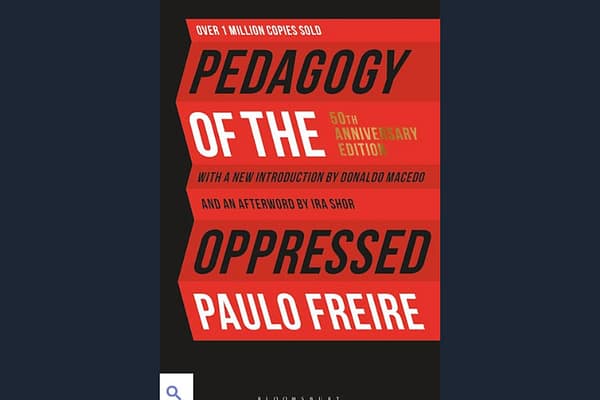
  • Pedagogy of the Oppressed, by Paulo Freire
  • Teaching to Transgress, by bell hooks
  • Defy: The Power of Saying No in a World That Demands Yes, by Sunita Sah
  • Jesse Stommel on Episode 320
  • Journey through infertility (Pudding, March 2026)

ARE YOU ENJOYING THE SHOW?

REVIEW THE SHOW
SEND FEEDBACK

ON THIS EPISODE

Malini Johar Schueller

Malini Johar Schueller is Professor of English at the University of Florida and author of U.S. Orientalisms, Locating Race, and Campaigns of Knowledge. She is also the director of In His Own Home, a documentary on raced policing. She received her M.A. in English from Panjab University and her Ph.D. from Purdue University (1986). She has published several edited collections including Messy Beginnings: Postcoloniality and Early American Studies and Exceptional State: Contemporary US Culture and the New Imperialism. She has also published articles in journals such as American Literature, American Quarterly, SIGNS, Interventions, and Cultural Critique as well as given invited talks at national and international universities.

Bonni Stachowiak

Bonni Stachowiak is dean of teaching and learning and professor of business and management at Vanguard University. She hosts Teaching in Higher Ed, a weekly podcast on the art and science of teaching with over five million downloads. Bonni holds a doctorate in Organizational Leadership and speaks widely on teaching, curiosity, digital pedagogy, and leadership. She often joins her husband, Dave, on his Coaching for Leaders podcast.

RECOMMENDATIONS

Journey through infertility (Pudding, March 2026)

Journey through infertility (Pudding, March 2026)

RECOMMENDED BY:Bonni Stachowiak
Pedagogy of the Oppressed, by Paulo Freire

Pedagogy of the Oppressed, by Paulo Freire

RECOMMENDED BY:Malini Johar Schueller
Woman sits at a desk, holding a sign that reads: "Show up for the work."

GET CONNECTED

JOIN OVER 4,000 EDUCATORS

Subscribe to the weekly email update and receive the most recent episode's show notes, as well as some other bonus resources.

Please enter your name.
Please enter a valid email address.
JOIN
Something went wrong. Please check your entries and try again.

Related Episodes

  • EPISODE 410Rethinking Critical Thinking
    Mays Imad Square

    with Mays Imad

  • EPISODE 226Critical Open Pedagogy
    Man with dark hair and beard smiles warmly

    with Rajiv Jhangiani

  • EPISODE 196Reading as Collective Action

    with Nicholas Hengen Fox

  • EPISODE 545Cultivating Critical AI Literacies
    Maha Bali profile picture

    with Maha Bali


EPISODE 625

Teaching Solidarity: Critical Race Reading with Malini Johar Schueller

DOWNLOAD TRANSCRIPT

EPISODE 6125 – Teaching Solidarity: Critical Race Reading with Malini Johar Schueller

Bonni Stachowiak [00:00:00]:

Today, on episode number 625 of the Teaching in Higher Ed podcast, Teaching Solidarity, with Malini Schueller.

Bonni Stachowiak [00:00:10]:

Production Credit: Produced by Innovate Learning, Maximizing Human Potential. 

Bonni Stachowiak [00:00:20]:

Welcome to this episode of Teaching in Higher Ed. I’m Bonni Stachowiak, and this is the space where we explore the art and science of being more effective at facilitating learning. We also share ways to improve our productivity approaches so we can have more peace in our lives and be even more present for our students. In today’s episode, I’m joined by Malini Johar Schueller, professor of English at the University of Florida, and author of Teaching Solidarity. In our conversation, we explore what she calls critical race reading, a practice that starts at empathy but moves beyond it to help learners examine their own positionality within systems of power and inequity. Malini shares how today’s political climate is reshaping what happens in classrooms and why discomfort can be such an essential part of meaningful learning. Malini Schueller, welcome to Teaching in Higher Ed.

Malini Johar Schueller [00:01:32]:

Thank you. Thank you for having me.

Bonni Stachowiak [00:01:34]:

I have been excited about this conversation since I was first contacted about your book. And so much of what I know we’ll be talking about is helping us make some distinctions, and a very important distinction, before we start speaking more specifically about the approaches that you recommend, is around critical race reading. And maybe we even start, you decide, do we start with critical race theory or do we start with critical race reading? But for either term that you choose, could you offer some reflections on both what it is but also what it is not? Because there’s so much confusion out there.

Malini Johar Schueller [00:02:15]:

Okay, would you like me to start with critical race theory first?

Bonni Stachowiak [00:02:18]:

Sure, that sounds great.

Malini Johar Schueller [00:02:19]:

Okay. Because my term, critical race reading, obviously riffs off of critical race theory. The main argument was that racism is a permanent structural feature of American society and that law alone cannot deal with law, as now we have it, cannot deal with racism because racism is also part of law. And so overall, it stresses sort of the implication of race in every aspect of American life. And though critical race reading takes off from that and it asks, is there a way of reading? And since I’m a literature professor, I focused on literature. Is there a way of reading that can awaken us to questions of racial privilege and hierarchy, without us imagining that we have taken over somebody’s place? In other words, I cannot sort of put myself in the position of somebody and vacate that person’s position, but to be able to awaken those questions of racial hierarchy and privilege within ourselves, and then be able to have sensibilities that can move us towards solidarity. Is there a way of reading that way? Right? And that was the idea of critical race reading, and obviously, the kinds of works you would read, although I would argue that in the US, pretty much anything that you read is racially implicated. Right? But there are some works, obviously, that it makes it easier to parse that kind of question out.

Malini Johar Schueller [00:04:09]:

And so that was a way, I mean, especially since literature is seen as so fundamental to teaching. Right? All the way from, I don’t know when, children start reading stories very early. Right? And it goes all the way, and it goes all the way to college and so on. This would be a way of really having a reading that can ultimately work for social and racial justice.

Malini Johar Schueller [00:04:37]:

And I see this particular critical race reading as sort of in the tradition of educators like Paulo Freire, who wrote Pedagogy of the Oppressed. What is the function of education and the classroom, or bell hooks, you know, teaching to transgress. So, that was the idea of critical race reading, is how to sort of have a pedagogy that would not tell people what to do. You’re not telling students what to do; you’re just telling them ways of thinking. You know, what they do is ultimately what they get to decide. A classroom is not a place of indoctrination or anything like that.

Malini Johar Schueller [00:05:19]:

But it’s also in the tradition of critical theory in general, right? Where, right, from the Frankfurt School, the idea was that eventually, critical theory, questions of critical theory, lead to emancipation and social liberation. Right? And so, what are the ways in which basic, like reading of stories, can be done in such a way to awaken those kinds of sensibilities and our own consciousness of hierarchies, and build those sensibilities that will hopefully move the students to, or any readers, to their solidarity with social justice movement, racial justice movements.

Bonni Stachowiak [00:05:58]:

And tell me more about then, the role that empathy plays an important role, but doesn’t necessarily go far enough?

Malini Johar Schueller [00:06:07]:

Oh, absolutely. One of the very common ways of teaching literature is, and I wouldn’t say this is the most sophisticated, but it’s quite common. You know, we’ll say, here’s a character, perhaps a minority character that people are encountering, who has been very oppressed or somebody poor. Don’t you identify with this person and all that that person has gone through? And students will say, I can really relate to this book because my mom was like this, or my dad was like this, or I had a cousin who was like this. That kind of thing. It’s very common, even in college. Right? But I think that when you only have empathy, for example, if you have a character like you’re reading some novel about Palestine, you’re reading about an African American who is suffering racism, and you sort of totally identify, there’s a way in which you can arrogantly take that person’s place without realizing the difference.

Malini Johar Schueller [00:07:06]:

There’s also a way in which once you’re done reading, you have sort of had a catharsis. You know, you have identified, you’re done with it, and you move on feeling very virtuous. There’s nothing else to be done after that moment. Now, there might be people who disagree with me, but there’ll be a lot of people who actually agree with this. You know, there’s a very prominent African American scholar of African American studies by the name of Saadia Hartman, who talks particularly about how it is that this identification is a way of just vacating the other. Other, as in capital O. And a lot of people have written this, I’m not the first one to come up with this. But I do think that it is important in literature, and certainly it can be important in historical narratives, not to just stop there. Because you can say, ” Oh, I really felt bad.

Malini Johar Schueller [00:07:59]:

I really identified with this character. Now I feel so good having read this because I could really feel sorry”. Right? But I think, from what I want to emphasize is what I call critical empathy, where you feel for others, and you feel the injustice of others, but you also feel differently, you know, differently. So that kind of distancing allows you to see that this injustice is, is part of a structure. And since I’m trying to, in critical race reading, have people think about structural racism. Right?

Malini Johar Schueller [00:08:36]:

It’s important to have that distance so that you can actually then have the kind of sensibilities which say, ” Hey, I’m not exactly this person. I’m different. And I can recognize what are the structures that were oppressing this person, and of which I’m also a part?” I mean, we are not apart from society. Right? But there’s something, I think, more useful than just simple identification. And it’s a difference between, I guess, a more experiential reading and a more analytical reading.

Bonni Stachowiak [00:09:11]:

Yeah, it’s so resonating with me. I’m thinking back to a class I have not taught in 15 years. So you’re going to have to bear with me on my memories. But this was an Introduction to Business class of all things. My discipline is in organizational leadership, so it’s sort of people side of business, but haven’t taught it in years. And I, and I really think I failed at this.

Bonni Stachowiak [00:09:32]:

So I’m about to tell you a story of failure. I used to try to teach about the two different kinds of discrimination. And this is in an HR employment law kind of a thing, and so I would try to teach about disparate treatment, where you treat someone differently because of a protected class, or disparate impact. And that would be more the systemic levels, right? That a protected group or class is somehow discriminated against. Well, why I am telling you that I would fail at this with regularity is, I think, I mean, I wish I would have had this book all those years ago, because I think it’s because people were still centered in that, in that example. So I would have many people in the class, I mean, I just failed and failed and failed at this.

Bonni Stachowiak [00:10:17]:

So they would, they would say to me, but I was treated bad at my work. So how can you say like, can’t I be? And that’s just like I would go round and round, and it was kind of that, like that I, that it was perceived that I didn’t have empathy for how hard it must have been. And I’m going, but, “it’s not that I don’t have empathy, it’s that…” and so I want to hear more from you about what literature can unlock that, me trying to teach, or anybody trying to teach a concept where that person is still at the center. Do you know what I mean? 

Bonni Stachowiak [00:10:55]:

What gets unlocked when we use literature that doesn’t get unlocked with the example I just gave?

Malini Johar Schueller [00:11:00]:

So literature, you know, has the ability always to imagine otherwise. Right? So you imagine things differently. Literature also has compelling kind of characters who go through, somebody can put a whole social reality in front of you, and can also posit a different kind of, you know, imagination. So you can have that literature that delineates a kind of oppression, but you can also have these other possibilities that you might not have in the situation that you’re talking about. But also, I do think that literature really elicits this kind of, with characters and all, that elicits this kind of move towards, “Can you understand me”? Right? And in order to answer that question, can you understand me? You have to go and see what the structure is around that person.

Malini Johar Schueller [00:11:57]:

Right? In a unique kind of manner that I don’t think simply a recording of events in history can do. So there is emotion involved, no doubt, right? And that’s not a bad thing. But in addition to having that kind of pull that literature has, it takes you to all these different possibilities and the different kind of literature. Not everything works with critical race reading, because there are some works that will deliberately try to distance you. So one of the works, now, Patrisse Khan-Cullors memoir that I talk about here, it’s a memoir, right? And she writes about what happens in her life and so on.

Malini Johar Schueller [00:12:44]:

At the very same time, she moves you away and says what was happening elsewhere. How is this connected? You know, and that is one of the things that literature does do. And your critical race reading moves you, not just from the moments where you’re connecting with, say, a protagonist, but to the other moments that it is connecting you with, you know? So I think of, you know, you could think of different kinds of examples, but if you think about works in which there’s a central character and then you have the colonial background, you know, if you are just going to work with something like empathy, you’re just going to work with that character and not be able to see that colonial background, for instance. Right? And that’s the kind of double thing that literature can do. I think that what you’re talking about in that business thing, because that seemed to be just individual.

Bonni Stachowiak [00:13:38]:

Let’s explore now a little bit more about this discomfort. And it’s something that’s talked about so much, I think, on the right and on the left. And how do you think about discomfort? How do we handle it? Do we prepare students for it? Do we wait until they’re experiencing… What’s your approach? And essentially, advice to others?

Malini Johar Schueller [00:14:00]:

That is actually what I was going to talk about before we started talking about empathy. One thing I noticed in all these bills that they had, including the 2020 bill that Trump had, which was combating race and sex stereotyping; such a cynical title. But anyway, what they all stress is, oh, they don’t want students in the class to be uncomfortable. The kind of anxiety or discomfort that is produced in students when they are told that they have to confront histories of racism. So this discomfort was constant. And one of the things that I emphasize in critical race reading is, it’s uncomfortable. It is uncomfortable.

Malini Johar Schueller [00:14:45]:

And there are people who argue like, there’s another educator by the name of Shoshana Felman who said, unless there is some level of discomfort in my students, I have not taught. But, of course, you don’t want to completely make the students so uncomfortable that they can’t learn. But to imagine, again, I think that if you have something like just empathy and identification, that’s quite comfortable. You might say, ” Oh, I feel so bad I shed a few tears. Then I feel really good about myself because I shed those tears”. Discomfort is much longer, you know, and I think that some level of feeling uncomfortable is fine for learning, because if learning doesn’t produce any kind of discomfort, you haven’t moved outside your zone of what you already know, which doesn’t mean you’re going to feel like you’re going to do something, you know, gross to yourself. I don’t mean that kind of discomfort, but enough that you will say, so I never realized that I was participating in this. What can I do? Maybe I need to join some social movement that does X.

Malini Johar Schueller [00:15:52]:

Maybe I need to do a little bit more with my life rather than, you know, just feeling bad about X, or feeling that I understand what’s going on. Maybe I need to be a little more active in my life. So I think that comes from people realizing that they haven’t done enough, that they haven’t realized their privileges enough, that they haven’t recognized structures enough. Right? So I think that some level of discomfort is, is necessary for, for this teaching, for learning.

Bonni Stachowiak [00:16:23]:

You and I live in quite different states, for listeners who- I’m in California, and for listeners who may not be aware, you are in Florida, and we have very different laws and very different regulations. And I’m curious, if you have advice for people who are teaching in context, different than the one I’m teaching in here. We don’t have the anti-CRT laws coming up here. We don’t have the anti-DEI, I’m not to say we’re completely immune to it, but it’s, it’s just markedly different. 

Bonni Stachowiak [00:16:53]:

Do you have advice or guidance for people who are teaching in states that, it’s a very risky endeavor to be teaching? What advice about risk is there? Is there such a thing as wise ways to take risks? I don’t mean to put words in your mouth, but just would love to hear anything that you would have to offer, while we both recognize how hard this is, you know.

Malini Johar Schueller [00:17:17]:

Yeah. That’s a really tough one, because I think there are ways in which teachers can actually, if there are certain works that are, for example, banned from the classroom, they don’t have to teach those. You can teach something else. So, you’re not telling the students, as I said, you’re not telling the students what to think, you’re just sort of having a certain method of teaching.

Malini Johar Schueller [00:17:46]:

So I think that, actually, critical race reading is, I wouldn’t say it’s sneaky, but it’s sort of an entry into these questions of racial hierarchy without your necessarily even having works that the right considers so provocative that they don’t want them taught in the classroom. So I think that to focus on ways of teaching that would be really useful when they’re teaching any of these. And I said, I think that almost anything that you teach in the US is implicated in race, to see the way that they can teach and build these kinds of sensibilities. The other thing is that you can have educators, people in the classroom, who don’t have to say, ” This is what I’m trying to do”. Right? Even though you want the ends of racial justice and social justice, which are probably not okay to talk about, but just have them think about. You have a character here who is undergoing X, what is it that’s contributing to it? Have questions that students can think about; who is involved? What are the kind of ways in which you can think about this character differently? Do you think you can exactly be this character? Why not? Those are the kinds of things that I don’t think are going to get people in trouble.

Malini Johar Schueller [00:19:04]:

What could get people in trouble are very explicit, kind of, right, how this, I feel like this as a white person, you don’t have to do stuff like that, you know? So there are ways of teaching that you can do, but then there might be, I don’t know that teachers whose syllabi gets looked at and so on, but I think they can still teach and emphasize the way in which they teach, right? And that, I think, is the power that we have.

Malini Johar Schueller [00:19:32]:

Unless somebody is going to now put cameras in the classroom or whatever and then completely misinterpret what, what you’re doing, you know.

Bonni Stachowiak [00:19:44]:

Yeah, I can see that you are smiling, as in not happy, but smiling, as in a little sarcastic. Because we, of course, know cameras are in the classroom every day, with the cell phones coming out, and how quickly things can be taken out of context. But what I’m hearing, I’m at a loss for the right vocabulary word here, but savvy is the best word I’m coming up with, and I’m not sure it quite is capturing all the wisdom that you’re offering to us. But really just thinking about how to do it in a, in a smart way, in a wise way, still living up to your values.

Malini Johar Schueller [00:20:16]:

Other thing I would have to add is that there is a way, and I don’t mean to at all disparage people who are younger than me, who have families to feed and so on, and are worried about their jobs. But there’s a way in which, you know, this sort of anticipatory obedience is really a problem, because that is how fascism continues. And I see that in the university, unfortunately, I see it in college professors and all that they are, well, let’s not do this because it might not be okay even if some law has not been passed ahead of that time. And I just think that you should go the length to do what you can do. But again, I cannot speak for people who are vulnerable, but I think there are to just, you know, talk about ways of reading and so on. But I don’t think that people can really get you for that.

Bonni Stachowiak [00:21:16]:

Thank you so much. Yeah, thank you for sharing that. This is the time in the show where we each get to share our recommendations. And my recommendation mostly has, I’m taking a shift here as listeners are used with me to a different topic, but some of the themes are somewhat related. 

Bonni Stachowiak [00:21:33]:

It’s a website which I’ve shared from this website before. The website has a very hokey name; it’s called pudding.cool, it’s a very weird name. Pudding, like pudding, the dessert that you eat, pudding cool.

Bonni Stachowiak [00:21:49]:

I find their work fascinating because they take topics, and they’re artists and web developers, and they create very interactive, intriguing websites that tell stories in interactive ways. And I just think, you were talking earlier about the ways in which literature can do things that other forms may not be able to educate. And to me, I find this website very intriguing because it has done similar things for me. And this is a- But I also, when I recommended it before, I didn’t recommend the whole website because I wanted to dole it out in tiny pieces. So today’s tiny piece is a site that they have, a page that they have on IVF.

Bonni Stachowiak [00:22:31]:

And I have not mentioned this, you know, many times on the show, but I had a couple of times in 12 years. I’ve mentioned that we had infertility many years in our family. And I really, it’s a story about, it looks at it from two different ways. It looks at it from the woman having the baby and some of the experiences that she has on a timeline. And then they show it from the bait what eventually, of course, becomes a baby. 

Bonni Stachowiak [00:22:56]:

I find that you’re- You’re talking about earlier about empathy and things like that, and how I love the idea of stories. And of course, much of literature is this way too, where you might read different chapters from different characters’ points of view. But I don’t see that done with websites quite as much, and it was just graphically very beautifully done. I found it creating empathy and more educating us about the science of how this works and how cells come together and multiply. It was just like a very interesting look. It got me instantly curious, the way that so many of their pieces do.

Bonni Stachowiak [00:23:31]:

So I encourage people to go check that out and have a, have a look. Once you’re there, I do need to warn you because if over there and look at this page, you are going to want to look at other pages, because they’ve done a lot of really fascinating things. So that’s my recommendation, and now I’m going to pass it over to you for whatever you’d like to recommend.

Malini Johar Schueller [00:23:48]:

Well, if I’m talking to a lot of educators, if they haven’t already seen it, I would recommend, pick up the classic Pedagogy of the Oppressed, and make that a way of thinking about the classroom. Because that’s so important that that would be a major thing that I would recommend. The other thing is more general kind of recommendation, which is, don’t worry so much about pleasing your students and keeping them always in a comfort zone, because a little bit of discomfort is a good thing. Right? So that would be my recommendation.

Bonni Stachowiak [00:24:27]:

Do you have any thoughts of, when you, what are some symbols or signs? Symptoms? I guess that’s the word I’m looking for. What are some symptoms that you think about where you go, yep, this is it. This is discomfort that leads to learning. What are the symptoms that you start to notice when it’s coming?

Malini Johar Schueller [00:24:43]:

Oh, I mean, you have, you have students talk about it, I mean, all the time, you’ll have students who’ll say, I just never thought about this before. So you have students talk about, and then one student talks about it, and you see the others also really be affected. Of course, there are some who don’t like that. You know, there are students who don’t like it who will either drop a class or be angry throughout because they don’t, they don’t like what they’ve been challenged with. And I will often tell them that, look, this, what we’re talking about when we talk in terms of race, we’re not talking about being white, as in just a personal kind of thing. We’re talking about a structure.

Malini Johar Schueller [00:25:29]:

Right? But you see that with students when they start to then realize that, and then they start going to different parts of the text you’re reading and say, I didn’t notice this before. I didn’t notice that before, but now I’m kind of seeing it. And that’s really interesting. And any of the students who stay in touch with you, way after the class is over, or they’ve joined the social movement after and said, I’ve been thinking about this for when I, you know, BLM happened, I really thought about our class. And that’s, you know, you see those kind of things. Sometimes the students realize in the classroom, sometimes it’s a little bit later, it comes back to them.

Bonni Stachowiak [00:26:09]:

You’ve mentioned a few books during our conversation, but I want to encourage listeners, too, to pick up Teaching Solidarity. And there’s essentially a syllabus in there for us with lots more of ideas for reading. And I found myself, you would have laughed if you would have seen me highlight, highlight, highlight. At some point, I highlight so much that the highlighter no longer serves its purpose.

Malini Johar Schueller [00:26:30]:

But yeah, I do that too. I’m a bad highlighter.

Bonni Stachowiak [00:26:36]:

It’s very funny. Well, I so appreciate this conversation. I’m so glad to have learned about your work and to get to have this conversation with you today. It’s an honor, and I’m excited to have gotten to meet you.

Malini Johar Schueller [00:26:47]:

Thank you.

Bonni Stachowiak [00:26:50]:

Thanks once again to Malini Schueller for joining me on today’s episode. Today’s episode was produced by me, Bonni Stachowiak. It was edited by the ever-talented Andrew Kroeger. If you’ve been listening for a while and haven’t signed up for the weekly email, I encourage you to head over to teachinginhighered.com/subscribe. You’ll receive the most recent episodes, show notes, and also some resources and other materials that go above and beyond those show notes. Thank you so much for listening, and I’ll see you next time on Teaching in Higher Ed.

Expand Transcript Text

TOOLS

  • Blog
  • Podcast
  • Community
  • Weekly Update

RESOURCES

  • Recommendations
  • EdTech Essentials Guide
  • The Productive Online Professor
  • How to Listen to Podcasts

Subscribe to Podcast

Apple PodcastsSpotifyAndroidby EmailRSSMore Subscribe Options

ABOUT

  • Bonni Stachowiak
  • Speaking + Workshops
  • Podcast FAQs
  • Media Kit
  • Lilly Conferences Partnership

CONTACT

  • Get in Touch
  • Support the Podcast
  • Sponsorship
  • Privacy Policy

CONNECT

  • LinkedIn
  • Instagram
  • RSS

CC BY-NC-SA 4.0 Teaching in Higher Ed | Designed by Anchored Design