Follow the Teaching in Higher Ed Podcast
About this Episode
Kerry Mandulak shares about metaphor as conceptual anchor on episode 457 of the Teaching in Higher Ed podcast.
People are more willing to talk about the fact that stuttering is something they are still working through.
Kerry Mandulak
On episode 457 of Teaching in Higher Ed
Voices on this Episode


Show Notes + Resources
- Lilly Conferences
- Katie Linder
- Holistic Review description
- Boyer Model of Scholarship
- Emily Blunt Opens Up About Being Bullied for Stuttering
- Dr. Joseph Sheehan Discusses His Iceberg Analogy
- ASHA’s 9 Areas in Scope of Practice
- Jennifer Gonzales’ One-Pager Information on Cult of Pedagogy
Affiliate income disclosure: Books that are recommended on the podcast link to the Teaching in Higher Ed bookstore on Bookshop.org. All affiliate income gets donated to the LibroMobile Arts Cooperative (LMAC), established in 2016 by Sara Rafael Garcia.”
Recommendations from this Episode
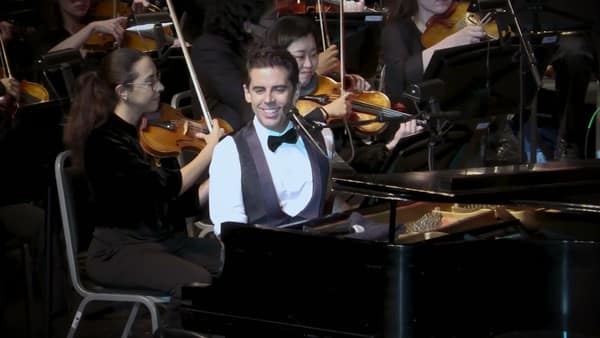
Music
Ray Charles Medley
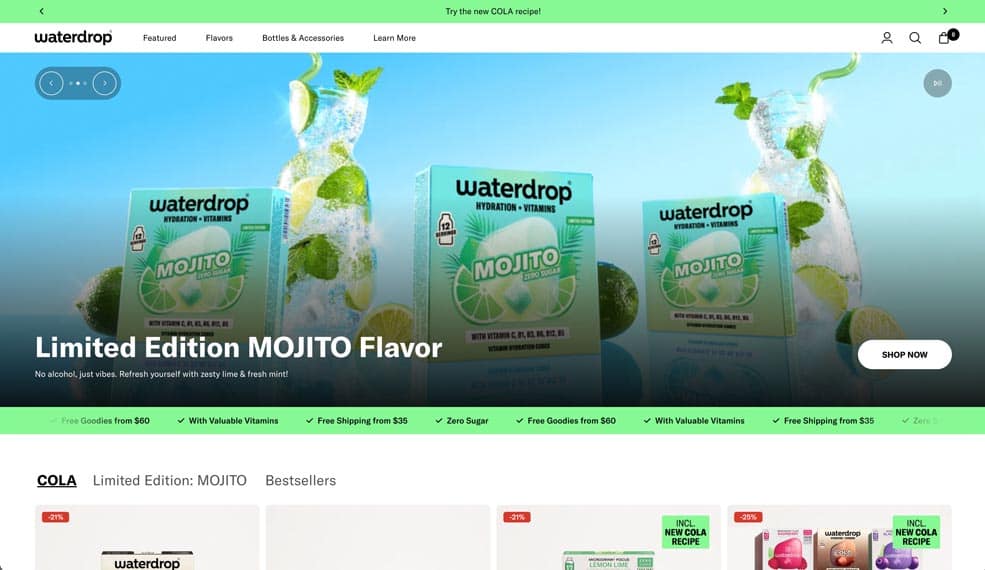
Resource
waterdrop
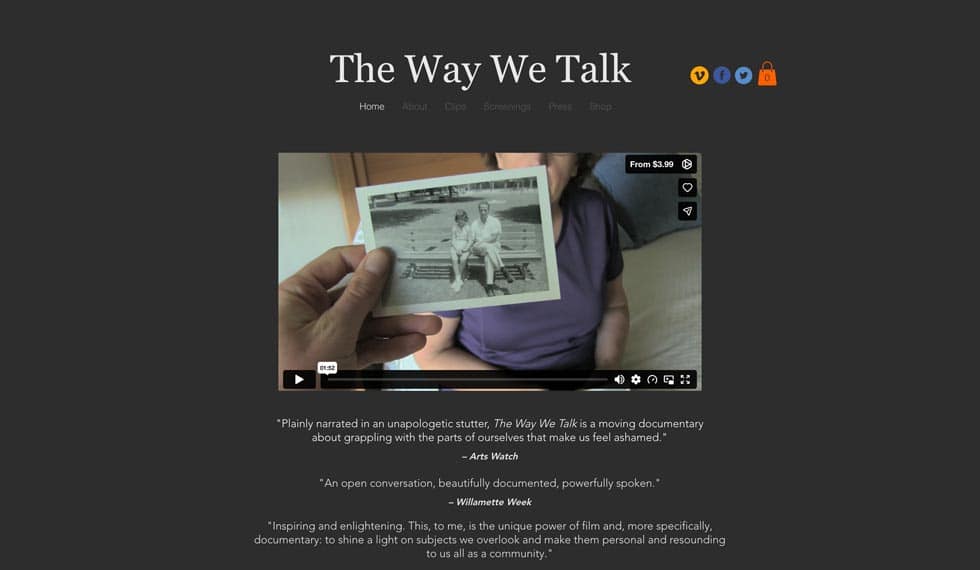
Article
The Way We Talk by Michael Turner
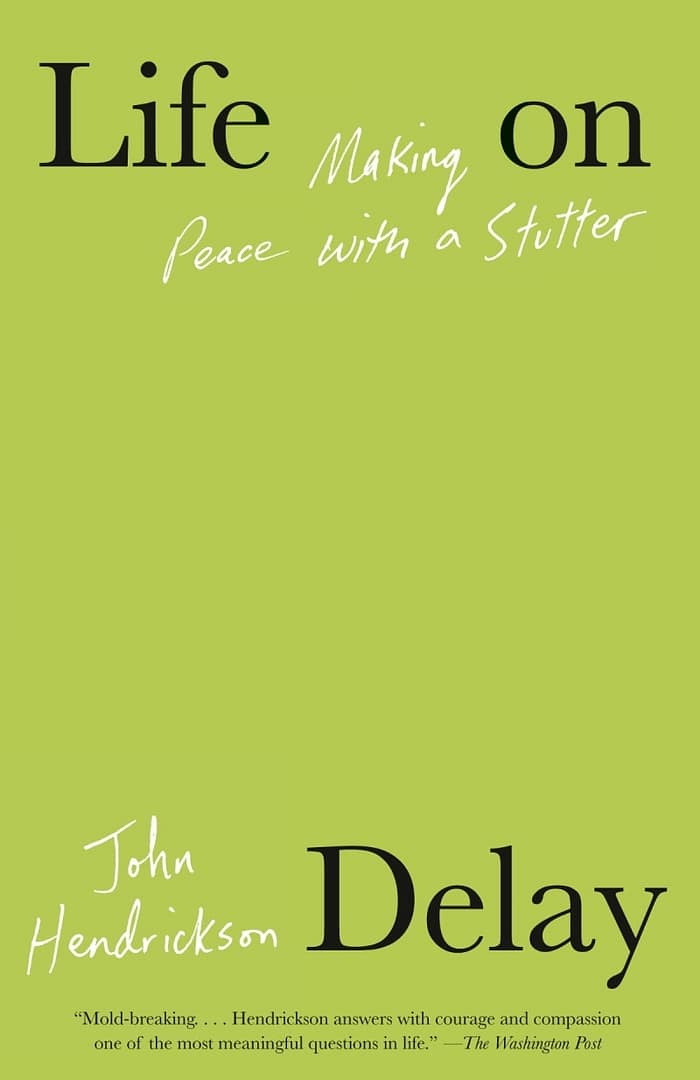
Book
Life on Delay by John Hendrickson
Resource
Merlin App

Music
Just One of Those Things

Resource
Coco Floss
Transcript
[00:00:00] Bonni Stachowiak: Today on episode number 457 of the Teaching in Higher Ed podcast, metaphor as conceptual anchor with Kerry Mandulak.
[music]
[00:00:15] Bonni: Welcome to this episode of Teaching in Higher Ed. I’m Bonni Stachowiak and this is the space where we explore the art and science of being more effective at facilitating learning. We also share ways to improve our productivity approaches so we can have more peace in our lives and be even more present for our students.
[music]
[00:00:43] Bonni: Kerry Mandulak, welcome to Teaching in Higher Ed.
[00:00:48] Kerry Mandulak: Thanks, Bonni. I’m so happy to be here.
[00:00:50] Bonni: Normally, when I start many episodes, I ask people to take me back to their childhood. Okay, not really, but back to earlier times. You and I are going to go back to January of 2023. I had an unusual experience meeting you [laughs] and we are going to possibly recreate it in 60 seconds or 90 seconds. You want to start and tell the first part?
[00:01:13] Kerry: Well, sure. I was attending the Lilly Conference in San Diego for the very first time. I was really looking forward to possibly meeting you there as the keynote speaker. I had never been to that conference and I was presenting. I was really excited about it. I think I crossed paths with you once outside and then I was like, “Tomorrow, I’ve got to make a point.” During your keynote, you talked about mantras and I really resonated with that. I wanted to tell you about how my mantra for class was very similar to yours. You were standing by yourself at the registration desk. I was like, “Okay, just go introduce yourself,” and then–
[00:01:52] Bonni: Dot, dot, dot. [chuckles]
[00:01:54] Kerry: Next thing you know, we were like, “Let’s talk about mantras over lunch.” Three or four hours later, we were still talking. [laughs]
[00:02:01] Bonni: I don’t know if you get this very often, but I feel a little bit like I skipped stages of disclosure with you. I had just no filter. Actually, when my husband and I first started to realize our relationship was taking a turn toward romantic, I was in the hospital with a– I was having to have my gallbladder removed and I had something called pancreatitis, which is life-threatening.
They’ll put you on a lot of drugs in a situation like that, so I literally just had no filter at all. That’s how I felt with you, where I was like, “Oh, you mentioned knowing Katie Linder and I know and feel very safe with Katie Linder.” You just felt very safe to me. I felt like I was experiencing all the bodily functions of like, “I am really hungry. I am also feeling somewhat socially awkward because I don’t feel like I know how to do this anymore,” because it was my first in-person conference. There was a lot of people there.
Then I was also not wanting to get COVID, so there was that. I was like, “Could we get some food and could we sit down outside so I could feel more safe? Can we tell each other our deepest secrets,” or whatever, and so we did. I got such a kick out of it. Then one of our favorite parts is that I have a– This is not our favorite part. This is our least favorite part, is I have an injured shoulder.
Just even getting into the car and thinking through the parking gate that I was going to have to probably get out of the car so that my right hand could do the job of waving the key. I wanted to make sure that it all worked and everything. Then I realized that someone had parked their car really, really close to my rental– Not a rental car. It was my car. Close to my car, so I was like, “Okay, I’m going to need to get in the passenger side and then just scooch myself right on over.” We’re walking together and you take the story from here. [chuckles]
[00:03:50] Kerry: Right, and then I was mentioning how I could not get my things out of the passenger side of my car because the person on the right-hand side of my car had parked so close to me. I think we had that simultaneous recognition as we-
[00:04:06] Bonni: Oh yes.
[00:04:07] Kerry: -entered the parking garage that we were talking about each other and our poor parking skills. That’s I was simultaneously so horrified, but also I was like, “I know she will think this is hilarious.”
[00:04:23] Bonni: Oh, not only did I think it was hilarious, but we each get to discover– and I have photographic evidence of this-
[00:04:29] Kerry: It’s true.
[00:04:29] Bonni: -that it was totally me, totally me parking too close. Kerry, since then, we actually have gotten a new car. We are living in the future now. Some people I know are going to have cars like this and be like, “You’re not living in the future. You’re living in the present.” It has one of those cameras that will literally show you how you’re doing on the parking job. Kerry, I’m getting better, but I have a lot of healing to do to be able to park straight in the middle of a parking space. [laughs] I have a coach now.
[00:05:01] Kerry: I’m so glad you have the support now you need. Also, I was secretly like, “Phew, it wasn’t me.”
[laughter]
[00:05:10] Kerry: Because I was driving a rental and, of course, you’re not always as good at driving a rental as your own car. That was a really funny moment. I loved how long we laughed about that too. [laughs]
[00:05:20] Bonni: Well, I have loved getting to know you and just so treasure already our friendship as it emerges here about a month later. So fun. I’m also really intrigued about your background. I just think you’re an interesting person with a unique set of skills as they say. Would you talk a little bit about you and about your scholarly background?
[00:05:43] Kerry: Sure, so I am currently an associate professor at Pacific University, which is a small liberal arts college just outside of Portland, Oregon. I teach in the School of Communication Sciences and Disorders, which is an undergraduate program that covers speech-language pathology and a few audiology classes. Then we also have a master’s program in speech-language pathology.
I’m a speech-language pathologist by trade, been practicing since 1998. Being at Pacific, it’s my second academic appointment. I’ve just really enjoyed the uniqueness of working at a small liberal arts college in a program that is typically at larger universities. Speech-language pathology isn’t usually at sort of smaller liberal arts colleges. It’s really afforded me the opportunity to reimagine what scholarship means. Pacific uses the Boyer model for scholarship.
To see the work that I’ve realized I really want to do, which my line of research is in holistic review for graduate admissions to really trying to diversify the workforce of speech-language pathologists, and to realize that that is an absolute line of scholarship. There is science to admissions and it fits directly really squarely into the scholarship of application, which I didn’t even know was a way I could imagine my research. That’s really wonderful. I feel like I’ve really found who I want to be as an academic. Pacific has really allowed me to be that.
That meshing of values has really just allowed me to really blossom, I would say, as a professor and a teacher and a scholar. That’s where I am right now. One of the courses of graduate courses I teach is in stuttering. I teach a course in voice disorders. My clinical focus, and I get to teach a little bit of it this semester, is in cleft lip and palate and craniofacial disorders. That’s really where my research started. About five or six years ago, I took a bit of a left-hand turn and went into this whole new area of scholarship. I’m really excited about where I’ve landed at this point.
[00:08:00] Bonni: I know just from my very, very limited knowledge, but also from getting to talk with you a little bit about this, that there are indeed a lot of misconceptions about stuttering. I’m sure we could just do probably 16 episodes just on that topic. I’m going to ask you an unfair question and just ask you to share a little bit about, I’m going to say, the tip of the iceberg. By the way, for people listening, that is– What do we call that? Foreshadowing.
[00:08:26] Kerry: Yes, that’s a preview for sure.
[00:08:27] Bonni: My analogy there is some foreshadowing for what is coming later in the episode. Give us the iceberg of misconceptions about stuttering.
[00:08:35] Kerry: Of stuttering? Sure. First of all, I want to start off by me saying I teach a course in stuttering. I remember speaking to one of our business faculty members who work up on this hallway. He said, “Where are you going?” I said, “Oh, I’m going to go teach my class.” He’s like, “Which class?” I said, “Stuttering.” He’s like, “You’re teaching people how to stutter?”
I was like, “No, I’m teaching graduate students how to work with people who stutters.” The first thing he said was, “You can have a whole class on that?” I think that’s a misconception actually, is that stuttering is a small thing or it reflects the under-emphasis that’s received in our field. That’s one misconception, is that stuttering is just a speech disorder or just something that you can see.
It’s just someone blocks on sounds. They repeat sounds or syllables or they prolong them. That’s stuttering and that’s all. That is really the tip of the iceberg. I think the idea that is what we see in a person who stutters, we see the actual behaviors that we characterize as stuttering. What stuttering really is, is the entire iceberg, right? There are all of these things that happen underneath the surface that happen over the course of a person’s lifetime that really characterize what stuttering is to a person.
One of the first things I teach students is a person who stutters can say, “I stuttered today.” That means sometime during that day, they repeated their speech. Stuttering has affected me my whole life. Stuttering as a concept, we call that capital S stuttering, where it’s also the feelings, the attitudes, the thoughts they have about speech or the thoughts they have about themselves, the way it affects how they participate in the world.
All of that is also part of stuttering, but people don’t see that. They don’t understand that right away. I think that one of the other unfortunate misconceptions is that stuttering is really portrayed poorly in the media. There’s not much representation in the world in general about stuttering because stuttering is something that’s low incidence. 1% of our world stutters. Across all different countries, across all different languages, it affects 1% of people.
The minute we say, “Well, only 1% of the world stutters,” that’s a signal that it should be underemphasized when really 1% of the world is– I don’t want to say the number exactly, but it’s millions of people. I think that is really important for us to think about that the people who really do need support and could be seeking treatment for maybe the speech part or maybe the effects of stuttering. Both of those are really important. Kids stuttering starts in childhood. It starts when children start talking.
They’ve already started talking and then stuttering can come. It can just happen overnight. That can be really upsetting for parents. Of course, it looks like a loss of function. 80% of children recover from stuttering, but there’s 20% of people who stutter that persist in stuttering. We can’t predict who those 20% are. When children start stuttering, there’s not a specific type that you’re like, “Oh, that’s the type that’s going to persist on.” We have to just meet families and children where they are. When that stuttering starts, assess, decide on treatment, and then go from there.
[00:12:06] Bonni: You talked about how the difference between, “I stuttered today,” versus stuttering affecting someone their whole lives. When you talk about that 80% having recovered, would we consider someone like the current president of the United States, Joe Biden, having been challenged by stuttering his whole life? Does he count as having recovered even though, on occasion, we might see some behaviors showing up or is this a gray area? Because it will seem pretty neat and tidy as far as recovery versus the 20% who don’t.
[00:12:39] Kerry: Yes, there is a specific definition about recovery, which is that recovery is really determined by, there is no stuttering to borderline stuttering, and it really does mean complete recovery. Again, deep respect for Joe Biden and his experience and what he goes through also with the media around his speech. That also could be another topic. He is a person who stutters.
He still works through it. He still uses strategies. It still shows up in his speech. He has been reticent to talk about it a lot just knowing the ramifications that come with admitting something that is not exactly perfect about your speech or about your communication. Especially when he is in a position to communicate all the time, that can have really large ramifications.
I think that is something, though, that is shifting in our world, is that people are more willing to admit or talk about, I would say, the fact that stuttering is still something they are working through, are managing, and still have effects from. You’ll hear it from other actors in the world. Emily Blunt, for example, talks about stuttering, that when she uses her voice in an acting context, there isn’t stuttering, but she may stutter in other situations. I don’t want to necessarily speak for anybody, but I think that we still see stuttering in Joe Biden’s speech for sure.
[00:14:07] Bonni: It’s been interesting to watch him navigate it in the sense of– My heart feels so tender toward him when he will name it specifically with someone else who has struggled with stuttering and encouraging them along their own journey toward whatever it might look like for them to be part of that 80%. My gosh, we have such ableism in all this.
[00:14:30] Kerry: Absolutely.
[00:14:31] Bonni: As you said, we could talk at length about the ableism and where it shows up in the politics and all of that. Well, speaking of, maybe I’m allowing myself to do this twice. I’m going to say the tip of the iceberg again, but this time really to have you introduce to us an analogy that you have incorporated into your class. It’s got some visuals around it and you’ve incorporated your students’ creativity. Tell us about your use of an iceberg as a metaphor in your teaching.
[00:15:01] Kerry: Yes, absolutely. Thanks. The iceberg has been used as a metaphor to show that there are things that you can see and then there’s other things that you can’t see below the surface. With a number, I’m seeing it a lot with people of ADHD or maybe people who have anxiety that there’s things that you see and things that you don’t. The metaphor of the iceberg has been used for a long time to describe the experience of stuttering or just stuttering as a condition.
Joseph Sheehan is a person who named this as the metaphor maybe in the ’50s, ’60s, ’70s to explain and illustrate what stuttering is like in ways that can be more widely accepted. I think that I’ve always introduced the iceberg metaphor at the beginning of class. I teach a graduate course in stuttering. I should say, I am not a person who focuses or is a specialist in stuttering research.
Through my clinical career, before I went back for my PhD, I worked with people who stutter, have a deep heart for working with people who stutter partially because of the compassion I feel that I talk so much. I talk very fast and I never have to worry that when I speak, are the words going to come out? When I was a doctoral student, I was teaching a course and there was a person who stuttered in my class.
He approached me and said that he had worked on his speech over the summer. He wanted to become a lawyer. Now, he could finally do the job that he wanted to do because he had figured out how to manage his stuttering. I said, “Well, do you want to talk to the class about stuttering? Because better a person who has this experience.” He said, “Of course.” He walked out. It turns out he was really anxious and practiced and was so nervous about it.
To me, he seemed he was just ready to talk about it. He came into class that day to speak about it. I watched him address the class, tell these stories about how he could never call the plays as an athlete. He always had the coach do it because of his stuttering, how he had not given a speech in front of a group of people since the fifth grade, and he was a senior in college. I had gotten cornered in this room.
I was standing close to him while he was talking. I could see the sweat dripping down the lectern from his hands and my heart just went out to him. I just thought, “Wow, what a brave, courageous moment I’m witnessing. What am I witnessing here?” He finished. He did a great job. He told his story. Later, I emailed him and said, “You really went outside your comfort zone.” He told me the whole story and it was an immediate connection.
Since then, he still guest lectures in my classes and we have this really strong friendship. He recently sent me a eulogy from a funeral that he did where he talked about his stuttering. He’s just showing me like, “I’m still doing it.” He’s run for public office. To me, that was one of my first experiences where I was like, “There’s so much more I have to teach people about stuttering, not just how do we fix their speech,” right? “Fix,” you can see my air quotes.
As I moved now into teaching at Pacific, we have nine big areas. They call it “The Big Nine” literally that we have to cover in all of our programs and stuttering is one. Here’s my class. We have to teach knowledge and skills, right? There’s the content knowledge and then there’s the skill development. Part of those skills that we have to teach students is what is happening below the surface. How do you work with that?
It’s not a counseling program, but we still have a responsibility to our clients to counsel them with respect to their speech condition. I used to just mention it at the beginning of the term and then refer to it throughout. In collaboration with one of my close thought partners here at Pacific, her name is Robbie, she and I were redesigning my course for the 90th time. I love to redesign my courses.
She was like, “What I hear you saying is that this metaphor carries all the way throughout your course. The metaphor of the iceberg, the knowledge, and the skills, but you’re also teaching this other emotional part of working with people who stutter.” I was like, “You’re right.” That is how I realized that the metaphor of the iceberg was there was a common thread throughout all of the work that I was doing.
I was like, “I need to talk about this more often.” When you think about the facts about stuttering like that, there’s a whole chapter about the prevalence and the incidence. I was like, “That’s the tip of the iceberg,” right? What does that mean for a person who stutters? For kids, when kids begin stuttering, what’s the facts? The 80% versus the 20%, but also what’s happening with parents? What are they going through? How do we support?
I think that that metaphor has helped students ground themselves into that content, but the place where it really changed was when I came up with this iceberg assignment. That came from Jennifer Gonzalez’s– I don’t think it was her main idea, but Jennifer Gonzalez at the Cult of Pedagogy website, she talked about one-pagers. Robbie and I loved to send ideas back and forth to each other and she was like, “What if you took the iceberg and made it into a one-pager assignment for the students?”
I thought I’ve never done a recurring assignment in a class that I’ve taught, but I was like, “That sounds like a great idea.” I give the students an outline of an iceberg on a PDF and I give it to them. After every chapter or a couple of chapters, they have to reflect back on what they’ve learned and frame the content no matter what it is into what are the facts, the figures, what’s the content that you have to learn, but then also what’s the deeper meaning of that content, or how does it affect people who stutter?
It’s a low-stakes assignment. Now, I’m doing it just as pass and fail. They also have the choice. Not all students resonate with that assignment. Now, they can just choose to do a certain amount and students who do more can get some extra points. Also, I think it has high impact. It requires them to stop, reflect, go back to the work we just did. There’s some retention practice there. Now, they have, essentially, a study guide too as they prepare for the midterms.
I felt like it has served many purposes in my class. I don’t want to say “forces” because that’s not the word I want, but it really requires them to stop for a minute and look back to then look forward. I think that I really value reflection. I not always practice it very well. I’m also trying to teach students how to do that in their own work so that they can also practice retention and learn the content as they move forward.
[00:22:18] Bonni: You did a poster session on this at the Lilly Conference. I got to see examples of some of the students’ one-pagers. Isn’t that so fun when something really resonates with you, but then you get to see it reimagined? You had mentioned that not all of them choose, in some cases, even to do an iceberg as their metaphor. Some of them branch out. I think you mentioned one doing a tree or all these different ways to consider.
I used to teach more consumer behavior than I have in recent years, but I loved this idea of having a metaphor. In this case, it was mostly a T-shirt, but there was a full person’s body there. There were shoes and the shoes connected a little bit. There was a head and there was glasses and some sort of a hair accessory. I guess it wasn’t just the shirt, but I did a lot of zooming in and then zooming back out because I had this fascination with the idea that you could go whole, part-whole, and that we could zoom in.
In one case, it was just a tattoo that was on the shoulder that looked at different types of– This has been a while, but I would hear from students years after they took the course and they would say, “I can see that T-shirt. I see that tattoo. I see the different–” It’s pretty remarkable like you’re saying when we allow them those opportunities to stop, look back, reflect.
Then I get the sense too that it goes beyond, as you said, the knowledge and the skills, but that you’re also getting them to think about their own emotions and how they’re processing their learning, which is just so powerful. I also love this friendship that you and Robbie have. Those are the best. It’s part of why I love this podcast so much. I get to meet people like you where we can geek out and talk about teaching for hours.
We don’t always have that necessarily at our institution. When we find them, we got to just cling onto them. Not in an awkward way, but we got to stand by each other’s side so we can continue to have these great continuing iterations. I hope also Robbie helps you though because I have friends who do this too, where it’s like you mentioned constantly wanting to change it. We need some people who are also like, “Okay, you’re done for the semester.”
[laughter]
[00:24:32] Bonni: “Yes, you’re going to need to stop now.” [laughs]
[00:24:34] Kerry: Yes. Robbie. She really stretches me. One of our origin stories is that she really was challenging me once about an idea around a rubric and I was like, “I can’t do that.” She was like, “Okay, I’m sensing some resistance.” I was like, “No, you’re not.” It was so funny that we had this and she remembers this conversation very differently, but I really respected that about her that she was willing to say, “I’m sensing this is not something you are very interested in.”
I was like, “Okay.” Sometimes we have to take that minute to get out of our expert mode that we think sometimes, as academics, we know all of the answers. At the same time, she’s so generous with her words to affirm the efforts I’m doing because sometimes teaching can be thankless. She’s like, “You’re doing the right things. You’re being inclusive. You’re thoughtful about your teaching.”
I was like, “Okay, thank you.” It’s a really great thought partnership. I like that she can see the connections between my work and all of the pedagogical knowledge that she has and all of these instructional design ideas and can connect what I’m doing to that to help me see it. We do. I tell her often that she has been transformational in my teaching, so it’s wonderful to find that. You hold on to those people with two hands for sure.
[00:25:59] Bonni: Hold on, hold on.
[00:26:01] Kerry: Not in a weird way, but yes, absolutely.
[00:26:03] Bonni: Just in not a weird way. I want to make an invitation to people because I’m super intrigued by this use of analogy that Kerry has described and it carrying across the whole class like this. Anybody listening who does something similar in your class where there’s some kind of analogy that carries across or if you’ve done some of this zooming in and zooming back out, I know we’d love to hear from you.
You can send an email to feedback@teachinginhighered.com and I’ll pass those messages on to Kerry because I think we both would be super intrigued. If there’s any images that you have that are associated with those analogies, those would be super fun to see. I would just invite people to do that. Before Kerry and I get to the recommendations segment, I wanted to take just a moment and thank today’s sponsor, and that is TextExpander.
With TextExpander, you can save time. It helps us work faster and smarter and lets us spend even more of our time and energy on more important work. How it works is you get to type less and say more. You can quickly insert text anywhere that you’re typing, whether that’s in email or Microsoft Word or on the web, anywhere you’re typing. You can expand what you type. These little shortcuts, they call them snippets. They expand into longer strings of text or even something that might be harder for you to remember.
If you head over to textexpander.com/podcast, you have an opportunity to try out TextExpander and get 20% off of your order. If you do that, please let them know that you heard about TextExpander from Teaching in Higher Ed. I’m a huge fan. I’ve been paying for it all these years, even though they have sponsored, and would continue to do so. It’s one of the first things that I install on any new device.
I love how easy it is to set things up to continue to grow my knowledge and get curious about other ways to use TextExpander. I love that they have a community of people that will essentially create these little dictionaries or encyclopedias of snippets that I can download and begin to make use of in my own workflows. There are a lot of creative TextExpander users out there. Take a minute and head over to textexpander.com/podcast and see if TextExpander is right for you. Thanks once again, TextExpander, for sponsoring today’s episode.
All right, this is the point in the show where we each get to share our recommendations. I have two and then I’m going to pass it over to Kerry for hers. Mine are musical again. It’s funny, Kerry, because I spent a couple of years not recommending music and then I’ve just been doing a lot and keep finding more. These come from my dad again. I shared over email that my dad and I have not really had the same kind of closeness that I may have had from other parents, just randomly speaking here, where we really do connect always because it just goes beyond words is through music.
He likes this artist named Tony DeSer or DeSare. Sorry, Tony, if you’re listening, [laughs] because Tony’s probably not listening. Tony does a lot of big band, jazz, swing-type music. The one thing I’d like to recommend that my dad shared with me is a Ray Charles Medley that he does that is so phenomenal. He does it with the Terre Haute Symphony. If you do decide to click on the link and watch, I encourage you to take a look at the end and consider what a great example he provides us of engaging an audience.
I am fascinated by people that are musicians, yes, but also are so into sharing that in very compelling ways. He’s playing. He has such a childlike character about him as he gets the whole audience to engage. While I do prefer typically not live recordings of most music when they nail it like this, then it’s just the best to imagine what it would have been like to be there, but almost to feel like I am there. Because if there’s no one else in the room or even if there is, you could still chant back and get to singing with him.
The second song I’d like to recommend, also from Tony, is Just One of Those Things. That’s just such a wonderful song. His version of it is delightful. Both of these are the things that you could just really move your body to and try to change your frame for the day. These are my two big recommendations that we listen. Maybe we dance a little and that we sing along with Tony when he invites us to do so, or even when he doesn’t. Those are my recommendations. Kerry, I’m going to pass it over to you for yours.
[00:30:50] Kerry: Thanks, Bonni. I have three recommendations. I have a movie, a book, and an app. One thing about me is that I am a chronic recommender of things. To narrow it down to just three was even tough. I love to share things that are bringing me joy. I wanted to recommend a movie for people who want to learn maybe a little bit more about stuttering. The movie is called The Way We Talk.
You can find it at thewaywetalk.org. The film’s creator is Michael Turner. Michael Turner lives here in Oregon just a little bit south of Portland. He and his partner, Alyssa, put together The Way We Talk. It is an introspective, thoughtful, quietly beautiful movie about one person’s experience and journey with stuttering. I met Michael in 2012 when he came to the stuttering support group, which was in Portland, something that my colleague Glenn Weybright and I restarted with a graduate student.
We brought it back to Portland. He showed up one Wednesday and said his name, introduced himself at the meeting and then didn’t talk at all for the rest of the meeting. At the end of the meeting, I invited him to come and speak to my class that I was having that Friday. That’s really the time between the stuttering support group and my class that he just decided it was time to make this movie about stuttering.
This movie has fundamentally changed how I teach stuttering. Every year, one of the traditions of my class is that we watch the movie together as a class. Then I, surprise, Zoom in Michael Turner at the end for a Q&A and it’s really, really special. He has been such a partner in the work. I love the movie so much. I am a little bit in the background of it. I’m in the background of a few scenes and you can hear my voice in the background.
That’s where I really want to be in this movie is completely in the background because it’s such an excellent way to learn about stuttering. I think it’s a really special, different type of experience. I want to recommend that and you can get it on Amazon Prime or anything like that. If you google it, you can find it. Secondly, John Hendrickson wrote– This is the book. He recently wrote a book. It just came out called Life on Delay. It’s about his experience with stuttering over his lifetime.
He is the person that interviewed Joe Biden about stuttering and wrote the article for The Atlantic, which then thrust him into the spotlight talking about stuttering. I think he wasn’t excited about it, but he still appeared on TV and spoke. Maybe it was with CNN and was interviewed, but he has written this book. From what I’ve heard from people who’ve read it so far or my friends who stutter, it’s one of the best representations of the experience of stuttering. That’s my second recommendation and I’m really excited to read it.
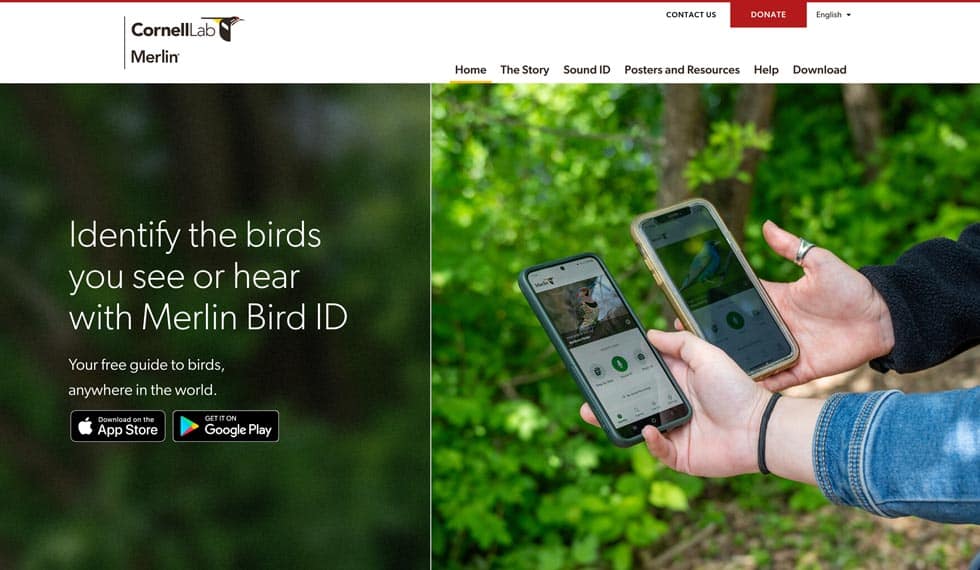
Finally, I want to recommend the Merlin app. The Merlin app is put out by the Cornell Lab of Ornithology. I just want to do a shout-out to those of us with ADHD out there in the world, which, of course, includes me that have the ability to hyper-focus and get very enthusiastic about very specific things. I didn’t realize that was a characteristic of ADHD but have learned that since. It explains a lot. A few years ago, I participated in a bird project with my son as part of his kindergarten project or when he was in kindergarten.
I never cared at all about birds. Birds flew in the sky and I was like, “That’s nice.” Once I understood that you could see a bird, hear its song, identify it, I was just hooked. The Merlin app is just so fun. You can take it outside and birds will do their songs and it will identify the birds for you. You can take a picture and it will identify it for you. It just does the work of identifying birds and it’s super fun. Everyone I show this app, they get real excited about it. I had to share it. I’m a novice birder now, Bonni. [chuckles]
[00:34:58] Bonni: I love it. I love all of these things. I’m looking at the clock and I’m thinking, Kerry, I want to know one or two that got left off your list. Because if these three are this good, there’s time, Kerry. There’s time. Do you have one or two that you’re like, “Man, it was right there, but I had to force myself not to do it”?
[00:35:21] Kerry: Oh, wow. Well, which direction do I go in? Do I go in the direction of my favorite floss called Cocofloss. It has coconut oil on the floss and even my dentist loves it. That’s something I really love. The other thing is that I have been completely spoiled by waterdrop, which I’ll show it to you. It’s just little squares that you drop in your water and it flavors it and it has micronutrients in it, which I’m not sure what all of that means, but I just know it makes my water taste so delicious.
I get to drink so much more water during the day because of waterdrop. None of these are paid endorsements by any means. They’re just things I really love. For those who are local, I could tell you about my favorite dentist, but I won’t do that. These are the things I love to tell people about the stuff that I love. I am an enthusiastic recommender, so I’m always trying to convince people to get different things. That’s part of who I am.
[00:36:21] Bonni: We were talking about Robbie and how when you find a teaching friend like that, you need to really hang on to them. When you find a dentist, you can’t ever let them go.
[00:36:33] Kerry: I won’t.
[00:36:33] Bonni: Ours is so good and he wants to retire. I literally don’t know what I will do when he retires. I think Cocofloss might have been showing up for me maybe as an advertisement on Instagram perhaps. Does it also have a different texture than normal floss that it gets better in between your teeth? Is it the same thing I’m thinking of? Because I literally thought about buying it.
[00:36:55] Kerry: Yes, it has a texture and it has coconut oil. It has different flavors. It’s really all-around.
[00:37:02] Bonni: If this was an advertisement or sponsorship or multi-level marketing, you might have just gotten yourself a customer. [laughs] Every time, I’m intrigued like, “Oh, yes, that looks like it’s really getting in there.” [laughs]
[00:37:17] Kerry: It does. It gets in there. [laughs]
[00:37:19] Bonni: It does.
[00:37:20] Kerry: I do love my dentist as well and my hygienist. Whenever they move, they know it’s going to be traumatic for me. [chuckles]
[00:37:28] Bonni: We want them to hold on. We’ve got to all, I don’t know, find healthcare providers that are significantly younger than us. They never get to retire. I don’t know. I don’t know. All right.
[00:37:40] Kerry: Absolutely.
[00:37:41] Bonni: Kerry, I’m so glad that I met you. I’m glad for our emerging friendship and I’m so glad that you came on the show and looking forward to the next time already, but also to our text messages and emails and for recommendations to continue that don’t even show up on the show.
[00:37:58] Kerry: Absolutely, Bonni. It’s been an honor. I’m so grateful that we got to meet and it was really a highlight of the conference to connect with you. Thank you so much.
[music]
[00:38:08] Bonni: Thanks once again to Kerry Mandulak for coming on today’s episode of Teaching in Higher Ed and thanks to each of you for listening. Today’s episode was produced by me, Bonni Stachowiak. It was edited by the ever-talented Andrew Kroger. Podcast production support was provided by Sierra Smith. If you’ve been listening for a while and haven’t signed up yet for the weekly update from Teaching in Higher Ed, I’d encourage you to do so.
You’ll get lots of links from the most recent episode, the show notes, but also some other recommendations and goodies that don’t show up on the regular episode show notes page. Head on over to teachinginhighered.com/subscribe. I appreciate you’re a part of the Teaching in Higher Ed community and I’ll see you next time.
[music]
The transcript of this episode has been made possible through a financial contribution by the Association of College and University Educators (ACUE). ACUE is on a mission to ensure student success through quality instruction. In partnership with institutions of higher education nationwide, ACUE supports and credentials faculty members in the use of evidence-based teaching practices that drive student engagement, retention, and learning.
Teaching in Higher Ed transcripts are created using a combination of an automated transcription service and human beings. This text likely will not represent the precise, word-for-word conversation that was had. The accuracy of the transcripts will vary. The authoritative record of the Teaching in Higher Ed podcasts is contained in the audio file.