Follow the Teaching in Higher Ed Podcast
About this Episode
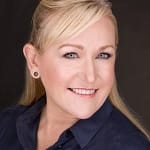
On today’s episode, I speak with Dr. Mary Gene Saudelli about developing curriculum for international higher education in the 21st Century on episode 80 of Teaching in Higher Ed.
I create a situation where I ask my students to think about things from multiple perspectives, but also allow their voices to be honored.
Mary Gene Saudelli
On episode 80 of Teaching in Higher Ed
Voices on this Episode

Show Notes + Resources
Transcript
Bonni [00:00:00] Today on episode 80 of Teaching in Higher Ed I speak with Dr. Mary Gene Saudelli about developing curriculum in an international context for 21st century learners.
Production Credit [00:00:15] Produced by Innovate Learning, maximizing human potential.
Bonni [00:00:25] Welcome to this episode of Teaching in Higher Ed. This is the space where we explore the art and science of being more effective at facilitating learning. We also share ways to increase our personal productivity approaches so we can have more peace in our lives and be even more present for our students.
Bonni [00:00:52] Hello this is Bonni Stachowiak. And I’m really excited that today we’re going to be talking about the realities of teaching in higher education in a global context. And I have the perfect guest to help us discuss that. Her name is Dr. Mary Jean Saudelli and she is currently teaching in the Middle East and I’ll be having her share a bit with you about how she wound up there and some of the things she teaches.
Bonni [00:01:22] But I’d like to share just first off she is an Assistant Professor and the Director of the Center for Teaching and Learning at the University of Calgary in Qatar. She has a Ph.D. in Philosophy of Education, Interdisciplinary Curriculum, International Education and multi-literacies in higher education at Brock University in Ontario Canada.
Bonni [00:01:50] And she has written two books and has a abundance of publications and I’ll be linking by the way to her bio in the show notes so you can check some of those out. But in 2014 she published 21st Century Higher Education: What Can We Learn from Transdisciplinary Curriculum. And then recently in 2015 she has published The Balancing Act: International Higher Education in the 21st Century.
Bonni [00:02:20] Mary Gene, welcome to Teaching in Higher Ed. The first question I’m so intrigued to ask you is how did you first get started teaching in this context.
Mary [00:02:32] I was teaching in a high school in Ontario Canada. Perfectly happy as can be. As an educator went through a couple of little personal issues that had happened. I got divorced and a few other things and then I was just in this moment in my life where I really felt that I just needed to do something completely different change everything. So I took a year sabbatical from my position in the high school and I actually went to Istanbul Turkey first.
Mary [00:03:07] So I was teaching English to future higher education students. I was an ESL teacher in a language Hausa language school. So it was a private vocational kind of school.
Mary [00:03:21] And as it turned out I loved the experience. Everything about it. I loved living in a different community. I loved the people I worked with I loved my students I loved everything. I ended up resigning from my position in Canada and I stayed in Istanbul for two more years.
Mary [00:03:41] And then I got into another mood where I felt like I needed to try another place. So I ended up going to Hong Kong and I was teaching ESL in Hong Kong. In the meantime I did a masters degree and I also did a tussle Canada certification degree. So I actually became an ESL certified teacher which is very different from being a kid a 12 certified teacher after a few years in Hong Kong a position actually came to me.
Mary [00:04:12] A friend of mine was a supervisor and the Higher Colleges of Technology in the United Arab Emirates and I was asked if I wanted to go and teach academic English in Abu Dhabi.
Mary [00:04:29] And I filled out my profile applied for the position got the position and the next thing you know I’m in Abu Dhabi in the United Arab Emirates. After about a year and a half of teaching in Abu Dhabi I was transferred to Dubai Women’s College of the Higher Colleges of Technology the Higher Colleges of Technology is actually a governmental school.
Mary [00:04:50] Higher education system with 16 colleges throughout the United Arab Emirates one for males and one for females because it is a gender segregated education system.
Mary [00:05:01] So when I was at Dubai women’s college I had a different position. My position was now curriculum team lead. So I was leading our team on her diploma here one into redesigning the entire curriculum to incorporate a 21st century approach and a task based learning approach. And that’s how I ended up in Dubai.
Bonni [00:05:23] And there you have it. I have so many questions about how I’m going to try to discipline myself. I’ll start just by asking what are some of the biggest surprises that you’ve had since you began your role in Dubai. And maybe we’ll you’ll satisfy some of my curiosity along your travels.
Mary [00:05:39] Well one of the things that I think people don’t recognize about Dubai is that higher education for women is actually governmental supported highly valued women are encouraged to go to higher education to get degrees and to pursue careers at the governmental level.
Mary [00:05:59] It’s considered an aspect of family honor. If you have a highly educated daughter so a lot of people don’t realize that in the United Arab Emirates higher education for women is specifically publicly mandated and promoted.
Mary [00:06:15] Women actually outnumber men in higher education in the UAE and they’re encouraged to go into that and they’re going into areas like engineering business management. So they’re going into programs that maybe necessarily in the past have not been male dominated but they’re starting to become dominated by women.
Bonni [00:06:36] I know that this must be one of the biggest misperceptions that Westerners have but what are some of the other misperceptions that we have.
Mary [00:06:44] Well one of the other elements that’s that’s quite astounding and certainly was a great surprise to me when I first got to the United Arab Emirates are students. Well first of all they’re all Amerada students so they’re all the national people. They have an incredibly profound respect for education.
Mary [00:07:07] They have a level of graciousness about them that I’ve never in my life encountered. So when an educator walks into the classroom in the United Arab Emirates students are very curious about you.
Mary [00:07:21] They want to know about you. They want to learn all sorts of aspects about you but they also want you to know about them and they want you to know about their family names and they want you to know about the legacy of their family names. They want to know who’s related to whom and how they want you to meet their families. So it’s a very inclusive embracing experience when you go there as an educator.
Bonni [00:07:48] I know one of the things in your book that you outline are some of the issues that we need to consider in facilitating learning in a global context and you have four of them I know we’ll talk about each one. We have social issues cultural issues political issues and religious issues.
Bonni [00:08:05] But I wonder if you might frame first for me and for everyone listening. What was the main project curriculum project that you worked on that helped you really identify and hone in on these issues.
Mary [00:08:18] Well one of the things that we had to do I mentioned that the school system is gender segregated so males are at a different college from women. But one of the other elements to keep in mind is is that Emory this school was a governmental school system but that meant that it was only open to emirati students at that time so it wasn’t diverse in terms of its student body coming from various parts of the world.
Mary [00:08:42] All of the students are emirati now one of the things that we were trying to achieve was a very contemporary 21st century approach to teaching and learning. So we took that curriculum and what we did is we turned it into a completely test based approach to curriculum.
Mary [00:09:02] So the academic year consisted of two semesters and in the first semester there were two main tasks. One was a company visit where students were put into groups and within their groups they had to make arrangements to visit a company in the local business sector.
Mary [00:09:19] They had to conduct a tour of the company. They had to learn about the company’s place within the global and the local economic sectors. They had to understand the various approaches to what’s called amortisation which may be a new term to people who might be listening to this but amortisation is what is a political mandate that all companies in the United Arab Emirates need to support the idea of having a rule.
Mary [00:09:49] And a place within their company for Merati people to actually work and have a position. The idea is just to build that that infrastructure from within. I mentioned that Mercedes actually only represents about 7 percent of the population in Dubai. That’s been due to an influx of people moving to Dubai for positions and wealth and businesses and those jobs and all the rest of it. So the idea is to give [00:10:15]Merati [0.0s] people a place within that that sector so students had to do this.
Mary [00:10:20] Now what’s important to keep in mind is that students had to make all of the arrangements for this. They also had to make the arrangements to visit the company. Now our students have to imagine higher education in Dubai. There is a wall around the school.
Mary [00:10:37] You don’t get onto that campus unless you’re supposed to be there and you don’t get off that campus unless you are really supposed to get off and you’ve got specific permission from your family or from the college director that you’re allowed to leave.
Mary [00:10:52] So what that meant is the students had to figure out some way to ensure that they were able to go to this company during operating hours and they had to work within their systems to do that.
Bonni [00:11:04] Is that because they were women that they need to have that permission or were the same have been true for the men.
Mary [00:11:11] No that’s because they were women. That is one of the aspects that’s part of part of life there.
Bonni [00:11:17] So they’re learning project management also and probably some of the management skill of controlling for when things don’t go the way I had planned them to go.
Mary [00:11:28] Absolutely. Absolutely. And that was just the first curricular task that semester. There was also a second curricular task where we turned the entire campus into a bizarre or a large souk. Students were in groups again. They had to develop a product that they were going to sell.
Mary [00:11:45] They had to get financing they had to do a business plan they had to advertise it they had to market their product. They had an internet site that they created that showcase their product. And the event was open for three days. On campus it was open to the public sector to come on a limited scale.
Mary [00:12:04] And it was also open to the business important people in the business sector to come to the bazaar and see what our students were doing. That was the second second task of that semester. Now for a semester two which went from January through to June the particular year that I’m speaking about in my book a very interesting thing happened the global financial crisis.
Mary [00:12:26] And here is what we noticed in November 2008 was when the real financial crisis hit and we really started talking about it. But the effect hadn’t really trickled through to Dubai yet. That happened a little bit later. One of the things that we did know is that our students really had trouble understanding the issues.
Mary [00:12:49] So what we decided to do is we had a totally different curricular event in mind at the beginning of the year but we completely got rid of our idea and instead we turned to the second semester into one form of virtual international exchanges so students could interact with people around the world and discuss the financial crisis and environmental issues related to it.
Mary [00:13:13] But also we had what was called the current issues forum and that’s where students were again in groups and they were tasked with researching and presenting and fielding questions about various issues related to the global financial crisis.
Mary [00:13:30] Now some of these issues were very controversial in the context of Dubai. Things like labour rights and the construction sector. Do you keep if you remember or if you think about it from this perspective some of our students fathers would be CEOs of the companies that they would be talking about that may be involved with some issues with rules pertaining to labor rights.
Mary [00:13:52] Some of the issues that pertain to human rights abuses some of the issues pertain to environmental degradation and the effects of the financial crisis on the development that was going on in Dubai.
Mary [00:14:05] So there were many many tasks that were quite controversial and our students had to explore them from multiple perspectives present on them and be prepared to field questions from the audience member who could be anybody because the entire event was open to the public completely. So this is what our curriculum was.
Bonni [00:14:24] Wow that sounds really powerful and I know one of the things we’re going to look at now is each one of these different issues and get some specific examples. You use the curriculum model task based approach so you gave them tasks more relevant to what was happening in our world right then and that must have been sort of hard for at least some people to maybe let go of what all the plans and all the work that you had put into another approach .
Mary [00:14:49] Well actually you know what it wasn’t hard.But I actually commend the educators because I didn’t create this the process of the educators developing their ideas and the way we talked about it was.
Mary [00:15:01] Why do you want students to learn when they leave us. What do you want them to learn. What do you want them to know where we want them to do. Why do you want them to care.
Mary [00:15:09] And so they actually came up with these ideas. Everything was team taught so there are four core discipline areas. All of the teachers worked together to ensure that all of the learning that they needed to achieve in relation to the standards that were mandated had been achieved but also supported and reinforced each other in completion of these tasks. So I don’t deserve the credit educators Dubai women’s college do.
Bonni [00:15:34] Wonderful. Is your advice that you’re about to give us applicable to all of us no matter where we are teaching in the world or is it specific to people that are teaching.
Bonni [00:15:45] I mean I’m asking this in a very American centric so. Anyway I don’t want to presume what your answer might be so who has your advice that you’re about to give us for.
Mary [00:15:57] Well I think the advice could be an approach that you might think about as an educator or anywhere in the world. OK. The specific stories that might relate would be specific to Dubai but there’s carryover right because our world is internationalizing typical classroom in Canada.
Mary [00:16:14] Now you’ve got students from many different places you’ve got students who may have just arrived here. You got students who were born here but have a different ethnicity. So we need to kind of think about our educational context as constantly changing continually changing and growing more international. And I see this as a positive thing.
Bonni [00:16:35] So share a bit about some of the social issues that you have found as important.
Mary [00:16:38] I think it’s important to note that I do actually define these terms quite strictly and in my work and I define social issues in terms of social issues in Dubai and social issues and the larger context the international context which is different to me from cultural issues I guess in my work the cultural issues relate specifically to the culture of emirati people.
Mary [00:17:02] Right because they were the students who were receiving this education and of course from the religious perspective we’re dealing with all of our students were Muslim are all of our tsudents are Muslim. And in terms of the politics we’ll get to that in a few moments.
Mary [00:17:18] But there are political mandates. It’s a monarchy they’re not a democracy. So that needs to kind of be part of the recognition of where you are. But first to think from a social perspective Dubai is a context of has gone through incredible change in a very short period of time.
Mary [00:17:37] Emiratis in 1991 and I know you saw that picture and you felt that that was very powerful. In 1991 emiratis epresented 85 percent of the population. By 2001 they represented less than 20 percent of the population of Dubai and another nine years later 2009 when I actually left Dubai emiratis themself in the in the census only represented about 7 percent of the population of Dubai.
Mary [00:18:05] So we were talking about a country that has gone through incredible rapid transformation incredible development and growth and our students have gone from being a national majority to a powerful but minority positioning in their own country.
Mary [00:18:24] So there’s all these issues with respect to the idea of who actually controls their own country. And that was something our students really had to think about.
Mary [00:18:35] They had to think about it not just from the perspective of them as as individual students going out in participating in society but what did they want their country to look like and what did they want their country to be in this transition in this time of change. So these were all issues that we incorporated rate with them teaching them that in context.
Mary [00:18:58] We had our students think about female leadership. We just talk about environmental degradation in their own country but also in a global sphere. We had our students thinking about empowerment and entrepreneurial ism and in some cases where many of our students.
Mary [00:19:15] What that meant is that they were then going home to their families and they were talking about some issues that were raised in the classroom and these were conversations that maybe had never happened before.
Mary [00:19:27] One of my students actually we were talking about the stock market in April 2009. There was a major stock market crash that happened in Dubai as as one of the side effects of the financial crisis.
Mary [00:19:42] And she went home and she was talking to her father at the dinner table about the stock market and what was going on and and apparently he looked at her and he said where are you learning this. And she said well we’re talking about it in school and in my classes and he says can I come to your cause I want to hear more about this. So our students are going home and talking about the issues as it turns out. Her father is in fact a stockbroker.
Mary [00:20:08] So he wanted to come in as a guest speaker and he wanted to be part of the whole process. And it’s just sort of that idea that that students have to start thinking about themselves in their own world in a different way.
Bonni [00:20:21] I certainly don’t want to focus too much on the segregated classroom aspect but I am just curious since you brought it up. Would he have been able to come in as a guest speaker.
Mary [00:20:30] Yes absolutely yes. And in fact most of the teachers who worked at Dubai women’s college when I was there most of them were male.
Bonni [00:20:37] And what are the implications are or did this come up as you were working on this project for online learning as the segregation still exist as part of a mandate.
Mary [00:20:49] Well we actually didn’t do online though. However what we did do was called Virtual international exchanges and this was in semester two. So but as part of our curriculum we had students from various places around the world and they would join with our students in a virtual environment.
Mary [00:21:06] In some cases it was using blackboard Vista and some cases it was using various different video conference tools. And so our students every single class had this experience of teaching or knowledge teaching of engaging in an inquiry about a topic with students in another part of the world.
Mary [00:21:24] And those students were often male female. It didn’t matter that it was the whole class environment. So that was actually also really interesting is how are students maybe some of her students might have been a bit shyer and maybe stayed away from the camera a little bit but as everybody started talking and learning from each other you’d see them move in a little bit more and a little bit more and a little bit more and actually be more participatory in the event. It was really a lovely thing to see.
Bonni [00:21:53] What a powerful experience has. What are some of the other issues that we want to talk about in terms of facilitating learning in a global context.
Mary [00:22:03] One of the things that I hear all the time as an educator when I’m in Canada or when I’m in the when I’m in the typical western environment when people are talking about international students you often hear the phrase they can’t.
Mary [00:22:17] So it could be something like they can’t critically think or they can’t reflect or they can’t do this or they can’t do that critical thinking was one of our learning outcome goals. It’s one of our standards we had to teach her students we had to get them involved with the process of critical thinking and culturally that can be problematic right.
Mary [00:22:37] Because to a certain degree face is very important in this part of the world. Emma Roddie graciousness I said is second to none. And so you don’t compromise face when you’re thinking through an issue you try and approach it from a very moderate temperate perspective.
Mary [00:22:54] What was critical thinking or thinking about your thinking and thinking about power structures and thinking and thinking about biases in your thinking that can then become very problematic. So students yes I will say this from a cultural perspective critical thinking for international students in many cases can be problematic not necessarily culturally but also linguistically.
Mary [00:23:17] Students can have difficulties with the language around critical thinking. So that means that when you’re teaching in an international or international students and specifically these students we had to provide models for what critical thinking was we had to provide frameworks to think about it from the perspective of mediating risk right. So you’re not going to compromise face.
Mary [00:23:39] This is an exploration where for example we had our students develop their own code of conduct when we were engaging in these kinds of tests so that they from within their culture they could approach the task of critical thinking and yet it was still a safe and respectful place.
Mary [00:23:56] So that’s something internet that anybody who’s teaching if you’re teaching students and part of your task is to engage in critical thinking or questioning or any of that. One of the things we need to think about is who are students are and how they’re going to understand that if it’s going to be problematic for them if it’s going to be potentially difficult for them.
Bonni [00:24:18] How about this tension that you share about between standards and relevance and learning.
Mary [00:24:25] Well I mean that’s sort of an age old debate in education especially with these movements and accountability that ugly word accountability. Every educator I know hates that word you know and I and I totally understand the tension.
Mary [00:24:41] I absolutely agree. Tension is there because you can have an administration that forces you into a position ality with respect to standards. And yet at the same time as an educator I want to do something creative and innovative and I want to think about mothers. I want whatever it is I’m doing in the classroom to be relevant meaningful to them.
Mary [00:25:01] And sometimes it is a measure of accountability doesn’t really match what I’m trying to do in the classroom however we do live in the real world and in the real world accountability is not going to go away and it’s certainly something that had an impact in teaching overseas. We had all kinds of standards that we had to address. We were an accredited institution.
Mary [00:25:30] So there were we had accreditation standards we had to meet we had standards amongst the whole 16 colleges that we had to address. We all had to have a level of sameness. Then we also had the English language standards which had an impact.
Mary [00:25:45] And what we what we did because our students had to achieve a certain standard on international placement tests in our case that was an exit requirement as a graduation requirement not an entry requirement which is a little bit different from what you see in higher education in most places.
Mary [00:26:00] But the idea is that we had to figure out a way to balance these two. What might seem as competing demands but they’re really not because both are designed.
Mary [00:26:13] If you think about it from what is in the best interests of your students when they leave higher education they do have to have a degree or certificate or a diploma that means something. And in order for it to mean something it’s got to meet some sort of standard and that’s just the way it is.
Mary [00:26:30] But at the same time you want the learning to be meaningful and relevant. You want students to get something that’s going to touch them. And that’s that’s what the tension embodies.
Bonni [00:26:41] Before we transition to the recommendation segment I just want to ask you a bit about there has to be so many things. I read a little bit about you on your linked in profile and I realize that’s not a window to your soul but I think it does at least shed some light on who you are as a person.
Bonni [00:26:58] You mentioned earlier bringing up issues of labor rights and human rights abuses and environmental degradation. I know you have a passion around some of these challenges on our world that has to create a friction with where you are living and where you are teaching.
Bonni [00:27:19] And I think about I mean I’m finding such a connection with you as we talk today because I realize that’s the same friction that I feel even though I mean it seemed like you’d have to be in such a vastly different situation than me and as you’re talking the more and more I’m discovering know we’re actually in a lot more of a common situation than I would have predicted before we spoke today.
Bonni [00:27:42] So I wonder if you might to give advice to me and to anyone else who’s listening who feels like some of the students that you’re teaching we can’t just fix them by telling them how to think and we can’t fix the societal challenges that we feel like with our different perspective just by educating people so what are some of your thoughts about advice to educators who want to feel like they’re a part of a meaningful change with their learners. And also on the broader societal and cultural context.
Mary [00:28:15] I’m so glad you asked that because it is so important. Right. What you don’t want to do is you don’t want to impose. You don’t want to say do it my way or think my way or be who I am. Right. That’s not to say that you deny who you are. I’m very open about my ideas and my belief systems. I’m an animal rights activist.
Mary [00:28:36] I believe that we need to take care of our planet. I believe in having a perspective that is whole the mind body spirit environment. And I believe that that this is something that’s very important to me and who I am.
Mary [00:28:51] And that comes out as an educator but that doesn’t mean that I impose that what I do is I try and create opportunities for my students to access floor issues that are relevant in their contexts but also in the global context and use their voice.
Mary [00:29:08] Now that doesn’t mean I’m only interested in one perspective because I always create a situation where I asked my students to think about things from multiple perspectives but also allow your voice to be honored. And I think that’s really what’s key.
Mary [00:29:23] You can create opportunities for students to explore controversial issues and they will do it and they will embrace it because it’s something that’s important to them. They want to think about these things they want to explore.
Mary [00:29:37] But with that you can’t tell them what they should think. You have to honor their voice. It might not agree with yours but you’ve provided them the opportunity. And that’s that I think is what’s most important.
Bonni [00:29:50] One thing that’s really been helpful for me to remember as an educator too is that things are never never very as binary as I sometimes think that they are.
Bonni [00:30:00] And just think about moving someone along along a spectrum and part of that as you said they can now start to see some of the more gray areas and some of the multiple perspectives that they might be able to have. And if I could just move one message perhaps that’s what my role was supposed to be and this person receiving higher education.
Mary [00:30:20] Exactly exactly. I mean you’re never going to be in a situation where you shouldn’t be in a situation where students are just spouting back to you what you think you want what you really want is to give you their exploration their inquiry and their voice.
Bonni [00:30:36] And how wonderful when we have students I have them every semester who can change our perspective on things. It’s just absolutely such a thing I treasure about teaching.
Mary [00:30:47] Well one of the things that and I’ll just talk about change from my perspective what changed about me from teaching in this context. I’m a Western woman I’ve come to the education system having a very strong understanding of separation of church and state.
Mary [00:31:01] Right. The two don’t intermingle as as a pre service University professor teaching in Canada. One of the things that I had to embrace was with the K to 12 curriculum and Kemet as we have it what we call a value free curriculum.
Mary [00:31:17] I don’t necessarily see it as a value free but that’s how it’s labeled. One of the things that I learned about teaching in the Arab world is there is no such thing as separation of church and state in that part of the world. Life is known. True Religion. So as an educator there Islam is coming up in the classroom.
Mary [00:31:36] Students will automatically connect their content to their religious beliefs. That’s not necessarily a bad thing. In fact that’s actually a really good thing because students are making meaning in a very real and relevant way to them.
Mary [00:31:50] Now if you’re not used to that because it’s not really done in certain places that could really put you off. It could make you uncomfortable. It could be the kind of thing we even say it was not really appropriate to talk about in the classroom.
Mary [00:32:04] I have heard people do that I fully embrace students making that connection. Absolutely. Because now what I see is that they’ve connected in a real meaningful way and in some cases you know things can happen that you just don’t expect.
Mary [00:32:19] So for example for our students or mostly Sunni students Sunni Islam worry the bizarre events are sorry for the current issues about one of the areas of inquiry that students were going into was the idea of thalassemia testing before marriage. Now Thalassemia is a genetic blood disorder that is passed down within the genetic transition in this context. Typically students first cousins married first cousins. It’s not unusual.
Mary [00:32:56] So Thalassemia can be passed down and can really cause some difficulties within the family line. When students were presenting the information that they had learned somebody within the audience said but how you should marry who. Who in Islam you’re supposed to marry who are your family and your family feel is important.
Mary [00:33:19] And as students had to answer back had to answer that and actually they answered very well and they said actually as a woman in Islam I’m free to marry who I wish to marry. That’s a cultural practice not a religious practice.
Mary [00:33:30] But as the educator the educator I mean it was standing back there going Oh thank goodness that you address that one. And I’m glad you did because faith was raised so she had to answer with faith. And that had to come from her not from me that that had to be completely within that society and then that learning moment. And I was really proud of that particular student.
Bonni [00:33:52] I’ll bet. Mary Gene one of the things I’m cognisant of as we speak today is that we’ve only skimmed the surface of what you were able to research and report on in your most recent book what you just share for people who want to find out more where they can get the book and once again the title of it. Sure.
Mary [00:34:10] Thank you very much. The title is called The Balancing Act International Higher Education in the 21st Century and its True Sense publishers.
Mary [00:34:19] However you can get the book actually on Amazon and as well there is a link on science publishers if you want to order to order it directly from the publisher itself. The book itself actually represents were made the greatest teaching and learning experience I’ve had thus far in my career. And I hope that I hope that you got something out of it and I hope the audience will appreciate any of my comments.
Bonni [00:34:44] Wonderful thank you so much. Well this is the point in the show where we each get to give some recommendations and I’m going to recommend that people go look in the show notes and look at the pictures that Mary Gene described from earlier that talked about just the magnificent change that had taken place in Dubai.
Bonni [00:35:04] And start to think about if we had pictures that could capture maybe what’s changed at your institution or even just in your own teaching and think about if there were pictures that could capture what those changes are.
Bonni [00:35:17] And as Mary Gene and I started talking about change before I pressed the record button I started thinking about some of my well my favorite author writing about change is William Bridges and his first book that really tackled the subject of transition is called quite apropos Transitions.
Bonni [00:35:37] But there’s also a wonderful follow up that he did many decades later called The Way of Transition and subtitled Embracing Life’s Most Difficult Moments.
Bonni [00:35:47] And he writes this looking back throughout all of his decades of research on change and transitions after the death of his wife from cancer a battle that she had fought for more than seven years and asks himself is what I have said about change. Accurate as I am now perceiving and it’s just an incredibly powerful powerful book.
Bonni [00:36:09] So I would recommend going and looking at the show notes because we’ll link to those pictures and then thinking about change in your own life. And then if you are so inspired to go pick up one of William Bridges book on change.
Mary [00:36:23] I’m going to look that up.
Bonni [00:36:24] Wonderful. And what do you have to recommend for people listening today.
Mary [00:36:30] Well I guess my recommendation is is maybe a little bit more introspective. Right. We’re in a very difficult moment in our world right. I mean things are happening around the world that is is challenging people. We’ve had Paris attacks and we’ve had all sorts of travesties happen.
Mary [00:36:52] And I would just ask you know everybody to to think about what they say to themselves and what they say to other people in their surroundings and be a little bit introspective.
Mary [00:37:03] I would ask people to to listen for that extreme thought and extreme comment and extreme and belief in extreme an idea system. When when you hear an extreme you know and the best example I can give is Donald Trump is now saying you know keep all the Muslims out of the United States.
Mary [00:37:25] That’s an extreme thought. And you know regardless of what political affiliation you have I would just say just take a moment and step back and think about that. And does that extreme thought really mirror who you want to be as a person and what you believe.
Bonni [00:37:41] Thank you for that encouragement and Mary Gene. So just want to thank you for investing your time. And you’ve been getting your equipment all set up and doing all kinds of preparation to invest your time in this community. I just want to say thank you so graciously for your time and your expertise.
Mary [00:37:58] Thank you very much for having me. And it’s been an absolute pleasure.
Bonni [00:38:02] Thanks once again to Mary Gene for joining me on Teaching in Higher Ed today and thanks to all of you for listening. I have a couple of reminders as usual and really want to encourage you if you have yet to subscribe to the weekly e-mail.
Bonni [00:38:17] That’s where you get all of the show notes all the links that we talk about each episode automatically coming into your inbox each week along with an article about either teaching or productivity.
Bonni [00:38:27] And also I really always appreciate you with whatever service it is that you use to listen to the show. Writing a review or giving it a rating and what that does is it allows other people to discover the show and is really the best way to spread the word other than sharing links and episodes that you appreciated with your colleagues.
Bonni [00:38:48] And if you have any feedback for the show I’m really looking forward to 2016 which is right around the corner and. I love hearing the ideas that you have and even just the feedback about what episodes have been particularly helpful to you.
Bonni [00:39:01] You can always do that at teachinginhighered.com/feedback. I also love connecting with so many of you on Twitter. My Twitter is at @Bonni208. Would love to connect with you on Twitter. And we also have a Facebook page and that’s at Facebook.com/teachinginhighered. Thanks so much for listening. I’ll see you next time.
Teaching in Higher Ed transcripts are created using a combination of an automated transcription service and human beings. This text likely will not represent the precise, word-for-word conversation that was had. The accuracy of the transcripts will vary. The authoritative record of the Teaching in Higher Ed podcasts is contained in the audio file.