Follow the Teaching in Higher Ed Podcast
About this Episode
VaNessa Thompson shares how to engage on social media on episode 416 of the Teaching in Higher Ed podcast.
Online spaces are not going away.
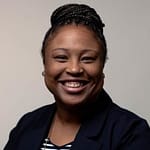
VaNessa Thompson
On episode 416 of Teaching in Higher Ed
Voices on this Episode

Show Notes + Resources
Transcript
[00:00:00] Bonni Stachowiak: On episode number 416 of the Teaching in Higher Ed podcast, VaNessa Thompson joins me to talk about how to engage on social media.
[00:00:12] Production Credit: Produced by Innovate Learning. Maximizing human potential.
[music]
[00:00:21] Bonni: Welcome to this episode of Teaching in Higher Ed. I’m, Bonni Stachowiak. This is the space where we explore the art and science of being more effective at facilitating learning. We also share ways to improve our productivity approaches, so we can have more peace in our lives and be even more present for our students. Today’s guest, VaNessa Thompson, will be talking to us about how to meet students where they are, including places like TikTok. She has a multifaceted way that she engages in online spaces, such as being the CORE program coordinator at Oakland University.
Also, as an adjunct English faculty member at Oakland Community College, and as an adjunct instructor at the Engineering Society of Detroit. She’s currently working on her PhD, has a master’s degree from Lawrence Technological University and a bachelor’s from Michigan State University’s College of Communication, Arts and Sciences. As you’ll hear about in the episode, she is a gamer. VaNessa Thompson, welcome to Teaching in Higher Ed.
[00:01:44] VaNessa Thompson: Hi, thanks for having me. This is so exciting.
[00:01:47] Bonni: I am so glad to get to talk to you, even though you’ve been talking to me for a while now, ever since I got introduced to your work. I have to take the listeners back to an episode from a while back from David White, before we start our conversation, VaNessa. He introduced to us a series of what he calls myths of a belief that some people are digital natives and some people are digital immigrants. He considers these to be myths. If anyone, if this is new, and you want to learn more about why he considers those things to be myths, you got to go back and listen to that episode with David White.
He introduces to us what he finds to be a more helpful continuum. He looks at, instead of digital natives versus immigrants, he says digital residents versus digital visitors. He actually breaks it down to in our personal lives and in our professional lives. An example for people, just a refresher is a visitor would be like how I am on TikTok, both professionally and personally. I don’t leave a trace. Although, if you want to see my kids, they have one video of themselves spilling water on each other which if you’ve been on TikTok, you may have seen that classic meme go around there.
You can’t see much of me. You don’t know much about my life. You’re not going to see any receipts or any trace of me really there. I visit and I enjoy watching people like VaNessa, which is one of the areas I first got familiar with your work. Versus, if you saw me on Twitter, I would be more considered a resident. You would find out, oh, she has a family. Oh, she’s a professor. Oh, she quotes. These are the books that she’s reading because she’s sharing quotes from these books. There are a lot of ways in which I leave traces behind, mostly on Twitter professionally.
I would say there’s a fair amount of personal as well. It’s flipped on Instagram, more personal than it is professional, but you would see both of those aspects of my life. VaNessa, this is why you’re here. I’d like us to start and see. Do you see the same desire to push back on the natives versus immigrants model or paradigm? Does what he came up with this resident versus visitors resonate with you?
[00:04:11] VaNessa: Yes. All of it. It’d be all of the above. You see that a lot with some of the TikTok because that’s where I would say right now I’m a resident. I’m there. I’m living there. I built a condo. It’s great. There’s actually research and data that shows that 30-year-olds and older millennials are now the more popular TikTok users versus originally gen Z, which would be probably 25 or younger. Millennials, like most things, dominated the digital space, but I find myself having to learn a little bit more about TikTok and how to navigate through that.
I came to the digital space more in the YouTube creator space and you had a lot more time to get to your thought. You could take people around and go on that journey. Whereas TikTok, you got clips, here’s a trailer of your life. You got 60 seconds. You might have 10 minutes or 3 minutes depending on how involved you are on the platform. It’s snippets or here’s a little nugget of wisdom for you to do with that as you will. There’s some blesses and some curses that come with that kind of bite-size content creation.
I see tons of people, older professors, I’ve linked up with some professors from Stanford and Canada in Colorado. They would be older and not in a necessarily negative way, like old people, young people, but they’re a little bit older. They’re a little bit more established professionally. They’re taking time to reach their students and reach their demographics through TikTok because that’s where they’re at. Then I also see a lot of college students using it as just a call it like Soma from Brave New World.
Just as a desensitizing thing with all the things that are happening in the world. I just need a moment in a space to be just goofy or just to learn something without– and I get to control it. They take that to that platform as well. I really like the resident visitor, because it also feels like it’s fluid. I used to be really prominent on Twitter. I remember signing up for Twitter in 2008. I didn’t even know what it is. I was there, I was in it, and now I would consider myself a visitor on Twitter, more like a resident in Instagram and then also on TikTok.
It ebbs and flows. It allows for that fluidity, which is really awesome.
[00:06:39] Bonni: Would you tell us, how did all of this part of your life start and maybe take us back to when you remember starting to either become a visitor online. Did that happen first, and then where did you take up residents, and what were some of those early memories that you have of all of that?
[00:06:57] VaNessa: Oh, I remember a time when Facebook wasn’t a thing. I also remember a time when Facebook was a thing. That’s probably the first time, and it probably was 2004. I created my first Facebook account, and then I realized that there was exclusivity to that because it was only exclusive to those that were in college. If I wanted to connect with my other college friends, you didn’t have a lot of wall posting or anything like that. It was just here’s my profile. Here’s who I am, and it was very static.
Then you start to see events, and then I was an RA, and I started to see people would post their parties in the resident hall. I’m like, “Oh, thanks for doing my job for me. Now I know where I need to go to make sure everybody’s good and safe.” That’s probably my first iteration. Then, I’m a McNair scholar two times because I love research. I looked at computer-mediated communication and realized that there is a whole breadth of topics and conversations, and online was just a new vehicle to do that.
We were doing computer-mediated communication or mediated communication through phones letters because we weren’t talking face to face. The only thing that has changed is the vehicle in which we do it. I dived into that. I was like, “Oh my gosh, this is just so fascinating. This is great.” Then fast-forward, I don’t even know, a couple of years. I realized that is now the underbelly of my dissertation research. I’m looking at Summer Bridge participants at Oakland University and seeing how the virtual Summer Bridge program prepared them for the demands of college.
whether that was virtual or in-person and right underneath that is computer-medicated communication. How do you build rapport with students? We were so easy to do that face to face, and we know how to do that so well, but now the educators and the administrators are now learning with the students. The students are looking to us as the experts, but we’re all trying to learn how to do this. What is this? I find it so interesting. I just love the conversations about it. I had no idea that what I loved in 2004, 2005 would fast-forward and show itself in this way.
That’s probably how I started and then how I have evolved.
[00:09:18] Bonni: Oh wow. For listeners who may not realize this, would you talk a little bit about– because this dissertation is very much a right-now thing. Man, you just took us on the quickest talk about. You really got this TikTok thing down, you took us on such a history from 2004 until the present day. I knew you were working on a PhD because I see you converse a lot about that and some of the challenges. You really bring in those of us that have worked on a dissertation, we can remember your having us go, “Oh, I remember that. I remember that.”
Also really helping a lot of people that are very much at present dealing with some of these challenges, being a doctoral student. I didn’t realize that it was on computer-mediated comm. Now I feel like I didn’t do my homework very well but tell us some more about that. What your dissertation is and where you’re finding yourself in your own educational experience.
[00:10:11] VaNessa: All the things. The panoramic because I like to use other P names besides pandemic because that in unprecedented times if I can just throw that folder vocabulary, that’d be great. I found in that time I was a doctoral student. I was also a faculty member and I was teaching at the Local Community College. I’m also a staff so I provide academic support for marginalized and minoritized groups. I’m seeing this computer-mediated communication and all of that in three different areas. I was wild it was amazing.
I think unfortunately all this had to happen for me to have a little bit of a lens to look in my dissertation and I’ve done a little bit of research. I’m still in the qualifying exam phase and that’s all so much fun. It’s riveting and scary all at the same time but what was really interesting is that what we did in 2020 and 2021 was not online education. That was an emergency pivot. That was, we are struggling and the world doesn’t stop. Unfortunately, this pandemic has stopped how we know how to do this. We need to pivot and this is the best way.
We have the vehicles, the technology to pivot in this way. I tell people all the time online education and though I’ve only had one online class and this really immersed me in the online education space. If you had one online class, you know that this wasn’t it, 2020 and 2021 was not it. If you haven’t had any foundation in that, you’re thinking all online education is 2020, 2021 and it’s not. What we did the pivot, how much time it takes to do an online course, how much resources it takes.
All of that prep like looking at cost of how to do that. It’s a lot of cost on the professor is a lot of costs on the students. It’s a lot of costs on the institution. We didn’t think about that. We were like, “We just need to go and so let’s learn it with zoom.” I’m real familiar with zoom now. To not carry that over to an online experience because that’s not the same. If you had an online faculty person, they’re probably one more versed in online education. Whether it’s synchronous or asynchronous, they wanted to do this.
They elected to do that and you picked this class because it was online. You were not forced to do it. When you take that lens away, you realize these are apples and oranges. I can’t compare the two and so that’s probably the most prominent thing I’ve found. I try to do that with my coworkers when they talk about it I’m like the environment in which we did 2020 and 2021, whether as for academic support or faculty, we were just trying to make it. We were just trying to get it together so this is not the same.
We have to get that attitude away so that we can really say like if you want to do online let’s do it. This is the best ways to be successful in a traditional non-pandemicey way.
[00:13:25] Bonni: I also think about people who would say things about online spaces like, “Oh, it’s a whole bunch of trolls,” or, “It’s utterly destroying society.” While there are certainly a lot of things we should be very concerned about in online spaces, there’s also affordances that social media allow us. I’m sure this is so much of what you’ve been looking at both in your life and in your research as well but let’s start out with the safety front. I’m curious for you since 2004 how would you describe your own safety online?
What are some of the things that you’ve seen come up over time? As you talk to other people about what you advise them staying safe, is it possible to be safe online? What have you been thinking about regarding safety in all this time?
[00:14:19] VaNessa: Oh, all the things especially now that I have a 24-year-old nephew, a 14-year-old niece, and a four-year-old nephew all 10 years apart. How they navigate online is very different. As an aunt, I call myself a professional aun, I have to keep that in mind. I would honestly say that with online, no matter what it is, you are either creating the story or the story’s being created about you. Either way it goes, your presence is going to be online whether you like it or not. They’re taking a picture and you’re walking past and you just happen to be there your face is there.
If you’re on Google Maps and I saw on Google Maps one time my car was in the driveway I’m there. It just depends on whether or not you want to take an active role and a passive role. There’s no shame or fault in either way because it can be very exhausting especially if that’s not something that you do. I think that is something to think about. Also, I think about I tell students all the time what happens online stays online. It never goes away. There’s some things about VaNessa in 2005 that I really don’t want anyone to find.
It’s just me being a 20-something-year-old adult. Other demographics and other generations had the same thing. The only difference is that they were able to throw away the photos that they didn’t want anyone to see. That’s the only difference. Mine are just on Facebook and so because of that, I have started to curate a professional and personal social media presence. One is that people don’t need to have 100% access to VaNessa. I am an amazing commodity but also I want to protect the little people that I have.
Just because I elect to be on social media does not mean that my best friend’s son elected to be on social media. That doesn’t mean that my sister wanted her kids on social media like that for the world to see. Making my personal more private and a little bit more selective on who I pick and allow in those spaces, I’m being very strategic about that. My professional TikTok and Instagram go at it. Everything’s on there about my presence as a student as a faculty member as a staff person, I am very just open. If you want to see how I teach a class, go for it.
I’m also being very strategic about my students though just because I am on social media doesn’t mean that they want to be. I’m blurring out faces. I also ask them in front of class in the very first day do you prefer if we take a picture in class that I can post it or would you like me not to. I’ve had students that have had some really rocky situations but I have to be more aware that just because I’m outgoing on all aspects of my life, other people aren’t. That’s probably the best safety advice I could probably give to other people like you are 13+ or 18+, whatever the social media account will allow, go for it.
Go nuts. Have fun but also realize that you elected that for yourself. Other people didn’t elect that for you. Also, I am not opposed to having special groups who can see what of me. I have like special groups in Facebook. Even my Facebook if you want to see all of me you have to be not in my professional networks. I’m actually actively curating and making that list. If people leave the institution and they go someplace else, we’re not coworkers anymore. Here, at it. Being strategic about that and just posting the post.
Thinking about it, think about the implication, who’s in this video, who wants to be in this video? Am I doing something? Is this the best thing I could say? Is there another way I could say it before you hit post? That probably would be my best advice.
[00:18:13] Bonni: Boy, a couple of themes that you said really stood out to me and that is, it’s just so true. Either you’re creating the story or someone else is and there was a podcast episode I listened to a little while ago. There was a woman who– this is many many moons ago but it still stands true as far as social media goes. A woman who had worked for a politician and in her personal life she and her friend loved to take their pictures in front of signs that told you not to do something doing something.
Whatever this don’t run on the grass, don’t run with scissors and they’re going to be running on the grass, running with scissors and all of that. They made the unfortunate choice which you talked about 2005, VaNessa. For me, I can’t remember what year it was but let’s just say I was glad that photos could be thrown away. The photo negatives don’t exist today. Many of us I think maybe I could even go so far as to say almost all of us have those moments in our lives. They made the really bad choice of some kind of sign being up in front of a memorial for people who had served in some type of military.
Doing the thing that the sign said not to do and it was viewed as disrespectful to the people who had served and lost their lives for our country. The woman who they interviewed, she wasn’t proud of that moment. She could see that that picture was not in her best judgment but she went on a flight from somewhere in the US to somewhere in another country. When she stepped off of the plane, her entire world had changed. There were tens of thousands. You think about every time something gets retweeted gets passed on or whatever.
What this podcast did is it went and it followed. If you hire a professional to help a woman like that solve that problem, they do not try to get rid of all of those pictures being retweeted and reposted in all of those places. It’s exactly what you said, VaNessa, you got to get on top of that and then have other messages that will eventually bubble up. Better to you being the one to tell that story. I do know there are people who have preferences to remain more in visitor mode and especially on certain platforms and about certain things you talked about, especially if it involves someone else and what that is involved.
It is definitely tough. Well, we’ve talked a little bit about safety and security. Is there anything else you want to talk about safety or security that you’d like to touch on before we then talk about thriving in these online spaces?
[00:20:54] VaNessa: I would probably say that online spaces aren’t going away. They’re not. We’ll try to control it as much as we can, but the best-informed person and especially our students and those that are younger really talk about how to navigate through that space. It’s almost the same thing. I will equivalate it to when you’re learning about sex education, alcohol, and things like that. There are some parents that are, regarding to exposure, we’re going to talk about these things, will be open about it.
Therefore, that translates to that exposure being like, the mystery of it is aloof. I now know how I need to maneuver, I need to know what makes me safe and it’s a little bit easier for them to navigate in those spaces. If you shun away online things, your child will not be able to do a whole lot. They won’t be able to play video games, they won’t be able to get help if they need help with homework. They won’t be able to find out what their favorite celebrity is doing. They won’t be able to connect with their friends.
Really getting out of the mindset that online spaces are horrible and they’re going to go away because they’re not. The best thing that we can control is how we respond as adults, how we respond with people that have little people in the world, and how to make sure that they’re the safest possible.
[00:22:16] Bonni: Thank you so much. Let’s talk about thriving in online spaces. I feel like I’ve seen you do that and your face lit up when I said earlier. What are some of the things that you think of in terms of thriving and let’s start with just talking about creation and curation? I see you doing so much of both of those things and talk a little bit about how that helps you thrive in online spaces.
[00:22:39] VaNessa: I think it helps me thrive. Well, it did in the pandemic because I don’t know if anyone could tell this, but I lean towards extroversion. The pandemic and sheltering in place was like torture to me. I was in solitary confinement. I needed to have a way for that extrovert energy to go. I’m someone that after a while, I need to move around after a while I need to listen to some music or do something participatory, which is why I’m a gamer too. It just wasn’t enough. Thriving on Instagram and TikTok, I was like, “Oh okay. I’m finding some of my people. This is great.”
I just created some things. At first, it was to connect with my students. I posted things that were complimentary to why I was teaching them in class, how to write a paper because a lot of students were really struggling with that. I’m a doctoral student, which means all of your assignments are papers. You don’t take very little exams. Telling them how to look up primary sources versus secondary sources, how to find topics. If you want to talk about PlayStation versus Xbox, where are some places you can go that you can get popular, my secular journals, but also academic and peer review journals?
How can you differentiate the two, if you don’t have access to your school’s library? Looking up Google Scholar, Google alerts, and things like that. It just exploded from there. I did one video where I probably went viral for lack of a better word when I showed how to convert a Word document to a PowerPoint and that you don’t have to recreate it. That just exploded. I had no idea that that was going to happen. I’m glad that it did because it helped not only students, but it helped my peers. It helped other people like, “Wow, I didn’t know that you could do that.”
It was just really cool. That’s probably my first viral thing and I was so pleasantly surprised and it’s gone on from there. Its given me amazing opportunities in the real-life, though we’re talking virtually and you are in one place and I’m in Michigan. Just the fact that I was able to do that. I don’t know if we did the traditional face-to-face, like going to a conference and things like that if we would have linked that up. It might have happened, but it would be the luck of the drawer where now I’m putting myself out there, showing what I align with.
Then hopefully, I’m finding people that align with that as well and want to talk about it a little bit more. It’s been amazing. It’s also interesting because students now I’m on the For You page and they’re like, “Oh, I saw you.” I’m like, “Oh no, you saw me.” Coworkers are seeing me now, but they’re also seeing me not just as a resident, but also as a tutor being able to help other people. We want to get in this space and how do we navigate through that? Now, I also have the fun task of our department’s social media pages which is a lot of fun. It’s not even work for me. I just love it.
[00:25:50] Bonni: What are some of the tools that you use for creation?
[00:25:55] VaNessa: I use my iPhone a lot. Then I also used CapCut to create things and I’m still a novice. I haven’t learned how to do a whole lot with that, but that’s definitely helped with making my videos more accessible with auto-captions and things like that. I do not have any hearing impairments or anything like that, but I do know that that can change really quickly. Seeing a lot of students that are disabled on TikTok, realized I can’t watch your videos because I typically watch it without sound or if I’m deaf, there’s no sound.
I want to engage, but I have no idea what you’re saying. Luckily, TikTok came up with that and got on the good foot, but then it was on the creator to figure out a way to make your videos more accessible. CapCut is really cool with that and that allows you to do that and you do a little couple of things like that. That’s probably my favorite. I also use a lot of music and I try to find some cool music and things. I’m able to also extract from a TikTok video and post it just for editing purposes and then put it back and upload it on TikTok just to give it credit.
You can do that all in CapCut. It’s amazing.
[00:27:05] Bonni: When you talk about using your iPhone, there is the phone itself. Do you use accessories such as a tripod or any kind of a clip or light or anything like that, that you enjoy that augments the use of the iPhone?
[00:27:20] VaNessa: Yes. I do have a ring light. My parents thought I was absolutely insane. They’re like, “What are you doing?” I’m like, “I’m making content, parents.” I do have a ring white. I also have an iPhone lavalier mic. All of those things really help, but they complement my content creation they do not supplement my content creation. A lot of times, I might not even use that because I just want to be personable. If it’s something where I’m using green screen, or if I’m doing a voiceover or something along those lines, I’m going to use those tools to make sure that it’s the best quality possible.
I don’t use it a whole lot maybe once a month if I do a batch of content but other than that, is just my phone and me.
[00:28:05] Bonni: One thing that has confused me and I’m a very much a visitor on TikTok and it’s not one that I spend a ton of time on. When I watch videos on TikTok, it appears to me as the novice. You said this earlier, a lot of work going into thinking, “I only have a limited amount of time to do this, so I have to get it right.” When I look at the video, a lot of times it has a ton of edit points. That to me would look like someone has planned more than I think they actually planned.
I’m confused between what percentage of it is planning versus what percentage of it is more spontaneous that then got edited down to just what they wanted to say? Do you have any sense of how much of it is, “I’m getting edited down because I went on too long”? Or how much of it is, “I planned this out super, super specifically”? Or maybe I’m thinking of it in the wrong way because it just depends on who’s creating it and what they’re going for.
[00:29:05] VaNessa: That’s what I think it really boils down to. It really depends who they’re creating and what’s the tone and the vibe for it. I think a lot of times with me because I am again, really just outgoing and just like, “I’m going to do something,” and they’re just quirky in that way. That I will record myself doing mundane things. I have a lot of B-roll of me studying whether it’s a time-lapse video or a regular video. It also helps me stay off my phone so I can focus on my assignments. I have a ton of just awesome content that I’ve repurposed multiple times.
If you look at my videos and I’m unapologetic about this, if there’s a great sound but I do not have time to do a video for it, I’m going to use one of those B-rolls and just put it together. I just posted one either today or yesterday where I was like, don’t stop the technique. I was using this over like really cool hip hop song, but it’s all video that I’ve already recorded before of me studying and I’m encouraging students, like, don’t stop the technique, you know what works. We’re getting into finals, keep it going and I was able to create new content.
So because I have 12 to 20, 32nd clips of me studying or whatnot, I can come up with an infinite amount of content and how I edit it and how I style it can change depending on the mood and depending on the sound. Then there’s other times where I wanted to show and highlight my office because we do so much amazing things. One of the things we did was a African American celebration month this year, and because we were still in pandemic times, we had to change it a little bit. I wanted some people to see the behind-the-scenes.
I wanted them to see our office is amazing and we’re trying to meet as many people where they’re at and this is how we are doing it. There’s a little behind-the-scenes. I also wanted to show people that you don’t have to be a professor to work in higher ed. You could do a whole bunch of other things, but it all becomes to accessibility and visibility. So if you don’t see those things, you don’t know that that’s available. It served multiple purposes. It did pretty well in terms of views, if they’re really, quantifying it, but it was a lot of fun.
A lot of students were like, “Oh, I had no idea that you all did stuff like that,” or I can get a job working at a university doing that as opposed to just teaching or being the Dean of Students or the President of the university. It was really cool.
[00:31:31] Bonni: Yes. Having the B-roll and it doesn’t even necessarily have to be ours because of the ability to remix other people’s clips and things like that, depending on what permissions they have set up. Also, you’re talking about styling and all of that. It’s thinking through how to tell the story, but in many cases, not always thinking we have to make something up from scratch. We can be drawing from what we’ve done in the past and thinking about collecting little nuggets of stories that you may not exactly know how you’re going to use, but yes, that’s really powerful.
Then what tools are you using for managing your social media presence? You’ve talked a little bit about creation tools, but what about the overarching when stuff gets posted, or are you using any tools like that?
[00:32:15] VaNessa: I’m using all the tools.
[laughter]
Just everything. I’m also an extrovert, so I do take that I have a lot of interest and if I see something really cool, I’m going to jump on it. Get in there. I’m like, “Wait a minute, let’s pause. Let’s take a beat.” I use Notion if there’s a sound highlight or if there’s an idea, but it’s going to take a little bit more power to execute that and things like that. I will put that onto the side, so it’s all of the links and things like that, that I use for inspiration, so I have that. That way I don’t feel like I’m losing it, because otherwise, it goes away.
Then there is a way on TikTok on the actual website where you can actually schedule some TikTok. I have used that before, specifically for my classes that when I was teaching to put things that were closer to the date that something was due. When I was telling students like, “Hey, look into Moodle or banner, or DTL for some resources to help you out, I knew that the assignment was going to be due, let’s say October 15th. So October 1st, I want this to go out, so then I can schedule it and then share that with the students.
That’s a really cool feature not a lot of people know about. The only downside is that you don’t have a lot of control of what the screen looks like, the thumbnail, if you will. I do use that occasionally. Those are pretty much the only two things that I use then in terms of content creation organization because I treat it as in hobby. If I don’t feel like I’m doing anything that day, I’m not doing anything that day, but luckily I have some B-roll to plan for when I don’t want to do that.
[00:33:58] Bonni: Yes. Even just the whole idea though of pre-scheduling messages. You talked about Moodle, Banner, DTL, all of the learning management systems have the ability for us to preschedule the announcements. For me, if I’ve got a big assignment coming out and I want to remind them about this or provide them with this resource to have that all scheduled out, you can be thinking about a cadence of messages. That’s great to know. I had no idea you could do that on TikTok, so you’re right, I’m one of those who had no idea.
I could barely post a video up there, so, oh, that’s wonderful. Well, anything else that you’d like to share about either content creation tools, social media, before we get to the recommendation segment where I own this so I’m going to take us in a slightly different direction. Anything else to share before we move on to that?
[00:34:40] VaNessa: The only other recommendation I would say is that to actively engage with the content that you’re coming up with. If you don’t want to see something, tell the platform you don’t want to see it. As opposed to just scrolling up because on their back end, they’re looking at how much time you’re spending on something. If you spend, let’s say eight, 10 seconds, they’re assuming that you like that content and so they’re going to push that hashtag push that creator, push that type, that style.
If you don’t want to see it, because there’s been times where I ended up on the wrong side of TikTok, how do we get here? Say that you’re not interested. Say you don’t want to see that if you’re coming up on Instagram and things like that. Don’t just use your thumb to double-tap to say that you like it, also use your thumb to say if you don’t like something or if you don’t want to see something
[00:35:28] Bonni: Am I supposed to be doing that in TikTok beyond just scrolling to the next one?
[00:35:32] VaNessa: Depends on this huge mystifying conversation of look, what does the algorithm do? I have no idea, but I do want to make sure that again, I am participatory in telling them what I want to see. If I see something that, again, on the side of TikTok that I don’t want to see, or where I want my content to be pushed, I’m going to tell you that I’m not interested. A lot of people just scroll up and just like, “Okay, I’m done with it.”
[00:35:58] Bonni: That’s what I mean, how do I tell it though? How do I tell it? You’re explaining so much about my TikTok experience right now. I’m like this what I need to do. It’s taking me and with my children with it to some places we don’t wish to go. I didn’t know there was a way to say, “I don’t want more of this.” How do I do that?
[00:36:17] VaNessa: If you hold down the video, there will have a way that shows like, add to your favorites, share this or send this. Then it says a broken heart that says not interested. Click on that and it will tell you that they won’t show you things like this. Again, you’re being a lot, not just participatory in what you post, but also participatory in what you engage with.
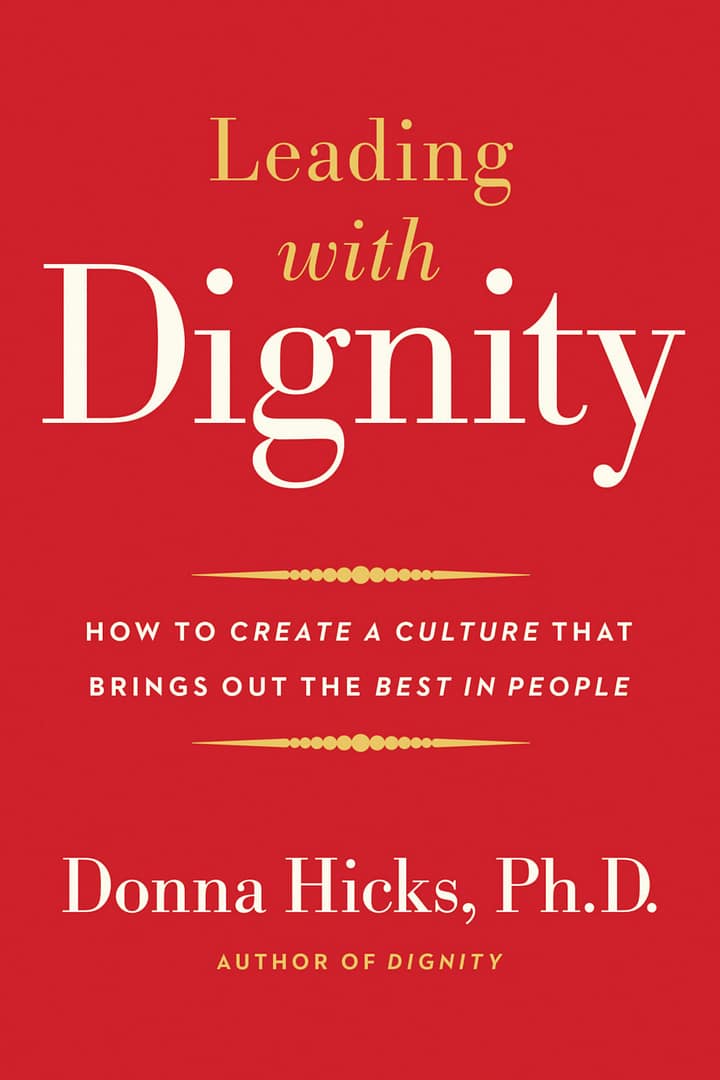
[00:36:43] Bonni: You have now changed, not just my life, but my children’s life, because they haven’t really let them come on as much as they would like to sitting down while I’m having my cup of tea at night and this explains a lot. Yes, it does. Okay. This is the time of the show where we each get to share our recommendations and I’m taking us in a totally different direction. I would like to recommend a book that was actually recommended by Este Jordan back on episode 407, it is called Dignity by Donna Hicks.
I’m currently reading just a spoiler alert for future episodes. I will most likely be recommending Donna Hicks, next book, after Dignity it’s about leadership and dignity. I have just been stunned. For people who may not remember Este Jordan shared about Dignity, Donna Hicks, she’s done a bunch of work with Desmond Tutu on the apartheid in South Africa. She’s worked with people in Ireland and some of the violence there throughout history. Then the leadership book by the way goes into more in businesses and other kinds of organizations.
I just find it fascinating how many connections there are to when people, when we have our dignity being taken away, which actually by the way is secret surprise. We actually can’t have anyone take our dignity away from us. She really does such a great job of telling stories in so many different contexts. I find so much can be explained to wounds around dignity from people’s pasts and stuff. Just the importance of communication and all of that, so really good read. I try not to recommend things twice myself, but I love it when other people recommend stuff that I can go read and vice versa and we can get this sharing to happen.
That’s my recommendation for today. VaNessa, I’ll pass it over to you, whatever you’d like to recommend.
[00:38:34] VaNessa: Oh wow. That’s such a great one. That’s such a insightful one and I’m going to take us in a different direction.
[00:38:41] Bonni: I’m ready for it.
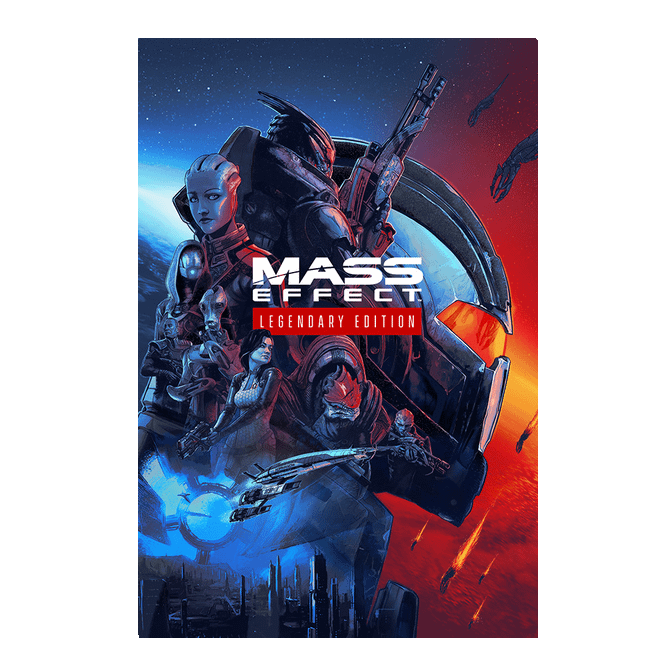
[00:38:42] VaNessa: In terms of, because I am a gamer and I have played video games longer than I’ve been on social media. I’ve been able to, Nintendo and iTETRIS and I want to say one other thing are around the same age. I’ve literally have grown up with video games, and the one game that is near and dear to my heart is Mass Effect, Legendary Edition. The reason why, I guess it’s a space Odyssey franchise, there’s three games to it. You can play it on Xbox or PlayStation, and it’s very fitting now because you have like Jeff Bezos and Elon Musk going to space like they’re going across the street.
It is set in space, but you can have romantic relationships and the really cool thing is that which gender you pick changes your relationship options. This is also the very first game that I’ve played and probably the first game period where if someone dies in the first game, they do not come back for the rest of the series. There is one point where you have to make this really big and all three of them have these really big ethical decisions. Like you have to save one person, who do you save? One of them could be your potential love interest, the other one could be your best friend.
Who do you save? One of them has to die. Another question would be if you know a species is going to be hazardous to the civilization as a whole, do you sterilize them or do you let them thrive and have an opportunity potentially to be better? Which one would you pick? You have to pick one. You’re like, “Oh no.”
[laughter]
Then you’re like,” I have to pause the game and really think about it like well, you could do this, but it’s going to help this group out but if I do this and sterilize a whole species, what happens?” Those types of games are always really exciting for me because it also triggers my empathy a little bit. I’m making sure that things to me like they might be very small stakes but the person that I’m talking to, they may be very high stakes. Being able to think about that, and also it’s participatory that’s why I love video games so much is because you have to make the choice.
You’re not watching a YouTube video you’re not watching a movie. You have to make the choice, how do you deal with that internalized guilt knowing this is a fictional world, and this is not real. How do you deal with that? That also can help you with your social, emotional development and your learning regardless if you’re a student, a high school student, or an adult. I love this game, I could talk about it all day. Garrus is my favorite character, he’s great he’s an alien. I wish we were friends in real life. [laughs] but it’s definitely something I go back to and it’s like a comfort movie, like a nice, good romcom.
[00:41:34] Bonni: This is so reminding me of choose your own adventure books from when I was young.
[00:41:38] VaNessa: Yes.
[00:41:39] Bonni: Something that I could never have even have envisioned back then. It sounds like such a wonderful game and so true to so many of the questions that we are being asked as a society collectively right now. Really important ethical questions to be, as you said practicing to be asking ourselves and everything. Well, I am so glad that you got recommended for the show and you responded to my invitation to come on. What a joy it’s been, not just to get to talk to you today, but also just to get to follow your work.
I’m going to of course recommend that people go, as you said, you use all the tools, also go follow you on all the places.
[laughter]
We’ll be having that-
[00:42:16] VaNessa: Thank you.
[00:42:16] Bonni: -in the show notes and also I know that part of your bio will include that information as well so thank you again for being a guest today on Teaching in Higher Ed.
[00:42:24] VaNessa: Thank you so much. I’m so honored and privileged to be in your space and thank you for what you’ve done, what you’re doing, and what you will continue to do because it’s really awesome.
[music]
[00:42:35] Bonni: In addition to thanking VaNessa Thompson for joining me for today’s episode, a big thanks to Christina Moore for recommending her. Today’s episode was produced by me, Bonnie Stachowiak, and was edited by the ever-talented Andrew Kroeger. Podcast production support was provided by Sierra Smith, a phenomenal educator who just happens to still have time to engage in this side gig for us. These podcast episodes are just one part of the Teaching in Higher Ed resources.
If you’d like to receive the weekly e-mail updates, subscribe at teachinginhighered.com. I promise we’ll take good care of you. The show notes from the most recent episode, a look at the one that’s to come, and some recommendations that don’t show up on the podcast episodes. Thanks so much for listening and I’ll see you next time.
[00:43:37] [END OF AUDIO]
The transcript of this episode has been made possible through a financial contribution by the Association of College and University Educators (ACUE). ACUE is on a mission to ensure student success through quality instruction. In partnership with institutions of higher education nationwide, ACUE supports and credentials faculty members in the use of evidence-based teaching practices that drive student engagement, retention, and learning.
Teaching in Higher Ed transcripts are created using a combination of an automated transcription service and human beings. This text likely will not represent the precise, word-for-word conversation that was had. The accuracy of the transcripts will vary. The authoritative record of the Teaching in Higher Ed podcasts is contained in the audio file.