Follow the Teaching in Higher Ed Podcast
About this Episode
Julia Charles talks about disrupting the syllabus on episode 419 of the Teaching in Higher Ed podcast.
Disrupting suggests that there is something that necessitates change over time.
Julia Charles
On episode 419 of Teaching in Higher Ed
Voices on this Episode


Show Notes + Resources
- That Middle World: Race, Performance, and the Politics of Passing – by Julia S. Charles
- The Loving Luggage Project
- Beloit College
- What is it we are trying to disrupt?
- Julia’s tweet with her syllabus
- The Source Magazine
- XXL Magazine
- Help celebrate Julia’s 40th birthday by “getting 40 new suitcases for youth currently in or aging out of foster care – any amount helps”
Recommendations from this Episode
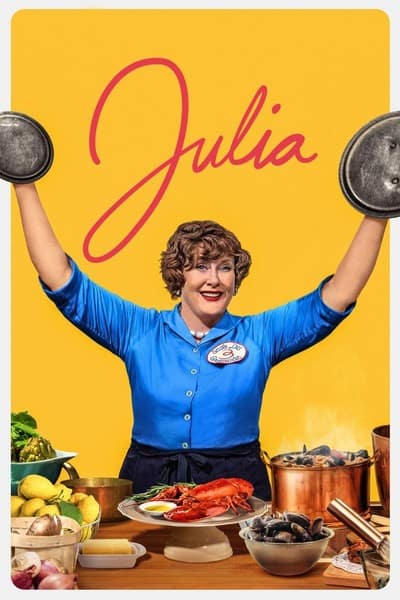
Movie/TV
Julia

Idea
Humanity first

Idea
Check yourself
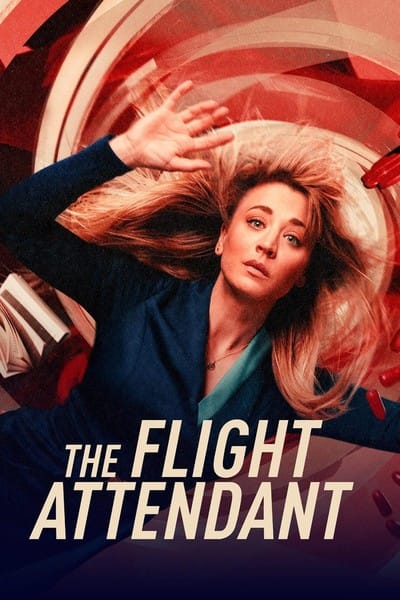
Movie/TV
The Flight Attendant
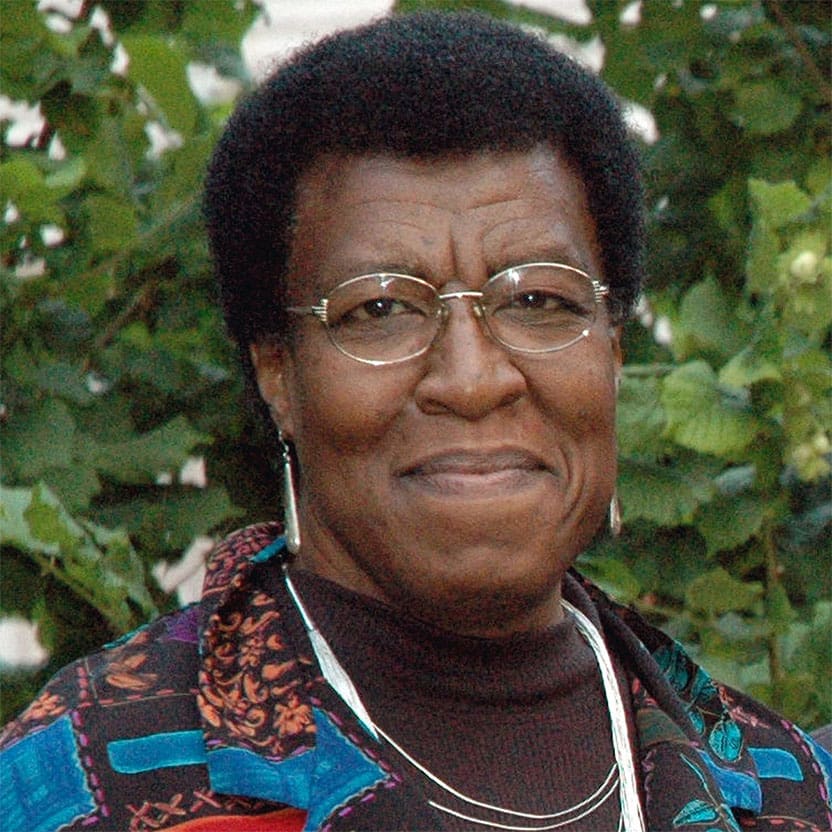
Person
Octavia Butler

Podcast
The Read
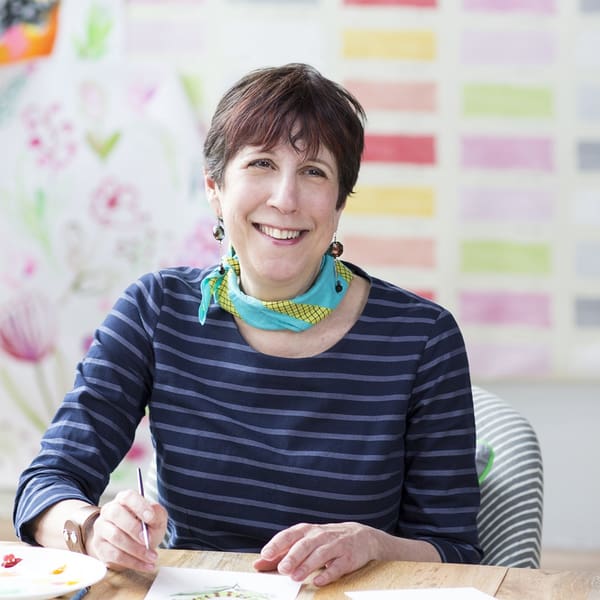
Person
Jennifer Orkin Lewis
Transcript
[00:00:00] Bonni Stachowiak: Today on episode number 419 of the Teaching In Higher Ed podcast, disrupting the syllabus with Dr. Julia Charles.
[00:00:12] Production Credit: Produced by Innovate Learning, maximizing human potential.
[00:00:21] Bonni: Welcome to this episode of Teaching In Higher Ed. I’m Bonni Stachowiak and this is the space where we explore the art and science of being more effective at facilitating learning. We also share ways to improve our productivity approaches so we can have more peace in our lives and be even more present for our students. Dr. Julia Charles-Linen is an associate professor of English at the University of Colorado. She recently published her book, That Middle World: Race, Performance, and the Politics of Passing.
Her teaching and research interests center on racial crossing, passing literature, Black women writers, Black girlhood studies, Black young adult literature and film and popular culture. She’s currently working on her second book, Finding Fauset, which is a biography of the New Negro Renaissance writer and literary editor, Jessie Redmon Fauset. Julia is the co-founder of The Loving Luggage Project, a nonprofit organization that provides new luggage for youth currently in or aging out of foster care. Julia Charles-Linen, welcome to teaching in higher Ed.
[00:01:49] Julia S. Charles-Linen: Thank you.
[00:01:50] Bonni: I need you to take us back. Can you take us back to what you recall about the syllabus as a document from– whatever the earliest time is you remember it showing up for you in school?
[00:02:04] Julia: I think if I had to go back, I’d probably go back to undergrad as an English major at Bennett College in Greensboro, North Carolina. If I’m honest, I think the document has always been formulated for me. I look at it as a contract, what do I need to do to achieve an A? I am often looking at as a student anyway, I was looking at what assignments are there? How many are they? What percentage do they count and when are they due so that I can map out my semester for myself, but I was type A in that way.
I looked at it more as a contract. What does it take to achieve an A and so in order for me to get to what it takes to achieve an A, I needed to know what the assignments were, what they weighed when they were due, if there was any room for any flexibility and so far as if I could slack on anything, what would it be? Certainly not an assignment that’s 25% of your grade. That’s when you want to hit out of the park and how much do things like discussion count in the class, those kinds of things. I was more interested in mathematically speaking, how much effort do I need to put in to achieve an A? That’s how I absorb the document. I think that’s how a lot of students absorb the document too. Have I done everything I need to do to get the highest grade possible?
[00:03:24] Bonni: When I was in undergrad, I didn’t have– In some aspects, I had more of A type personality but it depended on if it was in my major or not. The more interesting the readings were, the more likely I would be to want to follow on this track that had been pre-destined for me, if you will. Then if it wasn’t, I really can only remember pulling the syllabus out when I’m so far deep, I don’t know how I’m going to get out of this. I don’t even think I was necessarily savvy enough to because I remember I was failing.
Let’s see, I think I was failing microeconomics. Then I was like, “Oh my gosh, what do I have to do to pass the class?” I don’t think I was savvy enough at the time to break it down mathematically, [laughs] to gamify it for myself to get myself out of this thing. It was more like, “Oh my gosh, I need help.” Then I got tutoring on the subject from a roommate and then went to see the professor. That was one of the only times I ever went to office hours. I didn’t even really know how to do it to take advantage.
[00:04:23] Julia: I will say I’m giving myself way too much credit mathematically. I am an English major through and through. My mother however, is an accountant. Whenever I complained about a grade, even in high school, my senior year in high school, I’ll never forget it. This is the first time I felt like math was useful for me. There were two situations. One was, I was shopping in a store with my mom and I’d asked her if she’d buy me this pair of jeans. She said, “How much are they?” I said whatever the cost was.
I said, “But they’re 25% off.” She said, “So how much would I have to pay?” I told her what 25% off would be. She said, “Oh, you must not want them. I asked how much I’d have to pay for them, not how much off they were.” I quickly got percentages down and I remember my senior year in high school, a teacher had given me a grade that was mathematically and the grade book seemed like way harsher than it should have been. My mom asked me if this grade was accurate. I said, “I don’t think so because how could a grade that only weighs this much bring my grade down this percentage?” She explained the difference to me. I’m giving myself more credit, but it’s actually my mom being a pest about math that really made me game the system that way.
[00:05:47] Bonni: Oh, I love having that backstory. Thank you so much. I’d like you to take us back to another slice of history in your life and that would be about the first time you created a syllabus. What was that experience like for you?
[00:05:59] Julia: It was nerve-wracking, to be honest. I was fresh out of graduate school at Auburn University teaching my first graduate course and a lot of institutions have formulas for the way the syllabus should look. They should have, for example, student learning outcomes or objectives. They should have the institution, the year, the semester, that kind of thing. I recall asking several colleagues at Auburn for copies of their syllabi just to see what it looked like and more other than the content in so far as like what we were reading, my early syllabi were very much mirrors of my peers.
They very much mimicked whatever my peers had on their on their syllabi. The thing that I found most interesting about even the early and I would say boring syllabi, that I created myself. The thing that I was most invested in, I found were the assignments and the due dates. Even if my colleagues had arranged their syllabi to focus, let’s say per week, I wanted to focus per class period because I found that there was always something interesting about knowing exactly what I’m reading in a given class period rather than a week.
For example, knowing what I might focus on that week if it was thematic, if my syllabus was set up in a thematic way, what unit are we in or what theme are we discussing this week? What are we trying to get to? Even early on as boring as my syllabi were, I think I was most interested in what the student will encounter in a given class period.
[00:07:40] Bonni: I would love to have been able to see some of those readings because even still today, that aspect of thinking about those themes and as they emerge and something for me that I see as a transition from adopting other people’s syllabi who might have taught the class before or who are teaching different sections or whatever is going from at least in my discipline, this temptation of that you have to cover every chapter in every textbook. Of course, now do even have to have a textbook.
My questions have really shifted so much but then now when I do reading, I’m finding in some ways really trying to bend my own thinking around. I don’t want them to read this whole book and then this whole book. I know I don’t want them to read the whole thing in all cases, but then I’m trying to slice these themes. Sometimes that’s really very intense work to try to do well. I find myself also, like you’re talking really getting enthralled with the mystery of trying to thread together these things. Then feeling like I get it wrong and not wanting to throw all the work that I did out, but I have done that before where it’s like, try to start from scratch. [laughs]
[00:08:52] Julia: I totally get it.
[00:08:54] Bonni: Today we’re looking at disrupting the syllabus and before we talk about how we might do that, let’s first look at what are some of the critical questions we should be asking ourselves about the syllabus today?
[00:09:08] Julia: When it comes to the notion of disrupting the syllabus, I think the primary question should be what is it that we’re trying to disrupt because there are things I think that are necessary to keep. The language of disruption suggests to me that there is something, I think, that begs for change or necessitate change over time. Am I disrupting a standard by which we do this work or am I disrupting an ideology? Am I disrupting a way of thinking about this document?
I think for me, much of it is the latter because I am the English professor who in my unapologetic pursuit of language that gets us ever closer to the thing we want to achieve. I am the professor who rejects this notion of what they might call mainstream American English. I reject that in the sense that I speak Black English deliberately in the classroom, Black on purpose, as I say, because, one, Black English is my home language. James Baldwin tells us Black English isn’t a language. I don’t know what it is. The reason that I speak Black English in the classroom is because it’s part and parcel of who I am and I endeavor to bring my full self to the classroom space.
Every single class I have, I begin with a quote from Audrey Lord, who says, “I’ve come to believe over and over again, that what’s most important to me must be spoken, made verbal and shared, even at the risk of having it bruised or misunderstood. The speaking profits may beyond any other effect.” If that is to be true, and I believe that it is, then my speaking is more than just this verbal enterprise. It is bringing the fullness of myself to the classroom space.
That is where I get the energy about disrupting this thing we call the syllabus. It’s not so much disrupting it from the so-called mainstream as much as it is disrupting our thinking about the document itself, the ideology behind the document. Is it a contract with your students or do you view it as something even bigger than that? Do you view it as a tool of engagement, which I view it as a tool of engagement? As much as it is a contract with my students, the numbers make it a contract. It’s a tool for engagement and that’s how I view the disruption piece. How do I make this flat document something bigger that can engage students in a way that they’re not used to?
[00:11:43] Bonni: Oh, my gosh, I love everything that you just said.
[00:11:47] Julia: Thank you.
[00:11:47] Bonni: I’m excited for people to be able to just explore the show notes, because they’ll be able to click through and you’ve so graciously shared the images from one of your syllabi, and I’m excited to share that. It’s fun to have seen that first and then to hear you describe it as a tool of engagement. Now I’m thinking because you said the numbers make it a contract.
If I’m understanding what you’re saying, and then trying to juxtapose that on top of looking at these visual images, you are I think, not saying that it is completely not a contract, or at least completely not something that would convey expectations. You do mention things on here, like about late work. If I’m getting this, it is predominantly a tool of engagement and yet part of that engagement seems to me, Julia, that you still care about me being crystal clear about what is expected.
[00:12:54] Julia: Right, absolutely. I think the part that matters the most for me, is the tool of engagement. The part that matters the most for students is the contract portion. They want to know did I do everything? If it says I’ve done everything to achieve an A, why haven’t I achieved an A? It becomes incumbent upon me to make sure that I’ve given students every opportunity to pass. I also look at the document as there are a lot of professors who might look at, for example, when they’re grading a test, how many did you get right versus how many did you get wrong?
I’m looking at areas of growth, how many did you get right this time sure? What are the ways that you have grown from the beginning of the course to now? These are the things that you can’t capture in the syllabus and you’ll see them for me in fudgy places like, for example, class discussion. Class discussion is one of those places where it might be 10% of your grade, which we know you have to show up in order to have a class discussion and that kind of thing.
How do I weigh class discussion in this document? I weigh it in a way that suggests have you grown from the beginning of the class to the end of the class? If I’m being quite honest with myself, it’s not so much have you grown solely in your understanding of the material as much as it is are you a better human being when you leave here than when you came in? I don’t even mean that in a completely moral way. I mean, are you thinking about the world differently for better or worse but are you thinking about the world differently than you did before you encountered these characters in this moment in this space, in this specific time with these classmates?
When you came in here, you may have thought that this class, for example, was one of the classes that you just needed in order to graduate or is the diversity course or what have you. There’s something about encountering the characters in a significant way that might make you think about the world a little differently, and those are the things that I’m interested in. Yes, the document in as much as it is a tool for engagement, it is a contract and you can’t avoid that. I wouldn’t want to and neither with the students they wouldn’t want you to, be able to make it up on the fly. They want to know how to get an A.
[00:15:10] Bonni: I’d like to fast forward just a little bit in time now, Julia, to January the 13th 2022. You posted a tweet that says, “Decided to share my syllabus sans the reading/listening schedule with y’all since at … since forever,” and that is your wife, Dr. Nicole Charles-Linen does such a fantastic job with a design. I definitely want to take this class and sidenote, Julia. I would too and so sign up for it in my mind. You tweet, “I’m teaching dope-ass writers and artists too. I hope the students love this. Would you describe to us, Julia, what is this that we can’t visually see necessarily? Help us auditorily envision what it is, what is this the syllabus that we’re looking at here?
[00:15:54] Julia: This is for my literary analysis of the cipher class. The class is literary analysis. I had gone to some colleagues to see what they taught thematically around literary analysis. I have a love for hip-hop culture. I decided to teach literary analysis of the cipher, which is part and parcel of hip hop. I asked my wife, Dr. Nicole Charles-Linen to design a syllabus for me that looked like a hip-hop magazine so thinking things like Source magazine, or Vibe, or even thinking about the film, Brown Sugar, that focuses specifically on XXL magazine, that kind of thing.
I wanted something that looked exactly like that. I wanted it to feature Black women in hip hop, which we know often are pushed to the margins of hip hop culture in general. I think what she achieved here is something pretty brilliant because it looks exactly like a hip-hop magazine and on the cover, is the queen, Lauryn Hill. There’s so much to be said about Lauryn Hill in general. I wanted her on the cover for a few reasons.
One, she has only one full studio album and is still considered among the best hip-hop artists of all time. I wanted to feature her. You have a graphic here with Lauryn Hill in the center, and it has headlines the way a magazine would have. It says Afrofuturism, and hip hop, and that features Janelle Monae and OutKast, and Missy Elliott and so many more. Our unit on hip hop was so fascinating because it dealt with outcasts and how oftentimes Outcast is seen as the genesis of what we consider Afrofuturism in hip hop.
I might argue that Missy Elliott belongs in that conversation as well and she predates them. It was an interesting conversation and we got to engage some pretty dope artists just in that section. Then we talked about these acclaimed albums and who we consider to be on the Mount Rushmore, as it were, of hip hop talking about legendary lyricists. If you go into the next page, you’ll see it’s an information page essentially, like it says, MC is Dr. Julia Charles-Linen. It just goes on to define what the course is about.
It keeps that magazine feel. It has Missy Elliott on that page. Then the following page is called the playlist and this is the page that students are most interested in. This has some of the things we’re going to be discussing in class. For example, we read the outcast reader, which was a hit amongst– students love the outcast reader. We did Lauryn Hill’s Miseducation of Lauryn Hill. We also did She Begat This.
Joan Morgan … to Lauryn Hill, as students absolutely fell in love with that. We did Jay Z, Tupac. We did obviously some Outcast, Queen Latifah. We also did the anthology of rap. We didn’t have to go far and wide to find where we could get these lyrics in a legitimate way. Then the other pages understand the assignment which just tells you what’s due, when it’s due, and how much it’s worth.
I always have a section about light work because I love light work. On that page, it features a graphic of Run-DMC. We wanted a journal reflection, but we wanted it to be a little bit different. We have a meme reflection where students have to create a meme about different things that we talked about during the week and reflect on it, the multimedia presentations, which turned out to be fantastic.
The part I left out was the entire listening and reading list and students loved it. In fact, by the end of the semester, they were contributing to the listening list. They were saying things like, “How come we haven’t discussed more Kendrick Lamar, for example, or Kendrick Lamar in conversation with Jay Cole or Eminem.” By the end of the semester, students wanted to add people to the list which I thought is usually a sign that you’ve done something good.
[00:20:04] Bonni: I love that. When we were talking earlier, Julia, you were talking about really contrasting what has historically been a contract and viewed probably by both parties as a contract. Now wanting to disrupt that and wanting to capture the sense of engaging students, which visually you do, and it’s not just visually, it’s also what comes through in designing it in the way that you have. Then, I wonder though, because what I love about it is that you haven’t left it entirely like we were talking about having the clear expectations. Would you explain, because not everyone’s going to know that you’re meeting them where they are when you use this expression, understand the assignment? Could you talk a little bit about the– for some fun people listening, maybe an inside reference, they wouldn’t get, what does it mean today to say that you understood the assignment or that you didn’t.
[laughter]
[00:20:59] Julia: I would argue Black colloquial phrase about understanding the assignment, there’s a song about it. It just essentially means that there was a task before you not just that you achieved it, but that you met and exceeded expectations with it. Understanding the assignment, it’s not just a superficial I understand what you’re asking for, it’s more that I not just understand, but I presented it in a way that allows you to laud me for how well I actually did with this thing. That there’s a task at hand, but there are people who understand it, and then there are those who, in some larger way, understand it. Which is to say, they far exceed expectations with a given task.
[00:21:45] Bonni: Well, I’m going to transition this now into the recommendations segment, but I’m going to do it a little different this time than I normally do and that is to invite you to just stay just as engaged as you have been in the conversation, because I think I need your help with this. Because what I found myself wanting to recommend first is just more generically for us to check ourselves, to check yourself. What I mean by that is that I find– Probably I’m talking more to myself than maybe anybody else listening. I find when I see something as magnificent as what you’re sharing about today, that I can sometimes shut myself down in unhealthy ways and start to have a mindset of I can’t do whatever it is.
I think some of this can be helpful when we recognize the areas in which we just naturally thrive, but what I’m really recommending we check ourselves on, is just anytime we might make a blanket statement, like, “I’m not good at–” Then fill in some huge overarching thing. It is similar to what we’ve talked about on prior episodes, really wanting to caution people against ever saying, “I’m not good at technology,” well, really, like have you just shot yourself off, like for every aspect of technology. To be more precise, and to change the language so I will say, “I am getting better at this aspect of technology.”
When it comes to these kinds of, I don’t know if you want to call it a creative endeavor, because, yes, there’s creativity, but I feel like that undermines it when we phrase it as only a creative unless of you think of your whole life as a work of creativity and then, by all means, let’s call it all creative.
[00:23:19] Julia: Right.
[00:23:20] Bonni: I’d like to check ourselves about not just saying, “Oh, I’m not creative, I can’t do that.” While at the same time, wanting to recognize that part of when we start to feel ill-equipped, that’s a real thing. Oh my gosh, sometimes we really don’t understand the assignment.
[00:23:40] Julia: Absolutely.
[00:23:41] Bonni: Sometimes we really are ill-equipped. What might we then have to offer? The second half of this to me is sometimes what we have to offer is beginner’s mind. I just started participating in this summer conference that’s called MY Fest, which stands for mid-year festival. Yesterday I was in this whole session, they’re doing things called liberating structures. I go into this thing, I knew what one was, but that is literally bear– I just barely know what this is, in an environment that’s completely with people from all over the world. I’m having to pull out where is that place? Is very invigorating, but also an environment with which I was experiencing a lot of things that I was unfamiliar with.
I thought, what I can bring to mind is the beginner’s mind. So, no, don’t pretend I’m going to be an expert on these things but that is a gift that we can bring to communities that then can invite other people into the conversation. Anyway, I’d love to hear, Julia, just your reaction. Did you ever find yourself either wanting to tell other people, wanting to tell yourself to check yourself and your mindset and then do you have any ways in which you try to move to a different place or stay in that place and get beginner’s mind? I don’t know. What do you–
[00:25:02] Julia: A couple of things. Yes. I often have to– it’s not so much that I’m having to check myself, it’s actually as a principle, checking myself, am I going too far? Am I not going far enough? All of the ways in which we try to keep ourselves, I would argue safe. Also moving forward, because the classroom is not or should not be a static place. Oftentimes, is usually when it comes to creativity, particularly art craft design, my wife is a clinical and sports psychologist by profession, she is an artist by joy. She just learns these things. If I can dream it up, she will make it happen. She probably gets that from her mom.
They’re often asking me to do creative projects, and it unnerves me because I don’t often think I’m good at this kind of thing. What I am good at, is particularly in my mind’s eye, creating a thing in my mind, and figuring out and trying to communicate that with her so that if I describe it to her, she can make it happen. I stay out of her wheelhouse and so far, it’s like when she hits a zone when she’s doing these things, I’ll try and send you another syllabus that she did for me, it was like a Black superhero class that I taught. I told her, I wanted the syllabus to look like a comic book and she far exceeded expectations, it was a keepsake of a syllabus.
It had all these Black superheroes and what they were known for, and all of this kind of thing. Students still contact me about that same syllabus. I’m not good at that kind of thing and I would say, I’m getting better at it, I’m not, I’m getting better at describing the thing I want to get her there faster. So much so that other people have seen my syllabi, and have contacted me to say, “Hey, who did this for you? How do I get my hands on a syllabus for this.” My wife does that kind of thing. She’ll have a conversation with you and help you to create a syllabus, now granted, that’s not free of charge, but she will absolutely help you create the syllabus that you want to engage your students.
I taught a class, for example, on the Black American sitcom. I wanted students to be able to create a podcast about sitcoms we were doing. Students were so excited about it, that they just started– when the syllabus is a document that you can be excited about, I find that students become more creative during the class process. That for me gives me joy. I checked myself in a lot of ways, for example, I often don’t like to ask for help, but I don’t want a boring document. If you leave it up to me, you’re going to get a document that’s full of words.
I’ve learned to ask for help. I’ve learned to reach outside myself and say, “I want a syllabus that looks like this.” For example, I was scheduled to teach a class at Auburn on sneaker culture and hip hop culture, and African American literature. I left the university before I got the chance to teach it, but my wife and I had already worked out what the syllabus would look like. It was going to look like an East Bay catalog full of sneakers that you could order because the class was all on sneaker culture. That was going to be this, you could click on a sneaker, it will tell you the material history of the sneaker and all of this kind of thing.
I didn’t get a chance to teach it before I left and one of my colleagues taught the class. I don’t know that his syllabus looked like what I had imagined, but I’m saying all this to say that the thing that I check myself about the most, is thinking that it has to be only me who does it, that I can ask for help. When I asked my students, for example, to create a podcast, what do they know about creating a podcast? What they know is they have access to people who, for example, might be musicians, or who might be editors, or who might already work in this field and they call all of that together to create these things and so I do the same.
[00:29:09] Bonni: Oh, I love that. We’ve been doing some work on this instrument that’s called Clifton Strengths or Strengths Finder, and I’ve done a lot of work over many decades with the instrument and all that stuff but this is the first time really looking at what are essentially your weaknesses. People don’t like to call it that but if it’s your bottom, they listed in order of 1st to 34th or whatever, that’s really is the recommendation. Don’t try to become good at this thing that is literally what you’re showing up as the worst at and all of these things, maybe it’s time to get somebody else, that can be part of then turning the self awareness enough to know like that is not going to be like a really good use of anyone’s time to try to get better at that but who else can I engage?
[00:29:52] Julia: Absolutely. It also teaches lessons, it teaches a lesson to your students that while the assignments are theirs and they need to turn them in and they need to stand by what they’ve turned in. If it’s something like a multimedia presentation and you are tired as I am of seeing a PowerPoint every time there’s a presentation, how might they– For example, I had students to create a docuseries one semester and they had to find people to interview. They had to film it, they had to edit the film, they had to do all of this and they leaned into it.
What fantastic documentaries they came up with about race in Auburn, Alabama. It was just the most beautiful project I’d seen in a class to that date. What I do is, I try to mimic the behavior I want them to have. If I can’t ask my wife to design a syllabus, then [laughs] how can I expect to ask my students to do something that’s so far outside of their range. It’s not even about whether or not they’re successful at the thing, but did you do the best you could absolutely do with the parameters you were given?
[00:31:02] Bonni: I have two other small recommendations and I’ll pass it over to you related to this. The second one would just be to start saving creative inspiration. Sometimes when I come across something like what you’ve shared here, is to ask myself, “What is it that is standing out to you?” In this particular case, one thing that’s coming to mind, as you’ve talked about all of these different syllabus design is thinking about context.
If it’s a course about Black superheroes, comic book, like context. [chuckles] Is that what I’m drawing from it? Is it simply color that I’m drawing from it? Oh, these colors, those really, stand out to me as, what a cool color scheme and that kind of thing. To start saving that kind of thing, and just asking yourself either while you’re saving it, or later on when you revisit it, “What was it? What is it about this? That I can take as creative inspiration for the future?”
To that end, I found someone recently on Instagram, whose name is Jennifer Orkin Lewis. She has a book, which I am not going to recommend, but I’m buying. I bet you’ll be recommending it on the future show [laughs] once I’ve read it. She’s got this book about different kinds of sketches that you can do. It sounds really intriguing. Again, it hasn’t shown up yet, but how you can mix and match different kinds of prompts with different types of whether it be watercolor or sketchy pencil or whatever.
It sounds really, really cool. Since I don’t recommend things, I haven’t read, I’m holding off on that one, but for now saying, “Let’s follow her as an artist.” She is a painter, illustrator, author, and her Instagram is just really, really wonderful to look. Ask myself the question, “What is it about this that can resonate with me?” Anyway, that would be my suggestion to people, a couple of thoughts on checking yourself. Julia, thank you so much for being able to add such richness to that whole check yourself idea, really had fun with you exploring that with me.
[00:33:04] Julia: Thank you.
[00:33:05] Bonni: I’m going to pass it over to you now, for whatever you’d like to recommend.
[00:33:09] Julia: Recommendations are really funny. I’m going to recommend a couple of things that are sort of class-related and a couple of things that are not. Chiefly, I would recommend, and I say this in every class that we proceed with humanity first. Particularly if you’re in the humanities, there’s a reason it is called the humanities. If we could make the human condition important in our work, then it forces us, I would say encourages us to see even the small things as something much bigger.
This might be the best syllabus, for example, a student has ever seen. Every semester I get a note from a student that says, “This is the best class I’ve ever taken it.” I don’t think it’s because I’m such a fantastic teacher. I think it’s because I am different. I lean into those differences. When I say different, I mean different for them. I’m different than whom they’ve encountered.
Not just because I’m a Black woman with a head full of locks, and who’s married to a Black woman and that kind of thing, but that I openly fail and I openly succeed. For example, in my graduate classes, students are required to submit their final papers for publication. It’s not about whether or not your paper gets published. It’s about going through the process to know what it’s like. I also go through that process with them, because I’m at research at one university, I have to publish anyway.
I let them know if my paper was rejected. I let them know if I got it revised and resubmit. I let them know if I got accepted to this conference. All of those things. What I find is students are so much more excited about my vulnerability, and then they become more willing to fail. If they could fail fast, and fail forward, then we move a lot faster in that way. All of that means leaning into our humanity, which is to say how we fail, how we succeed.
The other thing I would recommend has a lot to do with how we view the classroom space, and these narrow confines. Both as a material location and as an ideology. How can we view? I would recommend us changing the way we view the classroom itself. That we come in as teachers, and yes, we have a command of the material more so than the students, but there are a lot of ways in which students can teach us. What are we willing to learn from our students?
For example, at the end of the semester, students telling me they would like to have talked a little bit about, for example, white rappers in literary analysis. Now, we had white rappers on the syllabus, but only one of merit in my opinion. Students came in and said, “I would like to talk about them,” because I want to talk about, “Do they fail? Is this cultural appropriation? Is this–” And all of these things that I had in mind about race in the classroom, and all of that stuff.
Students always let me know, that they’re more capable of handling these tough conversations around race than we give them credit for. The railing against critical race theory and all of this kind of thing is so interesting to me because, by and large, students want it. They want to know that thing. The other recommendations are actual recommendations like books and podcasts and TV shows. Right now, I’m reading a hell of a lot of Octavia Butler because I think she’s patient and she’s just amazing.
I’m reading a lot of Octavia Butler. I would say, if you haven’t, please do, and you’re welcome. [chuckles] I’m also reading contemporary Black writers. They’ve been very exciting for me, because of the classes I’m teaching and that kind of thing. I also try to listen to podcasts that keep me interested from start to finish. Podcasts like The Read, there are several other podcasts in that same vein that excite me. Then, finally, I would say I’m watching a lot on Julia Child right now because I love to cook.
Apparently, there are like four or five different shows or films out about [chuckles] Julia Child right now. I have no idea why, but it’s a joy for me. I’m particularly interested in the one that’s on HBO Max, and I’m watching The Flight Attendant on– I think that’s on HBO Max too. Those are just the things that keep me excited outside the classroom.
[00:37:35] Bonni: Oh, I love that so much. It has been such a delight to be connected with you, Julia, thank you so much for your time today. Please thank your wife for her contributions today’s episode. [laughs]
[00:37:45] Julia: [chuckles] Will do, will do.
[00:37:47] Bonni: It’s been really lovely talking with you. I’m so excited to share this episode.
[00:37:50] Julia: Oh, thank you so much. I appreciate the invitation.
[music]
[00:37:55] Bonni: Thanks once again, to Dr. Julia Charles-Linen, for being a guest on today’s episode. Today’s episode was produced by me, Bonni Stachowiak. It was edited by the ever-talented Andrew Kroger, and production support was provided by a wonderful teacher, Sierra Smith. Thanks to each one of you also for listening and being a part of the Teaching In Higher Ed community.
If you’re not already subscribed to the weekly update, I’d love to have you do that, and be able to have one more opportunity a week to connect with you. You can head over to teachinginhighered.com/subscribe and receive the most recent episodes, show notes, and other resources that don’t show up on the podcast. Once again, that was teachinginhighered.com/subscribe. I’ll see you next time on Teaching In Higher Ed.
[music]
[00:38:57] [END OF AUDIO]
The transcript of this episode has been made possible through a financial contribution by the Association of College and University Educators (ACUE). ACUE is on a mission to ensure student success through quality instruction. In partnership with institutions of higher education nationwide, ACUE supports and credentials faculty members in the use of evidence-based teaching practices that drive student engagement, retention, and learning.
Teaching in Higher Ed transcripts are created using a combination of an automated transcription service and human beings. This text likely will not represent the precise, word-for-word conversation that was had. The accuracy of the transcripts will vary. The authoritative record of the Teaching in Higher Ed podcasts is contained in the audio file.