Follow the Teaching in Higher Ed Podcast
About this Episode
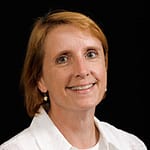
Rebecca Campbell shares about the power of mindset on episode 62 of Teaching in Higher Ed.
The shift between high school and college is pretty big.
Rebecca Campbell
On episode 62 of Teaching in Higher Ed
Voices on this Episode

Show Notes + Resources
- Dr. Rebecca Campbell
- Michelle Miller, from episode #026
- Director and Department Chair for Academic Transition Programs at Northern Arizona University
- Brain Stevenson: We need to talk about an injustice
- using his book for the freshman reading group this year
- Just Mercy
- iTunes
- Stitcher
- suggestions for future topics or guests
- subscribe to the weekly update
Transcript
Bonni: [00:00:00] Promise me you’ll always remember: You’re braver than you believe, and stronger than you seem, and smarter than you think. Today on episode 62 of Teaching in Higher Ed I talk with Dr. Rebecca Campbell about mindset.
Production Credit: [00:00:15] Produced by Innovate Learning, maximizing human potential.
Bonni: [00:00:24] Welcome to this episode of Teaching in Higher Ed. This is the space where we explore the art and science of being more effective at facilitating learning. We also share ways to increase our personal productivity approaches so we can have more peace in our lives and also be more present for our students.
Bonni: [00:00:52] I’m so happy today to be welcoming to the show Dr. Rebecca Campbell she was actually recommended to me by Dr. Michelle Miller who was on teaching in higher ed back in episode 26. Rebecca is the Associate Professor of Education and the Director and Department Chair for Academic Transition Programs at Northern Arizona University. Rebecca, welcome to the show.
Rebecca: [00:01:16] Well thanks for having me Bonni.
Bonni: [00:01:17] I wonder if you might start sharing about your role because it’s a little bit different than some of the people that we’ve had on the show since you clearly have the academic piece of your work but also a lot in terms of students support you share a little bit about your role there.
Rebecca: [00:01:32] Oh I’d love to. I have the greatest job in the world. I think as you said I’m my faculty home is in the Department of Educational Psychology in our college of education where I was wonderfully well supported and had a great time in teaching career.
Rebecca: [00:01:48] But my passion has always been with working with first year students particularly those who are admitted to the university academically interest or maybe psycho socially at risk.
Rebecca: [00:02:00] So I’ve always had a hand in that and over time that evolved into a full time administrative appointment as the director of this department which you mentioned academic transition programs and we focus on essentially the transition from high school to college.
Rebecca: [00:02:17] So we welcome several thousand students who are regularly admitted and help ease their transition both socially and academically into the university environment. And then we also have several different at risk groups of students.
Rebecca: [00:02:32] We work with students who are admitted at risk meaning their high school Core GPA was a little not quite where we wanted it. So they need some extra academic and social support as well as we work with our students on academic probation. That’s what the department does. So we focus all day all the time on students success which is a challenge as well very energizing.
Bonni: [00:02:56] I had a lot of fun researching your background a bit for this episode and it included coming across your blog which I think it starts with a quote from A.A. Milne at least it’s very early in your bio from his character Christopher Robin. “Promise me you’ll always remember you’re braver than you believe and stronger than you seem and smarter than you think.” Why was that the quote you decided to highlight so prominently on your bio.
Rebecca: [00:03:23] I think because it has such a foundational reference to the work that we do in the department so many aspects of that quote relate to mindset and self regulated learning. The bravery strength and intelligence piece are all highlighted there and sometimes students underestimate themselves as well.
Rebecca: [00:03:45] Sometimes students overestimate themselves but the quote I think focuses on that growth aspect of mine said You’re more than you ever seem in any any dimension. And I love that piece too. Promise me you’ll always remember. I think that it’s such a vote of confidence that Christopher Robin mentoring who thing you’ve got to remember you got it.
Rebecca: [00:04:12] So there’s that cheerleading aspect of it and also that reminder you’re your own best advocate. You need to remember the things you need to advocate for yourself. You need to motivate yourself back home. So it’s just really core to what we do in my department.
Bonni: [00:04:30] I have a friend who does a podcast on a blog called Student Caring and right now he’s spending a lot of time on Twitter finding a lot of tweets from students that are about to start college for the first year and just that anxiety that they feel and it’s so great to watch him and his colleague does really encourage them through little 140 word tweets just going.
Bonni: [00:04:49] You reminded me of it. You’ve got this. You’ve got this you couldn’t do this but a lot of times people didn’t really grow up with anyone nurturing a mindset. In fact some young people we know grew up with the opposite of that.
Bonni: [00:05:01] And just how tragic it is because we’re starting to see what the effects are with what we believe we can do or can’t do. When did you first start getting interested in the research on mindset. What do you remember about that.
Rebecca: [00:05:14] I think I know I was first introduced to mindset and all things motivational and my cognitive and learning courses through my graduate program at Texas ANM university as well as I did my dissertation work on a piece of that was focused on a system a logical belief which is sort of like mind set a little bit different but it’s it’s about those beliefs that we as individuals have about where knowledge comes from.
Rebecca: [00:05:44] And to some of that very tied to mindset theory if you believe that the faculty member possesses the knowledge and is handing it over that puts you in a very thick state where either you get it or you don’t.
Rebecca: [00:05:57] As opposed to oh if I didn’t understand that when the faculty member said it maybe I can get it out of a book or YouTube or Wikipedia or office hours or a tutor or or or.
Rebecca: [00:06:10] So if you don’t believe that knowledge is fixed. Coming from one entity then you might engage in more hope seeking behavior. And that’s definitely what we wants to do to engage in self-seeking behavior.
Bonni: [00:06:22] So help us to make the distinction between the type of research you did on those beliefs around knowledge and then how mindset is different then than that.
Rebecca: [00:06:32] Yeah great question and mindset. I think for me the distinction is it focuses more on effort so that you if you have a growth mindset about any dimension of of yourself any attribute although work or forecasting primarily early on focused on intellectual capabilities as well.
Rebecca: [00:06:53] But I think we now see it broadening to other dimensions. But once you have a growth mindset in other words I believe I can improve. Then the natural consequence of improvement is effort. So through effort through practice through skill acquisition through time through energy I can get better at that and that’s what we need students to do if you have a fixed mindset you will leave here village will ever be.
Rebecca: [00:07:21] And if that’s what I believe about myself and there’s really no point trying any harder or doing any more than I’m already doing because it’s not going to produce better results.
Bonni: [00:07:31] And speaking of the mindset I don’t want to start mixing my terms here but how do you see faculty having the mindset and maybe I should pick a different word with students as they come in feeling like they either have it or they don’t.
Rebecca: [00:07:46] That’s really interesting on a number of levels. What we would hope for is that faculty have a growth mindset about their students and that they are fostering that so they believe their students can get better through effort and they’re cultivating that true through their engagement with students having a growth mindset in the classroom isn’t so much about teaching differently as it is about framing the conversation differently highlighting the effort that’s needed rewarding effort.
Rebecca: [00:08:22] Acknowledging that some learning is hard and it takes a while to get it. And that’s OK. And helping students build confidence through all of that effort process.
Rebecca: [00:08:34] And I’m not sure if that’s exactly what what you asked. I know students are faculty. We believe sometimes faculty have your inner ear out to the left to the right.
Rebecca: [00:08:45] Some of you won’t be here I think which was a fixed mindset of maybe 20 years ago faculty that I’ve encountered really don’t have that sort of dualistic thinking that they’re ready to go out of the box or they’re not.
Rebecca: [00:09:00] I I love my faculty. I love my faculty and my department but my colleagues don’t seem to have that very shallow interpretation of me.
Bonni: [00:09:11] Yeah sort of reminds me of I never went to law school but it reminds me of early people telling stories of the early days in law school that kind of thing but that some of them yet promote that.
Rebecca: [00:09:24] And are you hear. You know sometimes those negative stories of colleagues who say well they’re not coming to class because they don’t care. We use the word performance barrier all the time. Well they’re not coming to class because there’s a performance barrier. What is that barrier.
Rebecca: [00:09:38] Is it a personal barrier is it an academic barrier. There’s a reason that they’re not coming to class and that’s overly simplistic. It’s sort of a fixed mindset about things that they really cared about their learning. They’d be here.
Rebecca: [00:09:51] So I think faculty at least that in a. This is a great teaching institution. Amazing place to work with the faculty that really cares about students that we don’t see some of those negative stereotypes of faculty on our campus anyway.
Bonni: [00:10:08] It’s one of those things as you’re talking about it I feel a little bit guilty because I know I can I can fall into the trap as much as my mind knows and believes about about mindset and our ability to impact it’s why I find such meaning in what I do.
Bonni: [00:10:24] But at the same time I was in the conversation we had on the last episode we were talking about students who have to miss cautions they have to. That’s an interesting choice of words. Students who missed classes to go to go to a funeral and sometimes that’s really hard for me to take because grandma passed away and then you’re not going to be here for a week in Hafford two weeks of a semester and I go.
Bonni: [00:10:47] Grandma would understand it’s one of those my cultural my sociological background says first of all I didn’t go to school about far away from where I live. Second of all I don’t have the kind of culture in a family that literally the family shuts down and I was never that close to my grandparents.
Bonni: [00:11:01] All three of these biases that I have messed me up when dealing with stuff like that and at the same time can a student really survive slash thrive if they’re gonna miss two to three weeks of school so I’m sorry for asking you be my therapist. But I struggled with it’s hard.
Rebecca: [00:11:18] We really struggle with those same issues. When the student really disappears for a while. How do you get them back on track quickly when they’ve missed so much and what happens to the integrity of the work. I think faculty do struggle with that.
Rebecca: [00:11:33] The integrity of the classroom experience and two weeks is a quaint significant portion of the semester. So it’s unfortunate that grandma died. However the integrity of the experience has now been impacted and I think those are very different questions.
Bonni: [00:11:47] Does your work ever have you engaging with parents or is that someone else’s role at your institution.
Rebecca: [00:11:54] I do get to engage parents from time to time especially right now as the semester starts. I’ve been talking to parents quite a bit. Yes.
Bonni: [00:12:02] Trying to maybe educate them ever on the idea of sad and some of the things they can do to help their their students thrive.
Rebecca: [00:12:11] We don’t necessarily use that term with the parents as much as I never use the term trial with a parent. I use your student your student your student or our student. They’re mine and yours.
Rebecca: [00:12:28] And I think that helps contextualize the conversation. We’re not talking about your child anymore we’re fucking about this independent you know young adult who’s asking how can we help. How can we help getting resources get them information. I see the problem. What can I do to support both of you. So a lot of what I do with parents is coaching them to coach their students.
Rebecca: [00:12:54] And that’s that seems to work. I haven’t experienced the crazy helicoptering and I talked to parents quite a bit.
Bonni: [00:13:01] That’s wonderful.
Rebecca: [00:13:01] Generally speaking they just want to know they just want to know what’s going on and they want to do what’s in the best interests of their school. So a lot of this answering basic questions about academic policies helps them understand the landscape.
Rebecca: [00:13:15] And then I do think for the most part they guide their students to making the decisions.
Bonni: [00:13:20] When I’m hearing a lot in your language and you just use this word but has the idea of framing and instead of using the word mindset and trying to go on a whole you know.
Bonni: [00:13:28] Let me review my part of my dissertation for you. You know instead of doing that I hear you saying just framing the language when my students come to me and say I’m not a good test taker. I say gosh let’s let’s reframe that a little bit. How about I’m working on becoming a better test taker and that kind of lifts a little bit of that stress.
Rebecca: [00:13:46] Exactly. So what parts of test taking. Are you good at. What are the performance barriers. Where can you improve. Can we can we figure out what those problems are so that we can address them.
Bonni: [00:13:58] One of the things I know comes up a lot for faculty is just feeling the sense of overwhelm. There are so many students and they have such diverse needs and we want to help.
Bonni: [00:14:09] I mean anyone listening to this podcast desperately wants to support and help our students when there gets to be large numbers of students are there ideas that you have for how we as faculty might have an impact on mindset when it seems like it’s not going to be those one on one helping an individual student frame things better.
Rebecca: [00:14:29] I think my number one strategy there would be to normalize health seeking behavior that most campuses are fairly rich in academic resources Supplemental Instruction tutoring learning skills specialist out of the Student Learning Center.
Rebecca: [00:14:47] We have tutoring available in our residence halls writing centers mass centers so office hours Piers recitations all of these things are pretty much part of of most of the higher ed landscape. Students don’t go I think I mentioned earlier health seeking behaviours is a big deal.
Rebecca: [00:15:11] And so if you can normalize health seeking behavior that then in order to succeed you have to ask questions you have to be willing to go and seek assistance and advocate for yourself.
Rebecca: [00:15:23] And how to do that to show up in office as far as making that OK. Telling stories of when they went to tutoring having successful students come back and doing a quick profile I wasn’t doing well either. But here’s what I did do better and here’s the resources that I use. I think that all goes a long way. When one on one individual help is not possible and some of those large lecture sections.
Bonni: [00:15:49] I crack up sometimes because I have a tendency to get forgetful about what it was like for me when I was in college who never went to see a professor in any of my classes until I was failing the class so I didn’t fail any classes.
Bonni: [00:16:01] But when I thought I might get. That’s what got me about desperation got me to his office. So I tried to remember that I try to get in touch with that and go do OK remember how you were and try to make it a little bit more welcoming.
Bonni: [00:16:14] So sometimes you might even talk with students about what office hours might look like. We don’t actually have to sit in my office. I’d be glad to buy you a cup of coffee at the Starbucks that we can walk to. That’s five minutes from our campus.
Bonni: [00:16:25] And just so. Oh and it kind of you don’t have to know what we’re going to talk about we could just talk about life and I think that has helped create a more welcoming environment sometimes for students at least that’s what they’ve told me.
Rebecca: [00:16:36] Absolutely I have a similar story I share with students when I’m teaching about a course that I was failing and that last ditch effort to reach out to the faculty member that really did not go well because I had waited so long that he didn’t think that was necessarily a very genuine but absolutely.
Rebecca: [00:16:57] And as well as yeah you don’t have to know why you’re coming or bring your book bring your notes in the problem and show me exactly where you’re stuck.
Rebecca: [00:17:07] Some of those kinds of things I don’t think it’s obvious. You know talking to a colleague the other day. This is really the first context in which you have an 18 year old showing up at somebody’s workplace knocking on their office door.
Rebecca: [00:17:22] So why would they necessarily know how to do that interrupt professional in their office. Yeah that’s absolutely. Those are actually professional skills. So why would we think students at 18 would know how to do that. Nothing is intuitive to this group necessarily. The shift between high school and college is pretty big.
Bonni: [00:17:42] What have I not asked you about mindset that we should be sure and talk about before we close the episode.
Rebecca: [00:17:48] You know the retention and student success ligature is very consistent in that students come and arrive with lots of incoming characteristics their background their gender their race orientation preparedness all the things none of these things have to be overcome in order for them to be successful.
Rebecca: [00:18:09] Rather there are processes in which the student engagement with the university processes how they deploy effort are highly engaged learning how they use resources and those help seeking behaviors. We talked about that’s what really defines students success regardless of how they showed up at our door.
Rebecca: [00:18:30] It’s the processes by which they engage in all of those different things throughout the college experience. And so I always push when I am fortunate to talk to anybody including this great experience is that those processes can be influenced.
Rebecca: [00:18:48] Guided mentor coached and taught that we can guide teach students explicitly what is the process of learning what is the process of engaging with me during office hours. What is the process of showing up at a new student organization network or are you scared to walk into a room of people you don’t know.
Rebecca: [00:19:07] How do we coach. How do you mentor students. But again making that explicit. Because when we make those processes explicit we’re making effort explicit and we’re saying everyone can grow. If you engage in the right process.
Bonni: [00:19:21] Wonderful. Well thank you so much for talking to me about mindset and I know we actually have a few things to share in the recommendations segment that I’m excited about. First of all I saw about time to remember how I first came across this but I saw someone on Twitter talking about a TED talk by Brian Stevenson. We need to talk about injustice and that’s going to be my recommendation for today.
Bonni: [00:19:45] And it was absolutely such a wonderful talk only to come to find out that I actually wrote a book that is quite popular I just had missed it so far called Just Mercy and you have a little bit to share about his book as well so I’m not going to recommend today watching that TED talk. And since I haven’t read the book yet I’m going to pass it on to you to share a little bit about his book Just Mercy.
Rebecca: [00:20:05] I am always happy to recommend Brian Stevenson’s work to anyone. Thank you. One thing I left out in was what my department does we do all these wonderful student success initiatives and courses but we also are fortunate to house our campuses. Common reading program.
Rebecca: [00:20:22] And so this year we have selected Just Mercy is our 2015 read. And we were thrilled to be welcoming Mr. Stevenson to campus in October. The book itself has a lot of great themes in it about social justice racial inequality issues about some of those differences within our judicial system within our prison system so it touches a beautiful interdisciplinary way across all over the campus about all those issues.
Rebecca: [00:20:52] But Brian also in the book does a beautiful job really focusing on the notion of resiliency and growth that we have to change the narrative about the US in our treatment of others but about also ourselves.
Rebecca: [00:21:14] And to be hopeful and do better. And so when he talks about some of these individuals who have really struggled. He reminds us all about our humanity that we’re all bigger than our biggest mistake. We’re all more than that really bad thing that we’ve done and certainly I’m not equating academic probation to murder because those are two different types of mistakes.
Rebecca: [00:21:39] But I think students are going to see some of that similarity in there that we’re all bigger than any bad thing that we’ve done. And resiliency is is key to being successful.
Bonni: [00:21:54] I’ll put a link. Oh go ahead.
Rebecca: [00:21:58] The other piece of the book that I think is just so profound is he in a really beautiful way. Talks about how we need to reach across the table to provide food for others and to allow them to recover from the states as well as the implied message there is recovering from our own mistakes and having hope for ourselves.
Bonni: [00:22:27] That sounds like a wonderful book and one that I’m definitely adding to my to read list. I’m also going to post a link to the Chronicle blog that I found that talks about your freshman reading group as well as others and it sounded like this is a very popular group for institutions to have adopted for their reading groups.
Rebecca: [00:22:46] The book is yes he has has been fortunate to get a lot of adoptions this year thinking of to Tweddell we’re so different campuses that we know of. It’s always a little hard to track how many campuses have chosen a specific book. Probably the publisher has a better handle on that which is a Penguin Random but yeah it’s a popular program in higher education.
Rebecca: [00:23:09] And definitely a theme that is touched on regardless of the book this shows. And a lot of campuses will choose a book that does hit that sort of identity development type of theme. How are we growing as individuals.
Bonni: [00:23:24] Well thanks for sharing about the reading group and I’d also love to hear what your recommendation is for people listening today.
Rebecca: [00:23:31] Be kind to students may be my recommendation don’t make assumptions. They do have interesting stories lots of performance barriers. Most of them are trying I think harder than we realize.
Rebecca: [00:23:45] But not always putting their effort in the right place. So I think there’s a lot of good work we can do and gently guiding them to different resources different strategies. If we can get that create that safe space to have that conversation.
Bonni: [00:24:01] Such good advice. And since I have like two minutes before I let you first stop recording on the episode and I keep using this language. Performance barriers let’s spend a couple more minutes. Could you give us a couple more examples of.
Bonni: [00:24:15] That’s such a powerful reframing for us instead of me saying this. How do I transition. You gave an example earlier but now it’s lost on me that you know they didn’t show up or that doing this all the sort of negative things. How do we start changing our language to have it be about performance barriers. Can you give us just a couple of more examples.
Rebecca: [00:24:34] Well I think we used to just ask really blunt questions why didn’t you come to class. And so we reach out with e-mails and we use an internal messaging system with our students and we very much say I noticed you weren’t here. What can I do to help you when you get back.
Rebecca: [00:24:53] Anything I need to know is we reframe it right then which I think opens the door to the students saying I have this problem or if if I’m in direct conversation because why didn’t you come to class almost feels like an attack. They know they weren’t supposed to be there. We all know they were supposed to be there. So.
Rebecca: [00:25:14] Instead it’s I noticed you weren’t there. What happened that you couldn’t get here. What was the performance barrier. It’s it’s it’s more of a strength made models and a deficit model to focus on barriers.
Rebecca: [00:25:28] And it’s also a strategy it’s a self regulated model if I can identify what I’m doing wrong. Then I have a shot at matching that to the right strategy to doing it better next time. And very much problem solving approach.
Bonni: [00:25:43] I’ve had so many lessons in the last 10 years as I’m starting my 10th year of teaching and just the power of not making assumptions but to me that’s a daily battle that’s not something I’ve just I’ve already checked the box and I’m going to move on to other lessons in life.
Bonni: [00:25:57] It is a daily battle for me and I still remember as you were talking there was a young man in the class I didn’t know him too terribly well but I’d had him in one unit class a couple of years back and he’s in my class for maybe a month or so and got an email from him and I get so many e-mails every day and it’s going I’m not going to be there probably won’t make it back by Monday. I’m skimming as I’ve reading hundreds of e-mails or what have her.
Bonni: [00:26:20] And I thought in my mind it goes into the trap of just here’s another student whose family decided to take them on a vacation to Hawaii in the middle of a semester doesn’t understand all of us. And it turned out unfortunately I didn’t make the mistake of emailing and saying why are you not coming to class.
Bonni: [00:26:37] But it turned out he was going home to be with his mother who was dying of cancer and she died that weekend. And again I don’t mean to tell such a dramatic story other than you can imagine that it haunts me but in a good way because I didn’t go with my initial scripta reaction.
Bonni: [00:26:55] And I waited and I asked questions like anything I need to know and it did turn out that that’s where he was and I was able to meet him. Thank goodness he was able to make it through this semester and surrounded by friends on this is coming back in the fall see him this week.
Rebecca: [00:27:10] Right we had a colleague do a talk for us on emerging adulthood and one of the statistics he shared was that 70 percent of students in this college age range are not sure the band of that study probably vaguely quoting but that 70 percent of our students don’t believe their adult. But yet probably 100 percent of the faculty believe they’re adults.
Bonni: [00:27:37] Yeah.
Rebecca: [00:27:37] And so there there’s really this mismatch and we make these assumptions about why students are here or not here and what they’re doing and we make these assumptions that they’re acting like adults. They say they don’t believe their adult.
Bonni: [00:27:52] And sometimes they’re not quite equipped to be them yet but we could be some small part in them growing into that too.
Rebecca: [00:27:58] Absolutely. Yes sometimes I use that language. My job is to help you be what you want to be when you grow up and that may only be three units of its 120 degree plan.
Rebecca: [00:28:09] But I’m three units of you becoming what you want to be when you grow up. So how does it stand up in this 15 weeks together.
Bonni: [00:28:17] Well I’m so glad you were able to carve time out of your very busy schedule preparing to train student leaders this coming week and then launching into your semester. And I was down ill and had to cancel on you. I’m just so flexible that I’m so glad to have had you on the show and to thank you so much for being here.
Rebecca: [00:28:35] Well thank you for the opportunity it’s been a pleasure.
Bonni: [00:28:38] It was so great to talk to Rebecca on the show today about growth mindset and she was sharing after I stopped recording about how it can be great to teach growth mindset to students explicitly and then they can actually even start calling each other out on it in the classroom.
Bonni: [00:28:53] And she says her faculty have all been trained on it too. They’ll start calling each other out on it. So I think that’s great. I’m not calling myself out on it this year as I challenge myself to incorporate some of these things.
Bonni: [00:29:04] Thanks for listening in today and thanks for all of your support of teaching and higher ed the podcast if you have any ideas. For future episodes or a guest. Please do that teachinginhighered.com/feedback or you can always catch me on Twitter @Bonni208. I’ll tell you the story of how that came about someday but not right now in the closing. 15 seconds that I have left to record this episode.
Bonni: [00:29:32] You have yet to subscribe to the weekly e-mail that will get all the show notes from every every episode along with an article a week on Teach-In or productivity. Thanks for listening oh you can subscribe at teachinginhighered.com/subscribe. Thanks for listening and I’ll see you next time.
Teaching in Higher Ed transcripts are created using a combination of an automated transcription service and human beings. This text likely will not represent the precise, word-for-word conversation that was had. The accuracy of the transcripts will vary. The authoritative record of the Teaching in Higher Ed podcasts is contained in the audio file.