Follow the Teaching in Higher Ed Podcast
About this Episode
Stephanie Moore + Heather Tillberg-Webb talk about their book, Ethics and Educational Technology, on episode 463 of the Teaching in Higher Ed podcast.
Learning is change.
Heather Tillberg-Webb
On episode 463 of Teaching in Higher Ed
Voices on this Episode



Show Notes + Resources
- Ethics and Educational Technology Reflection, Interrogation, and Design as a Framework for Practice, by Stephanie L. Moore and Heather K. Tillberg-Webb
- Imagination quote from Percy Bysshe Shelley
- Ely’s quote is included in this EDUCAUSE article, co-authored by Stephanie Moore and others.
- CAST UDL
Affiliate income disclosure: Books that are recommended on the podcast link to the Teaching in Higher Ed bookstore on Bookshop.org. All affiliate income gets donated to the LibroMobile Arts Cooperative (LMAC), established in 2016 by Sara Rafael Garcia.”
Recommendations from this Episode

Idea
Make it Your Own
Resource
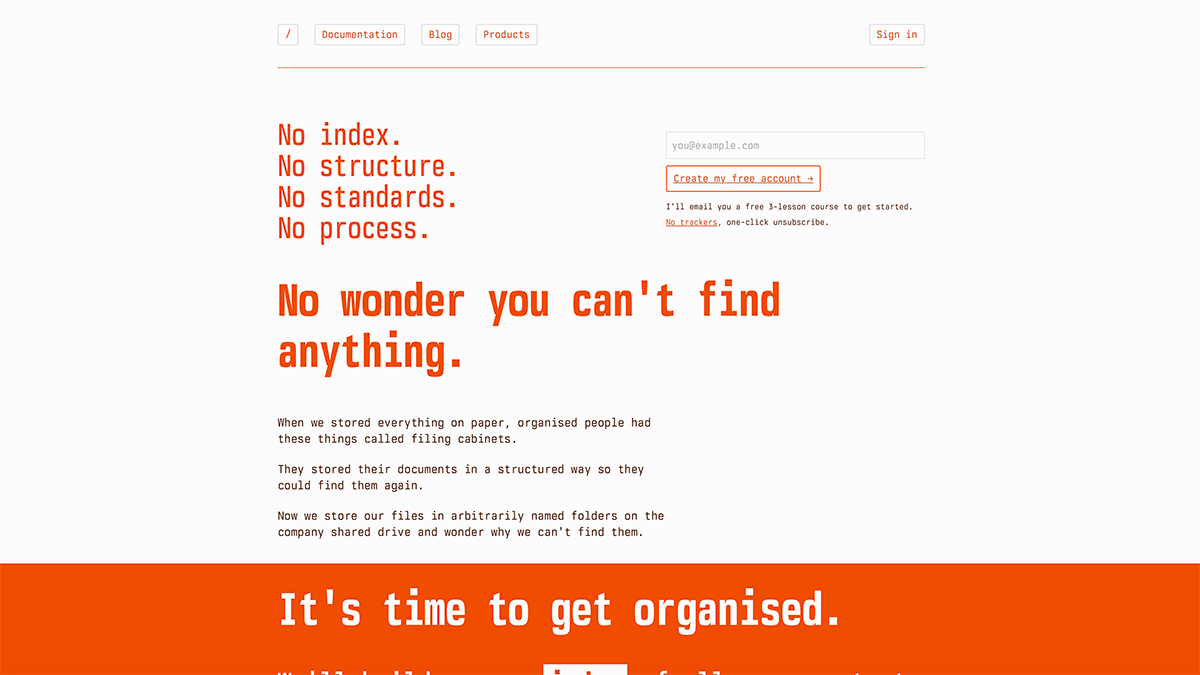
Johnny Decimal
Resource
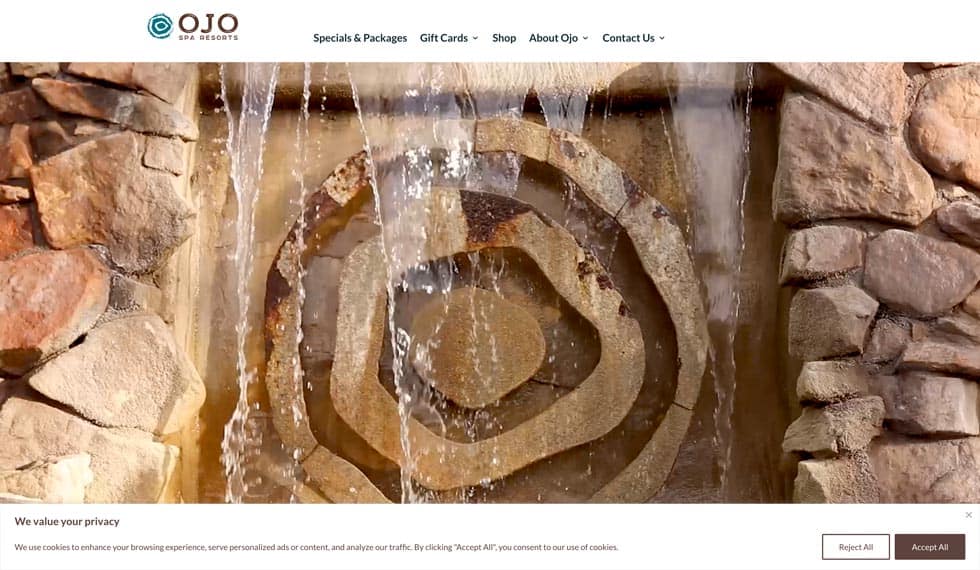
Ojo Spa in Santa Fe

Idea
Get outside and move every day
Book
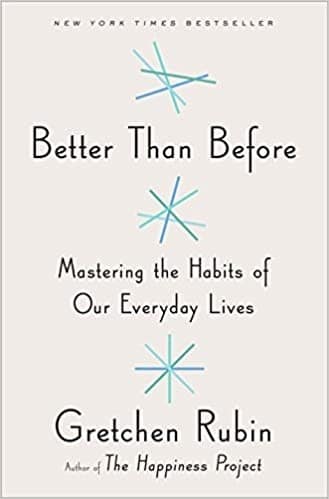
Better Than Before by Gretchen Rubin
Transcript
[00:00:00] Bonni Stachowiak: Today, on episode number 463 of the Teaching in Higher Ed Podcast, Ethics and Educational Technology with Stephanie Moore and Heather Tillberg-Webb.
[music]
Welcome to this episode of Teaching in Higher Ed. I’m Bonni Stachowiak, and this is the space where we explore the art and science of being more effective at facilitating learning. We also share ways to improve our productivity approaches, so we can have more peace in our lives, and be even more present for our students.
[music]
I’m thrilled today to be having two guests join me, co-authors of the new book, Ethics and Educational Technology. Heather K. Tillberg-Webb has two decades of experience in the field of instructional design and academic technology. She currently serves as Associate Vice President Academic Technology at Southern New Hampshire University in Manchester, New Hampshire.
She previously served as Associate Provost of Systems, Planning, and Administration at Leslie University in Cambridge, Massachusetts. She stays engaged with teaching in the Master’s of Education in the Health Professions Program at Johns Hopkins University. Her research interests focus on technology philosophy, and its intersection with educational technology practice and ethical instructional design.
She earned her PhD in instructional technology from the University of Virginia. Stephanie Moore is Assistant Professor in the Organization, Information, and Learning Sciences Program and is the Barbara Bush Foundation, Dollar General Foundation fellow. Her work with these foundations focuses on the use of learning technologies for adult literacy, and guidance for foundations wishing to invest in the development in learning technologies.
Her areas of expertise include online and blended learning, educational learning technologies, multimedia learning, performance improvement, ethics of technology, and integration of social impact into the design and learning process, as well, as you’ll hear in the episode, has a deep background in accessibility and universal design for learning. Across her career, she has helped to build and lead effective online learning programs that have won multiple awards and recognitions. Stephanie and Heather, welcome to Teaching in Higher Ed.
[00:02:54] Heather K. Tillberg-Webb: Thank you for having us.
[00:02:56] Stephanie Moore: Thank you. Happy to be here.
[00:02:57] Bonni: Thank you for giving us such rich things to consider and reflect on. I feel like today’s conversation is just going to be the beginning. Speaking of the beginning, Stephanie, would you talk a little bit about your experiences earlier in your career, working with engineering students, and how you started to consider how technology might impact humanity and vice versa?
[00:03:23] Stephanie: Sure. When I finished my doctorate and graduated, I started off my career as a Director of Instructional Design working for School of Engineering at University of Virginia, and because my interests had been ethics, when I interviewed, some of the faculty I met with were in the Science, Technology and Society department, and this is the stuff that they focus on.
When I was interviewing, they were like, “Oh, you’re such a great fit, because you’re already thinking about these things,” and so when I started there, they invited me to actually teach classes as part of that. I loved the challenge of talking about ethics in the engineering education context, in part because, I really– First of all, I learned from my colleagues a very different way of talking about, and approaching all of this.
They didn’t really talk a lot about philosophy or critical theories. My undergrad is in English, so I’m steeped in critical theories. They didn’t even have their students read codes of ethics or standards, or things like that. Their whole approach was to really analyze, and better understand the design process, and talk with students about, how do we embed ethics and to design? How do we incorporate that in like design specs or requirements?
You may be building a system, where you’ve got to think about these technical specs, and these mechanical aspects, and all of these other details, and, oh, by the way, how do we overlay considerations like safety and health and wellbeing and community impacts, and all of these other things into that? Just the reframing of the whole dialogue was a big takeaway for me, and getting to spend that time in that context, learning from them, reading things I hadn’t been exposed to, learning with students, learning a whole new way to talk about it, that was a really refreshing and invigorating experience.
[00:05:20] Bonni: Heather, Stephanie mentioned about reframing the whole dialogue, and I imagine that [chuckles] is very indicative of what your experience might have been like studying applied linguistics at university. You talk about in the book that, it going even deeper than that for you, as you consider the ways in which education was a tool for social justice.
I also so appreciated you writing about sometimes being a bit naïve at first, after you thought about the ways that, specifically, to our conversation today, the ways in which adding computers to education would make for better learning, and it not always turning out quite as neat and tidy as that. Would you talk, Heather, about those experiences, those early experiences, and maybe a little bit of that naiveté that you had, and how it fits in your thinking today?
[00:06:17] Heather: Absolutely. Thank you. That certainly takes me back in time a bit to go back 20, 25, maybe a little bit longer years. Thinking about a time when it wasn’t common necessarily to have one-to-one initiatives in classrooms, where every student wouldn’t have a laptop, or there would be a real concerted effort to bring computing into education.
Absolutely, I entered the field thinking from the viewpoint of someone who’d been a classroom teacher. It would be so great to bring various computing technology, software, hardware, into classrooms to, I don’t know, modernize the education experience, or whatever you think you’re doing when you’re in your early 20s.
The great part about that, and bringing that up to frame out this conversation is, when I think about all of the different topics we explore in this book, when you are approaching any topic like this with so much enthusiasm, and not necessarily thinking about all the different perspectives that may need to be considered, you have blind spots and you’re not necessarily critically reflecting in all the ways that you need to be about what that experience is going to be like, so I’m sure that, in terms of what I would consider best practices today, in terms of being an ethical and thoughtful practitioner, I violated many of those early, early career.
Also, at that time, some of the capabilities were so new. The idea of Web 2.0 in the classroom, and being able to have students interacting live in a public space, in a public forum, it was something that we promoted in design space, as an instructional design, as something positive for instructors to consider. Of course, at the time, there were some instructors who were enthusiastic, and others who were skeptical.
I think we all need to be skeptical because we know today that when we’re putting students in those public forums, that there’s risks that we’re putting them into, not to say we shouldn’t do it, but it has to be very thoughtful. I think that’s what we dig into in this book, which is, thinking through all of the different ways that we’re asking students or instructors, because we’re coming from a design perspective, but if you’re an instructor, as an instructor, what you’re asking your students to do, and to experience how it aligns with the educational outcomes we need to achieve, and then incorporates a whole other range of considerations that come with all of this technology, that wasn’t a consideration before we were incorporating it into instruction. Things like accessibility, things like security and data privacy, things like– Now, I’m trying to think off the top of my head. Pause.
[00:08:56] Stephanie: Of dignity, care. A lot that we write is equity now.
[00:09:03] Heather: Yes. A lot of different considerations.
[00:09:07] Bonni: There is so much that comes up in the book, and what I love about you sharing just with me today before we started recording, but also, it really comes out in your writing that, you both come across as, of course, very credible people, but part of why you’re credible is that, you are also open to others shaping you, and the ways in which you’ve shaped each other as co-authors.
Stephanie, this is now the second time I’ve gotten to speak with you for this podcast. You’ve shaped my life, and then there’s a lot of people who listen. I love that openness about, and especially, if we’re going to talk about social justice, we are never there. [laughs] We’ve never achieved it, but this yearning for what are our values, and having our values be in alignment to the degree possible, but that’s only possible through other people, and in community, and of course, caring about and orienting our learners in ways that are helpful to me. We do that by recognizing we are learners ourselves.
[00:10:10] Heather: I wanted to interject there.
[00:10:13] Bonni: Oh, please. Yes.
[00:10:12] Heather: What you’re saying also connects with some of the design models we bring into this approach, which is, that look for, not just when we think about design models, in terms of the impact to learners, but going further to the impact to society, so that is something that’s also distinctive about the approach we take.
[00:10:31] Bonni: We’re going to be looking at three broad themes today. First, we’ll be exploring the tension between change and stability, and then we’re going to look at the connections between imagination and ethics. We will wrap up with the easy topic, I say very sarcastically for my transcript reader friends, [chuckles] we will wrap up looking at learner diversity, and design.
As we begin to explore change and stability, you quoted something that I literally just wanted to stop right then, and take a few breaths after I read it, from Ely, this is in 1976. You quote, “Neither stability nor change can have any intrinsic value. The worth of stability is in the goodness it preserves, while the worth of change is in the goodness it brings about.” Stephanie, would you reflect on these tensions between change and stability?
[00:11:35] Stephanie: Sure. That quote, Don Ely was a change researcher, that was really his main focus was studying change, and conditions for change. I’ve always felt like this quote, if anything could serve as a maxim, this is probably it. It’s just such a good summary, such a great way to summarize so many of the points that we’re trying to communicate in the book as well.
Of course, he’s focused on the difference between change, and not change, like do you adopt something, do you reject it? If you do adopt it, how does it get integrated? All of that good stuff. One of the big ideas that we also really toy within this book, is this idea of tensions, and so right off the bat, you get this sense of tensions. In fact, as Heather and I were developing the book, we kept talking about, “Okay, it’s not simple to simply say, ‘You’ve got to make this accessible.'” Then, you go out and you do it, and you make something 100% accessible.
Sometimes accessibility, like other design constraints, starts to run into tension with other considerations. In fact, this is what we as designers and as educators do. We’re constantly navigating these tensions, as we make decisions about, “Okay, how am I going to balance X with Y,” and sometimes even ethical considerations come into tension with each other, like I give example a lot about transparency and confidentiality.
Both of those are great things, but they also tend to run in tension with each other. Change and stability are the same thing. There’s nothing inherently good or bad about change, or about not changing. Rather, what we want to do is pivot to, if we do change, then what is it that we want to bring about through that change, and what are the things that we also want to maintain?
Some folks who maybe talk about like organizational change because, “Oh, it’s always been done, and we don’t want to change that, and so we want to preserve that history.” Well, maybe by changing some of that, we can actually bring some good about. There are others who are ready to pitch all that history, [laughs] and maybe there’s actually some good things that we want to preserve for that.
I feel like this captures both the dichotomous debate that we tend to have about educational technology, that we’re always trying to come to this decision about, it’s either good, or it’s bad, and that there’s nothing in between, and instead, what this quote really suggests is that, there’s a lot of space in between, where we’re doing a lot of decision-making trying to figure out, how are we going to pull those different tension rods in this system that we’re trying to construct, so that we’re either optimizing this way, or optimizing that way.
It really requires stopping to think about the goodness, what is that goodness that we want to bring about, and so how does that begin to inform what changes we make, or what changes we don’t make?
[00:14:43] Heather: If I can just comment on the change aspect of it, I think that’s a really important tension, because as designers or instructors, learning is change, and so there’s always a tension when we’re introducing new concepts between where we’re pushing folks to change, and the discomfort that comes with it. I think a human gravitation towards wanting stability, so always looking for that balance.
I think in any kind of learning design of trying to push towards the next level, but absolutely when we start to introduce technology. I think our cultural stereotypes about technology as adding new technology as positive change, as cutting-edge change, as opposed to necessarily always thinking about the things that we’re potentially giving up with those changes, it’s a natural, I think, bent of the field of instructional design and educational technology, that’s a bit of a challenge in practice, because there’s also an element of needing to affirm that those changes are going to make sense for the designs that we’re working in.
[00:15:51] Stephanie: I think too, this captures a sense of human agency. A lot of discourse around technology is characterized by technology as absolutely beneficial, or technology as detrimental, and the reality, especially, if you look at historical examples, we could tell story after story of how that’s just not how things actually unfolded. The story in the middle between those, is this one of human agency, where it is what we make it, it is what we design it to be, what we implement it to be.
I can take a technology and decide, I’m going to use it this way. We see this a lot around a lot of different technologies too. I’m thinking of assessment technologies, or adaptive learning, or things like that. Those can be designed and implemented in such a way to achieve those visions of learner diversity, and supporting multiple pathways. Those can also be implemented in ways where we inadvertently exclude learners, and we’re not thinking about it in a way, where we’re creating those pathways, instead, we’re cutting off pathways, so there’s a lot of human choice and agency in the outcomes here.
[00:17:04] Bonni: You talk about avoiding these dichotomous ways of thinking, and also avoiding the ways of just thinking that more technology will make things better. [chuckles] I absolutely love the part of the book, where you talk about the importance of imagination, and how imagination can be a way by which we can take those values that we hold, those things that we consider to be a moral good.
You just said this, Stephanie, we could actually then use our own creativity to bring about those reflections of our ethics in technology. Talk a bit now about ethics as a great source and motivator for creative design and problem-solving.
[00:17:52] Stephanie: Right. We may not often think about ethics as a source for creativity, but it really can be a motivator for creative design and problem-solving. In fact, many of the challenges that we have to work on, whether they’re learning design challenges that we’re working on in the field, or maybe broader social challenges where folks in our field are working on some aspect of that, they tend to have some aspect of that.
Maybe it’s a primary need. I do some work with the Barbara Bush Foundation on adult literacy. That’s a significant social need, and trying to tackle that requires out-of-the-box creative thinking around what are we going to do around this need or this problem. Other times, we’re focused on more tactical or technical aspects of problems, like designing online learning, or addressing motivation and learning, or something like that.
On the surface, it may not seem like there’s an ethical aspect or moral dimension to that problem, but typically, there turns out to be some ethical or moral dimension to it, whether that’s accessibility, or really thinking about, “Is this really going to work for all learners? How do I think about different learners in my class, and incorporate diversity, and things like that?” That could start to prompt some problem-solving and solutions in this space.
I think we quoted Percy Bysshe Shelley, I mean, how could you not? In Defence of Poetry, he calls, “The great instrument of moral good is the imagination.” Yes, we really wanted to lean into that, that critiques or criticisms of technology are well-earned, and they’re really important, but I think we tend to approach those more as a front-end analysis of, “Okay, there are some potential benefits, and there are some potential harms,” and identifying those as important work, but then we’ve got to do the synthesis work of that.
Then, we’ve got to take that and say, “Okay, what are we going to do based on that?” Of course, synthesis work, I mean, that’s design work, that’s creative work, where you’re not choosing option A or B, you’re not choosing between do I or don’t I, except to reject. You’re really saying, “How am I going to shape things and devise a solution here, where I can make this better, or I can help incorporate these considerations along with everything else that I’ve got to do.”
That’s where you get into that creative space of generating solutions, and generating ideas. I think about one of the case studies that we have in the book on designing an accessible maker space. Such a great case, because they talk about how they invited students to come in, and do an evaluation of the space, and give them ideas for how to make it more accessible. That’s a good first cut.
Then, they realized that there were some recommendations that they received that were really conflicting with each other. Some students, like students with visual disabilities, really prefer for things to stay in the same spot, so that they can develop a topography of that space in their minds, and they know how to navigate it, that can conflict with other needs or demands to make the space more flexible, more adjustable, how can you move things around?
Then, they moved into this second phase of design of really thinking about, “Okay, these things that we value their intention with each other. How are we going to go about resolving these design conflicts?” That’s where you have to move into a space, like I said, of not simply choosing between option A and option B, but rather really stepping back and rethinking things.
There’s a lot of room in this in this space, or around this topic for imagination. I think too that the reason we wanted to emphasize that, is because we think moving into that design mindset about ethics is a more productive space, where you don’t simply stay stuck on the critique of things, but you start to move into that space of, “Okay, so what do I do based on this?”
[00:22:09] Heather: Just to add to that a little bit too. I think, thinking about design itself, design, learning design is a creative process to begin with. I think that also, that it seems pretty obvious, but I think when we’re starting from the ground up of selecting where it is, we choose to design, to focus our design efforts, sometimes it is a choice that we can make, in terms of approaching a larger project, and sometimes we’re constrained by the projects that are in front of us, but we always have the ability to think about these ethical components as part of the things that we’re creating, building on what Stephanie has just said.
What I think is interesting about that too is, in thinking about, holistically, as we’re designing the positives, as well as the risks, and then considering ethical components that we can bring into it, we’re always going to be having to make a choice. It’s never as clear-cut as this is bad, or this is good. It always has to be a concerted effort to think through, logically, all of the various components to arrive at the best scenario, given the problem we’re trying to solve, given the learners we’re trying to support.
I think that’s both the beauty of thinking of ethics as design, and bringing imagination into it, and also the responsibility of designers to think through all those different components.
[00:23:35] Bonni: Our last area of tension that we’ll be considering is, learning diversity and design. Of course, the ways in which learner diversity, sometimes our imaginations are not broad enough to consider what that diversity may look like. Again, both from a individual and a collective framework. Sadly, we don’t have six weeks to talk about this, I’m going to ask the impossible, [chuckles] and invite each of you to comment a little bit about this tension between the diversity of learners and inclusive design.
[00:24:11] Stephanie: We’ve tried to talk about learner diversities, and when I say “we”, I mean we as educators, as designers broadly, I mean that very broadly and collectively, that we know that diversity is important. We’ve generated numerous ways to try to talk about that diversity, and think about how we incorporate that into our design. I think along the way, we’ve had some challenges with clarifying terms, and muddling some terms and concepts as well.
Also, inadvertently, leaving people behind because of how we’re talking about diversity in that search to be ever more inclusive, there’s actually been some risks to that. What we decided to do was, walk through everything from a historical perspective. Where did some of these terms come from? Start to distinguish, and hopefully, clarify some of that language around like access versus accessibility.
Accessibility, in particular, is a term that gets used so many different ways. It gets used as a synonym for access, and that can be physical access, technological access, whatever. Then, it gets used as a synonym for UDL, and really, it’s a distinct term that’s sitting in between these two constructs. I think what’s important for learner diversity is, first of all, starting to try to clarify, “Okay, am I talking about creating online learning, because I want to create access for learners to education as an example of access, or am I thinking about using OER as a form of access, so that I’m increasing access to learning or education, which is different from accessibility.”
How am I thinking about different learners who are going to come to this environment, and what their needs are going to be, so I can ensure that they’re able to access the content, access the participations, all of that good stuff, so that they are equal participants in the learning process, not just in the content as well. That, of course, then got expanded into UDL and UDL has been going through its own evolution over many years too, and clarifications.
One of the challenges with UDL was that, it emphasized expanding that focus to universal. How can we design environments and learning products, materials, experiences, whatever, so that it’s as inclusive as possible for the broadest range of people? Then, if you look at UDL guidelines from CAST, accessibility falls off the radar. The very community that prompted a lot of these considerations in the first place, suddenly, start to become really invisible from a UDL perspective.
Then, we have the evolution of inclusive design. That has, in some ways further obscured it, because a lot of times when we say “inclusive design”, what we really mean is racially inclusive, culturally inclusive, something like that. We start to lose that history of disability rights and access, or learner diversity, things like that, that fed into that. It’s funny, you can see organizations changing their terms and debating, “Do we want to use inclusive? Do we want it?”
There’s issues with universal, so how do we resolve all of that? It is a challenge to actually try to balance so many different considerations of learner diversity in design, in technology selection, in all of the work that we do. That was partly why we wanted to try to start to create a clearer topography, or topographical map [laughs] of what these considerations look like.
[00:28:14] Heather: I’m going to jump in from a slightly different perspective, and take it from an academic tech point of view, which, in thinking about learner diversity and diversity in general, and the tension with technology, where technology often represents standardization, right? We talk about some STS models around analyzing technology from the point of view of the cultural actors that created that technology like Actor-Network Theory for example.
Just thinking about the technologies that we introduce, introducing certain ways of thinking, certain patterns of thinking, certain cultural knowledge that is then reified in that technology. Then, bringing that to the way that we’ve talked about accessibility, learning diversity, but also diversity broadly, cultural diversity, and just thinking about how to incorporate through approaches that really bring in, I’m going to use the word “stakeholders”, but bring in representatives of cultures, and audiences that we’re trying to reach with our designs and with our technology implementations, with those designs to ensure that we’re bringing in multiple perspectives because there’s a risk.
I think the more that we standardize with our technology of sometimes cutting out multiple perspectives. We really try to call the literature for models in instructional design and structural technology that looked at ways in which we could incorporate different cultural perspectives, as well as what Stephanie spoke to, in terms of inclusive design, broadly.
[00:29:44] Bonni: Well, I feel we have just gotten started [laughs] talking about this magnificent work. I just want to thank each of you again for your generousness as authors, and truly, co-authors, because I see both of you, and I see the conversations and relationships that you have had for all of these years. I just really, really enjoyed the book and thank you so much for all that you did, and for agreeing to be on the show.
This is the time in the show where we shift gears a little bit, although maybe not too much, we’ll find out. [laughs] This is the time in the show where we each get to share our recommendations. My recommendation is a little bit on the geekier side of things. I came across something called Johnny Decimal. Johnny Decimal is one person’s approach to this challenge. I’m quoting him here, “When we kept everything on paper, organized people had these things called filing cabinets. They stored all their documents in them in a structured way, so that they could find them again.”
Side note, or like me, just leave a giant to-be-filed stack back in the day, when I used to have a file cabinet. Anyway, so he says, and I’m quoting him again here, “Now, these same people, store all of their files in arbitrarily named folders on their computer’s shared drive, and wonder why they can’t find anything. Thousands of emails, hundreds of files, file structures created on a whim, and six layers deep. Duplicated content, lost content. We thought search would save us from this nightmare, but we were wrong.”
I got whisked away, and would invite you to get whisked away with Johnny Decimal, and consider whether your file naming conventions and folders’ naming conventions, and perhaps your calendar, and perhaps email, or wherever you store digital information, might benefit from something like Johnny Decimal. My second recommendation is to invite you to make it your own, because I found there were some aspects of the Johnny Decimal thing that really worked for me.
To give you just a brief, brief look at it, it basically categorizes. He says, “Don’t make any more than 10 categories in your life.” One of them might be more like administration and one of them might be, for me, the podcast, that kind of thing. He says, “Don’t do any more than 10.” Then, under those 10, there are some items, but he really recommends not going down to that next layer deeper than that, that’s his organization.
I found that I needed, I experimented and I created a taxonomy that was somewhat like his, but then I started to make it my own. There’s a home decorating show that I like called the Home Edit, and they like to organize things like books in rainbow. By the way, I don’t do books in rainbow, I’m anti books in rainbow. What I got a kick out of doing with this, was to realize that these categories, I could put an emoji on them, and then the emoji actually turned out to be a rainbow.
I lead an area called Teaching and Learning, and I realized that could be the orange in the rainbow, and a peach is a fruit. Hopefully, we’re getting fruit from teaching and learning. You can see where I’m going with this. Make it your own, play with it. The last thing I will tell you, my colleague Jim Darlac said I told him all about Johnny Decimal. I sent him the Johnny Decimal Thing.
I suspect that, as colleagues, we will be going down deep into Johnny Decimal. He goes, “Oh, but wait, it’s no longer Johnny Decimal. It’s now Bonni Decimal.” Just wait, everyone, be on the lookout for Bonni Decimal, because I think my colleagues and I, might be having even more fun with this idea. By the way, Jim Darlac is a librarian, as you might expect. [laughs]
Just wait, because I think we’re going to be having some fun figuring out how to make ourselves a little bit more digitally organized with the inspiration that came from Johnny Decimal, and who knows? Bonni Decimal. It could happen, it could happen. I’m going to pass it over now to Heather for your recommendation.
[00:34:04] Heather: All right, my first recommendation is to get outside and move every day. Then, in the spirit of sharing resources, I don’t know if this is how these recommendations should work, Bonni-
[00:34:16] Bonni: [chuckles] There are no rules.
[00:34:16] Heather: -but I’m going to say sky’s the limit. I’m going to recommend, just in terms of fun reading to think about how to change one’s own behavior. I enjoy Gretchen Rubin’s Better Than Before, where I don’t know if that’s something people have recommended before, where she outlines some strategies for thinking about habit change.
[00:34:36] Bonni: Oh, great. I know her. I’m familiar with her work, but I don’t think that one’s been recommended. Even if it had, it’s fun when something gets echoed because then that really means we should be paying attention. That sounds great. Thank you so much. I love getting outside and moving every day, too, and I love being able to form new habits.
By the way, Heather, mine that I’m working on right now, in case you’re stretching, I am becoming a person who stretches. I am already a person who gets outside and moves every day, but I am [clears throat] becoming a person who stretches. [laughs] I imagine I could take some inspiration from Gretchen Rubin’s Better Than Before when it comes to my work on stretching.
[00:35:15] Heather: I can relate to that as well.
[00:35:16] Bonni: Oh, good. [laughs] Did you like how I phrased that? You can see, I’m grinding my teeth as I say, “I am becoming a person who stretches.” All right, Stephanie, what do you have to wrap us up with?
[00:35:27] Stephanie: I love all the recommendations so far. First of all, I have to share in response to yours, Bonni, I have a folder on my computer that’s just labeled “Everything”. [laughter] I think that comes from years of working on a computer, and having to migrate and stuff, so it’s like everything’s in there. [laughs]
[00:35:46] Bonni: You’re not going to miss anything, as long as you take that with you. [laughter]
[00:35:50] Stephanie: That’s right. I’ll still have everything with me. [laughs]
[00:35:54] Bonni: Oh, thank you so much for telling me that. I love that.
[00:35:58] Stephanie: I haven’t done this in years, but this past weekend, a longtime friend of mine, we took a retreat to Ojo Spa in Santa Fe, it’s O-J-O, Ojo Spa, and it was the best thing. I guess that’s going to be my recommendation. I desperately needed that retreat. I had been hitting a point where I was very tired, especially, after working on a book like this that has really been a long, I don’t want to call it a slog, because it’s been a joy, but it’s been a lot of hard, hard work.
I think, right now, I’m worried about burnout and mental health, and my own as well as more broadly. If you’re looking for a place to get away to in the truly enchanting land of New Mexico, Ojo Spa is fantastic. They have hot springs, so we could soak in that. Of course, we got massages and facials, and all of that fun stuff, but we were commenting on how it’s such an open and accessible spa.
Folks from Albuquerque were just doing day trips up, and it didn’t feel like that elite experience at all, where we were worried about much younger, thinner, [laughs] bodies floating around us. Instead, it just felt so much more than that, much more welcoming and opening, and, boy, was it rejuvenating for me. I needed that. Whether it’s a good stretch in your day, or a trip like that, I guess that’s my recommendation.
[00:37:32] Bonni: Oh, my gosh, that sounds amazing. As someone who tries to stay away from spas for the reasons that you have cited, how nice that there could be one [laughs] that exists, where I might feel that sense of belonging. That sounds amazing.
[00:37:47] Stephanie: Belonging and acceptance. That’s right. [laughs]
[00:37:49] Bonni: Yes. I’m feeling this through line that has gone through this entire episode, and our entire relationship, too. That’s so wonderful. Well, thanks to both of you for your generosity of being a guest. I know it was not easy for either of you to carve out time in your week to do this, and we had to get creative on our schedules, but I’m so overjoyed that we still got to have this conversation.
I’m so excited for people to learn about this book. I’m telling you, people, you got to pick it up. [laughs] It’s really, really an important piece of work that is going to make a contribution to expanding our imaginations, such that we can meet diverse learners’ needs, using technology in ways that are more effective than what we do today. Thank you for all of that.
[00:38:32] Stephanie: Thank you for having us. It’s been a pleasure.
[00:38:35] Heather: Thank you very much, Bonni.
[music]
[00:38:39] Bonni: Thanks once again to Stephanie Moore and Heather Tillberg-Webb for joining me on today’s episode of Teaching in Higher Ed. Today’s episode was produced by me, Bonni Stachowiak. It was edited by the ever-talented Andrew Kroeger. Podcast production support was provided by the amazing Sierra Smith. If you’ve been listening for a while and have yet to sign up for the weekly email updates, you’ll get the latest episodes, show notes, as well as other goodies that don’t show up on the regular episodes.
Head on over to teachinginhired.com/subscribe to not have to remember to go look at the show notes, and the transcripts, and all that other good stuff on the web. Thanks so much for listening, and I’ll see you next time on Teaching in Higher Ed.
[music]
[00:39:38] [END OF AUDIO]
The transcript of this episode has been made possible through a financial contribution by the Association of College and University Educators (ACUE). ACUE is on a mission to ensure student success through quality instruction. In partnership with institutions of higher education nationwide, ACUE supports and credentials faculty members in the use of evidence-based teaching practices that drive student engagement, retention, and learning.
Teaching in Higher Ed transcripts are created using a combination of an automated transcription service and human beings. This text likely will not represent the precise, word-for-word conversation that was had. The accuracy of the transcripts will vary. The authoritative record of the Teaching in Higher Ed podcasts is contained in the audio file.