Follow the Teaching in Higher Ed Podcast
About this Episode
Melissa Salazar shares about serving our Hispanic students on episode 264 of the Teaching in Higher Ed podcast.
Whatever we say is a reflection of how we’re thinking and processing things.
Melissa Salazar
On episode 264 of Teaching in Higher Ed
Voices on this Episode


Recommendations from this Episode

Transcript
[00:00:00] Bonni Stachowiak: Today on episode number 264 of the Teaching in Higher Ed podcast Dr. Melissa Salazar shares about serving our Hispanic students.
[00:00:12] [music]
[00:00:12] Announcer: Produced by Innovate Learning. Maximizing human potential.
[00:00:18] [music]
[00:00:22] Bonni: Hello, and welcome to this episode of Teaching in Higher Ed, I’m Bonni Stachowiak and this is the space where we explore the art and science of being more effective at facilitating learning. We also share ways to improve our productivity approaches, so we can have more peace in our lives and be even more present for our students. I’m so pleased today to have the founder of ESCALA educational services, Dr. Melissa L. Salazar, joining me for today’s episode of Teaching in Higher Ed. She has over 20 years of experience in the field of education as an instructional coach, curriculum designer, grant writer and professor of math and science education.
Melissa launched ESCALA educational services in 2013 to address growing collegiate interest and best practices in teaching and learning. “Escala” is Spanish for “striving”, as a consortium of higher education consultants based in the U.S. Southwest who are committed personally and professionally to increasing the retention and graduation rates of underrepresented students in higher education. ESCALA works specifically with Hispanic-serving institutions, HSIs, to close the gap in educational access and completion rates for Latinos mainly through faculty development programming and remedial program evaluation. Melissa, welcome to Teaching in Higher Ed.
[00:02:00] Melissa Salazar: Thank you, Bonni, for having me on, and I forgot to tell you, but it’s my birthday.
[00:02:04] Bonni: Oh my gosh, happy birthday. [laughs]
[00:02:06] Melissa: Thank you. I actually scheduled it for my birthday because this is going to be a fun different thing for me to do today than my usual work.
[00:02:13] Bonni: I guess so. [laughing]
[00:02:14] Melissa: [laughs]
[00:02:15] Bonni: Well, I only wish I would have planned a this is your life episode.
[00:02:19] [laughter]
[00:02:20] Bonni: “And guess who’s here?”
[00:02:21] Melissa: No, that’s okay. You don’t have even to ask me how old I am, but yes, I’m very excited.
[00:02:26] Bonni: Well, It’s wonderful to celebrate you and the work that you do because I know that it is your life. The sense of purpose that you bring to the work that you do is absolutely infectious and very evident from the moment I met you until now, all this time later.
[00:02:42] Melissa: Well, thank you. Thanks.
[00:02:44] Bonni: I mentioned to you that as of this particular recording on your birthday, [chuckles] I have only watched a tiny snippet of Brené Brown’s Netflix special. One of the podcast listeners suggested it that it will be good for listeners to watch, and I actually planned a listening party at our campus next week. I did watch enough of it to hear her say this little thing about when she meets strangers on the airplane, that if she doesn’t feel like being chatty she can just say, “Oh, what do you do for a living?” She says, “I study shame, what do you do?” [chuckles] I thought I would ask you, Melissa, what do you for a living? Or maybe how do you explain this to strangers on a plane?
[00:03:27] Melissa: Well, it’s funny because I spend a lot of time on planes, so I related to that story when I heard her say that too. It can be really challenging to explain quickly what I do, but generally, down to just a one-sentence explanation, ESCALA, the business I started and now run, is a group of people who coach professors on how to work with students better so that they can learn better, succeed in college and graduate.
We’ve come down to that. I don’t say higher education and I don’t use words like Hispanic-serving institutions, because a lot of people still aren’t familiar with what those are. In general, it’s coaching college professors, and most people know that that’s unusual, but sometimes it is like a pin dropping and then they’re like, “Huh, that’s interesting. I don’t know what to do with that information,” and they turn away and go, “Okay, I’ll go back to my book.”
[00:04:26] [laughter]
[00:04:27] Bonni: It tends to be one of those things that people do too as a culturally this polite thing, “How are you?” “I’m fine, how are you?” But not that they’re mostly don’t want to dive in too deep. [chuckles]
[00:04:35] Melissa: Yes. Everybody has a college story who’s been to college, or if they’re a parent or a grandparent they have college stories. Sometimes it does start a whole litany of complaints about college teaching and this one professor, and sometimes it’s on the positive, but most of the time I get to hear about the one professor that was the meanest person they’ve ever encountered, which is all great information for me. It’s not a job that’s really been promoted or created in some big way, so people are like, “Well, how did you get to do that?” Then I have to launch into the longer story and I’m never sure if they really want to know, [chuckles] because it’s a long story, but yes, they are like, “That’s unusual. That isn’t what I thought you would say.”
[00:05:22] Bonni: That is part of your story too that I’d love to hear more about, because so many times, students, many of us had graduation at our institutions and there’s such a sense that these young people have of, “Just help me figure out the career path. There’s something that I haven’t learned yet, a book I haven’t come across, or just some little bit of advice,” and the fact is our paths are so rarely planned out. I know yours was not either, so could you talk about how you got started in this work?
[00:05:54] Melissa: Yes. It’s crazy, and I feel like I’m playing catch up with people like you who really have a lot of experience in the higher ed. It’s hard for me to admit, but I did not study higher education, and my own pathway through higher ed myself– My background is actually in chemistry, in chemical engineering, believe it or not, and so that’s what my bachelor degree was in, was in chemistry, chemical engineering. I knew that I didn’t want to be a scientist, so I was drawn to teaching mainly because I had just absolutely bombed my undergraduate experience.
I went to UC Berkeley, I had a very negative experience just navigating a large institution, it was very competitive, and all of that caused me to think that I just wasn’t really going to be a very good scientist, even though I was interested in chemistry. I just didn’t know what to do with myself, so I think like a lot of students, you are on a degree pathway, and then you’re realizing along the way that maybe this isn’t a good fit, but it’s too late. I just finished the degree after actually dropping out for a year and not knowing if this was the right path. I was like, “I better just go back and finish it.” I had a very poor GPA, was really discouraged about myself.
This is going to sound terrible, but I actually went into teaching because I didn’t know what else to do. I had a lot of teacher friends and they had encouraged me, “Just try this out.” I was actually a teaching assistant in a science classroom in an elementary school in the San Francisco Bay area for a couple of years and then got a job at Lawrence Hall of Science which is run by UC Berkeley and it’s a big science education center. That’s where I really found my calling, which to me was talking about science to non-scientist and also working with children who were learning science. They taught me a lot about how to organize information. It’s really my early training, and what I do now is just how do I help engage people in any topic?
They gave me the framework for that, and I was like 21, 22 when I started that job. I worked there for several years. I bounced around in the science education world before deciding I wanted to go to grad school, but at that point I was still thinking of myself as a scientist, so I got a master’s degree in food science and technology and still wasn’t thinking about education as a career, I don’t know why. I had already done it, but I was like, “Maybe I’ll go back and do science.” Again, it just wasn’t clicking yet.
Then, when I was in my master’s program, someone in the PhD program in education pulled me aside and said, “You’re really doing a lot of work that feels like you should blend the two of your degrees in chemistry and food science with education.” I went over to the PhD program applied, and it was a whole new world. I had never taken an education class in my life. I was in my 30s and I had finished the master’s and the bachelor’s and I was in this whole new world. I remember my very first class as a PhD in education, I didn’t even know what they were talking about. I just sat there. I was like, “What are these words, pedagogy and andragogy?” People were throwing out all these words, even like sociology and anthropology terms, I had no idea what they were talking about.
I spent about a year in that program just listening and looking things up at home, [chuckles] trying to figure out what is these education people talking about. I feel like that’s helped me a lot, because I have still new eyes, I think, on education. Even after finishing my PhD in education, I still feel like I’m learning. I didn’t take any classes in higher ed, so now I do a lot of background reading just to catch up. How did higher education have a culture and where did that come from, because I didn’t take any classes in that.
Anyway, that’s been my career pathway and when I graduated with my PhD, I was still thinking, “Okay, I’m going to go back into STEM education,” but I did it as an instructional coach. After I finished my PhD, I was an instructional coach for several years before thinking of this idea for ESCALA. I was a K12 instructional coach and then noticed that I was teaching college at that point as well, which a lot of other PhDs do. They teach an adjunct here and there. I noticed that my college colleagues were the ones that really wanted to know strategies to engage students.
I said, “Well, I know all that, but I only know it in the context of K12, I wonder what it would be like to translate some of these things that K12 teachers get trained in and train college professors.” I looked around and sure enough, I couldn’t find very many programs for college professors to go to. This was 2012, that I had the idea and I said, “Well, let’s give it a shot and let’s ask if some colleges around here want to sign up for a program.” I had a colleague, Kathy Berryhill, who still works with us in ESCALA, and we drummed up a program. Just from word of mouth, it grew and grew and grew into seven years later we’ve worked with several hundred faculty and more than 30 different institutions of higher ed across the U.S.
Obviously, the need was there, and I just had it at the right place right time. Then, I guess we did a good enough job in the beginning that it really became a word of mouth, so that now we haven’t had to do a lot of marketing. It’s really been fun to have people call us and say, “Well, I heard about you guys on this and that,” or, “I had a colleague who went to this, can you tell me more?” It’s really been a network of folks that have really sold our program by going to it themselves. We haven’t felt like we’ve had to formally market the program, hardly at all.
[00:11:47] Bonni: The group of institutions that you serve are known as Hispanic-serving institutions. I know this is a dangerous question to ask because [chuckles] you do know a lot about that, but I mean-
[00:11:58] Melissa: I’ll try to keep it short. [chuckles]
[00:11:59] Bonni: -we have lots of people listening and not all of them will be familiar with what that entails.
[00:12:05] Melissa: Sure. Hispanic-serving institutions, because it’s a mouthful, they’re usually shortened to HSIs, the acronym HSI. HSIs are a federal designation of an institution that’s based on enrollment. The enrollment criteria for being an HSI is that you have a quarter or more of your students declaring themselves as Hispanic or Latino backgrounds. That doesn’t happen automatically, there’s a lot of things that the college needs to do. They need to apply to the government and get designated from Department of Ed, and get on a list, but once you get on that list, you are eligible to apply for funds that are designated just for HSIs.
When I tell people about it, most people are familiar with HBCUs, the historically black colleges and universities, or native-serving institutions. It’s similar, but it’s not, because those institutions often have mission designations, meaning that they started that way and that was part of the reason the college exists. HSIs are very different because many of them have nothing in their mission that says anything about serving Latinos, but their enrollment meant that now they’re serving a large number of students of Latino backgrounds, and then they go, “Well, what are we supposed to be doing?”
The big question in the HSI world right now is, what does it mean to be serving? It’s not enrolling, but now we’re talking like they’re here. What do we do? We tapped into that by saying to ourselves, “Well, we have a lot of experience teaching Latinos here in New Mexico where ESCALA grew out of, and almost all of our colleges are HSIs.” In fact, I think every single College in New Mexico is an HSI. We felt like we had some experience that we could help other transitioning HSIs around the country learn more about what the institution needs to do and what professors should be thinking about.
[00:14:07] Bonni: Now that we know the definition of HSIs, I know there’s so much more to it. Could you talk about really the importance of these kinds of institutions?
[00:14:18] Melissa: Sure. The importance of HSIs is to me are that this is where equity work is being done. I’m sure your listeners know about equity, and its role, and higher education, and that this is something I think really grew out of K12. K12 educators have been hearing about equity for decades, but more recently, I think higher education started to look at subgroups of students that were not succeeding at the same rate. Meaning that they were not being retained, they were not graduating for some reason, they were stuck in different majors, are not across the board at the institution, enrolled in the same ways.
I think for us, just seeing over the last seven years of our own growth, that institutions now have equity officers, they have diversity officers. We did not see that seven years ago. I think the focus that HSIs have is providing equity, meaning greater success in higher education, more degrees granted to Latinos. There’s a lot of really neat stuff on Excelencia in Education, that shows the importance of HSIs and providing equity for the growing number of Latino students in the U.S. That is a huge demographic that we need to serve because they’re also in the K12 population, which means HSIs to me are just going to keep growing.
Every year Excelencia puts out how many HSIs there are, and I think there’s over 500 this year. There was 470 last year, so you can even see this cool chart they have of just– It’s skyrocketing. There’s a need for all of us to understand, whether you’re in an HSI or not, that Latinos are a very large demographic of students coming into college. I always like to joke, “If you’re not in an HSI, you will be in one soon.”
[00:16:16] [laughter]
[00:16:16] Melissa: This is something that everybody needs to pay attention to. For the professors in HSIs, it’s like, “This is what you signed up for.” These are the students that are here. Even if the demographics shifted rapidly, your job is always to serve who’s there. We can’t wish away, we can’t talk about what used to be and go backward. There’s absolutely no going backward with Latinos in education in the U.S. It’s pretty exciting, I think, to be teaching in an HSI.
I know you think that too, because I’ve been to your college, but sometimes it can be a little bit– I think professors feel trepidatious about discussing it because they’re just not sure. They’re not from that community, they’ve never taught large numbers of Latinos, so they’re are confused, I think, a little bit and want some guidance about what it means to have large numbers of Latinos in their institution.
[00:17:08] Bonni: Unfortunately, one of the things that happens in these dramatic changes, because it really is happening across the country, is that it can unroot or expose some of our systemic racism. A classic example of that, to me, would be that we start othering those Hispanic students who are joining our institutions, and then we start to describe that entire population as underprepared, and it becomes this whole thing of, “They’re not ready. What is going on in those K through 12? They don’t do it right, and they’re not ready.”
I know one of the things that you do so well is to shift minds toward an asset-based mindset. Could you talk a little bit about how that language changes, how that paradigm changes? I know, it can’t be as easy as you make it look sometimes. [laughs] It just can’t be, because that’s how systemic racism works. Could you share some of what goes on in terms of your approach and where we can be thinking differently there?
[00:18:12] Melissa: Sure. It’s such a big question. I really think that this is the root of what ESCALA does now, and I think we’ve come to that place after many years. It might be surprising for you to know that the first two or three years that we did programs, we actually avoided issues of race and ethnicity. We tried to talk about our program as, “You’re going to come and learn how to be a good teacher.” Then we tried to slip in a few things about Latinos, and Latino students, and Latino culture on the side. We were actually a little bit nervous about it ourselves, mainly because I don’t have anthropology as my background. I’m again, a STEM educator, and these things were coming right out of my mouth.
It’s like I just didn’t have the training to talk to people about race and ethnicity in the fluent way that I do now. [chuckles] We noticed when we were doing these programs in the first few years that people would just say things like you just said. Like, “I’m not sure they belong here.” These othering statements, pushing back on the whole idea of, “I can be a good teacher for all of these students.” They would say, “Well–” I don’t mean to insult anybody who comes to our programs, but it was just a pattern that we could tell. When people get nervous about not being a good teacher, they push back on it. “It’s the students’ fault. There’s nothing I can do for these students.”
We decided, after a few years of this that we had to unpack that to get anywhere with folks in a more substantial way. We needed to say, “Let’s put all of your attitudes on the table and discuss this and look in the mirror.” That’s when we developed our deficit and asset-based cultural component of our program that we do. Pretty much no matter where we go, we always start off by talking about deficit and asset-based thinking and language. We know now that our cognition, whatever we say is a reflection of how we’re thinking and processing things, so that when we check our language, we check our thinking as well.
That’s where that comes from is that we’re saying, “Yes, you may feel like your language is shifting in our program or we’re asking you to use language that’s unfamiliar to you, but that’s the disruption we’re looking for.” That you think a little bit before you start spurting out something that you actually go, “Oh my God, that means that I think that student doesn’t have the capacity to learn.” We really talk a lot now about if you’re saying the student is underprepared, whether or not they’re underprepared is really not the issue, the issue is that they’re there in your classroom.
What can you do now? How can you reach out to this student and understand what they can do and how they can be engaged? How can you reach out and also tell them they have assets, because guess what, the students have deficit attitudes about themselves, it’s not the instructors only. I’ll talk a little bit later, hopefully, about what we’re doing now to talk to professors about the patterns of thinking students have about themselves, because we think this is one of the key problems that Latino students as a whole have about themselves as a group coming into college they have heard.
Guess what, they’ve heard adults in their life say they’re underprepared and that they can’t do college, and they have been through all sorts of educational traumas in the K12 system. For us to talk about them that way– The students know. They’re no dummies. They can hear it and they also can hear it in the way you express your expectations for them. We call it deficit versus asset-based thinking, and we compare and contrast the ways we can say something to a student, but we really also feel like we draw on Laura Rendón’s work and Tara Roso have teamed up to do a lot of work on Latinos in college.
They interview students who have succeed and say, “What were you assets? What did you draw on in order to succeed and make it through college?” Especially if you’re a STEM major doing these really rigorous programs that Latinos typically haven’t been as successful in. They say, “Well, my family. My family is my asset, my community. The fact that I have faith,” which I think is a wonderful thing for professors to know is that Latinos aren’t coming in with only deficits from their K12 backgrounds, they’re coming in with substantial assets that need to be put on the table.
If they know those, then they can have something to work with that’s coming from a positive perspective instead of just going, “My gosh, what am I going to do,” and throwing up your hands, which I think most people don’t want to do, but it’s a human aspect of feeling unsuccessful. I think for us to demonstrate, “Look, there’s research done on this and students do come carrying these assets with them, use them,” and then they go, “Okay, I can do that.” We’re always just trying to educate so that people feel like they have some strategy with students that they may have been previously unfamiliar with.
[00:23:30] Bonni: There was that study that came out about nine months ago that shared the oh so obvious conclusion that if we as professors believe that our students aren’t capable of doing things, gee, they will be less likely to be capable of doing things. Then also what you’re describing is this is an old leadership principle from Stephen Covey way back in the day of things that we can control and influence, and spending our time focused on those things I can control my class planning, I can control how I chose to spend that time, I can control my parts of the way I show up for the work that I do. I can’t really control what happens with students once they leave my classroom or before they even got to me, and it’s not going to be really helpful to me or to them if I spend a lot of time focused on that. In fact, I’m going to have limiting beliefs and I’m going to make all kinds of assumptions that are not going to be helpful.
[00:24:25] Melissa: Right. Like I said, if someone’s feeling right now, listen to it, going, “Well,” but it is true that they’re underprepared, which we do have in our workshops. People will raise their hand and go, “Well do you want me to ignore the fact that they’re underprepared?” We’re like, “Absolutely not, but let’s take a look at how people can be accelerated. Let’s take a look that this isn’t– It doesn’t mean it’s a done deal.” I think what you just said is that you can show up for your work, there are things that have been shown to accelerate students’ learning who may have not have had that science lab in high school, who may actually have a fixed mindset of themselves; what can you actually do because the brain is not done.
Then we talk about all the things about the brain, so that people understand, like you said, that study, it felt like a “no duh” study but it’s not yet. Professors have sometimes a very fixed mindset about students. When they walk in, they see the student looking a certain way, slouching in their chair, or not making eye contact, whatever it might be, we all have these biases and it makes us lower our expectations or just jump ahead and go, “Well, that student’s probably not going to pass my class,” or whatever you’re thinking in the back of your head.
We’re trying to figure out how do you get to those narratives to know they even exist, because they happen so quickly, you just don’t even realize they’re happening. If we just pause and look at the way it looks out loud, going, “Oh my gosh, have I ever said these things to my students? Holy cow.” That whole myth about the professors saying– It’s not a myth but it’s kind of mythology, “Look to your left, look to your right. Only one of you is going to succeed.” Those kinds of things we hope are in the past, but all of those kinds of things can come out of your mouth maybe implicitly or explicitly, and the students are just waiting to be told that they don’t belong.
There’s a lot of research on Latinos and belonging in the college classroom and that they’re very, very sensitive to the professor, whether or not the professor believes in their ability to learn. That we think is one of the biggest things we’ve got to attack is that if you’re using language that shows students you’re not sure if they can learn, then really you’re not serving your Latinos very well, because we know that they’re a very sensitive group, too.
“Is the professor really on my side? Do they want to help me here?” Because they’re already assuming, a lot of them, that you don’t. That’s a surprise to professors who are very well-meaning and really want to do good work. They think the students all think that they deserve to be there. That’s usually a surprise to them that, “Oh my gosh, they need me to do that, really? I can do that.” [laughs] That’s a good thing that comes out of that.
[00:27:19] Bonni: What have you found makes faculty motivated to make changes in their teaching? I should say to make changes in our teaching, because I’m part of this too. [laughs]
[00:27:29] Melissa: It’s been such a fascinating journey for me with motivation, because like I said earlier, these are social science principles and cognitive science principles about motivation. We’ve done a lot of work looking at what motivates humans in general, and then trying to develop a program that is parallel to those so that we’re not beating anyone over the head saying, “You should.” We try to actually stay away from what we think is demotivational. I’ll talk about that for a second first, which is that faculty come to PD thinking they’re going to be told that they’re not doing it right, that they’re going to be scolded. There’s a lot of PD in the past they think that has been like, “Here’s the best way, and you guys should be doing this, and if you’re not doing it then you’ve done a bad job.”
I think as humans, we’re like, “Am I going to be okay when I come to this PD, or am I going to find out I’ve been really a bad teacher?” I think that’s– We’ve heard over and over and over faculty appreciate that we don’t scold. We don’t ever say, “How many of you, raise your hand, have ever done this really terrible strategy?” We just stay away from that, [chuckles] because faculty are really, I think, an over-achieving group and feel passionate about their work. I think the motivational side is tapping into that faculty want to do a good job. They want to feel like they’re serving all their students well and that they don’t want students to fail. They really don’t, I think, as the group.
We used to hear in the early days, deans and sometimes administrators would say, “Oh my gosh, you need to do this, all my faculty they all want students to fail.” I just don’t think that’s actually really what’s happening, I think sometimes faculty are just not sure how to assess and aren’t really sure how to tell if students are learning or not and only use grades to sort the students into learning and not learning, but don’t know what they could have done. I think what’s motivational is that faculty that come to our programs, by and large, want to feel successful, so if we can help guide them down a path where they feel tiny successes at first, then they will go and make bigger changes.
A lot of our programs ask people to get the toe in the water, look at things, hear how other people have done things. They love talking with others about teaching, almost without exception, so our programs are designed to have a lot of discussion at tables and with peers. We think the motivational pieces are really– It gets to be social, you get to share your ideas, and then we also really make a huge point that they know what they’re doing. We come from the assumption that you’re a very competent teacher to start, that you’re not incompetent and you’re here, again, because you have a deficit, but you’re here because you have assets and we’re going to show you how you can use them even better.
I think the motivational pieces that we really highlight now or that you get to talk about yourself from a positive perspective and what you’re doing well, not just, “Oh my gosh, I’ve been doing a terrible job and they’re going to tell me I’m doing a terrible job,” and all that stuff. It’s been fun to tap in to energizing faculty rather than– I can see sometimes when people come into our PD, we had a person come in once with a giant book, like a thousand page book. He put it down in front of me and he sat at the front table, and he made a big display of showing me that he wasn’t going to pay attention. It was like this, “Here you go, go ahead make me pay attention during this PD for the next two days.”
I just went over and met him, I was trying to be nice and whatever, and he never got the book out. He pushed it to the side once we started and realized he was going to be accountable for sharing ideas at his table and he never opened the book. At the end of the PD I said, “I just can’t help but notice that you brought this giant book,” and he goes, “Well, yes. Every PD I’ve ever been to has been so boring that I’ve needed to bring something to do.” He goes, “But I never got the chance to open it [chuckles] during your workshop.”
I was like, “Well, good. I felt good that you didn’t open it because I was a little worried that you were going to try to read it while we were working together here.” He said, “No, this whole thing was actively done and highly timed and specific about what I had to do that I didn’t have any time.” Anyway I think people have had bad experiences with PD in the past and I don’t blame them, I’ve had them too, so we try to not waste time so that people don’t get demotivated from that as well.
[00:32:07] Bonni: What you talked about regarding this belief that you have that people are coming in with those assets really shows up. When I went to your workshop, I was not expecting– I knew it was going to be great. I didn’t know it would be so great for me that I would never have that sense, I just so valued the collective wisdom that was present. Also, you are brilliant at keeping things active. It is very, very difficult to sit for those long periods of time. We have had people on the podcast before, this one guy, Mike Cross, comes to mind, who went back to school so that he could better understand what it’s like for students.
I also know that there was another person’s daughter who went back to school. It was Wiggins who wrote Backwards Design. His daughter went back to school at one point and just talked about the surprise of the exhaustion of sitting and that she had really forgotten that as an educator, and it is hard to sit for three days. [chuckles] It flew by. It really is so important to be thinking about that from a perspective of just energy levels. If those energy levels go so far down, then we’re just not going to be able to learn as well. It’s really wonderful. I do want to ask you about how teaching is a reflection of faculty’s own cultural backgrounds, because I don’t want to miss talking about that before we go to the next part of the show.
[00:33:27] Melissa: The cultural aspect of teaching, again, has been another thing that ESCALA has grown to embrace, because again, like I told you earlier, we thought, “Let’s just approach our PD from a culture-free zone and everyone will feel safe. We can talk about HSIs and Latino students, but let’s talk about it without making anyone uncomfortable.” I think after, again, a couple of years of realizing that wasn’t really hitting the right spots that we needed to start talking about how teaching is cultural work just like everything we do in life, that there is a culture that you’re exuding yourself as a faculty.
I think one of those moments that you have in the shower is that after a few years of talking about that Latino students have culture, we realized we had forgotten that faculty have culture. There’re several cultures going on. One of them is your institutional culture, another one is your personal family culture, whoever you might be and how your family trained you is a culture that you have, and then there is also the classroom itself. How you design the class, and your discipline that you’ve been trained in, all of these things have cultural elements that I think are very complex.
We now ask faculty to spend almost an entire day with us during our biggest program, the certificate. They spend an entire day looking at the various aspects of their culture. That could be the kinds of training they’ve had, whether or not they teach biology versus anthropology or English, those have their own disciplinary cultures, so that the attitudes and beliefs that they have about how to setup a class, what their syllabus might even say or look like, and then their interactions with students and the expectations they have for how students interact with one another, all of those are based on what the faculties’ decisions are.
We make decisions. All these instructional decisions come out of somewhere. When we can bubble up some of these more invisible aspects of ourselves and make them explicit and visible, we can go, “Oh my gosh, is that actually the best way to do this, or do I just do this because I’ve been watching professors teach my whole educational career and that’s how I thought you should do it?” Or can we question that and say, “What would it look like if you have a biology class of 90 students, but they turn to one another and speak instead of listening the whole time or doing everything individually?” Is there a way for a biology student to have an interaction with someone during your lecture?
I know those sound really simple, but sometimes these cultural attitudes they’re tightly held that people say, “No, it’s impossible. It’s impossible.” The reason they say it’s impossible is because they haven’t considered why they think that’s the best way to learn. It’s been a really interesting experience to start unpacking culture, because most of the faculty that come to our trainings are white and have Northern European family descent. Sometimes people come and just say out loud, “Well, I don’t have any culture,” and we’re like, “Okay, well, let’s look at what Northern European cultural traditions are and how education institutions actually have grown out of some of these Northern European ideas and values.”
That’s why it feels sometimes like it matches you and why you’ve been so successful, and why students who are not from an individualistic cultural background might feel like, “This is very strange that I’m being asked to do everything individually, that I’m being tested individually, that I’m supposed to leave my classmates behind and succeed and be the best.” Those aren’t collectivist values, so these are big switches for them.
I think this has been now the most fascinating thing that I’ve found from talking with faculty is that they really haven’t considered their own culture. They thought they were just going to study Latinos in general, but didn’t realize we were going to make them turn the lens on themselves, but find that they’re fascinated that they do have a culture. “Okay, I didn’t realize that was a cultural decision I was making about the way I do my test.” That’s the story of culture and the classroom with us.
[00:37:57] Bonni: This is the point in the show where we each get to share our recommendations, and I have one that has been going so well for me at work and that is a quick stress fix. This is a video by a woman named Adriene. She has a channel on YouTube called Yoga With Adriene. She’s very silly.
[00:38:14] [laughter]
[00:38:15] Bonni: That’s the part I like too, because if I’m going to do something called yoga, it has to be not very serious because I feel clumsy at it. [chuckles] Not particularly good, speaking of mindsets, but my goodness, five minutes just to stretch a little bit, get out of the chair if we’ve been sitting too much, it makes such a big difference. I’ve been doing this actually two and three times a day [chuckles] with someone else in my office.
[00:38:36] Melissa: I know.
[00:38:36] Bonni: It really does completely make such a difference. I don’t go home as sore if it’s a long work day or something. That was my recommendation. It’s the quick stress fix, we’ve got a link to it in the show notes. Melissa, I get to pass it over to you for your recommendations.
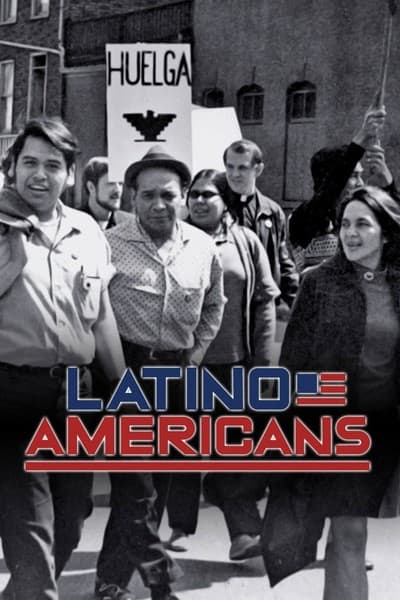
[00:38:51] Melissa: Well, I wish I had a silly one, but I was telling you earlier that I’m getting ready for our big summer program, so I’m reading a lot. I’m going to be all nerdy and tell people about the latest thing that I’ve been doing is working my way through the PBS documentary series called Latino Americans. It’s mainly because, like I’ve told you before, that I don’t have a huge background in sociology and anthropology. I’m doing a history walk for myself of how Latinos have experienced education in the U.S. and history going all the way back to the Spanish and colonial times.
The very first one I really, really love and would highly recommend that people watch, it’s called Foreigners in Their Own Land. I think it’s really relevant for people right now to realize the long, long history of Latinos in the U.S. so that we don’t keep focusing on just the immigration issues that we have now, but the long-standing issues that the U.S. and before the United States even existed, that Latinos were here and speaking Spanish.
There’s a great line in there that somebody says, one of the historians says, “Spanish was spoken before English was in this land.” To have this discussion about which language is more national, it’s really– It should have been Spanish. It’s just about power and history that it didn’t work out that way, but one of the first languages other than the native languages, obviously, that were spoken here, is that Spanish predated English as a language. Anyway, it’s lots of interesting stuff. It’s a great little documentary series. There’s, I think, eight episodes that you can watch. It’s called Latino Americans on PBS.
[00:40:36] Bonni: That sounds so wonderful. Something to add to my TV list. Thank you so much for that. Melissa, it’s so good to connect with you today and to have you on the show. I know we’ve been planning this for quite some time, and this has been a conversation I’ve been looking forward to. Also, I get to look forward to being a part of your summer institute and earning my certificate in Hispanic-serving institutions, which I love, by the way. Side note, it’s not just a class we go to. It’s part of a commitment, we have some pre-work that we’re doing now, and then there’s the actual face-to-face time with you and your colleagues. Then, it’s going to still be some work this fall to continue to make those changes and reflect and do it again.
[00:41:13] Melissa: Well, I’m so looking forward for you to coming. I’m honored that you would think it’s worth your time. I’m looking forward to seeing you and your colleagues from Vanguard there. Thank you so much for having me on the show. I really enjoyed it.
[00:41:25] Bonni: Everyone else should go check out their website and see what professional development opportunities you could have at your institution. You better get there fast, right, Melissa? Because your calendar gets booked up. [laughs]
[00:41:35] Melissa: Yes. I think it’s pretty much booked up for summer, but you can always go check out other things that we do. It’s escalaeducation.com. E-S-C-A-L-A, education, one word, dot com. There’s lots of information on our website about what we do.
[00:41:51] Bonni: Thanks again, Melissa.
[00:41:52] Melissa: Thank you, Bonni.
[00:41:54] [music]
[00:41:56] Bonni: Thanks so much to Melissa Salazar for joining me on today’s episode of Teaching in Higher Ed. It was so great to reconnect with you and to have you share your learning with us about Hispanic-serving institutions. Thanks to all of you for listening. There’s going to be a lot of great show notes at teachinginhighered.com/264. That’s today’s episode. If you would rather not have to remember to go find those show notes, you are always welcome to subscribe to the weekly update at teachinginhighered.com/update.
That’ll get you weekly emails with the show notes to the most recent episode, as well as a blog written by me. It also gets you an Ed Tech essentials e-book that will give you some ideas about how to use technology to enhance your teaching and productivity. Again, you can subscribe at teachinginhighered.com/subscribe. I’ll see you next time.
[00:42:50] [END OF AUDIO]
Teaching in Higher Ed transcripts are created using a combination of an automated transcription service and human beings. This text likely will not represent the precise, word-for-word conversation that was had. The accuracy of the transcripts will vary. The authoritative record of the Teaching in Higher Ed podcasts is contained in the audio file.