Follow the Teaching in Higher Ed Podcast
About this Episode
Stephen Finley, Lori Martin, and Biko Mandela Gray share about their article: “Affirming Our Values”: African American Scholars, White Virtual Mobs, and the Complicity of White University Administrators on episode 214 of the Teaching in Higher Ed podcast.
Integrity and honesty on both sides is absolutely necessary.
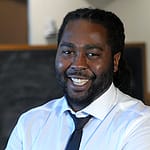
Biko Mandela Gray
On episode 214 of Teaching in Higher Ed
Voices on this Episode



Show Notes + Resources
- George Dewey Yancy
- Dear White America, by George Yancy in The New York Times
- The Pain and Promise of Black Women in Philosophy, by George Yancy in The New York Times
- Should I Give Up on White People? By George Yancy in The New York Times
- Afro-pessimism
- Black Lives Matter?: Africana Religious Responses to State Violence.
- Syracuse Fraternity Suspended for ‘Extremely Racist’ Video, by Maggie Astor in The New York Times
- The Vel of Slavery: Tracking the Figure of the Unsovereign, by Jared Sexton
- Incognegro: A Memoir of Exile and Apartheid, by Frank B. Wilderson
- Red, White & Black: Cinema and the Structure of U.S. Antagonisms, by Frank B. Wilderson
- Frantz Fanon
- Black Skin, White Masks, by Frantz Fanon*
- The Wretched of the Earth, by Frantz Fanon *
- Jesus turns over tables in anger
- Brood of vipers
- Debra Thompson
- An Exoneration of Black Rage, by Debra Thompson in The Atlantic Quarterly
- James Baldwin
- The Religion of White Rage – the book Stephen Finley, Lori Martin, and Biko Mandela Gray are writing
Recommendations from this Episode



Transcript
Bonni: [00:00:00] Today on the Teaching in Higher Ed Podcast episode number 214, Stephen Finley, Biko Gray and Lori Martin join me to share about their article Affirming our Values: African-American Scholars, White Virtual Mobs, and the Complicity of White University Administrators.
Production Credit: [00:00:24] Produced by Innovate Learning, maximizing human potential.
Bonni: [00:00:34] Hello and welcome to this episode of Teaching in Higher Ed. I’m Bonni Stachowiak and this is the space where we explore the art and science of being more effective at facilitating learning. We also share ways to improve our productivity approaches so we can have more peace on our lives and be even more present for our students.
Bonni: [00:01:01] On today’s episode I am so honored to have three guests, one of whom I was able to meet at Louisiana State University’s Communicating Across the Curriculum Summer Institute. And that is Lori Martin. I’m so glad that she suggested that she could bring her collaborators on this scholarly article and have an important conversation with us today and I’m just so pleased to have her with us. That’s Dr. Lori Latrice Martin. She’s an associate professor in the Department of Sociology and African and African-American studies at Louisiana State University. She was recently promoted to full professor. Congratulations, Lori. I’m so excited for you about that. Her research areas are race and ethnicity, racial wealth inequality and black asset poverty, and race and sports.
Bonni: [00:01:51] Next up we have Stephen Finley who is joining her, Dr. Steven Finley. He is her colleague an Associate Professor of Religious studies and African and African-American studies and Director of the African and African-American studies program at Louisiana State University. And Dr. Finley’s primary areas of scholarship are African-American religious cultures, theory and method in the study of religion, and the history of religions as informed by social theory, philosophy of race, and psycho analysis.
Bonni: [00:02:26] And their collaborator over at Syracuse University is Dr. Gray. Dr. Biko M. Gray. And his work operates at the nexus and interplay between continental philosophy of religion and theories and methods in African-American religion. His research is primarily on the connection between race, subjectivity, religion, and embodiment, exploring how these four categories play on one another in the concrete space of human experience. And Dr. Gray is also interested in the religious implications of social justice movements. He is currently working on a book project that explores how contemporary racial justice movements like Black Lives Matter demonstrate new ways of theorizing the connection between embodiment, religion, and subjectivity.
Bonni: [00:03:16] And all of these collaborators not only worked on this article, but are currently working on a book together called The Religion of White Rage. And I’m going to have that in the show notes as the title but nothing for me to link to yet. But when it does come out I’ll go back and link to that in the show notes which will be at teachinginhighered.com/214.
Bonni: [00:03:38] Stephen, Lori and Biki, welcome to Teaching in Higher Ed.
Stephen: [00:03:41] Thank you.
Biko: [00:03:43] Thank you.
Bonni: [00:03:44] I’m so honored to be speaking to you. Lori, t was so great meeting you out at LSU. And I know we have a lot to talk about today so I’m just going to get right to it. You outlined your article in a very succinct way: we’re going to look at the problem, we’re going to talk about some other responses to that problem, and then how people are responding. And then we’re going to end with a little bit of hope. We need it right.
Bonni: [00:04:11] So we’re going to end with corrective and constructive suggestions on what we might do about this. So let’s start out with the problem. Stephen, I know you have some things to share that just really will orient us to the challenge that we are facing here.
Stephen: [00:04:24] One of the main things that I wanted to do was talk just a little bit about how this article came together and why please. Over the past several years there have been many cases in which African-American scholars in their work, their professional work, their publications, in classrooms, on social media have published things, or said things, or written things about the world in which we live from the perspective of African-American scholars. And often these ideas have been critical of race in America and particularly critical about how whiteness functions. And some of this was often just sort of basic observations that scholars have made. And yet the response to these, what are often descriptive statements, has been quite violent.
Stephen: [00:05:18] In other words, there are cases in which scholars have been threatened bodily, have had their schools contacted threatening to get them fired, threatening to publish where their children go to school, and live with their families and so on. And and this concerns me. On the other hand, you have the university administrators, where these faculty work, have never really come out and condemned the violence against these African-American scholars who have been mostly women.
Stephen: [00:05:59] And so I wanted to write something about this. And because of my close relationship with Lori and Biko, and my respect for them, I asked them if they’d like to put something together that addresses this issue and gives us some coherence, what it means and what we can do with respect to it.
Bonni: [00:06:18] And Lori I know that you can familiarize us with many of these cases where we where you’ve seen this happen. There’s one from Texas A&M, one from Boston University. I mean you could actually spend probably the next four hours and not be done yet. But let’s just get a look at some of these specific examples of where this has occurred.
Lori: [00:06:39] So as you mentioned, yes, unfortunately there are cases that not only spanned the geography of the U.S. but also across time. And so we were limited by word count, but we wanted to go back as far as we could. And in the longer version that I shared with you, we started with the Clinton administration and with Lani Guinier, who is a law professor and how she came under attack for articles that were published in well respected places in various law reviews where she simply talked about making sure that black voters and others were able to exercise their rights under the Voting Rights Act and was abandoned very quickly by President Clinton.
Lori: [00:07:22] Other examples included professors who were in the classroom, such as in the case of Professor Gibney out in Minneapolis where she simply made a statement in class that some of her white male students took offense too and she found herself under scrutiny from the administration.
Lori: [00:07:42] We also have the case of Tommy Curry who got into a bit of a controversy based upon a podcast that he did several years ago. And we have other instances like with Johnny Williams at Trinity College where Johnny Williams was paraphrasing something that someone else said. And all these responses have been met by individuals outside of the university, inside the university, and many of these professors have found themselves under attack. They’ve been in fights for their careers and for their very lives.
Lori: [00:08:17] In the case of Princeton Professor, Dr. Taylor, who gave a commencement address. She made some comments about Donald Trump. And then from then on she had to cancel invited speaking engagements because she was concerned for her new child and for her partner. So unfortunately, there’s no shortage of examples of faculty, black faculty in particular, that have been subjected to attacks from what we call virtual white mobs as well as from their own administrators.
Bonni: [00:08:52] And one of the things that you talk about here. I just want to go back to it for a moment is people being attacked, threatened for doing their jobs. You were hired to teach curriculum, maybe curriculum is the wrong word, but that’s what you’re hired to do. And then having your livelihood threatened, having your careers and your very lives threatened. And you talked about this, some of this in your article focuses on the social media aspect. Of course that’s can be one of the ways as educators we get our messages out, but that in some of these cases this is their classrooms.
Lori: [00:09:30] Yes, unfortunately, many of the professors that I’ve mentioned and the ones that remain unknown to us at this time have to deal with a host of issues and assaults from all different areas. Many people might experience receiving threatening emails to their campus email address. George Yancy had an op ed piece, I believe in the New York Times, recently where he talked about the experiences that he has faced in his career as a professor. And of course as we mentioned with social media, anyone could go and post anything on a blog. And oftentimes the followers of those particular blogs and podcasts are like minded and so they can feed off each other, feed off on misinformation and the problem just gets increasingly worse which is why it’s so important that those in positions of authority, those administrators really take a stance in protection of their employees, in protection of these black scholars as opposed to oftentimes siding with their critics.
Bonni: [00:10:36] You talked about academic freedom, this idea that those of us who do this work a lot of it was appealing because of this idea of the marketplace of ideas. And that’s really a great ideal. Correct. I mean just I remember my own college experience. I like that I felt like my mind was being sharpened with diverse viewpoints. But as you point out in many cases that is just a farce today.
Bonni: [00:11:05] I teach at a religious institution. And so I will often think about. I don’t speak too terribly publicly about this, but I will often think about that at religious institutions, academic freedom can be limited, especially if you belong to a denomination that is not the founding denomination that the institution where you teach.
Bonni: [00:11:28] But your article really opened my eyes because I do- I will say I was naive and uneducated because I just thought well those of you that teach at public institutions, you got it. You got it. So, can you correct me there? Because I know it’s a fallacy and your article really woke me up to this point. But could you talk a little bit more about public institutions and how they’re suffering from some of these same challenges related to academic freedom?
Lori: [00:11:56] Sure. So as with all freedoms in general, they’re not absolute. And so we see that happening in higher education as well. While institutions may say that we’re free to say whatever we want to say and teach in the way that we see fit based upon our expertise, that’s not always the case. So we are always thinking and considering how what we’re saying or what we’re writing might be interpreted. And I’d like to ask Stephen to talk a little bit about having the talk. So we often times talk about having you know parents when they have a talk with their children. In contemporary times, when it comes to race, we’re oftentimes talking about interaction with police officers. We are finding in higher education that more seasoned professors are having the talk with junior faculty and black faculty in particular about ways to navigate this system.
Stephen: [00:12:53] Very quickly. The talk takes two forms. Biko and I wrote an article together about four years ago that came out in 2015. The article was an interpretation of state violence, anti- black violence, such as police violence. And one of the things I said to Biko is look Biko, the reality is- Biko was a graduate student at the time, he’s a brilliant professor now. But then, he was still a grad student.
Stephen: [00:13:21] And so I wanted Biko to understand that there are some inherent risks in the kind of work that we do that interprets the culture, particularly where race is concerned. And so I actually had to have that talk with Biko saying that when we publish this and it is out there in the public, we don’t know what the response might be for people who probably would not have even read the article.
Stephen: [00:13:44] The second talk is one that I had with my mother because I want my mother to understand that yes I’m a professor, but given the kind of work that I do at the intersection of race and religion, that sometimes that puts me and others who do work on race in America in jeopardy. And I actually had to have that conversation with her because I wanted her to have a sense of the the potential for that for the work that I do. And so like Lori said, these white virtual mobs spring up online from anywhere, all kind of social media sites, blogs and all of a sudden you have people threatening your life.
Bonni: [00:14:24] You brought up the issue of police shootings and I’d just like to briefly share a story in my own teaching after Tamir Rice was killed. I was very upset because that was not the first name that I was aware of. And many of us were upset. And I went into the classroom and I will not say it was my calmest moment as I shared some reflections on that. And the reason I bring it up is that a couple of years after that I had a student, a white man who had been in that class was in another class of mine, although it was much smaller. And we were doing that mid semester feedback and it was a class where we were talking about some really tough stuff and I was really actually so pleased that we had an environment to do that. But I wanted to check in and see if they felt like they had been respected and heard. And it was really funny because he said “Yeah I feel like I’ve been heard. But boy, I’ll tell you what when you talked about the police shooting I was so angry with you then” and it’s like I’m glad it came out. But he was so angry because I didn’t also talk about what wonderful jobs police officers do. That I didn’t give the other side.
Bonni: [00:15:35] And I wonder if one of you might share a little bit about how that same dynamic happens when there is this white mob mentality, instead of caring for, supporting finding ways to lift up the courageous educators that have done this work, it becomes well actually we’re going to turn it around and of this reverse racism argument. Could you talk a little bit about how that happens? And I know this is often with white administrators at predominantly white institutions.
Biko: [00:16:09] I think a couple of things. One, we have these conversations. So the logic is similar between the student that you had and what we see happening in these statements from white administrators. One of the things I want to suggest here and one of the things we suggested in the article is that whether we’re thinking about institutional heads, like white administrators over thinking about agents of the state, like police, what happens is is that these institutions do what Lewis Gordon calls taking themselves and taking their ideals too seriously.
Biko: [00:16:39] And so what happens is is that instead of saying “oh there’s a problem inherent to this institution” the reality is that people who are victimized on the other side of this quite frankly for being critical of these systems, are victimized by the very logic that they’re fighting for. Right. So if we think about for example, if safety and security and protection is one of the sort of big things that the police are supposed to engage with, then what does it mean that this institution is enacting serious forms of violence by the state and the state responds by saying “well these folks are being courageous on the day to day basis.” That completely erases from my perspective the reality, the empirical reality that folks are getting killed behind your appeals to security and safety, that lives are being lost behind the very appeals to humanity, certainty, security, safety, stability, all these things.
Biko: [00:17:29] Protection is being lost behind these ideals. And the response often is “well these are the ideals and we just carry them out imperfectly.” That in and of itself is not enough. And what essentially happens when we are thinking about it in terms of these university administrators is they hide behind ideals of of human diversity and equality and human freedom and they say “well these comments that are made, these critical comments about race and racism in the United States that are made by these professors, well they’rw not living up to the values of human equality and diversity.” When in reality, the reason why we were hired, as we are talking about the beginning of this conversation, the reason were hired was the was to come into critique these violent systems of discrimination that are in actuality running counterintuitive to the very ideals that these institutional heads, these administrators for example, or these institutional agencies, police officers profess to interact on a daily basis.
Biko: [00:18:25] So what we see happening ultimately is is that human equality and human diversity becomes a space of equivocation, which means that if you’re hired as a black professor or if you are a protester in the streets, you can only say so much before you come off as being a perpetrator of certain kinds of problematic biases. When in reality, we’re the ones who are in the first place having our lives put at risk, having our careers put at risk behind the supposed ideals that these administrations and that these institutions say that they live up to.
Biko: [00:18:58] So black actually, for example, are hired under a veneer of being critical thinkers. But they can only do that as much as it does not cause questions to the structures as they are. And as soon as they do that, these administrations, these institutions consume them and discard them and say “we did our job because now we’re appealing to these more universal ideals of human equality, diversity and freedom.”.
Biko: [00:19:22] So until we acknowledge that, any discussions about these purported democratic ideals do much more to harm the very people that they say they protect over and against actually advocating for the folks that are rendered most vulnerable in these situations.
Bonni: [00:19:41] When Lori brought up the talk, I thought that it was going to be a different talk. I thought that it was sort of going to be a talk on setting the stage for a class. I was moved by Stephen, just realizing that you had to have a talk with your family of the kind of risk that you’re taking in these endeavors. And I wonder though, there’s this real tension between- I think about myself as an educator and I’m more on fire than ever in terms of just the atrocities of this world and what I’m seeing. Yet I don’t know if the answer is to bring all my anger into the class, into the classroom. I struggle with that. I don’t know. I wonder if you have any thoughts about the talk that you have with your African-American students and the I’d love to hear the talk that you might have with your white students. And what are your thoughts? What do you believe works in terms of creating that kind of change? And is that different for you, as African-Americans than it might be for me, as a white woman?
Stephen: [00:20:47] I try to have very honest conversations with my students, many of whom are white students. In fact, in many of my classes, even though they’re in both religious studies and African-American studies, half of them or more tend to be white students. But the reality is the reality. And so if I’m trying to make a difference in this world then I’m not going to change that conversation based on the constitution of my class. I want my white students, my Latino students, my African-American students and so on to understand that they have a responsibility here. Based on how we see this world, how we experience the world, how we understand it, to do something to try to make this a better world. And so I don’t change the conversation.
Biko: [00:21:30] I just taught a class called black lives matter religion this past semester. And the class was split about 60/40 black/white, probably about 55/35 black/white probably little 10 to 20 percent South Asian folks and then the Latinx folks. So we were having this conversation. And one of the things that I had done in the classroom room itself was make it very clear to all the students that you signed up for this class which means you signed up for class that is going to engage in critical discussions about race that are going to be critical of white supremacy, going to be critical of whiteness, going to be critical of certain white actors, going to be critical of some of the frameworks that many of my white students were brought up in.
Biko: [00:22:11] And I think Stephen’s right here. As an educator, you have to have integrity when you stand before the students. So what happens is is that I don’t mince my words. I try to be as compassionate as possible, but at the same time I’m incredibly clear that this country that so many of us find as a space of security, safety, and home is torturous for many communities, particularly black ones. So that’s one way of doing it. I have two different talks with my students. So my black students come to class and say I’m the only black student in my all white chemistry class and I’m disgusted with how every time I turn around if the question of race comes up, I become a representative and then my comments are easily, quickly discarded. Those conversations have a different tone to them. Those conversations are encouraging in nature. All I can say is I relate to you as being a black professor at an all white institution that’s doing very similar things well.
Biko: [00:23:07] With my white students, the questions and the conversations are different. They’re saying “oh I’m in your class and I’m afraid to speak.” And my response to them is “look, feel free to speak but be okay with realizing that another student will disagree with you or could possibly disagree with you and be reasonable in doing so.” And remember you signed up for this class, right. I’m not rude, I’m not mean, but I tell them, I say “look, as a professor, I’m going to make sure that you’re not being disrespected or denigrated but if you say some off the wall stuff, be ready for someone to critique that.” So I think integrity and honesty on both sides is absolutely necessary and it’s to demand to the white students to not simply be uncomfortable but recognize that you’re going to be rendered vulnerable in these spaces.
Lori: [00:24:02] And the first thing I thought of when you asked this question Bonni was that anger is a human emotion. And you talked about teaching at a religious institution. And one of the things I’m reminded of is Jesus turning over tables in the church when people were engaged in activities other than religious instruction and the like. So there’s nothing wrong with being angry or feeling angry about various events that take place and actually you turn on the television or walk outside the house there is going to be something that may cause you to be angry.
Lori: [00:24:36] Something that I tell my black female graduate students in particular because they oftentimes have concerns about not wanting to be perceived as angry black women in their presentations and they’re not really sure how to respond when they’re confronted by a white male student or some other student in their class. And so my response to them is always if you’re really angry, write about it. You get a lot of publications that get a lot of thoughts out by writing it and there are lot of different audiences out there, a lot of different venues, we don’t always have the shoe for that top teir journal we can do it op ed piece. Some people may have blogs and they may just feel like sending a tweet or writing on their Facebook page. There’s lots of ways that you can express your concerns and do it in a way that it can impact people so that they feel empowered that they might be mobilized so that they can go and make changes in their corner of the world. That’s the message that I get to graduate students.
Lori: [00:25:37] I think it’s also important too. And I think that Stephen and Biko both alluded to this is that from day one you kind of set the standards as to what your expectations are for the class and that type of environment that you want to create. And then you don’t have to worry as much about those issues as long as people know that they’re walking into a space where everyone is going to be respected even when they don’t agree.
Biko: [00:26:02] This question of anger is something that is also racially tinged as well and it strikes me that in these conversations that the primary aspect of register for faculty of color, particularly black faculty, is often understood in terms of anger. Well we have this safeguard against what Jesus might have understood as righteous indignation. He was pissed and if we understand we know the Gospels brood of vipers was not- that was his version of cussing, right? So he was politically, he was not operating on respectability politics. This racialized minority male under the oppressive regime is being angry and righteously indignant. And the truth of the matter is when you see black professors, when you see black faculty operating in that mode, even as they’re teaching, that should not be denigrated or disrespected. That is a clear expression of a kind of care and not compassion but care for the world that we find ourselves in.
Biko: [00:27:01] Debra Thompson, a political scientist says that black rage is our way of saying we actually care about the future of this collective world that we live in. This is why we’re mad. And if we didn’t care, we would have moved on a long time ago.
Biko: [00:27:18] And so there’s a way in which this rage needs to be translated differently when we think about how it is erupting from black faculty members from black students. And that this is not a cause for fear but rather an invitation to sit down and ask what is it that is producing this, right. I mean this is what James Baldwin tells us – to be black and conscious in America is to be in a relatively high state of rage all the time. That’s what it is. Right?
Biko: [00:27:44] So don’t get upset that we’re mad because you keep killing us, find a way to stop killing us. Don’t pin that on us. Pin that on the institutions that are either lethal to our careers or lethal to our very existence. That’s where the energy needs to be enacted.
Bonni: [00:28:03] Could you talk a little bit more about the administrator’s response? What it has been and maybe we can even transition then into what it ought to have been when situations like this come up, the classroom gets out, someone’s offended. There’s not the chance to bring it back into the classroom, it goes public, it’s in social media and it’s blown up.
Biko: [00:28:24] The response from administrators has been paltry at best. And what it is for me is a spineless lack of courage. And I’d say this is embedded in the institution incredibly vulnerable as an untenured faculty member. But the reality is is that when faculty members are being honest, being critical, operating of integrity of their disciplines, the responses have been poor at best. Well you know this is an instance of reverse racism. How do you say that when this country was built on the black backs of slaves? That’s impossible. So there’s a there’s a lack of accountability and this need, the sort of waffling on questions of reverse racism, questions of equality produced by virtual mobs enabled them to come out and attack these professors who were doing the job that they were hired to do.
Biko: [00:29:08] The response that I would like to see from administrators when these things occur and just in general is an institutional restructuring and an emphasis primarily on the humanities and social sciences to do the work that we were called to do in the first place. Yes, STEM makes money. But the humanities and social sciences remind people that people exist. And we’ve lost that central emphasis in the institutional infrastructure because now the money is in science, technology, mathematics, and engineering. That’s one way to do it. The other way to do this is is that for administrators to unequivocally say no the faculty members that I hired is doing the job that we hired them to do. That is what’s happening. Anyone who comes against that particular faculty memeber for doing what we hired them to do and the institution is 100 percent behind them. So don’t come for the family members. Right. So I think those are- moving forward these are at least two ways to think through that.
Stephen: [00:30:06] And I just want to emphasize what Lori started talking about when he was describing many of these cases. And one of the things she was pointing out and we point out in the article is that many of the African-American faculty are punished for doing nothing wrong. Even when the institution admits that what they wrote, what they said was factually correct.
Stephen: [00:30:28] So I just wanted to lay that out because I don’t want people to miss what Lori was just describing. We’re not talking about people who are saying something radical or something that is not factually and descriptively correct.
Lori: [00:30:43] Dr. Finley, Stephen came up with the title for this article that we are talking about, affirming our values which comes directly from a quote from one of the university professors. So what it does, it points to this idea that many of these administrators are trying to set forth in their responses to these controversies that there are a certain values that the University holds dear and that these black professors are not living up to those values and they don’t also share them.
Lori: [00:31:11] And what’s really happening is that you have the black professors are actually pointing out that there is a gap between what the universities and colleges are saying that they value and what they actually do and where they put their resources. And what we would like to see is for diversity and inclusion not to be just something that’s on the Web site, that is not just a plan that meets the requirements for whatever the credentialing agency is for that particular region, but that there is a sincere commitment to actually embracing the work of the diversity of the work that black professors and other professors are doing and a real commitment to diversity.
Stephen: [00:31:50] Right so a lot of these institutions think diversity is having a woman, having a person of color on faculty but not structural change. These universities remain not just aesthetically white, but structurally white when they’re mostly public and private universities that are universal in many ways. We would like to see that happen, but that’s not happening.
Biko: [00:32:14] In a more concretely is to decrease that like eliminate the pay gap between white male faculty and faculty of color. This is a very brief structural thing, allow for professors to develop unions, allow for us to have collective bargaining power, create the possibility for us to not simply speak out in our classrooms, which are many of us spaces of refuge. But to speak out against the institution that is producing these inequities in the first place.
Biko: [00:32:41] And if we look at numbers, the Chronicle pointed it out very clearly. Black women faculty are getting paid ridiculously low compared to white male faculty in their fields. Right. The gender gap is real so there’s a plane which like put your money where your mouth is, don’t place this on your promotional materials and don’t pay us for the work that we do, right? Because the other part of this, too, is – speaking about the talk – and I know this from speaking to Lori and Stephen… We have black students, white students, women students, students of color, marginalized students come to our offices and those are hours of our days that are spent counseling, dealing with students who have concerns. We don’t get paid for that and we don’t get recognized for it.
Biko: [00:33:26] We do it because we care because we want to see change happen. But it comes at a cost. While we’re dealing with our students, our respective white colleagues across the hall are writing their research projects, are moving closer to tenure and promotion. They’re getting opportunities to do the work that we too would like to enact but we’re caught holding this with little to no compensation or recognition for it.
Biko: [00:33:52] So pay us more. Create the possibility to recognize the kind of not the kind of intangible work that we do as faculty members with undergraduate and grad student populations.
Bonni: [00:34:03] I believe it was the Chronicle that also had some data about what you just alluded to Biko, of the service aspect of our jobs and people of color, women still held to the same research standards, still held to the same teaching excellence, which often as you have said you know as being good, behaving good. Not getting it, not making people too uncomfortable in the learning process, right. We’re supposed to be learning, but not with getting uncomfortable.
Bonni: [00:34:31] And then the last one is just the service. And black women were just off the charts. I mean just look, I’ll see if I can find it and put it in the show notes but I mean I was just off the charts. And then as you say in your article too, for every single time it’s a new student orientation, or going out to try to recruit students, or trying to look like we’re doing the work of a diverse institution, but not the hard work, just the poster child sort of work. So it’s really powerful. Thank you so much for sharing all of this with me and with the audience. Should we move over to the recommendations portion? Anything else that we left out you want to make sure we say before we do?
Stephen: [00:35:08] Well I’ll just say that we’ve already moved over into the recommendations. That is some of what we are discussing. But I will add to that, programs like African-American studies, women’s and gender studies, and the like are really important to the world and to institutional life and they’re almost always understaffed and underfunded. So we have to do something about that.
Biko: [00:35:35] Religion studies as well, at least not empirical disciplines, religion, history, these disciplines, English as well and as well as contributing more to qualitative forms of sociological and anthropoligical inquiry as well. The truth is not simply in the numbers, it’s also the complexity of human life itself. And so encouraging humanities and social sciences or incentivizing humanities and social sciences to engage in the complex messiness, to do the work that they’ve been called or been hired to do. That’s another institutional addition too, don’t simply hire the quantitative sociologist, hire the quantitative sociologist and the qualitative sociologist. So they both can get in can can come into this space and start to have conversations as well.
Stephen: [00:36:19] And don’t simply hire the religion scholar who’s doing the Christian beat. But hire the scholar who’s who’s asking questions about what does religion mean in the world? Hire a scholar who’s asking these complex messy theoretical questions that don’t have clean answers and don’t have a neat numerical data to back up their sources.
Bonni: [00:36:38] This is the point in this show where we transition over to the recommendations. Stephen, do you have anything else you want to recommend or was that yours?
Stephen: [00:36:45] I think recruitment and retention is vital. And so we’ve touched on a lot of things. I just want to register that one. Recruitment and retention of faculty of color, women and so on. It’s s not enough just to get them in the door. But given all the things we’ve described, committing the resources to ensuring that they can do the work that makes them successful.
Bonni: [00:37:10] Lori, how about you? Do you have something you want to recommend?
Lori: [00:37:13] No, that’s it for me.
Bonni: [00:37:14] And Biko, how about you?
Biko: [00:37:16] I don’t have too much else something. I think Finley actually hit the nail on the head with the mention of this that I keep coming back to pay because class is an issue here as well. Many faculty of color, the women faculty, are coming from different class backgrounds that they have student loans, they have the series of financial hurdles that don’t make it easy for them to cultivate a living, to cultivate a life in order to do the work that they’ve been hired to do.
Biko: [00:37:42] And so retention includes by decreasing or at least being sensitive to the service that is happening especially for people with who you appointed. But it also includes shelling out real hard dollars to make sure that people are compensated well enough to live a life where they’re not breaking down and burnt out because they’re having to worry about financial hurdles. This is something that many universities don’t think about. University coaches get paid millions of dollars and faculty of color get paid pennies on the dollar. That has to change. That’s how you retain faculty.
Bonni: [00:38:16] Stephen and Lori and Biko thank you so much for today’s conversation and just for all the work that you do and just for your contribution to the community.
Biko: [00:38:26] Thank you.
Stephen: [00:38:26] We appreciate that.
Bonni: [00:38:30] Thanks to everyone for listening to today’s episode of Teaching in Higher Ed. If you’d like to take a look at the show notes with a bunch of links to many of the resources that were mentioned by Lori, Stephen and Biko, you can go to teachinginhighered.com/214. And if you’d like to be receiving those messages in your inbox without having to remember to go up to the website and check every time, feel free to subscribe to our weekly updates at teachinginhighered.com/subscribe. And you’ll just get one e-mail a week it’ll have the show notes and there with all the great links and also an article about teaching or productivity written by me. Thanks so much for listening and I’ll see you next time.
Teaching in Higher Ed transcripts are created using a combination of an automated transcription service and human beings. This text likely will not represent the precise, word-for-word conversation that was had. The accuracy of the transcripts will vary. The authoritative record of the Teaching in Higher Ed podcasts is contained in the audio file.