Follow the Teaching in Higher Ed Podcast
About this Episode
Bryan Alexander shares about digital literacy – then and now – on episode 144 of the Teaching in Higher Ed podcast.
A key part of digital literacy in the social age is that it is productive. We make stuff.
Bryan Alexander
On episode 144 of Teaching in Higher Ed
Voices on this Episode


Show Notes + Resources
- Bryan Alexander Consulting, LLC
- Web 2.0 and Emergent Multi-literacies
- Mozilla’s Web Literacy Map
- ”Creating a digital literacy report: The survey piece, Part 1” by Bryan Alexander
- Doug Belshaw
- Laura Gibbs – Teaching with Canvas Blog
- A Rape in Cyberspace by Julian Dibbell
- Pinboard.in
- Diigo
- The Idle Words blog
- ”Stanford researchers find students have trouble judging the credibility of information online” by Brooke Donald
- Web 2.0: A New Wave of Innovation for Teaching and Learning?
- We Make the Road by Walking* by Myles Horton and Paulo Freire
- Future Trends in Technology and Education, Bryan’s newsletter
Recommendations from this Episode



Transcript
Bonni: [00:00:00] On today’s episode of Teaching in Higher Ed. Bryan Alexander shares about digital literacy then and now.
Production Credit: [00:00:11] Produced by Innovate Learning: maximizing human potential.
Bonni: [00:00:20] Welcome to this episode of Teaching in Higher Ed. This is the space where we explore the art and science of being more effective at facilitating learning.
Bonni: [00:00:30] We also share ways to increase our productivity so we can have more peace in our lives and be even more present for our students.
Bonni: [00:00:47] Today’s guest Bryan Alexander is an internationally known Futurist, researcher, writer, speaker, consultant and teacher working in the field of how technology transforms education. He’s been listening to this podcast for a while now and also has recently blogged about all the other podcasts he regularly listens to. I’ll be putting that in the show notes if you want to take a look at teachinginhighered.com/144 to see what he’s listening into a little bit more about Brian. He completed his English Language and Literature Ph.D. at the University of Michigan in 1997 with a dissertation on doppelgangers in a romantic era. fiction and poetry. Then Bryan taught literature, writing, multimedia and Information Technology Studies at Centenary College of Louisiana. There he also pioneered multi campus interdisciplinary classes while organizing and information literacy initiative.
Bonni: [00:01:51] From 2002 to 2014, Bryan worked with the National Institute for Technology in liberal education a nonprofit working to help small colleges and universities best integrate digital technologies. And in 2013 Brian launched a business, Bryan Alexander Consulting. He consults throughout higher education in the United States and abroad. He speaks and publishes frequently with articles appearing in venues including the Atlantic Monthly and Inside Higher Ed. Bryan welcome to Teaching in Higher Ed.
Bryan: [00:02:26] Thank you. I’m really delighted to be here.
Bonni: [00:02:28] I have been able to be quite the sleuth and go into your past and we’re going to go all the way back to spring of 2008. I know. Where you published an article called Web 2.0 and emergent multi literacies and I kept thinking you probably finished writing that I would guess It’s coauthored by the way with Susan metros and Kristina Woolsey spring so it’s probably end of 2007. What’s it like to go back and think about Web 2.0 and emergent multi literacies and then think of today 2017.
Bryan: [00:03:08] Oh it’s it’s a blast. It’s one of those things where you think about in political science they have a cliché every paper is called Something something something continuity and change. Because you can always point to something that continues and something that changes and then it feels like that in a way. I mean I look back and think well we were right about so many things.
Bryan: [00:03:29] The importance of the web. The importance of the centrality of the of the web. The fact that the web was a social medium that people will be participating in it and that’s terrific. And that has continue to be true as the web has expanded but then there are things that that we overestimated social bookmarking for example never really became a big deal. I mean Diigo was very nice and I’m a huge fan of pinboard but those are relatively minor and we didn’t really talk about the huge churn social media platforms how all these different footholds on the web appeared and vanished or appeared and then it went underground. So you know we mentioned Delicious for the first social bookmarking tool that appeared and then has kind of leveled off and almost vanished or you know Harvard had its own social but merging into it but you think what I want you to think about MySpace you can think about the whole rash of early blogging platforms or a few of which are actively in use anymore.
Bryan: [00:04:23] There’s a there’s a lot of churn but I think overall we were right when we hit on the web as a major feature of literacy and learning and we were right and continue to be right. And that’s a good thing. We did identify a horrible monster and we identified a really powerful platform for human expression in connection with flaws with problems. But yeah that’s so that’s a major stride forward for the human race.
Bonni: [00:04:46] One of the many reasons I wanted to invite you on the show was out of getting to witness a little bit of a back and forth conversation between you and Michael Caulfield about digital literacy. And before we start talking specifically about some of your healthy debate around that. Let’s just start with how do you define digital literacy because there’s so many definitions out there and it’s really hard to nail down.
Bryan: [00:05:10] It’s funny last year I did a paper for the new media consortium on digital literacy and I found in my research that there were many competing definitions. And then we polled members the new media consortium network more than 400 people I think this is actually a unique poll and we asked them for their definitions and then we gave him A, B testing of different definitions so we show them definitions from. Oh gosh from JiSC from Doug Belshaw from the American Library Association and so on. And it was pretty clear there are a lot of different definitions and they are porc pushback and one of that for me the most entertaining sources of pushback was people saying how dare they say there are multiple definitions of logic.
Bryan: [00:05:53] There is my definition of like Oh of course. How foolish of me to not have appreciated it. I think digital literacy. I’m not going to give you a simple definition because I think right now there are way too many in play and the subject is in flux in many ways. You know the idea of thriving online which some have used I think is pretty good. You can decompose it into different pieces. Doug Belshaw does that for example. And then you can turn it into attitudes Howard Rheingold for example.
Bryan: [00:06:23] So you know the two the key parts digital literacy. One of them is having a good B.S. detector. That’s I mean he said this years ago and the 2016 election is really heightened that I think for people.
Bryan: [00:06:36] But the other is that it’s participatory. I think this is one of the most challenging parts of the digital universe for educators is that we were most of us were not trained in participatory media and we really haven’t integrated that into our teaching and learning. I mean we often teach students how to participate in the classroom. That’s a key part of what we do. But then we don’t teach them to participate online or if we do we do it in a hideously blinkered siloed environment like you know the learning management system which is basically antisocial then you know I I also add a historical dimension to this. I think digital literacy builds into a very very important precursors. One of them is media literacy which people usually date back to the 60s and 70s.
Bryan: [00:07:21] And that’s the whole idea of a skeptical critical approach to mass media. I think digital literacy really inherits that and really should the second part is the information literacy movement which started off in the 1980s at least in the United States to the American Library Association call it in 1980 very precint they said Hey coming up in the future are not people using the Internet to find information and they won’t be going through library sources. So we have to help them train to train themselves to figure out what’s good online how to find it and how to use it. You know it’s pretty sharp for them for they go for where or when.
Bryan: [00:07:56] And I think digital literacy incorporates that and that incorporate that adds to it a few key features one of which is that digital literacy is productive. People make stuff you know a lot of media criticism a lot of information literacy is based on some form of the user as either a passive consumer or an nonsocial producer. So Bonni just sent me this story. Is it true or not OK. You know that’s what’s important it’s vital got to have that. But then what do you do next. And all too often these prior forms of literacies would say you consume it you make a decision or you make something but the thing you make isn’t shared. It’s something that you you know hand in to a professor for example.
Bryan: [00:08:42] I think a key part of digital literacy in the social age is that it is productive. We are making stuff so Bonni shows me a story and maybe I share it through whatever venue possible. Be it Facebook, LinkedIn, Google Plus, MySpace, Pinterest, Twitter and then maybe I do something with it.
[00:09:02] We produce things. See I told you I told you I did not have the simple answer. It is for very long winded and deconstructed one.
Bonni: [00:09:10] I would have been worried if you did have one in the sense of one of the early and this wasn’t necessarily digital literacy but more web literacy. One of the early models that really has resonated and still in many ways continues to resonate resonate with me is Mozilla’s web literacy map. And they talk about and I guess this could just be my weakness in and how I took it in early on but was just thinking that the problem here is people don’t have the technical skills to be able to share on the web they don’t have the technical skills to be able to you know be more of a creator in in their own digital life. But what I realized was that the weakness of the model or my own weakness is how emotional it can be for some people to share on the web and how much fear is there and then of course some of that fear is rightfully so.
Bonni: [00:10:07] Do we want to allow the entire web to be made up of trolls and that type of thing or can we have some levels of not just only courage but also confidence that the risks that we take are worth it. I don’t know that it was a little bit of a tangent but I’m glad you have a a very multi-faceted definition because it’s more than just the technical skills that it takes to participate in today’s web.
Bryan: [00:10:33] You know the emotional part is crucial and really complex. I mean on the one hand we have the problem of so much emotional abuse. And what’s interesting is that that was a feature of the early Internet dating back to the 80s with say usenet and Lister’s and it became the big issue as the digital world grew. I mean you can see this in for example massively multiplayer online gaming or virtual worlds. And recently over the past few years with Trump and gamer gate it’s really metastasized in many ways and there’s some really horrible stuff out there. That was what I was referring to when I primarily when I mentioned some of the problems that were to deal with. And so that can be very that can be very terrifying to people but there are other emotional pieces too.
Bryan: [00:11:18] There’s the digital equivalent of the speaker’s nervousness when they go out to type something in front of a lot of different people. What are they going to say? Who will read it? What happens? And then there’s that and for teachers this becomes an extra level of anxiety because teachers are hired because they are experts in whatever you know in sports medicine and French and biology. And that’s their job is to be the expert in the classroom where their classroom may be. And then to set foot on those social participatory world of the web. So they they’re they’re not the expert they are the average user. In fact they may as you said before have technical challenges. That’s that’s very hard. That’s very threatening.
Bryan: [00:12:00] And that’s one of the major reasons why educators have had a hard time actually using the web and teaching and learning. I do wonder what your technical point though the technical skills part is so true. That’s you know it really does count. And as the technology keeps growing and ramified it keeps persisting and developing.
Bryan: [00:12:20] So we we do have an increasing amount of social media use at least in the United States but at the same time tools get more complex so you may have someone who has mastered Facebook and they have maybe they run their own blog but they don’t understand snapchat or whatsapp. Someone maybe very comfortable using the desktop but the phone functionality is beyond that. So the technical skills are I think unavoidable part of digital literacy. You’ve got to be able to ring the bells and press all the right buttons to be able to achieve your requisite degree of participation and skepticism and so forth.
Bonni: [00:12:57] I love your analogy of the speaker’s nervousness because I can have a lot of empathy for people who are nervous about public speaking and we recognize what a fear that is. But I have never compared these things and I think sometimes I don’t have the kind of empathy I would want to have around some of the fears. And I think part of it comes my lack of empathy and by the way mostly I have it but in the times when I fail it’s because people treat technical skills in a binary way I either am technically oriented or I am not and never the twain shall meet.
Bonni: [00:13:31] And I wonder if you have any thoughts about how people who are listening who genuinely consider themselves not technical they genuinely think of themselves that way how they might just get started developing because there is so much out there what would be a smaller step that someone could take to develop their own digital literacy skills that could start to build some early confidence and would have a big payoff.
Bryan: [00:13:58] What a fantastic question. And let me just second your point about the binary. You know I mean digital computing is at its root binary. You know a series of ones and zeros. But if do think we should think about this in terms of quantum computing the ability to have a range between 0 and 1. And I think that’s true for most skills.
Bryan: [00:14:17] You know and when it comes to the digital world we are there’s some version of competency in effect in the European discussion but in information digital literacy they use the term competencies. So you’re not necessarily a genius or necessarily a fluent person but you’re competent. And that’s that’s worth shooting for.
Bryan: [00:14:35] I guess a key piece of advice to give people is first of all nobody masters all this stuff. Nobody can. It’s far too big. It’s like saying all right on might start to learn a foreign language. Well somebody out there knows all of them. They don’t. It’s just there’s just too much. And you can feel empowered by seeing skilled people not know certain things.
Bryan: [00:14:57] For example a friend of mine was talking about at their school they had a whole bevy of Japanese 18 year old students and the students were having a very hard time with Word. And he was trying to figure out what was the problem. Problem turned out the students had never used a computer before. All they had used were phones. And so they were brilliant at phones but they hadn’t sat down with the desktop before. Which really took me back. I mean I’ve been talking about the power of mobile for years and that this was a quite a sign one thing to think about if you’re trying to get started enhancing our digital literacy is to grab one particular corner of it and just get comfy with it. So grab say some social media some social media platform and whichever one you like if you’re a very professional person you might like Linked-In.
Bryan: [00:15:46] LinkedIn is also really good if you like a very crowded busy interface. I’m just saying there’s a description in it. I feel very quotable there myself. It might be that you want Google Plus if you’re used to having the Google sphere and Google Plus has a lot of neat things plugged into it it could be that you’re on Facebook like more than a billion users are or Pinterest or you want to set up your own blog. And there are a lot of platforms for that from blogger to WordPress. But pick one of those and then just really start getting comfy with it. I mean I don’t master it. Maybe that’s down the road. We just are pushing it. What it can do. Look for other people there that you can follow that might be interesting or productive. Someone who is in your line of work or someone who has a fellow interest be it your profession or the wonders of cats and then follow them follow more people and learn to distinguish what’s good and what’s bad for you in that medium and do that for a while and then eventually try another medium and just see how you can apply lessons from the first to the second and then share what you learn.
Bryan: [00:16:52] So get the platform say hey I’ve been using this for five months. This is what I found what are you guys finding but sharing is a key component. I find people on the Web really are receptive to people getting media about their use and the technology.
Bonni: [00:17:07] One of the great things about doing what you’ve recommended is as you start to get comfy with it you’re going to without even realizing it, learn techniques that will help you elsewhere. My doctoral students right now are learning how to blog for the first time and they were challenged by how do I link to something else this highlight click the tool or use the keyboard short cut paste and then decide if I want it to open a new window or excited. These are all brand new things for them and I told them that that is one of those things it’s worth learning because it’s going to work in blackboard and future classes when you’re participating in discussion boards.
Bonni: [00:17:43] I don’t do a lot of discussion boards but they will help you and other other web platforms that will help you. I mean pretty much just pick a Web platform there’s some idea of how do I link to another part of the Web that’s a good skill that’s going to transfer a lot of other places.
Bryan: [00:17:57] This is what I was getting at about the difficulty we’re having and really integrating the Web into our lives isn’t something as simple and basic and world changing as a hyperlink which you know people are writing software for in the 1980s with hypertext creative engines from places like Eastgate. We still have a hard time with it and when I mentioned that the LMS is a silo that’s a perfect example because you can link out from Canvas or Moodle or Sakai or Blackboard or whatever. But, linking in is a dead end. And I found that in many ways we still have a hard time with this.
Bryan: [00:18:32] Stanford did a study about information literacy a few months ago and it’s fascinating. And one of the pieces that just broke my heart was students looking at one tweet. One of the reasons they weren’t able to apprehend it critically was because they didn’t click on it. They just didn’t have that basic web literacy of click on a hyperlink. They weren’t afraid for it for security reasons they just hadn’t. It wasn’t part of their necessary toolkit. And I think part of it if we can go back to 2004 2006 is that for a lot of Americans we came late to the mobile world we were the last country in the world really to figure out the mobile phone.
Bryan: [00:19:13] We did very little with it until 2007 when the iPhone and Android came out. And then suddenly leaped upon it. But one all the way that we’ve constructed the mobile experience is often apart from the web. I mean you know good iTunes you go to apps and you’re really outflanking the Web you’re usually using the Internet but you’re not using the hypertext engine of the Web. And a lot of publishers a lot of content creators have produced content for mobile devices for the phone and for tablets that doesn’t involve the web because they want they’re giving you wonderful content and they want you to stay there and not leave and go somewhere else. I think we have to really make that web literacy a crucial component of not just teaching and learning absolutely that but also basic citizenship of being alive in the world of the web.
Bonni: [00:20:01] I’d like to talk a little bit more about what’s changed from one of your other earlier writings and I do feel a little bit like I’m hosting a “this is your digital life show” only I didn’t plan, I didn’t bring any guests in. Sorry no surprise guests are coming.
Bonni: [00:20:15] So in 2006 and Educause, you wrote Web 2.0 A New Wave of Innovation for Teaching and Learning and a couple of things that you talked about here and you mentioned earlier the idea of social software and also the idea of openness. As you reflect on our teaching in where are we today in 2017 that is perhaps surprising when you think back to 2006 when you wrote that initial article.
Bryan: [00:20:42] What is surprising. A few things. I didn’t write about this in 2006 but I was at the I and I had been at that time for about 10 years really worried about government surveillance and I was worried about business surveillance and I had this kind of X-Files like Fox Mulder idea that if only the people knew man they they’d rise up in the streets and they happened. We had Snowden who revealed that digital surveillance was actually mind blowing the vast far greater than anybody had ever said in public proved it extensively. And then the world’s response specially in America was all right. You know we couldn’t really change. We continued to use open or parasitic social media gladly. We use mobile devices which are fantastic tracking mechanisms. That surprised me.
Bryan: [00:21:37] I really I really didn’t think that that would happen. That’s one I guess in many ways. My biggest surprise is a second surprise is just how viral people decide to be using social media. We’re going to come back to gamer gate and I come back to the Trump army of trolls. You know these are not new problems. I mean you could go back to Julian Dibbell classic classic piece A Rape in Cyberspace which describes sexual offense taking place in a text only virtual environment. You know in a pre-web world and in many ways I thought we were doing better than that in 2006. And I I really didn’t expect it to be worse at that.
Bryan: [00:22:18] So I guess those are those are two things if you want me to prognosticate from 2006 to 2017 I think I would have predicted educator’s doing more for the web than we are now. I think I think I would have put this a little more quickly on the developmental curve than we have been. You know those are some things that really surprised me.
Bonni: [00:22:41] So I want to be selfish and circle back. Before we go to our recommendations segment you talked a bit about social bookmarking and that bein something so essential for you in your own continuous learning. And I’ll tell you I’m a huge fan also I’m a huge fan of pinboard like you although it’s not so much about the tool as it is what these different kinds of social bookmarking tools can do for us.
Bonni: [00:23:08] One of the big resistances and I’m always surprised because they’re all relatively easy to use. Being able to install a extension on our browser helps us be able to save things really quickly but once we understand how to save or how to install an extension it’s a relatively easy tool to use. But what I get is way more resistance than I ever would have expected. And it comes from, Well why wouldn’t I just look up what I needed when I need it. Why wouldn’t I just google so I’m going to. I mean I need information about this. And for me I know that it’s so ingrained in me because I think ah if you knew how many times I go back to my social bookmarking to I mean on a daily basis and then really deep dives on a weekly basis but I still am completely fail at explaining the value so maybe I’ll do it better than I do. Why is social bookmarking so important in your own lifelong learning?
Bryan: [00:24:03] Oh my goodness. Well I’ve had the same kind of problem when I used to teach workshops on social media and you know it gives you a tour through different platforms and that was one which most of all we’re befuddled by the so many good things and one of them is my own learning over time that I get to look back at the categories I’ve created, the keywords I’ve added delicious which is fallen condition that really meant is to have this you know on the spot tag cloud generator. It was fascinating because it got me out of my own headspace I could see what it looked like from the outside so there’d be a key word WOW macroeconomics. I didn’t realize it was tagging so much in that. OK. That really is something I’m doing that’s useful.
Bryan: [00:24:48] The social thing is so useful people will share things through social bookmarking, people who often aim something at me through delicious or through digo. I know mushes platform pinboard is anti-social and they really respect that. That’s a cute idea of the social connection really comes from me for example to bookmark something and then see how many other people in the system I bookmarked it and what keywords they attach to it was really useful for me it would give me perspective especially for topics that were new to me.
Bryan: [00:25:18] You see the other thing is it’s not so much the ability to recall something like Oh what was that paper. But the fact that I had noticed it at all you know it’s like the Rumsfeld thing. These are the unknown unknowns if you will. So you know six years ago I bookmarked this one PDF. I totally forgot about them and I wouldn’t remember to remember it now. But it’s there much like you know a book in a bookshelf for a paper in the file cabinet. So I mean those are very positive from the whole thing is the the Web moves on things things develop. Things grow very quickly. And so we can leave behind counted in the pursuit of the new and to have pinboard DIGO be living our lives is really vital.
Bryan: [00:26:03] Just full disclosure the creator of Pinboard and I used to work together in the same nonprofit. Our offices were actually joined through a common elevator and much of it is a delight to read. Is his blog idle words is so very very awesome. Those are a few things a few things I really like about social bookmarking.
Bonni: [00:26:24] Well this is the time where we each get to recommend some things and I have a technique and a tool and they’re related and the technique is one that comes up so often in this podcast but it seems like when I actually get it right then it just surprises me every time with how delightful it is both as one who attempts to facilitate learning and then also as my students get to experience it.
Bonni: [00:26:49] The technique is to allow our students to explore more to give them a chance to have sort of a landscape of possibilities to be able to reflect on what they’re experiencing as they’re going through the exploration and then to share back with each other what they discovered and specifically how this change came about recently and my teaching is that I mentioned these doctoral students who are blogging for many of whom it’s for the first time and as I’m discovering so much there. Yes I need to help facilitate their learning in technical ways. But I’m discovering so much I have to facilitate through the fear and some of the fears are absolutely very rational fears and ones that need to be addressed.
Bonni: [00:27:32] I most recently had a woman who had foster children in her care and she is not able to put anything very personal about herself on the web as a part of that type of very high profile young people who she cares for. And that was very easy. Well we can set up a blog and not use your name and in fact she made important to her to not even indicate what her gender was her gender identity on that blog.
Bonni: [00:27:56] But she still thrived and got to explore in all of these things so instead of me trying to do so much telling of the benefits of having a digital presence this time I just came up with a whole diverse set of individuals who I thought had really great personal brands and were able to explore parts of life that maybe other people don’t even realize are possible for themselves. And so I gathered up a bunch of people’s blogs who do speaking who do writing who some of them are K through 12 because the program I teach in is partial K through 12 and some higher ed so it was a whole mix of people and I put all the I put all of these sites all together and sent them out in the email but it was for a synchronous class and then said Go explore you’ve got 20 minutes you’ll see what you can find what do you think. Does any of this resonate with you or what you know is this. Any thing you might want to have represented about yourself online.
Bonni: [00:28:54] It was really great and the tool that helped me make this easier from a technical standpoint is called Session Buddy. Imagine I had all these different Web sites that I had picked out on my browser that I liked a lot for this project instead of having to manually copy and paste each one of these links into this email that I sent out session body lives up in my browser in a little extension and I could just click on it and say I want to save all of these as a collection that I called digital identity and then later on I can go back in and open up all my digital identity tabs I can add new ones to it but I also can share them all in different ways that can share share them just plain text or I could share them and HTML if I wanted to put them on my own blog or something like that and I thought what a nice way to easily be able to share and then have a collection. That’s that’s just easy to share.
Bonni: [00:29:47] So the technique is do let it let students have more opportunities to explore and that tool is Session Buddy. And what do you have to recommend today?
Bryan: [00:29:58] That’s awesome. Oh my gosh I could just you know be a terrible guest and just go fool around in Session Buddy but it’s really don’t know. I was going to recommend two books. They do two books or two.
Bonni: [00:30:10] Yeah absolutely.
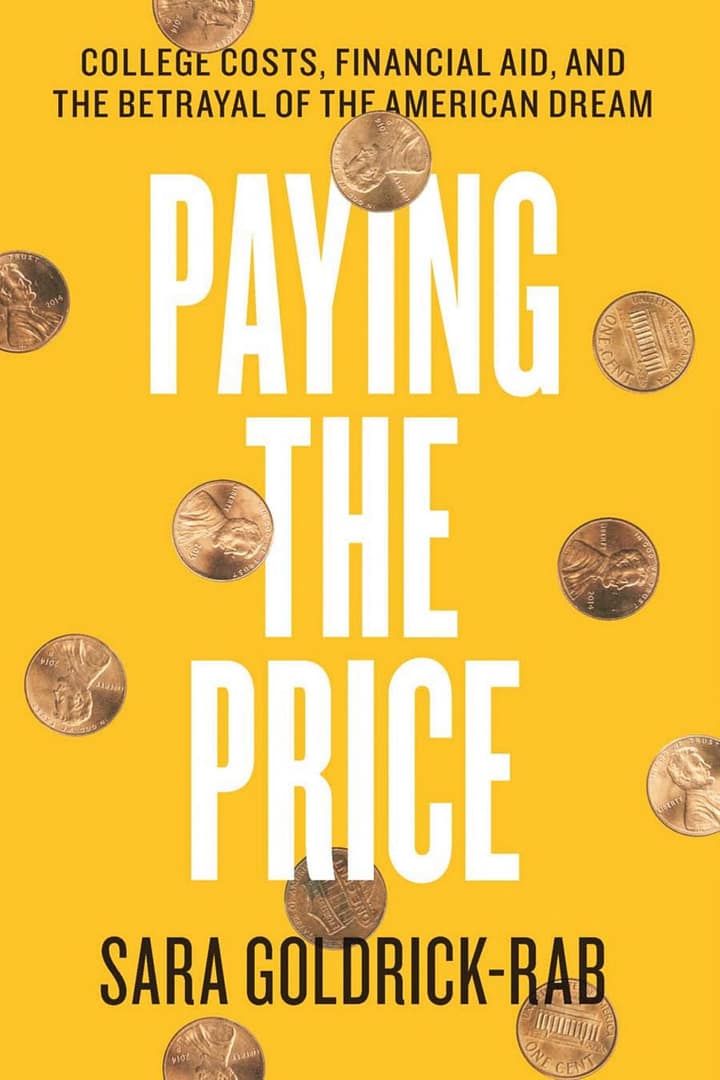
Bryan: [00:30:12] OK. These are two books that I think really really matter for today. One of them is by Sarah Goldrick-Rab. It is called Paying the Price. And it’s a book about financial aid and it doesn’t normally sound like most compelling read. And you should know that it was so compelling that it landed her a spot on the Daily Show with Trevor Noah. She is a wonderful scholar who has been studying this very closely launched a very powerful research lab in Wisconsin and is mostly trying to figure out how financial aid is actually working in real life. Is it actually helping students get to college. And their conclusion is that financial aid has broken that it is a disaster and it needs aggressive treatment and reconstruction nor do what it was originally supposed to do.
Bryan: [00:31:00] The book is not political. It is meticulously detailed. I mean incredible amount of data. She also flushes out the data with personal stories where she tracks students who either succeed or whose lives are blocked and stymied by how financially plays out. I can’t think of a more important book for people to read in secondary and post-secondary education right now. So that’s Paying the Price by Sarah Goldrick-Rab.
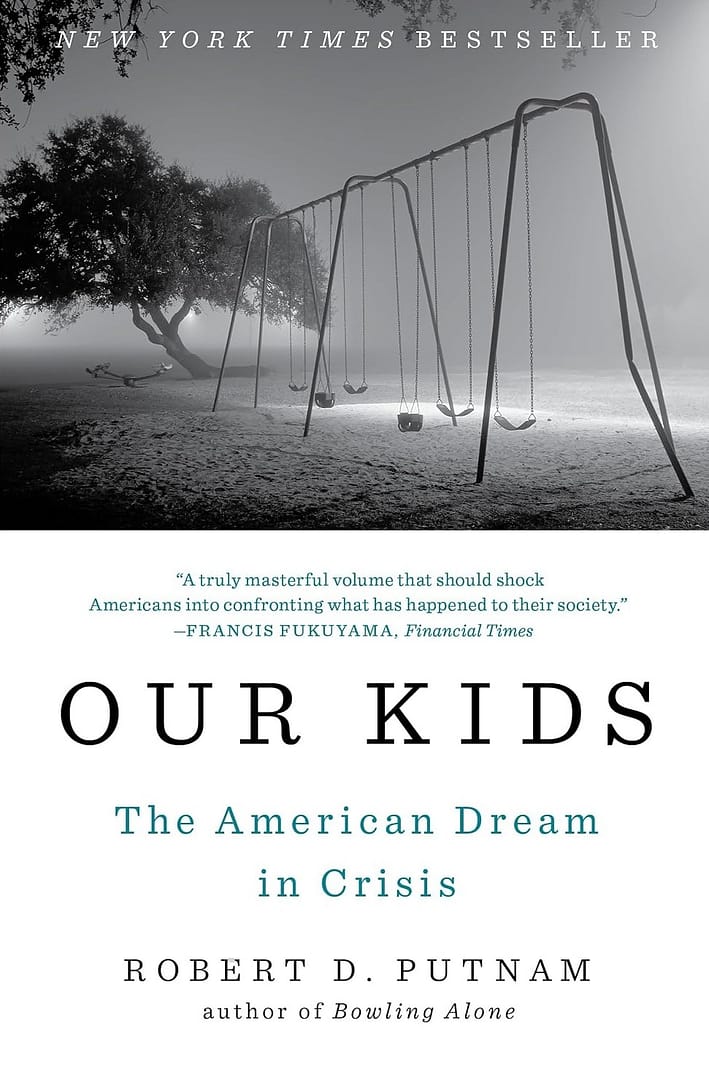
Bryan: [00:31:27] The second book which is even more daunting I’m afraid is by Robert Putnam called Our Kids some readers won’t recognize Putnam’s name he was famous in the 1990s for a book called Bowling Alone which made an argument for a kind of deep cohesion in American social life.
Bryan: [00:31:44] Our Kids is a study of differences among children across the United States. And the book’s thesis is that a class divides have now become greater than any other divide including gender including race including ethnicity and geography. And he does this with a few ways.
Bryan: [00:32:05] One is a giant pile of research. I mean tons and tons of data. Huge amounts of research to this most logical literature. Second is through personal stories. Again he describes growing up in a small town on the north shore of Ohio and then visits it again. But then he also traces a bunch of students who are kids who are growing up teenagers or younger kids and it makes the case that Americans going through what another sociologist is called The Big Sort where we are basically splitting apart at the micro level and it’s the micro of the township level the suburb level a block level not a level of states but the wrong side of the tracks. Now is becoming mandatory. And this plays out in all kinds of things including K-12 funding and the structuring of K-12. It plays out in politics and he concludes the dire warning that we’re basically creating a two tier society. You use the word apartheid at least once it says that if we don’t address this we may face powerful social and political consequences. And guess what. The book is from two years ago. Now both of these are works of social science. I’m a humanities person so if I could read these enjoy and appreciate them. Anybody can.
Bryan: [00:33:19] So again, that is Sarah Goldrick-Rab, Paying the Price and Robert Putnam, Our Kids.
Bonni: [00:33:25] Before we sign off would you share a little bit about your book club since I know that you’re either currently or just wrapping up the discussion on paying the price. And I think other people might like to engage with that community that’s sharing about different books.
Bryan: [00:33:39] Well please do. This is something that I’ve improvised over the past five years. I love reading. I’m a bibliophile which when I say that my wife says that’s a cry for help. And I love reading together. I love using social media to do that. So back in the 1990s I actually launched her first book club reading. I did a reading of two memoirs of World War One one written by the great poet novelist Robert Grange and the other one written by the peace activist and nurse Vera Brittain. They didn’t know each other during the war but they both read a memoir of their experience.
Bryan: [00:34:12] So I went through both books and broke them up by time. So every week we could read them in their chronological time so what were they both doing in April 1917 or they’re both doing in the fall of 1916. And we use e-mail to organize that. And it was a really good discussion and it really inspired me. So I’ve been doing this on the web in a way that works is I ask everybody who reads my blog either directly or by it being posted through link and Facebook and Google Plus. I was looking for suggestions of what to read and my focus is basically the future of education. That’s my professional job is to wonder about that. So I’ll ask her books you know like Sarah Goldrick-Rab is so important because it takes a look at the finances of higher education.
Bryan: [00:34:56] When we pick one I come up with a quick agenda and we structure it by posting my blog once a week about the reading up to the point. So say we’re reading a nonfiction book read a chapter a week so week one I’ll post about Chapter One week to about chapter two week three chapter three and so on.
Bryan: [00:35:16] I’ll post some quick notes and some questions to get going and hashtag and then people will participate in a few different ways. One is by commenting on the blog post. Sometimes they’ll go to Twitter and they’ll prefer to issue comments that way. Sometimes they’ll set up saw it on their own blog they’ll write about it and use the same hashtag and we’ll link them together. And there’s something even more creative.
Bryan: [00:35:38] Last year we read this magnificent book called We Make the Road by Walking. The book is a dialogue between two very very important educators powder for the great Brazilian liberation pedagogy our expert practitioner and Myles Horton a wonderful civil rights bureau who built a great series of schools in Appalachia. And the book is about them talking about education and what it means to help the poor and the dispossessed and the marginalized. And participation took off like that. People were tweeting about this 10 20 times a day and then people got creative. They started making images and graphics. They would take the left lift the cover of the paper mechanician remix it. Someone thought he had a fun time with Doc with a Dr. Seuss cover remix that Alan Levine and a few other people wrote bots that would generate random quotes from the book. And then the book started inspiring people to dig into archives.
Bryan: [00:36:35] Canadian participant whose name that temporarily escapes me dove into Canadian pedagogical project that was really really fascinating and is now trying to develop a new version of that old line. I thought of this is the kind of the exploded Twitter bookclub because it’s disintegrated the discussion is happening all over the place and Twitter and my blog are kind of the anchors such as they are.
Bryan: [00:36:58] So if you want to find out more just go to Bryanalexander.org look at the very top there’s a little tab for bookclub click that and you’ll find examples we read all kinds of stuff we’ve read nonfiction analyses or higher education we’ve read about four different near-future science fiction novels to try to think about where things are going and where we have to figure out our next book. So I would love to hear from your listeners Bonni to see what they’d like. I’d love to hear from you what we should be reading.
Bonni: [00:37:24] Ah a challenge. I will admit to being a little bit intimidated by some of them and I’ve just been enjoying peering in from a distance. But that’s the great thing is that we can do that for you.
Bryan: [00:37:33] That’s a great thing you can I’m glad to know. I mean you know what’s what’s the ratio of participants to lurker’s what is it like you know a one to five and a six.
Bonni: [00:37:43] Yeah. Well that’s wonderful and people who are listening who want to comment on today’s episode can do so at teachingathighered.com/144 and all the links to things that Brian talked about it’s going to be a lot of lengt so I’m excited to consolidate it all and then links over to his blog and his book club etc.
Bonni: [00:38:01] Brian thank you so much for joining me on today’s episode of Teaching in Higher Ed. It’s absolutely a thrill to talk to you and I feel like I’ve learned so much and I and I’m just excited to share the episode with everyone.
Bryan: [00:38:12] Bonni, it’s a treat talking with you and as a longtime listener it’s an honor to actually be on the show.
Bonni: [00:38:18] Thanks once again to Brian for joining me on this episode of Teaching in Higher Ed. One of the things that I didn’t mention is if you want to hear more from Brian about future trends in technology and education he has a wonderful newsletter that you can sign up for and receive ongoing information from him so take a look at the show notes and you can easily subscribe to that. And thanks to all of you for listening.
Bonni: [00:38:45] If you want to not have to remember to go to those show notes every week but have them come into your inbox. I do have a weekly newsletter that gets e-mailed to you once a week. And in it are the show notes with all the great links that Brian and I talked about today as well as an article about either teaching or productivity written by me.
Bonni: [00:39:06] You can subscribe at teachinginhighered.com/subscribe. And thanks to those of you who have been writing reviews on iTunes or whatever service it is that you use to listen to the show that really helps other people discover it. If you have any recommendations for future guests or topics please feel free to get in touch with me either on Twitter or at teachinginhighered.com/feedback. Thanks so much for listening and I’ll see you next time.
Teaching in Higher Ed transcripts are created using a combination of an automated transcription service and human beings. This text likely will not represent the precise, word-for-word conversation that was had. The accuracy of the transcripts will vary. The authoritative record of the Teaching in Higher Ed podcasts is contained in the audio file.