Follow the Teaching in Higher Ed Podcast
About this Episode
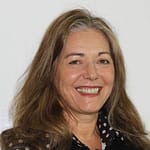
Christine Renaudin shares about Sonoma State’s Second Year Research & Creative Experience on episode 268 of the Teaching in Higher Ed podcast.
We can enhance each other’s efficiency and creativity by listening, learning, and supporting each other.
Christine Renaudin
On episode 268 of Teaching in Higher Ed
Voices on this Episode

Show Notes + Resources
Recommendations from this Episode
Transcript
[00:00:00] Bonni Stachowiak: Today on episode number 268 of the Teaching in Higher Ed podcast, Christine Renaudin shares about Sonoma State’s second-year research and creative experience.
[music]
[00:00:14] Production credit: Produced by Innovate Learning, maximizing human potential.
[music]
[00:00:24] Bonni: Hello and welcome to this episode of Teaching in Higher Ed. I’m Bonni Stachowiak and this is the space where we explore the art and science of being more effective at facilitating learning. We also share ways to improve our productivity approaches so we can have more peace in our lives and be even more present for our students.
Today, it’s another episode that’s part of the Teaching in Higher Ed and California State University collaboration to bring you a series of podcast episodes that features superb educators who will change how you think about your teaching in powerful ways. The episode series brings on faculty who are transforming the lives of students every day. These individuals embody the California State University’s commitment to achieving their educational goals through innovation and leadership.
Today’s guest, Dr. Christine Renaudin has taught French language, culture, and literature, and she is coming on the show today to tell us about Sonoma State’s second-year research and creative experience. This experience is designed to serve sophomore students where retention used to be the weakness. The program began as a constellation of 10 courses designed for second-year students to fulfill the requirements of general education in one of their academic areas called C2: Literature, Philosophy, and Values.
This program offers students a multidisciplinary approach to a common topic renewed every year. I say, it has been offered every semester since 2014 with Christine serving as coordinator while teaching the theater arts and dance seminar. Every year, 480 students are offered this opportunity to inspire others, their peers, and professors, but also high school and college freshmen students, as well as other members of the community who attend the public symposium. Christine, welcome to Teaching in Higher Ed.
[00:02:43] Christine Renaudin: Thank you. Hello.
[00:02:45] Bonni: We’ve been able to learn a little bit about your background, although the bio is really focused on this second-year program that you started, I’d love to have you share first, just about your academic background before we specifically dive into the second-year program.
[00:03:01] Christine: Okay. Well, I started my graduate studies in France and got an MA in French literature there. I was a medievalist at the time and got a doctorate here in the United States from Cornell University. That was about Voltaire and the representations of the body in his tales. That feels like a long time ago.
[laughter]
From there, I guess, I diversified my interest and got interested in a number of authors, including Malika Mokkedem, for example, from Algeria, and Desquiron from Haiti, and probably my favorite author is Marguerite Duras whom I teach every chance I get in my literature classes in French here.
[00:03:48] Bonni: When I look at your background, you seem very much– You mentioned that feeling a long time ago, you seem very much, today, comfortable in a space of being more of an interdisciplinarian, does that description fit you well?
[00:04:02] Christine: Absolutely. I have always enjoyed literature. I also have cultivated a passion for dance and the performing arts. I am also doing some creative writing and some painting even. So, yes, I would say that interdisciplinary is a keyword in my professional and personal life, I would say. This is where I feel good.
[00:04:25] Bonni: I could tell. I had this feeling that’s not something that naturally happens for a lot of us. We almost have to back our way into it because when we get our doctorates, they’re very, very, very specific. Then in our teaching, I think it really values our students that much more when we can broaden back out again.
[00:04:44] Christine: That’s true. Especially, when we want to commit to this concept I called the whole students, embodied ways of learning. Those are important concepts for me. I have always tried to conjugate, possibly, my love for literature and for other forms of art as well.
[00:05:06] Bonni: In the past, the word or the phrase embodied ways of learning, it comes up a lot. Would you explain it to me like I’m eight years old? [chuckles] Just in case because I think there’s so much richness there, but I might get lost and just feeling intimidated by this term.
[00:05:25] Christine: Yes, it’s probably overused these days, anyway. Let’s see, here’s an example that maybe will talk to you. I don’t know if you’ve ever learned another language, probably, yes?
[00:05:37] Bonni: Sign language, yes. [laughs] Many months ago, yes.
[00:05:40] Christine: You don’t know French, do you?
[00:05:42] Bonni: No. My mother does, I do not.
[00:05:44] Christine: Well, imagine yourself for the first time in a French class where you know nothing and you feel that you’re back to being five years old because you can’t see anything, you cannot translate into words, the maturity of your mind. That’s very frustrating. Yes, at first?
[00:06:00] Bonni: Yes.
[00:06:01] Christine: One way to get over this frustration, which is extremely natural, is to play the card of play, embody the play. I always told my students that in a dream world, I would be able to teach beginning French in a gym, where they would be able to run, to jump, to interact in wild physical ways. As to reconnect with this child that is learning something new at that level, that level where it doesn’t matter so much that you cannot translate your mind already. There are other things that you can communicate with and build upon each other, like a game of blocks, for example. I don’t know if that makes any sense to you, does it?
[00:06:46] Bonni: It really does. One of the things, because I loved your invitation to picture myself in the French class because that’s, right away, I could feel myself going there. If I stay in my adult mind that I worry about what other people think, and I worry about that I’m not good enough to learn this, that my brain combined with my mouth won’t be [laughs] able to produce what I’m expected to, but if I connect with the inner child that I have, one of the things I noticed is I have two young children, five and seven.
If I allow myself to enter into their worlds, they don’t spend time thinking about what other people think. That’s not ever a thought that seems to come across either of their minds, maybe my son a couple of times, but very, very rarely. What it enhances in them is their ability to notice things. In this new world, your dream world that you described in a gym and fully embodying my learning of French, I imagined that I would be able to notice more just about the process of learning.
[00:07:53] Christine: That then also the process of relating. When you as an adult are regressing to this world of a child where you cannot function as an adult yet, because you haven’t learned the tools, you don’t have enough blocks to build your castle, yes?
[00:08:09] Bonni: Yes.
[00:08:10] Christine: Then you have to rely on other forms of communication, and this is where playfulness comes into play, if I may say, and is very helpful. Also, body language, so here you go with the idea of embodiment. You embrace the concept and the learning process, not just from your mind, but also from your whole presence. That includes the material-physical presence.
[00:08:37] Bonni: I also hear you saying that my physical presence and fullness in that will allow me to relate to the others that are there too.
[00:08:45] Christine: That’s the idea. Therefore, the fact that you don’t have so many words is less of a frustration and more of an inspiration to get to know more.
[00:08:56] Bonni: Is there anything else that you want to share about this idea of the whole student? If we’re experiencing these embodied ways of learning, how does that enhance our– Is it our identity as our whole student? Or is there more to it than identity?
[00:09:12] Christine: That’s a good question. I think, well, identity for sure. I think also that we’re under-linked. I think that we retain more from the experience because it is inscribed in our bodies and in our minds, in not necessarily conscious ways all the time, but perhaps more profound ways, wider, we cast a wider net around the object of our learning.
[00:09:40] Bonni: I hear that. The other thing I think of when I think of the whole student, I don’t know if I’m projecting more on your ideas than belong, but just this idea that if I could connect with that child in me, then I do get to bring my whole self. I don’t have to cover parts of it up.
[00:09:59] Christine: Right. If I may transition to what we do in CSA is-
[00:10:04] Bonni: Yes, please.
[00:10:06] Christine: Creative experience, the fact that it’s built as an interdisciplinary course with a team of 10 instructors and we present the students with various facets of the same problem, of the same topic. Some of it is dense, some of it is literature, some of it is philosophy, some of it is music. This kind of interdisciplinary approach in my eyes also solicits the whole student into the learning process. Whether or not you’re a music major, you are going to be exposed to some music and even some music making which will address the whole student.
You will be asked to participate in some impromptu concert or in some impromptu singing together or making some music. For example, fairly recently, our music instructor engaged the whole community of CSA into playing a composition by John Cage, Clapping Our Hands.
[00:11:21] Bonni: Well, let’s fill out the acronym. It’s the second-year research and creative experience. Let’s talk first about why you found it important to build this whole program around the second-year when so much of what, at least I hear, is focused on that first-year experience.
[00:11:40] Christine: Okay. That’s a very simple story, it’s a very grassroots idea. I was chairing our school curriculum committee and I was encouraged to look at retention and the graduation initiative. I realized that sophomores were the least best served if I dare say. We had courses for freshmen, courses for juniors, courses for seniors but nothing specific for the second year students. It was a vulnerable place where some students decided to drop, to not continue. From the point of view of retention, it seemed worth our while to develop something that would help them stay, help them keep believing in the process.
That’s where the idea came. I started to sketch an idea and presented it to my dean and then a small team of colleagues that we took to a workshop organized in Sacramento by the council for undergraduate research. The dean came with us, we presented our idea, it was the form of a workshop so it was actually quite fun and came out of this experience thinking, “Yes, this is a good idea. This is a good idea that we could implement next semester if we hurry up.” So we did.
[00:13:05] Bonni: A big challenge you were trying to address was retention and meeting the needs of this perhaps under-served demographic.
[00:13:13] Christine: Yes.
[00:13:14] Bonni: What were some of the other goals you had around creating this new program?
[00:13:18] Christine: We also wanted it to serve the students in practical ways so we made it a general education course that would fulfill the area C2, literature philosophy of values and that would also engage the whole school. We wanted it to be a school enterprise. [laughs] We had a brand new building at the time, Shredder Hall which was built to host a choir at Sonoma State University, beautiful building that seats 240 students or people. With our goal in mind and the idea of using this beautiful newly built hall, I started to work and I imagined as, okay, we can fill the hall with 240 students.
If we have 10 instructors, that’s 10 seminars of 24 students, that’s reasonable for a GE, second year GE course and then how to make it interdisciplinary, how to make it a collaborative experience for the instructors involved and that’s when I came with this idea of devoting– It’s a four unit class that we teach in two meetings a week, two-hour-long meetings a week. I decided to structure it with a big lecture on Tuesday’s and seminars, disciplined specific seminars on Thursdays so that on Tuesdays, all sections are together in this beautiful hall and all instructors as well who sit on stage because there is no room in the house when the class is full.
Also because I thought that it might be a good idea to model for the students what it means to listen to each other with attention, without looking at your phone, without having your laptop distract you from what’s being said on stage. In other words, model that model, attentive listening, active listening and also for the instructors I wanted it to be an experience of sharing, of learning from each other. I have to say, this has been one of the most rewarding and most poignant aspect of the experience is the, I would say in French, [French] , the team spirit that was created between these instructors.
They are not always the same. Some of them have been in the experience from the beginning but every semester we have some new faces that we place in sabbatical or just joined for the first time. That has bee something beautifully rewarding for me personally to see this happen.
[00:16:03] Bonni: What you said about modelling this deep listening for the students really resonates with me and I’ll try to ask this question delicately because I’m sure neither I nor you would like to insult our colleagues here in a public space but nonetheless, I wonder if you had to name that and stress the importance because I find even some of my colleagues, that isn’t the first place we’re always able to go, we get a little impatient just as our students get impatient. Is that something that needed to be practiced among your colleagues to be able to model it for the students?
[00:16:39] Christine: Yes. I don’t know if I had to say anything but I did say something. I did mention that it was one of my goals that I wanted us to do this and there was some resistance at the beginning, I won’t hide that. But soon enough the resistance gave way to a collaborative spirit and authentic respect for each other and so on and so forth. I think that’s powerful to show this to our students. That we can enhance each other’s efficiency and creativity by listening, learning and supporting each other.
[00:17:19] Bonni: One of the ways that I know you are able to coral is the wrong word but to create more cohesion as through a canvas site for all 10 of the sections, would you speak a bit about how you went about that? Any lessons learned from that process?
[00:17:37] Christine: Yes. It’s always difficult to tell your colleagues what to do no matter how excited they are about the new venture. The canvas site provided a way for me to ask a coordinator to lay the structure for the course making sure that we had commonalities in syllabi. I constructed a syllabus, a general syllabus that people used, again as a canvas altering the things in the syllabus that were specific to their discipline. There are common goals and at the same time individual goals in each syllabus. The canvas site is only for the Tuesday lectures, this is where the Tuesday lecture series is posted.
This is also a way for me to communicate with all participants in CSA. When I say participants, I mean the students of course but also the instructional team are a dedicated librarian and also our PFC daters. We have a few PFC daters. All these people are participants and they all have access to this site which is mostly, we don’t record grades on this because each instructor is responsible for his or her own grades but it’s an informational site where you have what’s happening on a given Tuesday, what is the special feature of the day.
Then it’s a way for me to send emails, reminders, announcements, requests and so on and so forth.
[00:19:14] Bonni: We’ve talked a lot about the structure, we’ve looked at the goals and some of the lessons learned along the way. We’re missing a really big thing which is the, I don’t know if theme is the right word for it but I think we’re going to go back in time on this one. Would you explain the background of the time machine for us?
[00:19:31] Christine: I will. I want to make a tiny detour.
[00:19:34] Bonni: Sure, sure.
[00:19:36] Christine: I emphasized the idea of collaborative work between the instructors but also this is something we model and we encourage our students to do collaborative work. Their participation culminates in a symposium, a public symposium at the end of the semester where they present their semester project. This semester projects can be individual or collective or collaborative. They range from the traditional research paper to the podcast to the live performance to digital humanities and so on and so forth.
That said let’s talk about topics, so these 10 instructors, 10 discipline-specific seminars all tackle the same topic. This year it’s the 1960s but we started with 1848 which was by far the most difficult one because the further we moved we are from a contemporary period the more difficult it is for our students. I’m sure you know that.
[00:20:38] Bonni: Are you going in chronological order or are you hopping all over your timeline?
[00:20:44] Christine: We are hoping, so we started with 1848 then the following year we did the 1960s then the 1970s then we went back on the fourth year to the 1930s because we thought there was a certain relevance to our times as well. This year we are back to the ’60s and next year we are bound to revisiting the ’70s.
[00:21:08] Bonni: Would you share for either the ’60s or the ’70s just some examples of these various disciplines waving their way in.
[00:21:15] Christine: This semester we have a little bit of a smaller class, we only have seven sections. Let’s say last fall when we had a full plate we have a section in American multicultural studies, a section in Chicano Latino studies, a section in communication media studies, English, modern languages, art and art history, music, philosophy, theatre arts and dance. There should be 10 in that list that I just mentioned.
[laughter]
[00:21:44] Bonni: I’m impressed.
[00:21:48] Christine: We had the students learn a few steps of the twist, for example, this is just a detail a funny detail to engage the whole student in the big auditorium, can you imagine?
[00:22:01] Bonni: I love it.
[00:22:02] Christine: What I do is that next week, for example, I’m going to call a meeting with the people who will be teaching CSA next semester. Everybody will share three topics of interest from the point of view of their discipline about the 1970s. They don’t have to come up with full titles yet I’ll ask that about mid-summer, but the topics within the topics will help me create a coherent lecture series articulating a total of 30 lectures in the order that seems the most exciting the most interesting.
Tag also to these lectures– we usually have two lectures per Tuesday plus a special feature and the special feature is usually either a guest speaker sharing a more personal experience, or it can be a selection from a movie that illustrates one of the lectures that preceded, or it could be guest performers it can be a range of things and it depends of course on these topics. I can’t really decide which special features I’m going to add until I know what people are going to speak about because those special features are supposed to either compliment supplement or contrast with what we are talking about.
[00:23:22] Bonni: As you’re describing this I’m thinking back to my freshman year experience when I was in college. It was structured very similarly to what you described with the one huge exception with we didn’t really have a showcase of our accomplishments. It was more of just a paper that would only be read by the professor but it’s so memorable for me just those opportunities, ours was called war and peace. I can still remember getting to hear from a Holocaust survivor, I still can remember some of the books that we read and that was a very long time ago. It’s always fascinating to me what sticks with us from our educational experiences and what you’ve described here is the strengths of lectures but negating some of the weaknesses by allowing people to embody their learning and the ways that you’ve described.
[00:24:14] Christine: Right and giving them a full range of options to do that. Not limiting ourselves through the traditional research paper which has its place, there’s no question. For a lot of people, it’s not at this point in their life, in their college career perhaps the best way for them to shine and convince themselves that they can keep shining.
[00:24:39] Bonni: The other really distinctive area of your program that I’m learning from is just this idea of– Well, first you shared about modeling that deep listening in our learning process. You’re also modeling the ways in which our disciplines are interwoven with each other and we some times just make that assumption that students will be able to do that naturally and I do not find that to be the case. I don’t find some of us as professors are able to always do that and what a wonderful way to model and to really have that learning taking place as you mentioned earlier not just by the students but also by the people teaching the classes.
[00:25:18] Christine: Yes, and, Bonni, that is something we had to learn. it was one of the difficulties that we tackled earlier on, how could we connect these lectures together? In the seminars when the students meet with their discipline-specific instructor, they’re really three big tasks. Debriefing the lectures from Tuesday one way or the other, making connection between these lectures that are not necessarily in their discipline and their own discipline, covering some discipline-specific material and then “workshopping the semester projects.” This idea of connection, making connection, teaching the students inviting them, making it possible for them to draw connections between not only the events that happened in a given decade but between the various approaches to the same decade. That’s something we had to work on it did not come necessarily easily to a lot of us but now I think we are doing quite a good job about it. It comes a lot more naturally, we quote each other in our lectures, the ridges happened a lot more naturally than say that first semester we started it.
[00:26:36] Bonni: From what you’ve described and what we shared before we started recording to though I suspect you’re not done yet. There are still areas you want to grow you really model for us just this quest to continually improve and find new opportunities to support our students and their learning.
[00:26:53] Christine: Yes, there’s always plenty to improve but that’s for sure.
[00:26:59] Bonni: This is the time in the show where we each get to share our recommendations and I have a musical one today. People who have been listening to the podcast for a whole know that I am a fan of jazz and I’m also a fan of musicals. I have really good memories of growing up in San Diego and going into an outdoor theater that sadly is no longer down in San Diego at least it’s not operating in its past form. It used to be that they would put on musicals every week during the summers and it’s right there by the San Diego airport and every time that a plane would fly over the entire orchestra, all the musicians, the singers everyone would freeze in place until the plane had gone past and then they would just resume. It cracks me up because here I am so many decades later still when I hear an airplane I always feel like everyone around me should freeze until it’s gone past it was really funny.
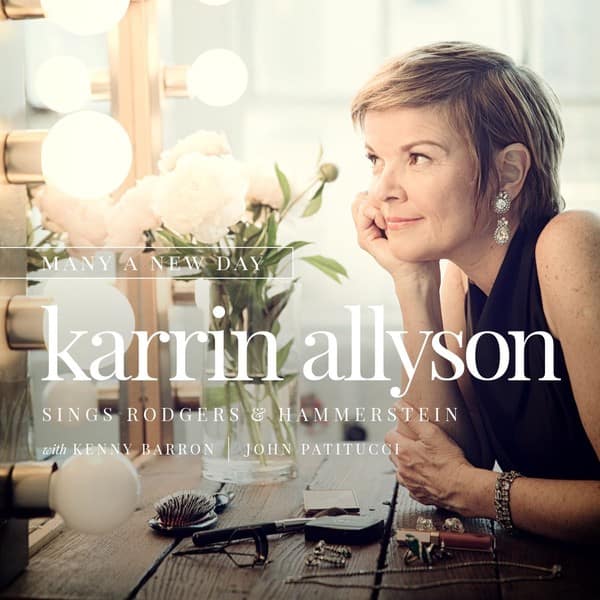
One of the musicals I can remember watching was south Pacific and today’s song I’m going to recommend is called Happy Talk which was in that musical. Just as a side note it’s still a really a good musical but there’s lots of problematic things and as far as gender and race and ethnicity and war. I mean there’s just all kinds of problems with it but it’s really good music. The artist I’m going yo recommend today her version of it is Karrin Allyson and she has a whole album of singing Rodgers and Hammerstein songs and so I’m going to play just a little bit of her version of Happy Talk.
[music]
It’s such a good song and she has such a wonderful version of it so I’d suggest from my recommendation, everyone go have a listen to Happy Talk then in a little bit of a new an interesting way. That’s my recommendation and Christine now I get to pass it over to you for yours.
[00:29:12] Christine: I have two actually Bonni, a very general one and then more specific one. The first one very general is that I would recommend that everybody learn another language. Whether it’s another language that you speak with words or with your body only like dance or music or anything else like that. Something that is different, something that you don’t know, something that forces you to develop a second operative system in your brain and so that’s my general recommendation of course.
The other one is a choreographer whom I discovered about 10 years ago while in France directing the CSU program abroad and I discovered it on TV. She’s a French-Canadian choreographer called Marie Chouinard and I’m reminded of her because very recently I had a chance for the first time in my life, see her work live in Vancouver, BC. I know that she was in Portland, Oregon recently and she has been in California although a while ago and he’s not been recently. Anyway, I recommend her work very much is beautiful. It’s definitely postmodern I would say with very well trained, very classically trained dancers. I find it very creative, edgy, moving and I recommend her to people who don’t know her.
[00:30:49] Bonni: Wonderful, we’ll be having links to all of the things that we recommended in the show notes and I’ll also be linking to information about this program that Christine, you and your colleagues have put together. I just appreciate so much you taking the time out of your day today to speak to me about these great inspirational programs and I’m sure we each have something we can take away from your contribution today.
[00:31:13] Christine: Well, thank you very much, Bonni, for inviting me.
[00:31:18] Bonni: It has been so inspiring to have this opportunity to talk with Dr. Christine Renaudin. What an inspiring conversation. I’ve got so many ideas of how we can take our students’ interests, all these various disciplines, and combine them into a shared embodied learning experience. Thank you, Christine, for that. Thanks to all of you for listening.
If you want to get the links to all the great things that we spoke about today and the recommendations you want to subscribe for the weekly update, because that’ll mean you’ll get a single email in your box in most weeks and that will have an article about teaching or productivity written by me along with the most recent shows. Show notes you can subscribe @teachingandhighered.com slash subscribe I’ll see you next time on Teaching in Higher Ed.
[00:32:13] [END OF AUDIO]