• Skip to primary navigation
  • Skip to main content
  • Skip to footer

Teaching in Higher Ed

  • Podcast
  • Blog
  • SPEAKING
  • Media
  • Recommendations
  • About
  • Contact
EPISODE 591

Rethinking Student Attendance Policies for Deeper Engagement and Learning

with Simon Cullen & Danny Oppenheimer

| October 9, 2025 | XFacebookLinkedInEmail

https://media.blubrry.com/teaching_in_higher_ed_faculty/content.blubrry.com/teaching_in_higher_ed_faculty/TIHE591.mp3

Podcast (tihe_podcast):

Play in new window | Download | Transcript

Subscribe: Apple Podcasts | Spotify | RSS | How do I listen to a podcast?

Simon Cullen + Danny Oppenheimer help us rethink student attendance policies toward deeper engagement and learning on episode 591 of the Teaching in Higher Ed podcast.

Quotes from the episode
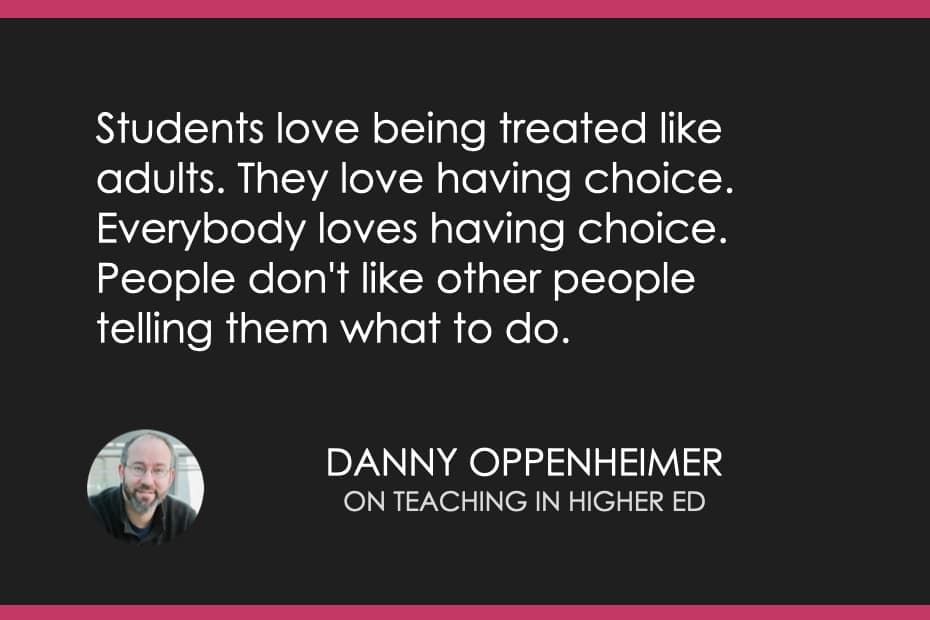
Students love being treated like adults. They love having choice. Everybody loves having choice. People don't like other people telling them what to do.

There's a lot of evidence that coming to class is one of the best things a student can do to facilitate their learning and performance in class.
-Danny Oppenheimer

You can make students attend, and most faculty do. They set attendance as mandatory. And then students attend and they learn because they attend. But they also hate you, and they hate the subject and they hate everything to do with the class.
-Danny Oppenheimer

If you give people choices, sometimes they make bad choices. Scaffolding choices can help people make choices that actually align with their preferences more effectively.
-Danny Oppenheimer

Students love being treated like adults. They love having choice. Everybody loves having choice. People don't like other people telling them what to do.
-Danny Oppenheimer

In some sense students have a preference to attend class. And in some sense they have a preference to not attend class. Those preferences can coexist in some way.
-Simon Cullen


Resources

  • Choosing to learn: The importance of student autonomy in higher education, by Simon Cullen and Daniel Oppenheimer
  • Are we overlooking the power of autonomy when it comes to motivating students? by Danny Oppenheimer
  • Consequences of Erudite Vernacular Utilized Irrespective of Necessity: Problems with Using Long Words Needlessly, by Daniel M. Oppenheimer
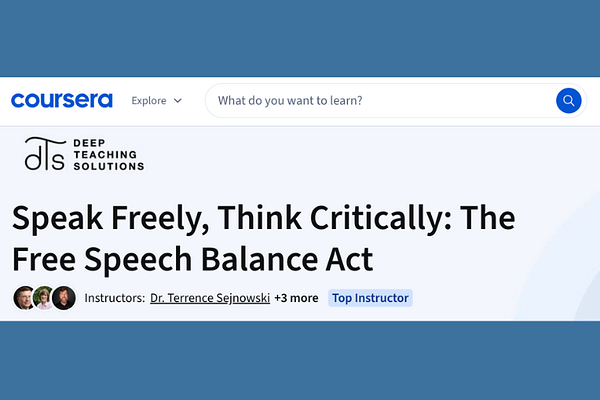
  • Speak Freely, Think Critically: The Free Speech Balance Act
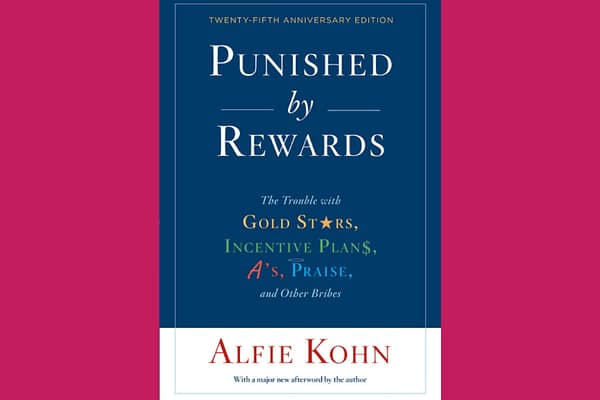
  • Punished By Rewards: The Trouble with Gold Stars, Incentive Plans, A's, Praise, and Other Bribes, by Alfie Kohn
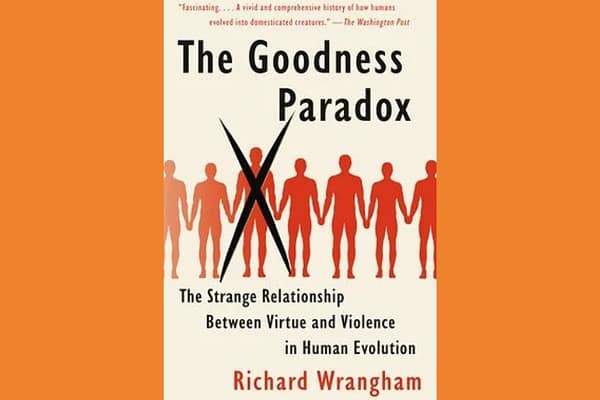
  • The Goodness Paradox: The Strange Relationship Between Virtue and Violence in Human Evolution, by Richard Wrangham
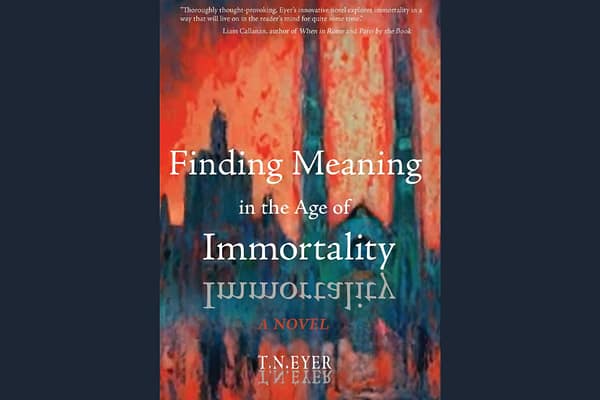
  • Finding Meaning in the Age of Immortality, by T.N. Eyer

ARE YOU ENJOYING THE SHOW?

REVIEW THE SHOW
SEND FEEDBACK

ON THIS EPISODE

Simon Cullen

Artificial Intelligence and Education Fellow

Simon Cullen is a faculty member and Artificial Intelligence and Education Fellow at Carnegie Mellon University. He developed the award-winning Dangerous Ideas in Science and Society course at CMU, helping students to explore diverse viewpoints on polarizing topics by teaching them the art of constructive disagreement. His research combines philosophy, cognitive science, and educational technology to improve reasoning, communication, and understanding across moral and political divides. His work has been published in Science Advances, Nature Science of Learning, Cognition, and the Review of Philosophy and Psychology. He holds a Ph.D. from Princeton University and has a background in reasoning pedagogy, psychology of reasoning, and philosophy of cognitive science.

Danny Oppenheimer square

Danny Oppenheimer

Professor of Decision Science and Psychology

Danny Oppenheimer is a professor at Carnegie Mellon jointly appointed in Psychology and Decision Sciences who studies judgment, decision making, metacognition, learning, and how the use of technology changes how people think.  He applies his findings to a diverse array of domains, such as charitable giving, consumer behavior, education, electoral outcomes, and how to trick students into buying him ice cream.  He is the author of over 75 peer-reviewed articles and books including "Democracy Despite Itself: Why a System that shouldn't work at all works so well" and "Psychology: The Comic Book Introduction".   After receiving his PhD in psychology at Stanford, he has served on the faculty at Princeton, UCLA, and for the past 8 years Carnegie Mellon.  He has won numerous awards for his teaching and research, and was the winner of the 2006 Ig Nobel Prize for Science Humor for research that "makes you laugh and makes you think" for his paper "Consequences of Erudite Vernacular Utilized Irrespective of Necessity: Problems with using long words needlessly".  This fall, he will be teaching two courses: "Introduction to Psychology" and "Human Intelligence and Human Stupidity"

Bonni Stachowiak

Bonni Stachowiak is dean of teaching and learning and professor of business and management at Vanguard University. She hosts Teaching in Higher Ed, a weekly podcast on the art and science of teaching with over five million downloads. Bonni holds a doctorate in Organizational Leadership and speaks widely on teaching, curiosity, digital pedagogy, and leadership. She often joins her husband, Dave, on his Coaching for Leaders podcast.

RECOMMENDATIONS

Speak Freely, Think Critically: The Free Speech Balance Act

Speak Freely, Think Critically: The Free Speech Balance Act

RECOMMENDED BY:Bonni Stachowiak
Punished By Rewards: The Trouble with Gold Stars, Incentive Plans, A's, Praise, and Other Bribes, by Alfie Kohn

Punished By Rewards: The Trouble with Gold Stars, Incentive Plans, A's, Praise, and Other Bribes, by Alfie Kohn

RECOMMENDED BY:Simon Cullen
The Goodness Paradox: The Strange Relationship Between Virtue and Violence in Human Evolution, by Richard Wrangham

The Goodness Paradox: The Strange Relationship Between Virtue and Violence in Human Evolution, by Richard Wrangham

RECOMMENDED BY:Simon Cullen
Finding Meaning in the Age of Immortality, by T.N. Eyer

Finding Meaning in the Age of Immortality, by T.N. Eyer

RECOMMENDED BY:Danny Oppenheimer
Woman sits at a desk, holding a sign that reads: "Show up for the work."

GET CONNECTED

JOIN OVER 4,000 EDUCATORS

Subscribe to the weekly email update and receive the most recent episode's show notes, as well as some other bonus resources.

Please enter your name.
Please enter a valid email address.
JOIN
Something went wrong. Please check your entries and try again.

Related Episodes

  • EPISODE 192Using Data to Stimulate Student Learning

    with Eric Loepp

  • EPISODE 414Promoting Student Well-Being in Learning Environments

    with Shaina Rowell

  • EPISODE 511Using Alternative Grading Practices to Foster Student Learning

    with David Clark

  • EPISODE 486Design for Learning
    Jenae Cohn

    with Jenae Cohn


EPISODE 591

Rethinking Student Attendance Policies for Deeper Engagement and Learning

DOWNLOAD TRANSCRIPT

Bonni Stachowiak [00:00:00]:

Today on episode number 591 of the Teaching in Higher Ed podcast, Rethinking Student Attendance Policies for Deeper Engagement and Learning with Danny Oppenheimer and Simon Cullen. Production Credit: Produced by Innovate Learning, Maximizing Human Potential.

Bonni Stachowiak [00:00:26]:

Welcome to this episode of Teaching in Higher Ed. Hi, I’m Bonni Stachowiak, and this is the space where we explore the art and science of being more effective at facilitating learning. We also share ways to improve our productivity approaches so we can have more peace in our lives and be even more present for our students. Today I welcome back to the show Simon Cullen, and he introduces me to his collaborator, Daniel M. Oppenheimer. Simon is an Assistant professor in the Department of Philosophy at Carnegie Mellon University and the Dietrich College AI and education fellow. He’s got a PhD from Princeton and he specializes in philosophy of mind, cognitive science and educational theory. He’s gained recognition through several initiatives including award winning choice architecture experiments like bots, rather real time surveys and pedagogical interventions. And he introduces us today, or at least me today, to Daniel M. Oppenheimer.

Bonni Stachowiak [00:01:38]:

He is a beloved professor in psychology and social and decision sciences at Carnegie Mellon University. Originally from the University of California, Los Angeles, Anderson and Princeton, he’s known for exploring judgment, causal reasoning and metacognition. He also received the 2006 Ig Nobel Prize in Literature. And this is a satirical prize awarded annually since 1991 to promote public engagement with scientific research. Its goal is to honor achievements that quote, “first make people laugh and then make them think.” It’s a parody, a pun on Nobel Prizes. In this case, Ig Nobel.

Bonni Stachowiak [00:02:29]:

And his 2006 Ig Nobel Prize in Literature was for his paper, and this is so beautiful you gotta such perhaps the best title I’ve ever heard of such a thing. Quote, “consequences of erudite vernacular utilized irrespective of necessity. Problems with using long words needlessly.” And his paper argues that simple writing makes authors appear more intelligent than complex writing. And today they’ll be discussing with me their recent article, Choosing to Learn: The Importance of Student Autonomy in Higher Education and inviting each of us to think about our attendance policies and even a deeper invitation to engage with further studies, should you be so inclined. Danny Oppenheimer and Simon Cullen, welcome to Teaching in Higher Ed.

Danny Oppenheimer [00:03:33]:

Thank you for having us.

Bonni Stachowiak [00:03:34]:

And Simon, I really should say welcome back to Teaching in Higher Ed. What a delight to get to talk with both of you today. Simon, let’s begin with you telling us what’s a moment that you, in your role, decided to focus on Autonomy.

Simon Cullen [00:03:53]:

Yeah, sure. Well, the story actually starts like a decade ago when I was at Princeton teaching this experimental seminar that just became hugely popular. It was called Philosophical Analysis Using Argument Maps. And maybe someday we’ll have a conversation about argument visualization as well. But the basic thing you need to know for this story is just that it’s an extremely challenging technique to learn. It’s really grueling. The learning curve is kind of brutal, but once you push through it, if you have the right kind of feedback, the right kind of coaching, you can get really big improvements in students general reasoning capacities. So their analytical reasoning, the sorts of tools that they just use everywhere now.

Simon Cullen [00:04:30]:

I had this really successful seminar at Princeton. It went really viral. It was like half of the incoming class were applying to get in with only 15 seats available. So I had tremendously motivated students. Every one of them was there because they really wanted to be. And I could start the class off by saying, There’s 290 people on the waiting list for this class, so if you don’t want to work hard, you don’t need to come, you know, you can, you can drop it. Well, that worked really well at Princeton. And we published the results.

Simon Cullen [00:04:56]:

Your listeners can check it out. It was in Nature, Science of Learning. And then I moved to CMU in 2018, thinking, I’m going to scale this approach up. So I took what I developed, which was a series of pretty grueling problem sets on argument analysis, and I made them mandatory for my students in Intro to Philosophy. That was a Gen Ed program, a Gen Ed class. And so many of those students were unlike the Princeton students there in this Gen Ed class, this lecture, because they’d been effectively bribed to be there. If they want their degree, they’re going to have to take one of the classes that satisfies this requirement. And that is a completely different motivational perspective than the students at Princeton.

Simon Cullen [00:05:34]:

So one day it wasn’t going super well at cmu. And one day, at the end of a lecture, a visibly frustrated student came up to me, complained about how long the problem sets were taking, and said to me, you do realize you’re teaching at a STEM school. Of course, I was a little taken aback by that. But after I gave it some thought, I realized that student was right, that they were taking my class because they’d been somewhat coerced to do so. They had a ton of demanding STEM classes that required huge amounts of time. And everything they do additionally is less time they spend sleeping. I realized that I really had to try a different approach with these students because they weren’t getting the benefits that I had seen. I thought from there, okay, I’m going to start giving them options.

Simon Cullen [00:06:17]:

Maybe I can challenge them to choose to do this difficult work themselves. And so I started to provide an alternative, which was a much lower effort option. And that’s one of the interventions that we ended up studying in the paper with Danny. But that was actually the first time when I was like, okay, we’ve got a really big issue here, and we need to get creative about how we can solve it. I’m sure we’ll talk more about the actual interventions that we tested in our study.

Bonni Stachowiak [00:06:42]:

So, Danny, tell us, what do we actually know? What evidence is there about any linkages between how students do in a class and how often they attend?

Danny Oppenheimer [00:06:53]:

Well, there’s a lot of evidence that coming to class is one of the best things a student can do to facilitate their learning, facilitate their performance in class. A lot of studies out there have looked at what are the primary predictors of student success. And actually, attendance is the number one predictor out there. It’s a better predictor than student preparedness. It’s a better predictor than various study strategies. It’s a really, really helpful thing for students to do. And in a way that shouldn’t surprise anyone, if you don’t come to class, you don’t get exposed to the material. How are you supposed to learn it? And unfortunately, not all students do come to all classes.

Danny Oppenheimer [00:07:30]:

They sometimes for legitimate reasons and sometimes for less legitimate reasons. They aren’t always the most focused on attending, but you can make them attend, and most faculty do. They set attendance as mandatory. And then students attend and they learn because they attend, but they also hate you, and they hate the subject and they hate everything to do with the class. They feel coerced. And it brings me back to a time when I was teaching a section of Intro Psych and I was asked to teach a special added discussion section. And I thought to myself, well, I. I don’t have anything extra to say, and I can’t give the students in this discussion section information that I don’t give to the general lecture because then I would be unfair in terms of the exam.

Danny Oppenheimer [00:08:12]:

So I said, okay to the students, I said, look, this discussion section, it’s not going to be tested. I’m never going to cover it on any exam. You’re never going to have any record of what you’ve done here. But you’re here and I’m here, and I’m going to just Try to make it as interesting as possible, but because it’s not being tested, there’s no reason that you have to show up. If you have something else you want to do, if you would prefer to be elsewhere, there’s no attendance. I’m not going to be monitoring and I’m just going to come into class trying to make this as interesting as possible for you. And if you are interested, you come, and if you’re not, don’t. And one of the things I noticed about that was that I had perfect attendance the entire semester, except once one student didn’t come to one lecture or one of the discussion sections.

Danny Oppenheimer [00:08:50]:

And he wrote me an apology and said, I’m so sorry. I really want to be there, but I can’t because there’s something else that I can’t get out of is going on at that time. And I wrote back and I said, yeah, but attendance isn’t mandatory. You don’t have to come. It’s only for, you know, it’s. It’s your preference. But he, he and everyone else loved coming to that. It, it was, it was special.

Danny Oppenheimer [00:09:08]:

And that’s part of what, you know, motivated us. Can we create that again?

Bonni Stachowiak [00:09:12]:

We’re going to hear in a moment from Simon telling us about two distinct types of human motivation. Before we do, though, I just want to reflect back to both of you. You teach at a very. I mean, teach at very different places than me in very different classes. And I. And for listeners who also may be feeling that way, I teach a very unique format of a class. Most of the time my classes are online, and most of the time students have a choice that they could attend and participate asynchronously. And so I do my best to make those activities, which is, by the way, why some of Simon’s work on the Sway AI Guide is so intriguing to me because of its.

Bonni Stachowiak [00:09:54]:

Its asynchronous nature. And if you’re wondering about that, I’ll put the link to that episode with Simon previously so you can get curious along with me. But. And then there also, though optional zoom sessions, synchronous sessions for them to join. And what I’m reflecting back with each of your stories is that it really does come down to motivation, that people who join me on Monday afternoons, they don’t have to be there, but they often reflect back to me. They’re there because that human interaction in real time does something to their motivation. And since I’m not an expert at all of this, I want Simon to lay out for us now what what am I bumping up against there? What are, you know, that anecdotal evidence I just provided that I’m seeing, and by the way, I’ve looked at the academic performance, there really isn’t a difference, although my sample size is very small, so I’m sure it would not hold up to scrutiny. But what I hear anecdotally is just how much of a difference those connection points make when it comes to human motivation.

Bonni Stachowiak [00:10:57]:

So let’s start, Simon, with what do you see? What do researchers see as the two distinct types of human motivation?

Simon Cullen [00:11:03]:

Well, both your story and Danny’s kind of illustrate something. You expected that you would need to reward the students to get them to come, that they needed some kind of external thing, some goodie, an A or whatever, a bonus on their grades. And what you actually discovered was that to the contrary, when you didn’t provide an extrinsic reward, dangle some goodies in front of them, they seemed to be more motivated. They seemed to be there, like in Danny’s case, almost invariably. And I’ve had similar experiences. All of that is extremely puzzling from the perspective of behaviorist psychology, which was the dominant form of psychology. Think about Skinner, think about rats in mazes, think about Pavlov’s dogs from that perspective. It’s extremely surprising that when you remove the reward, the behavior not only persists, but seems to become, in a certain sense, richer.

Simon Cullen [00:11:58]:

Those sorts of observations through, I think, Danny, correct me if I’m wrong, I think the 60s and then the 70s, culminating in Richard Ryan and Ed Deci’s work, those sorts of observations started to make psychologists think that maybe this behaviorist orthodoxy, that all behaviors are motivated by some extrinsic reward and the desire to gain that reward, that view started to fall apart because we actually saw human motivation is much more complicated than this. So I’ll just tell you about one of the early studies that actually my first teacher in philosophy told me about and triggered one of my interest this some 20 years ago. This was an amazing study. It involves children drawing. Everyone knows kids love to draw. You get some toddlers or whatever, give them a box of crayons and a stack of paper, and they’ll all be on the floor drawing away. No need to provide them with rewards, no need to give them treats, no need to scruffle their hair and tell them what good kids they are. They just love doing it.

Simon Cullen [00:12:56]:

So in this study, they looked at what happened if you reward children for doing something they already love to do. And so they. I don’t recall if it was payment or candies or some special bonus stickers. Stickers. Yeah, right, right. For the kids, in one condition, they get rewards for drawing, and the kids in the other are just left to draw themselves. And what they found was kind of stunning. So first of all, unsurprisingly, when you pay kids to draw or incentivize them in some way, they draw a lot, but they start to draw really simple stick figures and they’re just less creative.

Simon Cullen [00:13:30]:

But then the most remarkable thing was looking a little while later, when you gave the kids free choice, again, no rewards. Now you discover that the kids who hadn’t been rewarded for drawing, they just continue loving drawing like any kids do. But the kids who had been rewarded, now they show distinctly less interest in drawing. This became known as the overjustification effect. And the finding has turned up in all sorts of places. What it pointed to was a distinction between two different ways or modes that humans can be motivated. One of those is the familiar one that a lot of our educational policies focus on. I’m thinking things like syllabus, quizzes, mandatory attendance, and grading itself.

Simon Cullen [00:14:12]:

Those are extrinsic or external rewards, something that you can dangle in front of someone and to try and bribe them to do this thing. Now, part of the theory of the overjustification effect initially was, I’m communicating something to you when I say, you wouldn’t do this if I didn’t give you those nice stickers or something like that. I don’t actually know if that’s the mechanism, but they drew a distinction between the kind of motivation that the kids had before the intervention. They’re just doing it because it’s something they’re naturally drawn to, something which is intrinsically rewarding. There’s not got to be some further thing that they get for drawing. It’s one of those activities you could just engage in over and over and over again with no further motive in mind. So that was known as autonomous or intrinsic motivation. And it’s contrasted with the kind of motivation that comes only in response to rewards and that we call extrinsic motivation.

Simon Cullen [00:15:03]:

Now, the intrinsic motivation is highly linked across lots of studies. I just was looking at a meta analysis before this call of 200,000 students. Autonomous motivation is linked with well being, psychological well being, it’s linked with motivation, and it’s linked with student performance, and it’s linked with persistence at challenging tasks. Extrinsic motivation, the sort of motivation you can get by dangling goodies and treats in front of people or Threatening them with punishments, that is associated with none of those things except it is associated with less well being. So that was the base, and that’s the sort of crudest version where we’re just looking at the two pole, the opposite poles of this spectrum of motivation, where we have autonomous and intrinsic on one side and controlled or extrinsic on the other.

Bonni Stachowiak [00:15:48]:

So Danny, you. Now, as we start to think about, I’m sure people listening are thinking about in their own teaching, because I’m also thinking there’s the broader context too. Anytime we try to do any of these things, we can try and try and try, but we’re part of a larger system that requires to be thought of. But still small is compelling. I mean, small does make a difference. So tell us about a small intervention that you began to uncover that not only can tie in with the kind of motivation, the kind of reward systems that you’re laying out may be more effective, but also might make our lives a little bit easier.

Danny Oppenheimer [00:16:33]:

Yeah, well, one of the things that we’ve been looking at is this issue of how do you maintain the benefits of autonomy while also helping people make good choices. I mean, autonomy is at its very basics about allowing people to make choice. But if you give people choices, sometimes they make bad choices. And in educational contexts, when I’m a professor and a student doesn’t show up or doesn’t do their homework, they don’t learn. And it’s a bad choice from my perspective and probably for theirs, if they actually care about the material and want to learn it. So one thing that a lot of professors do is they mandate attendance. And that’s, you know, throwing out the baby with the bathwater. They say, look, I don’t want students to make bad choices, so I’m not going to let them make choices.

Danny Oppenheimer [00:17:14]:

But there’s this whole literature and choice architecture in nudging and decision science about how to scaffold choices to help people make choices that actually align with their preferences more effectively. So what we’re going to do is we’re going to try to apply a little bit of choice architecture to educational decisions. And we’re going to start with something simple like attendance. And you can either say you can always attend, you’re required to attend, or you can choose whether to attend. But there’s another third option there, which is to harvest the power of pre commitment. And what that means is you give people on the first day of class a choice of whether they would like to commit to attending or not. So if they choose optional attendance Then we don’t track their attendance. They can show up, they don’t have to show up.

Danny Oppenheimer [00:17:57]:

We encourage them to continue to show up, but it’s no longer going to have any stakes. If they choose mandatory attendance, then we track their attendance. We let them miss a couple of classes, one or two, because, hey, life happens and you get sick, but if you miss more than that, we’re going to start penalizing you. And the difference between this and just mandatory attendance more standardly is that the students are the ones choosing to adopt a mandatory attendance regime. It’s not me, top down, saying, you have to have this. It’s the student saying, I want that. And you might think, why would they ever want that? Why would they ever want to be in a situation where if they miss class, they also get penalized? And there are a number of reasons, one of which is just we give a small incentive to do so. But another one is that people know that they will make bad choices.

Danny Oppenheimer [00:18:40]:

You know, that they think in the future, hey, December’s going to come around. It’s going to be snowing, it’s going to be cold. I’m not going to have the willpower to go to class, but if I commit right now to going to class, then I will have that little bit of nudge that I need later. And so we find that students are really. This project works really well. So you might think, well, students who don’t want to go to class aren’t going to go to class. You’re just going to get no. 1 adopting mandatory attendance.

Danny Oppenheimer [00:19:02]:

We actually find anywhere from, say, 70% to 100% of students opting into mandatory attendance. The students are there because they want to learn. They’re going to college because they want something out of it. They’re not just there for no reason, and they’re paying a lot of money to go, actually. And so when you give students on the first day of class, when their identity as a scholar, as a student is really primary in their minds, and you say, hey, would you like to do this? Students say, yeah, they do. But then once they’ve signed in to mandatory, they’re much more likely to actually attend. And it has added bonuses because you’re not the one who told them. So you don’t lose any of those motivational bonuses, top down, telling them what’s going to happen.

Simon Cullen [00:19:40]:

So I just wanted to pick up on something Danny said earlier. So he referred to, you know, why would any students choose decide to make their attendance mandatory? Why wouldn’t they just prefer to maintain the flexibility. And Danny said, well, actually, students have a preference that they attend class. I can’t resist it because I am a philosopher. In some sense they have a preference to attend class. And in some sense they have a preference to not attend class. Those preferences can coexist in some way. On that morning that Danny just alluded to, you can imagine your alarm goes off.

Simon Cullen [00:20:18]:

It’s 8am you’re in Pittsburgh and it’s freezing cold and snowy. And you have now to make the decision, are you going to get out of bed and trudge through the snow to class, or are you going to hit snooze and enjoy your warm bed? In one sense, you prefer, at that moment, perhaps very strongly prefer to stay in bed. But that thing Danny mentioned at the beginning of the semester, when we asked you this question, do you want to make your attendance count? We were also tapping into a preference that you had then. It was a deeper preference, a preference that perhaps is only revealed through some kind of reflection on what you really value. And one of the reasons that we asked our colleagues what they anticipated would happen when we let students decide whether they want their attendance to be mandatory. And the predictions sort of range from the most common, none at all, to more optimistic, which was, well, they’ll choose it initially and then their classes will ramp up and they’ll regret the choice. That’s not at all what we see, rather what happens. It seems early on, like Danny was saying, when their sense of themselves as scholars, when they’re right at the beginning of the semester, they genuinely and deeply value learning.

Simon Cullen [00:21:30]:

And what we’re allowing them to do is. Danny referred to the nudge literature. And that’s really important, but it isn’t a totally new idea. And the most classic way philosophers always thought of it was in terms of Achilles and the sirens. Achilles knows that he’s going to hear the sweet song of the sirens and that it will tempt him. And so he has the people on his ship bind him to the mast, knowing that he will hear the sirens and he will have restricted his ability to make choices that wouldn’t align with his deeper preferences, his reflectively endorsed preferences. And students might be just like that. They know they’ll face these temptations, but if you get them at the right moment, they’ll restrict their own choice set to make their future behavior better align with their deep preferences, their values.

Bonni Stachowiak [00:22:20]:

I want to let listeners know that Simon recommended a class to me and a future guest. And so I’m wrapping up this course now. And they did exactly what Simon just described. And so I’ll tell you in the recommendation segment what this class is, in case you’re curious. But for now I’ll just share that it was going to be a three week class that required. I don’t even remember what they said because I’ve been taking a little less time than they thought. But I think it was three weeks, maybe three hours a week tops was kind of the thing. And so I remember, you know, of course I want to prepare for the guest that I get the honor of interviewing in September.

Bonni Stachowiak [00:22:55]:

And, but I was also really excited about the topic and, and, but they had a little thing come up. This is a, this is an entirely asynchronous course, a little thing come up. And it said, okay, you know, I, it basically was exactly what you said is to reflect on essentially why I’m taking this class and am I willing to put this time in. And at the same time, because of the person that I am, it just was a little nudge that I needed to go. Not only am I going to sign up for this class, this is an entirely asynchronous class that I’m taking it as a lifelong learner. But yes, of course to prepare for the guest, but because Simon knew I’d be interested in this topic. So I have that inherent motivation. But I went the extra step to then block out time in my calendar.

Bonni Stachowiak [00:23:40]:

So I have some busy weeks coming up, getting ready for the semesters. If I’m really going to do this, then I’m going to make sure that I block off three hours during the course each week for the course of those three weeks. But anyway, as a student, I’m kind of giddy hearing you talk about this because of course this is almost entirely intrinsic motivation. I mean, you even could argue, perhaps all of it is. And so now I want to hear what your students have told you because I’m sort of Simon’s student in a way, you know, him sort of directing me toward this learning experience. But what, what have you been hearing from students where you tried this intervention?

Simon Cullen [00:24:16]:

So in study one of choosing to learn, if you are a student in the class, you could be in one of two conditions. The first condition, you come to class and it’s just a normal lecture. Just normal class seems like a regular mandatory attendance policy. If you show up and miss no more than two or three classes, you get a bonus on your grade. Well done. If you miss more than three classes, you get punished, you know, 4% off your final grade. You better not do that. So that’s what half of the students experience.

Simon Cullen [00:24:43]:

The other half of the students come in and they don’t know that there’s a study going on like this. And they are told, in this class, it’s up to you whether or not your attendance counts. If you want it to count, you can log into this Google form and sign yourself up for it. And if you do, then this policy will apply. And the policy is exactly the same policy as in the mandatory condition. So what happens? 90% of the students choose to make their attendance mandatory, as Danny mentioned. So now, effectively, students across both conditions have the same rewards and punishments promised as a consequence of their attendance. And yet we see really different activity across the two.

Simon Cullen [00:25:23]:

So now what we’re left with is a setup where half of the students are bound by a policy because they and they had no choice in the matter. They’re bound by the policy because it was mandated. And the other half of the students, almost all of them, are bound by the policy because they chose to be bound by the policy. Okay, so what happened?

Danny Oppenheimer [00:25:44]:

I mean, students love it. They love it. Students love being treated like adults. They love having choice. Everybody loves having choice. People don’t like other people telling them what to do. And one of the things that keeps coming back is students coming up to me and saying, it’s so nice to hear someone actually trust us. It’s so nice to hear faculty understand that we actually do want to be on campus, that we do want to learn.

Danny Oppenheimer [00:26:05]:

I think a lot of faculty are used to hearing complaints from students. The students who we hear from, we’ll have 100 students who are there every day, loving every minute of the class and trying really hard. And then we’ll have a student who sends us constant complaints. And so we hear that one squeaky wheel so often. And there are things in life that come up and get in the way of attending class. And when those happen, we hear about it. But all the times the students do attend class, we don’t. And so it gives this perspective, this huge perspective that faculty often have, that the students aren’t motivated, but the students are.

Danny Oppenheimer [00:26:39]:

I mean, learning is fun. It’s always fun. I have a three year old daughter and she loves to learn. That’s what she does. She goes around exploring everything. And people pay money to go to documentaries and people do a lot of things to learn. Why do people read nonfiction? They love learning. It’s an inherently intrinsically fun activity.

Danny Oppenheimer [00:26:57]:

And so there’s this weird thing that happens to faculty when we are used to dealing with the minority of students who are not as engaged or who have other things come up is that it distorts our perspective on the fact that our students, when given the choices, will make responsible choices. And I’ve had so many students come up to me and say, you know, I have caretaker obligations. I can’t make it to class every time. Having this flexibility makes all the difference in the world to me and my career. And knowing that the faculty trust me to make this decision for myself really motivated me. And I have so many students who say things like, you know, I was really excited to be able to opt in and get this pre commitment because I know myself, I want to be there, but I can’t always motivate myself to go. Things get busy, and this is great, but I also feel like I’m not being told what to do. I’m getting to choose it for myself.

Danny Oppenheimer [00:27:45]:

I’m getting to be an adult. I’m getting to be responsible. And that’s something that students really love. And we see this, we see this in our classes. We implemented this plan. And not only did we actually get higher attendance rates than when we had mandatory attempts, because of course, we did a study on this. We randomly assigned students to either have mandatory attendance regimes or an optional mandatory attendance regime. And when we gave people the option, most of them opted into mandatory.

Danny Oppenheimer [00:28:09]:

But even considering that some of them didn’t, we still had higher attendance rates than for mandatory, because even if you make it mandatory, you can’t actually make students show up. You can just penalize them for not doing so. And so attendance rates actually went up. But also through some clever tricks that Simon was using, we were able to figure out how often they talked in class and how long they talked in class. We had a measure of engagement, and what we found is that at the beginning of class, everybody was engaged. But in the normal, in the mandatory attendance class, engagement went down over time as the semester went along. In the optional mandatory class, we didn’t see engagement go down. People continued to talk through the entire semester.

Danny Oppenheimer [00:28:46]:

And by the end of the semester, we were observing statistically reliable differences in frequency of participation and length of participation and students in class when they had been in the optional mandatory, as opposed to the pure mandatory regime. So it’s not just that it gets people to show up. It gets people to show up and they want to be there, and so they participate more. So it’s just a really genuinely good thing for the students.

Simon Cullen [00:29:10]:

I’d love to add just a couple of bits of student feedback that I Collected in advance of this. So here is one that I really love. This is from a student asked to reflect on the autonomy promoting policies that were implemented in my class. Dangerous Ideas and also tested in paper with Danny choosing to learn. So this is the student writing. I like having the option. I truly hate when attendance is just straight up required. At least now when I have to go to lecture, but would rather not, I can blame myself and not the professor.

Simon Cullen [00:29:41]:

I love that I can blame myself. Another one from a student. I think the overall freedom aspect of choosing what you want graded created a better environment to do what you really want. In the end it became your responsibility because you chose what to do. I’ve got, you know, we’ve just got pages and pages of this kind of feedback and I think it really reflects something, something deep.

Bonni Stachowiak [00:30:04]:

Well, we’ve heard about how I feel about all this. We’ve heard about how your students have felt about all this and what this research has revealed. I suspect I’m not the only person with my curiosity piqued right now. So if we would like to learn more, first of all, know that in the show notes people will have links to the research that’s been discussed today and as many of the other goodies that I can find and coordinate. But Danny has to share with us a unique opportunity if you’d actually like to get even more engaged than just reading and reviewing, but actually to participate in a more deep way than you may have been used to in these kinds of episodes.

Danny Oppenheimer [00:30:47]:

Yeah, we’re doing some follow up studies right now. I mean, one of the things about Carnegie Mellon, the motto of Carnegie Mellon is my heart is in the work. So the sorts of students who come here are not necessarily representative of the population as a whole. And so one question that often arises when I talk about this is, well, would this work at schools where the students aren’t quite as dedicated? Maybe they have other obligations, maybe they’re going for different reasons. Who knows, maybe their scholar identity isn’t essential to their total identity. And so we’re doing follow up studies right now and so far the follow up studies have come out very, very promising. We’re finding at technical schools, at community colleges, we’re replicating these findings, but we’re still looking for more sites to be studying these sorts of things and also to do variants on them. We haven’t talked about it.

Danny Oppenheimer [00:31:31]:

I’ve been talking about attendance, but we’ve also done things on choices of what assignments to do. I think Simon alluded to that. We’ve talked about Choices about when to turn in drafts and other things that are also ways of increasing autonomy. And in our paper we reference a number of different ways you can increase autonomy in a classroom. A lot of them though, obviously the attendance and some other choices we’ve studied, but we haven’t studied all of them and we’re doing some follow up studies now. So if anybody out there is interested in potentially lending their classroom to be an empirical study, letting their students be guinea pigs, I guess I should say so that we can improve this even further. Please do feel free to reach out and contact me. I think my contact information will be linked somewhere and if not, you can just google me.

Bonni Stachowiak [00:32:15]:

Simon, I have a selfish question for you. So when Mike Caulfield, he’s come on the show a number of times, but also we correspond on social media. He is convinced, I don’t know if either of you are familiar with his work, but he’s convinced that all of us need to learn and continue to get better at argumentation theory. And specifically he’s experimenting with AI and what AI is particularly good at. And it’s all tied around argumentation theory. So I’m just, I’ve been selfishly asking people like yourself when it’s an area you’re an expert in, if I just need footholds because I don’t know anything about argument, I’m a total novice. What would be like, what comes to mind? Like start here, read this, names, I’ll just type and let you go.

Simon Cullen [00:32:56]:

No, absolutely. First of all, you’re not an absolute novice. Argumentation is something all humans engage in, but we can refine our ability to do it. I’ll recommend my resources. So the website’s called philosophy mapped or philmaps.com and I’ve just tried to put together the shortest, sweetest introduction to the basic technique that I’ve used to teach students this argumentation. It’s called Argument Visualization. And you’ll see that website just leads you through the basics and shows you how to use software. It’s called Mindmap Argument Visualization and it’s free for everyone.

Simon Cullen [00:33:33]:

Yeah, that would be my suggestion. Get started there. You don’t need to dig into a deep book or anything like that and just begin analyzing the arguments that you hear in your day to day life and try and use the technique and send me your argument visualizations and I’ll give you feedback. Yeah, so I think what I wanted to just say to the listeners, a lot of the results that we’ve reviewed in this episode and in Our paper choosing to Learn are really surprising to educators. I mentioned our colleagues never predicted anything remotely like what would actually happen when we allow our students to opt in to mandatory attendance to choose to do harder assignments. But all of these sorts of results wouldn’t come as a surprise if we based our predictions. US educators. If we based our predictions not on the inaccurate stereotype of students as slackers, but on the hundreds of articles summarized and synthesized in meta analyses that we discuss and reference in this paper, it would not come as a surprise at all.

Simon Cullen [00:34:36]:

This stereotype of your student is kind of basically a slacker, and if you don’t motivate them, they won’t work. It’s an extraordinarily destructive thing, I think, and it is self reinforcing in a certain way. The effect of our attempt to motivate students is to damage their motivation, making us more convinced of the need to intervene to improve their motivation. And you can see how that cycle goes. And I think the only way to break it is that we have to stop trying to motivate our students with sticks and carrots like attendance grades and syllabus quizzes and all the rest. Just think back through your own life. Have you ever achieved anything really meaningful because someone dangled a reward in front of you? Can you think of a major scientific or artistic or literary achievement that was achieved because of an A or a bonus paycheck? I can’t. I think what you have to do is stop trying to motivate students in that way.

Simon Cullen [00:35:34]:

The kind of motivation that might promote learning and the stuff we all really care about can’t actually come in response to anything that we educators can control. So I guess my message is students can be driven to excel in our classes by the exact same drive lives that lead them to pursue countless projects and passions outside of their formal learning. But that can only happen if we let them choose to learn.

Bonni Stachowiak [00:36:03]:

What I think that I hear you saying, Simon, that is so key to all of this is that if we start with the fix, oh, there’s this intervention. Oh, let me go try. If we don’t start at the root of it, and the root of it is our beliefs about our students. And this just comes up as a thread over more than a decade of having conversations like today, I have to do that work on the biases that are in me and they’ll never be gone. But I mean, I have to acknowledge them, I have to name them that those biases are there, and then building in interventions that will interrupt us from ultimately hurting opportunities for students to learn. And one of the things I have found also as a theme, it isn’t just that I need to work on this one motivation with students as slackers. It’s almost like I hear you arguing the negative, but I almost have to argue and trick my mind into arguing the positive. I ask myself frequently, what harm would come if I just assumed, as my first assumption about someone coming into a learning experience with me is that they wanted to learn.

Bonni Stachowiak [00:37:21]:

What if I just started with that premise, Everyone here, including me, wants to learn, as opposed to what if I need to weed out the slackers and figure out here who’s lazy and all the things so like. And then make the decisions from there. And by the way, sometimes, Simon, we’re going to get tricked, and sometimes we’ll have students who absolutely do not want to learn. But what harm comes in assuming first that people want to learn until proven otherwise?

Simon Cullen [00:37:52]:

Well, Bonni, the answer to the question of what would happen if we began with that assumption is education would be completely transformed. It would be unrecognizable. And I don’t think that’s only true of college education, although it’s certainly true there. Yeah, I hope we will take that. Danny and I can help promote a tiny little step towards a world that’s more like that. That where we begin with that assumption.

Bonni Stachowiak [00:38:16]:

This is the time in the show where we each get to share our recommendations. And as I mentioned earlier, Simon had suggested a course to me, but in his email, he for. He emailed and said, hey, would you be okay if I introduce you? And it was one of those, would I be okay? You gotta be kidding me. So Barbara Oakley has been on my list of prospective guests for years now. And Simon, of course, didn’t know that, but it was one of those where I felt pretty intimidated. I feel intimidated close to a hundred percent of the time. So it’s okay. But she just hadn’t bubbled up.

Bonni Stachowiak [00:38:47]:

Not because she’s not phenomenal, but just out of my own feelings of limitation. But I thought, well, now Simon has just set the table for you. You might as well, like, enjoy this wonderful connection that you’ve been able to make with him. So, Barbara, I knew about her because she’s developed this course called with a colleague to learning how to learn Powerful Mental tools to help you master tough subjects. And a number of you have written in over the years thinking she would be a wonderful guest. So thanks to you who have reached out. But in Simon’s case, he was recommending a new class that’s just been developed with Barbara and her collaborators. And I have to tell you, Simon, so I was on vacation and hadn’t started it yet.

Bonni Stachowiak [00:39:29]:

We were, we were emailing as I was on vacation. And it was so funny because I saw someone when I’m, when I’m walking or I love doing walks every single day on this trip. And I saw someone wear that just was, I’m not going to go into tons of detail here because it was, it was oozing with all of my sort of triggers and biases. So, again, I don’t want to get too descriptive, lest I defend everyone who listens to this podcast, but he was, let’s just say, wearing a T shirt with the word freedom on it. And there were a lot of other accoutrements that led me to like, oh, like, I wonder if I talked to this person if his idea would be the same as my idea of what freedom really means. So I was just cracking up as Simon and I are exchanging things. But I will tell you, Simon, so the course’s name that I’d like to recommend today is called Speak Freely, Think Critically. The Free Speech Balance Act.

Bonni Stachowiak [00:40:24]:

But as someone who has not read extensively about free speech, I have to tell you, Simon, I was sort of the perfect person to have go take this class because I thought, I don’t really feel like a free speech class is actually going to be what I think free speech is as a total novice to the subject. But I trusted you because of our past, you know, and of course trusted Barbara because of her exceptional background as well. And I could not be more delighted. So I would recommend anyone listening. Even if you’re not interested in the topic, I bet you actually are. And you probably just don’t realize it because there was so much more there that I didn’t even know would fall under the topic of free speech. So specifically, what’s coming to mind for me right now, a lot about narcissism. I’ve been interested in narcissism for as long as I’ve been working, and I’ve read tons of articles about that.

Bonni Stachowiak [00:41:14]:

So I thought, oh my gosh, there’s so much. I wouldn’t have expected narcissism to come in to a topic about free speech. But of course, now it makes perfect sense to me. So even if you don’t think you’re interested in free speech, I still encourage you to check this course out. Because guess what? We’re all educators and this is an exquisitely designed course. I mean, I just, the whole time I’M learning things about video and I’m learning things about prompts and quizzes. I mean is phenomenal. So if nothing else for us as wanting to be excellent at once, what we do, getting to just experience excellence as a learner, I could not recommend it highly enough.

Bonni Stachowiak [00:41:55]:

And if you take me up on my suggestion, please write to me and tell me because I’m just so excited about talking to someone about this course and as of now, I have to wait quite a time before I get to talk to Barbara about it directly. So that’s my recommendation and my deepest grat to Simon for not only telling me about this course but for introducing me to such a phenomenal person. I’m so much looking forward to that conversation. So Simon, I’m going to pass it over to you for whatever you’d like to recommend and then we’ll wrap up with Danny’s recommendation.

Simon Cullen [00:42:24]:

Okay, well, I’ll certainly double and ditto your recommendation for Think Think. Sorry, Speak Freely, Think Critically. The Free Speech Balance Act. It is a phenomenal course and Bob is a phenomenal educator, so I’ll double that one. I want to recommend a book. It was actually the first book that got me interested in reward and how reward reward interacts with human psychology. It’s not a scholarly book, but it’s by an author, Alfie Kohn, and it’s called Punished by Rewards. And I read it when I was an undergraduate and I thought if even 5% of what is in this book is true, it’s one of the most important books I’ll ever read and I still feel that way.

Simon Cullen [00:43:01]:

It’s very accessible. Cohen is a great writer and I recommend it wholeheartedly. The second one I’ll do is a book in moral psychology. It’s called the Goodness Paradox. I just read it by Richard Wrangham. I’d read his papers about the origins of morality, the evolution of a morality of fairness and the book just pulls it all together in a wonderful, engaging way. It’s about the self domestication hypothesis of human beings. Why do we have such low reactive aggression but nevertheless very highly lethal, planned or cool aggression.

Simon Cullen [00:43:33]:

And it’s a wonderful, engaging, evocative read that I think you’ll probably remember for a long time time.

Bonni Stachowiak [00:43:37]:

Oh, thank you so much for both of those recommendations, Danny. I know you’ve got one for us too.

Danny Oppenheimer [00:43:42]:

Yeah, sure. I have one called Finding Meaning in the Age of Immortality by an author, T.N. Eyer. And this is a speculative fiction work. So the basic premise is to explore a future world in which New medications have come out that extend life indefinitely but are very expensive. And the question is, how do we as a society decide who should get them and how that would break down? So it’s actually told in the story of a family drama where, for example, you have a family where they have enough money to give immortality to only one member of the family. And how do they decide who are they going to give it to? And everybody has their arguments about why they should or shouldn’t get it and other people who are not wealthy enough to be able to afford immortality. And the question is, now, it used to everybody dies in the modern world, but in.

Danny Oppenheimer [00:44:31]:

In this future world, what does it do to people to know that you have the ability to. You’ve just been given a lethal disease, basically, which is mortality, and it’s not inevitable anymore. And the book raises a lot of really interesting issues. They’re fun to discuss if you have a book group or something. But I think even more than that, it’s told in such an engaging way where there are occasionally books where you really like the characters. And after they leave, it’s like losing an old friend. And I felt like almost every character in this book was like that. Where I felt afterwards.

Danny Oppenheimer [00:45:01]:

I want to read more. I want engage with these characters more. I want to think about their lives. I want to know what happens next. And it’s very rare that I come across a book that makes me think so much and also makes me feel so much. And so finding meaning in the age of immortality is one that I would recommend to any of your listeners who are excited about the possibility of that combination.

Bonni Stachowiak [00:45:21]:

Simon Cullen, thank you so much for coming back on today’s episode. And my most gracious thanks for introducing me and us to Danny Oppenheimer. What a pleasure to get to learn from each of you today. And I feel like it’s just going to continue because there’s so many branches off of this work that you’re doing. And, Danny, you’ve already extended an opportunity to us to get even more involved if we are so interested. So we really want to encourage people to go to those show notes and see what you can connect with more. Thank you both again, so much.

Simon Cullen [00:45:55]:

Thanks for having us, Bonni.

Danny Oppenheimer [00:45:56]:

Yeah, it’s been wonderful talking to you.

Bonni Stachowiak [00:46:00]:

Once again, such a pleasure to be reconnected with Simon Cullen for today’s episode and to have been introduced to Danny Oppenheimer through Simon. Thank you both so much for your generous contributions to the teaching in higher ed community. Today’s episode was produced by. By me Bonni Stachowiak. It was edited by the ever talented Andrew Kroeger. Podcast Production support was provided by the amazing Sierra Priest. Thanks to each one of you for listening. I encourage you to sign up for the Teaching in Higher Ed update.

Bonni Stachowiak [00:46:39]:

Head over to teachinginhighered.com/subscribe that will get those weekly emails emails coming to you with the show notes as well as other resources. Thank you so much for listening and I’ll see you next time on Teaching in Higher Ed.

Teaching in Higher Ed transcripts are created using a combination of an automated transcription service and human beings. This text likely will not represent the precise, word-for-word conversation that was had. The accuracy of the transcripts will vary. The authoritative record of the Teaching in Higher Ed podcasts is contained in the audio file.

Expand Transcript Text

TOOLS

  • Blog
  • Podcast
  • Community
  • Weekly Update

RESOURCES

  • Recommendations
  • EdTech Essentials Guide
  • The Productive Online Professor
  • How to Listen to Podcasts

Subscribe to Podcast

Apple PodcastsSpotifyAndroidby EmailRSSMore Subscribe Options

ABOUT

  • Bonni Stachowiak
  • Speaking + Workshops
  • Podcast FAQs
  • Media Kit
  • Lilly Conferences Partnership

CONTACT

  • Get in Touch
  • Support the Podcast
  • Sponsorship
  • Privacy Policy

CONNECT

  • LinkedIn
  • Instagram
  • RSS

CC BY-NC-SA 4.0 Teaching in Higher Ed | Designed by Anchored Design