Follow the Teaching in Higher Ed Podcast
About this Episode
Meeting the Moment Through Inclusive Teaching, with Michael Benitez and Meredith Flynn on episode 343 of Teaching in Higher Ed.
Pedagogy is truly a craft. It is an art and requires us to be attentive to it.
Michael Benitez
On episode 343 of Teaching in Higher Ed
Voices on this Episode



Show Notes + Resources
- Improve online teaching while learning about anti-racist pedagogy (MSU Denver)
- Creating an Inclusive Online Learning Environment: Webinar Recap (ACUE Community)
- Ungrading: Why Rating Students Undermines Learning (and What to Do Instead), edited by Susan Blum*
- Pasque, P. A., Chesler, M. A., Charbeneau, J., & Carlson, C. (2013). Pedagogical approaches to student racial conflict in the classroom. Journal of Diversity in Higher Education, 6 (1), 1-16.
- Equity-Minded and Culturally-Affirming Teaching and Learning Practices in Virtual Learning Communities with J. Luke Wood and Frank Harris III
Recommendations from this Episode
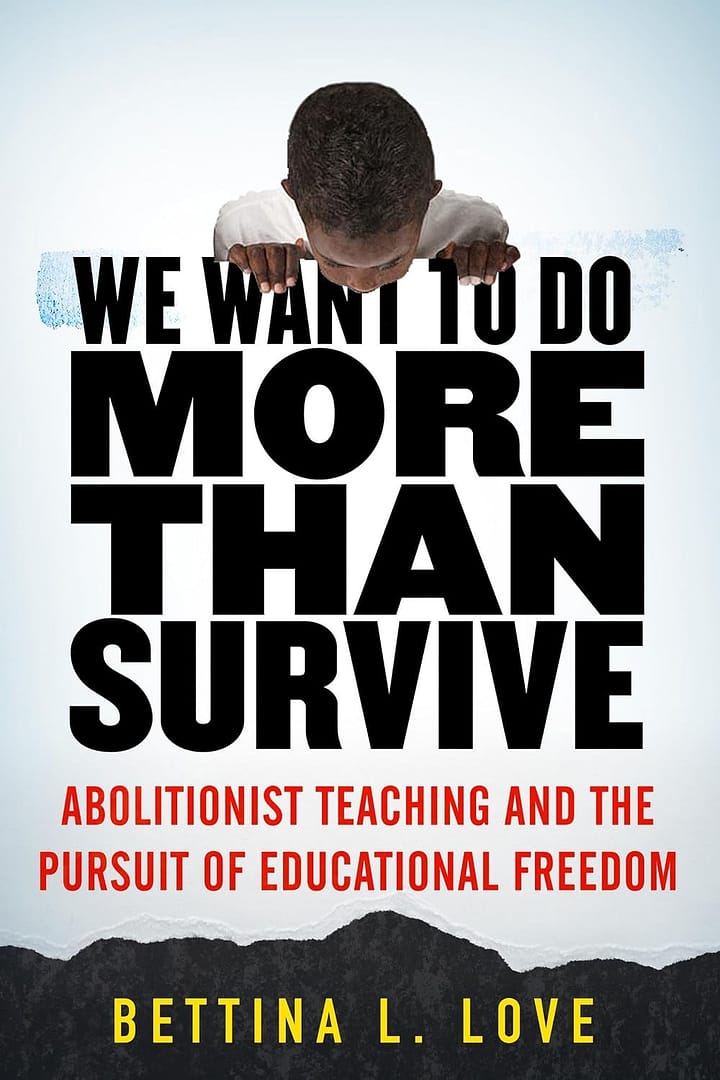
Book
We Want to Do More Than Survive by Bettina L. Love

Idea
Words Mean Things

Book
The Ball is in Y(Our) Court: Social Change Through and Beyond Sport edited by Mary Louise Adams
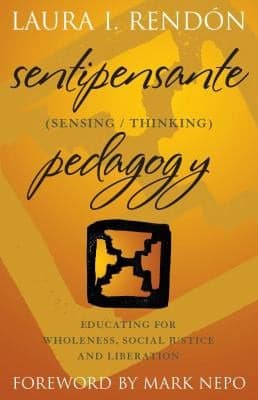
Book
Sentipensante Pedagogy by Laura I. Rendón

Resource
National Museum for African American History and Culture

Idea
Self reflection and self implication
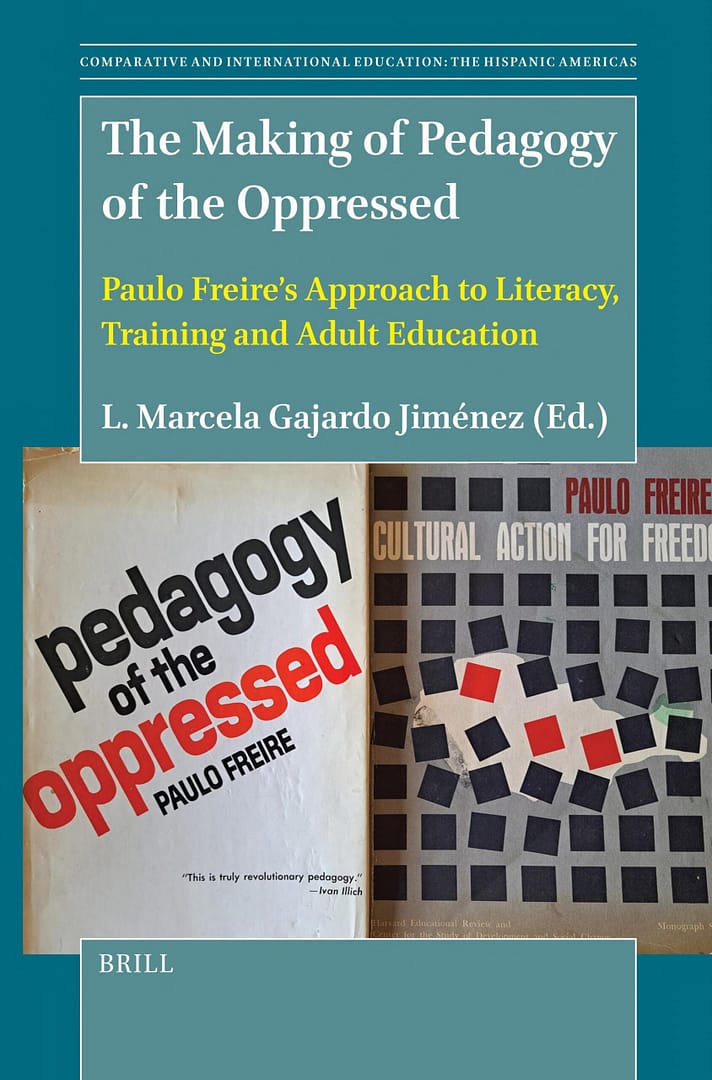
Book
Pedagogy of the Oppressed by Paulo Freire
Transcript
[00:00:00] Bonni Stachowiak: Today on episode number 343 of the Teaching in Higher Ed podcast, Dr. Michael Benitez, and Dr. Meredith Flynn join me to discuss Meeting the Moment Through Inclusive Teaching.
[music]
[00:00:16] Production Credit: Produced by Innovate Learning, maximizing human potential.
[music]
[00:00:25] Bonni: Welcome to this episode of Teaching in Higher Ed. I’m Bonni Stachowiak. This is the space where we explore the art and science of being more effective at facilitating learning. We also share ways to improve our productivity approaches so we can have more peace in our lives and be even more present for our students.
[music]
[00:00:54] Bonni: Today’s guests were introduced to me through my partnership with the Association of College and University Educators or ACUE. ACUEs courses and community site feature many of teaching and learning’s top experts, faculty developers, and practitioners to showcase evidence-based teaching practices. Thanks again to ACUE for connecting me with today’s guests.
On today’s episode, joining me are Michael Benitez and Meredith Flynn. Let’s begin learning a little bit about Dr. Michael Benitez. He’s the Vice President for Diversity and Inclusion at Metropolitan State University of Denver. He has served higher education in different capacities over the last two decades including academic and student affairs, diversity, equity, and inclusion in teaching. He’s a nationally acclaimed scholar-practitioner in higher education, and a highly sought speaker and workshop leader at universities, colleges, and conferences nationwide.
His role includes providing leadership over the development, implementation, and assessment of diversity, strategic goals and planning institutional efforts and programming aimed at cultivating and sustaining an equitable and inclusive campus climate. Ensuring that diversity, equity, and inclusion are prominent components in the decision making an organizational culture that drives inclusive excellence at MSU, Denver.
Meredith Flynn, PhD, Associate Director of Teaching & Learning at the Center for Teaching, Learning and Design at Metropolitan State University in Denver. She began her exploration of intersections of activism and education while working on her dissertation, which was a qualitative analysis of the work of a professional experimental feminist theatre group.
Her work in feminist political theater introduced her to the work of Augusto Boal, and the Theatre of the Oppressed. She was extremely fortunate enough to have been able to attend inclusive workshops led by Boal that naturally led her to study in the work of Paulo Freire, including Pedagogy of the Oppressed. Since that time, her teaching philosophy has been firmly grounded in Freire’s work. Michael and Meredith, welcome to Teaching in Higher Ed.
[00:03:25] Michael Benitez: Hey, thank you for having us, Bonni.
[00:03:27] Meredith Flynn: Yes, thank you very much, Bonni. I’m looking forward to this.
[00:03:31] Bonni: Michael, I’d like to start with you for this first question and I’d like you to paint a picture for us, and if it involves stories, even better. What does inclusive teaching look like in general?
[00:03:44] Michael: I think, for me, inclusive teaching is accounting for the different needs, the different situations, the different identities, the different ways we can support students, particularly in the classroom. I think about, are we familiar with the research? Are we being attentive to some of those individual needs? Are we accounting universally but also accounting for some of the salient support possibilities for students who are in the classroom? Are we thinking about the curriculum and how we could think differently about how to present it and modalities that account for different ways of learning and consuming that knowledge?
I think more than anything else, and I’ll be brief with this. I think that inclusive teaching is more about the style and the way that we engage in the classroom that accounts for all the different personalities and differences that present themselves in the classroom by way of the students so that we’re not only taking responsibility and are accountable to the students but that we’re really truly listening and being attentive to who the students are and what their different needs are.
There’s quite a bit that goes into that from cultivating the trust to collaborating with the students to truly listening, to offering some humility on your behalf. To simply having also the courage in particular as a teacher to continue to learn and grow so that you can improve your craft and better serve the students. Inclusive, there’s so much nuance to that depending on the context of who you serve.
[00:05:29] Bonni: Yes, and Meredith, I definitely I’m going to want to hear your picture of what inclusive teaching looks like. Before I ask you about that, I wanted to just comment Michael on the idea of this very delicate balance of having that deep humility but with that bold courage. Boy, isn’t that just what is required here? Could you tell us about a time where you weren’t in your own educational experience able to feel like you could bring your full identity into either a classroom or any kind of a learning environment?
[00:06:04] Michael: Yes, I could certainly think of plenty as an undergrad and graduate student. I think in the professional realms, in my last institution, for example, there are these expectations around, for example, syllabus should look like or what you should achieve by way of learning outcomes that sometimes go against, not only the grain, but really challenge you to have to think innovatively so that you could still meet those learning outcomes.
In my case, in particular, I had a class that I taught, it was an education 400 level that focused on some of the construction of school systems in America. I really appreciated the student’s input by way of what are they interested in? How am I stepping into that space with cultural relevancy?
Feeling again like the syllabus that was provided to me while solid has some constraints, I wanted to create some space for the students to dictate some of their own learning and co-create it with me. I will leave 10% or 15%, it really depends of the syllabus open to what the students wanted to co-create with me within a range of topics. It still has to me that curricular criteria and I will co-construct that learning for them and work with them on how that should be graded.
For me, that was a way, I was able to step in authentically as a teacher. I will say that until that class, and a class that I created at Iowa State University when I taught there, of course, on race and ethnicity, every other course that I have taught has always had a limitation to it that did not permit me by way of requirements to truly step in there inclusively in the way that I needed to for the students that I was serving and teaching.
[00:08:01] Bonni: What you’re talking about so much reminds me again of the humility required to unlearn what we experienced. I’m reading a book right now called Ungrading. I don’t know if either one of you has become familiar at all with this movement, I guess would be the best way to describe it.
I’m very early on in my reading, by the way, [laughs] I’m not sure I’ve made it even to the introduction, maybe I’m there. Even in the foreword or the preface, they are already challenging me because so much of it is just programmed inside of us as individuals, and then, of course, it becomes a part of this broader system. Then if you want to break some of that system down, boy, you want to quickly see you’re trying to break down the system, and then it can push right back at you when you start to try to dismantle some of those things.
Meredith, let’s hear from you a little bit. What comes to your mind? What does the picture of inclusive teaching look like?
[00:08:56] Meredith: Michael certainly covered a lot of ground in his answer. I definitely agree with everything he said. I do think as educators, we want to make sure that we create really welcoming environments, and that our learning environments promote equitable and successful outcomes for our students. We want each and every student in our classrooms to be successful. We want to achieve equity in our classrooms, in our learning environments for all of our students. To achieve that equity, we have to have a very inclusive environment.
That means, what Michael was talking about, we have to look at how we are creating our curriculum, we have to look at how we’re creating our assessments. We have to look at how we’re welcoming our students on our very first day of class because that sets the tone for the entire classroom. We have to make sure all of that is very inclusive and that takes thoughtful examination because every student in our classroom is an individual. Every student in our classroom is coming to us with a different background, with a different story. We have to take all of that into consideration when we’re creating our courses, when we’re creating every single element in our courses.
[00:10:42] Bonni: Meredith, as you think back to yourself, either as a little girl or as you got a little bit older, maybe junior high, high school, possibly college, was there a time that you can think about where you didn’t feel you were able to bring your full identity into a space of learning?
[00:11:00] Meredith: There was lots of time. [laughs]
[00:11:02] Bonni: Talk about one that really comes to mind.
[00:11:05] Meredith: I went to graduate school and at that time– Women were going to graduate school but it was early on when women were going to graduate school. I would not say I was totally welcomed in all of my graduate school classes. That was made apparent in that I was not called on. [laughs] I [inaudible 00:11:35] Hermione Granger. “Call me. Call me,” and I wasn’t. My male faculty just overlooked me. I definitely learned not to bring that female, that was not welcomed in graduate school at the time.
[00:12:03] Bonni: You’re reminding me of an article which I’ll put in the show notes for today’s episode. It has still just hung around in my mind. It was an article about how Elizabeth Warren approached teaching when she taught law school. I know this is going to be an area that we explore today rather than us thinking about when we aren’t creating those welcoming spaces to try to change our minds, which of course changing our minds is really important because how we think affects how we act and how we behave.
Sometimes we need to get a little ahead of that though and sort of interrupt to the bias before we get there. She had a TA or maybe perhaps multiple TAs. It’s been a while since I read the article but rather than her try to be 100% welcoming, inclusive, making sure that the Hermione Granger, there we go, that the person who really has something to say gets those opportunities in our spaces.
We can measure how many times are people being called on and to try to– in her case, it was more, I think that we would generally call this cold calling. If someone doesn’t know that they’re going to be called on in class. I try to do more warm calling because sometimes just the very act that you do a cold call and someone who’s more introverted with their personality, actually doesn’t give them enough time to process what they’d like to say to really be able to bring their fullest selves into there.
Anyway, I’ll definitely post a link to that article because I’m really– Thank you for sharing those personal details with us, because things have changed but not enough.
[00:13:41] Meredith: Two quick more things about that story though.
[00:13:44] Bonni: Please.
[00:13:45] Meredith: One was, I wasn’t aware that I was being looked over until a male colleague came up to me and said, “Jeez, Meredith, I’m really, really sorry about how you’re being treated in class.” I was like, “What are you talking about?” He said, “I’m really sorry. You never get called on and when you do talk, it really put down and stuff.” There’s our own self-oppression there.
We’re unaware of that I was had a big aha moment and then I think is good for us as faculty to be aware of, that students have our own self-oppression and that was a big, important thing to be aware of. I think we, as faculty members have to be conscious of this. I don’t know that my male, I’m not saying they were intentionally trying to do these things. We need to be consciously, and you’re saying TAs they help, but these are conscious efforts that we need to make to be inclusive.
[00:14:59] Bonni: I’m thinking about the studies that have been done on discrimination within STEM fields and they don’t say that it’s the males … 100% of that discrimination. The idea where one of the studies where you’re looking at the resumes and if it’s a male sounding name versus a female sounding name but that’s the same thing is happening with women in faculty roles, in the STEM functions. We’re all capable of perpetuating that which we may or may not wish to continue to perpetuate.
[00:15:32] Michael: I want to add, Bonni, if I may. Because I think you both brought up a really great point and that is that part of inclusive teaching also requires of us a willingness to shift and adapt and evolve on a week to week basis. There’s a particularity around student’s experiences and how they show up to the classroom that we need to take more than seriously, that we need to be intentionally attentive to so that we can address the way those biases, for example, show up week to week. Because we’re not going to see them right away that first week.
Over time, as we learn the dynamics of a classroom and who’s there and who’s not, we also learn to be responsive to those dynamics in the way that accounts for those unique needs within that space.
[00:16:27] Bonni: Let’s explore a bit then. Meredith, I’m going to start with you this time. What does it look like? How does it change, this quest that we’re on to provide this equity in our classes when we move online? What are some of the challenges or what are some of the opportunities that enter when we start talking about online teaching?
[00:16:49] Meredith: I think one of the challenges is that you need to be maybe even more aware and more on top of things than in a face-to-face class. I’m thinking particularly of one example of say microaggressions that in a face-to-face class, you can see what’s going on in a classroom. You can see your student’s reactions. You can read facial expressions. You can read nuances and so on. You may be more there when you witness a microaggression and you can address it immediately.
In an online course if you have a discussion board, for an example, if you’re not checking that discussion board, regularly, microaggressions could be occurring in an online discussion board and it could be three or four days and you haven’t even been aware of it. That would be a long time to have something like that happen and you haven’t been in there and addressed it.
[00:18:12] Michael: No. When we move online, at least what I have found when I do a lot of my teaching online and I’m not teaching directly right now but I do quite a bit of teaching. When I do a lot of the trainings or I’m invited to do workshops which is a different public pedagogy and teaching is that one, the reality is that every institution is always going to have students on different ends of a spectrum. All those students are going to come to a course in a class and bring those lived realities and subjectivities.
The issue is not how do we eliminate microaggressions, though a lot of people ask that question. I sincerely and genuinely don’t think that we can get rid of the microaggressions because of the very inherent racialized and gendered, cultural ways they represent.
A lot of microaggressions don’t come with people trying to be malicious. They come with folks truly being interested. You end up with folks who may come from an urban community, more diverse onto space and say, “Oh my God, this place is so white.” You may have people come from a rural community that have never really been exposed to diversity, go to that same space and say, “This is the most diverse place ever,” and they’re both right.
How do you hold on to that tension and be okay with it so that when microaggressions show up that we’re dealing with it for the reality that it is and also confronting it head-on but as an educational opportunity moment? Not as a bashing, not as you’re wrong, not as put down or making students feel like they somehow are missing something. There’s some constant, especially even when you transition online. If you look at the work of Luke Wood and Frank Harris and their research really focuses around the way microaggressions and bias shows up in this online learning environments. They’ve been able to find that not only it does happen, but there’s ways and tools available to be able to address it, sometimes collectively.
I think particularly about a study, the leading author is Pasque and there’s three or four other authors, but they found that there’s five very particular ways that teachers deal with tension, in particular racial tension in the classroom, and describe that some faculty just don’t like to deal with it. Some prefer not to make a scene, some try to take control of the situation, perhaps divert, distract, others are reactive, others are proactive.
I think what I’m trying to relay through that is that as faculty who own these classrooms, we must be okay with also owning the ways in which we need to respond differently to differently situations. Back to the humility, is to also own what we don’t know, and to be able to also work with our students to figure out how we can best know what we don’t know. That’s that co-construction of pedagogy.
Again, that evolution piece I brought up earlier goes such a long way. Here’s just a quick example, when I was at grad school, and I say this because I’ve also seen this now online. I was one of the outspoken one, one because of how I feel about social justice and have been part of that movement for so long, but the other two let me admit it. It’s probably had to do a little bit with my maleness. Me being in a classroom, not checking my maleness and feeling like, “I’m going to say what I’m going to say. I’m going to say it unapologetically,” without really being mindful about who I’m sharing space with.
I think there’s a self-implicative process there. Me and this other classmate, it’s me and another male, and we started going at it back and forth almost like we were back in the block. It looked like an argument, but we were very good friends. People didn’t know we were good friends, but here we’ve become the spectacle, the professor, let it go, just let us go at it. Everybody was looking on saying like, “Why has the professor stopped this? They’re going to fight each other, A, B and C.”
At the end, when we finished that, the professor just leaned in and he said, “This is the first time that I’ve allowed this or let this happen, or didn’t know how to really step in.” I didn’t know how it was going to turn out, but I’m glad that at the end, Yacht,decided to agree to disagree and we were able to move on, but still offered us that space, another man of color, to have that exchange.
It didn’t really box it into this conventional thinking of what dialogue should look like with such a charged topic. I say that to say that I’ve also seen that online, especially when you do a lot of the sessions. I think a lot of this work has to do with our ability to also remain incredibly flexible, agile, and open.
Then the last thing I’ll add to that is I can take away the importance of institutional and structural support for the faculty, not only in their development, but to offer also the tools. By tools I’m also referring to policies and ways that we value that agile and flexible teaching that permits faculty to show up not only authentically, but to allow their students to also show up authentically.
[00:23:53] Bonni: Before we do the recommendations segment, where we each share something that’s had our attention recently, I just wanted to take a moment to thank today’s sponsor, and that is TextExpander.
TextExpander has been the longest running sponsor for Teaching in Higher Ed. It also is a tool that has been around a long time in both Dave and my life and our work. What TextExpander does is allows you to save time by automating in a very simple way, things that you type often or things that you find hard to remember.
For me you probably remember me saying [laughs] if you listen for a while, that I don’t remember my work phone number, because I don’t have to, I just have a little snippet, a few letters that are easy to remember that I type in. As soon as I press the space bar, it expands out to that work phone number.
On a longer set of text for every one of the show notes, I simply type in T-I-H-E-S-N, as in Teaching in Higher Ed show notes. Instantly, as soon as I press space, I have some fillable blank such as what’s the episode number? Who are the guests? What is the topic? The category of the episode, and then all of that gets input in. I don’t have to spend my time building things for the show notes that are repetitive, but I can customize them again with the date and also with going and finding the great resources that people share about on the show.
TextExpander as a wonderful tool and through our partnership with them, you can get 20% off your first year. If you head on over to textexpander.com/podcast, you can sign up there for a trial and also get that 20% discount. Please do let them know that you heard about them through Teaching in Higher Ed, just so that they know that people are getting as much as [chuckles] we are out of the resource and able to give it a try through them.
You can automate your signatures. You can automate reference letters, and again, you can still customize them with the meaningful, specific stuff, but automate some of the repetitive things. Again, thanks once again to TextExpander for sponsoring today’s episode. I encourage those of you who want to check out TextExpander to head on over to textexpander.com/podcast.
This is the time in the show where each get to share our recommendations, I have a couple of things I’d like to share today and recommend. First off, I want to thank Kenzie Gandy from Pacific Lutheran University who sent me a new project that they worked on, it was both staff and students, and it’s called Words Mean Things. It’s a digital campaign that explores the meanings of the words anti-racist, anti-black, decolonize and BIPOC. I went to encourage everyone to go to the show notes and go explore the Words Mean Thing campaigns.
Thanks again, Kenzie for writing to me about this resource. I think people will really enjoy having a look at it. Then I wanted to also thank Mary Louise Adams. She posted a tweet on Twitter and she copied myself and also Rajiv Jhangiani. She said that I decided to do this project with my students at Queens University after hearing you, in this case, Rajiv talk on Teaching in Higher Ed with Bonni about open educational resources.
She wrote with her students, they co-created a open textbook called The Ball Is In Y(Our) Court, Social Change Through And Beyond Sport. The authors are the students of KNPE 473 at Queens University in fall of 2020. That would be another great resource for you to check out an open textbook.
I have to just thank you again, Mary, for contacting me. It means the world to me that conversations that we’re having on this podcast can go really beyond what I ever could have envisioned. Then I’m just so glad that speaking of what Michael said earlier about the need for us to have humility and courage as someone who has co-created [chuckles] content like that with my students in the past. Boy, if there’s ever projects that require those two things, it’s definitely writing something like that with your students.
Again, thank you to both of these individuals for contacting me about these resources. Michael, I’m going to hand it over to you for anything you’d like to recommend today.
[00:28:15] Michael: I think for me, one thing that I want to recommend, and [inaudible 00:28:19] when they research inclusive teaching or addressing anti-racism and bias in the classroom, this is not what comes to mind. I think that the National Museum for African-American History and Culture out of the Smithsonian, has a really great source on talking about race. Because they not only offer definitions and some framings, but they also offer models and very practical exercises, and they offer videos that people can run with and integrate, and so a lot of the teaching that they already do.
I’ve found that to be an incredibly useful and practical resource, especially for faculty members who are just really trying to figure it out, who are not experts in this, but where we can help them own some of the pedagogic element of it. I always have to tell folks and remind folks, at least from where I stand, that pedagogy is truly, truly a craft. It is an art and it requires us to be attentive to it in such a way.
I think that’s a great resource that’s out there out of many resource guides. Because I think it accounts that piecemealing, I’m calling it an a la carte menu that allows you to borrow and integrate into your curriculum in a way that makes sense. It’s obviously easier for the social sciences and humanities, but it’s certainly not impossible to do so also in the STEMs, because there is so much there to open a conversation with.
Outside of that, just self-reflection, and self-implication is my second recommendation, and our ability to truly sit with ourselves, to struggle with ourselves and be honest with ourselves. Just that art of sitting with yourself all the time and reflecting, is such a useful contemplative activity that I think helps us become better and more useful instructors and teachers.
[00:30:27] Bonni: Thank you so much Michael, and Meredith, you get to finish us off with whatever you would like to recommend.
[00:30:32] Meredith: Quickly, I know a lot of your other people who have visited you have already recommended Freire’s Pedagogy of the Oppressed, but that is just the basis of a lot– If you do dig in to the anti-racist pedagogy, a lot of them go back to Freire and Pedagogy of the Oppressed and it forms the basis for really looking at power structures and things like that, particularly in education. That’s always to be recommended. [laughs]
Beyond that, I’d like to recommend a book by Bettina Love, We Want to Do More Than Survive, and this is her impassioned argument for what she calls abolitionist teaching, as opposed to educational reform. She’s pretty harsh [laughs] in terms of looking at what she calls educational reform, and tweaking the educational system rather than really, really transforming the educational system.
Just quickly, she defines abolitionist teaching as “The practice of working in solidarity with communities of color while drawing on the imagination, creativity, refusal, remembering, visionary thinking, healing, rebellious spirit, boldness, determination, and subversiveness of abolitionists to eradicate injustice in and outside of schools.” It’s a really, really good critical examination of our current educational system, so I recommend that.
I also recommend Laura Rendón’s on Sentipensante. She doesn’t call this anti-racist pedagogy. What it is, it’s a holistic approach to pedagogy, so she’s really advocating going beyond just the analytical kind of inter-moral holistic, spiritualistic approach. Some of the things that are talked about here are certainly the same types of things we were talking about in terms of questioning. Who gets to decide what knowledge is? [chuckles] Who gets to decide what compromises knowledge and who makes those kinds of decisions?
She does ask the same sort of questions. Then there are interviews with faculty who are using these kinds of pedagogy in their classes and the types of things that they do. It’s got lots of interesting examples of faculty who are using really different types of pedagogy in their classes. Those are my recommendations.
[00:33:57] Bonni: Thank you both for these delightful recommendations. You’ve given us some things to go explore or to revisit. I love this idea that we can’t do what we want to do unless we’re doing that self-reflection. I don’t think I’ve visited the National Museum for African-American History and Culture, but Michael, I can tell you I will be.
Meredith, I’m so glad that you didn’t not recommend Pedagogy of the Oppressed. Because I find that it is the second-most recommended book, but the first-most recommended book was Bell Hooks– Oh gosh, what is the– [crosstalk]
[00:34:33] Michael: Teaching to Transgress
[00:34:34] Bonni: Thank you. I’m embarrassed to tell you, it took about four years of people recommending it over and over again, and I had felt intimidated by it and I entered in and I’m so glad I did. It’s books like the ones that you are recommending that, when it happens again and again, I think finally some of us get and go, “Oh, I guess, I should read this book.” [laughs] My whole life can be changed. Now, I’m so glad that you did.
I got a chance to see Bettina Love speak in person a couple of years ago and what a delight that was. You described her so well, just in terms or she is just in our faces in the most beautiful way ever. She’s such a powerful figure and envelops you in her vision for how things could be different. I’ve read a number of Laura Rendón’s articles before, but not this one. I’ve got so much to check out and I’m just so glad to be connected with both of you and so appreciate your time being on the show today.
[00:35:27] Meredith: Thank you, been wonderful being here.
[00:35:29] Michael: Hey, Bonni, thanks. Bonni, thanks for having us an absolute delight. Thank you for the work that you do to just ensure that we can lean on each other’s voices through this podcast to continue to learn from one another. It’s a very useful platform, so thank you again.
[00:35:46] Bonni: Yes, that’s exactly what I want to do, so you nailed it. Thank you.
[music]
[00:35:53] Bonni: Thanks once again to Michael Benitez and Meredith Flynn for joining me for today’s episode, and thanks to all of you for listening. If you’ve been listening for a while but have yet to sign up for the Teaching in Higher Ed update, you can head on over to teachinginhighered.com/subscribe. When you subscribe, you’ll get the occasional Teaching in Higher Ed updates, and you’ll also receive a free e-book with 19 tools that I use both in my teaching and also in productivity work.
Thank you so much for listening and to being a part of this community. As Michael said at the end of the episode, this is so much about us being in solidarity with one another. Thank you again for listening and for being a part of Teaching in Higher Ed. See you next time.
[music]
[00:36:55] [END OF AUDIO]
The transcript of this episode has been made possible through a financial contribution by the Association of College and University Educators (ACUE). ACUE is on a mission to ensure student success through quality instruction. In partnership with institutions of higher education nationwide, ACUE supports and credentials faculty members in the use of evidence-based teaching practices that drive student engagement, retention, and learning.
Teaching in Higher Ed transcripts are created using a combination of an automated transcription service and human beings. This text likely will not represent the precise, word-for-word conversation that was had. The accuracy of the transcripts will vary. The authoritative record of the Teaching in Higher Ed podcasts is contained in the audio file.