Follow the Teaching in Higher Ed Podcast
About this Episode
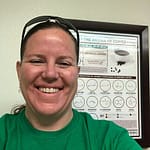
Clarissa Sorensen Unruh shares about intersectionality, power, and pedagogy on episode 522 of the Teaching in Higher Ed podcast.
Not only is the system rigged for a certain dominant group, but it is purposefully sabotaging some groups.
Clarissa Sorensen Unruh
On episode 522 of Teaching in Higher Ed
Voices on this Episode

Show Notes + Resources
- Intersectionality as Critical Social Theory, by Patricia Hill Collins
- Kimberlé Crenshaw
- Liberatory and emancipatory pedagogies – critical pedagogy, culturally responsive pedagogies, open pedagogy, and ungrading
- Nel Noddings Ethics of Care
- Wool, Hugh Howey*
- Nikita Gill
- Dune
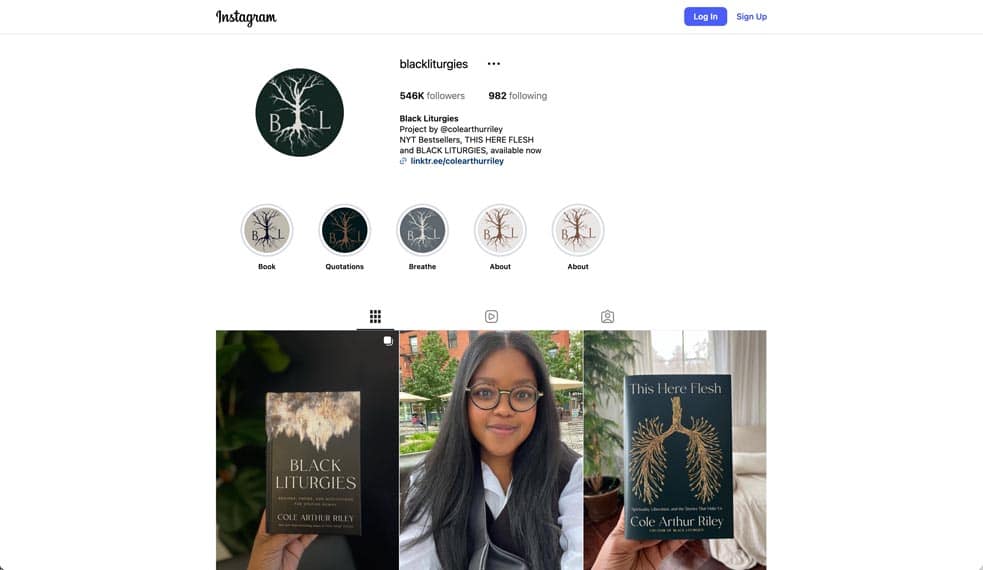
- Black Liturgies
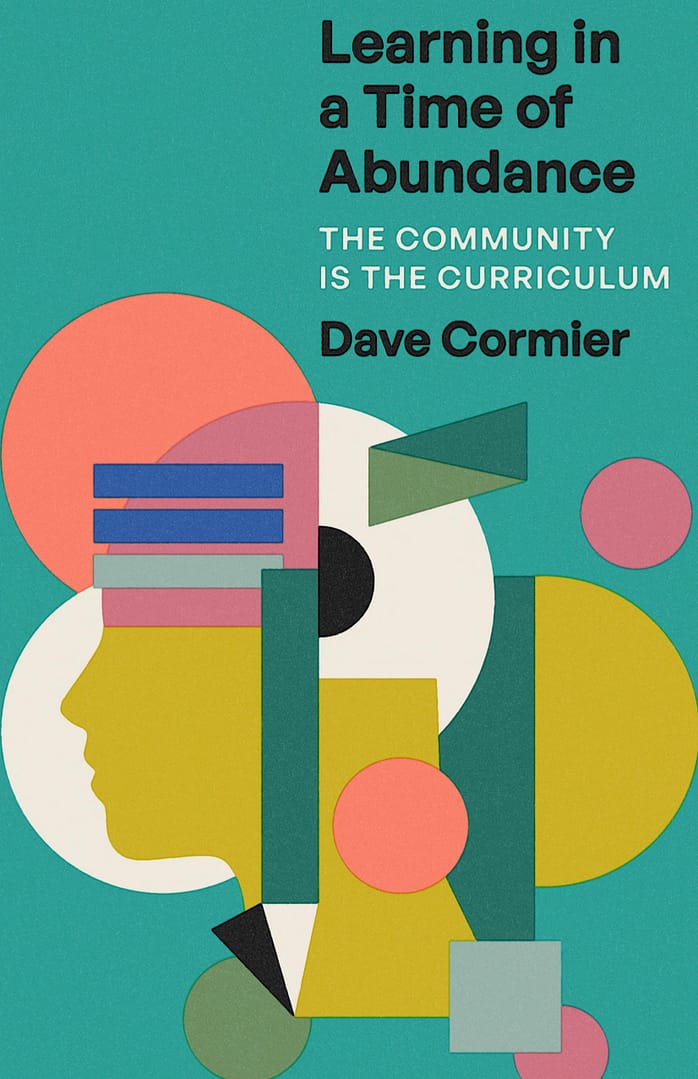
- Learning in a Time of Abundance, by Dave Cormier
Recommendations from this Episode

Person
Hala Alyan quote

Person
Nikita Gill

Movie/TV
Dune
Resource
Black Liturgies
Book
Learning in a Time of Abundance by Dave Cormier

Book
Wool by Hugh Howey
Transcript
Bonni Stachowiak [00:00:00]:
Today on episode number 522 of the Teaching in Higher Ed podcast, intersectionality, power, and pedagogy with Clarissa Sorensen Unruh.Production Credit: Produced by Innovate Learning, maximizing human potential.
Bonni Stachowiak [00:00:23]:
Welcome to this episode of Teaching in Higher Ed. I’m Bonni Stachowiak, and this is the space where we explore the art and science of being more effective at facilitating learning. We also share ways to improve our productivity approaches, so we can have more peace in our lives and be even more present for our students. I am so grateful to be welcoming back to the show Clarissa “Rissa” Sorensen Unruh. She has undergirded her full time chemistry faculty position at Central New Mexico Community College, which she will you’ll hear her abbreviate CNM with a passion for social justice. Her most recent University of New Mexico graduate degrees, her master’s in statistics in May of 2020, and her PhD in learning sciences, which is anticipated in 2024, have broadened this passion from social justice to diversity, equity, inclusion, justice, and from the lenses of practitioner to practitioner, researcher, evaluator. Rissa is also a statistician and ABET accreditation manager for the University of New Mexico’s computer science department. As you’ll hear about in the interview, she practices liberatory pedagogy practices surrounding areas, including assessment and evaluation, specifically ungrading and ethics in educational technology, critical pedagogy, culturally responsive pedagogies, open pedagogy, etcetera.
Bonni Stachowiak [00:02:15]:
Rissa regularly serves as faculty for my fest and in several roles in the American Chemistry Society. Rissa, welcome back to Teaching in Higher Ed.
Clarissa Sorensen Unruh [00:02:26]:
Thank you so much for having me, Bonni.
Bonni Stachowiak [00:02:29]:
I’m going to invite you to take us back. Take us back to an innocent time, I say sarcastically. I want you to take us back to 2014, 10 years ago. If I were to have the privilege of getting to observe one of your classes, what are some of the characteristics I might observe?
Clarissa Sorensen Unruh [00:02:48]:
Well, in 2014, I was both teaching at CNM, the community college that I’ve worked at now for 23 years. And at UNM, University of New Mexico, in giant lecture halls that were 400 students deep. And I was already starting to have some issues with really the way that I thought things were going versus the way they actually were going. So I had my whole pedagogy on critical thinking. I thought, wow, I’m really teaching my students critical thinking, but all evidence that I could anecdotally collect was to the contrary. And so I was like, this is not working the way I want to. So I got so mad that I went back to graduate school to learn how to do assessment and evaluation particularly better. Fascinating.
Clarissa Sorensen Unruh [00:03:48]:
My class had well, at that point, I was using clickers, so I was a big clicker fan. I would maybe start off with some clickers. We had videos that I had recorded before that that like, in the 2009, 2010 chemistry. Luckily, it doesn’t change very much. I had started recording videos in 2006. So that had been a long time recording videos and making them shorter and shorter and shorter and more to the point so that I could stack them differently for different levels of classes. And students would watch the videos, would come in, we’d have some clickers, we’d have some talk talking about what the problems were and trying to model what that looked like. A lot of group work, which was really small group work, you know, turn to your neighbor and talk about this thing or do this thing.
Clarissa Sorensen Unruh [00:04:42]:
Mainly the thing being a problem that was on the board. And that was really interesting in UNM’s Woodward Hall, which had, like, the seats that didn’t move that were like stadium seating. So there was a lot of moving around in the class and a lot of loud, loud talking.
Bonni Stachowiak [00:05:03]:
Yeah. And I imagine as someone who has used clickers and continues to use some form of that anecdotal evidence of attempting to gauge understanding and and engagement. I imagine that when you did that, it’s if we were to measure the decibel levels, would we like some researchers do, would we see some, you know, lots of vibrant conversation happening in those small groups if we were to come watch in 2014?
Clarissa Sorensen Unruh [00:05:28]:
Yeah. And I had a whole team, at UNM. I had a whole team of pure learning facilitators and supplemental instructors who helped me manage the 400 person class. So they would go around and talk and and explain things. And it was it was like teaching 2 classes, 2 levels of classes at once. Teaching those folks who were helping me implement the class, how to teach chemistry, and and at the same time, trying to teach chemistry.
Bonni Stachowiak [00:05:58]:
So now we get to fast forward 10 years and beyond. If I were to get the privilege of coming to observe a class of yours now in in 2024, what would it look like? What differences might you notice?
Clarissa Sorensen Unruh [00:06:10]:
Probably the biggest difference has been the assessment and how I evaluate. In that class, it was almost impossible not to give multiple choice exams. And now I do I don’t even do any multiple choice. I do entirely short answer writing out because I can gauge much more about what’s going on in terms of thinking. There’s a lot more reflective learning embedded in my class now, so I there’s a lot of, that’s how I do kind of ungrading is I have folks think through, like, how did you prepare for this test? What what did you what resources did you use? Do you think they helped you? What do you think you if you kind of evaluated your own growth and time and effort put into this test, how would you evaluate yourself in terms of your learning? And often that’s with a letter grade because I’m kinda stuck with this idea of I can’t really get rid of grades altogether because there’s still a final exam that has to be given. And but this is a negotiated way to kind of get to a place of having a conversation about what those grades might reflect in terms of learning and performance.
Bonni Stachowiak [00:07:30]:
I was grateful that that you were able to carve out some time in your schedule today to talk to me. And as you already know, there were about 57100 topics
Clarissa Sorensen Unruh [00:07:40]:
that I could possibly pick. I was like, get in a
Bonni Stachowiak [00:07:42]:
candy store over here, and we landed on you already agreeing to come back. You’re you’re working on your doctoral research, and I’m excited to explore that further. But for today, we’re gonna look at something that you tell me and your readers is often misunderstood, and that is intersectionality. How do most of us tend to misunderstand intersectionality and specifically how it’s really different than what we might think of in terms of one’s identity?
Clarissa Sorensen Unruh [00:08:12]:
Yeah. So in terms of intersectionality, almost everyone thinks that it’s the inner mixing of whatever parts of your identity make you you. And we can talk about this in multiple ways. Is it a crystallized identity? Is it, you know, this race, ethnicity, SES, all of that? But really what intersectionality is, and I had the privilege of hearing from Kimberlé Crenshaw, in the NCORE conference when she was there giving a keynote in like 2020, maybe 2021. That and she was the originator of the term intersectionality. That’s why she’s important. She was saying that it’s not just identity. It’s how oppressive structures interact with your identity in a way that reduces your ability to do what you need to do in ways that are compounded based off of your oppressive based off of your identities and as your significance in groups that tend to have Bonni dominance in a society.
Bonni Stachowiak [00:09:27]:
And are there examples or is there an example that comes to your mind when you think about your own intersectional identity and the ways in which you have seen these systems and structures get in the way of you being able to do what you need to do?
Clarissa Sorensen Unruh [00:09:41]:
Yeah. Absolutely. So I tend to view intersectionality very much now through the lenses, the lenses of inter power lenses is what we tend to think about it as in terms of intersectionality. And those were first given to us by Patricia Hill Collins. It’s, Surma Bilge. Seurma Bilge. Sorry. And those 2 thought about kinda delineated the lenses as structural, cultural, disciplinary, and interpersonal.
Clarissa Sorensen Unruh [00:10:17]:
And so we start thinking about what those look like. Right? I have designs on how I might do a graduate level class that is entirely through participatory design and that would be incredibly self assessed with portfolios or with any kind of way of backing your claim. Right? If your claim is that you have an a in this class, then I would like you to give me evidence of curated evidence of what that looks like for you. And it could be stuff that I required in the class or not. But I don’t have the ability to do any of that because the structural pieces, the structural lens, I can see that I do not have simply can’t teach graduate classes. I’m a community college professor. I have very distinct requirements as a community college professor through my department that are required for, like, folks going to graduate school or medical school, particularly medical or pharmacy school that say that I have to do 60% of my class as exams, and they have to be proctored exams. They don’t have to necessarily be high stakes in the same way that we think about it, but that’s a big percentage.
Clarissa Sorensen Unruh [00:11:43]:
And so it’s kind of high stakes whether I want it to be or not. And then there’s a culture for grading. If I wanna do anything that really departs from, like this ungrading there in the first two years of community college work of under undergraduate work, that’s where community colleges thrive. It really is clear to me that self assessment is a is a heavy lift.
Bonni Stachowiak [00:12:10]:
Mhmm.
Clarissa Sorensen Unruh [00:12:11]:
Because that is it has to be scaffolded quite a lot. It is hard for students to accurately think about what their learning process looked like. And accuracy here is maybe not the right term, but I don’t really care whether it’s accurate. I just want you to be able to elucidate it. And the amount of metacognition that you have to be able to elucidate it becomes sometimes a barrier. I would love for my students to be cohorted so that we could build, you know, we could scaffold in self assessment throughout several semesters while we’re also doing something like specs grading that’s a whole lot more clear to spokes off the bat in terms of saying, hey. You know, you do these things. Here’s the grade you’re gonna get.
Clarissa Sorensen Unruh [00:13:01]:
I have to account for student attendance. I have to do use an LMS. Like, there’s just a huge number of what I see as possible barriers to my ability to enact a class that I would like to enact.
Bonni Stachowiak [00:13:20]:
And this is so good. The examples that you gave, you gave some that I believe were structural. You gave some that I believe were probably could be classified under cultural, specifically around being in a community college context, and there’s so much Yeah. That I my understanding is around the ways in which those types of institutions are funded for the common good and, you know, the benefits that a public education provides to our society, etcetera. You touched a little bit Bonni disciplinary, you know, in terms of your discipline and preparing and equipping people for it. I don’t know. It could be wrong, but I didn’t hear an example of interpersonal. Are there any ways in which your story might touch on for your uniqueness and and interpersonal factors that might come up in terms of power? I am
Clarissa Sorensen Unruh [00:14:12]:
not shy about. I know that sounds just shocking, but I’m not shy about elucidating my viewpoints Mhmm. Regarding these kinds of, pedagogies that I would like to enact. And the problem is is that while I’m not shy in elucidating them, I have not been very good at communicating that to my department. My for a very long time, CNM had no idea what I was doing inside of CNM. And so I did not bring folks along with me Mhmm. And kind of help them understand. And that’s, to me, maybe that’s a choice, but it also was a moment in terms of not helping folks understand why this is so important to do.
Bonni Stachowiak [00:15:10]:
Yeah. That’s for such good self awareness that you’re exhibiting there, and just the importance of playing the longer Dave. And maybe game is not a fair precise enough word to use, but our longer term influence when I don’t know if I’m projecting myself onto what you’re saying, but it can be No. I hear it. It can be where you just wanna raise our fists and say, this is not the way to do things, and it’s causing so much harm and not fostering learning or even measuring learning the way that so many people think that it is.
Clarissa Sorensen Unruh [00:15:43]:
Well, and there was also a piece that I held back a little bit because I had thought through because of the way that I’ve thought about this. I had certainly thought about how ungrading could go wrong. Right? If you if you just failed a grade and give any feedback whatsoever. So it’s it’s not just the grading. Right? Maybe you get rid of grades altogether. That would be amazing. But you can’t cannot get rid of feedback altogether as well. Like, there’s a point at which you have to kind of help students understand what they what you kind of have seen them learn and what they might be still working Bonni, and and you’re holding that against some standards.
Clarissa Sorensen Unruh [00:16:27]:
Those standards could be individual or class decided or any number of things, but that that’s still important to do. And I have had folks who come up to me and are like, oh, I can just get a get rid of grades. That’s so much easier. I’m like, no. No. That’s that’s not okay. I don’t know what we were talking about. So there is some piece that is, like, when you’re bringing some someone along with you, you really want them to understand the kind of aims you have being emancipatory, being working towards uplifting oppression, and really kind of breaking the system in any way you can to not make it as white dominant as it is, particularly white male dominance.
Clarissa Sorensen Unruh [00:17:20]:
But that has to be an underlying reason you’re doing this for me. Because if you don’t have that mindset, then you might just be like, oh, well, I can get rid of grades. Mhmm. And I don’t have to do anything anymore. And isn’t this awesome?
Bonni Stachowiak [00:17:37]:
And you you’ve so far outlined for us how intersectionality is different than so many of us think about it. It is more than just various aspects of our identity. And you’ve also described these power differential lenses, and you talked about structural, cultural, disciplinary, and interpersonal. And then you most recently shared a little bit about how you see your own intersectional identity sometimes getting in the way and and and those systems and structures getting in the way of you being able to do what you feel you want to or need to do. Talk a little bit more about from the student standpoint. How have you seen for them the importance of intersectionality in in their role as learners?
Clarissa Sorensen Unruh [00:18:27]:
That’s a great question. I think the pandemic did do a really great service to us as instructors. And that is that we if if we did not understand how complex the lives of our students are beforehand. Like, really understand it. We certainly understood that better, hopefully, crossed fingers, after the pandemic because it it was a time when everyone just kind of was trying to make it through. And I think when you’re just trying to make it through, there’s a lot of brutal honesty that has happened. And so for me as an emancipatory, someone who really thinks about emancipatory pedagogies, and you can think about this in terms terms of liberatory. Liberatory and emancipatory basically are the same.
Bonni Stachowiak [00:19:23]:
Mhmm.
Clarissa Sorensen Unruh [00:19:24]:
So when I’m putting this under a larger umbrella of what this term is, I’m talking about critical pedagogy, I’m talking about culturally responsive pedagogies, and sustaining pedic culturally sustaining pedagogies. I’m talking about open pedagogy. I’m talking about ungrading. All of those fit under this umbrella. I think for students, understanding the many intersections of their lives that they aren’t just students they Dave. And if they, you know, that the, you can go towards the idea that, well, the system was rigged for the white folks who have a higher SES, right, a socioeconomic status. And so for them, the pandemic might not have been as detrimental because high high likelihood is the parents are educated and had the means to help them get through the pandemic, whether the material was clear or not. And then there’s this other piece of understanding that not only is the system rigged for a certain dominant group, but that it is purposefully sabotaging some groups.
Clarissa Sorensen Unruh [00:20:53]:
And we see this over and over again. Right? There was, I just was reading an article about how large introductory classes in STEM weed out groups that are non dominant more effectively than any other group. It’s just, it’s just, it just is a difficult lift. So for me, in terms of the intersectionality of my students, it’s not just about race. It’s not just about socioeconomic status. It’s also understanding that they have children, elders, siblings that they have to take care of. It is that they have full time jobs that they have to do. And that it’s not just about all of that as well, which I actually knew beforehand.
Clarissa Sorensen Unruh [00:21:46]:
But that, like, in the pandemic, people were dying. And folks from, press groups were dying at a higher rate than those who are not. Because the health care system is also late also unfortunately rigged. And so having the conversation with my student who is Navajo, who was taking my organic class and trying to say, okay, You have now told me that 4 of your family members have died, and you’ve had to go a week for each of these people in terms of going back to the reservation to do the proper rights to be able to have the right celebrations. Is this even something that we can work out in a different way than we would have otherwise? And that’s where the expansion of my mind as a teacher came in. How can I make this work for folks in a much more individualized level than I had thought of before?
Bonni Stachowiak [00:22:50]:
And am I correct in my assumption that we might perhaps aversively rethink what it means to take attendance in the way that we’ve been asked to do through the systems and structures? Or do you not really wanna admit that on a on a podcast?
Clarissa Sorensen Unruh [00:23:04]:
No. I want I’ll admit it.
Bonni Stachowiak [00:23:05]:
I mean, you
Clarissa Sorensen Unruh [00:23:05]:
know what I mean? I’m just wondering if that’s quote, attend the class while
Bonni Stachowiak [00:23:09]:
we were also attending to these cultural ceremonies and celebrations.
Clarissa Sorensen Unruh [00:23:13]:
Right. And and it’s just about whether I have enough time throughout the end of the semester and perhaps after to give you the time you need to learn the materials so that we can go through the whatever needs to be done. And maybe that’s an oral exam. Maybe it’s just tell me about what you know about organic chemistry. But, right, it it could be a difference in the way I’m thinking about even asking you to come in, what your preparation looks like for certain assessments and such. And so, that’s where it became real clear that our students have incredibly intersectional lives with all of the pieces that go along with that. And certainly, this idea of the oppressive forces compounding things based off of your nondominant identities, that that that really became very clear. The unfortunate thing about intersectionality that I do wanna put out there is that once you start seeing the power lenses, you can never go back to not seeing the power lenses.
Clarissa Sorensen Unruh [00:24:21]:
You see them everywhere all the time.
Bonni Stachowiak [00:24:23]:
Well, I’m gonna ask the easiest question of all, and I’m saying that quite sarcastically for those reading the transcripts. So the final question I’d like to ask you to reflect on is given what you have shared throughout this conversation and especially this last thing you just said, this isn’t solely about what I am able to do as a single human being
Clarissa Sorensen Unruh [00:24:46]:
Mhmm.
Bonni Stachowiak [00:24:46]:
Who might like to adopt more emancipatory pedagogy practices. There are also systems and structures at work, and this can often feel like it is just one more thing, and I don’t have anything else to give. So tell us a bit about how have you seen boundary work and self care as so vital in your pedagogical practices and overall teaching philosophy?
Clarissa Sorensen Unruh [00:25:12]:
Absolutely. I think the the boundaries and self care piece is absolutely critical because there is a tension between acknowledging our own intersectionalities and intersectional identities and what kind of systems are working for or against us in those and our students. Those the same thing for our students. And so our our goal, right, is not hopefully, I’m hoping our goal is not to get burnt out, although it is hyper easy to get burnt out at this point in teaching anything, actually. And so I think acknowledging that tension, making sure that we recognize some of the symptoms of burn burnout and, certainly recognize our own grief in the process of knowing what we can do and what we can’t do. That doesn’t mean we shouldn’t try, but that means that sometimes something that I am enacting is just not feasible. For instance, doing portfolios for the 400 person class with self assessments wouldn’t have been a lift that I could not actually make happen Because the amount of time to grade those portfolios would have been so such a huge lift that it would Dave kind of eaten me alive to make it happen. And I have, you know, my own stuff that I have to be doing, and stuff meaning, you know, I’m a mom, I’m a working woman.
Clarissa Sorensen Unruh [00:26:58]:
I do. I was going to school as well. So there are things that I am trying to make happen for myself, and those pieces come into conflict. Students often want as much as you can kind of do. And that’s not always true. I think that is it’s that’s kind of some of your best students. And best students meaning those who are the most into learning, not the ones who want to check the box of getting through the class. And so, you want to give everything you can, but you can’t I I thought of this the other day.
Clarissa Sorensen Unruh [00:27:42]:
I was talking with my wife and we were talking about how a lot of what happens in emancipatory Bonni pedagogies is overlaying an apprenticeship relationship, an apprenticeship model of education Bonni a factory model of education. Right? So a lot of our lower levels of undergraduate are really based off of kind of a factory model in a lot of ways. We don’t do the age cohort anymore like you do through k through 12, but it is absolutely true that we, kind of assume everyone comes in similarly and that everyone is gonna go out. If I do these things, everyone’s gonna go out similarly. Almost as if humans are computers, which we super understand, hopefully, at this point that they aren’t. And you can’t just give in inputs and have outputs come out and they’ll always be the same. But that we are the first two years of undergraduate, especially in STEM, and I think this is true across the board as we keep on increasing student capacity levels for classes and such, that we have this factory model of education going on that has to kinda work as a factory, and we are paid based off of that factory model. And overlaying this apprenticeship idea, it can be a lot of time and effort.
Clarissa Sorensen Unruh [00:29:10]:
Mhmm. That we may or may not have. And it also takes some power as well. In terms of power, what I’m saying is that, like, adjunctification, those who are adjuncts don’t necessarily have the same ability to enact that in their class that someone who is a full time tenure tenure professor might Dave, and that you have to you also have to kinda be looking out for your own abilities and needs in that.
Bonni Stachowiak [00:29:45]:
Oh my gosh. You you spoke earlier about the health care system. If you’re an adjunct in the United States, for those many people listening from outside the US, that does not come with health benefits. So people trying to string together multiple paychecks across 4 or 5, 6 different universities and colleges and doing all of that for low pay and zero benefits. So, yeah, so much we could talk about there. And, I’m actually gonna move us to the recommendations segment because as you were sharing, you reminded me as you were talking about liberation and and that aspect of your pedagogy, reminded me of a quote I had read from Hala Alyan, on Instagram, and she is a clinical psychologist, professor, and author of Salt Houses and the Arsonist’s City and other books. And you reminded me of it just thinking a little bit about when you were talking about boundaries and self care and that we can have these things that we care so deeply about and these things these issues that we we just think are world changing both in the bad and the good and the ugly of all of that, and it can feel so helpless sometimes. And I really like what she had to share with these particular, words in a quote she shared on Instagram.
Bonni Stachowiak [00:31:05]:
So I will read from her words. There are countless ways to protest, but perhaps the first act of protest is an interior one. It is where we turn our attention. It is what we decide to do with ideas, how we examine or question them, how we earn our principles. And I see that so much in you and the work that you are both doing now and also equipping yourself and future learners as well. So it’s exciting to see that and celebrate, and I can’t wait till the next time we get to chat about, how that is all transforming and all the learning that, you’re doing and and so openly sharing as well. But I have one more thing I wanna recommend because, yes, I so resonate with Allianz’s words here, but there’s sometimes where we just need to escape. I had I had mentioned in a somewhat recent update about that I I think of myself as someone who doesn’t like science fiction, and then it turns out that maybe I do like science fiction.
Bonni Stachowiak [00:32:12]:
So Maria Anderson had written to me about a book called Wool by Hugh Howey, and it’s the first in a series of books of about silo. And they made a Apple TV plus production about it, which I haven’t watched yet because I don’t wanna erase the movie in my own mind or the TV show in my own mind that got created until I read more of the series. But, anyway so the book is a story of mankind after the world outside of these silos have grown toxic, and the view of the world outside has grown limited, and the ability to communicate is forbidden about about what is happening as well as what has happened historically speaking. And so it’s about, a group of a community, really, that lives underground in a single silo. And you met you’re mentioning socioeconomic status. There are some socioeconomic status elements of that. Whoever lives higher up or lower down on the silo, one can just imagine. And, there’s some law enforcement themes in there and ethics, and, I mean, it’s just really, really a wonderful book.
Bonni Stachowiak [00:33:22]:
And I mentioned it. It was such a good read. I love when people know me because they’ve either been on the podcast or have been listening for a long time, so they know the kinds of things that they think I might enjoy. And it was so good to hear from Maria and hear about this book, and I just escaped. I mean, I love it when a book can capture my imagination and entirely just remove me. I forget how long I’m reading, and I just devour it in a number of days. So I’m very grateful for that community and and relationship with Maria, and what a wonderful book. I can’t recommend it enough.
Bonni Stachowiak [00:33:53]:
So, Marissa, I’m gonna share it over to you pass it over to you for whatever you’d like to recommend.
Clarissa Sorensen Unruh [00:33:58]:
Okay. I have, like, 3 now because when you said silo, I in science fiction, I was like, oh, that has Rebecca Ferguson in it. And Rebecca Ferguson is also in Dune. And if I was gonna do a recommendation as a sci fi, my son is absolutely into Dune. It is just it’s it and I’ve seen it now a couple I’ve seen it once, but I saw it in parts. I need to see it all as one big long stream, Dune 1 and Dune 2. Both fantastic movies. Hypnotic.
Clarissa Sorensen Unruh [00:34:35]:
Hypnotic in terms of how they kind of capture you and you’re, like, in it and you’re like, okay. I am I didn’t expect to be that into this movie.
Bonni Stachowiak [00:34:47]:
I remember reading Dune, the first book. I don’t I think it’s a series, but but I remember reading it when I was in my teens or maybe even preteens. I I can and and somebody else recommended the book about, I don’t know, a few years ago, And I described a scene to him, and he goes, oh my gosh. I can’t believe you just so vividly can remember. I mean, it’s such a powerful book. So and I have also heard good things about these movies, so thank you for that.
Clarissa Sorensen Unruh [00:35:11]:
I gotta check that
Bonni Stachowiak [00:35:12]:
out. Yeah.
Clarissa Sorensen Unruh [00:35:12]:
So good. And Rebecca Ferguson is just fantastic. Yeah. Yeah. So and then I was also thinking about self care. And one of the ways that I approach self care is I read poetry, and Nikita Gill just has some really amazing mind bending poetry that I’ve been reading lately. And and, of course, I love black liturgies and all there are many different groups on Instagram who now that these folks now have books or have always had books. Nikita Gill has been putting out poetry for decades at this point.
Clarissa Sorensen Unruh [00:35:53]:
But it’s just really nice to go back and think, oh, yes. Oh, yes. I love poetry. And I love when it’s really good and speaks to your soul almost immediately.
Bonni Stachowiak [00:36:05]:
Yes.
Clarissa Sorensen Unruh [00:36:07]:
And so that’s that’s another recommendation. My last recommendation, I was looking Bonni your recommendation list, and I saw that Bonni and and Autumn already recommended this. But I I have to recommend Dave’s book. Dave Cormier’s book, Learning in the Time of Abundance. That book, I I told him at one point. We had a whole conversation. And I was like, what I appreciate the most about this book at this point, and I’ve thought about it a lot since. But what I really appreciate it this about this book at this point is that you have documented for those of us who are gen x, why the world is so different than the one we grew up in.
Clarissa Sorensen Unruh [00:36:56]:
And that is something that I can hand to my son, my 18 year old son, and say, no. When I say the world is different, I really mean that it’s different. There was a one to one before, and it’s no longer a one to one. And by one to one, I mean, like, you were able to do this thing in some other way, but now you have a computer that does it as opposed to the Internet in which there’s no one to one to that. And so it really is feeling much more like the printing press. Mhmm. Something that’s absolutely transformative for learning.
Bonni Stachowiak [00:37:33]:
Yeah. And then, of course, with with these analogies for me, so often break down too when we layer on top of that artificial intelligence and large language models and generative Mhmm. It’s like,
Clarissa Sorensen Unruh [00:37:43]:
oh, mind bending for sure. Absolutely. And I I love AI. I’m like, as a statistician, AI is stupid, Y’all, it’s not nearly as smart as you think it is. It’s not gonna be Jarvis anytime soon. But it is absolutely impressive what it can do and a great tool to to learn how to use for the future. So not that I’m a techno, like, futurist. I absolutely think that we need to make it better, and there’s gonna be places where it can’t be used.
Clarissa Sorensen Unruh [00:38:17]:
But it’s really interesting to see where it is now and where it’ll be at least.
Bonni Stachowiak [00:38:22]:
Because I can’t resist asking then, what’s one thing recently in the last weeks that that you’ve thought like, wow. That that was kinda cool that it could do that to something that’s coming to mind for you?
Clarissa Sorensen Unruh [00:38:34]:
I I had it I I just I really enjoy seeing what it comes up with for factual information. I don’t use it very often because what I found I mean, I use it I prompt it a lot, but I don’t use its output very often because, honestly, it takes me more time to fix it than it would Dave been to just write it from the beginning. But I really like seeing it try to do chemistry. It’s one of the funniest things I’ve ever seen in my life. It’s like, wow, you just made up a whole bunch of yeah. None of that was right. That’s okay. That’s okay.
Clarissa Sorensen Unruh [00:39:15]:
You’re gonna get there.
Bonni Stachowiak [00:39:17]:
I have to share just 2 things that I had it do in the last 24 to 48 hours. One is that someone contacted me from Australia and signed off his email, noon, and I didn’t know what that meant. And so it says that noon is a phrase meaning thank you. It is used by some communities and organizations such as employees at RMIT University, which was the person who was contacting me from that university, so I thought that was rather interesting. The expression reflects a cultural or group specific language usage and can be found in context aiming to promote specific local or cultural identity. So I thought that was kind of interesting. That was more on the micro level. And then on the macro level, our university offers a 1st year course.
Bonni Stachowiak [00:40:03]:
It’s called cornerstone, and Mhmm. Our institutional research department reports to me and my function as dean. And so there were about 350 or so student course evaluations from that 1st year course last fall. And I was kind of interested to see what it would do with both Dave talk about something that I’m exploring and I want to do more with is just this idea of, could artificial intelligence do for us what we sometimes ask other humans to do, and that is to read through our evaluations. And if there’s I’ve I’ve heard of people doing this, if there’s anything really stinging or biting feedback that is based more on our intersectional identities than it actually is on our worth or value as an educator to remove those things. And, again, I haven’t had to do that in the past, but I still have experienced certainly of people listening to the show for a while have heard me ball about that very thing. But but, I wondered the possibilities of perhaps being good at doing that, at diluting out the more biting, less constructive feedback that could emerge. And it was really kind of interesting.
Bonni Stachowiak [00:41:14]:
I did I didn’t it was just a quick experiment, and I didn’t go through to verify if the quantitative data were calculated Mhmm. Appropriately and if the if that actually was, but I sent it to the dean who oversees that program. And he said Mhmm. Oh my gosh. It’s totally identical to what he had taken away from having read through them all manually. So I’m kind of excited about that little exploration. So, anyway
Clarissa Sorensen Unruh [00:41:36]:
That would be amazing. That’s the yeah. And, actually, one of the best uses of chat gpt in that right now is coding. Mhmm.
Bonni Stachowiak [00:41:46]:
If you
Clarissa Sorensen Unruh [00:41:46]:
want if you I mean, you were talking about the statistical analysis. I’m like, coding in r, coding in Python, Fantastic at that because there’s just a huge amount of data to think about that. But yeah, it, it does a pretty good job. Does a pretty good job. I’m, I’m a little wary about using it, but I re what I really want having just done this is I really want not AI to be actively involved because, you know, IRB constraints are gonna kill the ability to do this at some point. But for it to be able to transcribe Mhmm. Accurately, I think that would be a gift to humanity to have accurate transcriptions from like Zoom calls and stuff.
Bonni Stachowiak [00:42:32]:
Oh, yeah. And I I just spoke I just interviewed someone yesterday for an episode that I can’t remember if it’s coming out before or after yours because I don’t have the dates in my head, but he Somewhere around. Recommend he’s actually earning his PhD in AI and writing, the the practice of writing. And so he really recommended otter dotai Oh, yeah. Yeah. As particularly that. But, I mean, as you said Yeah. We do have to, as researchers and and think through the ethics and really get down to put the pressure on these organizations for clarity around confidentiality, etcetera, before we can really start to use them as you shared.
Bonni Stachowiak [00:43:11]:
Yeah.
Clarissa Sorensen Unruh [00:43:11]:
Right. And they can do that. Yep. Right? I mean, Zoom wasn’t necessarily didn’t have the things that were needed at the beginning of its usage to be able to do confidential government government work, and then there was, like, a government zoom. I absolutely believe chat GBT can do this. It’s just Well, yeah. They did get
Bonni Stachowiak [00:43:32]:
now. They got so much pressure. Zoom specifically got so much pressure as an organization to tighten up those privacy things, and that was a market driven thing, an example, of course, where the market drove them to where I think we would have wanted them to be. So yeah. But we can’t let up that pressure, so that’s great. Alright. So thank you so much for coming back. Thank you for already agreeing to come back as you continue this journey of your doctoral research.
Bonni Stachowiak [00:43:56]:
Thank you for helping me narrow down what we might speak about today and for all of the ways that you continue to expand my imagination and so many others out there in the world who care about teaching.
Clarissa Sorensen Unruh [00:44:07]:
Awesome. Thank you for having me. It’s been a joy.
Bonni Stachowiak [00:44:13]:
Thanks once again to Clarissa, Sorensen, Unruh for joining me on today’s episode of Teaching in Higher Ed. Today’s episode was produced by me, Bonni Stachowiak. It was edited by the ever talented Andrew Kroeger. Podcast production support was provided by the amazing Sierra Priest. If you have yet to sign up for the weekly updates from Teaching in Higher Ed, you’re missing out on the most recent episodes show notes as well as some other resources that don’t show up in said show notes. So head over to teaching in higher ed dot com slash subscribe and receive the weekly update. Thanks so much for listening, and I’ll see you next time on Teaching in Higher Ed.
Teaching in Higher Ed transcripts are created using a combination of an automated transcription service and human beings. This text likely will not represent the precise, word-for-word conversation that was had. The accuracy of the transcripts will vary. The authoritative record of the Teaching in Higher Ed podcasts is contained in the audio file.