Follow the Teaching in Higher Ed Podcast
About this Episode
Stephanie Moore shares how to bring art and science into online teaching on episode 354 of the Teaching in Higher Ed podcast on episode 353 of Teaching in Higher Ed.
Our teaching practices are continually improving and evolving.
Stephanie Moore
On episode 353 of Teaching in Higher Ed
Voices on this Episode


Show Notes + Resources
- Planning for Resilience, Not Resistance, by Stephanie Moore and Phil Hill
- The Difference Between Emergency Remote Teaching and Online Learning, by Charles Hodges, Stephanie Moore, Barb Lockee, Torrey Trust and Aaron Bond
- So You Want to Temporarily Teach Online, by Stephanie Moore and Charles B. Hodges
- American Factory
Recommendations from this Episode



Transcript
[00:00:00] Bonni Stachowiak: Today on episode number 353 of the Teaching in Higher Ed podcast, Stephanie Moore joins me to talk about how to bring art and science into online teaching.
[music]
[00:00:14] Production Credit: Produced by Innovate Learning, maximizing human potential.
[music]
[00:00:23] Bonni: Welcome to this episode of Teaching in Higher Ed. I’m Bonni Stachowiak and this is the space where we explore the art and science of being more effective at facilitating learning. We also share ways to improve our productivity approaches, so we can have more peace in our lives, and be even more present for our students.
[music]
Joining me today is Stephanie Moore. She’s an assistant professor in the organization information and learning sciences program and is the Barbara Bush foundation Dollar General foundation fellow. Her work with these foundations focuses on the use of learning technologies for adult literacy and guidance for foundations wishing to invest in the development of learning technologies.
Her areas of expertise include online and blended learning, educational, learning technologies, multimedia learning, performance improvement, ethics of technology, and integration of social impact into the design and planning process, as well as a deep background in accessibility and UDL.
Across her career, Stephanie has helped to build and lead effective online learning programs that have won multiple awards and recognitions such as the AACTE Innovation of the Year Award, and the Leadership and Education Award presented by the Southern Piedmont Technology Council.
The latest online program for which she led the development is now ranked number three in its category. Stephanie, welcome to Teaching in Higher Ed.
[00:02:09] Stephanie Moore: Thank you so much for having me.
[00:02:11] Bonni: We are going to start right out looking at false dichotomies. I want to hear from you, what kinds of images conjure up in your head when we talk about false dichotomies in our respective professions?
[00:02:27] Stephanie: Well, quite a few but I think for me, one of the ones that I encounter on a daily basis is online learning versus face-to-face learning. In fact, there’s a whole genre of research study, [laughs] comparing online learning to face-to-face or whatever technology does your to the classroom setting. Some of the other dichotomies that I see come along with that are asynchronous versus synchronous or, things like that, where folks are really trying to figure out, which is better, which might I want to use for what things like that.
Especially the online versus face-to-face over the years has really evolved into the sense that these are two very distinct things. The two should never mix. They vary in quality, all kinds of things. This dichotomy leads to a lot of strategic planning and a lot of opinions and thoughts on online learning in particular. It doesn’t allow us to really think about how we might use the two in tandem like what they’re each really good for and good at.
Classroom instruction has its strengths, and its weaknesses. In our field, we talk about affordances, what the online or what the classroom experience affords, and what an online learning experience affords. There’s ways to meld all of that together. That’s one of the most common and probably most frustrating dichotomies that I tend to encounter.
The same thing, drilling down a level thinking about asynchronous versus synchronous, I get a lot of questions, because my area of expertise is online learning about, well, which is more effective? Is it asynchronous or synchronous better? Again, that’s just not the way to think about it. Even from a research-based perspective, when we look at what the research has to say, it’s not that one is better or more effective, but they each have their strengths and their weaknesses.
Thinking about it more from a design mindset, rather than these dichotomies, and what type of experience am I trying to design? What type of interactions do I want to have? What do I want the students to be able to do? How do these different technologies afford me those different opportunities, it’s just a very different way of thinking about it, rather than in dichotomy’s terms.
[00:05:01] Bonni: One thing that has been helpful to me, and I would love to get your reaction to this. I have been teaching what I call HyFlex classes but I realized that is very different. Most people when I’m reading about people sharing about their HyFlex experiences, or which is better, some of these debates, what they mean is that they’re in a classroom and there are people in the classroom, and then there are people joining. I don’t call that HyFlex. I call that dual– I don’t know, dual something, something. I think that’s the technical term for it.
When I say HyFlex, I mean that we have decided that some of our classes where I teach, including mine, are going to offer this flexibility, where if they don’t show up Monday afternoons at 2:30, I have designed and I really appreciate what you said, there, it’s a design mindset, I have designed an experience for them that I never attempt to try to have it be the same thing because it couldn’t be or even if I try, I would be missing some of the affordances that you talked about that one would do.
Since the asynchronous is harder for me, I think about with synchronous, and this is not good. I’m not saying I’m proud of this, but I can wing it. I can wing it a lot more in synchronous things. You can see, Oh, expressions on faces, are not. They don’t get it or they’re not happy, or they’re bored. To adapt in that moment, it’s nearly impossible for me to adapt in the moment when I’m not in their moment. I am, but I’m not.
I design first, what would I want this experience to look like? What do I want this to do with this? It’s also because it’s harder for me. It’s both affordances and because it’s harder for me.
[00:06:51] Stephanie: Oh, sure. I think the way to think about it is and you’re definitely tending in that direction, it’s easy for us to think about synchronous or live as having that feature at that affordance of immediacy, and being able to respond to students immediately. Synchronous time, their lifetime is also time-bound. You have an hour or an hour and 15 minutes or whatever to spend with your students. Even if it’s a high engagement class, where you’re trying to get them talking with each other, they have just that limited amount of time to participate and that time has to somehow be divided among all of them.
Whereas in asynchronous, we’re not just unbounding them from place, but we’re also unbounding them from time. I think an easy way to think about this is that synchronous is more time-bound. It is different place, but same time. [laughs] It’s also usually structured around like an hour, hour and 15 minutes, something like that.
You’re trying to fit everything in within a certain amount of time. If you’ve got a class of like 30 students or larger, and you really want to have engagement, now you’re in this challenge of how much are they really going to be able to participate in this limited amount of time? How much depth of thought does that really afford a student as well?
Whereas asynchronous technologies tend to be great for students to take their time, they can all participate equally, and put as much time into it as they want, they’re not suddenly limited to, maybe they’ve got a couple of minutes where they can participate during a discussion but rather, they can all take the same amount of time to really develop their responses. Asynchronous tends to be a great tool for flexibility first of all, and in times like a pandemic, flexibility is really important for students.
Also, in terms of learning affordances, it’s great for allowing students time and space to think more deeply process more deeply, generate more insights, make stronger connections. From an instructional standpoint, if you think about it, as, “Well, I want to give my students time to think and reflect and integrate,” and the asynchronous tools are a great opportunity for that. I also want to have opportunities where I’m going to be giving them immediate feedback.
I want to see what’s going on and I want to make sure I can get in, just in time and give them that immediate feedback. Asynchronous technologies are great for that. It just circles back to this idea of they both have these affordances and that depends on what it is that you’re really trying to facilitate with your learners, and how you would leverage those technologies and service of that.
[00:09:45] Bonni: We started out this conversation looking at these dichotomies. I wanted to give one more example before we go to our next topic, and that is that you mentioned that we treat them as two separate things when they really can blur and I’ve just got such a kick out of this.
I’m teaching a business ethics class. This is movie week, I don’t know if you know this or not, Stephanie. It’s movie week. They were going to be watching this documentary, it’s on Netflix and they had all indicated that they already subscribed to Netflix before our class so I knew that about them.
They were going to be watching the American Factory is the name of the documentary and it comes with a really rich set of materials. A lot of documentaries do, of course, where you have some pre-movie screening questions that come and some information. There would be some vocabulary they wouldn’t have already been familiar with.
I had some Quizlet, flashcards that they could go and play some of the games that are there to familiarize themselves with some of the terms that would be used, et cetera. I had a Google Slides document with the pre-movie screening questions on them. The people who joined me Monday at 2:30, I could if I wanted to type in their answers as they were saying them to me, but then make that same editable document available to the people who weren’t able to or didn’t want to be there.
Some people, Sean Michael Morris is the first person I heard use this phrase synchronish, that it was both the same tool being used for a synchronous, but also asynchronous, and that can help in some instances them get to know each other so that we’re seeing student-to-student and we’re seeing professor-to-student, and we’re seeing some immediate feedback where that is afforded to us. Then some where that’s not going to be. I’m not going to be awake when they’re doing this probably at eleven o’clock or twelve o’clock at night.
[00:11:45] Stephanie: That’s a great design example of that. There’s just so many different ways to use these in different combinations. Now, I will say that, when we’re working with younger learners, let’s say we’re talking about middle school, high school, even undergraduates, to some extent designing a quality online learning experience, really, they need some structure, and synchronous time provides an important structure for them, as opposed to talking about adult learners who really need a lot more flexibility and maybe more self-regulated, so they don’t need quite as much structure in their time. Asynchronous becomes more useful for that.
Using all of that time together, it intersects with like, what is it I want to accomplish with my students, as well as the nature of the content you’re teaching and your learners? Who are your learners as well and designing for that age group appropriately. Circling back, this idea of breaking down this dichotomy between asynchronous or synchronous, really, most online course designs that I see feature a mix of both.
What those mixes look like, really vary. I think that’s fantastic just because– I guess I think of online learning as a canvas. I’m sitting here looking at a piece of art right now from a local artist. I think of it as a canvas, and the art that we can create on that canvas, like the creative opportunities there are really endless.
Online learning gets boxed into certain types and designs and features and things like that quite often but it’s a medium just like film or novels or whatnot. I think in reality, there are so many different creative productions in that space. Thinking about it in these dichotomous terms, I think doesn’t really help. Nor does it really reflect some of the creative or ingenious solutions that instructors are coming up with.
[00:13:52] Bonni: Oh, it’s been such a delight to witness to some of these incredible things that people are doing. One of the other areas that we know gets treated in a very binary way has to do with the college experience. This idea that I know you’ve written about where this virtual learning threatens the whole concept and I’m quoting you, the whole concept of the college experience that this experience of college depends on proximity.
Again, I’m quoting you, proximity to real people, not squares on a screen. Just this sense of what we might think of as those of us that have experienced college to what we want students to experience day to what is actually they’re going to be in their own lives and their own circumstances afforded to have an experience in.
These are just such important things that are being debated, but also really treated in a very binary way. What are you hearing? What are you thinking about in this area?
[00:14:50] Stephanie: I think this is a great question because one of the problems we’ve definitely seen arise, as a result of COVID-19 discussions is, well, what is the college experience mean and for whom? Oftentimes when we talk– I think what I hear a lot of times around the college experience is the traditional undergraduate 18 to 22-year-old, come to campus, and classes are just a part of the overall experience. All of the rest of it is going out to bars or whatever, with your buddies and being able to participate in a great club or whatever.
It’s not that those aren’t important, but that’s one particular type of college experience. Of course, we’ve got more and more non-traditional students engaging in the college experience, but they’re not as interested in being able to go out to bars with buddies or things like that. What they really want is access to the education. That’s what online learning originally was really conceived around.
One of my areas of interest is ethics of educational technology. The main organizing ethos, really, for online learning originally was increasing access to education. Instead of thinking of learners as traditional versus non-traditional, we really have learners coming at the college experience or coming to the college experience, looking for very different things from it and needing very different things from that. That just demands a much more flexible way of thinking about our architecture, what we offer, how we offer that, what’s the nature of that experience.
Coming back to your question around the college experience, there’s this presumption that we can’t create a meaningful learning experience in the online environment, beyond just providing some content and basic information. We have both large bodies of experience and large bodies of research that prove otherwise.
Just as a quick anecdote, one of my grad students, while I was teaching at UVA, she’s what we call a double who, where she did her undergrad and her graduate degree at UVA. She finished her Masters with us and said, “I interacted more with my fellow students and with my instructors, and had a stronger sense of community in my online Masters program than I did in my face-to-face undergraduate program.”
That’s not to diss on the undergrad program too much but it is to say, we can build very meaningful interactions and a very strong sense of community in online distributed networks. Frankly, that’s the world that most of our students are going to be graduating into. They will most likely be working in business environments, or for corporations that are multinational organizations, where they may be collaborating with colleagues who were in other countries, other time zones, things like that.
Learning how to not just collaborate and manage projects but really build a meaningful community of practice around something is turning out to be a pretty essential life or career skill as well.
[00:18:29] Bonni: The challenge that I see is when someone is able to say, “Okay, I’m going to take you at your word. I’m going to give it a try. I’m going to see if I can build relationships”, that I see people immediately going to a checklist approach. She mentioned the community of inquiry so I’m going to have these types of interactions. I’m going to have four student to student, and this and this.
I think it’s a mix because when we’re learning art, you mentioned the beautiful work of art that you’re looking at here. When you go to learn how to do that you do learn rules, how to draw the human body, how to draw landscape, proportions, depth of field.
Then you can later on break, but before you can get to the breaking, you do have to kind of, “Oh, okay, I’m very much a beginner here. I am not tracing but I’m modeling what I’m seeing from other artists that have drawn human faces or whatever.” There is just this challenge that I see between the checklist versus the canvas because if I go too much on the checklist, I’m going to replicate the kinds of transactional mindset that far too many online courses have out there.
I don’t know if you have advice for people who want to try this, but really run into this trouble of it becoming really transactional respond to three discussion board posts.
[00:19:54] Stephanie: What a wonderful question because I do think that this is a challenge for practice, and especially for communicating out, especially when we’ve got large bodies of research, [laughs] there’s a lot to get communicated there. Not only that, but I think we have to– part of what’s really embedded in your question is this idea that our teaching practices are continually improving and evolving.
In my own teaching experience, as well as when I work with other faculty, in developing their online courses, one thing that I recommend is that we break this down into, what are you really going to focus on this iteration and the next iteration? Then think about it in terms of iterating your way through.
Starting with just a few pieces that you feel like, “Okay, these are the practices that I want to adopt and integrate into my class as a personal example.” Something I didn’t used to do very much of, was really providing students a lot of feedback in a manner in which they could actually act on and apply that feedback.
Most of us are used to teaching a class where you go through, you cover everything, maybe they turn in assignments, they’ve got a final paper, or a project, or whatever you graded at the end. You give them a grade, and you write the feedback, and then you complain that they don’t read the feedback, they just read the grade. That’s because we’re not giving them any opportunity to do anything with that feedback.
I just started very incrementally and deciding, “I want to build more feedback as a type of interaction into my classes.” I started just very simply by moving back deadlines on papers so that students would turn that into me maybe three weeks before the end of class. I’d give them feedback and expect them to act on that for their final paper.
Then, of course, now, the way that my classes look are completely different from that. Where I have a lot of feedback loops built into my class, lots of opportunities for me to interact with them on their work, provide them very specific targeted types of feedback, not just corrective, but strategic feedback. Also, looping in peer review cycles, and things like that, whether it’s for a design project, or for a paper, whatever.
I didn’t get to those practices overnight, or the first time I started teaching. I do think that there’s an aspect of this where we need to be patient with ourselves and be patient with the faculty. If you’re working in a center, whatever, think of this in terms of evolving over multiple cycles or iteration. I think the frustration a lot of faculty feel right now, of course, is that they had two to three weeks to move to online, and that’s not a recipe for success.
We were seeing a lot of people draw conclusions about online because of that, which is why we wrote the piece on the difference between emergency remote teaching and online learning. We’re expecting these masterpieces to come out of two to three weeks worth of people just starting to learn what this really looks like. I think a good approach really is to boil it down to say, “What are two or three things that I want to make sure I’m really focusing on integrating into my class?”
Like you say, maybe it comes off a checklist, I don’t care where you get the idea from. Maybe you say, “Oh, I really do want to facilitate student-to-student interactions more.” I’m going to think about where are two, three opportunities throughout my class where I can facilitate those interactions for students at, maybe the beginning, and while they’re working on their project, and towards the end of class, or something like that? Where can I take an activity and instead of me telling students about it, lecturing at them about it, can I turn this into an opportunity for them to collaborate on it?
I taught a class on sustainability, and systems thinking, and all of that, and megacities like megacity planning. I actually started the class not by defining a megacity for them, but by asking them, “How do you define a megacity? What is that? Let’s construct a definition together. Let’s go out. You’ve got all the resources there, you can Google this. Let’s generate some examples, and let’s see if we can come up with an operational definition of this together.”
I think just flipping the script on a few things here and there, and thinking about where can I actually interact or facilitate those interactions, is a good way to move past just a checklist approach where you feel you’re just doing it because you have to comply with a rubric or something like that. Instead, think about, what are just a few key practices where I feel I can adapt my teaching practices? That’s it, that’s all I’m going to bite off for now. [laughs]
[00:24:59] Bonni: This whole entire episode is so much about dichotomies because I see the pressure that people feel, where they feel, “If I can’t meet everything that’s listed on whatever, pick a rubric out there for quality online courses, then, this isn’t for me. I can’t wait until this whole thing is over so I can go back to what may never exist again”, but we still want to cling to the idea that it might be able to.
You’ve given us such a practical example here, and especially one so specific to your own teaching, which I think is so helpful. It also is one that I’ve really struggled with as well. This is something that you really have to be intentional about if you want to be really exemplar in terms of being able to give this feedback.
I just wrapped up another course. I was– You mentioned earlier, designing courses for the type of students, and the type of class, and the goals that it is. This was a group of doctoral students, a technology and leadership class, and because of the context in which they work, most of the students tend to come out of a K through 12 environment.
I’m sure it’s just them, I’m sure this never happens anywhere else in the world, so please don’t get offended by this. I did notice, early in teaching this class, that there was just not the same reaction to feedback, there would be really something that I would consider to be such a small thing. You could think about this, you can possibly– I was softening my language, and then it would just be these emotional responses that I went, “Wow, we have to talk about feedback.”
Now, I very purposefully talk about feedback early on, and I use humor a little bit, I even have some swing dancing videos that I showed, all these thing, and then we build our way into it. Anyway, when the class was ending, of course, we love to hear words about our teaching, and that was so nice.
I’d sent them out into their little breakout rooms, and we always do check-in, what brought you life since we last met, what took life away? Then they came back and I said, “What are the themes? What’s one thing that emerged from your group?” One group started out with, “It was you, what a wonderful teacher.” It was just the sweetest thing that I needed so much on that week, but they were so specific about it.
One of the things that someone shared was, “You gave us feedback on every single assignment we do.” I thought, like, “It’s a good thing you’re not asking me if I do because I actually don’t.” I think I just give– it’s a lot of small stakes assignments- in this thing. I’m thinking, “Technically, I actually don’t think I probably hit 100%, but I probably gave you the impression that I’m hitting 100%.”
Also, you mentioned earlier, you said I don’t just give them corrective feedback, but I also give them strategic feedback. I’d love to have you talked a little bit more about what you see as the differences between those two things. Also, I wonder, can we add a third or a fourth or a fifth because what I tend to do a lot of is like, “Yes, you’re getting this.”
Look at this and recognizing them as human beings, and that I remember that they have a dog, and that they like this music, and that they just suffered this real difficult thing in their lives, and they’re really having a hard time. Look at what you did during an incredibly difficult time. That’s not really feedback per se, I wonder what you would think about what’s going on there because I still know I have so much more room to grow in this area that you talked about.
[00:28:22] Stephanie: That’s such a great– I like how you’re extending off of that. From a research-based perspective, we look at the difference between corrective or error-focused feedback, as opposed to strategic feedback. Really, the difference is just it’s self-explanatory. Maybe you picture, I used to teach writing, so mocking up a student’s page, I’d like typos errors, incomplete sentences, whatever, all of these things that are really pointing out errors or faults.
A lot of feedback tends to fall into that category. What we’ve learned from research is that corrective feedback by and large, and I don’t want to make broad sweeping generalizations here, but it tends to demotivate people. It actually tends to interfere with learning, and performance, and development, because it’s demotivating to only hear what you’re doing wrong.
A lot of times, what students are really looking from us isn’t just, “What am I doing wrong? You’re the expert, I’m here to learn from you. Tell me how to do this better. I want to do better, I want to grow.” That’s what strategic feedback is really all about is– Okay. I was teaching a course on performance improvement, very complex topic, often for students who have never even heard the term before, they didn’t even know what they’re doing.
They turn in their first assignment and, of course, they’re not hitting it out of the ballpark. This is new territory for them. We’ve got a long ways to go before they’ve really mastered this. When I’d give them their initial feedback on, here’s where we are now, keep doing this, here are areas where I’d like you to think about X or maybe instead of approaching it this way, what if you framed it this way? Or pose a question to them. All of that helpful feedback that we tend to give them.
When I first started doing that, I had the same thing you did have happened where students were like, “Oh, my gosh, I’m failing. I feel bad.” [laughs] It’s like, “No, no, no, you’re not failing, you’re learning.” There is this added layer of communication that we have to add to that strategy of explaining to students and I do the same thing now too of explaining to students upfront, what I give a lot of feedback, I’m going to give you a lot of feedback, you’re going to have opportunity to act on that and continuously improve throughout class. That’s the goal.
I will even explicitly say, “I’m not interested in grades, I’m not thinking in that way at all. I’m really interested in, how are you improving in your understanding and your application of what we’re studying here? How can I help you move so that by the end of class, you feel like you understand it, and you feel really confident in your ability to go out and do.” First of all, we know that strategic feedback actually does increase student motivation and increases learning, because it helps novices, maybe understand connections that they’re missing, or better understand, in this situation, this is what I might want to do.
They develop more robust decision-making models, things like that. It also increases their learning and their performance and their confidence. We start to see this really positive relationship between motivation and self-efficacy and learning outcomes when we use strategic focus feedback.
To your point, that’s a different, yet, again, from just being socially present with our learners and being responsive to them as human beings, a very human-centered approach. There are a lot of times when especially if I’ve got a student who’s let’s say they really are hitting it out of the park. They’re going above and beyond any rubric I’ve written. [laughs]
At that point, I’m definitely saying, “You’re on the right track, keep going here.” Just cheerleading … and that’s great, too. For learning purposes, we just tend to be focused on the distinction between error and strategy-focused feedback, and the research because that’s easier to distinguish between.
I think the personal encouragement that you’re talking about, that goes a long way in building relationships, especially in creating a sense of instructor presence with your students. Then helping them feel like you’re not just some remote distant person who’s just sitting there grading, but you’re really paying attention to them as an individual and as a human being and you care about what’s happening during their learning process, which of course, helps with motivation, and confidence, and all that good stuff, too.
[00:33:18] Bonni: Before Stephanie, and I each share our recommendations, I wanted to take just a moment to thank today’s sponsor, and that is SaneBox. What SaneBox does is it really helps us address the problem of all of the email that we get. All of it arriving in our inbox in an unsorted way. We can’t tell how important something is just because it’s arrived there.
There are some services that do a little bit of sorting for us but I’ve never seen anything that’s as powerful as what SaneBox has to offer. What happens is, once we connect it with our email, it’s AI makes sure that only the important email stays in our inbox and the rest of it gets sorted out according to initially some predefined rules.
They have things like a sane later folder for those distracting emails that yes, we want to get to some time but aren’t urgent for us, or a sane news folder for newsletters, and all of those things being sorted in there. Of course, you can set up other kinds of rules and really configure it, including, by the way, I can even email someone else and put in the blind carbon copy section to remind me via SaneBox, if they don’t reply to me within some pre-designated point of time. I can say if they don’t get back to me in three days, or seven days, or what have you.
It allows me to really save time having to put things over in my task manager that really are just one-off things, but I still want to make sure that the follow-up is there for the people that I serve. Sanebox is a wonderful way to improve your productivity when it comes to email. You also can train it really well.
If it’s sorted something in the wrong spot, which by the way, it has hardly ever done for me but if it’s sorted something in the wrong spot, you just drag it to the place you wanted it to show up. If you wanted it to come in your inbox or wanted it to show up in that sane later, it’s that easy to train it.
Thank you, SaneBox, not just for sponsoring today’s episode of Teaching In Higher Ed but also for really helping me manage my email so well. If you go over to SaneBox.com/T-I-H-E as in Teaching In Higher Ed, you’ll get a free trial and also a $25 credit toward your SaneBox subscription. Thanks again to SaneBox for sponsoring today’s episode. I hope you’ll head over to SaneBox.com/T-I-H-E to check it out.
This is the point in the show where we each get to share our recommendations. I feel like my first one here is going to go along really well with what we were just talking about. This is a piece that Sarah Rose Cavanagh wrote for the Chronicle of Higher Education. It’s called How to Play in the College Classroom.
In a pandemic, and why you should seven ways to lighten up things in class that are emotionally, academically, and pedagogically sound. It’s a wonderful piece if you’re having trouble with how to bring play and curiosity, things that will spark people’s imagination into your class. She gives really practical examples to follow. I would highly suggest that you check that out.
Then the second thing I’d like to recommend actually comes from my husband, Dave, he started listening to this podcast called Strong Songs Podcast. We both love listening to podcasts. I have a gigantic queue right now of there’s just so much goodness in the podcasting world and you can never get through it all.
Rather than think about, that I’m possibly going to catch up with this podcast that’s been around some time, I picked a song that my dad used to listen to all the time when we were kids that I associate with him very much. It’s from Steely Dan, and it’s called Babylon Sisters. It had been out in the ’70s. Those of us around my age would maybe recognize that song.
I guess in general, I suggest that you go over to the Strong Songs Podcast and pick a song that you like that you might want to learn more about. He does everything from the history of the musicians. If you’re into music, he does the chord progressions and you can see, Oh, this first he did this, but then the next verse, see he went to the E sharp and then he even plays the drums and plays the keyboard.
It is an absolute magnificent thing. I can’t wait to go back to listen. It’s everything from– he does Michael Jackson, there’s a Madonna song that he does. There’s more current stuff. A delightful podcast, a wonderful episode specifically on that song if you have recollections of Steely Dan. Those are my two recommendations. Stephanie, I’m going to pass it over to you for yours.
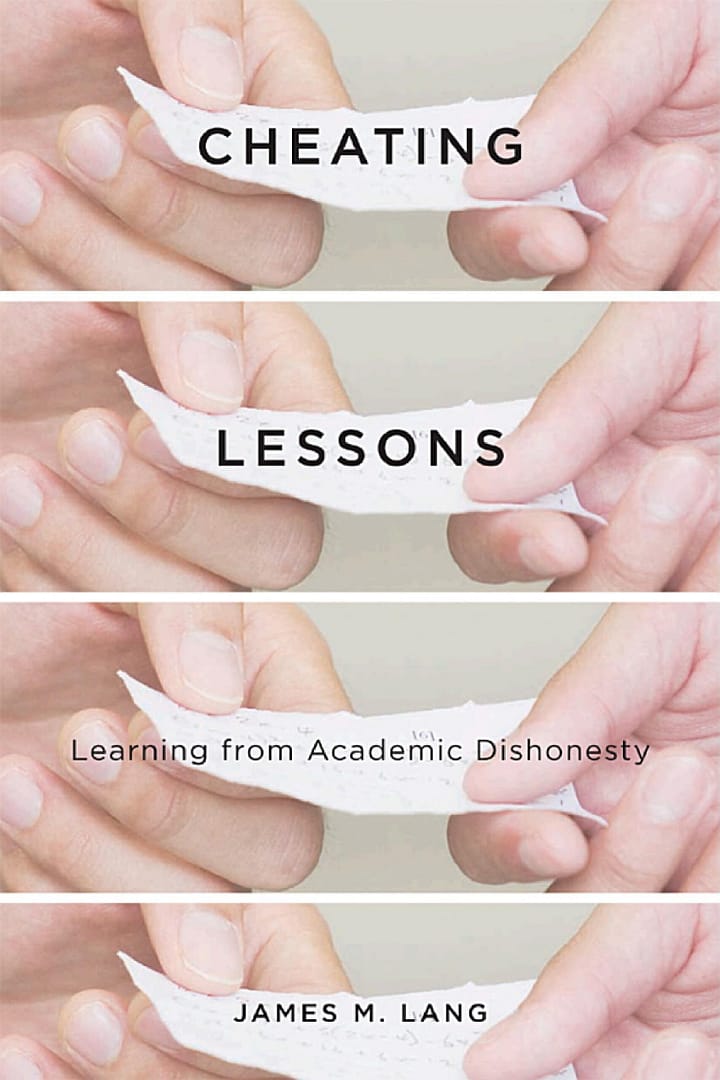
[00:37:51] Stephanie: Two things that really come to mind. First of all, I have really enjoyed reading Cheating Lessons, by James Lang. It’s not a new book, but I don’t think many folks know about it and are reading it. I get asked so many questions about cheating online and proctoring, and things like that. I really love this book.
In fact, when I talk about learning online, [laughs] I have a whole subsection of my talk that’s on his book. Really, at the heart of how he address cheating is good instructional practices. He just does such a lovely job walking through the research on cheating, and what are the lessons we can learn from that, and what are the implications of that for how we design wonderful courses, whether it’s in person or online, none of that matters. It’s just designing good instruction. I think that’s a good book.
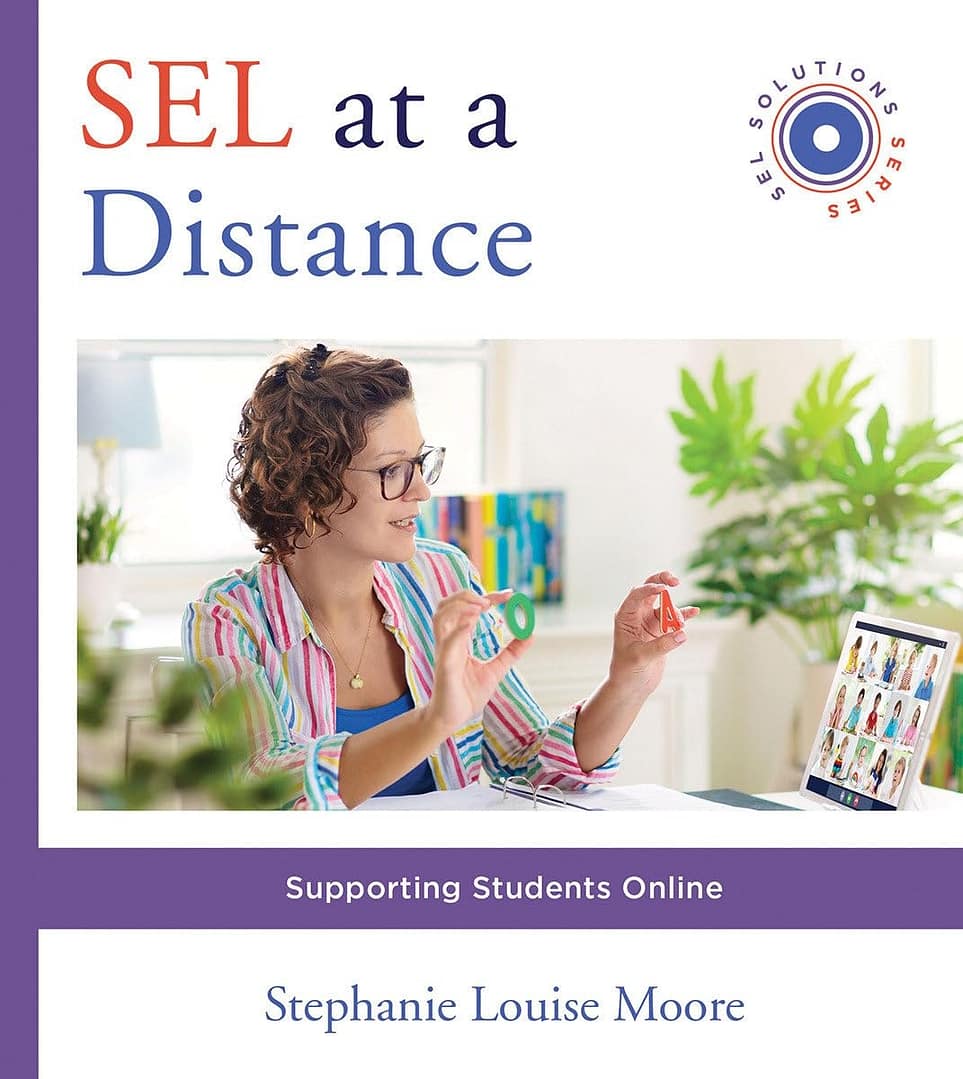
I have also– I have a book coming out very soon on Social and Emotional Learning at a Distance. I really tried in that book to take the research that we have on online learning, and break it down into very user-friendly summaries and recommendations with examples straight from the field. If you’d like a resource that really helps summarize how to teach online effectively, but it’s anchored in evidence-informed practices that book is very much practitioner-oriented.
I know it’s around SEL but I also knew a lot of teachers who are just adopting online for the first time. There’s a lot in the book about just effective online teaching period for that. I’m going to steal just one quick second if I can. I’m inspired, Bonni, by your recommendations on music. You’re going to laugh at me.
TOOL is one of my favorite bands. That’s probably not a new band for a lot of people but their album Fear Inoculum is fabulous. I feel like I listen to the song Invincible over and over, [laughs] which is not about being invincible. Quite the opposite. [laughs] It’s about really feeling time and age and things like that and what we learn from that. That’s been a meaningful song for me this past year as we’ve gone through the pandemic, and just I think feel the limitations of our own humanity at some time.
[00:40:32] Bonni: Oh, you know that is going to be going directly- something I’ll be listening to probably before the workday is even over. Thank you so much for that. Stephanie, thank you for giving me a legitimate excuse, not that I probably needed one. I want to talk again. Can you come back and promote your book when it’s actually out there so I can read it and get to interview you on that? Would you be willing in front of thousands of people to commit to it right now to come back?
[laughter]
[00:40:58] Stephanie: I would love to chat about it, yes. Anything that helps get the research and information out there, [laughs] whether it’s mine or anybody else’s work, I’m happy to do that.
[00:41:09] Bonni: It sounds like an absolutely, really important resource. I’m so glad that you have now publicly accepted the invitation so I can send you a snippet of just this part of you- [laughs] Yes, exactly. It’s been an absolute delight getting to know you and your work. I just can’t wait to continue this.
You mentioned James Lang. That was one of the earliest episodes I did, was on his book, Cheating Lessons. Not only is that such a great resource, but he’s introduced me to so many people. I’m looking forward to you and I being able to look back years from now and say, “Look at what happened.” So glad to have gotten the honor of talking to you today. I learned so much and I also am leaving really inspired. Thank you. I also have a song to add to my playlist, too.
[00:41:51] Stephanie: There you go. Yes, you have to like rock. I like really good drumming.
[laughter]
[00:41:56] Bonni: I’m totally ready to rock. [laughs]
[00:42:00] Stephanie: Thank you so much, Bonni. It’s been an honor and a delight. I thank you, kindly.
[music]
[00:42:09] Bonni: As I close out the show, I just want to say once again, thank you to Stephanie Moore for joining me on today’s episode of Teaching in Higher Ed. If you’d like to go over to access the show notes or the recommendations, you can head over to teachinginhighered.com/353, as in episode 353.
You can also subscribe to the Teaching in Higher Ed weekly update. That will get these same set of show notes over to you in your inbox and also some quotable words, some other recommendations, some related episodes and other good stuff that comes on a weekly basis. Head on over to teachinginhighered.com/subscribe to start getting that in your inbox each week. Thanks once again to SaneBox for sponsoring today’s episode and to all of you for listening. I’ll see you next time.
[music]
[00:43:09] [END OF AUDIO]
The transcript of this episode has been made possible through a financial contribution by the Association of College and University Educators (ACUE). ACUE is on a mission to ensure student success through quality instruction. In partnership with institutions of higher education nationwide, ACUE supports and credentials faculty members in the use of evidence-based teaching practices that drive student engagement, retention, and learning.
Teaching in Higher Ed transcripts are created using a combination of an automated transcription service and human beings. This text likely will not represent the precise, word-for-word conversation that was had. The accuracy of the transcripts will vary. The authoritative record of the Teaching in Higher Ed podcasts is contained in the audio file.