Follow the Teaching in Higher Ed Podcast
About this Episode
Bonni Stachowiak shares about her card game, Go Somewhere: A game of metaphors, AI, and what comes next on episode 597 of the Teaching in Higher Ed podcast.
Continue to learn, reflect, and keep moving. Go somewhere.
Bonni Stachowiak
On episode 597 of Teaching in Higher Ed
Voices on this Episode

Show Notes + Resources
- Assistant, Parrot, or Colonizing Loudspeaker? ChatGPT Metaphors for Developing Critical AI Literacies, by Anuj Gupta, Yasser Atef, Anna Mills, & Maha Bali
- Teaching in Higher Ed AI Resources and Episodes
- All Aboard – Digital Skills Map (Ireland)
- Where are the crescents in AI? by Maha Bali
- Different Critiques of AI in Education, by Maha Bali
- Critical AI Literacy is Not Enough: Introducing Care Literacy, Equity Literacy & Teaching Philosophies, by Maha Bali
- Teaching AI Ethics, by Leon Furze
- Scooby-Doo
- AI Metaphors We Live By: The Language of Artificial Intelligence, by Leon Furze
- Her (2013)
- On the Dangers of Stochastic Parrots, by Bender, Gebru, et al.
- Episode 576: The AI Con with Emily M Bender and Alex Hanna
- The Princess Bride (1987)
- Are We Tripping? The Mirage of AI Hallucinations, by Anna Mills & Nate Angell
- ChatGPT is a Blurry JPEG, by Ted Chiang
- Permission Slip, by Bryan Mathers from Visual Thinkery
- How Will AI Impact Gen Z?
Transcript
Bonni Stachowiak [00:00:00]:
Today, on episode number 597 of the Teaching in Higher Ed podcast, Go Somewhere: A Game of Metaphors, AI, and what Comes Next. Production Credit: Produced by Innovate Learning, Maximizing Human Potential. Welcome to this episode of Teaching in Higher Ed, I’m Bonni Stachowiak and this is the space where we explore the art and science of being more effective at facilitating learning. We also share ways to improve our productivity approaches so we can have more peace in our lives and be even more present for our students. A lot of you have been asking me about this game that I’ve played now and facilitated at over 10 universities and conferences called Go Somewhere. Inherent in the name of the game is the idea that we don’t want to get stuck, but also recognizing how many different ways people view artificial intelligence and the way that it is shaping higher education and how higher education is shaping it. And what the game allows people to do is to be a little bit playful. Dare I say we laugh and smile a lot as we explore very serious things that are often bumping up against our sense of identity when we are lost.
Bonni Stachowiak [00:01:41]:
It can be helpful to have a map, and I’m pleased that still this digital skills map from Higher education in Ireland called All Aboard is still so relevant when we think about all of the different ways that artificial intelligence might impact our teaching. I encourage you to visit the Show Notes when you have a chance and take a look at this map. There is a whole picture, a subway or a train with different stops, about how we find and use information, things having to do with our identity and well being, how we create and innovate, how we teach and learn, how we communicate and collaborate and tools and technologies. I think about artificial intelligence as a layer on top of this map and all of the different ways that we might experience those intersections happening. It can be so disorienting to feel lost in all of this and I find that a map can be very helpful. I also find a set of resources and I have a set of resources I’m continually updating on teachinginhighered.com/AI with all of the, not all, a curated, carefully curated list of articles, tools, critiques, whether they’re videos, whether they’re audio content, all sorts of things, and all of the episodes that I’ve aired having to do with artificial intelligence as well, that’ll be in the Show Notes for you to check out. Another way that we’re trying to grapple with artificial intelligence is to attempt to say what are the competencies or the literacies or the fluencies. There have been some real, more simplistic versions, like an AI Skills for Business competency framework that looks at oh, I’m an AI citizen.
Bonni Stachowiak [00:03:48]:
These are the skills that everybody needs. I’m an AI worker. These are skills that might augment particular jobs, whether that be a programmer or perhaps someone in a medical context, or am I an AI professional where I am actually doing the programming analysis and I’m deep, deeply rooted in artificial intelligence and those looking different. There are people who critique that models like that are overly simplistic and have said that what we need is critical AI literacy. And I’m reading here from an article by Mahat Bali, who’s been on the podcast many times before called where are the Crescents in AI? And quoting from her here. “For me, being critical goes beyond critique and skepticism. It includes subscribing to critical theory and critical pedagogy, developing awareness of social justice issues, and cultivating in learners a disposition to redress them.” And then again, still continuing on with Mahabali’s words, “the element of critical AI literacy, in my view, are” and then she lists out five elements that are in her model understanding how genai works, “recognizing inequalities and biases within Gen AI third examining ethical issues in GenAI, fourth, crafting effective prompts and five assessing appropriate uses of Gen AI.”
Bonni Stachowiak [00:05:32]:
In a future piece, Mahabali wrote about different critiques of AI in education. She writes, “I’ve needed to write this post for a long time. It’s about the differences and the types of arguments people use when they want to critique or resist AI in education. The nuanced differences between them is important because I think this means sometimes we agree to resist AI, but our reasons come from different perspectives, such as if that one small thing changes, it makes a huge difference to us and one of us may change their minds while others won’t.” And finally, from Maha Bali, “critical AI literacy is not enough, introducing care literacy, equity literacy, and teaching philosophy.” So she even extends beyond what do we need to have as our fluencies? And saying that the critical AI literacy is not enough, we need to also be thinking about those other elements. Leon Furz has a wonderful set of posts for people wanting to enhance your critical AI literacy. His teaching AI ethics posts are wonderful and cover topics such as bias and discrimination, environmental concerns, truth and academic integrity, copyright, privacy, datification, emotion recognition, human labor and power.
Bonni Stachowiak [00:07:10]:
Some of us may remember fondly the Scooby Doo cartoon and the character of Fred Jones, who was like the older brother or the uncle, one of the elder of the kids who were going out and solving crimes. And a cartoon drawn by Brian Mathers from the Visual Thinkery has this character, Fred Jones on the right. He’s just pulled the mask off of someone dressed in a costume with a white shirt and a white mask with two holes cut out of the front of it to like a. Like a ghost type of a character. And the shirt on this evil villain’s shirt reads generative AI. And this character, this evil villain type character is saying, I would have gotten away with it too, if it weren’t for you. Pesky Ethics yes, indeed. A lot for us to grapple with as we think about critical AI literacy.
Bonni Stachowiak [00:08:08]:
That just understanding how it works and how we might interact with it isn’t going to be enough. We need to recognize the biases, examine ethical issues, and assess that appropriate use. The other issue that comes up a lot as we start talking about artificial intelligence intelligence is how often it bumps up against our sense of identity. It was something I recognized very early on in the creation of this game, that Go Somewhere card game, how important it was going to be to recognize right underneath the surface. Sometimes not even really hidden under the surface, but oftentimes right underneath the surface, those things linger. Our sense of failure, our sense of anger, rage, even, and just the disappointment of all of the ways in which our teaching really has been interrupted. And how frustrating that can be. Often when we’re navigating difficult things in our lives, we’ll come up with metaphors for them.
Bonni Stachowiak [00:09:14]:
Even when we’re navigating exciting, exhilarating things in our lives, we’ll come up with metaphors for them. And Mahabali and some other collaborators, Anuj Gupta, Yasser Atef, and Anna Mills, came up with this wonderful article around which the metaphors used in the Go Somewhere card game come from. They did qualitative analysis across social media, across many pieces of writing, and from within their own evoked sets for different ways that people express how they feel about and how they’re using or not using AI. The title of their article is Assistant. Of course, we see that metaphor used often parrot that. That is often said, oh, the. The AI is just parroting back to me. Or colonizing loudspeaker chatgpt Metaphors for Developing Critical AI Literacies.
Bonni Stachowiak [00:10:17]:
And it’s a study that explores how, when we discuss the metaph use for AI, this can help us build awareness of what frames, what are our paradigms, what are our shared, or perhaps not shared understanding of AI systems. They used a collaborative autoethnographic methodology. And they analyzed metaphors from a bunch of different sources. And then they used a multi literacies framework of functional how does this thing work? Critical how might we critique it or resist it? And rhetorical how is it explained? How is it discussed and communicated about? And those that categorization and that research methodology allowed them to analyze questions having to do with ethics, equity and accessibility in relation to AI and the game. The Go Somewhere card game is based on these metaphors. And I’ll just give a couple of examples here. In the human metaphor category, the example given is of a helper or of an assistant. And I would play this clip for you, but I would get flagged by the various copyright protection things within the various platforms I use to publish.
Bonni Stachowiak [00:11:47]:
But from a movie hero, a Spike Jones love story. So this is a well known AI assistant character played by Scarlett Johansson. And some of you may know that Scarlett Johansson was asked if she was willing to be the voice of an AI assistant and she said no. And then when it came out it sounded remarkably like her. And there were some lawsuits, et cetera, and some change of plans. But yes, watching the clip, I’ve actually never seen the movie her. It was out in 20, it was out in 2013. And I’ve asked people if I should go back and watch it or how they feel about it.
Bonni Stachowiak [00:12:27]:
Does it hold up and stay on the test of time? And people have said that it definitely holds the test of time, but that they may have been more amused by it in 2013 and today it makes them sad as they think about those who have lost their lives due to death by suicide and some of the ramifications of creating a sense that these are real relationships that are happening with the AI chatbots. And the second type of metaphor is the semi human metaphor. And this is where we get. Which for me was a new word I had to learn when all this started coming out. The stochastic parrot. A stochastic parrot is one that mimics human like text by predicting words based on patterns without actually understanding the language or the concepts. And so this comes out of an article by Emily Bender. And this comes out of an article called On the Dangers of Stochastic Parrots.
Bonni Stachowiak [00:13:38]:
One of the articles of that author was Emily Bender. And she was actually back in on episode 576 talking about her book the AI Con, which she co authored with Alex Hanna. And when we talk about stochastic parrots, one of the frustrations that people who use metaphors like this is that some of the rest of us, myself sometimes included, will inadvertently say, oh, the AI is thinking. And they want to push back and say it’s not capable of thinking, it is capable of mimicking human like text. And it’s a predicting machine. It’s not a thinking machine, it’s a predicting machine. And that it’s important that we keep those things as distinct. And one of the movie clips that comes to my mind, a lot having to do with this comes from the Princess Bride.
Bonni Stachowiak [00:14:34]:
And one of the characters saying, you keep using that word. I do not think it means what you think it means. That was Inigo Montoya from the Princess Bride, the character of Inigo Montoya. And yes, we can confuse ourselves or perhaps the marketing geniuses are having their way with us to think and forget how these systems actually work, as opposed to how they’re described as working in some of the advertisements that are used in the marketplace marketing language. Continuing through the metaphor examples are the non human metaphors. An example here that is used is a blurry jpeg. And this comes out of an article that was written for the New York Times by Ted Chang Chat GPT is a blurry jpeg and this article looks at. Looking at a blurry JPEG is not the same thing as looking at the original.
Bonni Stachowiak [00:15:39]:
They make some analogies to photocopy machines from back in the day and that OpenAI’s chatbot offers paraphrases, whereas Google offers quotes. And which ones do we tend to prefer? And here’s yet another metaphor of the confusion that can come into our brains of what we’re looking at and when it gets things wrong. These AI metaphors can be such a powerful way for us to articulate how we are perceiving different ways of using or not using artificial intelligence. And I’m going to read off some of the other metaphors that these researchers found. An AI tutor would be a functional view of AI and a human metaphor. Other functional views of AI and human metaphors include AI coach, an AI mentor, a lifesaver. In the non human metaphors, a couple of examples that use the functional how does it work View of AI. It’s like making cake or it’s like a blood transfusion.
Bonni Stachowiak [00:16:51]:
It is like autocomplete or an AI simulator. So that’s all the way again, the functional view of AI, non human metaphors. In using the rhetorical view of AI, a human metaphor might be a clueless intern. Interns show up throughout their research, but in this case it is a clueless one who you can see that rhetorical view coming out there. Or how about a non human metaphor using the critical view of AI lens? So things like opium. A metaphor of AI is like opium. That’s a non human metaphor and it is under the domain of critical view of AI. How about fast food? How about this is where the colonizing loudspeaker comes out.
Bonni Stachowiak [00:17:45]:
That was in the title of one of the other articles we looked at. Or plastic surgery or that same blurry jpeg. So I encourage you to go look at the article and explore some more of the metaphors. And I’d like to read from Anuj Gupta, Yasser Atef, Anna Mills and Mahabali’s article as they explain our work helps extend this conversation on creating supportive environments for AI learning by arguing that supportive learning environments around AI should also make space for critical exploration of the nature and ethics of AI. Here’s where we get into the Go Somewhere game and how it works. First off, this is a game to play in teams. You would want to have at least two teams to play and I find an ideal group size teams of about four to five people. A maximum of five players per team is ideal.
Bonni Stachowiak [00:18:47]:
And again, at least two teams and the players each receive two small index cards and something to write with. And as far as the team’s materials, the team needs a deck of cards containing those metaphors and a second deck of cards containing values and actions cards Round one of Go Somewhere begins with an activity that comes from Brian Mathers at the Visual Thinkery. As soon as I saw this activity on his blog, I thought this is the perfect activity. It’s a permission slip and it begins with drawing a self portrait. And that self portrait. There’s an example that will be in the show notes that comes from Brian himself. It’s very simple, like a childlike sketch of somebody with a round head and some eyelashes and eyebrows and a nose and a mouth, all just a hand drawn. An ear.
Bonni Stachowiak [00:19:49]:
I see a half of an ear coming just depending on the angle of the head. And the permission slip reads, I hereby give myself permission to draw things and not care what anyone thinks. And each time I’ve led people through this activity, I start to see some walls breaking down. There’s laughter. There’s a way of more vulnerability in introducing one’s self to other people at the table who they may or may not know. Now in some contexts they do know each other and in others at conferences, for example, they are new. There’s a timekeeper. That was one of the things when I was creating the game.
Bonni Stachowiak [00:20:34]:
Some Great advice I got from a former student to think about the way that both points and time constraints help make games more effective because you show what is valued, that I shouldn’t shy away from creating stress in games, that actually stress in games can be very helpful. So people have one minute to draw their self portrait and add their signature to it. And then they have two minutes to share their drawing with their team and to pick their scorekeeper. And at the end of that round, the team’s scorecard gets filled out and each person gets a point for each finished permission slip. And that’s a wonderful way to kick things off with more of that childlike experience. So then we go on to sharing the permission slips. I use Padlet, which is a virtual cork board, and it’s so wonderful. People don’t have to share their permission slips on the Padlet, but if they do, it’s a wonderful way, especially for people who know each other, for them to get some joy and some laughter out of seeing how each of them represented themselves in this sketch form.
Bonni Stachowiak [00:21:43]:
It’s just a wonderful thing. And Padlet, I didn’t actually know this until the first time I played Go Somewhere. If you click on one of the items on the cork board, it turns it into a mini slideshow that you can scroll through. It’s like a slideshow inside of a slideshow. Then it’s just a wonderful way of sharing those quickly and not having to experience a lot of friction there. Round two of Go Somewhere is a metaphor sketch. So this is for those of you who, like me, really enjoyed playing Pictionary growing up. Well, Piction, actually, I don’t even know if it was around when I was growing up.
Bonni Stachowiak [00:22:19]:
I lose all track of time. Mental note. When did Pictionary come out? I know I’ve played it with youth like abandon, but I’m trying to remember when exactly it came out. But Pictionary is where you get a word and you’re challenged to sketch. Draw fast, by the way, for your teammates to get them to guess. So each. Each person remember they had two. Each player had two index cards.
Bonni Stachowiak [00:22:43]:
So the first index card was their portrait. The second index card was and is their drawing of a metaphor. What kind of metaphor do you think of when you talk about AI or what’s one you’ve heard other people use? I have a friend and colleague who drew a picture of a dumpster with fire coming out of it. Flames, as in a dumpster fire. And when she shared that sketch, the goal was that her team would guess dumpster Fire. And they got it very quickly, I might add. Whereas other people might draw metaphors that are more like around that coach analogy that I said previously, or a helper, that sort of a thing. A helpful assistant.
Bonni Stachowiak [00:23:29]:
And if someone needs to have an alternative to drawing, someone also could write down some words or a phrase to describe it as well. And that would certainly suit the purpose for getting people to guess. So after. There’s some time constraints here too. So people have two minutes to draw a sketch without speaking to their teammates or write that phrase, if that’s something that’s preferable or needed. And I would encourage, by the way, for those who are able to draw, to stay with that vulnerability, though. It’s really, really helpful. It kind of creates a climate that’s really requiring people to be a little more vulnerable than they might normally be.
Bonni Stachowiak [00:24:07]:
And then we. The guessing of the metaphors and then to the scoring of this one, the scoring. By the way, this was such a great advice from Dave, my husband. We played the game as I was creating it, and he’s like, nope, don’t have two points for this and minus one point for this. Keep it real simple. So it’s real simple. One point earned for each metaphor Guest. And then on the scorecard, there is a place to type in or sorry to write in the points for round two.
Bonni Stachowiak [00:24:37]:
And we’re on to round three, by the way, the round two, there is an optional place where people can share their metaphor drawings on that virtual padlet. And again, that’s an optional place if people want to share in a little bit more of a public way beyond their team in round three. So now I want you to picture. We’ve got two things that people drew. They drew their permission slip. They drew their own metaphor that either they use to describe AI or that other people do. Round three goes to those two decks of cards that I mentioned. One of the decks of cards are the metaphors from the article that I mentioned previously.
Bonni Stachowiak [00:25:23]:
And we ask people to shuffle the metaphor deck and deal out all those cards, all those metaphors amongst your teammates. So picture. I picture your team of four to five people. They each have a fairly substantial set of cards. Maybe I’m trying to do the math here. 10 or 12 or 15 different cards that each teammate is holding. And the goal here is to try to describe the metaphors that are in your hand without using the word or phrase itself. And then you rotate turns after each correct guess.
Bonni Stachowiak [00:26:03]:
By the way, nobody’s ever going to get through all of the cards in the only four minutes they have to play this part of the game. So you sort the cards in your hand to the ones that would be easier to describe and easier to guess. Since the researchers from that metaphor article are from all over the world, they also had some metaphors that were more specific to the region in which they live. And so this would be one of the ways where it’s maybe a more often used metaphor or easier to describe, et cetera, maybe not something that as many people have used like, like for example, stochastic parrot. I mean, unless you’re. You’ve read that article and you’re kind of familiar with the, with those critical lenses for AI that would be. Stochastic was not a word, like I said that I knew prior to starting to read some of these articles and getting to know this landscape. So the goal, again, trying to get as many of those metaphors guessed.
Bonni Stachowiak [00:27:04]:
And every time somebody does guess from something from someone’s hand, that card goes down and that represents a point that they earn. So you earn a point for each metaphor that got guessed. And then on the scorecard, round three is to total up all of those metaphor guesses. And then now that scorecard gets added up. We’ve got a total, we’ve got the team member names, and then they bring that scorecard over to whoever is facilitating the game. And the thing that I found so much fun, I continue to this day, it brings me so much delight, is that I invite people if they want to. You remember probably that I. They can share on the padlet if they want to, which is basically like taking a picture of their self portrait or taking a picture of the metaphor that they sketched.
Bonni Stachowiak [00:27:54]:
And they can share that via the padlet. But I also now invite them. They’re still holding, or not holding, but it’s on their table, their own metaphor sketch, the dumpster fire, for example, that a friend and colleague had used. If they want to, they can put that sketch into the deck of cards, the deck of metaphors. And then in future games, when we do that guessing round, the round three, where the metaphors are guessed, they write down what it is now, because once their team members get it, then they can add, you know, dumpster fire, et cetera. But then this is one of those games that every time it is played, it gets augmented in some way. So there’s new metaphors that get added and new sketches that get added. And it is so much fun.
Bonni Stachowiak [00:28:44]:
When I get back from a trip to go through all of the cards, I’m laughing, I’m thinking My gosh, that’s such a unique contribution. And it’s so much fun to get this extra glimpse of what happened at each one of the tables when I’m not. Not always able to listen to 20 different tables at once. It’s just such a fun way to remember and see additional glimpses of what happened. We’re on to round four. So I want you to picture me. I’m getting all these cards if I were to be doing this at a conference or at a university, and this is where behind the scenes, I’m going and figuring out who won because I always bring prizes. And it’s so much fun to award prizes to the winning teams or team.
Bonni Stachowiak [00:29:26]:
And, and round four, while I’m doing that is called packing purpose. And it’s an opportunity to examine our values and reflect on them and to think about one thing, one action we’re willing to commit to, to take action on our next step with regard to AI. And maybe our next step is to continue to look at some of those ethical issues. There’s been some recent research and some a way of measuring the environmental impact. And how does the environmental impact of artificial intelligence compare to, for example, doing a Google search? And I mean, that might be for a person that’s their next action. I always tell people, make it as small as you can. Make it public. Make it something that you’re really willing to do.
Bonni Stachowiak [00:30:25]:
I’ve got a deck of actions and values that are all together and some ideas for people to take action. Maybe you sign up for a workshop, maybe you read a book, et cetera, et cetera, watch a video. My gosh, there’s so many wonderful videos out there. And if people are having trouble deciding what action to take, they can go back to those values cards or, or to other values that they’re thinking about and have that help guide their action, their precious time and how they’re going to spend it and, and continue to learn and reflect and keep moving, go somewhere. That’s really, really a value that I think is crucial for us as educators. We owe that to our students. And yes, I do realize that there is such a sense of overwhelm, and it is incredibly challenging. That’s why it’s so important to shrink it down so that we’re having movement, but we’re not overwhelming ourselves.
Bonni Stachowiak [00:31:21]:
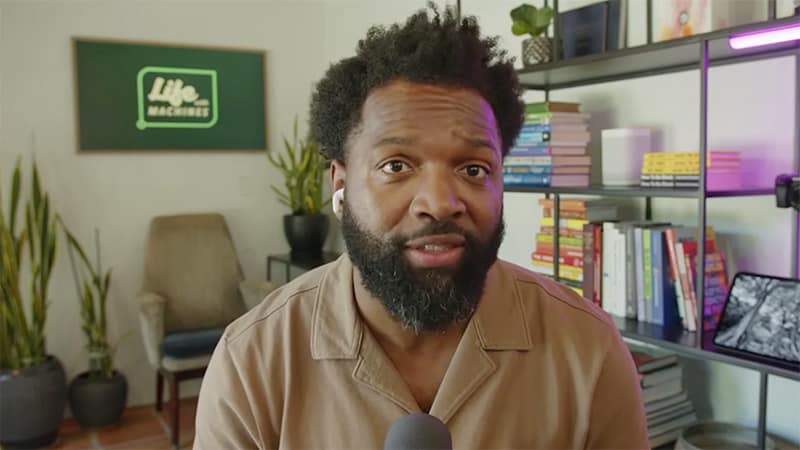
We’re still being gentle with ourselves and recognizing our unique context. This is the time in the show where I get to share a recommendation. This name may sound familiar to some of you. Baratunde Thurston has a new series out. It’s a video podcast. It’s called How Will AI Impact Gen Z? I’m reading from the description here. “From mental health and loneliness to the future of jobs, AI quote friends and school life, Gen Z is facing more tech fueled change than any generation before. Baratunde and his guests unpack what’s really happening and how we can help the next generation shape their AI future, not just survive it.”
Bonni Stachowiak [00:32:07]:
It’s a wonderful series, He’s a tremendous host. It’s nuanced, it explores lots of different perspectives and also some organizations that have resources that can help us all as we are working with members of the Gen Z population in navigating all of this thank you so much for listening to today’s episode of Teaching in Higher Ed. Today’s episode was produced by me, Bonni Stachowiak. It was edited by the ever talented Andrew Kroeger. Podcast production support was provided by the amazing Sierra Priest. If you’ve been listening and haven’t yet signed up for the weekly update from Teaching in Higher Ed, now is that moment. Head over to teachinginhighered.com/subscribe. You’ll get an email once a week with the most recent episodes show notes, and this one’s got a lot of them and also some other goodies that go above and beyond the regular show notes.
Bonni Stachowiak [00:33:12]:
So that’s a great time for you to subscribe. Thanks so much for listening and I’ll see you next time on Teaching in Higher Ed.
Teaching in Higher Ed transcripts are created using a combination of an automated transcription service and human beings. This text likely will not represent the precise, word-for-word conversation that was had. The accuracy of the transcripts will vary. The authoritative record of the Teaching in Higher Ed podcasts is contained in the audio file.