Follow the Teaching in Higher Ed Podcast
About this Episode
Harriet Schwartz shares about her book Connected Teaching on episode 287 of the Teaching in Higher Ed podcast.
People are at their best when they can engage in healthy growth-fostering relationships.
Harriet L. Schwartz
On episode 287 of Teaching in Higher Ed
Voices on this Episode


Show Notes + Resources
Recommendations from this Episode


Transcript
[00:00:00] Bonni Stachowiak: Today on episode number 287 of the Teaching in Higher Ed podcast, Harriet Schwartz shares about her book, Connected Teaching.
[00:00:11] Voice-over: Produced by Innovate Learning, maximizing human potential.
[music]
[00:00:20] Bonni: Hello and welcome to this episode of Teaching in Higher Ed. I’m Bonni Stachowiak. This is the space where we explore the art and science of being more effective at facilitating learning. We also share ways to improve our productivity approaches, so we can have more peace in our lives and be even more present for our students. Today’s guest is Harriet Schwartz. She is a professor of Psychology and Counseling at Carlow University in Pittsburgh, Pennsylvania, where she serves as chair of the Masters in Student Affairs program. She’s got a PhD from Antioch University and her PhD is in Leadership and Change.
Harriet mentors doctoral students in qualitative research methods at Antioch University. In addition to her role at Carlow, a leader in the Relational Cultural Theory community, Harriet is a lead scholar for the International Center for growth in connection. Her scholarly interests include teaching as relational practice, emotion and teaching and qualitative research methods. Harriet, welcome to Teaching in Higher Ed.
[00:01:35] Harriet Schwartz: Thanks, Bonni. Thanks for inviting me for your program.
[00:01:38] Bonni: I am thankful for my friend and I know yours Chip Espinosa for connecting us. I felt like a kid in a candy store when we first got to have that first phone conversation and then reading your book. I usually read in bed not to get overly personal but I kept nodding my head, I’m going to get a stiff neck from all the nodding of my head. I’ve been teaching about 15 years now in a higher education context and many of the things that you talk about, I’ve just come across, and it just kept bringing me back to when I first started teaching and to things I’ve learned. I will admit to feeling ashamed of some of those things.
I know you’ve talked a little bit about shame, [chuckles] but also just grateful that I’m more informed now. I would love if we could start out this conversation with you reflecting some on any changes that you think back on to your early teaching, and what’s radically changed today.
[00:02:29] Harriet: I think of two things that have shifted for me. They’re probably many more but the first one that comes to mind is I remember my first, I don’t know, some number of years of teaching. I was in the classroom, and I was just in it, and I was trying to get everything in and just going moment to moment. Then I remember there was a point at which that feeling really shifted and what the analogy that comes to mind is being a basketball player on the court and becoming, I guess, confident enough and maybe having enough tools in the toolbox to really see the court.
To be able to see the court and see what’s unfolding in front of you and to be able to anticipate, and to be able to improvise and adjust. That’s something that definitely came with experience. I’m really grateful for it because I think it takes some of the pressure off. It just allows us to be a little more relaxed in the process. That’s one piece I remember. Then another thing that’s maybe a little more closely related to the book is, I worked in student affairs for a long time before I moved into a full-time faculty position. There was a bit of a transition with that, and it wasn’t at all bad or difficult transition.
After having spent about 14 years in student affairs, I was really accustomed to interacting and relating with students in a particular way. Moving into a faculty role where I’m assessing work, and I wanted to bring that supportive part of me with me into teaching that I had developed as a student affairs practitioner, but also learning how to balance that supportive side with the side that needs to maintain the standards of discipline or profession or whatever. Then also how to be a good academic advisor, which is a little bit different than Student Affairs’ work as well. I think that’s one piece or a second piece that I see as a shift from my early teaching years later.
[00:04:13] Bonni: I relate to those both so much. One of the things that you make clear in your work is that even just us being able to anticipate and being more relaxed, that doesn’t mean that we’re going to be able to avoid failure. You’ll cross over it [chuckles] some boundary at some point. I know we’re going to dive deeper into the topic of failure later on. That relaxation doesn’t come from, I’m not going to fail anymore, that relaxation to me, and I know to you as well comes from, I have failed before and I will fail again and it’s not as hard as it seems.
Sometimes that can be a really healthy modeling for our students. I know we’ll talk more about that later on. Before we get too deep into some of the aspects of your work, I’d like you to just help us see the title of your book and the title of your research so that we can, as you mentioned, be introduced to a new language, many of which will recognize ourselves in our teaching in it. Could you tell us what Relational Cultural Theory is?
[00:05:13] Harriet: Sure, I’d love to. So Relational Cultural Theory is a human development theory that was developed by Jean Baker Miller and her colleagues. They were all up in the Wellesley area. They were developing this work at the same time, as Carol Gilligan was doing her work. My guess is they’ll be some listeners who are more familiar with Gilligan’s work, but this was another feminist theory that was being developed really in the same geographical area and at about the same time.
The development of RCT was in response to a lot of the prevailing human development theories, which really suggest that adults become fully adults and fully developed when they can become independent and autonomous and don’t need anything from anybody else. That’s also an idea that our culture really celebrates. This idea of individual achievement and pull yourself up by your bootstraps.
Jean Baker Miller who was a psychiatrist and her colleagues who were psychologists were looking within their practices and looking at their clients and even thinking, I think about themselves and their friends. They really believed that for both women and men, people are at their best when they engage in healthy growth, fostering relationships and that that’s a sign of healthy development and rather than isolation. They’re really pushing back against the clinical and therapeutic communities, as well as the cultural narrative. RCT for me is something I discovered in graduate school, and it was really one of those light bulb moments.
I have been trying to understand what goes on in meaningful interactions initially between Student Affairs practitioners and students that later between faculty and students. I knew it wasn’t quite mentoring, but it was developmental and I really didn’t have a language for it. Then my advisor [unintelligible 00:06:56] pointed me toward RCT, and I started reading it. It was just like I said, a light-bulb moment. It really put language to what I was experiencing. There are many aspects of RCT I can tell you more about but that’s the beginnings for me. RCT continues to really provide a foundation for my work.
[00:07:12] Bonni: You mentioned that phrase of pulling yourself up by your bootstraps. I will candidly admit, I have a lot of bias around that particular phrase. A similar one was used in a talk I attended the other day of a hand-up, not a handout. I just tend to bristle because much of that for me brings up that usually I hear those words, actually, let me just stay, I’ve never heard those words [chuckles] spoken by anyone who didn’t have a lot of power and a lot of privilege.
I know for myself, just the transitions that I’ve need to make around race and ethnicity and other marginalized groups that I have to really work at uncluttering my mind of such perceptions. Could you talk about this power and position and how it plays and a little bit more, I guess I was going to say tension but it’s almost like a magnet pulling apart this idea of some of the traditional theories.
[00:08:06] Harriet: Relational Cultural Theory was originally called Stone Center Theory and then it was called relational theory. Then there were some practitioners who came along and joined that conversation as folks were developing the theory. They pointed out that the founders were white women who were primarily middle or upper-middle class. They were speaking at times that they were speaking for all women. These other colleagues who were joining the conversation pointed out that these women weren’t really incorporating and understanding the experience of maybe women living in poverty, women of color, lesbians, and so on.
The founders, I think were good role models of taking in that feedback and they incorporated cultural context as essential in understanding human development. Relational Cultural Theory helps us think about context as central in any interaction or relationship. It really calls on us to– It not that we’re always explicit about it, but for example, if I’m meeting with a student as a student of color, I need to have in my mind that that student may have had a very different experience today simply based on the way the society treats them, the way people treat them, the way they’re met in our culture.
A very different experience than I have, of course, we also take into account intersectionality and it’s much more complicated than that. If I have a student that comes in and isn’t getting worked on, might be students living in poverty, and just really doesn’t have the same resources to other students. As I say throughout the book, and so on, we have to maintain the standards of our profession and the standards of our disciplines, but at the same time, really understanding that not everybody’s experience is the same as ours.
I think a lot of human development theories don’t pay any attention to cultural context. I think that supports again that narrative of, if you just work hard, you can make it. It’s true that to make it typically people do need to work hard, but as I say to my students, the path from Pre K to let’s say, successful employment after high school is going to be very different for someone who grows up with no internet at home, no extra money for tutors or for help with college essays, no role models for going to college. That person’s journey is very different than someone who has those things who has good internet at home, has the newest laptop, gets a tutor when they need it, et cetera. Now both of those people do need to work hard. We’re not taking anything away from the person who has the resources, but just to understand that we say everyone needs to work hard. Those journeys from very different based on identity.
It’s important stuff for teaching. Again, RCT really does a good job of making RCT so much about relational practice and how we grow in connection and it holds cultural context as central part of that work.
[00:10:42] Bonni: When you talk about the idea of working hard. That’s yet another thing that I resonated within your book, because I know for myself many times and I’m sure I’m still susceptible to it today. I think I somehow can actually tell that, that’s how hard someone worked or didn’t and I can find a lot my biases come in, open up an assignment and can start to assign a lot of intent and a lot of ideas that I have about, well, this person just didn’t take it seriously.
Actually, you tell a couple of really powerful stories in one of the chapters, where you talk about contrasting two different ways where you start to have some of that narrative come in. I know for myself, I’ve been doing this long enough where I know, Harriet, you and I were recently traveling. It’s like, “You’re tired, Bonni, this is not a great to be grading. When you have these kinds of thoughts that are really central, that’s not who you are as a person. This is a good scientist step away.”
Would you share a little bit more about some of these biases that come in how we can start to start to attach our own scripts, our own narratives to our students and how hard they’re working? Or in your case, your stories were how much did they listen to your instructions that you were given in class? Would you share about that?
[00:11:57] Harriet: Sure. For most of us, this comes from a passion for teaching and a passion for discipline. In some cases, I think, disappointment when students don’t do well, or if we think they’re not working hard or whatever. I think as we, whether it’s grading papers, or whether it’s managing a classroom discussion, I don’t know my own experience, I’ve been quick to assign meaning to what I perceive as student work that isn’t sort of up to the standard that I would have hoped.
I talked in the book about, I was reading one student assignment, and the student really got it wrong. It was a very straightforward assignment. I felt like the student made a central mistake in the assignment that students had made in past semesters. I really try to say be very clear, very explicit about if you don’t do it this way, you’re not going to do well on this assignment. Like this idea is central to this and this one student still got it wrong.
I remember reading the paper and just being so frustrated and thinking, wasn’t he listening? Or does he just not care? Or is he disregarding the concept. Then I thought to myself, or maybe you’re still not explaining it as clearly as you think you are. I think the other reason to sort of catch myself in that moment is, in some ways, it doesn’t matter a whole lot. I think, ideally, I should still come back to that student with compassion.
We could get into a whole another piece here about how sometimes I think we catch ourselves working harder than our students on their behalf. That’s like a whole another thing we talked about. I think there is a point at which you have to let go a little bit, but trying to bring my best self to a student who maybe hasn’t been as well as important, and because there may be again there may be other reasons, the student may have been up all night with a sick kid, the student may have had a computer that broke two weeks ago and hasn’t been able to get fixed.
Again, not that that means I let them off the hook and just give them an A or something. I’m not talking about that at all, but I think the asset that I bring to that student, the energy that I bring to that student, if it turns negative because I’m frustrated and making assumptions, then I think I, for some students, at least that really shut down the teaching relationship and that’s problematic.
Ideally, I come back to that student concerned and open to information that might either inform my teaching or inform your situation, still maintain the standards of the course and the discipline, but be open to other reasons for why this happened and be willing to work with that while maintaining the standards that I have.
[00:14:18] Bonni: One of the people that you cite a number of times in the book is Paulo Freire and listeners who’ve been around for a while or read his work with know his coining of the term the banking model of education and use stress as it does here against the banking model. One of the things that you talk about is learning in connection. Can you tell us about what learning in connection is and how it’s in contrast to the banking model?
[00:14:45] Harriet: Right. This is really central and this comes from relational cultural theory, although again, that theory is developed more for use in therapy and clinical work, social work, et cetera. There are a few of us we’re really trying to bring it into education because I think it’s such a natural fit for education. This idea of learning and connection is that interactions and relationships are really sites and sources for learning.
It’s an interesting thing, because we also, a lot of the work of being a student or a teacher, a lot of that work is done in isolation, right? We have to go write our paper, we have to go do the reading, we have to go assess the paper, whatever it is. Part of it’s about knowing that I have people I can connect with whether I’m a student or faculty member, knowing I have people I can connect with trusting that I can approach a faculty member if I’m stuck in some way if I’m confused with a concept or can’t figure out what I want to do with the paper or whatever.
A piece of it is that trusting their connections out there. I think students and their studies that show the students get to school and feel like now I’m in college, I need to make it on my own. That happens again, in grad school, right? Like, I’m a grad student. Now I should know how to navigate the system. I think what we’d hope for is that students understand that it’s not a solo endeavor, that anyone who makes it has gotten help from people in various sorts of ways. It’s that idea that people can reach out and connect in ways that they get the support and help they need.
The other piece of it, though, is so in RCT, there’s this idea of the five good things. This for me really puts language in terms of how we learn and grow in connection. The five things and these don’t unfold in a linear way, but of course, it’s the only way I can talk about it. The first thing that happens when two people really connect, and this could be, friends over lunch, it’s you and me, right now, it could be a teacher and student advising session or in the classroom.
The first thing that happens when we connect, ideally, if it’s a growth fostering connection, is that we both get a little bit of a bump in energy, right? We both get energized by each other’s presence, and by the fact that, for me, I get energized by the sense that you’re really present with me and you’re paying attention and you’re hearing me. We get a bump in energy. We also get an enhanced sense of self, but these are all tiny changes.
Again, it lifts me up to see that you’re taking my work seriously, maybe it’s lifting you up that I’m really signed on for this podcast, and feel like it’s a good thing. Then a third thing is we get clarity. As I talk through something with you, and again, if you imagine that I’m a student, I’m talking to you about my confusion with a concept or my struggles and assignment that just by putting it into words, I’m going to start to probably clarify something for myself, and then as you respond to me, that helps me get more clear.
Then the fourth thing is movement. We get unstuck, so if I come to you with a problem, I’m thinking about leaving school or about changing majors, that that conversation not that everything so but I leave that meeting or that conversation able to take the next step. Then the fifth thing is a desire for more connection either with the person I’m talking to or with other people. For me, these five things, this is what’s happening in growth, fostering connection, and these are also outcomes of growth fostering connection.
For me, that language just translates so well to powerful teaching moments. Those moments when you meet with a student and they leave and you just feel so energized. Like you Feel like you did good work. Part of that is because I think a big part of that is when you see them leave feeling a little better, a little more confident, a little more clear.
Having that language for me is really powerful because it also helps me be more intentional. It helps me recognize when my own energy is low, or why an interaction didn’t feel good. I hope that helps, but that’s where it really how I think about that growth, in connection, connected teaching.
[00:18:27] Bonni: It’s reminding me too, and you talk about this in the book in terms of how to set boundaries for digital things, including students texting you and use of devices, et cetera, but it’s also just, it’s hard for people who haven’t really had it modeled for them to be fully present for others and then to try to do that in the class.
That’s a whole lot of unlearning that has to happen. I would imagine these five good things can help to start to reinforce what that means when we can be fully present for other people. That bump and energy that and once I start to experience that then like you said, a desire for more connection I might build upon itself.
[00:19:07] Harriet: I think that can help. Also so there’s a really powerful article I read years ago by Alison Tom, where she talks about boundaries in teaching adult students. Then I her work was actually based somewhat on RCT. Then, there are other concepts in RCT, particularly relational and role clarity, that I think are really helpful with that whole trying to navigate what does it mean to be in connection with students? How can I do that without–
It’s a complicated endeavor because I still need to maintain the standards of the course. I’m assessing their work. There is a difference, and you talked earlier about power, but one of the things that RCT calls on us to do is to reduce power differentials, but it would never suggest that we eliminate them, or that we even say that we can eliminate them. I’ve heard over the years, some people teach adult students say, we’re all adults. We’re all in this together. I think that the students a disservice because I’m assessing their work, then there is power differential. I think it’s important to be clear about that. How can I manage that power differential? How can I reduce it? How can I be in connection? How can I be in connection with a student who is not doing good work? How can I be in connection with a student who I find difficult?
Maybe there’s just sort of personality thing is for rubbed me the wrong way at but also how can I manage for those who really are maybe more naturally inclined to connect with students? Sometimes students want more from us than we can give. A student comes in as an upset to the degree that we’re concerned, how do we manage that a student pulls on us more than we think is appropriate, and we wish they would maybe learn how to use a wider array of resources, and so on.
There’s a lots to sort out in this. Again, I think RCT is helpful with that, but it’s not. I think some people think it’s easier to try to be connected with your students and be in relation and I think it’s actually much more complicated, but I think it’s good teaching and I think it’s definitely worthwhile.
[00:20:59] Bonni: In these kinds of spaces, we do have a lot of conversations about students and failure and how good it can be for them. We have a lot fewer conversations about when we fail as professors, what have you learned about that topic?
[00:21:13] Harriet: Again, I agree with you that there is just not much work out there. I haven’t had a particularly difficult semester and went looking for some literature that could help me and couldn’t find much on faculty failure. I found a few pieces that had some narrative elements. They were particularly helpful because the stories these faculty members told, reflected my own experience so closely.
It was scary, the kinds of things they talked about having a semester fall apart, having gone into the course thinking they created something really innovative that was going to energize students that students really resist it. Another case of faculty member talked about how by the end of the semester, he was keeping his office door closed, and he didn’t go to class early to talk to students.
I had done the same thing because I was just so frustrated with this course that seemed to fall apart. Finding those readings was helpful. It was also really helpful to look at the workplace literature. There’s not much there, but there’s a little bit on workplace failure. There were some models there that helped me think about my own experience and I think are helpful faculty that, how can we unpack the failure situation.
When I was writing the chapter on failure, and I was consulting with some colleagues who were helping me think for ideas for the book, some of them really pushed back and encouraged me not to use the word failure because it is too binary and they saw it as like dismissive and, and I finally decided that using that language just really helped was helpful for me at least. I know, one of the theories I was reading about workplace go, you’re talking about naming it is really important, because it’s part of what can help people move past.
I would never say someone else should use the language of failure if they don’t want to, but for me, it was really helpful to acknowledge Not that I was failure, not that the students were failures, but this particular course, ultimately, in some ways was a failure this semester, and then I could start to unpack what were the elements that were going on for me, what was going on for students? Maybe what was going on in the context of our
university or something there, what are the things I can do to be better prepared next time to try to prevent some of what went on.
One of the things that came out of that and some other classes where I had some tensions with students was using what’s called a psychological contract concept. This is also a workplace concept that talks about how when we enter an employment situation, we have passive the expectations of employers, and they have passive expectations of us. These are very basic things that don’t get talked about, and they are things like we expect will pay us on time and they expect will show up on time. They expect us to be ethical and those sorts of things, right.
I translated that to a classroom conversation, so now at the start of each semester, I have a conversation with students and I introduce this concept, and then I say to them, “What do you expect of me as a teacher?” It allows them to say things like, you know, they expect me to arrive on time the expect me to be prepared for class. They expect me to be an expert in the field. They expect me to assess their work fairly, and so on and so forth.
Then I say, “What do you think I expect from you?” It allows them to then talk about the things we would, you know, anticipate they would say that I expect them to be on time and to do their work and to ask questions and tribute with respect and all that. I think that’s been a helpful conversation to have. That’s a strategy that emerged from that work on failure that I think has been helpful.
The other thing I’d say, though, is that I think we don’t, there’s some folks out there, Doug Robertson is one who’s done some work on teaching and emotion. Beyond failure, we don’t talk a lot about the emotion of teaching. Teaching is a very human endeavor. There’s a lot of emotion involved for anyone who’s at all invested in your teaching. There are great highs and they’re great lows.
I think, in my own experience, some of us gets process that informally in the college, but there aren’t a lot of intentional spaces, where faculty can really process difficult semesters, difficult classes, difficult students, you have to really have some colleagues you trust to do that, and Doug Roberson, and some others have suggested the faculty should have supervision in the way that and consultation the way that therapists do.
We need a safe space to talk about difficult situations so that we can process them for ourselves what goes on for us when we have a student who just doesn’t live up to expectations, what goes on for us when we feel like our class fell apart and how can we process that healthy way and move on?
[00:25:25] Bonni: I’m not familiar with his work and I’m excited to see more because you’re so right. It’s not talked about very much. I’ve tried to articulate before some of the people that have come on the podcast just really seem to be able to articulate that deeper sense of teaching in the all the joys in fact, there’s a wonderful Parker Palmer quote, about the pain of teaching and the joy of it.
It just so much I understand that. You named so many things there with being able to be self-aware and the ways in which we contribute to some of the failures in the classroom, but then also it can be things happening with the students that we either are or are not aware of. One of the other things I wrote about probably three years ago, or maybe even more than that was just the rhythms of a semester.
I compared it to in organizational development literature, there’s the stages of team formation, and it usually goes something like, forming, storming, norming performing, and then I’d like to do an accent adjoining so that they all rhyme. That was my terrible accent, but then to me, it’s not it doesn’t work quite the same way as a team formation. I do see some common themes that come through a lot.
As we’re recording this, we always pre-record we’re probably I think three weeks or so left in our semester and boy, oh, boy, can I feel that, but I don’t take it as personally anymore. I still don’t love it. I mean, it doesn’t feel great to go in and you’re with a room full of people. That’s not about my class. That’s not about the students. It’s not about me, it’s about this is a really hard season for most of our students who are holding down the jobs and trying to.
A lot of the way that classes are designed is to have that ramp up at the end, and the big test at the end is not the way I structure things, but it is still the majority of how higher education is structured. There’s nothing I can do about that other than I just don’t feel quite as emotionally tied to it. I can go, “Oh, this is what’s happening. This happens pretty much every single semester since you started teaching.” Then, of course, try to find some ways to lighten that a little bit.
This is kind of embarrassing to say, but I’m just going to say it because sometimes I think when we’re ashamed of something, they’re important things to say, and that is I asked my class how they wanted to celebrate their last class together. They got those really big eyes. They’re like, “What are the limits here? What are the limits here?” and I said, “Well, we can’t break the law,” that’s kind of think of things, but they got such a sense of excitement that they could actually shape that class and what they wanted to do was watch a movie together.
They decided that they wanted to watch what they consider to be their version of The Grinch with it. They said it was the original Grinch. I was like, Jimmy, the one with Jim Carrey because that’s not the original Grinch. We had a really funny conversation. I’ve never seen one with Jim Carrey, but I could tell from what they were saying they were not talking about my original Grinch in their story.
I might be a bad teacher because I’m just throwing in the towel, and yet, we’re going to have some reflection on what we learned this semester, and we’re going to do some other things, but they want to watch a movie. I think it’s a really stressful time in the semester. If you can get a group of that many students who all want to do the same thing.
I think that that could be a really healthy part of their finals week and not such a bad thing that they’re going to have a little bit of a lighter load in that particular class. They’ve worked hard this semester. I can guarantee you that. It just didn’t come at the very end.
[00:28:57] Harriet: No, I’m with you on this. I think it’s a very human approach to teaching and, you’re not saying that you decided that mid-semester to stop teaching the rest of the term because you’re tired, but you gave them some agency to figure out a way to celebrate. The fact that they want to watch a movie, they’re all tired, like you said, so you’re spending some time together, you’re going to watch a movie, there’s connection there, there’s support. I a couple weeks ago, I got to class and they just were dragging, they look so tired.
I actually changed the course. I went back to my office and got some random items, and then I get to know you activity with them. These are students who are going to many of them will be in class again together next semester, and be working on team projects. It’s sort of an icebreaker kind of thing that I think tends to be fun for students.
We spent the first half-hour doing that, and their energy shifted, and they seem to again, it doesn’t solve it for the rest of the semester, but after the second half of the evening, they were, I think more engaged than they would have been if we had taken a little bit of a break. I also think we’re doing there’s role modeling that right and someday they’re going to be leaders in their workplace, either in my position or just informally. I think, for them to have that awareness that some of these people just need a break, that’s good self-care. That’s good care for colleagues. I think it’s a great honor that you did that. I like that idea of offering, inviting students to suggest how they might want to celebrate. I think in certain courses, I think that [unintelligible 00:30:22] as well.
[00:30:23] Bonni: I hope that people pick up your book quickly. We’re just barely skimming the surface. I feel like I got through about a 10th of my questions that I even had thought about asking, let alone all the ones that I didn’t think of asking. You speak about humor and there’s a lot of wisdom there a lot of wisdom in what you had to say about humor. I felt like I got rewarded a little bit on Monday night as we concluded the class that one of the students dropped his pen in a desk that was in the room where we are, became this whole MacGyver thing, trying to get this pen. It was his favorite pen.
I had mentioned that my kids have these little grabber things that are so precise, they can pick up a dime on carpet or on a hard floor. I was like, “Oh, I don’t know if I could remember to bring that and even if I did once I had it in the office, I don’t know if I’d remember to come back to this part of the building. One of my students said, “You just need to slap a context on that add desk.” It’s a GTD, it’s a getting things done joke, which you’d only get if you had studied or read the book, getting things done, but I thought, “Oh my gosh, not only have they memorized this stuff, but they’re doing it and they’re doing it to an extent that they’re using it in humor.
I just thought, “Oh, my gosh.” I felt like we can watch a movie because these students actually know enough about the things that we’ve read and experienced together to make explicit jokes about it. I thought that was so much fun.
[00:31:44] Harriet: That’s fantastic. I think it says a lot about their connection with the content and their connection with you. Again, I think that gets back to that connection as a site and source for learning. [unintelligible 00:31:55] with you and their eagerness to learn with you, it made a difference.
[00:31:59] Bonni: I’m cracking up because I’ve tied into the humor piece and I forgot about the bigger picture which is it really does represent that connection for sure. That’s so fun. Before we get to the recommendations segment, I’d like to take a moment to thank today’s episodes sponsor, and that is Hello Fresh. I have someone here to join me to share a little bit about what she likes about Hello Fresh. Would you introduce yourself and say one thing that you like about Hello Fresh?
[00:32:25] Hannah: My name is Hannah, and I like to cook the meals, and I like to slice the tomatoes, and shred the lemons and it’s really fun. I really like to cook either if it’s my mom or my dad..
[00:32:44] Bonni: Yes, whether it’s daddy cooking or if it’s me cooking, the meals are delicious and they’re pretty easy to do. Right, Hannah?
[00:32:51] Hannah: Yes.
[00:32:52] Bonni: What do you like to do? Do you get this stuff out of the refrigerator?
[00:32:56] Hanna: I get the vegs and I mix the sauce when we need to make a sauce and I love to cook.
[00:33:08] Bonni: That’s really fun we have a good time. Do you know it’s so convenient they come with exactly the right portions of whatever ingredients it is that we need, Hannah? It makes it really easy. We don’t have to commit to doing it every week because if we’re out of town we don’t need the meals, right? super easy to skip a week. It’s fresh and affordable.
[00:33:27] Hannah: Mommy very likes the chicken sausage one.
[00:33:30] Bonni: Oh my gosh, the chicken sausage ravioli is so good, Hannah. I love it. I also love that you can order little sides too. We love the garlic bread. Then remember that time we got the cookies and we made the cookies too?
[00:33:43] Hannah: Yes.
[00:33:44] Bonni: Thanks again to Hello Fresh for sponsoring today’s episode. Get nine free meals with Hello Fresh by going to hellofresh.com/tihe9 and using the code T-I-H-E 9. Again, get nine free meals with Hello Fresh by going to hellofresh.com/tihe9 and using the code T-T-H-E 9. Well, this is the point in the show where we each get to share our recommendations. Speaking of humor, I have got a good one for you. The author, Julie Schumacher, the first book that I ever read of hers was a wonderful one that of course, I can’t remember the name of right now. [laughs]
I’m not recommending it today so it doesn’t matter but it was all written in the form of letters of recommendation. It’s very satirical. I loved that book. I’d never seen a book written that way. It’s just so delightful to think like, “Oh my gosh, I’m not alone in some of the absurdity that happens in the work that we do.” So she did a follow up to it. It’s a subsequent book. It’s called The Shakespeare Requirement. It has some of the same characters that were in the first book of this series, but instead of being written in letters of recommendation, it takes on a few different characters’ voices in it, including a student.
It is just though, so delightful. I just read through it in lickety-split speed and laughed and just thought, “Oh, we’re all in this absurdity.” It actually, believe it or not, also has a lot of hope in it. It doesn’t just, it doesn’t just poke fun for the point of making fun, there’s hope in it and the characters, you start to really just see the grappling. One of the things, I’m not giving anything away, but one of the things is–
Well, I guess it’s in the title of the book, is this tension around whether Shakespeare should be required or is that to per se or whatever and just people that really believe strongly in the things that they believe about education and how we have to just try to navigate this complex beast that is higher education. If you need a little bit of some smiles on your face, I would highly recommend picking up The Shakespeare Requirement and if you didn’t read her other book in the series, definitely start with that one too. I’ll find it and put a link to it in the show notes. I apologize for my memory right now, not working as good on that one but I’ll put it in the show notes so you can go pick it up. All right here. I’ll pass it over to you.
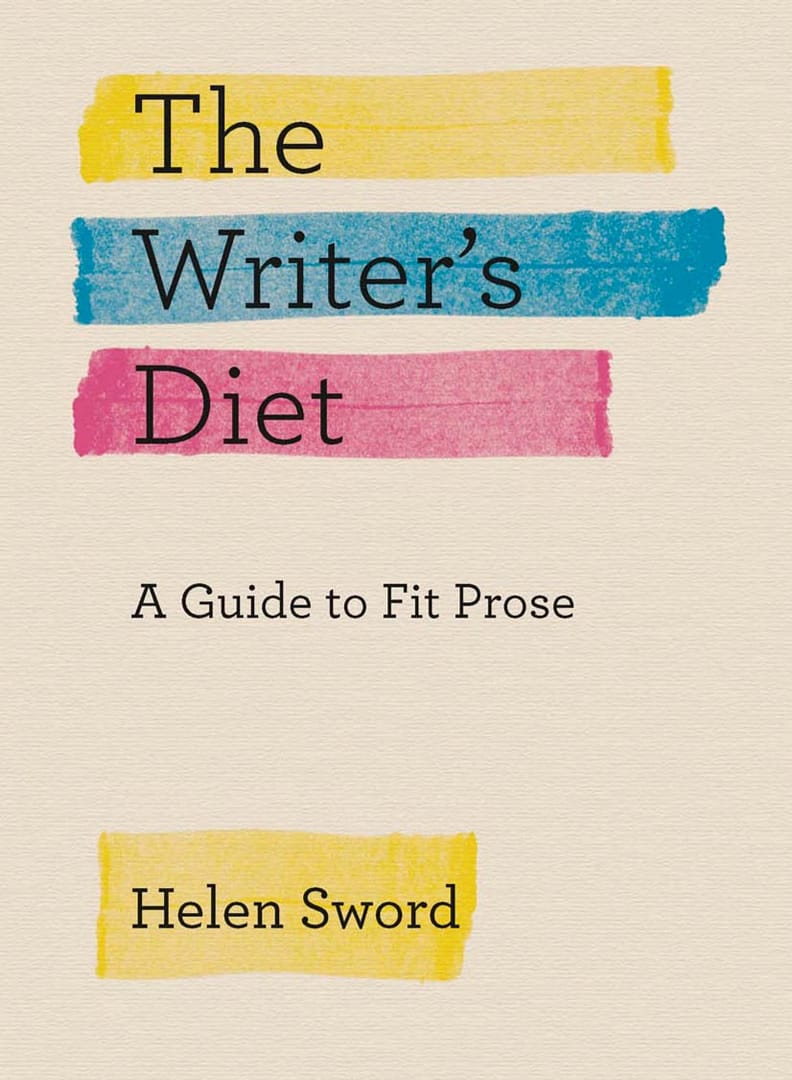
[00:36:10] Harriet: Well, first of all, thanks for that. I think books that can help us take a lighter look at the work that we do [unintelligible 00:36:15]. Thank you for that. I have two recommendations. The first one is a book called The Writers Diet. [inaudible 00:36:21] by Helen Sword. I picked this up when I started working on my book. I was a journalism majors and undergrad. I’m actually a pretty confident writer most of the time, but I was really looking to get even better. I somehow came across her work and it’s a very short book that helps us look at how we’re using language.
It was just a good refresher for me about writing in a tight lean way and trying to make sure that every word counts, and I think that was my intention going in. I wanted every word to count. This helped me, I think, take a more almost technical approach to doing that. She also has on her website, a sort of automated tool where you can put in a chunk of text and it will evaluate it. Are you using too many prepositions, too many adjectives, whatever? You have to look at that through the lens of your work and what you’re trying to say. It did help me see some different prepositions some that were used there to help me see some things that I could tighten up.
It really helped me develop my eye when I reread my own work. I recommend her work. I found it very helpful. Then the other something a little lighter. A little more fun is Do you know the singer Yola?
[00:37:30] Bonni: No.
[00:37:31] Harriet: She’s from the UK and she just has this amazing voice. She had her own band, and then I think did backup singing for some artists, some well-known artists, and then she connected with Dan Auerbach of the Black Keys and she recorded what I think was her second solo album, but it’s maybe the first one to really break solo album and she’s just amazing. She covers a lot of range. Sometimes she sounds pretty rootsy Americanaish and sometimes real bluesy, sometimes to me, it’s more like 60s soul. She just has this amazing voice, amazing range. Also, I’ll send you a video of her, the song that’s getting the most noticed is called Walk Through The Fire.
You can get a studio video for that. I’m doing a song in the studio and it’s just, it’s just amazing. That’s why music tip for today.
[00:38:23] Bonni: I love it. We haven’t had musical tips in a while and I love that. My kids are getting so into music now, most of which I can’t share with anyone because before they get in their pj’s, they’re all dancing around the room in their andies. It’s just stuff that only I can share but it’s just really fun when you’re as into music as I am and just to see what human bodies do when you just put music. You can’t choreograph that stuff. It’s awesome. It’s been a joy. I look forward to introducing Yola to them as well. Thank you.
[00:38:55] Harriet: She just got some Grammy nominations I think. You might be hearing more about her.
[00:38:59] Bonni: I was making sure I was spelling her name, right so I can see. The first three things that pop up, the top stories have to do with the Grammy Awards by the way. Well, Harriet, I’m so glad we got to have this conversation. I’m just thankful for your work. As I said, just throughout every page of your book, I was nodding my head and I feel like it’s one of those– I did tons of highlights. It was one of those books where I feel like I may have highlighted 50% of it, but I have a lot I can go back and continue to have your work shape what I do. Thank you for that and thank you for this conversation today. I’m looking forward to spreading the word about your book and having more people get it into their hands as well.
[00:39:35] Harriet: Thank you so much. It’s been really exciting to hear what parts of the book struck you and again just to hear that it resonates really. It means the world to me. Thank you very much. I hope we can talk again.
[music]
[00:39:48] Bonni: Harriet Schwartz. Thank you for coming on today’s episode of teaching in higher ed, and sharing about your book, Connected Teaching. Speaking of connected teaching, thanks to Chip Espinosa for connecting the two of us and introducing me to this vital theory. Thanks to all of you for listening. If you’ve been listening in for a while and enjoying the show, I’d really appreciate it if you use whatever service it is you listen to the podcast on, give it a rating or give it a review. It really helps other people discover the show. We are on episode number 287. Next week is going to be Episode 288 with Bryan Alexander. And after that, lots of great guests coming up. I just thank you so much for listening and being a part of the teaching in higher ed community. Thanks for listening and I’ll see you next time on Teaching in Higher Ed.
[music]
[00:40:41] [END OF AUDIO]
The transcript of this episode has been made possible through a financial contribution by the Association of College and University Educators (ACUE). ACUE is on a mission to ensure student success through quality instruction. In partnership with institutions of higher education nationwide, ACUE supports and credentials faculty members in the use of evidence-based teaching practices that drive student engagement, retention, and learning.
Teaching in Higher Ed transcripts are created using a combination of an automated transcription service and human beings. This text likely will not represent the precise, word-for-word conversation that was had. The accuracy of the transcripts will vary. The authoritative record of the Teaching in Higher Ed podcasts is contained in the audio file.