• Skip to primary navigation
  • Skip to main content
  • Skip to footer

Teaching in Higher Ed

  • Podcast
  • Blog
  • SPEAKING
  • Media
  • Recommendations
  • About
  • Contact
EPISODE 626

Naming the Urgency: Trauma-Informed Practices in Higher Ed

with Jeanie Tietjen

| June 11, 2026 | XFacebookLinkedInEmail

https://media.blubrry.com/teaching_in_higher_ed_faculty/content.blubrry.com/teaching_in_higher_ed_faculty/TIHE626.mp3

Podcast (tihe_podcast):

Play in new window | Download | Transcript

Subscribe: Apple Podcasts | Spotify | RSS | How do I listen to a podcast?

Jeanie Tietjen unpacks trauma-informed practices in higher ed and why naming itself is a form of teaching on episode 626 of the Teaching in Higher Ed podcast.

Quotes from the episode

There is still a very nascent and as yet relatively unarticulated understanding of how profoundly trauma, adversity, and violence adversely affect teaching and learning.

Naming goes so far back in, even just in literary terms, the importance of naming.
-Jeanie Tietjen

There is still a very nascent and as yet relatively unarticulated understanding of how profoundly trauma, adversity, and violence adversely affect teaching and learning.
-Jeanie Tietjen

Many students have experienced traumas that are situated in educational settings, bullying experiences that are identity-based, that profoundly shape how they feel about the educational setting as a place.
-Jeanie Tietjen

Learning is very vulnerable. It involves being wrong, failing, failing in front of other people.
-Jeanie Tietjen

Resources

  • Naming the Urgency: The Importance of Trauma-Informed Practices in Community Colleges, by Jeanie Tietjen (chapter)
  • Trauma Informed Pedagogies: A Guide for Responding to Crisis and Inequality in Higher Education, edited by Phyllis Thompson and Janice Carello
  • The Institute for Trauma, Adversity, and Resilience in Higher Education
  • Supporting the Whole Student: Mental Health, Substance Use, and Wellbeing in Higher Education (National Academies of Sciences, Engineering, and Medicine)
  • What Happened to You? Conversations on Trauma, Resilience, and Healing, by Bruce D. Perry and Oprah Winfrey
  • SAMHSA's 6 Guiding Principles to a Trauma-Informed Approach (infographic)
  • Mays Imad
  • Janice Carello
  • Bryan Dewsbury
  • Tracie Addy and PAITE (Personal Assessment of Inclusive Teaching for Effectiveness)
  • Education Northwest — research on trauma and attendance (Shannon Davidson)
  • Teaching Solidarity: Critical Race Reading, by Malini Johar Schueller
  • The Essential Gwendolyn Brooks
  • Episode 357: Sandie Morgan and Warren Doody on Elizabeth Leonard's interdisciplinary legacy
  • Bread and War: A Ukrainian Story of Food, Bravery and Hope, by Felicity Spector
  • Flour Power (Felicity Spector's Substack)
  • The Gap (Ira Glass), video by Daniel Sax on Vimeo
  • The Gap — PKM in Action, by Bonni Stachowiak
  • Poll Everywhere

ARE YOU ENJOYING THE SHOW?

REVIEW THE SHOW
SEND FEEDBACK

ON THIS EPISODE

Jeanie Tietjen

Founder & Director, Institute for Trauma; Professor of English, MassBay Community College

Dr. Jeanie Tietjen is Professor of English at MassBay Community College, and founded and directs the Institute for Trauma, Adversity, and Resilience in Higher Education.  The Institute promotes an understanding of the profound impact trauma and adversity have on academic resilience in higher education as well as how a strengths-based, trauma-informed campus and community support student success. She served on an 18-month consensus study “Supporting the Whole Student: Mental Health and Well-Being in Higher Education” with Washington D.C.’s National Academies of Sciences, Engineering, and Medicine, and contributed an article “Naming the Urgency: The Importance of Trauma-Informed Practices in Community Colleges” in the November 2022 edited collection on Trauma Informed Pedagogies: A Guide for Responding to Crisis and Inequality in Higher Education.  She earned her doctorate from the Department of English at Brandeis University in 2016, and her dissertation examined representations of excremental violence in Holocaust literature. She has taught for over 20 years in diverse settings: two- and four-year colleges, prisons and homeless shelters, residential treatment facility for adolescent girls.

Bonni Stachowiak

Bonni Stachowiak is dean of teaching and learning and professor of business and management at Vanguard University. She hosts Teaching in Higher Ed, a weekly podcast on the art and science of teaching with over five million downloads. Bonni holds a doctorate in Organizational Leadership and speaks widely on teaching, curiosity, digital pedagogy, and leadership. She often joins her husband, Dave, on his Coaching for Leaders podcast.

RECOMMENDATIONS

The Gap (Ira Glass), video by Daniel Sax on Vimeo

The Gap (Ira Glass), video by Daniel Sax on Vimeo

RECOMMENDED BY:Bonni Stachowiak
Bread and War: A Ukrainian Story of Food, Bravery and Hope, by Felicity Spector

Bread and War: A Ukrainian Story of Food, Bravery and Hope, by Felicity Spector

RECOMMENDED BY:Jeanie Tietjen
The Essential Gwendolyn Brooks

The Essential Gwendolyn Brooks

RECOMMENDED BY:Jeanie Tietjen
Woman sits at a desk, holding a sign that reads: "Show up for the work."

GET CONNECTED

JOIN OVER 4,000 EDUCATORS

Subscribe to the weekly email update and receive the most recent episode's show notes, as well as some other bonus resources.

Please enter your name.
Please enter a valid email address.
JOIN
Something went wrong. Please check your entries and try again.

Related Episodes

  • EPISODE 335Trauma-Informed Teaching and Learning
    Mays Imad Square

    with Mays Imad

  • EPISODE 372Equity-Centered Trauma-Informed Education

    with Alex Venet

  • EPISODE 363Evidence-Based Teaching Practices
    Phil Newton

    with Phil Newton

  • EPISODE 224An Urgency of Teachers

    with , Sean Michael Morris, Jesse Stommel


EPISODE 626

Naming the Urgency: Trauma-Informed Practices in Higher Ed

DOWNLOAD TRANSCRIPT

EPISODE 626: Naming the Urgency: Trauma-Informed Practices in Higher Ed

Bonni Stachowiak [00:00:00]:

Today on episode number 626 of the Teaching in Higher Ed podcast, Naming the Urgency: The Importance of Trauma-Informed Practices in Higher Education, with Jeanie Tietjen.

Bonni Stachowiak [00:00:17]:

Production Credit: Produced by Innovate Learning, Maximizing Human Potential. 

Bonni Stachowiak [00:00:25]:

Welcome to this episode of Teaching in Higher Ed. Hi, I’m Bonni Stachowiak, and this is the space where we explore the art and science of being more effective at facilitating learning. We also share ways to improve our productivity approaches so we can have more peace in our lives and be even more present for our students. My guest today has spent decades teaching across a wide variety of different contexts. Jeanie is a Professor of English at MassBay Community College, where she also founded and directs the Institute for Trauma, Adversity, and Resilience in Higher Education. She served on a National Academies of Science consensus study on mental health and well-being in Higher Education, and contributed to the edited collection Trauma-Informed Pedagogies: A Guide for Responding to Crisis and Inequality in Higher Education. In our conversation, as you’ll hear, she gets to what does it mean to name things? Trauma, adversity, systemic violence, and why the act of naming itself is a form of practice? She shares why trauma-informed teaching is less about individual deficits and far more about understanding how learning itself is a vulnerable process, and as we explored what it looks like practically, how syllabi policies, attendance structures, even what we call office hours, can either reinforce harms or open up possibilities.

Bonni Stachowiak [00:02:11]:

Jeanie Tietjen, welcome to Teaching in Higher Ed.

Jeanie Tietjen [00:02:15]:

Thank you. It is so wonderful to be here, and I really am so appreciative of you and your guests over the years, and all you have contributed to ongoing innovation and practices in teaching in higher ed.

Bonni Stachowiak [00:02:29]:

I’ve already had such a delightful time getting to know each other a little bit, and you and I share something in common, and that is a last name that for some is hard to pronounce. Now you’ve taught me, and you’re about to teach the listeners how to pronounce it, but mine has been one of the worst pronunciations was in the grocery store as I was checking out and they went to hand me the receipt. They don’t do this anymore, by the way. Not just to me, but it seems this is not a thing anymore. But for a while, I think they really wanted to use people’s names, so I was Mrs. Sasquatch for that day. So, and for listeners that are brand new to the podcast, that is not how you pronounce my last name, but yours is much easier to learn and also ties in with part of your identity. Would you teach us how to pronounce your last name and tell us how it relates to you and your life?

Jeanie Tietjen [00:03:19]:

Absolutely. So my last name is Tietjen, and it is destiny in a name, because an easy way to pronounce it, it’s Danish in its origin, and then my father’s people moved throughout northern Germany, and then they came to the United States. And so, if you think about Tietjen and you drop and you think about what I do, which is teaching, and you drop the g, Teachin and my name Tietjen sit side by side. So it’s a really easy way to remember. And, I think it’s very fitting because I’ve been teaching for almost 30 years, and when I say teaching, I have taught in so many different types of settings, from traditional colleges and universities like UMass Amherst, Brandeis University, as a PhD student, and now teaching for almost 16 years, the longest I’ve taught anywhere, which is at a community college. But I’ve also taught in homeless shelters for women as part of the Government Arts Project. I’ve taught in a correctional treatment facility or a prison, also for women in the D.C. area.

Jeanie Tietjen [00:04:28]:

I’ve taught with English language learners, both in the United States and overseas. And so I’ve been teaching in many different ways for many, many years. And I come from a family of educators. And it is so gratifying to be able to be in a profession where I regularly see individuals transform their lives, and in my case, as a community college instructor, I see them transform the lives of their families and of their children. And it is a profound pleasure, and it regenerates every semester. What an honor and a privilege it is to be with people at that moment in their lives. So, Teachin’ drop the g, and you got me.

Bonni Stachowiak [00:05:18]:

I’m fascinated by words and by word choices. And you contributed a piece to an edited collection called Naming the Urgency: The Importance of Trauma-Informed Practices in Community Colleges. Let’s start by talking about the process of naming things. How might you characterize the act of naming things in terms of its role that it might play?

Jeanie Tietjen [00:05:44]:

Naming goes so far back in, even just in literary terms, the importance of naming. And if you think about, if you have children or when you are trying to come up with, let’s say, especially as a first-time parent, and you are coming up with what is the name. There’s so much significance and embodied significance in ordinary terms in how we come up with names. And in the context of higher education and in the context of trauma-informed community colleges, that article was written during the pandemic, and or, you know, in many ways, we’re still very much living the outcome and the ramifications of the pandemic. But higher education as an institution, while it’s an extraordinary site of transformation that in the last 50 years has changed in terms of access for historically marginalized or excluded populations, at the same time, is a deeply exclusive endeavor. And it is a gatekeeping industry at its bones. It is really important to name that, ways in which the institution of higher education has been constructed at the level of systems. So even transcending the role and the experiences of individuals at the level of systems, policies, practices, think about the admissions process overall, the choosing, and all the criteria that go into that, the legacy factors.

Jeanie Tietjen [00:07:23]:

When we think about naming trauma with regards to higher education, it has not yet been sufficiently named. And I get in conversations with people a lot because, you know, actually trauma-informed really is less about focusing on injury and on adversity, and on all the terrible things that humans do to one another. And it’s actually much more focused on transformation and the many, many, many ways every day we have neurobiologically reinforced opportunities to build teaching and learning, to build relationships. But the reason that I used naming the urgency, in the context of that article, is because there is still a very nascent and as yet relatively unarticulated in terms of the general landscape, understanding of how profoundly trauma, adversity, and violence adversely affect teaching and learning. And it’s, you know, there’s tons of research now coming out, and there’s been a lot of changes, but I still feel very much that that’s the case. That, you know, and I remember when trauma-informed higher education is relatively new to higher education, and we can talk more about how that has evolved. But it’s been around in K12 for over 30 years, and it came about in California, in the state of Washington, and also in Massachusetts, where I am. And when I started teaching at MassBay Community College in 2009, I teach a five-course load, which is typical for community college faculty in the context of a college writing course. That’s a lot of students.

Jeanie Tietjen [00:09:06]:

A very typical on-ramp for community college students for college writing classes in community colleges, four-year colleges, and universities across the nation, is to write a narrative and descriptive essay in which first-time students just sort of finding their legs in terms of their academic identity. They take something about which they know, their own experiences, so name an important role model, or a significant experience that changed how you think about something, and that using that literacy about your own experiences, but combining it with a concept or an idea like resilience that is larger than yourself, is an exercise that is used by college writing instructors across the country. I was really struck by how, in the context of that first semester, I had students who were representing in really high proportions, so in a class of 24 students. It was average between 17 and 21 students per class were electing to represent, typically not just one traumatic experience, like the murder of a family member, but they were representing that in the context of multiple intersecting experiences, such as political violence, and family displacement, and mental health concerns. And so I started asking myself, what is it about this class, and what is it about the process of narrative, and what is it about a college writing classroom that is that students are representing this experience? Even with all these buffers in place, you can’t write about something that’s so raw. You have to share this. It has to be something that you feel that can be graded.

Jeanie Tietjen [00:10:54]:

You have to understand it’s part of a classroom assignment where we’re learning about narration and descriptive, and how to use specific versus concrete language, all of these nuts and bolts. Yet with all those advisements in place, and typically, you know, as we’re all just getting to know one another, students are disclosing these really powerful stories about their lives. So what does that mean for me as a writing instructor? How do I grade it for one when someone is pouring their, you know, lived experience on the page? And why is it that almost every one of those narratives concludes with, while I wouldn’t wish this experience on anyone, it has created such strength and insight for me that I believe in my own resilience in ways that I didn’t before it happened. And so, what are the pedagogical issues that come up for me? And so, because there wasn’t a ton of stuff in higher education that I could find at that time. And trauma-informed in higher education was happening in pockets like Mesa Mod out at then, then at Pima Community College in Tucson, Arizona, Janice Carrello, who did some of the first and most important work on what it means to do trauma-informed teaching, and what trauma-informed pedagogies look like. But there was very little.

Jeanie Tietjen [00:12:11]:

And so I actually reached out to trauma-sensitive schools and the Trauma and Learning Policy Institute in Massachusetts, because they had very articulated frameworks on what trauma-informed pedagogies, and policies, and practices across the educational community writ large, from frontline faculty and staff to executive leadership. And it was K12 that put this concept of trauma-informed education on the map. And so for me, it’s really critical that until higher education as a nationwide culture really forefronts and recognizes and understands how profoundly learning is compromised, how profoundly teaching and learning together are compromised, that the educational alliance is both dramatically affected by systemic poverty, by systemic violence and racism, by experiences of individual and familial and community violence, that all of these. It’s not like students graduate at the age of 18 and leave their secondary schools and come to college with a blank slate. That is not the case at all. And in fact, many students have experienced traumas that are situated in educational settings, bullying experiences that are identity-based, that profoundly shape how they feel about the educational setting as a place. Look, learning is very vulnerable. It involves being wrong, failing, failing in front of other people.

Jeanie Tietjen [00:13:54]:

And so to be able to feel neurobiologically that you are under threat, that this is not a safe place, is enormously consequential. And higher education is doing more and more research that is naming that, through looking at adverse childhood experiences and student persistence, adverse childhood experiences and substance use and mental health, and how that ultimately affects academic resilience and persistence. In a nutshell, when higher education finally names and acknowledges profoundly how deeply trauma, adversity, and violence impact student lives and student readiness to learn, but also we ourselves, as educators, as faculty and staff, and as communities that are compromised by institutional histories of inequity and gatekeeping and exclusionary policies and elitism, that we inherit these worlds. We didn’t ask for them; we inherit these things, and they have a dramatic impact. And once we, once, I just speaking for myself, feel like that’s been sufficiently named, at that point, I think we can then shift to only talking about resilience strategies. But until that time, I feel like we need both. So, yeah.

Bonni Stachowiak [00:15:12]:

Tell us more, you talked about the K12 and some of the ways in which their research efforts have surpassed the ones that might have come out from higher education. And I’d like you to expand a little bit more about some of the ways in which the body of research looks at how trauma impacts things like attention, self-regulation, stress management, and interpersonal skills. I know we could be talking for hours and hours and just be getting started, but for today, where we sit together talking, what are some themes or things that you’d really want people to be aware of around those broad areas?

Jeanie Tietjen [00:15:50]:

Absolutely. So again, I’m speaking to Massachusetts in particular, but this was happening around the nation, so in roundabout, the time that the adverse childhood experiences came out in the late 90s. And so there was an escalating consciousness in Public Health. And the CDC has since adopted the Adverse Childhood Experiences Study that looks at behaviors, including so specific to higher education, I’ll point to some of those behaviors, that looks at behaviors, and asks not what’s wrong with the individual, but what is happening for the individual, such that these behaviors are the best they can do in the moment. And to look at these behaviors. And that has shifted. And so Bruce Perry’s and Oprah Winfrey’s book What Happened to You continues that conversation. And in terms of K12, they, in Massachusetts, when it was called an expulsion crisis in the late 90s, and rules and regulations had changed at the policy level about how kids with acting out behaviors in the classroom, swearing at other kids, striking out behaviors, tantrums, things like that, how acting out behaviors were resulting in just suddenly epic numbers of kids being suspended or expelled.

Jeanie Tietjen [00:17:10]:

And so educators, parents, Mass Advocates for Children, the Disability Law Center at Harvard, they put their heads together, like, ” What the heck is happening that all these kids are suddenly misbehaving?” And so they looked at things like all the demographic factors, they looked at socioeconomics, they looked at all of these things, and what they found was the common denominator was experiences of trauma, and that trauma was directly correlated. And so out of that, Massachusetts and the Trauma and Learning Policy Institute developed a flexible framework that reinterprets and reframes the kinds of dysregulated behaviors that result in poor academic outcomes for K12, and says, let’s better understand what is driving those behaviors. And in doing so, we can shift our pedagogies and interventions. And so K12 has been doing extraordinary work in what does it mean to do trauma-informed at the level of kindergarten? And to help kids understand that they have the right to safe and supportive environments and how that matters in terms of. So, how does this evolve to higher education? Because largely in higher education, we aren’t seeing students strike one another over the head or swear out their professors or things like this. What we are seeing are behaviors that are on the other side, also a trauma adaptation. Those fighting behaviors, those acting out behaviors that we see K12 are often examples of hyperarousal. But what fell under the radar is the hypoarousal, the level of disengagement, the ways in which students could pass under the radar, and because they didn’t create trouble in the classroom, were sometimes promoted from grade to grade without necessarily having the competencies, and so learned that if they just retreat and become quiet and disengage in the classroom, that that somehow helps them survive academically. And so what became adaptive behaviors, K12, that wasn’t really talked about very much early on.

Jeanie Tietjen [00:19:35]:

Those maladaptive behaviors become quickly even more maladaptive in a post-secondary setting, where you’re expected to articulate questions, to actively contribute, and to attend your classes and things like that. A really fantastic group called Education Northwest was one of the first, Shannon Davidson in 2017, I believe, to list out some of the behaviors that are correlated with experiences of trauma and of managing trauma, adversity, and violence. And the behaviors are very common behaviors. Problems with attendance, spacing out in class, difficulty concentrating, lack of emotional regulation, especially around stressful situations like test-taking or presenting in class. All of these ordinary practices and ordinary expectations in higher education, so many students have developed strategies for coping with them that become maladaptive in the post-secondary setting. And so in fact, the trauma coping mechanisms that we see in post-secondary education are typically those that fall on the hypoarousal or the other side. But they’re equally, neuroscience tells us, brain science tells us, clinicians tell us, researchers tell us, that is a form of coping, and it’s a form of trying to manage the dysregulating effects of poverty, of violence, of experiences of interpersonal stress, you know, all of these things of toxic stress.

Jeanie Tietjen [00:21:16]:

And so, you know, it’s a trajectory that goes, that should really go K to 16, K to 18. And a lot of people are now looking at how it affects the workforce. Same issues, attendance, levels of engagement, stress management, ability to form boundaried and productive relationships. So, you know, in terms of how we’re seeing it and why it matters in higher education, it’s because without understanding some of the problems and problematic behaviors in higher education, the exclusive sort of gatekeeping response is, well, what’s the matter with these students of today? How come they can’t fill in the blank? Back in my day, fill in the blank, right? What does it mean to reframe that and to say, actually, these motivated students who are committing time, resources, and a lot of dreams the first day of class, you see it on their faces. The hope, the anticipation, the nervousness, the anxiety around pursuing whatever their dreams are in the context of their college education, all of these things, reframing those problematic behaviors that nobody wants, reframing procrastination, reframing these things as these are a student’s best ways of coping that have been adapted for them many, many years prior, but they are no longer adaptive and point to the necessity of developing new strategies for managing stress, new strategies for becoming overwhelmed. So I think I lost a little bit track of what the question was, but…

Bonni Stachowiak [00:22:59]:

Speaking of questions, I’m going to ask you a totally unfair question for my final question. And by unfair, I mean because it’s, we’ve covered, you’ve already shared so much, and before we get to the recommendations, just wanted to invite you to think about small ways to shrink down what approaches we might have as educators. Yesterday I was in a session with Tracie Addy and some of her colleagues. They are doing research, looking at an observation protocol that can be used with lots of different strategies you could use in your class, from using students’ names to diversifying the media that you might use to represent ideas and things like that.

Bonni Stachowiak [00:23:43]:

I’m naming one of like 15 different things that they look at, but they emphasized, in this session, such a good reminder for us all that yes, of course, this particular body of research is looking at historically marginalized populations, but there’s this wonderful spillover effect that means it can benefit all students when we, when we strategize that way. Are there things that come to your mind that are maybe more practical things that we could do to be able to better have systems and structures set up? That may not feel quite as overwhelming? Sometimes we make these things bigger than they are, and then we stay stuck where we are, you know?

Jeanie Tietjen [00:24:25]:

Absolutely, absolutely. And thank you for asking that question, and thanks for getting back to the practical, because that’s where the magic is, right? It’s where the magic is that we see every day in K12. And to begin with, trauma-informed is equity-centered. When we talk about trauma-informed pedagogies, it is an additional practice and an additional lens. And the best way to understand it and the best way that trauma-informed scholars and practitioners talk about it, is it’s a lens through which to regard the practices that you already do, and the things that you know that are so successful and that are very, very- result in positive experiences of teaching and learning. And it’s not about diagnosing students, let me be clear, or having to understand what, oh well, this Student has an ACEs score of, or this student really struggles with housing insecurity, as do 8% of the college students in America, who have experienced homelessness in the last year. 

Jeanie Tietjen [00:25:28]:

Our job, to use your word, overwhelming; it is overwhelming to think about the many, many obstacles that individuals are facing, students, but also faculty and staff, administrators, and executive leadership. So it’s about adding to our toolkits rather than replacing or somehow invalidating what we have. And it’s the ordinary practices and what ordinary people come up with when they understand some of the basic science that creates so much amazing work every day, most of which is unseen. Which is why podcasts like yours are so valuable, because it asks us, what does it look like practically? So, what does it look like practically? Some of the practices, it looks at how we form. One of the things that we know about the brain is that it’s a predictive instrument. And so the more that the brain can say, ” Yep, I understand what the person who wears that uniform, or what the person whose voice sounds like this, or the person who stands in front of the classroom”, the more our brains function predictably. And they’re geared towards identifying what’s threatening and what makes us feel safe, and so using that as a superpower. Predictability is a container for scaffolding academic rigor, difficult things, the challenges, the things that are positive, stressors that build teaching and learning in our classrooms, no matter what the subjects or even what the level is.

Jeanie Tietjen [00:27:01]:

But predictability, what does it look like? Does that mean we never challenge our students? Absolutely not. Does that mean that we can never have surprise quizzes? Absolutely not. Predictability means that you execute, that you manage, that you manage your classrooms in such ways that there’s a certain level of predictability about how things go, how we speak to one another, how you reach out to your professor. Are there clear avenues of communication that are regularly posted in the syllabus, in the learning software, face to face renaming? And this is Bryan Dewsbury, I might be getting his name wrong, I apologize, renamed office hours, which is often confusing for students, especially those standing at the threshold of an office watching a professor work, renaming them to student hours.

Jeanie Tietjen [00:27:54]:

That there are so many ways in which we create calmer, more regulated learning environments by deploying practices that say, there’s a certain amount of how we run this class every time that it’s predictable. We’ll start by talking about what are the objectives? And we’ll close by saying, what are three suggestions that we have? What are three takeaways? And educators know these practices. Looking at attendance policies and late work policies through the lens, trauma-informed educational practices are proactive rather than reactive. So the reactive approach is, a student exceeds the number of absences, right? Or student turns in late work on a regular enough basis. And the reaction is, well, what’s wrong with this student? The reaction is, how do I respond? How can I be fair? How can I possibly evaluate this, given that the student turned it in two weeks late, whatever the case may be? And being proactive means having an approach that looks at the very many factors that might interfere with regular and consistent attendance in class, acknowledging them, normalizing them as part of the toolkit for getting ahead in higher education for students. So things like housing insecurity, food insecurity, mental health, and struggles with mental health, childcare, transportation, putting those in your syllabus, normalizing them as part of the academic experience, this is part of the stress that you’ll face, and then building that in.

Jeanie Tietjen [00:29:31]:

And so in my classes, we look at attendance policy first by looking at what do we mean by being on time, right? Because it varies according to cultures. And so we look at that, and then we talk about how does it affect a professor when a student comes in late? How does it affect other students in the class? How does it make that student feel? How does it make a student feel when a professor comes in late to class? And it all comes back to respect. As a writing instructor, one of the practices that I do is I have us talk about this, their first writing assignment, which is a diagnostic. They look at this, and then we share it and discuss it, and only then do we finalize the attendance policy. And so I borrowed this attendance policy and late work policy from Janice Carrello. And the policy is that students have an automatic grace period for turning in work late. And so I’m constantly modifying and changing it. And I know a lot of my colleagues do the same.

Jeanie Tietjen [00:30:32]:

But building in this space for negotiation and communication around what to do if something comes up, what if your kid gets sick? If you’re struggling with a health issue yourself, building it in. So this is like you should expect that these stressors are going to happen. And it doesn’t mean you don’t belong here, and it doesn’t mean you are not a successful student. Let’s be proactive about building in skills to do this. And so, for example, in my class, students can get an automatic extension up until the beginning of the next class. Usually, my classes meet twice a week or three times a week, and they get an automatic extension just by emailing me. They don’t have to tell me why. They don’t have to spill their guts.

Jeanie Tietjen [00:31:17]:

They don’t have to make up that their grandma died three times in one semester or any other authenticating thing that comes to mind. Instead, we build in this mechanism that gives them extra time, and then they have that additional extended time built in. And if they turn it in, that piece of writing, in my case, or that assignment is assessed just like any other, and follows the same rubric and the same assessment criteria. If the student doesn’t meet that extended deadline, and if that student has not reached out to me as a professor to set up another deadline, then that grade, and again, this is Janice Carello’s great idea, can earn no higher than a B. And what that does is it creates a parody around the currency of higher education, which is grades, so that students who are turning in their work on time or do meet that extended deadline or do make those arrangements with their professor, because we all come late to meetings. That setting in this proactively makes us less reactive in the moment and sets up this realistic framework or container that understands the very real stressors and yet also prioritizes problem-solving and prioritizing the work that we have to do in higher education. There’s so many other wonderful strategies that exist.

Bonni Stachowiak [00:32:48]:

I told you it was going to be an impossible question.

Jeanie Tietjen [00:32:52]:

But I really so much appreciate that you’re bringing it to the practical because that is where it happens, and that’s where students see it and feel it. And it doesn’t really matter that you would call it trauma-informed or equity-centered. I had a student who became a trauma research intern because she noticed that these flip desk chairs that were in many of our classrooms excluded so many bodies and so many sizes of bodies, particularly larger bodies, and so many levels of mobility, and that it effectively. And so she walked into my office, and she said, Jeanie, those chairs that are in so many of our classrooms are not trauma-informed, they’re not equity-centered, they’re not universal design. What can we do about that? And then she did her semester-long research on trauma-informed chair design. And brought that before our board of trustees, who then decided in their strategic priorities that they needed to devote resources to getting rid of these one-armed, flip-over desk chairs that belong to only a certain specific kind of body and level of mobility, and instead changed. And the students hosted a chair fair, which is, the vendors donated all these chairs and tables, and people filled out, oh, this chair is great, or this chair moves too much or whatever. We collected that data, students collected that data, and then that informed what chairs the college ultimately bought. And it was expensive.

Jeanie Tietjen [00:34:30]:

Like, we still haven’t replaced them all. But my point is this student, in very ordinary ways, looked at the very physicality of being in the class through a trauma-informed lens and said what can we do about this? And trauma-informed educational practices are just good teaching. And that is the exciting opportunity that is available to all of us. And it is a growth period. There’s so much room at the table at every level for change and transformation that is responsive to the very real obstacles that students/educators face.

Bonni Stachowiak [00:35:12]:

Before I get to the recommendations segment, I wanted to take a moment to thank Poll Everywhere for your partnership with Teaching in Higher Ed. And I wanted to share a tip, as usual. This one’s going to sound depressing, and it is sad, because past guest and dear friend Rob Park, he and Jackie, his wife, were over the other night, and I was telling them that I still get sad all these years later thinking about how close they were with their dog, and their dog passed away many years ago. And he actually told me that he uses Poll Everywhere. And I’ve talked about this tip before, where you have different tappable segments of it. I use the example of the Muppets, where you could say, what kind of Muppet are you feeling like today? Some of you have seen that cat one, where it’s which kind of cat are you today? And he has one with pictures of their sweet, sweet pup. And, he said it just brings so much of a personal touch into the classroom and really introduces him. And of course, he’s vulnerable to mention.

Bonni Stachowiak [00:36:18]:

He says he doesn’t belabor it. But yes, of course, mentions missing the dog a lot. And it’s just great. Whenever we can bring in our own life experiences, our personalities, dare I say, our humanness into these types of ways of bringing technology. And it can be so wonderful. So I’m going to suggest to you, get a photo that you have or think about, maybe some movies that are popular, or music, or that kind of thing, and let students weigh in in a personal way. And also do that check-in. We are talking today about trauma-informed practices, and a very, very small move that we all can make is just to check in and see how people are doing. And this can be sometimes a fun, sometimes a heartwarming, but an important way to get a chance just to check in and see how.

Bonni Stachowiak [00:37:11]:

And Poll Everywhere makes a great way to do that. Thanks again to Poll Everywhere for your partnership and for making such a wonderful tool to help us engage with students. This is the time in the show where we each get to share our recommendations. And mine is a video that I jokingly said online, I’ve probably watched 4,000 times. But it’s one of those that, it’s very short, I think it’s just a couple of minutes. But it’s so representative to me of what holds us back sometimes. And I’ve been thinking a lot, not just about the conversations that we have in higher education about learning, but also the ones that we’re not having. This is, of course, inspired by so many people.

Bonni Stachowiak [00:37:55]:

I could just be naming people for the rest of the episode, and just be getting started. But I think especially with some of the polarizing conversations we’re having about artificial intelligence’s impact in higher education, how polarizing that can be. And I’m really enjoying those colleagues who are taking up some of the space there to say: I’m really curious about this thing over here because this thing over here isn’t really being talked about very much versus, you know, jumping right into one side extreme or another. I just, I find that, I find that something that I would like to honor about people, when their curiosity takes them to those places. So what this is about is, broadly speaking, it’s about how we can be held back from growth, we can be held back from learning, and we’re thinking it’s often described as a gap. So the post that I’m going to recommend is something that I penned after being part of Harold Jarche’s Personal Knowledge Mastery Workshop last year. And in this post is the video I’d like to recommend. But I think about myself, what holds me back when I have a gap in my own learning, or something that I would like to pursue?

Bonni Stachowiak [00:39:07]:

And then I see it in all sorts of different spaces in colleagues, I see it in students. And a lot of times when we think about that gap, we can go back and have all sorts of factors we might think about, and maybe we think about, you know, what happened to them previously in their educational experiences. We might have, I’ll say this politely, less than an asset-based thinking mindset about them as human beings. But one that I don’t really see being very, very much talked about, and I’m super curious about this, and very intrigued about it, is what Ira Glass, and Ira Glass, for those not familiar, a beautiful audio storyteller. He was the founder of a very popular podcast called This American Life. So there’s a video of him describing this gap, and he talks about one of the things that holds us back is that we just don’t, we haven’t really yet figured out that, you don’t go from not being good at something to being good at it, that there’s actually a lot of practice that has to happen along the way and a lot of work and labor and effort and failure and all that. But he talks about something that he calls taste.

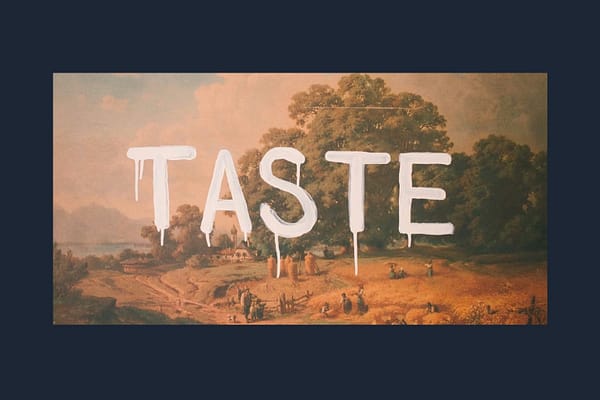
Bonni Stachowiak [00:40:20]:

And so what is it about that thing that I like, or I don’t like? And that taste as a way toward growth is very intriguing to me. And I, I listened to a podcast that Jeff Young does, and he was interviewing students who had designed chairs using, partially using artificial intelligence, that was the thing. And I heard them talking about it, I’m thinking about engineering skills and, and that, what does it take to design a chair? Yes, in this particular instance, partially assisted by AI. But what they were really talking about was taste.

Bonni Stachowiak [00:40:57]:

And taste on the way toward learning and growth is just something that’s really been intriguing. Even if you don’t, you’re not interested in thinking about gaps in our learning or things that hold us back. I have to just say this is a gorgeous video, because someone by the name of Daniel Sachs took this clip of Ira Glass talking about the gap, and he made the most beautiful tapestry of visuals that go along with his words. It starts out with an old-fashioned printing press, and it reminded me of when I was young, my mom went teach us how to create stamps, but it was instead with potatoes. And we’d cut out the potatoes and get to do these stamps. And so it’s just, it’s marvelous how it just draws you in. It’s very visually appealing across lots of different mediums and contexts.

Bonni Stachowiak [00:41:43]:

So I’ve, I’ve said too much already. But again, I’m going to recommend that you might go and read my post thinking about personal knowledge management or personal knowledge mastery in action around this idea of the gap. And then also the video The Gap by Ira Glass, and the video designed by Daniel Sacks. It is a gorgeous, gorgeous piece of video and a very short watch, I might add. And so I get to now pass it over to you for whatever you’d like to recommend.

Jeanie Tietjen [00:42:10]:

Thank you for those recommendations. As soon as we sign off here, I know what I’m gonna do.

Bonni Stachowiak [00:42:17]:

Wait a minute, though. You told me you’re on a deadline. Do you have to save it as a reward for after you like? Okay, I’m going to write the next hundred, however many words, and then I’ll allow myself to go watch the two-minute video.

Jeanie Tietjen [00:42:30]:

That’s how we do it, right? That’s how we do it. I’m fascinated by this, by your bringing up taste and how often that it’s just such a powerful driver at every level of our lives. And actually, one of the things that I’ve been going to recently has to do with taste. And it’s a podcast and a blog by a woman named Felicity Spector, and it’s called Flower Power, as in the stuff you make cookies and cakes with. And it’s stories of food and resistance in wartime Ukraine. And as with so much that has to do with the human community that is struggling forces beyond our control, there’s so much within our control that this Felicity Spector shares recipes, follows the stories of individual bakers, cafe owners, bar owners, groups of individuals who regularly make hundreds of loaves of bread, and drive them out to the front lines in places like Kyiv and Kherson and all of these places. And it is just so powerful. And when we think about taste, I love so much that it has this essential power, that is partly that feels embodied, that feels like, you know, I have this response to something in a strong way.

Jeanie Tietjen [00:44:00]:

And so I love that. So that was one of mine. I have so many. But another one, and one that I often close my talks on, is a poem, and I’ll close with that. But I really do have to thank and give honor to my fellow colleagues and scholars working in this space in trauma-informed higher education. And most especially important to me, Mays Imad and Janice Carello and another trauma-informed scholar, colleague, and practitioner, Phyllis Thompson, put together a toolkit that is put in a book called Trauma Informed Pedagogies: A Guide for Responding to Crisis and Inequality in Higher Education. The way they put it together is, it’s an edited collection of essays about various things that respond to trauma-informed higher education. And at the end, there’s a toolkit of all these practices, right? What it looks like in your attendance policy, what it looks like, you know, in how you build your online classes.

Jeanie Tietjen [00:45:07]:

And so I really, really recommend that folks grab a copy of that because it is so accessible, kind of no matter where you open the book. And then, as someone who is an English major at the end of the day myself, I think a lot about the transformative power of words. To transform our lives, to speak for ourselves and to speak across time, to represent those who have come before us, to speak into future generations. And so the great Gwendolyn Brooks, the poet from the Chicago area, who was a Pulitzer Prize winner, I believe, the first black woman to win a Pulitzer Prize in literature. She has this beautiful tribute and a poem from 1970, and it’s a tribute to Paul Robeson, and the poem closes with a series of four lines that really, really guide me and give me a lot of strength. And she says, and I’ll read it so that I don’t mess it up: We are each other’s harvest. We are each other’s business. We are each other’s magnitude. And bond.

Bonni Stachowiak [00:46:23]:

Will you read it one more time?

Jeanie Tietjen [00:46:24]:

Sure. We are each other’s harvest. We are each other’s business. We are each other’s magnitude, and bond.

Bonni Stachowiak [00:46:33]:

Gorgeous. Thank you so much.

Jeanie Tietjen [00:46:35]:

Yeah, she should have been a guest on your podcast. She would have been so much more incisive.

Bonni Stachowiak [00:46:41]:

Thank you so much for this generous conversation. It’s been delightful to get to know you a little bit and hear about your work, and the ways in which your head, heart, and hands are aligned toward doing this work and collaboration. It’s fun to hear you celebrate these people who have shaped you and are shaping others’ lives, too. And to hear about your teaching. And I’ll never forget how to pronounce your name. This will never be a problematic name for me to come back to. Thank you again for today’s conversation.

Jeanie Tietjen [00:47:12]:

Thank you so much. Thank you.

Bonni Stachowiak [00:47:17]:

Thanks once again to Jeanie Tietjen for joining me for today’s Episode. Today’s Episode was produced by me, Bonni Stachowiak. It was edited by the ever-talented Andrew Kroeger. And if you want to not have to remember to go download the episode’s show notes, and I can almost guarantee you this one’s gonna be a great one, full of lots of resources. I encourage you to sign up for the weekly Teaching in Higher Ed update. You can head over to teachinginhighered.com/subscribe. You’ll receive the most recent episode’s show notes, as well as a bunch of resources that go above and beyond.

Bonni Stachowiak [00:47:57]:

Thanks so much for listening, and I’ll see you next time on Teaching in Higher Ed.

Expand Transcript Text

TOOLS

  • Blog
  • Podcast
  • Community
  • Weekly Update

RESOURCES

  • Recommendations
  • EdTech Essentials Guide
  • The Productive Online Professor
  • How to Listen to Podcasts

Subscribe to Podcast

Apple PodcastsSpotifyAndroidby EmailRSSMore Subscribe Options

ABOUT

  • Bonni Stachowiak
  • Speaking + Workshops
  • Podcast FAQs
  • Media Kit
  • Lilly Conferences Partnership

CONTACT

  • Get in Touch
  • Support the Podcast
  • Sponsorship
  • Privacy Policy

CONNECT

  • LinkedIn
  • Instagram
  • RSS

CC BY-NC-SA 4.0 Teaching in Higher Ed | Designed by Anchored Design