Follow the Teaching in Higher Ed Podcast
About this Episode
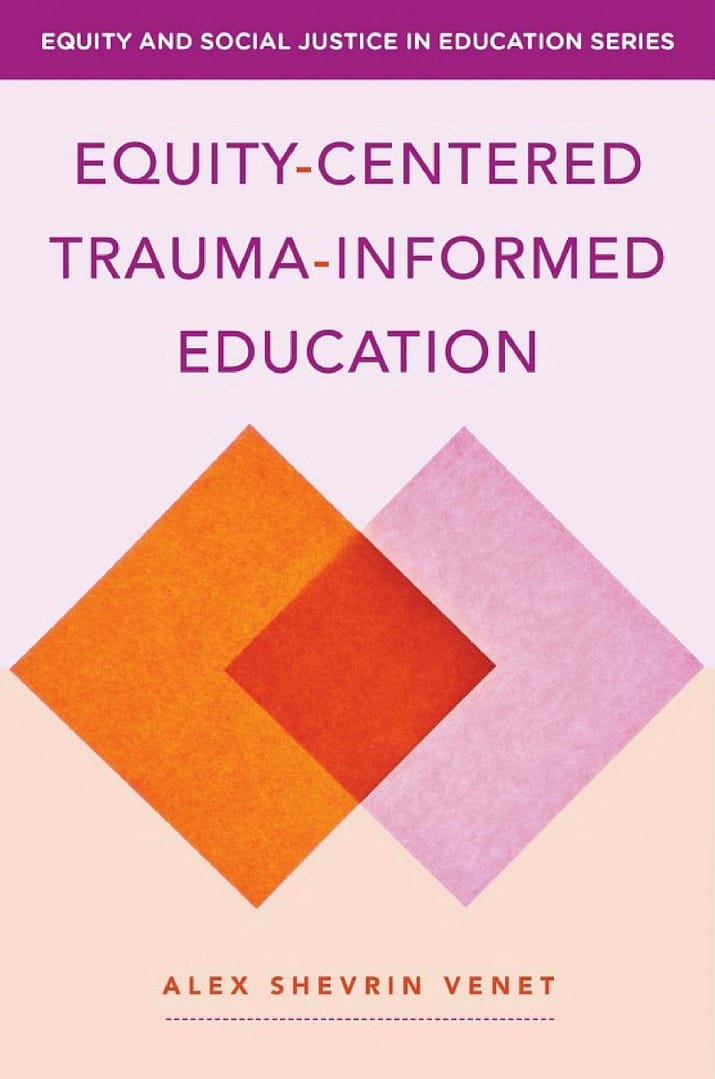
Alex Shevrin Venet talks about her book, Equity-Centered Trauma-Informed Education on episode 372 of the Teaching in Higher Ed podcast.
The way we understand trauma is always changing.
Alex Shevrin Venet
On episode 372 of Teaching in Higher Ed
Voices on this Episode


Show Notes + Resources
Recommendations from this Episode
Transcript
[00:00:00] Bonni Stachowiak: Today on episode number 372 of the Teaching In Higher Ed Podcast, Alex Shevrin Venet joins me to speak about Equity-Centered Trauma-Informed education.
[00:00:16] Production Credit: Produced by Innovate Learning: Maximizing human potential.
[00:00:25] Bonni: Welcome to this episode of Teaching In Higher Ed, I’m, Bonni Stachowiak, and this is the space where we explore the art and science of being more effective at facilitating learning. We also share ways to improve our productivity approaches so we can have more peace in our lives and be even more present for our students.
Alex Shevrin Venet is an educator, author, and professional development facilitator in Vermont. She teaches at the Community College of Vermont, Antioch University, New England, and Castleton University. Previously, she was a teacher and leader at an alternative therapeutic school. Her first book, Equity-Centered Trauma-Informed Education is now available, and you’ll hear about it on today’s episode. Alex, welcome to Teaching In Higher Ed.
[00:01:25] Alex Shevrin Venet: Thank you. Thanks so much for having me.
[00:01:27] Bonni: You talk about, write about, speak about, think about, and research such an important topic. What is trauma-informed education?
[00:01:39] Alex: It’s a little bit sticky to define trauma-informed education because everybody means something a little bit different by it. In general, whenever anyone talks about trauma-informed education, they’re talking about the idea that trauma or basically psychological harm is something that is really prevalent in our society and is prevalent amongst student populations of all kinds and education has to be responsive to that. From there, everyone defines things a little bit differently. People have different sets of principles and different sets of priorities that go with trauma-informed education. I’ll tell you that this is my definition of trauma-informed education, that trauma-informed educational practices respond to the impacts of trauma on the entire school community and prevent future trauma from occurring.
Equity and social justice are key concerns of trauma-informed educators as we make changes in our individual practice in classrooms, in schools, and in the larger systems. I’m really looking at trauma-informed education as encompassing, not only how we respond to trauma that’s already happened, but also how we are intervening in the things that cause trauma and attempting to prevent trauma from happening inside of schools.
[00:03:03] Bonni: We’re going to be exploring in our conversation, different approaches that we might think about. I know we’re only going to touch the surface today or skim the surface today. My next question, pretty much I could just stop talking, and you could probably really talk for a long time about it, but give us just some of a sense of why does it matter? Why should we as educators care about and not just care about, but actually do something about the trauma that we already recognize is there?
[00:03:34] Alex: There are so many entry points to caring about trauma-informed education, and some people come to this work from their own experience of trauma and how hard it is to learn and work and just be a person when you’re going through stuff. Some people have seen the impact on students. All of us have lived through a collective trauma over the past year and a half with COVID-19. For teachers, especially in higher ed, I just think about this idea that ultimately what we want to help students do is learn to their greatest potential. When students are challenged by trauma, there’s just something in the way of that living out to the fullest potential.
When we can see that there are barriers in the way and that actually we can do something about it, that’s where trauma-informed education can help us figure out how. We also can recognize that school and education itself can be harmful, and no teacher wants school to be harmful, we want it to be a safe place, a caring place somewhere you can challenge yourself. If we recognize that trauma sometimes happens inside of our schools, then we have to get motivated to interrupt that.
[00:04:56] Bonni: I’m thinking about those of us that have these conversations about who is the teacher that really was so instrumental in your life? Then we can learn a lot from who’s the teacher who didn’t leave the greatest impact positively in your life? Just how many ways in which I don’t know if you get so haunted by this sometimes, Alex, but I know for me, I go, “Oh gosh.” Just how we’re just one step away sometimes from potentially saying something that could leave a lasting memory. That’s the least, but it could actually lead to having a real detrimental effect. That’s a huge responsibility for us as educators.
[00:05:37] Alex: At the community college where I teach, I rotate between teaching a first-semester seminar and a last semester seminar. In both of those courses, the students do quite a bit of reflection about their educational experiences up to that point. Who am I as a student entering college? Who am I as a student leaving college? In both cases, students really talk about the teachers who made them feel stupid and the teachers who made them feel like they didn’t know anything or that didn’t believe that when they were having a hard time. Then they also talk about the teachers who saw their strengths and supported them and helped them push themselves. It really is, just like you say, it leaves such a lasting impression.
When we consider that, for some of those cases, a negative experience with a teacher may just be something that is stressful or uncomfortable, but in some of those cases, it’s actually traumatic, and it adversely affects students for life. When we recognize that, we really have to try to do better.
[00:06:49] Bonni: When I think about issues like this, one of the limitations I see us having, and you’ve talked about this a number of times, is just the ways in which our imagination isn’t big enough. Generally, when we talk about imagination, it’s for really positive things that we also don’t have a big enough imagination for. In this case, I find so many times myself and so many of us, we don’t really have an imagination that’s big enough to understand this. By the way, what a great privileged place that is to be. You talked about, with COVID, and this systemic collective trauma that many of us didn’t have an imagination big enough to have experienced that in a real societal way but, of course, there were many in our society going, “Are you kidding? This has been my entire life.”
I wonder before we get into looking at these four approaches, could you help expand those of us who just don’t know a lot about trauma in general? Could you help us just expand it a little bit with a couple of examples that are really prevalent, that show up a lot that we may not realize are actually connected to this whole body of work and body of research? Help me understand– You’ve told me the definition of trauma, but go that next level deeper to say here’s a couple of stories, just to give you a sense of what we’re talking about, but I know anytime we give stories, that’s not going to be all-inclusive, but I think it might help us a little bit just expand our minds a bit before we dive into the approaches.
[00:08:21] Alex: One metaphor that I use sometimes about trauma is of being at the ocean when it’s a maybe a really stormy day and there are big waves. The wave itself is not the trauma, your experience of it is. Picture that you’re at the ocean and you go into the water, and then a huge wave sweeps you off your feet. You’re struggling to get out of the water with the undertow or whatever. If you are a pro-surfer, and you have had lots of experiences in big waves before. You have training and you know how to get yourself out, and you have a bunch of buddies that you can go talk to, and they’ve all experienced the same things, that wave might be stressful, but it might not be traumatic.
If you are three years old, and it’s a very first time at the beach, and you don’t know what’s going on, you don’t have the skills to get yourself out, and ultimately you’re safe afterwards, but it was frightening, and you don’t know how to make sense of it, that might cause trauma. That trauma is really what impacts your mind and your body and your soul right for a long time. Tasting saltwater might give you flashbacks and send your body into panic mode afterwards. Applying that example to different situations, something that may just be stressful for one person might be traumatic for another. COVID is actually a great example where collectively, it was a collective trauma in that it impacted our society in a certain way. It caused societal stress, but any individual person going through that may have merely experienced it as, “Wow, this was a really stressful time,” whereas another person who maybe isn’t supported in the same way, or who was put in a more vulnerable position by our leaders and politicians in neglecting their community, all those different things might put someone else in the position where it becomes traumatic. I think when you talk about imagination, part of what we have to do is let go of this idea that trauma is going to fit into neat categories, or we can check it off the list of PTSD symptoms and we can say this person has trauma, this doesn’t.
If we instead take a more expansive view then we recognize that, because trauma is subjective, and because there are all these different factors, we just can’t ever really know what someone else experiences as trauma. It’s like that saying, everyone is fighting a battle you don’t know anything about. It’s about developing this radical empathy that even if I have no idea of your story, I’m going to respond to you with care because that’s what people need when they’re going through hard times.
[00:11:23] Bonni: I appreciate that example so much of the tasting the saltwater. I’ve shared this before on the podcast, but I think anytime we can take some experience that we’ve had and just be able to understand something a little bit better is helpful. For me, instead of saltwater, it’s actually the smell of a certain hand sanitizer. As a family, we went through infertility for many years before we were able to have children. I didn’t really realize that this was the case until we would, every Halloween, they’ll always have an opportunity to bring the kids all together and they celebrate their lives and everything. We get to take a picture with the doctor, hugging him, and then smelling the hand sanitizer, I was like, “Whoa,” that’s not a normal reaction to have.
I love him, I feel very comfortable with him, but it’s like my body’s saying, “Oh wow, things aren’t okay.” I know that it’s not a rational response, but I could feel my heart racing. I could feel fear even though I wasn’t afraid. It’s very hard to explain to anyone that hasn’t experienced it. I think, again, I don’t think we need to parse it out too much, but just the idea that it might be helpful if I was going to be in an environment where I was constantly going to be surrounded by that same smell of hand sanitizer, then to know that I also don’t have a lot of good short-term memory because our memories, it’s hard to learn when, when you’re experiencing a lot of fear like that.
That doesn’t mean that whatever it was I was trying to pursue in terms of my education that like, then I never go to a doctor’s office again, just I should never not enter a classroom again, but that that’s going to be carried with me. There are approaches that we can have to be able to help combat it. Let’s move into that now. Would you talk a little bit about the importance of shifting away from a reactive stance into one that’s more proactive?
[00:13:24] Alex: A lot of people, when they think about trauma-informed education, they think about this idea of being trauma-responsive. “Some of my students may have experienced trauma and so I’m going to be responsive and make sure that the classroom is a safe place for them.” For example, I remember my first year of teaching at my college, in the first couple of weeks, we were going to have a fire drill and a lockdown drill. There was a handout in the new faculty folder that said, “Here’s the time and date of the drill. Just so you know, your students who are veterans may have a hard time with this. If you have students who are veterans, please dismiss them before the lockdown drill.”
That’s a great consideration. I was very glad that the student veteran group had put that info sheet together. I also live in a community, it’s a refugee resettlement community. I also just live in a town like many other towns, like probably every other town, where just anybody could have experienced trauma, and the sound of a lockdown drill could be really triggering. A reactive stance could look like, “Oh, my students got upset from the lockdown drill. I’m going to do some mindfulness afterwards before we shift back into work,” or, “Oh, I recognize that my students who are veterans might have a hard time, so I’m going to notify just those students.”
A proactive and universal stance, which is what I’m advocating for, is recognizing that any and anyone could have experienced trauma and that people are the experts of their own needs. That basically, if I offer maximum trust to students, then they will know how to care for themselves. What I do when we have the lockdown drill is I say, “Hey, we’re having a lockdown drill, it’s at this time, here’s what happens during the lockdown drill. It has these sounds and these lights and a scary knock on the door. If you stay in the classroom, here’s what we’ll do. If you want to leave, I’m going to remind you at the time you can go out, come back after five minutes, whatever the timing is.”
That approach just makes it so that it’s not my job to determine or decide or evaluate who needs the trauma-informed approach. Instead, I just offer it to everybody because I’m never going to know if there’s a student who never would have told me proactively, “I need this accommodation,” yet they’ve really needed that accommodation. That’s just one small example, but the overall idea is, we don’t wait to try to figure out who needs the trauma-informed approach, we apply it to everybody because we can never know if we’re missing somebody.
[00:16:21] Bonni: That is such a great example, and it actually came up fairly recently at the university where I work. I’d love for you to extend that example from another one of your approaches where we shift it from thinking about it just as ourselves as individuals, but instead, we look at it more on a systemic level.
[00:16:44] Alex: Just following that same example, if I am the only person offering that proactive, “Hey, here’s all the detail about the lockdown drill to my class,” that’s great, but that also means there’s an equity issue in my building. Because a student who happened to have me, versus a student who happened to have another instructor, one is getting some proactive support and another is not. I really encourage colleges, universities, schools in general, to think about making universal and systemic those types of approaches. Not just, “Hey, let’s put this in the faculty folder,” but, “let’s put flyers on the door so that everybody knows this is going on,” which I believe my college actually does now.
Although I haven’t been in the building, of course, in almost two years. How do we make that proactive embedded in the system so that it’s not up to individual faculty, and this is just how we do at school. Another part of that systemic approach as well is to looking into things like policy and what are the underpinning structures that guide how we do school so that the work is really lasting? I think a lot of what happens these days is that faculty go to the trauma-informed webinar, and they say, “Oh, this is great.” They make some changes in their classroom, but then nothing changes on a bigger level. I’ll give you another example. I’ve done some committee work at my college over the past few years, connected to student success and retention.
Sometimes what that committee takes up is things like how could we offer the workshop on growth mindset or how do we offer the workshop on resilience? Should we do a student celebration that helps students mark milestones in their degree journey? One year, is something that we worked on was the financial aid warning letters that were sent out when students were not in good financial standing were so punitive, and scary, and in this really intense language was hard to understand. There was a policy connected to it that if you were out of good standing, it was really hard to pick your degree work back up. What we worked on was changing the actual financial aid policy, which is very tedious and boring work for a committee, and we rewrote the letter.
I highlight this because that’s not, to use a weird phrase, that’s not sexy work. That’s not very exciting work to share out or tweet about or put in a brochure that, “Hey, our committee rewrote this financial aid warning letter policy,” but ultimately it makes a huge difference in students’ ability to persist. If something happens, connected to trauma or not, that destabilizes their financial ability and interrupts their possibility to complete their degree, this just made it a little easier in a systemic way that is going to outlast those people on the committee. It does so much more than a webinar. I really encourage educators to think about what are some of those hidden policies that are really having an impact on students? Are there ways that I can get involved in making lasting change with those?
[00:20:13] Bonni: I’m going to put a link to this in the show notes, but when I had Sara Goldrick-Rab on the podcast, of course, she talked about something as simple as putting a Basic Needs Statement. When I first heard about it, of course, I was very open to doing that, but I missed part of it was in addition to providing that information, the ways in which that rather, like you said, it’s very similar to the example of the letter that you rewrote, not at first, seeing that it also helps reduce the stigma because, oh, if I’m experiencing food insecurity and then I say, oh, if it’s in this syllabus, then it must mean other people have the same challenge too. Then perhaps could, with that, reduce stigma and providing the information. It could have more people receive the support that they need.
I love that as an example. This actually shifts us really well into your next approach for us. We need to be cautious, not about having a savior mentality. “I’m not here to help and fix things.” Could you talk about this one?
[00:21:12] Alex: A savior mentality is something that sometimes shows up in trauma-informed education, and it’s when we view trauma as just another way to explain what’s going wrong with students. We use it as this way to say, “Oh, I feel so bad for these poor traumatized students. I have to be the one who can help them. All it takes is one caring person who can turn their life around.” I’m being a little sarcastic, but truly, this comes from well-meaning educators, people want to help. The thing is when we get into this place of, “I’m going to be the one to fix it,” we’re not doing well for our students because when we take on a savior role, it dehumanizes our students a little bit because it takes away some of their agency in their ability to help themselves and their capacity to heal and their strengths.
It dehumanizes us as teachers because we’re not responsible for everything in the world. We can’t fix every problem in society. I encourage teachers to view themselves as one caring person in the life of a student and to build networks of support around their students. Again, this ties into that individual versus systems thing. The Basic Needs Syllabus is a great example where, if I put the Basic Needs Statement in my syllabus, and I say, “Oh, you can come and chat with me if something’s going on,” that’s a good start. If the only option is, “Come and chat with me,” I may be positioning myself as I’m the only one here who can help you. Versus if I look at what are actually the resources in my school, in my university that could be supportive and how can I be a bridge to those for my students?
“You don’t have to come talk to me, but here are some of the other people, and here are some of the resources.” My role isn’t going to be that you have to tell me everything that’s going wrong in life. You can just tell me what you need and I’ll help get you connected to that.
[00:23:20] Bonni: As aware as I am that things like this can happen to other people, it’s hard to point the finger back at ourselves, and I certainly have. I recognize this in my own teaching when it starts to feel so overwhelming, like, “Oh my gosh, this is just so horrible that this is happening.” When you are made aware of some of the trauma that students have experienced, and it’s funny to me because I haven’t always been able to throughout all my teaching experience, been able to be more proactive about recognizing those supports, but it is so wonderful that so many times they emerge. I shared on a previous episode about a starting, it started small for us putting in about Basic Needs Statement in the syllabus, but we eventually were able to open a food pantry and it provides a lot more resources than just food.
Through that, even because that that particular area is under the areas that I lead. It’s even that doesn’t have to be the only thing that saves the day. Just when you get those little glimpses, when you’re in a system where you do have a lot of very caring educators who view themselves in that way, not as the hero, but as part of a broader system, boy, it just can bring about so much joy and so much hope. Thank you for that. There’s one more for you to talk about as far as your approach, how do we go about, and this is such a nice one to end on. How do we go about shifting from looking at what happens in our classrooms to really what happens in our classrooms as one way of actually changing the world?
[00:24:56] Alex: A lot of educators get interested in trauma-informed education when they hear about how trauma can impact learning and things like your working memory has having issues or handling multi-step projects can be hard. They get really interested in this idea of trauma is impacting my classroom. How do I respond to that? What I want to encourage folks to do is keep thinking about that because that’s important, and also think about how your classroom impacts trauma. If that sounds really abstract, let me give some examples. I think a lot of educators get excited about teaching because we are helping shape citizens. We’re helping shape people who are going to influence their community for the better.
This is where things like teaching for social justice come in because there’s a way to think about it where when I am teaching students to advocate for change and to be good people and to disrupt hate speech or those different things I’m teaching, they are interrupting and lessening the things that cause trauma out in the world. This fits in really well with another aspect of trauma-informed education, which is that we’re always striving to help students be more connected. I always think about how can this project or piece of writing or a thing that we’re doing in the classroom helps students be connected to our community? Is there any way we can do that, that just puts a little more good in the world and that helps students disrupt those big systems of oppression, which ultimately will lessen trauma?
It’s seeing our classrooms as part of a cycle where it’s not just that trauma’s coming in and I’m addressing it, but then it stops there, but it comes in and we’re addressing it. Then we’re transforming as an output. Viewing how we really can be part of that ecosystem in a positive way.
[00:27:03] Bonni: The last part of this conversation, before we get to the recommendations segment, I understand that you will be addressing with us how we can be perfect at trauma-informed education. I’m ready, I’m sitting back.
[00:27:18] Alex: One of the things I like to say is that trauma-informed education is not a checklist. Some people will try to sell you a trauma-informed education checklist. I’m here to tell you, there’s not one that exists in part because the way we understand trauma is always changing. If you made a checklist today, it’s going to be inaccurate tomorrow. Also, part of being trauma-informed is being so human-centered and really focusing on the needs of the people in your community. The checklist that works for me is not going to work for you. What I really encouraged teachers to do is think about trauma-informed education like a menu rather than a checklist.
What are some of the things that I can choose that will fit into– Let’s see if we’re going to extend the metaphor like my appetite for right now, but what can I do basically within my realm of influence? Maybe I’m on the student success committee or maybe I’m on my curriculum committee or I advise the student leadership group, what is one thing that you can do, just within that realm of influence, to start making some change? If enough people are really shifting the system from any point in the system, then we start to really create some positive momentum for change.
[00:28:41] Bonni: I had missed the additional aspect of using a menu as an analogy until you just sharing right now because you also think about what it is that you choose off of that menu. Sometimes what somebody may need is a milkshake or French fries or whatever, but we’ve been talking with our kids a lot about– because they have so much more autonomy than they ever had about whatever it is they choose because sometimes they’re here and they just pick their own lunch and make their own lunch and clean up after themselves, which is both wonderful, but when you find out that they had Graham crackers and milk, this was some months ago, but it’s like not terrible if that’s all you ever ate.
That’s the thing that we’ve been talking with them about. What does an apple do for your body? What fuel does that give your body? Just in the sense of the systemic things, that if we are going to make these efforts, what we choose off of the menu, like you said, fit in the context, fitting this unique group of learners, but also what will actually provide that fuel for a longer time that will transform you to something beyond an individual classroom? I love how that all ties together.
[00:29:48] Alex: That’s such a great extension because it is perfect for thinking about that if you are someone who likes to focus on the individual stuff, for example, a lot of people love teaching about growth mindset or mindfulness. Those things are great, but if you’re only ever teaching students how to cope with trauma and never really saying, “Well, how do I make sure there’s less trauma in our school for these students to cope with?” In the first place, you’re not having a balanced meal. That’s a great extension of that metaphor. Love it.
[00:30:21] Bonni: This is the time in the show where we each get to give our recommendations, and first off, surprise everyone. I would like to recommend Alex’s book, Equity-Centered Trauma-Informed Education. It is such a wonderful resource. Alex, I first heard about it on Twitter, and I recognize that it was geared, not entirely, but a little bit more toward a K through 12 contexts, but literally I think the next tweet was like, “But everybody needs to read this.” This is a perfect example of a resource that can absolutely be transformative in any educational context. I was so glad that I got to hear about it and that you were willing to come on the podcast. That’s the first thing I’d like to recommend wholeheartedly every page.
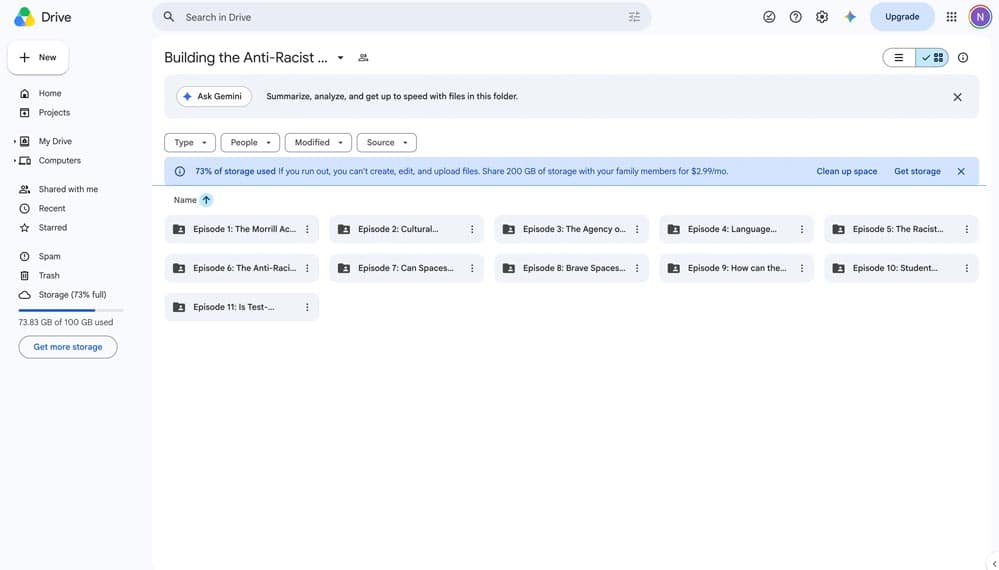
I read books digitally, so I do a lot of highlighting, and it literally felt like I was just highlighting everything on. It defeats the purpose when you do that. It really every page that I just, I’m going to treasure this book and I’m going to be revisiting it and also introducing it to colleagues. Thank you so much for this wonderful resource. I’d also like to recommend, I got to hear from Paul Eaton from Sam Houston State University. He’s been on the podcast before, and I was so glad that he reached out and let me know that his class, Diversity and Culture in Higher Education during the fall 2020 term in their doctoral program created an 11 part podcast mini-series, Building the Anti-racist College and University.
He says about it, “This mini-series was written, designed, and produced by doctoral scholars at Sam Houston State University who are enrolled in that class.” There’s lots of different ways that you can listen. Oh my gosh, not only do you get to listen but there are wonderful show notes and transcripts, and it’s just a whole. It’s incredible that they were able to do that during– go back in time, the fall 2020 to term. I really recommend that people check out that resource. Again, thanks to Paul and the doctoral students there at Sam Houston State University for this wonderful resource. Alex, I’m going to pass it over to you for whatever you’d like to recommend.
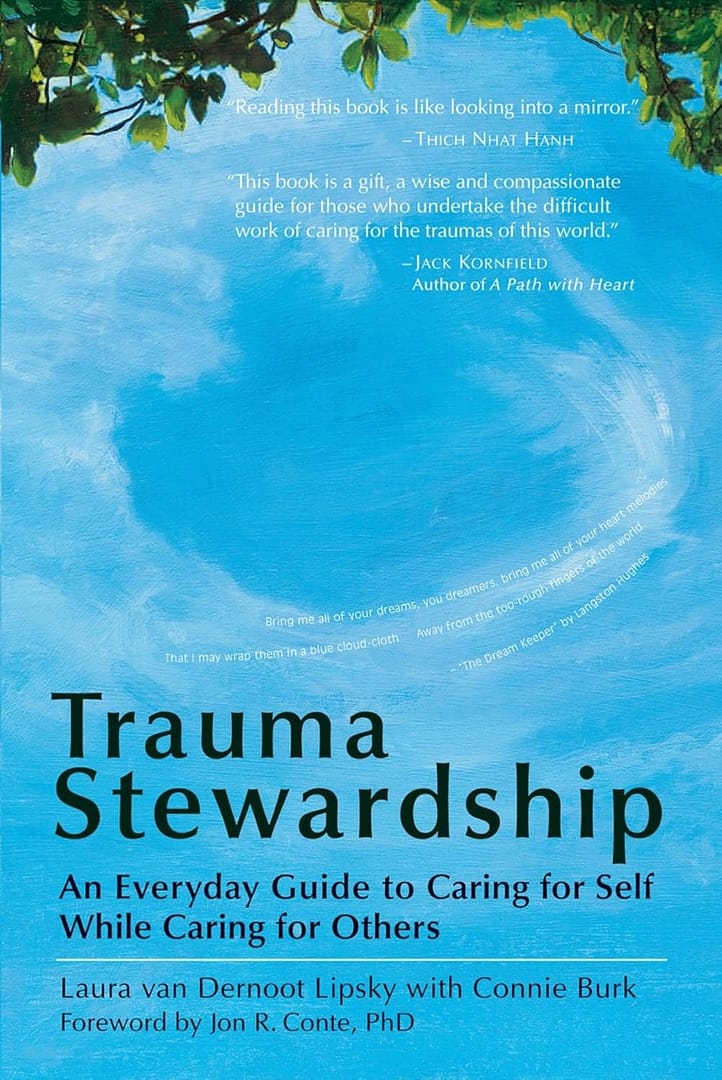
[00:32:32] Alex: I’m going to give one book recommendation and then a life recommendation. My book recommendation is the book, Trauma Stewardship by Laura van Dernoot Lipsky. I wish I had this book when I first started teaching at the K-12 level and when I started teaching at the higher ed level. It’s a book about taking care of yourself if you work with people who have trauma, which if you’re an educator, you do. I roll my eyes sometimes at a lot of books about self-care or wellness because I just walk away sometimes feeling like, “Okay. I get it. I should meditate.” This book, I just love because it really carries that systemic lens of how do systems and organizations share the responsibility of individual wellness?
She outlines these signs that you are experiencing stress related to working with people with trauma. They’re so spot on, I can’t even tell you. I highly recommend that to anyone. That’s my book recommendation. My life recommendation, I was just thinking about what are the little things that have helped me get through this challenging year and a half and gives me the little boosts? One of them is, you know subscription boxes that you can get? They make all different them. I do a tea subscription box, and it’s just a really fun way to try out different. I do loose-leaf tea and try out something new and have something fun that comes in the mail every few weeks. I highly recommend anyone, get a subscription box. It’s like a little fun care package to yourself that you’ve got. It’s just one of the little things I do to boost my own wellness.
[00:34:21] Bonni: Oh, I love that idea. I love it too because there are so many of them that are out there and you can really customize it for something that you like. I had a friend from college who was like, “Do you do beauty supply or beauty products?” I’m thinking like, I literally, “Just washing my face with soap, if that’s what you mean?” You got to find a subscription box. That really will be, like you said, something delightful to surprise you every time. That’s so great. That book sounds amazing. I’m so excited about that. I’m both excited and horrified at how behind I am on my reading, but it really does sound like a wonderful resource. Like you, I sometimes with the self-care stuff. You got to find something that’s really going to be authentic, I think, for what we’re experiencing, that sounds like that’s one of those.
[00:35:09] Alex: Absolutely.
[00:35:10] Bonni: Well, Alex, thank you so much for coming on, investing your time in the Teaching In Higher Ed community. It’s just really been a joy to get to know you a little bit. Now, I’m excited we’re connected on Twitter. I encourage people to go to the show notes and connect with you there. I am just thanking you so much for your time today.
[00:35:28] Alex: Thank you so much.
[music]
[00:35:33] Bonni: Thanks so much to Alex Shevrin Venet for joining me for today’s episode of Teaching In Higher Ed and for sharing with us about Equity-Centered Trauma-Informed education. If you would like to receive the show notes and a little update from me every week from the time you sign up until now, head on over to teachinginhighered.com/subscribe. This coming week, you can get the show notes from the episode with Alex and also some other resources that I add in. Again, head on over to teachinginhighered.com/subscribe. Thank you so much for being a part of the Teaching In Higher Ed community. I’ll see you next time.
[music]
[00:36:34] [END OF AUDIO]
The transcript of this episode has been made possible through a financial contribution by the Association of College and University Educators (ACUE). ACUE is on a mission to ensure student success through quality instruction. In partnership with institutions of higher education nationwide, ACUE supports and credentials faculty members in the use of evidence-based teaching practices that drive student engagement, retention, and learning.
Teaching in Higher Ed transcripts are created using a combination of an automated transcription service and human beings. This text likely will not represent the precise, word-for-word conversation that was had. The accuracy of the transcripts will vary. The authoritative record of the Teaching in Higher Ed podcasts is contained in the audio file.