Follow the Teaching in Higher Ed Podcast
About this Episode
Dave Stachowiak and Bonni Stachowiak answer listener questions on episode 473 of the Teaching in Higher Ed podcast.
Our stated preferences don’t always align with the challenge needed for deeper, more memorable learning.
Bonni Stachowiak
On episode 473 of Teaching in Higher Ed
Voices on this Episode


Show Notes + Resources
- Pia Lauritzen – Danish Philosopher
- MYFest
- Quote Investigator Entry: Einstein quote
- Question Jam
- Centering Centers: How to Help New Faculty Get Started with SoTL Projects
- Lilly Conferences
- Episode 443 with David Clark: Arbitrary Limits in Our Classes
- Artificial Scarcity: Reflecting on Arbitrary Limits in Our Classes
- Teaching in Higher Ed Episodes Taxonomy
- Subscribe to Bill Dogterom’s MiniBlog
- TripIt
Transcript
[00:00:00] Dave Stachowiak: Today on episode 473 of the Teaching in Higher Ed podcast, Living in the Questions.
[music]
[00:00:11] Bonni Stachowiak: Welcome to this episode of Teaching in Higher Ed. I’m Bonni Stachowiak, and this is the space where we explore the art and science of being more effective at facilitating learning. We also share ways to improve our productivity approaches so we can have more peace in our lives and be even more present for our students.
[music]
[00:00:38] Dave: Bonni, it has been a bit since we did a question-and-answer episode, or at least it’s been a bit since you did one. I don’t know if you’ve done one more without me, but it’s been a bit since I’ve done one.
[00:00:48] Bonni: It has been a while since any episode has aired on Teaching in Higher Ed specifically with questions from the listeners.
[00:00:54] Dave: I am glad to be back. Thanks for having me.
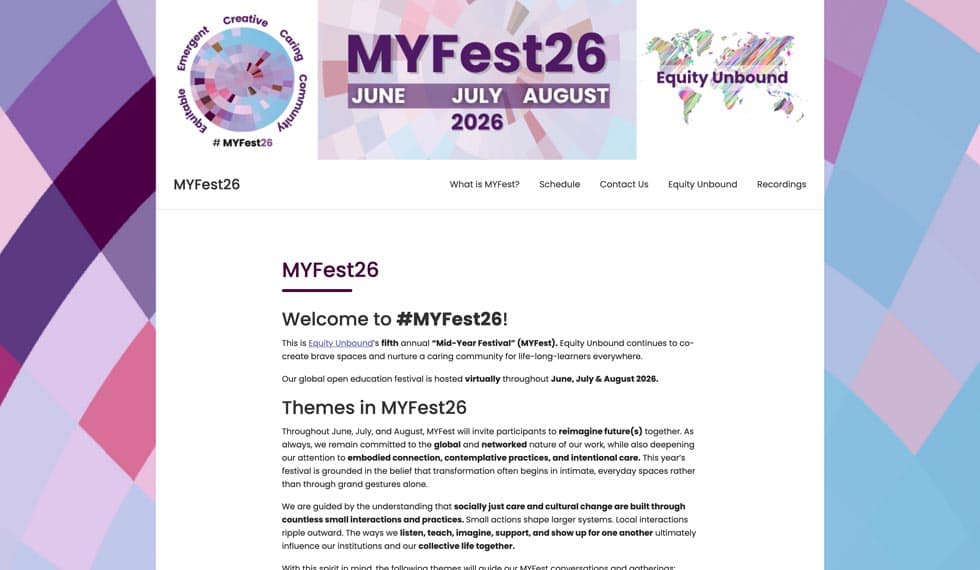
[00:00:56] Bonni: Thanks for being here. Today, earlier, I was actually a little bit late to show up for the recording appointment that I set up with you. [laughs] Part of that was I got to sit in a MYFest session that stands for Mid-Year Festival, and it’s a wonderful inclusive conference that I just get so much joy out of. We got to sit with a Danish philosopher, Pia Lauritzen, and she shared this quote, which she said, is attributed to Einstein.
[00:01:26] Dave: If I had an hour to solve a problem and my life depended on the solution, I would spend the first 55 minutes determining the proper question to ask. For once I know the proper question, I could solve the problem in less than five minutes.
[00:01:39] Bonni: I get a little bit nervous to do these Q&A episodes, Dave. It tends to get me mostly instead of feeling like I have any valuable answers, to just asking more questions and I tend to not think I have answers, but I guess I want to warn the listeners, perhaps, to consider whatever I might have to share or you might have to share as the start of these conversations on these important topics, not the end.
[00:02:03] Dave: I always crack up whenever I host a question, answer event with my community is someone will ask a question and inevitably I ask them four questions back before I feel like I can say anything. It’s just the nature of doing this. We’re making some assumptions, of course, but hopefully, get at least a starting point for thinking about some of these things.
Okay, let’s look at our first question here. Brandy has a question about how to go about writing up articles or poster presentations about innovative teaching strategies. I teach nursing and use many active and innovative teaching practices and would like to learn how to write them up so that others can use them and learn from them. They aren’t research really, so I’m lost on how to write it and where it should be accepted. I listen to your podcast, but I haven’t listened to all of them, so if you have already answered this in a previous episode, please send me the numbers and I’ll listen. Thank you.
[00:02:51] Bonni: Brandy, I have a few thoughts on your question, but before I dive in on that, I did want to mention because it seems like every time I mention this, at least someone goes, “Wait, I didn’t know you had that.” If you go to the Teaching in Higher Ed website teachinginhighered.com and you click on podcast, you will be directed to the main podcast episodes page, and on there, there’s a search box you could search just for any topic that you might be looking for. There also is a taxonomy that a lot of people has told me is helpful when they’re not sure what they want to search for, and you can also search on prior guests.
I did want to mention that before diving into your specific questions. I have been airing weekly episodes of Teaching in Higher Ed since June of 2014, and one thing that has never changed is about teaching being both an art and a science. We say that at the beginning of every episode. There definitely is this feeling where you have a gut sense about what worked or what maybe didn’t work as you were trying them.
I just want to encourage you and say how wonderful it is that you are willing to be experimental in your teaching and you’re finding some success in that. I think that’s wonderful. There is an emerging body of research about what holds people back from trying new things in their teaching, and a lot of it is that fear of failure. One thing, however, and you alluded to this in your question, most of the publications, most conferences, most places that provide opportunities for us to share this body of research is called the Scholarship of Teaching and Learning.
This is sometimes abbreviated SoTL or pronounced SoTL, S-O-T-L. They’re going to need to get from you a little bit more than just I’d like to share what it is I’m doing. They are going to be looking for there to be some evidence of what you did that maybe worked or didn’t work. I get fascinated by some of the evidence where there is counterintuitive evidence about what we think works and what actually doesn’t work. I will give a couple of examples.
People will think, oh, because students are paying attention and seem really engaged that means something happened in terms of their learning, and it could have just been that something was particularly entertaining but didn’t actually challenge them sufficiently in order to produce some kind of retrieval practice where ideally we have that kind of challenge. We maybe fail at something, we answer a question wrong, and that I still will never forget Robert Bjork, when he came on the show, talked about forgetting is the friend of learning.
Generally our stated preferences, I prefer to learn this way, aren’t always going to align with having sufficient challenge in that learning experience to actually produce the more memorable and the deeper learning. A couple of things that you could try out. Certainly, I would encourage you to go and look at many of the open educational resources around the Scholarship of Teaching and Learning, see what kinds of questions other people are asking, write out what your hypothesis is about a particular activity that you do in your class and how that relates to your goals for the class, and try out some measurements.
In most instances, you’re going to need to work with your institutional review board, your IRB office and get permission in order to conduct these little mini-research studies on students that you teach in order to be able to publish them. Sometimes there’s an umbrella agreement with your faculty development center for this kind of Scholarship of Teaching and Learning research.
[00:06:44] Dave: Bonni, you also recommend an episode that we’re going to link up in the show notes. It’s from the Centering Centers podcast. Is that the name of the podcast or the name of the episode, I forgot to ask you.
[00:06:55] Bonni: That’s the name of the podcast.
[00:06:56] Dave: Oh, okay. Great. The co-hosts are Laura Baecher and Lindsay Doukopoulos, hope I’m saying your last name correctly, Lindsay. It’s a pod network podcast that explores the work of centers of teaching and learning and the vision and insights of educational developers in higher education. A good resource in addition for a lot more on this.
[00:07:13] Bonni: Yes, and they have a specific episode that I’ll link to in the show notes about how to get started with SoTL projects that I highly recommend. Last, you talked about you weren’t even sure where you might present something like this. I highly recommend checking out either a local Lilly conference. There are various locations that these conferences, it’s evidence-based teaching. They happen across the United States, and maybe you want to even get further away geographically speaking.
I would encourage you to apply to present. Something that is unique about the way that they handled their conference presentation proposals is that you don’t get a rejection. They do rolling proposals. If your submission needs to be improved in some way, you will get feedback from the reviewers and you can revise your proposal and strengthen it in order to present either at the upcoming conference or if the timing is such that it needs to be pushed into another conference or a further year, you can do that as well.
I think that’s just such a healthy way to really live out what it means both to teach and to learn. I do have a partnership right now going with the Lilly conference where I’m sharing about Lilly conferences on the Teaching and Higher Ed podcast, which works out nice for me since I was doing that anyway, [laughs] and they’re sharing about the Teaching and Higher Ed podcast at the various Lilly Conferences, and I’m very grateful for that partnership and for all of the times that Todd Zakrajsek has been on the podcast and has shared what he has been talking about and learning himself at those really, really vital conferences.
[00:08:50] Dave: Our next question is from Melanie. Melanie writes, I’ve long struggled with late work policies. I want to keep things fair for those who turn in things on time and also not penalized to a point that the student decides not to do the work at all. What would a happy medium be? I teach a planning class and was dismayed when I looked at the analytics and noticed how many late assignments there were. I’d love to hear what approaches others have with this thorny issue. This is a tough issue, Bonni, what do you think?
[00:09:16] Bonni: Oh, it really is, and I love that the title of this episode is Living in the Questions because that’s where I want us to live when it comes to these kinds of questions about deadlines. I really treasure the conversation I was able to have with David Clark on episode 443. If you didn’t have a chance to listen to that one yet, it’s called Arbitrary Limits in Our Classes, and it was based on a blog post that he wrote called Artificial Scarcity, reflecting on arbitrary limits in our classes.
In your question, you used the phrase happy medium, that you would like to find a happy medium. I really appreciate the way that you phrase that and that resonates a lot. The tension that we’re really talking about here is holding hard and fast to rules that are not in alignment with the goal of a class versus on the other end of that spectrum, not having any sort of limits or boundaries at all, and that lack of structure not always supporting, helping people work through the material over the length of the course that it was designed to do.
You talked about when you wrote to me about teaching study skills, and a lot of this is building up those executive function skills. Having zero boundaries, zero limits, zero deadlines the research would show that’s not going to be a helpful, healthy medium, but also teaching in such a way that we have absolute rigidity and not an appreciation for the kinds of struggles that students may find themselves in. I’m going to first off, recommend that you keep asking these questions.
I’m going to encourage you not just to keep asking them of yourself, although that’s a really important part of this reflective process, but also to ask the learning community. Each time you start a class, it’s going to be important to be transparent about what you know, the research around deadlines and such, and what you don’t know, and that is these students that you’re working with in this given class, their unique contexts, their unique challenges.
I’ll give you an example of this. I do tend to set my due dates, the time on it of 9:00 PM or 10:00 PM. I do have students who will get frustrated and say, “Well, why can’t you just have it at 11:59 PM like every other professor?” I want to really attend to their concerns and say, “I care about this, and this is really important to me. Thank you for calling this to my attention,” and then I share with them. The research really shows that when everything lands at 11:59, we start to get a little bit into high pressure, high stress, and also late at night, potentially impacting people’s sleep such that I set the deadlines a little bit earlier, but In my particular instance, I allow students to turn in things later that same day without a penalty.
The deadline in this case is a little bit arbitrary, but just anything that I can do to encourage them getting a little bit more sleep and not having all of the deadlines literally land in exactly the same minute. I’m being transparent with what I do know, the research, and then also what I don’t know, their unique contexts. Some of them will talk about, “Oh, I don’t get off of my shift until such and such a time.” That’s a happy medium. I don’t think we ever land in a place that is perfection on this. I think we have to keep asking the questions, again, asking ourselves and asking the learning communities if we are going to err on one side or the other. Trust students.
When they write to us and they share about a struggle or a challenge, my focus is I believe them, I trust them. Even though I know that there will be those times when someone might choose to be dishonest, I don’t want to err on that side. I’m going to err on the side that says what you’re telling me is true and responding accordingly.
[00:13:33] Dave: Danny also wrote in with a question for us and says, “I’m a TA and created some of the curriculum for a course through an inclusive teaching fellowship, which I is when I learned about your podcast. One of the ways that we foster a sense of community in the course is through a community discussion forum. Students can post questions and thoughts about the assignments here and get feedback from the professor and TAs. When I started teaching this course in 2020, this discussion form was very active and students were really engaged, but in the last two years, it has become much less active.
Students now have a private discord community that they share among themselves, but not with the professor or TAs. I’m glad that the students have their own space to discuss and think through these topics without feeling policed by the professor. However, I worry about having this extension of the classroom “where we can’t set expectations about how students should behave and treat each other.”
The course discusses some complex and emotionally challenging topics, including the history of racism in the field, the role of animal behavioralists in the field of eugenics, and the ways that LGBTQ perspectives have been excluded and marginalized from the field. We worked hard to craft a supportive and safe environment for students to explore these topics in the course. How do you navigate the uncertainty that comes when students go off and create a supplemental environment that is out of your control?”
[00:14:53] Bonni: Thanks for your question, Danny. I picked up on something that I found important in the way that you asked your question. That is when we have the conversations inside of a class, we have a little bit more influence over how to respond. I even have changed how I do this in recent years where I don’t even really have students start out with some of these controversial topics in a group setting. I actually have them do some of their earlier assignments where they might be trying on new language or new ideas for size and seeing how it fits.
Sometimes when we do that, we’re going to fail, and I would much rather have that failure, and by failure, I mean failure to have my language match up with my values. That’s not always going to be the case. That’s a wonderful opportunity that educational experiences give us where we can find ourselves somewhat disrupted in our normal patterns of behaviors and thoughts and introduced to ones that might fit a little bit better for longer periods of our life. Recognizing that, especially when we’re learning and becoming more aware, perhaps our empathy is even growing in this particular sense and our language does not yet match our values.
In fact, Dave, I don’t know if you remember this last night, but when we were having dinner with a friend who brought his kids over and they were all playing around last night, he actually– I don’t even know what he said and even if I could remember what he said, I wouldn’t mention it because it would just be perpetuating it. He said something, he goes, “Oh God, I just realized I should actually go look up on my phone and see if I should say this anymore.”
Sure enough, it’s one of those cultural things that gets passed along and we got to see him in the moment notice, oh wait, that particular phrase that I just used is offensive and potentially racist and goes, “I’m going to have to work on not saying that anymore.” It was really just lovely that we’re all friends and finding ourselves in that moment, and he’s going to go become aware of that, recognize that his language doesn’t match the values that he has.
Something that this really comes back to for me, Dave, is reading a couple of books by Donna Hicks about dignity. When someone is trying on language in this particular case, he recognizes that his values are not aligned with his phrase that he used, we could have chosen to pile on the guilt, pile on the shame, and violate his dignity. Instead, it was just a safe place in order to go, “Hey, I’m going to work on not doing that anymore.”
I really have liked more having these private spaces where people can try on language as they’re hearing about and learning about new ideas. I do, however, recognize that as a someone who is not a person of color, that I need to be aware that others may need to watch for what is known as weathering or that trauma that comes from having to hear as people are trying on these ideas. This is certainly not a one-size-fit-all approach, but it’s something that I have found useful in recent years.
Something else I’d like you to recognize, Danny, and I think you already have recognized this, is that students are going to do this anyway. I have two other ideas for you here. One is, I actually learned about this from Kathy Davidson, is to create a class constitution. Those are where the class can begin to define and shape their values and ask that those commitments be carried over into any or all communication that happens regarding the class outside of the community.
You mentioned having a place set up in the class for these kinds of discussions to happen. I would just encourage you to think a little bit more about maybe how to make that a place where this happens a bit more seamlessly. I’ve only used Discord a tad bit. I haven’t particularly found it to be amazing, but that’s probably just because I need to understand the norms and some of how things happen but that is, especially for people younger than me, where a lot of these conversations and collaborations are happening.
How might you either inside your class go about creating those same kinds of environments where they can, with frictionless-ness, be able to collaborate, share ideas, and that kind of thing? They’re going to probably do it anyway, but can you make it a little bit easier, perhaps find out how to improve that such that people could feel like they could have those kinds of conversations and collaboration inside the class? Sometimes, by the way, discussion boards inside of certain learning management systems aren’t always ideal.
I’m thinking about specifically sometimes a lack of a search feature makes it harder to find information and some of the norms just around longer answers versus when someone just has a quick question, they might find platforms like Discord a little bit easier to do that on. We have a fourth question, Dave. It’s actually coming from me. I always think certain times of the year, I don’t know, maybe all of the year we need to be asking ourselves the question, why do we do what we do?
We have heard from people over all these years who really resist being very precise about learning outcomes, that rigidity not being helpful for what’s emerging in the moment and some of those deeper experiences of learning. My friend and colleague, Bill Dogterom, he asked himself the question recently of what is it we’re trying to do here in higher education in general.
He wrote a beautiful, beautiful blog post about his commencement musings that I asked and received permission to share on today’s show and so we’re going to hear a little bit from Bill Dogterom on really his reflections on why we do what we do. I’m just so grateful for him for allowing me to share his message with us.
[00:21:17] Bill Dogterom: There is a certain sadness in the celebrations of this time of year. Students with whom I have walked and for whom I have prayed for the last three or four years have their names called, walk across the platform, the cheers of family and friends ringing in their ears to receive a lovely folder in which is a piece of paper promising their diploma once all the final grades are entered and the bills are paid. The moment is a culmination of years of formal education.
Some will go on to complete advanced degrees, but most will build a life solely on the foundation of the roughly 16 years of learning begun in first grade. In a society driven by productivity as validation, the test of their education will be acquiring a job which will provide an income adequate to support them in the manner to which they aspire. To this bottom line approach the classic liberal arts education, prioritizing learning how to learn over what to learn poses an awkward question. What if in learning how to make a living you have not learned how to make a life?
It turns out that the making of a prophet is easier than the making of a person, especially a person of character transformed to withstand the relentless press to inhumanity. While there is usually a course in ethics along the way, a quick survey of the current cultural moment suggests that unless you form ethical people, codes of ethical conduct quickly become obstacles to be overcome in pursuit of the bottom line.
Also making the case for the how over the what is the rapid pace of change, not to say advancement, leaving behind anyone who is not committed to lifelong learning, but in the middle of this commencement musing, I am feeling deep gratitude for the shared journey and an equally deep sadness that this part of it is over. We sang blessing over them yesterday and release them with joy.
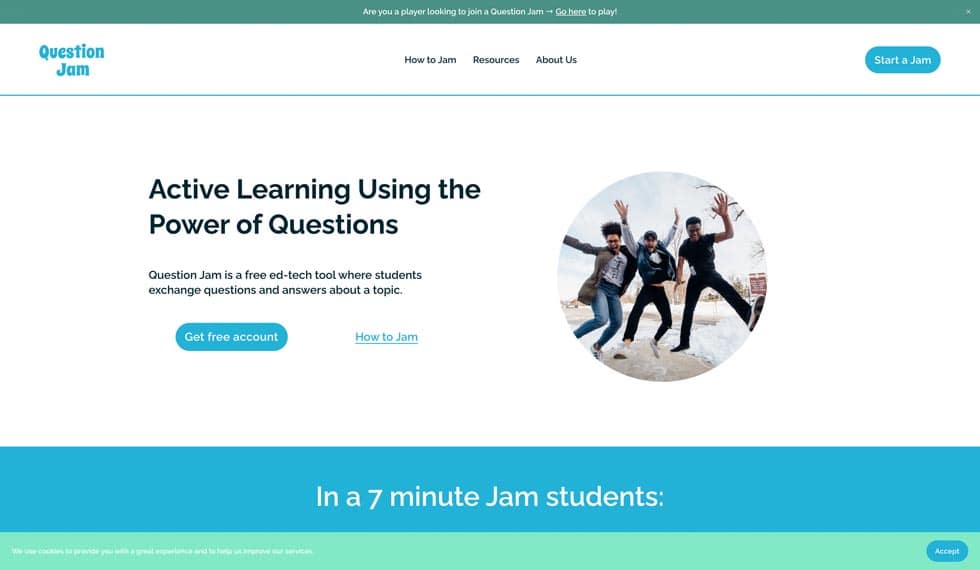
[00:23:58] Bonni: This is the time in the show where we each get to share our recommendations. Dave, I mentioned at the top of the show having had an opportunity to attend a MYFest session this morning and I was introduced to a new tool there that I wanted to recommend today. It is called Question Jam. Question Jam is like so many of the tools that’s very easy to set up a session and get people onto it, and it’s a seven minute digital game where students exchange questions and answers about a topic of your choice.
In this particular case, we were looking at the whole idea of questions and human’s ability to focus more on questions or answers and all of that within a context of a world in which artificial intelligence is emerging so quickly for us. When the seven minute jam concludes, all of the questions that people asked and the answers that various people gave get shared in a word cloud on the main screen so you can see what were some of the ideas that emerged and then if you want to as a participant, you can put your email in. You don’t have to, but you can put it in and then you’ll receive all of those questions and answers.
I just thought, how perfect for us today, Dave, as we’re doing an episode with questions and answers where I am quite candidly saying there’s more questions than there are answers, and that really was the Danish philosopher’s point of the session today and it was energizing. You could ask a particular person who was on there to answer your question and other people could ask you to answer their questions. It was really invigorating and I found the whole experience great. Also, I did put in my email and and get all those questions and it was just such a helpful way to get what kinds of questions are people asking out there.
I did want to mention that she was very insistent that this is a nonprofit, they do not charge for this service and have zero plans to ever charge for it. It is a big part of the research that she does in philosophy, and I just found the whole experience energizing would highly recommend it for anyone who’s looking to live in the questions. Second, I just want to mention this episode’s going to be airing in July of 2023 and highly encourage to go check out the MYFest experience. By then it will be somewhat halfway over, although they did recently receive funding such that it is going to be sustainable for years to come.
What a rich caring, challenging, in the best sense of the word, community to help us all grow and be able to do more of why we do what we do, to be able to do more of that and just continually refine our practices and make sure that our values are lining up with how we are approaching our teaching and our learning. I’ll have a link in the show notes to find out more about MYFest and how you can join. Dave, now I’m going to pass it over to you for whatever you would like to recommend.
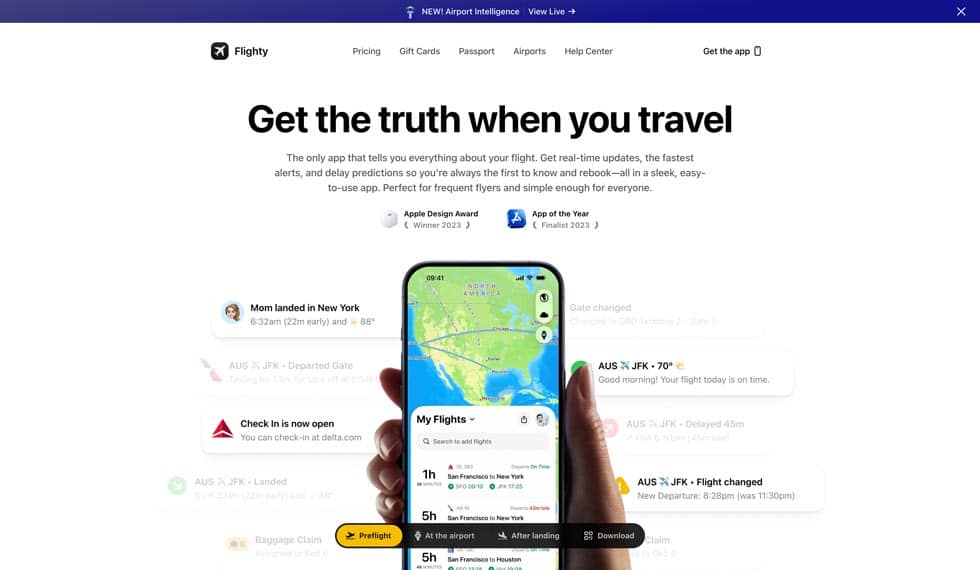
[00:27:09] Dave: I have an app/service to recommend and it is a little app called Flighty. It is on, I believe it is iPhone and iPad and Mac only, but it is a really wonderful app, and the reason I’m thinking about it is Bonni and I are traveling in the next few months for some conferences and some personal stuff and so we’ve been doing a few more flights this year than obviously in the past few years.
We got a subscription earlier this year to use Flighty. It’s a flight tracking app, but it’s really delightful on a couple of levels. It does all of the normal flight tracking things that you would expect from any of the airline apps if you’ve used if you do any traveling. The wonderful thing is it’s not specific to any one airline. You can track flights from any airline, both your own and friend’s flights.
It has a really nice interface where you can separate your travel plans versus friends and family that you’re tracking their plans from. It’s got all the little notifications and widgets and it’s really cool from that standpoint. Two features in particular that I think are really delightful is, I know other travel services have this as well, but you can set it up when you book a trip, you can just forward the itinerary to an email address and it’ll automatically bring it into the app and highlight everything for you and highlight your itinerary and put it in automatically.
The thing that I think is really, really cool is having flown a bit in the last six months and having not flown over the last two to three years, there’s a new thing on airplanes spawning out, which is you get on most flights apparently free text messaging, which for years you’ve had to pay for Wi-Fi and you still do if you want to use Wi-Fi in a plane, but now apparently a lot of flights you get free text messaging, which is cool.
Although obviously you can only text, but one of the cool things this app does is it uses that service. When you’re on a plane, especially if you have a connecting flight, you can get for free, it’s part of their subscription, but you can get on the plane without having to sign up for the paid service updates in real time on your flights and future flights. It’s just really, really a delightful app. We have used it a bunch when traveling and also tracking flights for friends and family members who are meeting up with us or coming to visit. Flighty, I would recommend.
[00:29:27] Bonni: On a show years ago I recommended the app called TripIt. Legally it’s in the law actually. It’s in, I think it’s California state law, you’re not allowed to recommend something twice on your show.
[00:29:39] Dave: On the Teaching in Higher Ed Podcast.
[00:29:41] Bonni: Oh, I’m pretty sure, but I’ll just share quickly that TripIt is so great because you can forward all your itineraries for things and it all gets combined in a very easy to use and easy to share interface, but what I love, Dave, is that TripIt connects with Flighty.
[00:29:55] Dave: Oh, I forgot about that.
[00:29:57] Bonni: You get a lot more into knowing when flights are going to land and when they’re taking off. It is just such a wonderfully designed, elegant, functional app. I don’t even know. This is someone who doesn’t care a lot about flight information, and oh, my goodness, it’s really, really good. The fact that it talks to TripIt, which I do get a lot more use out of than Flighty on its own, those two are the whole peanut butter and chocolate idea, really, really.
[00:30:27] Dave: I love that you can see your incoming flight, the flight that’s coming to the airport that will then be your plane and how old the plane is, and when the pilot files the flight plan. I have that stuff turned on too.
[00:30:38] Bonni: Also, I was going to say, I didn’t even know it did that, which is a good sign. Because if you don’t care about any of that, you still may like Flighty.
[00:30:44] Dave: You can turn it off. That’s the beauty of it.
[00:30:45] Bonni: It’s not complicated to look at. It’s very visually, very, very beautiful.
[00:30:49] Dave: It’s very geeky and delightful for someone like me who gets geeked out about aviation. Cool stuff.
[music]
[00:30:58] Bonni: Well, thanks to everyone for listening to today’s episode of Teaching in Higher Ed. If you have yet to subscribe to the weekly Teaching in Higher Ed update, I encourage you to do so now. Head on over to teachinginhighered.com/subscribe. Today’s episode was produced by me, Bonni Stachowiak. It was edited by the ever talented, Andrew Kroeger. Podcast production support was provided by the amazing Sierra Smith. Thanks so much for listening, and we’ll see you next time on Teaching in Higher Ed.
[00:31:57] [END OF AUDIO]
Teaching in Higher Ed transcripts are created using a combination of an automated transcription service and human beings. This text likely will not represent the precise, word-for-word conversation that was had. The accuracy of the transcripts will vary. The authoritative record of the Teaching in Higher Ed podcasts is contained in the audio file.