Follow the Teaching in Higher Ed Podcast
About this Episode
David Clark discusses arbitrary limits in our classes on episode 443 of the Teaching in Higher Ed podcast.
I am not deadline free, but I have gone to total flexibility for deadlines.
David Clark
On episode 443 of Teaching in Higher Ed
Voices on this Episode


Show Notes + Resources
Affiliate income disclosure: Books that are recommended on the podcast link to the Teaching in Higher Ed bookstore on Bookshop.org(https://bookshop.org/shop/teachinginhighered). All affiliate income gets donated to the LibroMobile Arts Cooperative (LMAC)(https://bookshop.org/shop/LibroMobile), established in 2016 by Sara Rafael Garcia(https://www.cuentosmobile.com/bio).”
Recommendations from this Episode




Transcript
[00:00:00] Bonni Stachowiak: Today on episode number 443 of the Teaching in Higher Ed Podcast, arbitrary limits in our classes with David Clark.
[music]
Bonni: Welcome to this episode of Teaching in Higher Ed. I’m Bonni Stachowiak, and this is the space where we explore the art and science of being more effective at facilitating learning. We also share ways to improve our productivity approaches, so we can have more peace in our lives and be even more present for our students. I am so excited about getting to finally talk to today’s guest. I read his blog voraciously, and every time I’ve hopped on his website, I just devour what I see there. I actually get to talk to David Clark today. David Clark is an associate professor in the Department of Mathematics at Grand Valley State University.
He earned his PhD in 2012 at Michigan Technological University. David is a leading proponent of alternative grading in higher education and spreads the word about progressing assessment by co-organizing the annual online grading conference. His book, Grading for Growth, which is co-authored with Robert Talbert, whose side note has been on Teaching in Higher Ed many times, who wrote the forward for my book, and who I also treasure in terms of all that he gives to higher education. I can’t wait for that book to come out. It’s not out yet as of this recording. David, who’s online with me now as I share these words has already agreed to come back and speak about the book.
I’m so excited about that. We all won’t have to wait too much longer as of this recording, it’s coming out in early 2023. Beyond assessment, David studies discrete mathematics, especially via undergraduate projects and serves on the senior staff for MathPath, a month-long residential enrichment program for middle school students. He’s also an avid backpacker and board gamer. David Clark, welcome to Teaching in Higher Ed.
[00:02:13] David Clark: Thank you. It’s great to finally be on here.
[00:02:15] Bonni: I went back to your website, which I have gone to many times before. Every time you have something new to give me, and this time I got fascinated by– I think it’s maybe the first thing I see on your about page where it says, “I study combinatorics,” and I think I may have said it wrong when we spoke earlier. Do you want to pronounce it for us correctly?
[00:02:35] David: You got it. Yes, you got it. Combinatorics. It’s combinations almost.
[00:02:39] Bonni: You have a subtitle here on your about page, “The art and science of counting interesting things.” David, the first thing I wanted to ask you is, if I were to go get my PhD in this thing, does it come out of the box this simple, or did you have to do some work as a communicator to make it that simple?
[00:03:00] David: Yes, that’s something I’ve worked on is finding a really short way to describe it. I’ve leaned into the I count things. People will sometimes look at that and say, “Counting? I can count, right?” “Yes,” and then that opens a conversation at least because that’s where it begins with counting, and that gets more complex from there.
[00:03:18] Bonni: Yes. What I love about it, though, it’s not just counting things, but it’s counting interesting things. Then the next thing down on your website are some of the interesting things that you’ve counted, and you also do that in combination with undergraduate research. Would you talk about some of the interesting things we could learn about what you and students have counted together?
[00:03:38] David: Oh, yes, absolutely. I really do all of my disciplinary research nowadays with students. I’m at an institution that really values that, and I just love working with students and introducing them to that. The main type of things I do, I like to use games. You mentioned I’m a board gamer. I like games, I like studying games. I will study things like guessing games. I’m thinking of a number from one to a million, and you can ask me yes or no questions about it. Can you figure out my number? Then here’s the counting part. Can you figure out my number in fewer guesses? What’s the smallest number of guesses you need?
What if I’m allowed to lie sometimes? What if I’m thinking of two numbers, and I only tell you how many of mine fit your question? All these variations, they’re about counting, they’re about how numbers work and how they’re arranged, and they’re really easy to introduce. I think your readers right now can be imagining questions they would ask me, but we can really dig really quite deep during the course of a summer-long project or something.
[00:04:36] Bonni: One of my favorite classes if I combine my masters and my doctorate was actually a prerequisite, not even in the curriculum for those things. I had to go back and take an undergraduate statistics class, never having taken it way back when I first did that. It literally was the best class, again, if I combine all of that, and it was because he made it interesting. So many times I think we fall in love with our disciplines and then forgot maybe why we fell in love with them in the first place, and then realize that other people might fall in love with disciplines for different reasons and might be curious about different things.
Are you finding that you are able to have them curious from the beginning, or do you have to start with something in common, like games? By the way, this guy, he brought in lots of games when he started teaching probabilities that you might play if you went to gamble, and I don’t really play those games. I had to learn how the game worked before I could even start to look at the probability, but he did capture just my curiosity, even though I’m not really terribly interested in gambling. You start with something general before students can get curious about something specific or how does that work?
[00:05:49] David: Yes. I think people naturally engage with games. Yes, I think that a general idea like that, I’m thinking of a number from one to a million game. People can engage with that immediately. We begin with that. Then the variations and digging into the, “Let’s look at the math about this.” It’s almost naturally motivated because people care already like, “Oh, yes, I want to be able to solve this. I want to be able to do this.” It’s the thing that I think is lucky that combinatorics can be expressed that way, but I think it’s something that I really value as being able to engage people quickly with these ideas.
It’s fantastic that you had a good experience with the statistics class. Because so often, I say I’m a mathematician and people’s first reactions is, “Oh, yes, I hate math.” “Oh, man, come on. I bet I can make you be interested in something, but you might not know it’s math.”
[00:06:42] Bonni: Yes, that’s the thing. I don’t know much about math, [laughs] but I know a decent amount about technology. It seems similar to when people say, “Oh, I’m just not good at technology,” and it’s like, “It’s such a broad field. You couldn’t possibly be bad at all of it.” To think of it that way as a binary thing, you either are good at math or are not, that’s the danger, right?
[00:07:07] David: Some people almost like define math as the things they think they’re not good at, and if they’re good at it, that’s not math or any technology, too. Oh, I can use this, but that’s not what I mean. That’s not the technology I’m talking about. I think people having positive experiences with math is a good thing, and we all know some math, it is a thing.
[00:07:28] Bonni: I mentioned as I was reading your bio and started to go off script, as we will, how excited I am about your book coming out, and you’ve already said that you’ll come back and share a lot about alternative grading. Today’s conversation is actually a little bit– I don’t know, is it a cousin of the topic? It’s just a tiny slice where we’ll touch on that, but I hope we are going to be getting people really curious about the topics, so they’ll be really excited about your book when it does come out and our future conversations. Today, we’re going to be looking at something called artificial scarcity. First, what is that, David?
[00:08:06] David: When I’m talking about artificial scarcity, we’re looking at something that is limited in some way, and it’s an arbitrary limit. When I say arbitrary, I don’t mean random. I don’t mean capricious. Just it’s limited in some way that’s not inherent to what it is. A non-example of that would be seats in a classroom. There’s a hard limit to the number of students you can have seating in a classroom. That’s a hard limit, and it’s not arbitrary.
[00:08:33] Bonni: Then what is the danger in artificial scarcity and how might we be more intentional in how we choose to embrace it or avoid it in certain cases and in certain classes?
[00:08:49] David: Yes, I think the danger of artificial scarcity is if something is limited– I think a good example of this is thinking of grades as a limited resource. If you think of
There should only be so many As available in a class, or that the class average needs to be within a certain range. That’s an artificial limit. There’s artificial scarcity of grades. The danger there is then that by enforcing this artificial limit, you are leaving out people who are doing genuinely good work, or you are cutting out something with this limit that is valuable and is worth knowing or seeing or engaging with. Because we’re focusing on complying with a limit, it’s out, it’s gone.
I think that’s a really common thing in higher education, and artificial scarcity often shows up. This is really the point of thinking about it. It shows up in things that we don’t even think about in considering because they’re just here, or they’re in the air as automatic things we do in a class or in our teaching or in our grading or something like that. Leaving people out, they risk not showing us the brilliance of our students when they’re showing us what they know because we have limited them in an arbitrary way.
[00:10:05] Bonni: Yes. That so much of what I’ve gleaned from your writing and your work in this area has to do with that intentionality and asking questions. When I first came into teaching in the context of higher education, I get disappointed in myself sometimes because I don’t think I asked a lot of questions. It was, “This is how it works. This is what we do.” Some of that in a very intentional way, I think the most, I would call it egregious, way that this shows up is what we call grading on a curve. You just described it, but in case anyone hasn’t made that connection, and I didn’t necessarily think of it because it was like, “Oh, no we have to fight against,–” Oh my gosh, I’m forgetting the expression.
[00:10:51] David: Against grade inflation.
[00:10:52] Bonni: Yes.
[00:10:53] David: Yes. That’s a phrase.
[00:10:55] Bonni: Now, I’m more bold. Where I’ll say, “That’s not really a thing.” I’ll try not to sound dripping with sarcasm, but you probably have more practice at this than I do. How do you describe that’s not really a thing that we need to be concerned about when you’re talking to colleagues and probably do it better than I sometimes do?
[00:11:13] David: Yes. I want to start by saying intentionality is a great word right there, just intentionally think about our practice. Thinking about about grades, grading on a curve and grade inflation is a critical one here. The way that I like to think about grade inflation is if I ask someone to say, “What is grade inflation? What do you mean?” Usually the response is, “It’s grades getting higher,” or, “My average grade getting higher,” or something. That’s not wrong, but I would say, “I think I would add something to it.” Basically, nobody objects to this, which is it’s grades getting higher when they don’t represent more learning. Because grades getting higher and more learning, cool. That’s what we want grades to represent.
When you put it that way, I think it really undercuts what people are thinking about with grade inflation, which is they’re thinking that just grades getting higher is somehow letting kids get away with stuff. It’s letting our students get away with things that they shouldn’t. One of my core beliefs is that if we’re going to have grades, then grades need to represent learning. They should represent what students know. As soon as you start thinking of grades that way, that opens the door to the possibility that maybe all of my students really know and understand this or maybe a lot of them do. If they’re going to get a grade for that, it should be a high grade.
That would look like grade inflation. If all you’re thinking of is just higher grades. As soon as you say, “It’s linked to actual learning,” and I can point to the things that they’ve done to demonstrate that learning, it’s not grade inflation. It’s just awesome. I’ve got a bunch of students who really understand this well. I think grade inflation is a topic that is not at the front of my mind because the way that I think about what grades mean, they’re inherently linked to learning. Inflation is not the question that matters there.
[00:13:04] Bonni: Something I’m going to be changing about myself moving forward is I’m going to start with that question, what do you mean? That’s really helpful. I think sometimes the conversations I’ve had, they want to be protective of the reputation of the school as it comes to employers or to graduate schools. I attempt to, I’m sure, clumsily break down those arguments. Back to what you talked about, if this represented actual more learning, then we wouldn’t really have anything to protect. Because what would be students who would be going into these graduate programs or who would be going to work for these employers would be better equipped with more learning. Then it would never come down to, “My goodness gracious. Do you ever give a lot of A in your classes.”
[00:13:53] David: I don’t want to pretend that grade inflation isn’t a thing. I’ve interviewed a number of instructors usually from really high powered institutions like Ivy Leagues, who are genuinely afraid of not giving high enough grades to their students. That’s like the students come in expecting this. There is such a thing as grade inflation there if the reason they’re going higher isn’t related to what they actually have learned.
[00:14:19] Bonni: Yes. When I have said it, I don’t say it quite that way in the sense of I say of all the problems that we have as an institution, this particular– First of all, we should create a shared definition so that what you mentioned is going to be really helpful for me going forward. Also, if it is a problem in the way that someone might be posing that it’s a problem, it’s going to be so low on the list as opposed to seeing if grades match learning. I know this is a conversation for the future, if we could put grades way over here and just focus on learning, there we go, then now we’re really talking at that point.
I want to actually go back just for a moment because I took us on a path right away of artificial scarcity as a bad thing. You point out to us that it’s not always a bad thing. Could you talk a little bit about libraries and how libraries have made use of artificial scarcity?
[00:15:11] David: Yes, absolutely. This is really important. Talking about artificial scarcity, it can sound like I’m saying, “Throw out all the limits. Get rid of all the limits.” I think libraries are a useful thing to think about because it’s something most of us have experience with. A common experience is a due date for a book, or you have to return the book by a certain date. That’s a form of artificial scarcity because it arbitrarily limits your access to a book. I can only keep it for so long. It’s not like the book burst into flames if I keep it longer than that. It’s not this inherent limit. It’s just something we’ve decided, three weeks or whatever.
There’s some questions I like to think about here. It’s not just thinking, “This is arbitrarily limited, but why? Why is it arbitrarily limited?” I think there’s some really good reasons for that. A library, I’m thinking public libraries, their mission is to have access to this information to all of their patrons, not just to one person. Having a deadline, a return date for a book means that more people have access to it. More people can have access to these things. If the date isn’t really, really short, then you’ll all have a reasonable chance to read and learn from it. It makes sure that the mission of the library can actually be achieved. This is maybe me, I love my library.
I will go there, and I’ll start looking around and, “Oh, I’d like to check this one and this one and this one,” and just end up with this huge pile of books that is not reasonable for me to actually all read in the next three weeks. Knowing that there’s a due date actually makes me a little more careful with the genuinely scarce resource of the number of books that are in the library and the number that people could check out. I’m a little more intentional about, “This is what I actually want to do and read for the next few weeks.” Then when I have them at home, knowing that they’re due means I don’t tend to keep them just sitting on the floor and ignored.
I’ll actually engage with them a little more. Those are all useful things. I also want to point out anyone who’s ever checked a book out of a library knows that the deadline for returning that book is not a hard deadline. This is not totally a, “You return it now or else.” We can renew books. Most libraries will work with you to get the books back in. They’ll send you some emails or give you a call or whatever. Different books might have different amounts of time you can check them out for, like newer books that are more popular. They have a shorter date so that more people can see them. Older ones have a longer date.
Those are all ways you add in flexibility that respect why there’s a limit in the first place. Like, “Oh, yes, we want people to be able to read our books, but we also want more people to be able to read our books. Let’s be flexible in a way that respects that.”
[00:17:47] Bonni: We talked about intentionality, the person who leads our library, we have the course reserves. I suspect that lots of places do this where a professor might put their textbook on reserve in the library if a student is unable to purchase that book, at least they can use it for two hours. Those are arbitrary limits where we really should be asking the questions with intentionality because what if we were to break through that barrier and more classes were using open educational resources so that artificial limit could just be released. Anyone, whether you attend our university or anywhere in the world, are just interested in this topic. We really should be asking those questions.
I know librarians have been for some time now asking questions around the ethics of late fees for books and how that may or may not drive the best outcomes and behaviors or arbitrarily affect in a disproportional way the people who you’d most want to be making use of your library. Then I also think about the studies. I’ve read about late fees for people who pick up their kids from school or daycare or something like that. How they started where they said there was this social contract that said, “Pick up your kids by 5:00,” I’m making this up, of course. Then, “Oh, If you’re going to be late, then we’re going to need to charge you.”
Then it just became a– That makes sense. The dollars that I would pay, and then I could not have to get there. They actually made their problems worse by setting up arbitrary fees. I don’t know if this is fitting, is this fitting with arbitrary limits in terms of that?
[00:19:24] David: It is. Yes, sometimes limits have unexpected consequences. Actually, I like your mention of open educational resources because it brings up a few things. One of which is it’s not always an easier or immediate thing to change these arbitrary limits. Textbook availability is an arbitrary limit. It’s definitely something that prohibits or can stop a lot of students from taking a full part in higher education. It does, “I’m going to go make a free textbook,” is not an easy, immediate thing to do. I think that’s an excellent way to go, but that’s a big job to reduce this artificial scarcity, these limitations.
[00:20:04] Bonni: We’ve been talking about due dates as it relates to library books. Would you talk about due dates as it relates to assignments?
[00:20:13] David: Yes. This is a place where once I started thinking in the language of artificial scarcity that I really started to see a lot of it in my own practice. Due dates for assignments are a totally standard part of education where you say, “Hand this in by such and such a date.” That’s artificial scarcity. It’s limiting the opportunity for the student to show you what you’ve learned, especially if that’s a hard deadline. I’m not going to accept anything after this deadline. The student can still learn things. Students can still know things. They can still complete the assignment successfully, but I’m not going to look at it, and so they’re going to get a zero in my grade book.
That’s artificial scarcity. I have always been a sucker for, “Sure I’ll extend that deadline, whatever.” When I start thinking about the artificial scarcity of deadlines, I realized it’s the same as with grades. I care about what students have learned. I really want to see what a student knows rather than focusing and doubling down on compliance and saying, “You got to comply with my deadline or else,” because that’s not about learning. On the other hand, deadlines are there for a reason. Why is there artificial scarcity? Because I got great stuff sometime, and it’s a lot easier if I grade it all at once. I’m not trying to say that’s not a real thing.
That’s the life of educators, thinking about how to organize our time and make it efficient or just doable. For me, thinking about, “I’ve got this artificial scarcity, but I also have this need to just be able to manage my own time when it comes to grading.” Thinking in these terms, I started to use what I called grace day. I got the name from a colleague. You get a little bit of grace. A grace day is just every student has maybe three of them during the course of a semester. It’s just an automatic, no questions asked extension on a deadline. I usually said it would be to the next class day because I have things due on class days, and then they can just hand it in.
The result of that would be I knew some students would always be using a grace day, but I knew that they’d be coming in in a certain amount of time. I could plan my schedule around that. I’ll grade a bunch of them this day and a bunch of them one class day later. It adds flexibility, and it shows me what students have learned without just forcing them to comply with my arbitrary deadline. That was a way of ameliorate the artificial scarcity a little bit in a way that students could. They didn’t need my permission to do it. They didn’t need to worry about complying with my rules. They just could say, “Yes, I need the time, and here it goes.”
I’ve gone further than that recently because as soon as there are rules, there’s a game to play, if that makes sense. Then it’s almost like you’re saying with the fees for picking up your kids too late. It’s like, “if I’m limiting the number of grace days, then students start playing around with, ‘Am I going to use one now, or am I just going to not going to do this assignment? Do I want to save it for later?'” That kind of thing. I have gone not deadline free. I have deadlines on everything still, but I have gone total flexibility on deadlines. I actually just have a form. I got all of these ideas from other people. Nothing here is original to me. I have a form, a student can fill out this Google form, and it just says, “What do you want the new deadline to be for which assignment?”
Then there’s a couple questions about, “Do you need any support or help from me or others.” I have really been amazed at what comes out of that, that giving students that responsibility and that freedom to say, “I want to set my own limits. I don’t want the artificial scarcity of your hard deadline.” They use it really responsibly almost for the most part, put it that way. They suggest shorter deadlines than I would have suggested that I would’ve given them. I have been really happy with the result of that. I see better work. I get to see what students do. I get to see better work if they have just a family emergency, or they didn’t sleep well, or they’re feeling sick or whatever.
They make smart choices, and I get to see what they did as a result of it. I have about the same amount of difficulty of cases where students are consistently missing deadlines as I would even if I had the hardest deadlines in the world. It’s no worse than it has ever been.
[00:24:30] Bonni: That is such an important point. I think we forget about sometimes. To factor into thinking about how we might want to make these kinds of choices with intentionality. I wanted to share way back when I had Annemarie Perez on the show. Because part of the problem that we haven’t discussed yet is when you do have rules, there are going to be some portion of students who don’t know that they can ask. Just like you, I used to really have super hard– It’s got to be in by that time or it’s a go, no go kind of thing. Then, yes, of course, if someone comes to you and explains something that has happened, she had a story, I’m not going to tell it again, just such a heavy story to share.
A student experienced such a tragedy, and she only found out way after the fact what it was and thought, “My gosh, if I had known, of course.” Talk about grace, all the grace in the world, and the student just didn’t know that it was okay to ask. By making these things more open and transparent, we’re minimizing the incentive to be dishonest. We’re minimizing the incentive, and you talk about this, too, of just turning in shoddy work. It’s not really great work. It’s just like, “Just throw it in there, so I can see anything I can get out of this game that this is. Let me see if 5% effort might get me 5% of the points,” or something like that.
There’s so many positives to it. The second thing I wanted to share is that you didn’t say this explicitly, but you implied having no deadlines, not such a good thing. You’re not saying just free for all entire flexibility, just get to it when you can. Would you talk a little bit more about the benefits of that structure?
[00:26:21] David: Yes. I’m a big believer in structure with flexibility. Yes, you’re absolutely right. I very deliberately have deadlines but flexibility within those deadlines. I think when people hear I am flexible with deadlines, they immediately go to thinking there’s just no deadlines. It’s just a free for all. Humans work well with structure. That’s a fundamental human trait is that it helps if we know what expectations are and what we can do and where we can push and where we can’t push. For students in particular, in higher education, a lot of our students are coming in, and they are just learning how to structure their own lives outside of a more controlled family environment.
Having clear deadlines, having a clear structure in organization is really helpful. Just like I was talking about, I don’t want to focus on students complying with my rules arbitrary or not. That’s also something, structure is great until it becomes rigidity and that there’s no flexibility, that it’s just about complying with my rules and not about why they’re there. If I have clear structure and deadlines, that helps people understand what they need to do to help make their own time, work out the way it should to get it done. Then the flexibility recognizes that we’re all humans, and just like you were saying about that story, things happen to humans, big and small, and we need to have a little bit of grace to just allow that to work.
Yes, have deadlines. I know people who go totally deadline free, but I think it’s more useful to have that structure and have the flexibility around it. Actually, I want to say one more thing, too. You began mentioning making expectations clear but also making the hidden curriculum clear. Knowing what you can ask for and what you can’t, that’s a huge thing. If a student knows they can ask me for free to extend a deadline, then they’re more likely to use that than if I don’t say anything. Only the students who have the background or the experience, they’re like, “Oh, Yes, I can ask for this. I can request it.”
Then the only people who I’m allowing to show me what they’ve learned beyond the deadline are the ones who already have some advantage and know that they can do that. Making it really clear and explicit, this is my policy, and this is how it’s flexible. That’s incredibly valuable. If they ask, I’ll let them extend however much they want. It’s asking for only certain students to benefit from it.
[00:28:52] Bonni: One of the ways that people such as yourself, and I know you give credit where you’ve learned so much of this from other individuals, whether it is a grace day or some type of a token for resubmitting assignments to get feedback and do those again, you talked about having students fill out some kind of online form. I’m curious then, what does that logistically look like when it comes to the learning management system? Because every recommendation I’ve ever seen, these forms are filled out, whether it’s Microsoft forms or Google forms, it’s not something inside of a learning management system. What’s the system then to track what that looks like inside of a learning management system?
[00:29:33] David: That’s a good question. I am not a huge fan of a lot of learning management systems. We have one that we use. The form I’m talking about, everything I’ve ever used has been separate from a learning management system, like you say. I set it up, so whenever a student fills it out, it comes to me in an email. Then the way that I track this, I’m recording things in a spreadsheet, so I’m not recording them directly in an LMS. That spreadsheet, wherever the assignment’s recorded, I just type a note, “Okay by Thursday night,” or whatever. That’s recorded for me, and students get a receipt from the form that reminds them that they filled it out and when they said it was going to happen.
In terms of recording it on an LMS, this is an internal problem for how do you do anything that isn’t just enter a number in an LMS. I don’t think I have a good answer to that, unfortunately. For myself, recording it in my own spreadsheet works pretty well.
[00:30:25] Bonni: Do you keep track of, in that spreadsheet, that they’ve only used there however many you’re allowing at this point? Do you just figure that it’s not worth tracking or checking?
[00:30:37] David: Yes. If I have a limited number of, say, grace days, so there’s artificial scarcity again, I’ve artificially limited the number of times that a student can do this. I usually track it. I highlight perhaps with a special color or something. Again, instead of holding them to a hard limit, if a student uses up their grace days really quickly right off the bat, then that’s a conversation, “Let’s talk about this.” This is even true with the unlimited flexibility where I don’t limit students to how many times they can request an extension. If I see that they’re using it all the time, that’s a conversation, too, and interesting stuff comes out of it.
I have a number of students this semester where they’re like, “Oh, yes, I work until midnight, and these deadlines are midnight, can I just always hand them in the next morning?”
“Oh yes, totally.” You don’t need to use this limited resource for something that’s a systemic issue. You always are going to have this happen. That’s how that conversation often goes. Sometimes it’s just, “Oh no, I’m really terrible at managing my time. Even when I know the deadline, I just keep missing this.” That’s a different conversation. I think the important thing to think about there is that when a student is butting up against these limits, it’s important to talk about why. To ask why.
I’m in the job of helping students figure out how to learn things and how to make their own life work the way they want to and figuring out how to organize your time and ask for what you need as part of that.
[00:32:03] Bonni: Something else that comes to mind as you’re talking about this, whether it’s with deadlines or things like people showing up on time. I used to be pretty punitive about people showing up on time to things. Speaking of those conversations, it was out of that in a conversation with a student many years ago that I recognized my own cultural incompetence at the time of not really fully recognizing, or I certainly knew, but I didn’t necessarily have it showing up in this context about the different ways that different cultures look at time. It was a great conversation because she could hold me to count from the family that she is from, from the culture she is from.
This is just not part of that culture. Yet I could say quite candidly and truthfully that in a business context, which is the discipline that I teach in, yes, there are differences in different parts of the world, but, yes, you are going to need to shape yourself a little bit more if you’re planning on working here, at least in the United States and the region in which we work, to be able to be more disciplined about showing up on time and fulfilling those commitments. It was fun, though, in the sense that she’s educating me and pushing back, I think, in a very healthy way. I’m also educating her, pushing back in a healthy way.
It opens up the opportunity for both parties to learn more about one another and meet in a different place than if you just had this hard cold deadline or rule or that kind of thing, a limit. Then you’re not ever able to be able to learn in that two-way, both about what the individual might be experiencing, let alone just the kinds of skills, habits, character that you’re trying to build up over time that doesn’t happen from a pass or fail experience.
[00:33:48] David: Yes to all of that. I think that having those conversations and actually just listening to what a student tells you is such a valuable thing. I do think often, especially when it comes to due dates and getting in homework, for example, it’s just really easy or at least it’s easy for me to ascribe to a student what I think is going on. I think they’re being lazy about this. I think they should just try harder and start earlier. When you talk with a student, and you believe them, you learn a lot. It’s basically never what I think. I’ve learned that lesson over and over, and it’s a thing that I keep learning over and over.
Also related to that is examining I have all of these artificial limits, due dates. Thinking about attendance coming to class. There’s all these things that are built into higher education. The thinking about which of them are based on something that matters, it’s just always been that way. I’m just doing it the way it’s always been. Which of those do I actually want to keep and which ones am I willing to get rid of out of my own practice?
[00:34:54] Bonni: I could keep talking to you for hours and just be getting started. Thank you once again for already agreeing to come back on the podcast. [laughs] I didn’t mention this in the beginning, but I invited you to come specifically for an article that you posted on your Grading for Growth blog that you co-author with Robert Talbert, and the title, it’ll be in the show notes, Artificial Scarcity. We really only touched on just a few components. It’s a very brilliant piece. My first recommendation to people who are listening today is to go read that piece, and sit down and talk about it with colleagues, and start asking questions and wrestling, and really hone in on that intentionality.
Are your intentions showing up in healthy ways for how you have structured things? In what way might you benefit by asking more critical questions of yourself and of other colleagues for how you might be able to facilitate learning and growth over time? The second recommendation I have is that back on Episode 399, that was an episode where I read a piece of satire from McSweeney’s. In the recommendations segment, I talked about my nephew, who, at the time, was pursuing a PhD in chemistry. He had given me permission to take a co-authored journal article that he had written and put it into this website that at the time was called Too Long, Didn’t Read, as in TLDR. Then I was able to ask him because I, of course, could not understand [laughs] the journal article. The abstract I could, but it was pretty heady for me.
I was, “Is this actually what your journal article was about?” He definitely said, “Yes, that really makes sense.” This idea of simplifying our research into easy-to-digest information is one of the reasons David I mentioned early in our conversation today just how much I love your website and how you’ve made your work of counting interesting things. That’s just instantly something that captures my imagination. I was very fascinated by this website, and as I was looking at your website, I was trying to think, “Now what was the name of that website?” It’s funny how our brains were because I tried to find it, I couldn’t do it.
Then I thought, “You talked about it with Nick and his research, so just go look for his name on your own website because it’s got to be linked in there.” Sure enough. The name of it has changed. It is no longer called TLDR, it’s now called Elicit as an E-L-I-C-I-T. I’ll put a link to this in the recommendations elicit.org. It also seems to have evolved, and I didn’t have time before David and I started talking today to go and see what happened because I was able to earlier just paste in all of Nick’s journal article verbiage, and then get this plain text, plain spoken type of explanation. Then now, it seems it’s gone in a different direction, and now I’m just that much more fascinated.
The other day we had been having some conversations as colleagues as to the many reasons that go into why women tend to be paid less than men with the same experience, et cetera. You can go into this website now and just type that, “Why do women make less than men?” You’re basically getting, using natural language, a pretty fascinating literature review. I did see in there that of course there’s going to be limitations to using artificial intelligence in this way, but rather than just never using artificial intelligence because there might be limitations or by the way, thinking our students won’t use artificial intelligence for things like this and writing to go explore more.
I have so much more that I need to get into here. I’m so excited to have something. I am so curious now. I want to learn more about this website and that kind of thing. I’d encourage anybody else who’s curious about this to head on over to elicit.org and just see what happens maybe in your field or a field you’re curious about, a discipline you’re curious about and start to see what happens when you start to type into it. I’m curious about that and recommend that people go check it out.
[00:39:03] David: I need to go check that out myself. I had never heard of that before.
[00:39:07] Bonni: So funny. I was so glad I was able to just pick apart where on earth I had heard about that and find it again, only to see it’s really entirely been redesigned. I’m curious about that now. I know you have some things to recommend for us as well, David.
[00:39:23] David: I do. I’m going to do these in decreasing order of relevance to the topic of this episode. Most directly, anybody who heard us talking about grading on a curve, and they wanted to know more, or they’re very skeptical, there is a very recent article in the Journal of Chemistry Education by Bowen and Cooper. It’s called Grading on a Curve as a Systemic Issue of Equity in Chemistry Education. Almost nothing they say is specific to chemistry, though. They do this fantastic job of looking through the history of grades and where did grading on a curve come from. They list 12 different issues that are all really important that have to do with grading on a curve. Check that out if you possibly can.
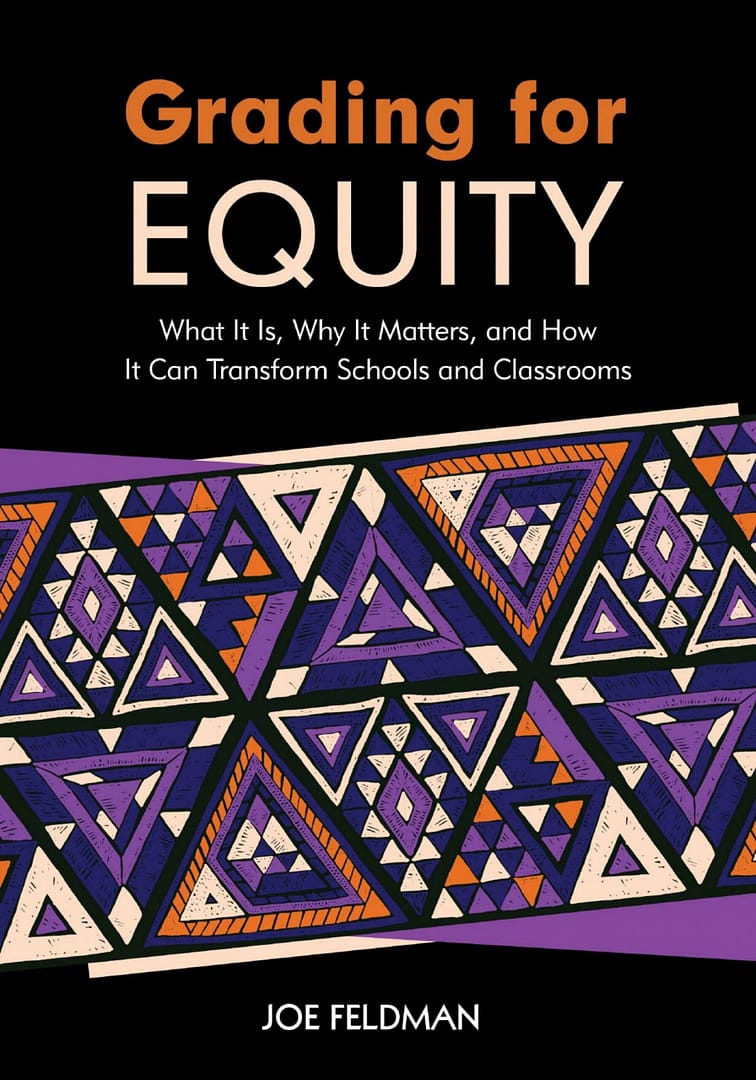
It’s good, and it also provides good arguments against grading on a curve that you could use with people. That’s number one, is this article about grading on a curve. Slightly farther out, I’m going to recommend a book. The book is Grading for Equity. It’s by Joe Feldman. It is a book that has really influenced my thinking and has gotten me considering, like, “What is it I do in my own practice?” Especially grading, but in terms of thinking about compliance and enforcing compliance versus flexibility, or focusing on learning versus compliance. Grading for Equity is a book. It’s focused on K12, but the lessons from it directly apply to higher education. It has wonderful case studies.
It is very clear and illustrates well the issues with so many types of policies that we have. It gives really good concrete ways to fix them up and to change them in ways that are more equitable. Grading for Equity by Joe Feldman is a book that has influenced me a lot. Then furthest the field, I know that you have had a lot of guests who have recommended board games, and I said I was a board gamer, so I’m going to recommend a board game. One that I just played for the first time recently, and that is called Calico, a board game. Actually, I should have checked out the publisher. Calico, it’s this very cute little game. The idea is you’re building a quilt. There’s little tiles that make a quilt.
They’re very colorful. They have lots of patterns, and you have goals about the shapes or the arrangement of patterns or the arrangements of colors or things that you’re trying to do, and that’s how you score points. Visually, t’s just really beautiful. You’re making a beautiful pattern on your board. The part that I think is best is that the way you score points in this game or the way you record points, once you’ve put together one of these shapes or arrangements that fits the goal, a cat shows up and sits on that part of the board. There’s a little cat token, and they’re all worth different numbers of points, and they all have names, and they’re all really cute.
It’s exactly what cats do. If you love cats, or if you love quilts, or if you love board games, it’s also a game that is, it can be as think-y or as casual as you want it to be. It can be as competitive or as everyone’s on their own as you’d like it to be. I really enjoyed it. It was a lot of fun. It has cats, the points.
[00:42:18] Bonni: You are blowing my mind right now. You probably know Derek Bruff.
[00:42:23] David: Yes, absolutely.
[00:42:24] Bonni: Derek Bruff, when he was on most recently, recommended the board game Wingspan. My parents don’t listen to this show, so I can tell you. You and I are having a conversation in the middle of November, and they’re getting it for Christmas. Don’t tell them, David. I’m always looking for ideas for them. My mom has been a quilter for as long as long as I’ve known that my mom was a quilter. It’s just like that’s been her life. It sounds amazing for her, but it’s fun to sometimes have things be intergenerational. Our daughter loves cats, just loves cats. I’m picturing, would this be the game that someone would be able to play who was 8 and someone who’s in their 70s?
[00:43:10] David: Absolutely. It is very quick to learn the rules. The rules are pretty intuitive. You put a piece on the board, and you’re looking for those pictures of the shapes you’re trying to make. Like I said, as casual or as hardcore as you want to be with strategy. If you just want to sit and make a board that looks really nice and see how many points it’s worth, then you can do that.
[00:43:30] Bonni: Oh, it sounds perfect. It sounds amazing. You’ve just made my holiday. Is there anything else you want to recommend that will fit perfectly with my family?
[laughter]
[00:43:37] David: Let me, let me re-up Derek’s recommendation of Wingspan. That is another favorite, and it’s another one that’s just visually beautiful, but it’s also really fun, and again, as serious or as casual as you want it to be. The problem with recommending board games is there’s no end to doing it.
[00:43:55] Bonni: Oh, it looks amazing. As we close down our time together, I’m realizing that I did have another recommendation. I implied it earlier, but I wanted to be explicit. Go look at David Clark’s website. Go look at his website and just think about for yourself, how might you make what it is that you explore in your discipline a little bit more able to peak people’s curiosity. There’s so much there. You have an entire thing where, speaking of grading resources where you can go entire Google Drive folders full of resource, you got to have some time on your hands to do it.
Because you’re going to be so curious about wanting to go– I feel like I’m still not done, David. I haven’t gone through everything that’s there. There’s so much there. That’s a recommendation I neglected to say explicitly, but I’ll be including in my list as well.
[00:44:43] David: I think it’s important to say this relates to my website but also a lot of the things I’ve talked about today, flexible due date policies, so many of these are taken from other people with their permission, of course. I don’t know that I’ve had a truly original thought here at all. A repository of sample materials is managed by somebody else. My grading ideas are coming from other people, and there’s a really friendly community of people out there who think about higher education and especially about assessments and want to help each other improve. I’m honored to be a part of that. I’m just one piece of it.
[00:45:20] Bonni: I appreciate you saying that there was a lot of, let’s say, heated debate or a flurry of things on social media, specifically Twitter in recent weeks over someone who wrote a piece that was implying– maybe not implying, maybe I’m being too soft here, had explicitly said there’s one way to do this alternative grading thing. A lot of people, “No, there’s not one way to do this.: There’s this danger to thinking that it’s my way, and it’s the right way. I appreciate your generosity with saying these are threads. I appreciate today’s conversation, David.
These are threads that we’re able to engage with each other and, yes, define some terms but to the extent that it’s helpful then to build our practice, but not to the extent that it’s helpful to build legalism into what we do. Because there’s so much that context matters in this, people’s own strengths and that matter and the course that you’re teaching and how important is scaffolding for whatever it is you’re trying to prepare. I appreciate the way that you come with your research and your communication that is so credible while also leaving room for diversity of thought and practice. Thank you for that
[00:46:38] David: Absolutely. I’m glad you brought up that particular tizzy on Twitter because, yes, it’s true. Any of these things we talk about, if someone looks at them and says, “Actually, that will not work for me in my situation because of this thing.” Perfect. What matters is you’re thinking about it. You’re thinking carefully and thinking about where those limits are, or why you’re doing things the way you are and not just letting them go on uninspected.
[00:47:02] Bonni: I think some of the dangers, too, of conversations like the one we’re having today or your book when it comes out, is thinking then that that means your thinking or my thinking has then ended on the topic. I don’t know about you, but I never want to stop changing my mind about things. Because I want to keep learning and growing, and students are going to change, and our contexts are going to change. It’s really important.
[00:47:23] David: Absolutely, yes. Teaching is not a static thing at all.
[00:47:28] Bonni: Yes. David Clark, thank you so much for coming on Teaching in Higher Ed today. Thank you for coming on it next year. Thank you. [laughs] I’m so grateful for just getting to have a two-way conversation with you today and look forward to those future conversations as well.
[00:47:42] David: It has been great talking with you as well. Thanks for having me on here.
[00:47:45] Bonni: Absolutely.
[music]
Bonni: David Clark, thank you once again for being a guest on today’s Teaching in Higher Ed episode. Today’s episode was produced by me, Bonnie Stachowiak. It was edited by the ever-talented Andrew Kroger podcast. Production support was provided by the amazing Sierra Smith. Thanks to each one of you for listening. If you have yet to subscribe to my weekly Teaching in Higher Ed update, head on over to teachinginhighered.com/subscribe. You’ll get the show notes from the most recent episode. You’ll also receive some other nuggets that do not show up in the regular podcast. Thanks so much for listening, and I’ll see you next time on teaching in Higher Ed.
[00:48:48] [END OF AUDIO]
The transcript of this episode has been made possible through a financial contribution by the Association of College and University Educators (ACUE). ACUE is on a mission to ensure student success through quality instruction. In partnership with institutions of higher education nationwide, ACUE supports and credentials faculty members in the use of evidence-based teaching practices that drive student engagement, retention, and learning.
Teaching in Higher Ed transcripts are created using a combination of an automated transcription service and human beings. This text likely will not represent the precise, word-for-word conversation that was had. The accuracy of the transcripts will vary. The authoritative record of the Teaching in Higher Ed podcasts is contained in the audio file.