Follow the Teaching in Higher Ed Podcast
About this Episode
Ian Cook helps Bonni celebrate 9 years of podcasting and his new book, Scholarly Podcasting, on episode 468 of the Teaching in Higher Ed podcast.
What is your purpose?
Ian Cook
On episode 468 of Teaching in Higher Ed
Voices on this Episode

Show Notes + Resources
- Richard Berry, podcast scholar
- Dolly Parton on the More Perfect podcast
- The Most Perfect Album (songs about the U.S. Constitutional Amendments)
- “The Most Perfect Album” review; The Columbia Journal of Law and the Arts
- Michael Bossetta | Social Media and Politics
- Vincent Racaniello | This Week in Virology
- Maria Sachiko |Cecire In Theory
- Kent Davies Preserves podcast and podcast instructor
- Stephanie Caligiuri, The People’s Scientist
- Neil Fox The Cinematologists
Affiliate income disclosure: Books that are recommended on the podcast link to the Teaching in Higher Ed bookstore on Bookshop.org. All affiliate income gets donated to the LibroMobile Arts Cooperative (LMAC), established in 2016 by Sara Rafael Garcia.”
Recommendations from this Episode
Book
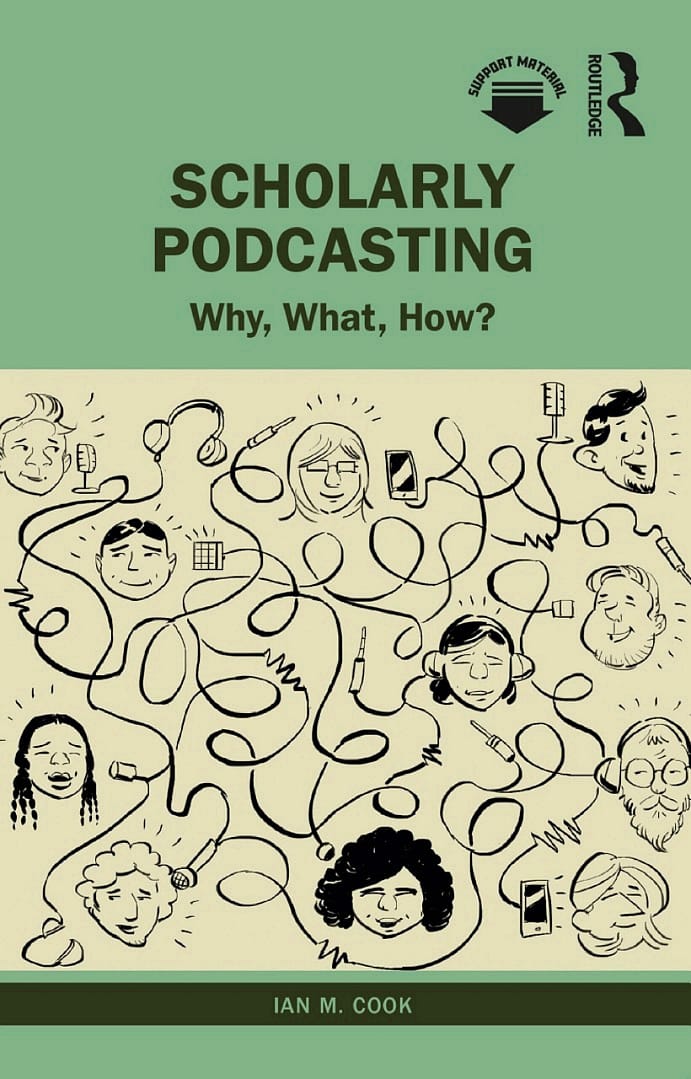
Scholarly Podcasting: Why, What, How? by Ian M. Cook
Product
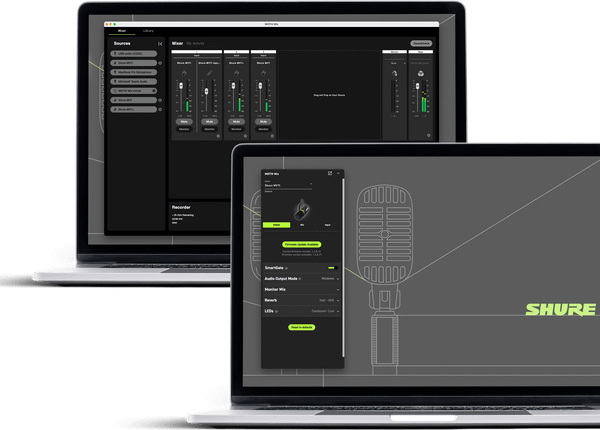
Shure MV7
Podcast
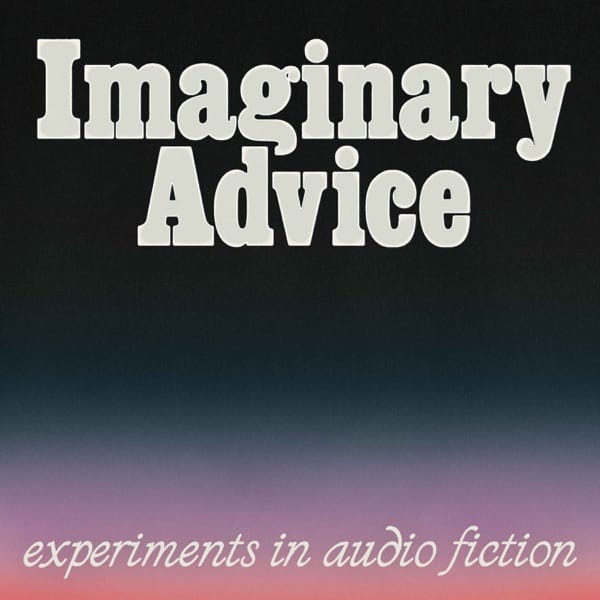
Imaginary Advice
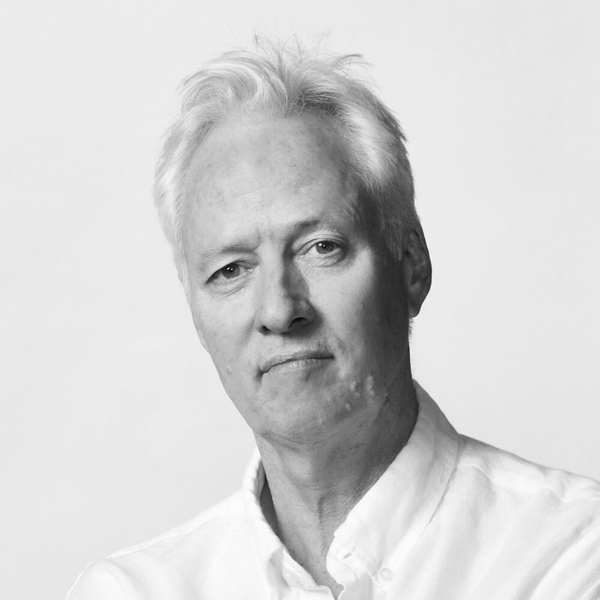
Person
John Biewen
Transcript
[00:00:00] Bonni Stachowiak: Today on episode number 468 of the Teaching in Higher Ed podcast, Ian Cook is back, this time to talk about his book, Academic Podcasting, and to celebrate the ninth anniversary or birthday of Teaching in Higher Ed.
[theme music]
[00:00:22] Bonni: Welcome to this episode of Teaching in Higher Ed. I’m Bonni Stachowiak and this is the space where we explore the art and science of being more effective at facilitating learning. We also share ways to improve our productivity approaches so we can have more peace in our lives and be even more present for our students.
[theme music]
[00:00:50] Bonni: I’m so pleased today to be welcoming back to the show Ian Cook. The first time he was here, it was episode 412 where I learned so much from him and his colleagues about teaching and learning with refugees. For today’s episode, Ian Cook, an anthropologist by training, his work focuses, as you’ll hear on urban India, environmental justice, access to higher education, and which you’ll especially here in this episode, podcasting. Ian strives to make scholarly practice more collaborative and multimodal. He is also part of the Allegra Lab editorial collective.
As you’ll hear a lot about on today’s episode, we are celebrating the ninth birthday of the Teaching and Higher Education podcast, in addition to Ian’s new book about scholarly podcasting. Featuring interviews with 101 podcasting academics, including scholars and teachers of podcasting, his book explores the motivations of scholarly podcasters, interrogates what podcasting does to academic knowledge, and leads potential podcasters through the creation process from beginning to end. With scholarship often trapped inside expensive journals wrapped in opaque language and laced with a standoffish tone, Ian’s book analyzes the implications of moving towards a more open and accessible form. Ian Cook, welcome back to Teaching in Higher Ed.
[00:02:26] Ian Cook: Really happy to be here Bonni. Really happy to be back.
[00:02:29] Bonni: Ever since you reached out about this book coming out and your research on it, I’ve been looking forward to today’s conversation. I was going to wait to air this until International Podcasting Day because I didn’t celebrate last year, and so I thought, “Oh, this would be perfect,” but I couldn’t wait that long, so we are doing the next best thing. We are going to wish Teaching in Higher Ed a happy ninth birthday. I have been airing episodes every single week for nine years, Ian.
[00:03:00] Ian: Whoo. [chuckles]
[00:03:01] Bonni: In case anyone’s wondering, I’m going to try to go for 10 and then I will give myself a proper break around holidays and around it, but I’m going for 10. I understand that you bought something, or not bought. Sorry, that’s terribly capitalistic of me. You have prepared something to celebrate the ninth birthday, or at least that’s what we’re telling ourselves today.
[00:03:23] Ian: Yes. Well, what could you want more in the world than audio recordings of podcasters talking about podcasts for the ninth birthday?
[00:03:33] Bonni: It’s a lovely gift. It’s a lovely gift and a lovely way of celebrating. I do truly love geeking out with people about podcasting. Although it may seem counterintuitive, one of the things I do a lot with people is to try to convince them not to start a podcast, and that often has to do with people not having an understanding of their own purpose and sense of meaning as to why they would want to do that. Ian, what can you tell us about how someone might think through a goal of potentially starting a podcast and what the medium might do for them in their teaching and learning?
[00:04:16] Ian: Well, maybe it’s time to unwrap the first present and maybe we can actually listen to one of the audio clips. This is Richard Berry, who’s a podcast scholar and teacher in the UK.
[00:04:25] Richard Berry: You have to think, “Well, what am I trying to do? What am I trying to communicate here, and what’s my medium?” Well, my medium is audio. My medium is podcasting. How are people listening? What are they listening on? Where are they listening? How is it going to fit into their day and what am I trying to do really? What are my tools? Your tool is when you’re writing a journal article are words, referencing, and maybe images. If you move that online and some digital academic platforms and obviously when you blog, you can hyperlink and you can add video and embed things, so again, you’re using the medium.
When you think about academic podcasting, I think you’ve got to think about the medium and that might mean bits of drama. It might mean getting somebody to voice up some quotes or you do it or you use music or use scripting. I think you’ve got to appreciate the medium.
[00:05:31] Ian: Why I brought that quote in, I think it really talks to the craft of podcasting. Everything we do, when we produce anything, is a craft. We should think about it. We think about our writing, we think about our teaching. We should think about both of those things in the same way we should think about our podcasting. The things that Richard Berry said then are super important.
An example I like to use when I’m talking to people about starting a podcast is, like you say, ask about purpose and audience. I always say, listen, I’m an anthropologist. If I wanted to explain kinship in a certain way, then kinship diagrams are great for that. They’re not going to work very well on audio. I’m not going to be able to describe that on audio in an effective way. What I’m going to have to do, if I’m going to want to start a podcast about kinship relations in a certain community somewhere, then I would start and I’m really making this up off the top of my head now, but then I would start to think about maybe what effective dimension I could get in there.
Could I get people on tape talking about their relationships to different family members or people talking about the different terms they use and the confusion they use for those terms and the untranslatability of certain terms and stuff like this? This is what I would start to think about and then put it all together. I don’t discourage people from podcasting as much as you do Bonni, but rather I try to really say, “Okay, think about it. What’s your purpose, who’s your audience,” and a whole bunch of steps after that about how you structure and put these different elements together.
[00:06:55] Bonni: Yes, I realize that might sound like an uncharacteristically negative thing for me to say, but oftentimes, people haven’t thought about what their purpose would be and haven’t really thought about that as a medium. There might be another medium for which their ideas might lend themselves better or it may be that thinking a little bit more about listening to podcasts and thinking of oneself more as a curator initially.
One of the examples I give so often is that of course here in the United States, we have a Constitution and there are a number of amendments about that. If you taught Political Science or History, you might generate your own podcast about that but I suspect you would be unlikely to be able to hire a bunch of famous and some not-so-famous bands to come and write songs around each one of those amendments to the Constitution the way that an entity has done here in in the United States. Rather you could use those podcasts, those episodes where Dolly Parton sings a song about one of the amendments and an all-female mariachi band sings a song about another one of those amendments, and thinking of oneself first as a curator before a creator. It doesn’t mean not to create, but it means perhaps doing a little bit of exploring before we go too deep.
I know one of the things that I have felt and still really struggle with, Ian, is just around how do I measure my success. I will admit that I can get discouraged that in our summertime here in the United States, my numbers tend to go down. My numbers also tend to go down in the holidays, and it’ll be a little bit discouraging where it’ll seem if you look at the little bar chart in our podcast host, I’ll go, “Oh, that’s really sad.” Sometimes Dave, my husband will send me numbers and go, “But you’re still growing every single year. Yes, there’s that, but if you looked at last summer instead of just at this year, maybe you’d feel better.”
I don’t want to be driven by those numbers in terms of my emotions and how I feel about my own success. I know that you have some things to share as well as someone else to bring into our conversation around what’s important in measuring our success and the success of the work of podcasting.
[00:09:18] Ian: Let’s listen to Michael Bossetta who makes social media and politics.
[00:09:23] Michael Bossetta: I could list a hundred reasons why downloads are not important, but I’ll only name a few here. I think first, the main beneficiary of your podcast is you. If you’re learning from it, networking with it, and most importantly, having fun, then that’s really the most important. I know it sounds cheesy, but it’s 100% true. There’s not really much you can do about download numbers. I’ve tried everything. Mainstream media pickup, plugging on other podcasts, promoting it every talk I give, and nothing moves the numbers significantly in any direction.
It’s really about the quality, not quantity of your audience. If podcast is reaching 50 people but they are peers or students in your field, your content is going directly into their ears and they’re going to be appreciative. One email about how much someone appreciates your podcast is worth thousands of downloads. Even with a small audience, I get those emails quite regularly.
I think it’s also important to visualize your downloads as people in a room. After five years, my core audience is maybe 500 people, but imagine speaking to an audience of 500 people in person. Most of us will never have that opportunity in an academic setting, but with podcasting, I do it regularly. I check the downloads every now and then, just to make sure nothing’s wrong with the podcast technically, but I’ve really come to view downloads as otherwise not important.
[00:10:43] Ian: I think that’s super interesting. Partly this, of course, your numbers are always going to depend on the topic of your podcast, right? Teaching in Higher Ed is going to have a broader appeal because you’ve got lots of people who are teachers in many different disciplines. Social media and politics, this is really specifically for people who, from a political science point of view, are interested in researching social media and there’s not that many people in the world who regularly want to listen to a podcast about that. As Michael points out, that’s totally fine because he reaches those people in the world who are really interested in that topic, both academics and practitioners and people around the edges as well, and so you basically create this audience of really core and key people.
I would say, if we are going back to linking back to the first question, if people are thinking of starting a scholarly podcast, then it goes back to purpose. What is your purpose? Maybe your purpose is to speak to 50 people. There’s 50 people in the world who research that niche topic or might potentially research that niche topic and that’s great. That would change the way you made the podcast. You could use jargon if you wanted to. You wouldn’t need to explain everything so much because you’d assume that people would know. Then if you want a much broader podcast, then you would need to change the way that you presented the information and you structured the podcast, and also, I guess, a less niche topic as well.
[00:12:07] Bonni: Definitely, for me, an anecdote to the pressure I sometimes put on myself around the numbers and wanting to see them grow is that sense of community, and what he says, the one email that will come through of encouragement. To me, that helps me, again, put less pressure on myself and feel more edified by the work that I put into it, and knowing who we’re talking to helps a lot, that sense of community. How do we know a little bit more about who’s listening to these podcasts?
[00:12:40] Ian: Well, there’s a bunch of ways, but let’s listen again. Next birthday present. You’re getting these birthday presents thick and fast today, Bonni, I’m spoiling you. Let’s listen to Vincent Racaniello. I hope I’m pronouncing that right. He makes a bunch of podcasts, but the most famous one and the most listened one, as you might guess from the title, was a very popular topic in the last few years. It’s called This Week in Virology.
[00:13:04] Vincent Racaniello: We got to know our audience over the years because they started writing in and telling us about themselves. We’ve done a few surveys, and it really, from high school kids, college kids in all fields, graduate students, professionals, academics in all fields, not just science. We have healthcare workers, we have IT people, we have laborers, we have trash collectors and house painters, and so forth. That’s amazing, frankly. Now we’re getting hundreds of emails a day and I’m learning that what an amazing gamut of people who are listening. I think we could probably be better but it’s not bad in terms of educating people.
[00:13:45] Ian: Hundreds of emails a day is probably not what most people will get unless they’re hosting a virology podcast in the middle of a global pandemic. Of course, this changes the situation. I think what’s really interesting there is there’s some interactivity built into podcasting. I wouldn’t say it’s a form of social media, but it lives in the social media sphere much more easily than text does. People feel very comfortable about reaching out to you if you make a podcast because they hear your voice, they get to know you. There’s a sense of intimacy and so on, to tweet at you or to write to you, and this is really great, and very rarely, do you get this with your scholarly written work.
Of course, you get people who engage with it in their own scholarly written work. Every now and, again, if some student takes a picture of some part of a chapter, I’ve written a book, and tags me on Twitter, I’m really happy. I’m like, “Wow. I can see someone’s–” when I’m like, what actually happens in podcasting quite a bit once you start to do it, people write to you, and people write to you in quite a nice way most of the time. I think what’s also amazing, what Vincent mentioned then, is that outside of the niche audience, you can really reach people. I think that’s actually what’s been really fascinating for me speaking to so many scholars who podcast, is that people have found out that actually, the “general public” is really interested in deep dives into scientific topics, whatever they may be.
I think back in the day, and when I was growing up, you listen to maybe BBC Radio 4, and there would be like a scientist talking for a little bit, but it was always framed by the journalist, which was often very good, because you got good scientific journalists, and I think there’s a good place for that, but then it was only ever like a snippet, a sound bite here and there, or maybe, a couple of minute interview. People actually want to listen to like an hour or more of people really deep diving into a topic. I think that’s amazing and it shows really a massive potential for making our scholarship much more public-facing and actually putting much more primacy on that as well. Not thinking of it as an afterthought but actually one of the core things that we do as scholars.
[00:15:56] Bonni: Once I get finished telling people not to start podcasts, then I tell them to start them. When I tell them to start them, my encouragement, my philosophy about it is that we are at our best in this medium when we allow ourselves to show up in the fullness of who we are. To me, it really comes down to authenticity. That’s what makes me really resonate with podcasts that I listen to relentlessly. It is the attributes that when I have shown up in authentic ways have had the most amount of people reach out to me.
I will never forget when I had an interview back out at the last minute, and I wanted to keep going with that streak. At that time, it wasn’t anywhere near as long as it is now, but I’m still very motivated by streaks, and so I asked Dave if he would sit down and I thought, “Oh, course evaluations.” A lot of people want to talk about course evaluations, so maybe I could just share what I do at the end of every semester when I get them. What’s the process I go through? This had been a class I had taught, Consumer Behavior, and it involved at the end of the semester inviting all these business professionals to come in. Students hadn’t done these posters sessions, but most people in academia think of very formal posters.
These almost just became like a carnival. I can’t really describe it any better than that. People brought food to sample, people brought little sports games kinds of things, and all these different themes and it was really, really, really fun. I knew that I wouldn’t be able to greet all these business professionals, some of whom I hadn’t seen in almost a decade. Also, I had brought my children. There was someone there to watch them, but still, they were at an age back then they did not tend to themselves without some engagement from me. I ended up where I did not get around to every one of these poster sessions on the students, but I had someone do a live stream and I went back later and watched it all the way through and was so overjoyed.
One of the comments that came out on the evaluations was someone being saddened that I hadn’t made it to their booth, again, not realizing that I had overshot my ability to connect with that many people on that many levels that day. I just got so sad because they really felt like I had not lived up to my end of my commitments to them as learners and I just began to weep. It’s what I could best describe as the ugly cry. If I had a clip of it now, I would play it because it’s really an ugly cry but you don’t see the face, you just see the so sad.
I heard from so many people who were touched that I would allow myself to be that vulnerable, and show up in such authentic ways and the hurt that they’ve experienced from course evaluations and wanting to comfort me. It was very sweet, and also being appreciative that someone was like that. I know a lot of thoughts come out in terms of authenticity. I’m wondering how you see it play out in the realm of podcasting.
[00:19:02] Ian: I think amongst people of my generation, I’m 40 years old, there’s more of that now than what there is in older generations. I think people are more used to it. We’re encouraged to more but people don’t like to talk about failures, or when people do like to talk about failures, they like to talk about failures in a way that shows how they overcome it and then became brilliant. That which it’s like another variation on the humble brag. I think a space for people to be very authentic and open and vulnerable is brilliant when thinking about teaching practice, but I think it’s also really important when it comes to thinking about the scholarship we produce as well. I would like then if we could listen to Maria Sachiko Cecire, who co-hosted a podcast called In Theory.
[00:19:50] Maria Sachiko Cecire: Like a lot of people, I had a pretty tough grad school experience and I was very, very nervous about putting my voice out there and being piled on for being wrong. I just was not super comfortable and even I think one thing I’ve had to deal with and a lot of people deal with in academia is my personal style is not the assertion of my original idea and then like boom, there it is, everyone deal with it. I much prefer to be in conversation with others and develop ideas together.
Podcasting was a great medium for being part of a bigger conversation, but doing it in a way that felt more connected to the modes of communication I’m comfortable with and I enjoy. That meant often just talking to a smart friend about a subject that I thought was important and interesting.
[00:20:42] Ian: I think that’s a really brilliant, beautiful quote because it really speaks to me about what is wrong with many academic cultures where we’re meant to put out something into the world which is finished and perfect and then defend it from all sides, which isn’t actually how we produce knowledge. It’s not been my experience of producing knowledge as a social anthropologist and I think for most people, it’s not the same.
I know from the mathematicians I spoke to in the podcast, it’s exactly the same. There’s a math podcast called In Theorem, and going back to the very beginning when we were talking about what works well on a podcast, what works well on a podcast for them is mathematicians talking and getting very excited about their favorite theorems and seeing all the messiness and the wrong turns that go behind making this proof because that’s a discipline that relies on proof.
Disciplines like ours that don’t rely on proof, that are much more iterative, and finding things out as we go, should definitely not be presented in a way that this is our unassailable knowledge. Because we’ve created this knowledge in dialogue with our colleagues, with our students, with the texts, and the podcast that we’ve read, and I think podcasts are a wonderful way to show that process in motion.
[00:21:53] Bonni: When I mentioned earlier that I love to geek out about podcasting, that tends to be a little bit of too overarching of a statement. It’s like saying, “I love technology.” Well, technology is really, really broad, and so sometimes people will say that they want to pick my brain about starting a podcast and what they mean is, what equipment should I buy and about some of the technical aspects of it and I have little to no interest in that, but what I love geeking out about, Ian, whoo, I love the storytelling aspect, I love the art form of it.
In that vein, I don’t mean this in a super hyper self-deprecating way, I don’t consider myself to do the real art of podcasting. The people who they have tons of editors and they’re out there and they’ve got what would be the equivalent of B-roll and they’re sound technicians and all of that. I do love it as an art form. I think it’s absolutely just a gorgeous, gorgeous, very intimate art form. I’m curious, for you Ian, do you see it as an art form as well, and if so, how?
[00:23:02] Ian: Well, I think the first thing to say is there’s podcast and podcasts, right?
[00:23:06] Bonni: Yes.
[laughter]
[00:23:06] Ian: I mean it in the sense that there’s podcasts like the podcast that we’re making now which does have a storytelling element, right? Because I don’t know, I guess as we’re geeking out and getting quite meta, maybe we can say, beforehand, I’d sent Bonni a bunch of audio. They weren’t surprise presents. I’m sorry to tell everybody– [crosstalk]
[00:23:29] Bonni: We had them going until then. Darn it.
[laughter]
[00:23:34] Ian: We’re spoiling it. We’re spoiling it, you know, and then at the same time is then you’ve mapped out how the best arc of a conversation will go and you shared it with me 10 minutes before we spoke and just to make sure we’re on the same page. I guess that’s come from years of experience, to make sure the podcast doesn’t just go in too many different directions at once and then sadly, not really work in terms of a storytelling form.
Then there’s types of podcasts that take this quite differently because they’re basically scripted, narrated audio, which closer to this audio documentary style, but they’re not restricted by the 45 minutes or one hour that they would’ve got on the BBC or NPR. The BBC from the UK, National Public Radio in the US for Non-British and American listeners, everyone’s international. Then you have to really think about the craft of that as well and the art of that as well.
I’m starting to do that because I’m interested in it. I went and I made a bunch of interviews with one of my interlocutors when I do fieldwork in South India. My plan now is to work on something like that. There are some people who do it way more in-depth than me and I think we should listen to Kent Davies who’s a podcast instructor and he makes podcasts together with his students.
[00:24:55] Kent Davies: When we’re teaching audio storytelling, we’re teaching them how to find that moment of pause or what interests them. We do a lot of interviews on a food truck. We have a food truck as well. We’ll have interviewees make us dishes on the food truck and we’ll record them so it becomes like a cooking show/history show. We’re interviewing them, we do a pre and post-interview about their lives, but in the middle, they’re cooking something. It becomes this narrative tool that we can utilize while the meal is being made. We can jump around throughout their life or add historical context.
We don’t just do interviews. I do a field recording course as well, because having some action, having someone make food or do something or do a tour of their house or the restaurant or what have you, lends itself to segmentation which is also something that draws people in. There’s an art form to trying to create these stories and I feel like the audio lends itself to telling those stories when we can actually get up and go and do things and be in the now and then also go back in time.
Finding the right time period is difficult to be like, we can only talk about this time period from here to here and we might be leaving out some context along the way and that’s hard I find when it comes to putting a podcast together. Because there’s stuff I want to drop for the sake of the narrative but then again, this is why we utilize footnotes within our scripts or little notes or sources or other add-ons later in the books or stuff like that, that we can follow up on that extent.
We can’t put everything into a podcast, but what we’re trying to find, and this is what I’m teaching the students, is to find that one thing. That moment of pause, that one thing you want to explore and then expand on it. You don’t want to have a series of things that you’re pursuing or it becomes too convoluted, too much stuff. We’re not looking to do like a three, four, five-parter of certain topics. We want to touch on them and then maybe we’ll add more within other media like a book or a story map or something like that.
[00:27:17] Ian: Wouldn’t you want to be in his class, wouldn’t that be so great?
[00:27:20] Bonni: Oh yes. I love what he really shares about context and also the planning and intentionality that comes into that deeper level of storytelling. We’ve been talking about this maybe in perhaps too dichotomous of a way because it’s really a spectrum and you’ve given me these wonderful gifts today and you have got a couple more to give I know, but that took planning and preparation. Of course, it comes out of your own scholarship and an entire book and all of that. There’s lots of planning that goes into that.
In some episodes, maybe someone’s written a blog post that turned into a really interesting conversation. Everything in between. I think it’s helpful to think about the affordances and when I’ve gotten down on myself and wishing that I could– sometimes people will send me emails, “I wish you would send a better synopsis in your weekly updates for what the episode was about,” and I’m thinking, I would love to be able to do that. This is not a job for me, it’s kind of a hobby and occasionally, people pay me to speak, but this is not something I would be able to do that at present.
By the way, yes, I’m aware there’s a lot of AI tools that could do that for me and don’t think I’m not tempted to start plunking down some cash for that. Anyway thinking about the affordances though that because I choose a conversation element for the particular way I use this medium, that means I’ve been able to do it every single week for nine years now. Because of the size of team we don’t have, that means there are certain affordances that this particular format would take advantage of versus we get to hear from him, I mean Kent talking about all of the planning and storytelling and getting on that food truck and what’s are the sounds and smells and tastes. How do you actually recreate that sense in an audio format and really plan for it with that level of intentionality?
[00:29:16] Ian: It’s amazing. His podcast is called Preserves, I should say and it’s part of a much bigger project. It’s exactly what I think is super interesting also in terms of scholarship is because he’s talking about how to make it also be understood as legible scholarship to others, right? Maybe for people who don’t fully understand the affordances of podcasting or to the same degree as we do so. Like to make sure it’s properly footnoted and also to start to think about how it can be critiqued as well. Because this is when we’re creating original knowledge, we want it to be critiqued, we want it to be reviewed, we want it to be cited, all of these things.
It’s true it’s difficult to put together than a summary for an interview-based podcast, maybe a full script doesn’t make so much sense, but if it’s one of these crafted audio podcasts, it might make much more sense because then you’d want people to engage in a different way. I would even say the AI tools, they’re getting pretty good now. I’ve made lots of podcasts that have no scripts, but now moving forward, I really want to have scripts. That’s what I’m really trying to do. Really thinking about how it needs to be accessible also for people who are maybe not native speakers.
I think after living abroad for so long, my Northern English accent is understandable to everybody, but when I first moved abroad, it really wasn’t, but still, it might not be and people might need to really look up the things I say, especially because I’ve been butchering people’s names in this podcast. [chuckles] They might also want to look up that as well. I think, yes, to make podcasting more legible, understandable, citable, it needs to start to get all of the scholarly apparatus around it as well.
[00:31:06] Bonni: Yes. Well, I know that there is one more area to explore and then just we’re going to end. We’ve got two more audio clips to hear. First, maybe we should have started here, how much we can learn through podcasting. How can podcasting make us smarter?
[00:31:24] Ian: Yes, so one of the things I claim in the book is that podcasting is a curiosity generator because I don’t know about yourself, Bonni, but I’m guessing it’s the case, but when I’m doing non-podcasting scholarship, it gets quite narrow, right? You become an expert in a certain thing and you read around that, and you don’t often have time to read more generally or to consume knowledge more generally in a way that making a podcast does.
Of course, we can listen to stuff, but not like really getting into stuff because we have to teach, we have to produce scholarship and aside from podcasting, because I think podcasting is scholarship, and then it’s like, okay, so now wow, that study looks really interesting. That blog post is really interesting. That book looks fascinating. That film is great. You know what? I’m going to write to that person and say, hey, would you like to come on the podcast, and they come on the podcast, isn’t that great? [laughs]
Sometimes they don’t, but often they do. Whereas if you wrote to them and said, hey, can we have a chat on Zoom for an hour? They’re probably going to say no, [laughs] as nice as it would be because everyone’s super busy. I think it’s just this wonderful thing that it’s just constantly pushing you to think about things not only directly related to your field.
I remember when I first started teaching, I was like, wow, that’s the way you really learn a text, is when you have to learn it to teach it, right? It’s a little bit the same with podcasting. You really have to read a book or think about another podcast or a film or whatever it is you’re talking about in a different way when you know you’re going to be speaking to someone about it. You start to really think things through.
Enough of me rabbiting on, we can also listen to Stephanie Caligiuri, I hope. I’m sorry, Stephanie. She makes a really wonderful podcast. She just wrote me an email today as well, so I feel very bad now, called The People’s Scientist.
[00:33:14] Stephanie Caligiuri: I would say it’s definitely made me smarter for sure. That is without a doubt and honestly is one of the motivating factors because I learned so much. It can be in an area that I am an expert in, but I’m still finding, oh, I found this new study, or there’s this new detail that I wasn’t aware of. It has impacted my outlook, I would say. I always have a bigger picture now when I approach science. I feel like I always have but one thing that I’ve realized in my department anyway and in neuroscience is sometimes the bigger picture or focusing upon the patient can be lost in regard to the goal of the research. Doing this podcast and remaining connected with the community has helped me to keep that, to help keep the patient in mind and realize that that is why I’m doing my research, so it’s given me a new perspective.
[00:34:08] Ian: Yes, and I think those two things are key. One is to learn about new things or new studies, but whilst doing them, having the patient in mind and then the audience in mind because you have to explain it to people. Because if you read something and you don’t understand it a hundred percent, you might underline it with a note to come back to it, then you might never come back to it, but if you know you’re going to have to have a conversation with someone about that, then you’re going to put a bit more effort into understand it or if you’re going to have to present that idea on a podcast.
Yes, so it goes back to the curiosity and I really think that, yes, podcasting makes you smarter. Maybe that should be on a baseball cup or a t-shirt, [chuckles] but then all the people you tell not to make podcasts might not believe you anymore.
[00:34:48] Bonni: [laughs] I know, and they shouldn’t. Ian, the last theme that we want to explore together, I think, is perhaps the most important by a lot, and that is what kinds of things that this medium of podcasting might be able to do for us in terms of liberating us.
[00:35:06] Ian: Okay, let’s open up your last birthday present..
[00:35:09] Bonni: To Doozy.
[laughter]
[00:35:13] Ian: It’s Neil Fox from The Cinematologists.
[00:35:18] Neil Fox: Okay, let’s be utopian. I think it can liberate academia, but I think that it can provide a space to do the things that academia says it wants to do and culture wants to do, industry wants to do, all this stuff saying we want to do this stuff. Well, podcasting is a space to actively do that. It’s actively a way to reach outside the walls of academia in terms of where your content goes and where your knowledge goes. It’s an active way to cultivate and welcome diverse voices, either through decolonizing the curriculum or actively employing people from different backgrounds and celebrating and supporting their work and their voice, and their perspective. I think it’s limitless, potentially.
[00:36:00] Ian: What’s nice there is, you can hear that I’ve asked him a question, probably something along the lines of what can podcasting do to academia? He’s gone, “No, let’s be utopian,” and that’s what’s great about one of the things we haven’t spoken about, about the medium is being able to hear somebody’s voice, which I really love because you can really hear unless you’re a really brilliant writer, but I mean really, really brilliant, it’s very hard to get over those nuances in the way people speak, the tone, the inflection, and all these things which you can get in a podcast.
Going back to Neil’s more utopian notions or ideas, I agree with a lot of that. Isn’t it wonderful? I feel as if the only thing I was meant to do as a scholar, aside from the teaching and then the admin and all the other stuff, was to write journal articles and book chapters, I’m not sure I would stay in academia, because for me, that would feel just too limiting. Knowledge is this amazing, flowing, overspilling thing, which has become constrained by a very particular form of writing that gets put into very particular forms of measurement so that we can have points with our university and blah blah.
Oh God, it’s just depressing sometimes, Bonni, and I’m just like, wow, there’s this new thing. The university, the big machine of the university doesn’t really know what to do with it yet, so we can do what we want right, at the moment, and I hope we can keep doing what we want because podcasting has this DIY punk ethos from the very beginning because there’s a podcast like this, there’s a podcast like the one that Kent Davies makes, totally different things, so it’s very hard to measure in the same way.
You can bring in people, you can collaborate in different ways. You can collaborate with people inside and outside academia in different ways, so I’m super hopeful. I think there’s just so much amazing stuff we can do in terms of opening up, liberating knowledge, and just being scholars in a much more fuller, human, and open-ended way.
[00:38:08] Bonni: This is the time in the show in which we each get to share our recommendations and I have two, kind of two and a half, but I’m not going to cheat, I’m not going to cheat here, so I don’t recommend any books that I have not read yet. I’m just going to tell people to be having your eyes peeled for the forthcoming book called Podcast or Perish, Peer Review and Knowledge Creation in the 21st Century by Hannah McGregor, Ian Cook, and Lori Beckstead. Again, I’m not going to recommend it officially till it’s out, but I just last night got the final draft, is that what it is, Ian, final draft or among a final draft? So, be watching out for that.
Today, I would officially like to recommend Ian’s book that we’ve been speaking about today, and he’s been sharing clips from, that’s called Scholarly Podcasting: Why, What, How? Ian, if you don’t mind, I’m wholeheartedly recommending it, but I’d love to have you share just a little bit more about what we might expect if they do crack the cover on this one.
[00:39:10] Ian: Yes, I’ve been really bad at marketing, right? I’ve not told you anything-
[00:39:13] Bonni: This is your chance.
[laughter]
[00:39:14] Ian: -about the book.
[00:39:17] Bonni: This is the moment.
[00:39:18] Ian: Yes, so what I did for the book, I interviewed 101 people, scholars who made podcasts, are all podcasting scholars, and it was wonderful. It was sort of what I did during lockdown on and off and people from many different disciplines, one of whom is Bonni, who I’m talking with now, but many of 100 of a people as well. Then I started to analyze everything and categorize everything and I started to write the book. Then as I was writing the book, I realized my words were getting in the way a little bit, so then what I did was, I just started to quote people and then curate the quotes together in a way under certain headings.
Each of them has short introductions, more anecdotal or slightly conceptual, but I wanted to make a book which was not just for people in my discipline, so I’d get rid of all the jargon and really keep it open for anyone who is a scholar who is thinking about making a podcast or who is interested in the phenomena. It’s about the phenomena of scholarly podcasting. So many people are doing it. I wanted to find out why they’re doing it.
A lot of people were like, it’s because it’s like, well, I called it an insurgency against the current system we have of knowledge production. Let’s try doing new things. I asked like, what is they’re doing? I think for a lot of people it was a curiosity generator or a curiosity feeder, and I said, how? They said, it’s a craft. We spoke a bit about that. Then I detailed in step by step how you can go about and make a podcast, not just in my opinion, but in the opinion of all the people who’ve been making these amazing podcasts.
[00:40:45] Bonni: Thank you so much for the book and for your generosity just on an ongoing basis. I love how many different conversations we’ve had across so many different topics. The second thing I’d like to recommend is actually a person, and his name is John Biewen. I’ve actually recommended his podcast series before called Scene on Radio, and specifically his second season of the podcast called Scene White, which is an examination of how race has been constructed throughout history. I have admired his work for quite some time.
I did get a little bit concerned when on Twitter he mentioned that his time with his particular department at Duke University was coming to an end. I get very nervous, Ian, the world changes, and I thought, what is going to happen to him? Well, as I might have expected, we didn’t need to worry about him because on May 10th, 2023, there was a press release that came out, which states the following, “Journalist, audio producer, and host of the Peabody Award nominated podcast Scene on Radio, John Biewen, joined the Kenan or Kenan, speaking of mispronouncing things, Institute for Ethics at Duke University as Director of Storytelling and Public Engagement on May 1st, 2023.
I am absolutely thrilled to now know where he’s landing. I recommend that people follow him as a person. You want to talk about a brilliant storyteller and collaborator in the world of podcasting. He is incredible. The work that he’s done, again, I’ve recommended so many of the past seasons of the Scene on Radio, just love his work and I cannot wait to see what happens next. By the way, in case you’re wondering like I am, will his audio work specifically continue on the Scene on Radio? The answer is yes, it looks like.
I’ve got one quote I’m going to share and then I’ll pass it over to Ian for whatever he’d like to recommend, this quote from David Toole, the Interim Director of the Kenan Institute for Ethics says about John. “He’s an incredibly gifted storyteller as the remarkable success of Scene on Radio attests. Adding John and his podcast to Kenan deepens the institute’s longstanding commitments to public-facing programs that focus on social inequities. His engaging, thorough explorations of racism, gender, democracy, and the climate crisis could not be timelier and I’m excited about his plans for future seasons.” As am I, Ian. I’m going to pass it over to you now for whatever you’d like to recommend.
[00:43:36] Ian: Well, I feel quite bad, Bonni, because I was thinking, what should I recommend? The last time I was on, I think I remember going to have a buff like … and I thought I should try to be more serious. Then I was thinking maybe something useful for podcasting and I was actually going to recommend the mic, but then you started like being down on– [crosstalk]
[laughter]
[00:43:59] Bonni: No, you should punish me for that statement.
[00:44:03] Ian: No, it’s totally fine. I’m also the same, but usually, I don’t know what to recommend, but then I just used one like last week and it was because I went to an anthropology workshop and they asked me to make an audio essay up on the theme of the workshop, so I was going around and interviewing people. Most of the time, I was using a shotgun mic like this and that, but then when I wasn’t, I had a mic for interviews. I found this new mic, it’s very new, I think from Shure, the MV7, and this is no affiliate links, at least not on my side.
What I liked about it was is because it would, and so people who have no technical expertise at all, it can just be USB, plug into your computer, download a software, it works out a lot of stuff for you. I think stuff like that’s really great because it removes the tech worry from podcasting. Because it also has an XLR, so a professional-grade output as well. If you want to upgrade in the future, you could still use that mic as part of your setup. I’m always happy when I see the high-end companies trying to make entry-level models which are good because then it reduces the entry barriers and I think that’s really good because I want people to make podcasts.
Then I thought, okay, well, then as Bonni was being down on mics, maybe I’ll also recommend a podcast which I love in terms of storytelling. It’s called Imaginary Advice. It’s by a writer called Ross Sutherland based in the UK. It’s a wonderful bunch of experiments in audio fiction. It’s a fiction podcast and really cleverly uses also the digital as well within it. I won’t give too much away because you’d have to listen to some of them to work it out. Really funny, really smart, really makes you think.
It’s been going for a bunch of years. I don’t know, he’s on a little bit of a hiatus, but the last podcast he’d say he’s going to come back. I just think he’s just like a really wonderful way in which something that I probably wouldn’t find the time in my life or I didn’t really know so much about contemporary experimental literature and this is just been a wonderful window for me to listen to that. I’d like to have two recommendations as well because you had two.
[00:46:13] Bonni: I also may be a total hypocrite here because not only do I apparently enjoy learning about mics, I also watched a YouTube video about this exact product the other day, and it’s so fun. Now you’re making me want to go check out the Shure MV7. We contain multitudes, Ian, we contain multitudes.
[laughter]
[00:46:32] Bonni: That’s all I can say. Ian, thank you so much for today’s conversation and what I consider to be an ongoing conversation. Thanks for all of the work that you put into making today’s episodes such a success. I cannot think of a better person to celebrate these last nine years in podcasting and all of the ways in which podcasts, in general, have shaped my life and the lives of so many people.
[00:46:56] Ian: Thank you so much for having me on and being also one of the podcasting pioneers, scholarly podcasting pioneers. I think it’s been really important that you’ve shown people how it can be done and the fact you’ve been doing a podcast every week is just an amazing testament to the thirst that people have to find out about these topics. It’s been, like you say, you’re not getting rich from it, you’re not getting famous from it, but you are really serving a community, so I think it’s really important that we recognize the amount of work that goes into making a weekly podcast as well. Thanks for having me on, and thanks for the last nine years, and happy birthday. I brought you a cake but we’re online so I’m going to have to eat it myself.
[00:47:38] Bonni: Okay. Maybe just mail a slice.
[theme music]
[00:47:46] Bonni: Thanks, Ian Cook, once again for being a guest on today’s episode of Teaching in Higher Ed. Today’s episode was produced by me, Bonni Stachowiak. It was edited by the ever-talented Andrew Kroger. Podcast production support was provided by the amazing Sierra Smith. If you have yet to sign up for the updates, the email updates from Teaching in Higher Ed, head on over to teachinginhighered.com/subscribe. You’ll receive the weekly emails with the most recent episodes, show notes, as well as some other goodies that do not show up in the regular show notes. Thanks so much for listening and being a part of the Teaching in Higher Ed Community. I’ll see you next time.
[theme music]
[00:48:45] [END OF AUDIO]
Teaching in Higher Ed transcripts are created using a combination of an automated transcription service and human beings. This text likely will not represent the precise, word-for-word conversation that was had. The accuracy of the transcripts will vary. The authoritative record of the Teaching in Higher Ed podcasts is contained in the audio file.