Follow the Teaching in Higher Ed Podcast
About this Episode
Bonni Stachowiak shares some reflections on a new year on episode 447 of the Teaching in Higher Ed podcast.
Take your work seriously, but don’t take yourself too seriously.
Bonni Stachowiak
On episode 447 of Teaching in Higher Ed
Voices on this Episode

Show Notes + Resources
- Meyer lemon
- Maha Bali
- Awareness & Action in Intentionally Equitable Hospitality
- Intentionally Equitable Hospitality series for facilitators/teachers
- Kelly Corrigan Wonders Podcast
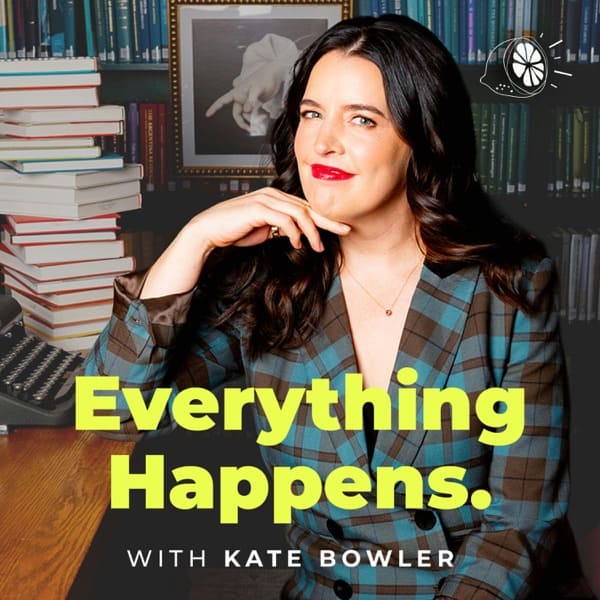
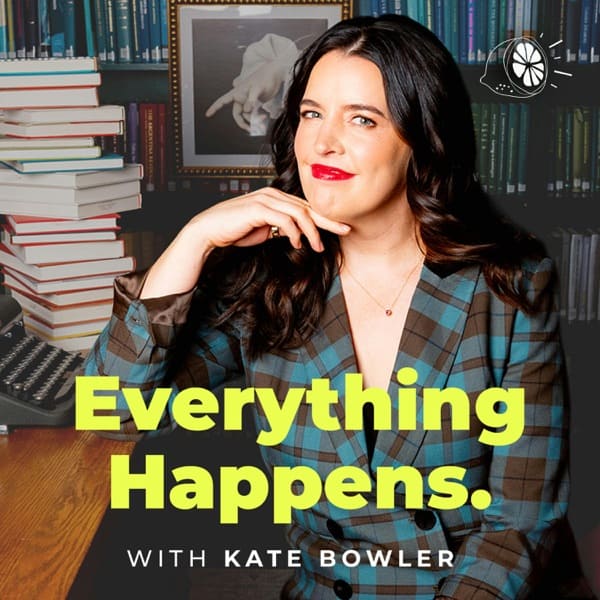
- Everything Happens with Kate Bowler Podcast
Affiliate income disclosure: Books that are recommended on the podcast link to the Teaching in Higher Ed bookstore on Bookshop.org. All affiliate income gets donated to the LibroMobile Arts Cooperative (LMAC), established in 2016 by Sara Rafael Garcia.”
Transcript
Bonni Stachowiak: Today on Episode number 447 of the Teaching in Higher Ed Podcast, Reflections on a New Year.
[music]
Welcome to this episode of Teaching in Higher Ed. I’m Bonni Stachowiak, and this is the space where we explore the art and science of being more effective at facilitating learning. We also share ways to improve our productivity approaches, so we can have more peace in our lives and be even more present for our students. This morning I decided to get out and get some dirt under my fingernails.
Our lemon trees, Meyer lemons, are– I was going to say blooming, but they’re way past the blooming stages. They have all kinds of bright yellow lemons on them. I noticed something interesting. There was a lemon, ready to be picked which had been wedged right between two branches and literally looked as if it was about to burst. It couldn’t grow any longer because it was stuck right between these two branches.
As you might imagine, as I removed said lemon, this was not an edible lemon. Some of you might say, “Of course it was edible. Just cut into it,” but it had seen better days, let’s just say that. It got me to thinking about how vital pruning is in both teaching and learning, and how important it is for us to be leaving room for growth. I wasn’t the only one doing gardening and today was not the only day with gardening.
Yesterday I started out. We have a atrium in the middle of our house, basically a room with no ceiling on it, and we have a couple of bushes there that tend to not last more than six months to a year depending on what year it is, and it had come time that the Ficus trees that we had out there needed to be removed. I was easily able to remove one of the Ficus trees myself. I have an injured shoulder, so this tends to be a one-handed or one-armed project, if it involves any strength needed or any weight, and by the time the second Ficus tree had decided that its roots had gone all the way down to the bottom and sides of the pot, it was not going to go easily.
I needed to recruit my teammate, Dave. He ended up doing the much harder work of not only removing that second tree, but going out and purchasing new ones and getting rid of all of the dead leaves in there. By the way, I can’t wait until after I’m done recording to go spend some time out in that beautiful outdoor room, doing some reading. The roots of course, got me thinking about how rooted we need to be in terms of our values when it comes to teaching, and to continually be asking questions. Something that a lot of you are asking questions about along with me is how artificial intelligence is currently impacting and down the road will continue to expand its immense impact on higher education.
In fact, one of you joined me in asking questions. Andreas Giesbert wrote to me from FernUniversity in Hagen to ask if I was going to be doing any episodes on artificial intelligence or machine learning, and what can it do and not do and what does this all mean in terms of education? Andreas, I have good news for you because not only will I be doing an episode, but I actually have a number of episodes that will be coming out in the next couple of months to explore this topic in depth. If you are like me, and like Andreas, and like so many others asking questions about the ramifications of artificial intelligence and machine learning, you are in for a treat as I invite some experts on.
Maybe experts is too strong of a word. I mean people who are asking questions and and wrestling with the impacts of all of this. Look forward to those conversations to come. Another place that I really enjoy having conversations besides on the podcast is in community with many of you. Maha Bali who has been a guest previously, I consider her a friend. She is going to be working with colleagues and putting on a three-day online event for Intentionally Equitable Hospitality, a series for facilitators and teachers. As of this recording, if you’re listening as it’s coming out, you’ll want to quickly go access the link in the show notes to find out more information because that will be kicking off soon, and something that will be of benefit to many of us.
You’ve probably heard me talk about the MYFest Mid-Year Fest that I did in the middle of August of 2022. These are many of the same planners and facilitators. Something for you to be looking out for and if you do miss that because you listen to this a little bit late, be definitely following the work that they do so that you can find out about future events. They’re continuing to emerge with other events and ways to help us to create spaces that are more hospital and welcoming for others.
We are wrapping up some holidays and it’s been so fun to see our kids have their curiosity and sense of wonder expanded. It’s always such a fun thing just to see their delight in their experimentation, and I did a little bit of that on my own, of course. The last thing I want to leave us thinking about in this new year, although for some of us that are on semester systems, it’s halfway through our year, is just to remember to have fun and to have that sense of curiosity ourselves and not trying to take our work– Yes, take our work very seriously, but don’t take ourselves too terribly seriously. That would just be my encouragement to you.
This is the time in the show where I get to share some recommendations. Two of my absolute favorite podcasters got together and did not just one, but two podcast episodes together. Let me first tell you who they are in case you’re not familiar with them. Kelly Corrigan does the Kelly Corrigan Wonders Podcast. That is just a delightful interview show. She recently has been interviewing people who teach in a higher education context and I’ve really been enjoying those episodes. Very vulnerable, explores lots of meaningful topics, and is just a wonderful, wonderful listener.
The other podcaster who joined forces with Kelly is Kate Bowler. She has a podcast that’s called Everything Happens. It is a play on words a bit because there is an expression, “Everything happens for a reason.” As a stage 4 cancer survivor, Kate definitely wants to just focus on the beginning part of that statement, everything does happen, but not necessarily for a reason, the way some people try to ascribe.
These two individuals got together and did two episodes. The first episode is entitled Cheers to the Crappies. They go through their year and look at four different categories of just awful things that they experienced. It might sound really hopeless, and why would you want to listen to people talking about that? Well, they laugh during the episode. They also get raw and get real, rather than just trying to act as if bad things don’t happen. Bad things can be tolerable when we are going through them with people who can show up for us and be good listeners and be present for us, and they do that for each other so wonderfully well.
The second episode is called, Here’s to the Happies. They look at four different categories of joyous things that happened to them throughout the year. They’re such both episodes, they’re just such a fun listen. Each one of these podcasters aired the episodes on their respective podcast, so you could get to it in either place, but I’ve got some show notes and links to the recommendations if you would like to check those things out.
As I think about ending the last year and as we go into a new year, I’m incredibly grateful for you. I know that I end every show when I talk about that and it might seem flippant, and I’m sure sometimes it is, as I’m just trying to finish off a recording if I’ve had technical issues or I’m tired or any of those things. Day in and day out, I truly am grateful to have people who care about teaching, and care about learning, and want to get better at it, and know that it’s messy.
I know that I am not perfect and I’m going to show up in imperfect ways, but I’m going to continually now since June of 2014 be wanting to ask those questions. Be wanting to fail– I don’t want to fail, but knowing that when I inevitably fail, that I will get back up again, and try it again because it’s worth it.
When it works, it’s absolutely the best things of life. I truly am grateful for you, whether I’ve ever heard from you or whether you just send me a quick email or a note somewhere on social media to let me know that some episode or the show has had some kind of impact on you. Those are absolute treasures to me. I hang on to them and I always know I’m going to need to look back because there are going to be some seriously hard times in my own teaching and also in producing and hosting this podcast.
Thank you for the gifts that you’ve given me before, and even if you’ve never reached out, I know that you’re there. I am able to see the downloads and just get to see this group of people that care deeply about facilitating learning. Whether you just discovered the show or whether you’ve been along for many more years than that, I truly am grateful. Thanks for listening to this episode, Episode 447, and for all the ones that are to come in this very New Year. Speaking of which, I just went through and put in the episode numbers across the various systems that I have and very much look forward to celebrating that 500th episode.
In June of 2024, we’ll be celebrating 10 years of Teaching in Higher Ed. I’ve realized I have to celebrate year nine first in June of 2023. I do tend to look forward a lot and it’s easy to do with this podcast. The joy that it brings me to be in community with you. Thanks for listening. I’ll see you next time on Teaching in Higher Ed. Very many of these episodes reminding you that if you have yet to subscribe to the Teaching in Higher Ed weekly update, you’ll be able to receive
[music]
an email with me with resources that don’t show up on the show as well as the ones that do. The show notes will come in to your inbox and you can head on over to teachinginhighered.com/subscribe in order to subscribe to those weekly email updates.
If you would like to share the show with someone else, please feel free to do that informally, or if you’d like to just make sure more people see it. Whatever player, podcast service it is that you use, you can put a little star, give it a rating, give it a review so more people can find out about the show.
Today’s episode was produced by me, Bonni Stachowiak. It was edited by Andrew Kroger. Podcast production support was provided by Sierra Smith. Thanks for listening. I’ll see you next time on Teaching in Higher Ed.
[music]
[00:12:51] [END OF AUDIO]
The transcript of this episode has been made possible through a financial contribution by the Association of College and University Educators (ACUE). ACUE is on a mission to ensure student success through quality instruction. In partnership with institutions of higher education nationwide, ACUE supports and credentials faculty members in the use of evidence-based teaching practices that drive student engagement, retention, and learning.
Teaching in Higher Ed transcripts are created using a combination of an automated transcription service and human beings. This text likely will not represent the precise, word-for-word conversation that was had. The accuracy of the transcripts will vary. The authoritative record of the Teaching in Higher Ed podcasts is contained in the audio file.