Follow the Teaching in Higher Ed Podcast
About this Episode
Lindsey Kealey shares ways we can revive our own curiousity on episode 437 of the Teaching in Higher Ed podcast.
Curiosity is learning-focused.
Lindsey Kealey
On episode 437 of Teaching in Higher Ed
Voices on this Episode


Show Notes + Resources
- Dr. Lauris Santos shares how to make our work more fulfilling
- Dr. Daniel Siegel
- The PAWsitive Choices podcast
Affiliate income disclosure: Books that are recommended on the podcast link to the Teaching in Higher Ed bookstore on Bookshop.org(https://bookshop.org/shop/teachinginhighered). All affiliate income gets donated to the LibroMobile Arts Cooperative (LMAC)(https://bookshop.org/shop/LibroMobile), established in 2016 by Sara Rafael Garcia(https://www.cuentosmobile.com/bio).”

Transcript
[00:00:00] Bonni Stachowiak: Today on Episode Number 437 of the Teaching in Higher Ed podcast, Reviving Our Own Curiosity with Lindsey Kealey.
Welcome to this episode of Teaching in Higher Ed. I’m Bonni Stachowiak, and this is the space where we explore the art and science of being more effective at facilitating learning. We also share ways to improve our productivity approaches, so we can have more peace in our lives and be even more present for our students.
[music]
[00:00:42] Bonni: Lindsey Kealey is an Instructor of Education and Human Development and Family Sciences at Oregon State University. Lindsey provides professional development to teaching faculty in higher education to reignite their passion for teaching and equip them with best practices in student engagement. She is the author of PAWsitive Choices Social and Emotional Learning and the host of The PAWsitive Choices podcast. Lindsey earned a Bachelor’s of Science in Human Development and Family Sciences with an emphasis in child development and holds a Master’s of Arts in Teaching.
Her university work as well as her experience coaching families and teachers helped her craft a curriculum that integrates interpersonal neurobiology, trauma-responsive practices, and problem-solving to help children thrive. Lindsey Kealey, welcome to Teaching in Higher Ed.
[00:01:39] Lindsey Kealey: Thank you so much for having me. It’s great to be here.
[00:01:42] Bonni: I have had so many different guests from a myriad of disciplines but not too many who have the privilege of teaching or at least teaching the people who teach the real, real little ones. What are one or two things that come to mind for you about big differences between teaching those very littles and those of us that have a few more years on us?
[00:02:06] Lindsey: That’s a great question. I think something that I often see comes down to mindset. I know there’s a lot of research surrounding growth mindset with Carol Dweck, but I’ve noticed when I’ve worked with younger students, those who are in elementary school, middle school, they tend to have more of a growth mindset, they have that belief that they can learn anything, they can do anything, and then which is really exciting to capitalize on that and just expand that growth mindset.
Then, in my experience working with undergraduate and then graduate students, I found that sometimes they’ll fall into more of a fixed mindset, like, “I have to get this grade, and if I don’t, that will reflect poorly,” and so maybe a little more perfectionism I see on that end, but across the continuum, it’s so wonderful to work with humans who are trying to learn and improve themselves.
[00:02:53] Bonni: I’ve definitely noticed that too. We have a daughter who right now is eight. One thing that I’ve been trying to watch with her is that I definitely see both her and her brother having that growth mindset, but I had read recently somewhere about being careful not to control because they do still get frustrated. I was trying to teach her how to do a ponytail the other day, and she was getting really frustrated by that.
I thought, like, “Okay, well–” I was trying to focus on my own thing, so I was trying to attend to at that exact moment, and so I thought she was ready to give up for the day, we were done for the day, so I said, “Okay, did you want to stop and try again another day or did you want to keep trying?” She wanted to keep trying but also just keep griping about it … Yes, the growth mindset is there, but I do think that desirable difficulties that gets talked about in the literature, we do still need to let our learners of all ages experience that frustration and not try to protect them from it. I’m lecturing to myself now, can you tell?
[00:03:58] Lindsey: All research is research, right?
[00:04:00] Bonni: Yes.
[00:04:00] Lindsey: I feel like I’m constantly doing that. How beautiful that you took that moment with the ponytail and you’re being mindful and really zoning in on, what kind of coaching are you doing? That’s so awesome. Something that I’ve thought of is the difference between productive struggle and healthy striving versus the opposite, which can be that perfectionism. Something that Brené Brown talks about, and I know you and I connected before about how we’re both big fans of her and her research. She really describes it to as being different.
If you have more of a curiosity mindset, then you come to the table saying, “What can I learn from this experience?” But then if you have more of a perfectionistic mindset, your focus is on what will they think of me. Curiosity is learning focused and then the perfectionism is other, “What are they thinking of me?” That’s something that I really try to hit home on the first day of all my classes, whether it’s undergraduate or graduate classes, I just give all of my students permission to be curious and to really let go of any of that perfectionism and give them space for that. I think that’s something that I also am practicing myself.
[00:05:10] Bonni: That can be such a hard thing because so many of our contexts that we ended up in, in our research, it really does sort of instill that perfectionism, and if you can persist through it and not realizing the baggage that we can sometimes hand down to the next generation of people coming up through our academic programs, it’s so difficult for some people to break through that. I’ve even found my own failures as being some of the greatest gifts that I can give to people in terms of when they can see that.
I had to, especially when I started teaching at the graduate level, I was not prepared at all for that, and the perfectionism also how it came to giving others feedback, what for me in my own workplace is as natural as breathing was not something that they really had had in their culture, so I really had to unlearn some things for myself, and I actually had to use humor more early on just to help everybody relax a little bit without trying to sound condescending, but it’s so difficult.
I know one of the things you and I are going to be exploring today, that can be another really big challenge, is when we lose some of that curiosity in our own teaching and we start to sort of lose some of that spark for when we’re teaching this same thing over and over again. I’d like to start just by having you share a little bit of where you’ve seen this challenge show up for people.
[00:06:37] Lindsey: Yes. Well, great question. I found it occurring in myself. I started off teaching actually during COVID in higher education. That was talk about a learning experience, the very first class that I did, the first day of class, and again, I had that perfectionistic mindset, like, I want to show up, I want this to be an amazing experience even though it’s Zoom and it’s kind of wobbly and new for me.
I go to start the meeting, and everyone– I have all my students show up on their little screens and then I say, “Welcome, I’m going to go ahead and share my slides” and then I go to click and it says, “You need to ask the host for permission to share your screen,” this is like a three-hour lecture, and so I’m asking, “Is anyone here the host?” Talk about, like, just letting go of all perfectionism there.
Everyone had to leave the meeting, we had to restart it, and gosh, that was the struggle from the very get-go. At the beginning, it was new in my teaching. It was new content. Even being on Zoom was new for me. I think when there’s that newness, although there’s some struggle there or some challenges, I think we’re more apt to have that passion. Like you’re learning alongside of them, we’re all learners, but what happens once you know the content and you’ve gone through your syllabus and now this is the third or fourth or fifth, tenth time you’ve taught the specific course, what do you do with that?
I know that personally, after I had taught this course on Zoom a couple of times and then in-person three times, I realized about the second or third time I had taught this course that I needed to get myself more passionate again about the content, because it was getting a little dry. This is not something that it’s uncommon, I talked to a lot of instructors and professors who find this as well after they’ve taught a class multiple times.
[00:08:22] Bonni: Yes. When I was in my 20s, I used to teach the same exact eight-hour Microsoft applications classes. I used to look up a word in the dictionary in the mornings, just a random one, and then try to use it a few times during the teaching without letting anyone on. I’m not sure that’s the best strategy. I feel like you might have some better strategies than look up a random word in the dictionary and try to use it. What’s some of the guidance either that you’ve used for yourself or with other faculty that you’ve coached?
[00:08:53] Lindsey: Basically something that I’ve found and that I’ve given this tip to other educators in higher education is build in a teaching tip time or whatever you want to call it. For me, I started off as it being the first 5 to 10 minutes of each lecture and then eventually I bumped it to 20 minutes, but basically, this is the start of your lecture where you find content and maybe it’s not something that’s in the textbook, it’s something that you’re currently really excited about in the research.
Now, of course, it should somehow connect to your objectives and your standards for that class, but when you find something that you’re excited about, maybe you just listened to a podcast or you just read some amazing research on the weekend about neuroscience, take that first 5 to 20 minutes, if you can allow for that, to really expand on that and just let your students in, “Hey, everyone, this is something that I’ve recently learned about, and I am so excited to share with you.”
I always call it nerdy now, I’ve completely embraced the term as being a nerd, I’m totally okay with that, but really being able to share that excitement with your students, and it really helps you be a learner again.
[00:09:58] Bonni: You’re reminding me a little bit of Sarah Rose Cavanagh’s book, The Spark of Learning, where she talks about just the importance of those emotions and then some of the research that Daniel Goleman has done around just the contagiousness of our emotions. If we’ve lost the ability to feel that spark ourselves, it’s certainly going to be inflicted upon those people who were supposedly teaching, so that’s great. You think about all of the emotions we might bring in, you talked about something that’s current, which is kind of sparking your curiosity, or is it humor?
Again, we got to be careful that the humor and the things we’re bringing in are tied to the class in some way like you really pointed out to us, because generally people don’t want to come to the class just to have the fun or laugh or whatever it is that we’re trying to do. We do have to make sure that it ties, but yes, that can be so helpful as well. Other thoughts around where we might either go astray when it comes to having that kind of spark in our own teaching or other ways we might foster it within ourselves or each other?
[00:11:03] Lindsey: Yes. Great question. There’s something that I’ve recently learned about and it’s, I don’t know if you’re familiar with Dr. Laurie Santos from The Happiness Lab. She is a Professor of Psychology at Yale University, and she has explored something called job crafting. She has talked about how it’s connected to building a positive work orientation. Job crafting is described as the act of redesigning the specific work you do to match your personal strengths and values and thus amplify the sense of meaning you get from your job. How can we really reflect upon those two things, your own strengths and then your personal values?
When you’re really clear on both of those, then that really allows you to not only enjoy your job more, but it gives you more of a sense of meaning. Not only do those nerding out teaching research tips at the start, that certainly helps, but when you have the deeper sense of meaning, because you know your strengths and also your values, that’s another tip that I give, is to really hone in on that job crafting in your practice.
[00:12:05] Bonni: Yes, I like what that does for us in terms of recognizing the power that we really do have to shape things. I also want to be careful when we talk about it, of course, to not oversimplify it in the sense of there are also ways in which a system that we might be trying to influence is going to push back at us when we try to do that, so it’s definitely a lot of both but even just reflecting though on what does give us that sense of meaning can really be a help to us.
We were talking earlier about the infectious nature of our own emotions. I know you have some other advice to give us on how we might help spark the interest for our students and their own engagement in our classes.
[00:12:49] Lindsey: Yes. That’s so important too, as you mentioned, honing in on our students’ interests and engagement. There’s something called neural fatigue. Basically, it’s like if you go to the gym and you’re lifting weights and then your muscles start to fatigue, you have to pause to recover for a moment. That’s what happens in our brain with our neurons.
Neural system fatigue, within five minutes of sustained activity, cognitive activity, neurons can become less responsive. That’s why it’s important when we think about learning, and all learning is brain-based, and so with our students, we want to be mindful of that neural fatigue. We want to be able to connect with them, kind of read the room. Then, you mentioned infusing humor, and sometimes if we don’t know the why behind doing a certain practice, we’re less likely to do it, like, if your doctor says to not lift anything heavy after a surgery, I’ve made that mistake where I did.
Then that was bad for my healing, but he did not say why, so when we know the why, the why behind infusing humor, infusing narrative, doing those things helps neural fatigue. When a student is just about to zone out because they’re distracted or their brain is just fatiguing, when you’re able to infuse some humor or integrate a personal narrative, even narrative about content in your class.
For instance, in my lectures that I do, I do Human Development and Family Sciences as well as Education. I have experienced with myself teaching kindergarten. I have some really funny and hard-to-believe stories about, being an educator, being an elementary educator, when I can share a story that’s tied to whatever content I’m teaching at the graduate level, that can re-engage their brains, and so being mindful of their cognitive capacity and their attention span is so important.
[00:14:36] Bonni: Yes. I know another big part of that is to then find out from them what’s connecting and what’s not. What are some of the things that you do to try to turn that attention over to them and to find out what they’re learning and what their experience is like?
[00:14:51] Lindsey: I do something called a keep-start-stop survey, and this was something that was suggested by Oregon State University where I teach. It was a great idea. A keep-start-stop survey is something that I do actually every couple of weeks during the term, but when I first did this, I did it after the second week, the middle, and then towards the end of the term, but I just made this as a Google survey, and I sent it out to students as part of our online learning, “Here’s your reading.”
Again, the reminder that you’re welcome to click this link and fill out this survey, where they can put, “Can you please start doing maybe more work in small groups?” “Maybe it’s more time to allow us to reflect our private reading time.” That’s start. Then the keep part, “What do you enjoy about our lectures? What do you want me to keep doing?”
Then I put stop/adjust. The adjust part, that’s really important. That’s a place where students can feel safe to say, “Can you try something else?” I want to give students permission to do that, and I think it’s important to keep it anonymous so that way they feel more comfortable. I also say, “You’re welcome to include your name if you’d like me to follow up with you.”
One of my students, she said in her survey, she put, “You talk really quickly. Would you mind slowing down the pace of what you’re saying?” She was an English language learner. I went home, and I talked to Thomas, he’s my husband, and I said, “Can you believe a student said I need to slow down a little bit?” He’s like, “Well, you do talk very fast.” He’s heard me on webinars, and he’s heard me when I’m doing these types of lectures.
I was able to pause and be reflective and realize, “I think maybe I do talk a little fast,” almost like an episode of Gilmore Girls, we’re just going, we’re hitting everything, and so that was helpful for me to be a little more mindful of how quickly I’m disseminating information and maybe to allow for those powerful pauses.
[00:16:46] Bonni: When we started our conversation, we started with what is one or two of the differences that you see between teaching the really young ones that you, again, have either taught or taught other people how to teach and some of those with more years under our belts. Now I’d like to, before we get to the recommendation segment, just have you reflect a little bit on some of the similarities, what’s sort of universal in teaching and learning regardless of age?
[00:17:14] Lindsey: That is an excellent question. I think regardless of age, everything for me comes down to connection. I believe it’s City Slickers where that one character saying, “What’s the one thing?” “What’s your one thing?” I think that’s helpful, and that almost ties back into what are your values and what is the one thing that is important to you. I recently did a TED Talk and you have to identify what’s your throughline. For me, that throughline is connection. Not only because it’s a personal value but because it’s actually neurobiologically found in their research.
Connection is so important, it’s a fundamental need that humans have with one another, and it’s really at the core of motivation. Motivation is something that our young students really need to have to learn and also how are we motivating our students who are in graduate school as well? I think with younger kids, some teachers do the Skittles or the Stickers. When you’re in graduate school, certainly that’s not as helpful, but I do bring scones and muffins sometimes.
I think food is just great across the board. It’s very helpful to have your brain feel nourished but going back to the concept of connection, what are ways that we can help students feel safe emotionally? Give them permission to express their feelings. When we focus on the connection that we have with them, we’re ultimately making them more successful for learning and we’re building positive associations around school, and that’s what we really want. We want our students to stick with it.
In higher education, we want them to graduate and we want them to jump into their field of whatever their field is and be motivated and inspire themselves. Some ways that we can connect with our students is doing something called the Three C’s that I’ve established. The first one is to connect. Let’s say, what is an example that you can think of, of a student who maybe was making a request? Like you mentioned before, you had to give yourself a little bit of time. Is there something that comes to mind in terms of a student who maybe is a little dysregulated or you’re trying to connect with?
[00:19:16] Bonni: Oh, sure. I think a lot of times this can happen at the start of a term or a semester where I need to remind myself of what it’s like to either come back to or experience a totally new environment with all of those things. As many years as I’ve done this, it’s like, “Okay, it’s a big deal.” I think part of that can be, and you spoke about this earlier, then how do we get them to engage to let us know where they’re at? This, I suppose, goes back to connecting. Once we can get a better sense of where we’re all coming into this space, that can really help us be more effective, I think, yes.
[00:19:57] Lindsey: That’s huge. I had a student who was telling me that she was feeling dysregulated, and she felt there’s too many papers that you’re assigning, and she was kind of upset about the amount of work, and so I started off by connecting. I said, “Thank you so much for coming to me. I can tell that this is upsetting or you’re just acknowledging the feeling. I totally understand that this feels like a lot for you. Thank you for letting me know.” That’s the first C, connect.
The second C is to calm. You want to help their brain settle, so I said, “I’m so glad you brought this to my attention. I’m going to think about this. What about next class on Thursday? Would you come a little early and then we can connect about this? I want to make sure that we’re both settled, and we’re feeling calm when we discuss this, and I want to give it the proper attention.” Just like you mentioned, it’s important to give yourself time as well.
Then when she came back to class a little early, I got to the third C, which is collaborate. I was able to say in that little moment, “Hey, thanks for checking in.” Guess what? She was so much more regulated. Her brain was settled, and she apologized. She was like, “Oh my gosh, Lindsey, I am so sorry. I had so much going on. My husband and I are on the brink of a divorce, and so I am just exploding all over the place on people.” I said, “I get it. I totally understand.”
I said, “I want to collaborate with you. How can I make this work for you? What can this look like in terms of helping you be successful? These papers or these assignments are important, so would an extension, would that be helpful for your learning?” She said, “That would be amazing. Can I have two extra days for that discussion post.” I’m thinking, “Wow, it was only two days she needed.” It wasn’t that big of a request, but giving her space to do that, really that third C, which is collaborating, is so powerful and important. I think using the three C’s, connect, calm, collaborate with little kiddos, adults, and it works excellent in partnerships. Thomas and I use it all the time.
[00:21:53] Bonni: These sound like good practices all around and especially how interrelated they all are as well because anytime we put it all on another person or take it all on ourselves is generally not the best way to go in a number of contexts like you talked about. Well, this is the time in the show where we each get to share our recommendations, and I wanted to share a movie. I haven’t shared a movie in a long time. It is a movie that I probably shouldn’t even be recommending because Dave, I know next time he comes back, he’s going to want to recommend it because I think he’s seen it three or four times now, and it is Top Gun: Maverick.
Many of us, generations ago, watched the first Top Gun, which I think was 30 years ago. Am I remembering that right? Then they came out with another one and apparently Tom Cruise has not aged a day in 30 years, so I wasn’t expecting to like it even as much as I did. It’s just great, has a lot of that same feel of the first movie but then also feels very current. It’s got some great music in it and some great acting and adventure and really kept my attention the whole time, so I want to recommend Top Gun: Maverick for everyone’s movie watching enjoyment. Lindsey, what would you like to recommend today?
[00:23:05] Lindsey: Well, I would like to second that recommendation. I saw that in theaters. Did you see it in theaters as well?
[00:23:10] Bonni: Okay. Well, now that since you brought it up and now I’m ruining Dave’s future recommendation. He went and saw it in one of those, I don’t know if it was technically an IMAX movie, but the one of the ones that’s really, really got this spectacular sound. He said that the seats were vibrating even though they weren’t designed to be vibrating but just that it was so magnificent. He said he literally wants to go back to see it again just in that one theater because it made such a difference.
He could see why apparently Tom Cruise hadn’t wanted to release the movie until it could be out in theaters because it made such a difference, so now Lindsey, I’m going to ruin this all for you. I saw it on our 20-year-old TV, 51-inch TV without very good speakers, and it was still good, but I do feel like, as Dave says, “You’ve got to see it in the theater with all the big thundering sound,” and that it was truly magnificent.
[00:24:01] Lindsey: It is amazing. In my theater, people stood up and clapped at the end. Even in some of those–
[00:24:06] Bonni: Oh.
[00:24:07] Lindsey: I know. You know there’s really powerful moments. People were clapping during the movie. I’ve never had that experience before where people just start clapping. That was really powerful.
[00:24:16] Bonni: Oh, [crosstalk]
[00:24:16] Lindsey: That makes me think about just the inspiration and enthusiasm of those who watch it. It’s motivating. It makes you feel more committed, like, what am I doing with my life? How can I live more passionately and fully? I feel like that movie encompasses what we wanted to– Still not saying that all of your students have to end the day where they’re clapping for you, but man, how can we just have a little of that essence and have that something we integrate. Anyway, I second that recommendation.
[00:24:44] Bonni: Oh, I love it. Oh, it’s great.
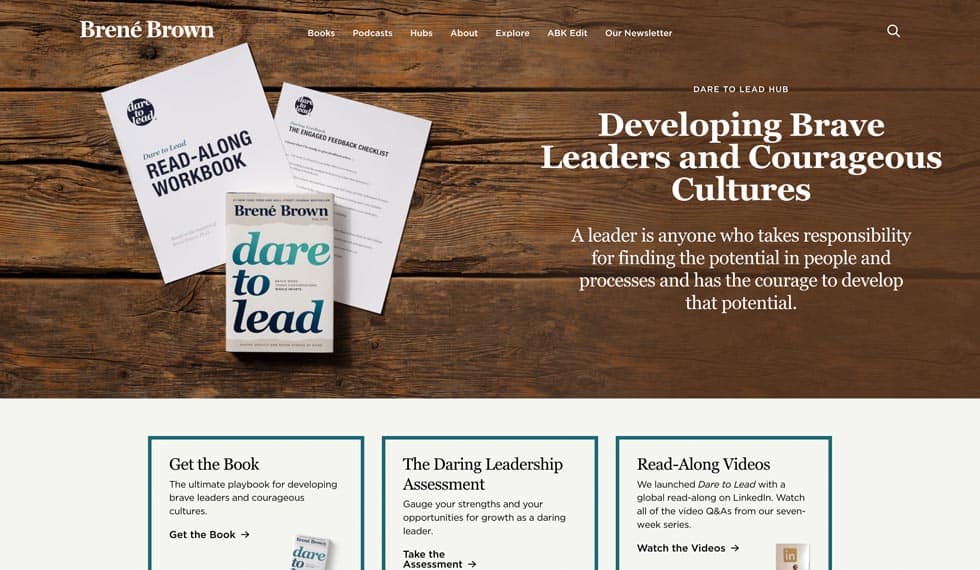
[00:24:46] Lindsey: My other one is Brené Brown’s book called Dare to Lead. It’s incredible. As educators, we are certainly leaders, and so that’s a great book. Part of that book is the exercise of your values. What are your values? I know I touched on that earlier, but sometimes when we just say, “Oh, find your values,” that can be kind of vague. In this book, there is a resource, even if you don’t read the book, you can just Google it, Daring Greatly Values Exercise. I think it’s a two-page PDF file print. It has a list of a bunch of different values anywhere from vulnerability, courage, honesty, authenticity. There are a lot of them. Adventure is one.
Pick two to three values. When I first did it, I had like 20, so I had to keep honing down and down. Then once you get clear on that, you’re able to realize, “Okay, what does it look like when I’m living within my values? What does it feel like when I am being in connection and relationship with other people?”
I think that really helps you get granular with making that come to life, living within your values, and in doing so, you are really creating that positive work orientation and getting more specific with crafting your job and to something that you want to keep doing, you want to keep teaching for. I want to be like one of those professors, I know that I had, who was in his 70s. I think he taught geology back when I was doing my undergraduate, and I just thought, “I want to be like him someday.” He was still passionate even at that age.
[00:26:13] Bonni: Well, I know that if people want to explore these topics even more that we just barely touched on today, you have another resource to share with them before we close the show.
[00:26:23] Lindsey: I do. As I mentioned before, I’m a major nerd. I’m part of a group people call us neuro nerds. Anyway, I love the brain. I have a podcast, and so I dive into these different concepts more deeply like the three C’s, ways to engage the brain, build collaboration. If you want to learn more about these different concepts, you’re welcome to check out my podcast. It’s called The PAWsitive Choices podcast. The word positive is spelled with a PAW, like an animal’s paw print. The reason for that, at first when I named it that, someone said, “Is your podcast about– Are you a dog trainer?” I had to say, “No. I don’t train dogs. I don’t bathe them.” Lots of confusion around that.
The reason why there’s a PAW is because in the curriculum that I do for younger kids, the animal characters use their paws to do American Sign Language towards one another. There is that nonverbal communication. It’s called The PAWsitive Choices podcast. I just like to create content. Whether you’re a parent, an educator of younger grades or if you’re in higher education, there’s just basic life principles in psychology that I think are applicable for everyone.
[00:27:30] Bonni: Well, I will tell you, I didn’t even bat an eye when I saw the positive spelled PAW because our kids at their school, they use pawsitive. There are pawsitive exchanges, and it’s this type of currency, like, all built in to making those good choices, so you were already speaking my language when I saw that, but I could see how dogs might come into some people’s minds, for sure, or some type of animal. That’s so funny. Well, it has been so great connecting with you, Lindsey. Thank you so much for coming on the show and being willing to share a little bit about your experience and things that you’ve learned along the way.
[00:28:06] Lindsey: Thank you for having me.
[00:28:10] Bonni: Today’s podcast episode was produced by me, Bonni Stachowiak, and was edited by the ever-talented Andrew Kroeger. Podcast production support was provided by the amazing Sierra Smith. Thanks to each of you for listening to today’s episode. If you have yet to subscribe to the weekly Teaching in Higher Ed email, I encourage you right now to, well, unless you’re driving, but pretty soon to subscribe to the weekly update at teachinginhighered.com/subscribe. You’ll receive the most recent episode’s show notes as well as some resources that don’t appear on the podcast episodes. Thanks so much for listening, and I’ll see you next time on Teaching in Higher Ed.
[music]
The transcript of this episode has been made possible through a financial contribution by the Association of College and University Educators (ACUE). ACUE is on a mission to ensure student success through quality instruction. In partnership with institutions of higher education nationwide, ACUE supports and credentials faculty members in the use of evidence-based teaching practices that drive student engagement, retention, and learning.
Teaching in Higher Ed transcripts are created using a combination of an automated transcription service and human beings. This text likely will not represent the precise, word-for-word conversation that was had. The accuracy of the transcripts will vary. The authoritative record of the Teaching in Higher Ed podcasts is contained in the audio file.