Follow the Teaching in Higher Ed Podcast
About this Episode
How to Say Goodbye, with Warren Doody on episode 415 of Teaching in Higher Ed.
Saying goodbye and letting go through some type of ritual is important.
Warren Doody
On episode 415 of Teaching in Higher Ed
Voices on this Episode

Show Notes + Resources
Recommendations from this Episode

Transcript
[00:00:00] Bonni Stachowiak: On Episode number 415 of the Teaching in Higher Ed podcast, Warren Doody is back to tell us how to say goodbye.
[00:00:11] Production Credit: Produced by Innovate Learning, maximizing human potential.
[music]
[00:00:18] Bonni: Welcome to this episode of Teaching in Higher Ed. I’m Bonni Stachowiak, and this is the space where we explore the art and science of being more effective at facilitating learning. We also share ways to improve our productivity approaches so we can have more peace in our lives, and be even more present for our students. I am welcoming back my friend and colleague, Warren Doody, to today’s episode. He was with us back on Episode number 357, where we also talked about a form of goodbye to a former colleague, Elizabeth Leonard. He’s back today to talk about saying goodbye again, only in this case, how to say goodbye in terms of to our students as they graduate, or also to colleagues as they retire or go and embark on other adventures in their career.
A little bit about Warren Doody, Warren is the Associate Dean of Education, Arts and Humanities, professor of English, and the current chair of the English Department at Vanguard University, where he has taught for over two decades. His range of classes runs from Shakespeare, to American literature, to a variety of creative writing courses. He is a working playwright, and his original scripts include Life Without Parole, Development, and Enlightenment.com. His plays have received productions in New York, Los Angeles, Canada, and throughout the United States. Warren Doody, welcome back to Teaching in Higher Ed.
[00:02:09] Warren Doody: Thank you, Bonni. I really appreciate your inviting me here to talk about kind of a new genre that I’ve been working with lately, which is writing retirement speeches, and in one case, writing an obituary. As a playwright, I think narratively, but nevertheless, this has kind of come as a surprise.
[00:02:29] Bonni: We’re going to start today’s episode with just such a goodbye, and it’s actually with someone who has also been on the show. The sample you’ll be reading for us today is for a dear colleague, Sylvia Kane, who after decades of teaching both in public schools and in a higher education context, is retiring, as of this recording, days away– We’re days away from her retirement, although I understand the one place where I’m able to at least hold in my own heart, Warren, is I know she’ll stay involved with the teaching of teachers in at least some ways in her next season in her career.
I’m just going to pass it over to you in a moment and have you read the speech, but to give a little context, you’re going to mention early on in the speech, people by the name of John Wilson, a long-time history professor, Pam Crenshaw, a long-time librarian at Vanguard. Then the one character in your play of sorts, one that I know we’ll have to just briefly explain, although we won’t be able to do it justice, is a former colleague, Vince Gil, who is infamous at our institution for having a flair for writing emails, shall we say, that would be talked about for some time after he would send them. That’s a little bit of context for people. Warren, I’m going to pass it over to you to recite the speech that you gave at Sylvia Kane’s retirement.
[00:03:52] Warren: Thank you so much. I was put on the agenda for Sylvia Kane’s retirement ceremony a couple of weeks ago, and this piece is entitled “Sylvia.” In the last few years, I’ve been asked to speak at a number of these events. Most recently, I spoke at John Wilson’s retirement celebration, and the piece that I read was entitled “The Day John Wilson Saved my Life,” which centered around a faculty luncheon that went sideways prior to my hire in 1999. Last year, I spoke at Pam Crenshaw’s retirement celebration, and the narrative I used as an emblem of my friendship and working relationship with her focused on a moment during my second year here, where she, like John, saved my life.
Before that, I spoke at Vince Gil’s retirement celebration, who over the course of my surprisingly long VU career has provided a number of dramatic moments intended to save my working life and keep me moving forward, and which, as an aside, led to the invention of a new word. When I was asked to speak today on behalf of Dr. Sylvia Kane, my mind instantly began searching for something similar on which to frame my speech. An event, an incident, an administrative faux pas that required the same kind of dramatic rescue that John and Pam had engineered. Alas, I drew a blank.
I’ve worked closely with Sylvia for several years, and we’ve had many interactions about many things, but try as I might, I could not recall anything that would focus a speech such as this. I knew it was there, I just had to find it. I began searching my inbox on Outlook, looking for an email or exchange that spelled drama or trouble, an e-fight or two, anything that would enable me to properly structure this piece. Again, I came up short.
There was no drama to be found, no gossip, no issues, nothing that a playwright such as myself could use to create conflict, recognition, reversal of fortune, some moment in time that I could use to build a dramatic structure. Instead, my search uncovered threads like the following– A Monday morning in October, 2016, I sent an email to Sylvia with the subject line, “Changing curriculum requirements for English department.” The message involved a simple ask, increasing the number of curriculum units from 27 to 30, and a question, could we do this on our own, or would we need to go through Sacramento?
Sylvia responded 16 minutes later, attaching a document, “English teacher preparation in California, standards of quality and effectiveness for subject matter programs,” and a matrix explaining and diagramming the document. These had been retrieved in those 16 minutes from the CTC website and then sent to me. 42 minutes later, she sent additional resources; a letter from the CTC about subject matter in the English department, and an all caps document entitled, “CTC single-subject matter waiver program in English, required courses for all prospective English teachers who wish to waive the CSET.” 26 minutes after that, I was copied on an email Sylvia sent to Erin Sullivan, the CTC director, inquiring about the waiver program for the English department.
The next morning, she let me know that after sending the email to Erin Sullivan, she called her, and they discussed the specific steps necessary for our department to make changes. Later that afternoon, she asked to meet with me to discuss these steps, the documents, and the materials. We met for an hour, and she specifically mapped out the strategy for approval, typing up a detailed yet easy to follow step-by-step plan.
I continued combining through my emails from her, there were other similar email threads. There were more attached documents, there were forwarded websites and resources, a spreadsheet listing potential English adjuncts, recommendations for coursework, and there was what I can only describe as supernatural patience for my many questions about the changing landscape of education. I never had to ask for anything twice, and I never had to wait longer than an hour or two to receive whatever it was that I thought I needed. Sylvia’s door was always open.
I could stop by at any time of the day, any day of the week, and she would drop whatever she was doing and give me her complete undivided attention, as if talking to me, despite the fact that I had interrupted her, was the most important thing in the world. And yet, as I sifted through these years of correspondence and memories, I still couldn’t find that one dramatic moment on which to build my speech…and spreadsheets, useful to be sure, but not dramatic, so I took my search out into the world.
As the deadline dawned, I sent emails to colleagues, students, and staff, asking them to share their thoughts about Sylvia. I had no sooner hit the send button, that the responses began pouring in like a flood. “Sylvia,” a colleague wrote, “is dependable, diligent, decisive, and has a tremendous work ethic, the hardest worker I’ve ever known.” Another wrote, “Sylvia is curious, collaborative, collegial, and she is very gentle, willing to hear complaints and address them meaningfully.” An email appeared from a student who wrote that, “Dr. Kane is smart, skilled, sensitive, and encouraging, and is kind when she needs to share corrections with us.”
Every minute or two, my inbox would go, bing, bing, bing, and I’d be greeted with another set of accolades– Steady, solid, supportive, impeccable, irreproachable, unimpeachable. In other words, all of the adjectives that speak to great leadership, to departments that runs smoothly, and to the backbone of a good organization.
I began today by referencing people who have saved my life, and it should be obvious by now that Sylvia has been saving lives all along, mine, and everyone fortunate enough to work with her, and it is dramatic– Not in a one-time climatic Aristotelian sort of way, but steadily, and so consistently that the impact is sometimes invisible– By always leaving her door open, lending an ear, modeling integrity, and by just being there year by year, week by week, day by day by day.
[00:10:20] Bonni: Oh, it makes me emotional just hearing it again. You captured her so well, and now you’re going to give us some advice about how someone such as those of us that maybe haven’t had as much experience as you have had to do this. I know it starts with a story, how do we begin embarking on how to say goodbye when it comes to a story?
[00:10:41] Warren: Well, the first thing I do in this process– And again, I’ve written five of these in the last couple of years, which usually leads people afterwards to ask me when I’m going to retire. Maybe when you get asked to write a retirement speech, it’s because you’ve been around for a while, clearly. The first thing I do is I try to find a significant and personally meaningful moment that serves as a symbol or a microcosm of the relationship I have with that person. The more personal and specific, the better. Then I use that moment to create a narrative, a story, and I just found that that works so much better than a set of bullet points about the person. Bullet points often become generic, but a narrative shows the individuality of the person.
That moment, I embed it in a narrative, a story, and it just seems– For me at least, it seems to encapsulate who that person is. I’ve been fortunate so far with the various people that I’ve been asked to speak about, to find that moment, but what was curious about this particular example, Sylvia Kane, is that I couldn’t find the moment. I couldn’t find that one dramatic moment that she and I connected about. With some of the others, it was easy, something popped into my mind immediately. I mentioned John Wilson, who was a history prof, and he’s somebody who literally saved my working life at the faculty lunch before my hire because he– It could have gone in a very confrontive direction, aggressive direction. He jumped in and offered a lifeline, and it just broke up the emotion in the room.
With another colleague, Pam Crenshaw, she had really gone to bat for me my second year at Vanguard. I was on a term contract, they were going to open it up to a search. She stepped in because I had her son in my class, and really advocated for me. The next thing I know, and it was sort of mysterious and never fully explained, my contract was turned into a tenure track contract. I just received an email that said, “You’re now a tenure track,” which, again, kind of mysterious. I don’t know how it happened, but it doesn’t matter.
With Sylvia, we’ve had a great working relationship for a number of years. It really sort of commenced– She got hired, I believe, in 2012. In 2016, I became the chair of the English Department for the second time, and so I had to work closely with her. There was never a real dramatic moment. Instead, there was this steadiness and consistency that when I started to put this together, this speech, I just marveled at, because a lot of the people that I work with, and a lot of the people obviously that Bonni works with too, it can be a bit of a roller coaster, but Sylvia was just–
She was steady, she was low-maintenance, she was hardworking, she was consistent, she was dependable. All the things that her colleagues and the student whose email I shared, said about her, she was just this sort of unflappable person who got so much done and really did make our lives so much easier because she was willing to go that extra mile.
[00:14:09] Bonni: And you did it all through story– Your story was the quest for finding a story. Another thing I know you emphasize is that we should be thinking about joy as we say goodbye.
[00:14:22] Warren: Yes. I’ve attended, obviously, a lot of these retirements celebrations as well, and there have been a few that felt more like a wake than a celebration. There was a sadness about them. Somebody was walking away into sort of an unpredictable, unknown future, and there was a heaviness in the room, or outside, or wherever the speech or the celebration was taking place. I think that it’s really important when you’re writing a speech like this or giving a speech like this, that you focus more on the celebration, more on the joy, more on who that person was and is, and what they’ve contributed, and really sort of usher them into this unpredictable, but for a lot of people– For Sylvia, certainly, she was doing a happy dance at the end of that retirement celebration. She was so excited about what the future held.
I don’t mean to imply at all that my speech or the other speeches set that up per se, but there was a tonality that I was searching for that would enable that process so that it was more joyous than sad, more celebratory than the sort of wake that I referred to. Now, an Irish wake is different. If it was an Irish wake, you could probably get away with it. I remember when my father passed away, it was a long time ago, in 1987, and we had an impromptu traditional Irish wake where we told great stories about him. That ended up being joyous in its own way.
[00:16:13] Bonni: The tone is joy, the message is gratitude.
[00:16:18] Warren: Yes. When I’ve worked on these various speeches, I’m trying to find a way to not only thank the person from my perspective, but to write it in such a way that the community, whoever is there, whosever in attendance, sort of vicariously can thank that person as well. Again, in the case of Sylvia, lifelong educator, totally committed to her students, completely committed to colleagues, completely committed to the total university program and to education in general. Somebody like that needs to be commended. They need to be thanked. Sylvia has been in service to others her entire life, which is quite remarkable, and I have never seen evidence of ego per se. I know she has one, we all have one, but she doesn’t have any kind of overinflated ego. She’s all about giving to others, being in service to others.
[00:17:26] Bonni: The last bit of advice that I know you have for us as we might think about writing a similar or preparing to give a similar speech has to do with thinking about our purpose. You do have a cautionary word for us about how humor may or may not play into a sense of purpose.
[00:17:44] Warren: Yes. I’ll start with an anecdote from a play that I wrote, the most recent play I wrote. It was a holiday play, and I got advice from the then chair of the artistic committee. Her advice was advice I took to heart and made work in the play, which is that people– When people are going to see a Christmas show, by the time they walk out of that show, they want to feel better about Christmas, about the holiday season, than when they walked in. If there’s a Christmas play, for example, that doesn’t do that, then in some ways, it’s sort of a failure in terms of that genre. I apply that to writing a retirement speech. People should feel better– Everyone, especially the person being spoken of or written about, should feel better by the end of it.
That sort of connects in a way with this idea of, it should be joyous and not a wake. I think humor can be a double-edged sword. We had another graduate education faculty member retire last week, Mikki Gil, who has served for 55 years in the classroom. Our Interim Provost, Chip Espinoza, told a joke about sending a letter to Mikki and Vince, and it was addressed, “Dr. Vince Gil and Mrs. Mikki Gil.” Mikki got on the phone right away and told Chip a thing or two, because she was also a doctor. Chip ended up using that moment of humor self-deprecatingly, and it was a big hit. I think if you’re going to use humor, it’s best to poke it at yourself, because some humor is edgy, and this is a time to really celebrate the person, and not necessarily poke fun at them, even if it’s in a gentle way.
[00:19:54] Bonni: All right. We have just a few minutes to share any advice that we have about saying goodbye to students, specifically before we get to the recommendations segment, which is how we’ll close out today’s show. I just wanted to share one– I know, Warren, you and I have been texting back and forth about today’s conversation. One that I have found really important is to name the moment. I think a lot of times I was sharing with you, Warren, that people will say, “These are the best days of your life–”
By the way, please, if any of you out there listening to this can heed my words, please don’t tell people these are the best days of their life, because I really, for their sake, hope that that is not the case. I do think acknowledging the difficulty of that moment … a season. I talk a lot about identity, how so much of our identities get wrapped around our work, and for you, these last number of years, a lot of your work has been wrapped around an identity of being a student. When we have our identities ripped away from us, things that we have sort of clinged to in that way in healthy, and probably, in my case, in unhealthy ways sometimes, that we need to mark it, to name it, to not shy away from the difficulties that they might be facing.
That was just something that comes to my mind as I think about saying goodbye to students. In some ways, at least in my experience, Warren, it’s never a complete easy goodbye, because some people are coming back the next semester. It’s not like you’re saying goodbye to an entire group of people in that exact moment. It’s maybe a mini goodbye, it’s a longer-term goodbye, but just to name the moment that we’re all experiencing and give people an opportunity to reflect I think is helpful. What comes to mind for you when you think about saying goodbye to students?
[00:21:40] Warren: Well, I agree that if your college life is described as the best days of your life, then that implies that it’s all going to be downhill from here, which is probably not the most useful way to look at your future. What I would say though, in my time at Vanguard with students, particularly the English majors, and to some extent, the theater majors as well because I teach in that department also, is that they may not be the best years of their life– We don’t really know yet because they’re still moving forward, but there is a predictability to going to school, as difficult as it may be. Even if they’re holding down multiple jobs, even if they’re going without sleep trying to get everything done, but there is a predictability to it that can be kind of comforting.
In a smaller private school like Vanguard, these students get to know their professors, they get to know staff, they get to know the campus, and they’ve got all their friends around. To be wrenched away from that through graduation can be a little scary, I think, in some ways. I had one student this year, she really just had a– She had a great year, and she was starting to grow a little anxious about graduating, despite all the work, despite looking forward to some free time and not having to write papers every week or every night. I just told her, I said, “You know, this door is closing, but it’s not locked. I’m still accessible.” I tell that to all my graduates, “I’m still accessible. You can contact me via email, you can stay in touch.”
I have a lot of students that I’m still in touch with. I have one student, Rini Skies, who was one of the first students I had at Vanguard in– I think it was 1999. He and I still go out to lunch at least once a semester, just to stay in touch, stay current, and there’s something pretty great about that.
The other thing I do is, every class I teach, I make sure that I have that moment on the last day to say goodbye. I take the time at the end of that last class to thank them for the journey they’ve taken with me. I tell them that I’ve learned as much from them as, hopefully, they have from me. I make sure to remind them how intelligent and wonderful they are, and that I’m going to miss them, but that again, they should stay in touch. I find that that helps me as well, because I get attached to students as well, and that whatever that collective is in a classroom, it can’t be reproduced again. It really is a one-time 16-week experience, and so I think that saying goodbye, letting go, and doing it through some kind of ritual is important.
[00:24:44] Bonni: You’re reminding me so much of a piece that’s been rattling around in my head ever since going to see our daughter’s theater performance a couple of months ago, and watching the guy– I mean, he’s quite a bit younger than I am, but this isn’t his first trip to the rodeo, if you will, but watching– They performed in a box theater, and so I got to see actually a better view of the guy who was directing the performance than I actually got to see of the kids, which was an absolute delight. Because watching the expressions on his face as one child would make the same joke that I’m sure he has seen different children make 50, 100 times, whatever. For him, in that moment, it was the first time he’d ever seen it.
I just felt pouring out of him the joy and delight that … comes when you get to see students exhibit the skills, and the talents, and all of the things that you’ve been able to foster, and as you said, walk alongside them. So you’re reminding me so much of that piece.
This is the time in the show where we each get to share our recommendations. Before I share mine, I have to remind listeners about an episode that I did actually with another colleague of ours, Warren. His name is Andy Stenhouse. One of the areas he researches in is what is known as positive or negative work-life spillover. In Episode 301, he talked about, rather than us using an analogy of balance, work-life balance doesn’t really show up much in the literature as being an appropriate or recognizable analogy to use. Instead, the idea that our times at home can spill over in positive or negative ways into work, and then vice versa.
I’ve been thinking so much about that, and each time I get to see Andy, we’ll have conversations that somehow wind their ways back to that idea. I still, Warren, I’ve been hoping that since I saw what I’m about to recommend, I would see Andy at a lunch or something so I can talk to him, but as of this recording, I have not actually found out if he has watched the television show I am about to recommend. So Andy be ready for the conversation here coming up.
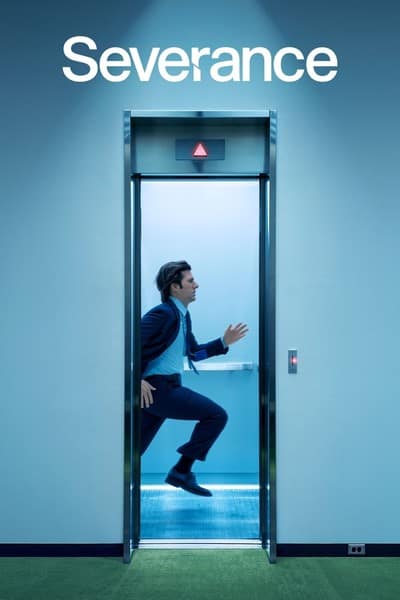
Today, I would like to recommend an Apple TV+ television show which is called Severance. It has an absolutely fascinating premise where the workers of this company, which is called Lumon, they allow themselves to have a surgical procedure performed on their brains that separates their memories. When they’re at work, they only have memories and meaning-making that relates to their work context. Then when they leave the building, they go through the elevator, they are then transformed to people who outside of work, only have memories that are associated with their personal lives.
The premise– I mean, there’s so many things that it gets you thinking. It’s a hard show to describe because it’s both a drama, there’s a lot of suspense there, but it also has some comedy. In a prior episode, I did share some of the comedy that involves– Like, their rewards programs, Warren, involve waffle parties, which absolutely cracks me up. I just think how often workplaces will completely miss the mark when it comes to encouraging, edifying, or appreciating people with things that are so mismatched … waffle parties. Although I suspect, actually, at Vanguard, we might be able to put on a pretty good waffle party, who knows.
It is a wonderful show. Season one, I just– It kept bending my mind in some really, really interesting ways, and it definitely gives people a lot to talk about. That is my recommendation for today. Warren, I’m going to pass it over to you for yours.
[00:28:41] Warren: I’ll just add real quick, I’ve heard of Severance also. I haven’t seen it, but I’m looking for a new show, and maybe I’ll start that tonight. I appreciate that recommendation. I’ve heard so many good things about it. Certainly, we all struggle right now with that work-life balance, because work bleeds into after-hours and weekends and all the rest.
[00:29:05] Bonni: It’s a huge recommendation from me, but since then you would be in the Apple TV+ universe, have you seen Ted Lasso is the real question.
[00:29:14] Warren: I have not, but I do have Apple TV, so I’ll look that one up too.
[00:29:18] Bonni: That’s going to go in your first-place slot, especially particularly because we’re wrapping up our academic year, Warren. For a little bit of a stress release, I’m going to recommend that one to you first as my prescription. Then once you’ve had a healthy dose of Ted Lasso and you’re a little bit into your season, which I realized you don’t ever have a complete season of rest, but when you’re in Arizona and you just have a chance to unwind a little bit, then you can come back to Severance. That’s my prescription, and I am a doctor, so just not the kind that helps people.
[00:29:51] Warren: I appreciate that prescription. I do feel like things have already calmed down a little bit, but there’s still so many things to do that just to be able to relax and laugh and get away from some of this, I think is a good remedy for a good but challenging year.
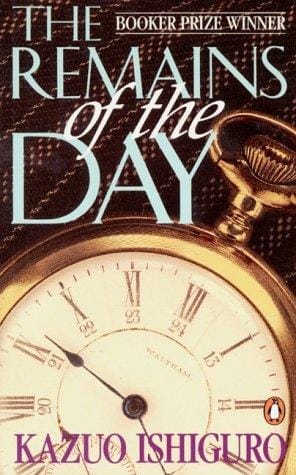
I have a book recommendation, and I have a film recommendation. The book– I’m reading a book right now by a writer named Ishiguro. He’s a Japanese novelist who won the Nobel Prize in 2021. His most recent book, the one I’m reading is called Klara and the Sun, but the one that I’m going to recommend is called The Remains of the Day. Probably, a lot of your listeners know of this book. It was made into a movie starring Anthony Hopkins and Emma Thompson, but it is still one of the most beautiful books I’ve ever read.
It’s about an English butler, and he’s almost obsolete at this point. He’s still butlering, but most of his life now is spent looking back on the past. In some ways, it reminds me of a sort of modern tragedy, but not in the classical sense, because nobody dies. It’s not that, but I think it has lessons for all of us in more than one way wherever we are in life. Whether we’re younger, whether we’re older, middle-aged, or whatever, there’s something about what Mr. Stevens is imparting to us that I think has the potential to change our lives.
Of course, it’s a novel, it’s first-person, and so one of the things that’s fascinating about the book is that Mr. Stevens doesn’t quite understand what he’s telling us. There’s all these subtexts, and there’s something that– He’s something of an unreliable narrator until the end. It’s just a great read. It’s not a couple of hundred pages. It’s a fairly quick read in a way, but it has a lot of meaning.
My film recommendation– I saw a film last year on Prime Video, The Sound of Metal, and it just moved me in so many ways. It’s about a heavy metal drummer. He’s spent most of his years on the road playing music, doing drugs, doing a lot of things he shouldn’t be doing, and early in the movie– And I won’t give too much away, obviously, he starts to lose his hearing, and it leads to this amazing, amazing transformation. By the end of it, the last few images, I was just blown away. I mean, it really did a number on my psyche.
[00:32:54] Bonni: Warren Doody, thank you for returning to Teaching in Higher Ed today, and for teaching us how to say goodbye.
[00:33:00] Warren: Thank you so much for having me.
[music]
[00:33:05] Bonni: Today’s episode was produced by me, Bonni Stachowiak, and was edited by the ever-talented Andrew Kroeger. Podcast production support was provided by Sierra Smith, a phenomenal educator who just happens to still have time to engage in this side gig for us here at Innovate Learning. These podcast episodes are just one Teaching in Higher Ed resource. If you’d like to receive our weekly email updates, you can subscribe at teachinginhighered.com/subscribe. In that email, you’ll get the most recent episodes’ show notes and recommendations, along with some recommendations that don’t show up on the episodes, some quotable words, and other goodies. Again, head on over to teachinginhighered.com/subscribe. Thank you so much for listening.
[music]
[00:34:07] [END OF AUDIO]
The transcript of this episode has been made possible through a financial contribution by the Association of College and University Educators (ACUE). ACUE is on a mission to ensure student success through quality instruction. In partnership with institutions of higher education nationwide, ACUE supports and credentials faculty members in the use of evidence-based teaching practices that drive student engagement, retention, and learning.
Teaching in Higher Ed transcripts are created using a combination of an automated transcription service and human beings. This text likely will not represent the precise, word-for-word conversation that was had. The accuracy of the transcripts will vary. The authoritative record of the Teaching in Higher Ed podcasts is contained in the audio file.