Follow the Teaching in Higher Ed Podcast
About this Episode
Bonni Stachowiak shares how to create engaging asynchronous activities for Hyflex courses on episode 351 of the Teaching in Higher Ed podcast.
Curation is an essential skill for me to practice.
Bonni Stachowiak
On episode 351 of Teaching in Higher Ed
Voices on this Episode

Show Notes + Resources
- Episode 309: Hyflex Learning with David Rhoads
- Episode 327: Misconceptions about Hyflex with David Rhoads
- Banking Model of Education on Wikipedia
- Harold Jarche’s Personal Knowledge Mastery model
- Community of Inquiry on Wikipedia
- Chapter: Community of Inquiry Framework in Online Learning: Use of Technology, by Lindita Bektashi
- Quizlet
- Loom
- Episode 347: Online Culture with Courtney Plotts
- Michael Sandel’s Justice Course Videos and Discussion Guides
- Mike Caulfield’s SIFT modules
- Ethics for A-Level, by Mark Dimmock and Andrew Fisher
- The True Cost
- American Factory
- This I Believe
- NPR audio series: This I Believe
- This I Believe in the Classroom
- Episode 215: Teaching as an Act of Social Justice and Equity with Bryan Dewsbury
Recommendations from this Episode

Transcript
Bonni Stachowiak: Today on episode number 351 of the Teaching in Higher Ed podcast, I share about HyFlex and how to create engaging asynchronous activities.
Production Credit: Produced by Innovate Learning, maximizing human potential.
[music]
Bonni Stachowiak: Welcome to this episode of Teaching in Higher Ed. I’m Bonni Stachowiak, and this is the space where we explore the art and science of being more effective at facilitating learning. We also share ways to improve our productivity approaches, so we can have more peace in our lives and be even more present for our students. Prior to listening to today’s episode, you may have heard of before what is known as the banking model of education.
The banking model of education was criticized by people like Paolo Freire, having to do with just our jobs as teachers, as educators being about pouring information into students’ heads and asking them to recite it back to us at some future date. In relation to that, I see as we are doing more online teaching collectively in higher education, this resistance between wanting to avoid doing the banking model of education in our classes, but finding out that it’s a lot harder than it seems.
In this episode, I’m going to be sharing some of the things that I’m doing around building asynchronous content for my HyFlex classes. Before I do that, I should share my own definition of what I mean when I say I’m teaching HyFlex. There’s a lot of different ways that people define HyFlex. The biggest distinction between what I’m doing and what I see a lot of institutions doing is thinking that HyFlex means that I go into a classroom space, as in a physical classroom with windows and doors- maybe not windows, maybe it’s just a door, but between going into there and offering people the opportunity to join that class via web conferencing tools. That is not how I define HyFlex.
How I define HyFlex in this particular case is that I am teaching entirely online. I am doing synchronous sessions that have asynchronous components that students can participate in if they are either unable to or prefer not to attend a scheduled synchronous class session. That’s what I mean when I say HyFlex. I mean that, first of all, most of my class, regardless of how a student engages in that one component of it, the typical class component of it, is asynchronous content, and at least where the accrediting agencies in higher education in the United States, most of them still go with a really outdated method of quantifying learning, instead of–
Yes, it is about assessment, but also using what’s called the Carnegie credit hour. We have to show and demonstrate that so much of our class is made up of in terms of the hours that it would take the typical person to complete them. Of course, what that used to look like, in many cases, would be meeting three times a week for an hour, and then having some textbook readings, and maybe a paper and a test, that kind of thing.
I do a lot of things that are different than that. I offer a lot of activities that are small stakes activities that are what I would refer to as mini-assessments. A lot of thinkers and experts in this area talk about assessing for learning, versus assessing for having these high stakes, high pressure, high anxiety-producing assignments. I do a lot of that in my teaching, and I’m going to talk a little bit about some of the techniques that I’ve been using to attempt to make the asynchronous portions of my class, whether it’s an option for someone not attending the scheduled class, or whether it is simply part of the rest of the class, but all of the students are participating in.
I do try to reject the banking model and to have it be as engaging as possible. I’ve got some techniques that you can try in your own teaching to do that as well. When I do this, I find that curation is an essential skill for me to have a central thing for me to practice. By curation, I’m drawing from the work of Harold Jarche and others who talk about personal knowledge mastery.
This, what Jarche calls seek, sense and share, that whole sense-making process where I’m going out and seeking out information, tools, resources, and then making sense of it, in this case, helping my students to do the same, helping them to make sense of it. Rather than try to come up with my own content entirely, I’m trying to draw from all that’s out there that’s so much better than anything I would ever be able to produce on my own.
Here are a few examples. I’ve mentioned this before. I like to use Michael Sandel’s Justice videos. He teaches at Harvard. He has, at least at the time I knew of, was among the most popular classes at Harvard. His class called Justice: What’s the Right Thing to Do? He has a book about it, which is excellent, and he also has a series of videos that they produced a number of years ago.
It takes place in either the largest or one of the largest lecture halls there. It has lots of opportunities where he would ask questions to the students. They have all kinds of cameras and there are camera angles, and all that, to get right up in the face of the student who’s answering, and he’ll go back and forth. It really is a delight. I read somewhere, he started with it being something like three or four hours of content, and it gets all the way down to 40 minutes. They really do a nice job on editing. He’s a delightful Socratic professor, and it’s just so fun to see him engage in that way.
I place that video, which is available on YouTube, I place it inside of our Canvas Learning Management System. We also subscribe to their Canvas Studio tool. When it’s in there, there’s an opportunity for students to chat, where as soon as he asks a question, I tell them to pretend as if they’re sitting in that very same lecture hall, and he’s just asked them the question. As soon as they start typing, the video pauses.
As soon as they submit their comment, it puts a little dot there so I can see. By the time all the students have gone through, there’s just dots all over the video, and I can go and read through and see what different students– Now, Canvas Studio is not the only tool that will allow you to do this. There are many tools that will create this kind of engagement. What is nice about Michael Sandel’s videos is that he is such a Socratic method instructor, such that it’s already built that way. I don’t have to change it.
If you’re going to record videos yourself and produce some original content, it’s good to draw from those lessons to be asking questions. I’ve started doing that more and then just pausing a little bit, giving them a chance to go type in their answer to whatever question I’ve posed. Another example of something that I have curated recently is Mike Caulfield’s SIFT modules. You’ve heard me share about that on prior episodes. It’s a wonderful three-hour set of modules that anyone can go through.
They’re available through an open license. Not only can you use them through an open license, but you can actually replicate them and make modifications. What they’re designed to do is to help any of us better be able to assess the credibility of something that we find on the web, most often something in the news, although it could be anything. It’s a wonderful set of tools, and it’s very engaging. I am using it with students this semester, and they are telling me, “Wow, I love how it’s not too reading intensive.”
He’s got short text components to it. He’s got videos. He’s got games that people play. He prescribes using what he calls a digital notebook. I’ve added a few things to his digital notebook idea where I ask them to include screenshots after they’ve completed playing any of the games that he has. I ask them to copy and paste over key terms so that they’ve got a digital notebook that includes the questions that he poses and includes the information, so that by the time we’ve gone through all of the modules, which we’re getting close to now, some of them already have, then they have a digital notebook that can help them anytime they want to revisit this.
Then in the coming weeks, they will be actually using SIFT on a regular basis to bring in news items related to our course, which is business ethics. It’s been a wonderful resource, very positive feedback from students. What I really like about it is the ways in which I’m not asking them to completely throw away everything that they’ve ever heard about everything having to do with the news.
We come into spaces like this already having, from our families, from people who have influenced us, ideas already about which news sources are likely to be credible or not. Rather than me trying to go with the rip the band-aid off approach, it’s kind of, hey, this information is out there, here’s a resource that you could use, and letting them discover their way toward better credibility. It’s really working out well, just the reflective comments that they are all providing has just been wonderful. Then the other things that I have curated for this class include some open textbooks.
If you are going to be wanting to have more asynchronous activities in your classes, there are wonderful open educational resources. It could be a textbook, it could be a video series, it could be any kind of an interactive way to get people thinking about the content. I have two that I draw from from the business ethics class, and then I also have some short quiz questions and reflective questions that I include as part of their completion of that portion of the class.
Then, of course, anytime that we can bring movies in is wonderful. Our institution has recently subscribed to a couple of different movie services where students can access a number of different documentaries. A couple of weeks before the semester started, I asked which movie services they already subscribed to, and 100% of my students already subscribed to Netflix. I was able to use a couple of movies from that service without adding to the cost of the class and I was excited about that.
I was a little bit disappointed because there was a documentary that I really liked using called The True Cost about the fast fashion industry and, unfortunately, is not available on Netflix anymore. I decided not to use it although it is tremendous, but I decided not to use it as a part of this class. Then there also- from Bryan Dewsbury who was back on episode 215, he recommended the This I Believe essays and NPR has done a wonderful audio series of it. There’s a whole online set of tools that you can use. He does it in his STEM classes. His background is in marine ecology and ecological economics, but it fits any discipline, he says.
I’m planning on having them write a This I Believe essay after listening to a few of them, and also getting the option if they would prefer to read a few of them additionally. As far as other ways that I engage with them, one that is working really well that I want to mention before we kind of get into a little bit of the other aspects of these asynchronous activities is using a screen casting tool called Loom. Loom is like many of the other ones I’ve recommended in the past Screencast-O-Matic, which is actually built into Canvas’s Studio video tool that I talked about earlier.
There are lots of good ones out there. What I always look for is how fast can I set up a recording? How flexible is it as far as having it show my webcam or not, my screen or not? Any combination of those things. Then how fast can I get a link, a URL to that video? With Loom it hits all of those components. They do offer a free pro-account for educators, or students as well, anyone with an EDU email address. I’d highly suggest that you take a look at Loom because it has just been delightful.
I’m finding that there’s something about it, most of them so far have been using the webcam with- it just shows their face in the lower left hand corner. Then they’ll show me things on their screen. For example, one time I asked them to show me actually on their screen where they get their news from. That was an introductory reflection exercise and it worked great. I also have them playing some Quizlet games, some flashcard games, and showing themselves doing it and it’s hysterical.
I had a student who says, “This is my dog, her name is Bella. She’s here to support me, let’s do this.” It’s spectacular, their personalities are really coming out and I’m having a delight. On a recent episode, we heard from Courtney Plotts about the Community of Inquiry framework. It wasn’t the first time but it was the first time in recent episodes that we’ve looked at that and that can allow us some different ways to think about engagement in online classes, specifically, building asynchronous assignments or activities. Reminder, that the CoI, the Community of Inquiry framework includes three components.
The first one is social presence. This is the ability of participants to identify with the community, to communicate purposefully in a trusting environment and develop interpersonal relationships by way of projecting their individual personalities. You heard me talking a little bit about that with the dog Bella, when I talked about the Loom exercise. I’ve got an article that I’m quoting a little bit from on the definitions that will help you build upon your knowledge of the Community of Inquiry framework, and then it’s also included in a open textbook as well for you to learn more.
Then we also have cognitive presence. That’s the idea that we’re asking learners to be able to construct and confirm meaning through sustained reflection and discourse in a critical community of inquiry. That’s kind of we’re going from the more interacting with our peers, our colleagues, to interacting- building that neural network of knowledge in our own minds.
Then there’s the teaching presence.
This is where we often come in, the design, facilitation, and direction of cognitive and social processes for the purpose of realizing personally meaningful, and educationally worthwhile learning outcomes. As we think about social presence, cognitive presence, and teaching presence, I hope that you see that one thing is in common. They are all rather contrary to the banking method of education.
It’s about relationship, it’s about questioning things, it’s about not just pouring information in and pouring it back out, but, actually, interacting with it and being able to construct it to make meaning for ourselves, have it be relevant, and to be able to see where there are differences with other people and opportunities to connect and see similar perspectives as well. As I close this part of the episode, I’m going to share about these three components of the CoI model, and then I’m going to share just a few techniques that I’m using for each one.
Let’s think about the social presence. This is that student to student presence, building opportunities for them to engage with one another. As I have done even more online teaching and especially teaching during a pandemic, I just continually reflect on the importance of trust. Trust is hard to build between students who don’t otherwise know each other in normal times, let alone now. I have found that I just need to forgive myself maybe or allow myself to recognize I don’t need to and I don’t want to force this too early.
When we build in all of these discussion boards that ask them to do things in very transactional ways, or even the opposite where we’re asking them to share such intimate details that may not be particularly helpful at that part– They haven’t gotten to know each other and built up that trust yet. I find that what’s working well for me is to build up their confidence first and trust in me, because a lot of the things that they’re learning are some– I mean, we’re talking about business ethics, and what is right what is wrong, and to work our way into then the more opportunities for them to engage with others.
I also find that in terms of that social presence having some playfulness built in, I mentioned recently about asking students to share memes with me. Then wanting to share them with each other in discussion boards, and about the learning outcomes for the class on some of the stuff they have found is just an absolute hoot. It’s been really fun. When it comes to cognitive presence, you won’t be surprised to hear that I use a lot of retrieval practice, a lot of these small stakes assignments that you get the check for having done it.
I think back to Mike Caulfield’s SIFT assignments that he has us as learners do in his three hour SIFT modules that help us assess the credibility of news sources. One of the games he has us do very early on is to see how well we can predict whether or not something is true. I don’t want to spoiler alert, I don’t want to ruin parts of what he’s trying to teach, but a lot of us- students were surprised how many they got wrong, and I keep having to tell them, “I got a bunch wrong, too.”
It’s very normal, if you aren’t experts in this stuff to have built up some ideas about what actually is going to help you tell if something’s credible or not, and to be wrong about it. The fact that they did it, checked the box, it didn’t matter how many they got wrong. In fact, how many they got wrong can be a way for them to see, “Oh, wow, I have a lot I can learn here. It’s time for me to pay attention,” and that’s been really fun to see them doing. I talked about the Quizlet games, and so I built up a number of different flashcard decks to review some of the content from the course.
There are different games and little assessments that you can do on Quizlet individually. I tell them to go in and try a few of the games out and then to take a few minutes to do it five or so times just to continue to build in some of that retrieval practice opportunity. Then on the final one, I have them record themselves on a Loom video playing the game. Again, as small stakes assignment I’m just checking off that they did it.
I’m not caring about how long it took them. Some of them do really get competitive and want to get the first place in terms of the time– Not all of them do, but it’s been fun to see that. By the way, I don’t think I’ll ever get first place after putting them in front of students, because some of them really do get awfully fast. I can’t keep up even though I know these terms well.
Then when it came to the students going through my Caulfield’s SIFT Course, the emphasis was on trying to get them to see the games were supposed to be fun, but they still felt nervous about not getting it right. I think that built some additional trust with us, that learning doesn’t have to have everything assessed for a grade or for a series of points. You did it, and that’s the important part of the learning.
Then, I mentioned previously that they really did like that it wasn’t too heavy on the reading. Just the more I have been teaching, the more I realize the less I have them read, the more they’re likely to read whatever it is that’s been assigned. I realized that not every class is that going to be true for. Not every style, but it’s just something for the many of the classes that I teach. I find that the longer those reading assignments is, the more disproportionately- the likelihood goes down of them actually completing the reading.
Then finally, we have the teaching presence. One thing that I found that some students had trouble getting used to is the part in Canvas, and other learning management systems but I’ve found Canvas does it the best, is that the feedback that I have on their assignments can be a conversation. There’s a little comment area, you can comment in written text, you can comment via an audio recording, you can also comment via a web-based recording, it pulls up your webcam, asks for permission to record it and use the camera et cetera, and the microphone.
Then, I had some students who were saying ,”I didn’t know if I wrote back to you here, if you would see it.” It comes into my email, and then also is they’re waiting for me the next time I log into the class, but that was kind of nice for them to start to warm up to this idea that this can be a back and forth. Again, I mentioned that most learning management systems that’s not that natural to be able to have that back and forth, and that is something that I like a lot about Canvas.
I really found we’ve had some incredibly powerful conversations, right? They feel very intimate and very, very much that I’m accomplishing the goal of building up that trust among us that we can talk about some really deep things that’s been really important and not something that often comes in most forms of assessment. That’s been really nice. I start out each class with a process called Examen.
It does Ignatius prayer, actually, but that’s not where I first learned about it. Basically, it’s a way of building community and it’s asking two questions. What brought you life since we last met? What took life away? People who join me for the synchronous class, the scheduled one, they can answer that out loud if they’d like, with or without video. They can answer it in the chat so that everyone can see it, or they can answer it in the chat privately just to me if it’s something that they would rather keep just between the two of us.
Then, the second question that Examen asks is, “What took life away since we last met?” Those people who are unable to join us or prefer not to join us for the scheduled class are able to answer that question on a discussion board. They can do it via Loom if they want, or they can just write down the words that answer those two questions as well, and that’s a way where we can build a community.
Something that I’m looking forward to doing in the future is bringing the two groups together. I generally have about 20 to 30% on a high week of students electing to do the asynchronous work, the asynchronous activities, and I don’t have quite as much as any kind of a crossover with the answers to these two questions. That being said, though, a lot of the students who are joining synchronously still prefer to keep at least the answer of what took life away just between the two of us.
I don’t know how much I want to force it, but it is something I’ve been thinking about. As far as teaching presence goes, I’ve really enjoyed, again, Mike Caulfield’s reflective questions that he includes in the SIFT Modules. One of the things he asks in there that I, of course, then pass on to ask the students to answer is, “Have you ever had anyone you know fall victim of conspiracy theories?” That’s been, wow, I mean, really revealing for me to see the extent to which they’re seeing these kinds of things in their own lives.
I’d like to make a few comments before I go to the recommendation segment of just how I am addressing building asynchronous activities, versus then building the synchronous sessions and how they’re going to go. I’d begin the entire process by planning the asynchronous activities first. In my head, I am picturing what is it that I want them to be able to do with this, whatever this is. I need to make sure that everything that we’re doing is tied to the course learning outcomes.
When it comes to, for example, the SIFT modules I referred to earlier, that ties to a learning outcome for the class that talks about using the SIFT methodology to assess the credibility, the likely credibility of a news item, a business ethics news item. I’m thinking about that end in mind, but then like what do I want them to be able to do? Part of it is on things as major as the SIFT modules, for example, it’s not about perfection at every step, it’s a lot about progression.
I mentioned that little quiz that he has in the beginning. That’s not about scoring 100%. That’s an activity that’s very engaging, that shows in a non-threatening way the areas of opportunity for learning about this thing. I always start by building the asynchronous first, and then figuring out how to design the synchronous session takes me hardly any time at all, because I’ve put so much time into making sure that that asynchronous activity is engaging.
That they’re doing things with what– They’re not just reading passively, or watching a video passively, there’s always something that they’re doing and it breaks it up, the activities break it up so that they’re not listening to me talk too long. They’re not listening to anyone else talk too long. They’re engaging in their learning in observable ways. I hope this has been helpful look at the way that I am teaching HyFlex and specifically building out engaging asynchronous activities.
I’d love to hear from you if you’ve been experimenting with other things and have things to share as well, that would be wonderful. This is the time in the show where I get to share some recommendations that I have. The first one might be predictable. I’d like to recommend that you go try out Loom. The link that I have in the show notes is going to take you to loom.com/education.
That’s where you can both sign up for an account, but also then verify your account to show that you are either a student or someone from an educational institution. It took me no time at all. They’re just double-checking that you have an EDU email address. That’s a high recommendation and to use it in engaging ways to get your students talking with you, you talking back with them, and creating that sense of community that I described earlier.
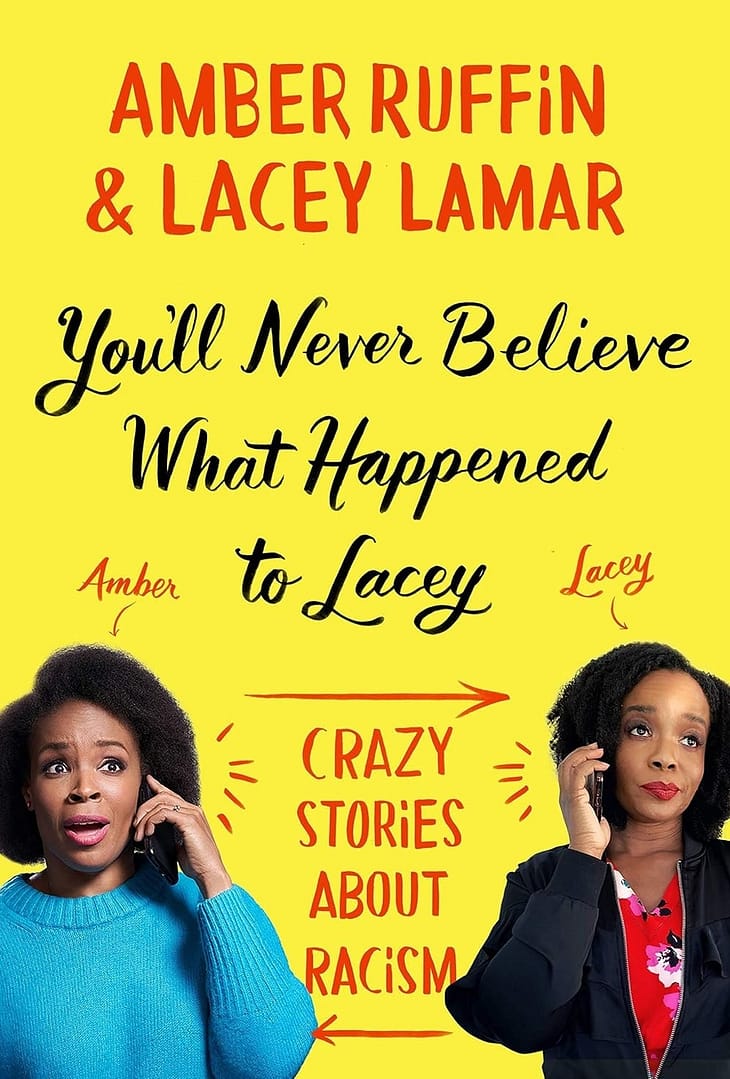
The second recommendation I would like to make is a book. I really enjoy the writer whose name is Amber Ruffin. She is a writer for Late Night with Seth Meyers and she often comes on the show and is quite, quite funny. I was excited to hear that she had co-written a book with her sister and it really is a good read. The book is called, You’ll Never Believe What Happened to Lacey. That is Amber Ruffin’s sister. You’ll Never Believe What Happened to Lacey: Crazy Stories about Racism by Amber Ruffin and Lacey Lamar.
If you have ever heard of Amber Ruffin before, you know that she’s funny. She’s been a comedian and a writer for quite some time now. This is a look at racism that does definitely have a light-hearted approach yet it is also really, in a strange way to try to describe is also very much in our faces. Just looking at some of the stories from Lacey, her sister living in Nebraska. She says in the book description she says, “Trust us, you’ll never believe what happened to Lacey.”
They talk about in the book that people of color– Yes, you’re actually going to believe what happened to Lacey, because these kinds of things are happening to you, too. It’s definitely not the only book I would want someone to read about the subject of racism, but to me, it was just a really nice way– Nice is the wrong word. It was a healthy way to look at the experiences that people of color, particularly Black people, have to have all of the time in our country.
I enjoyed it from that. It went from both light-hearted to feeling really heavy. It’s again hard to explain that juxtaposition of how they were able to do it. I’m going to read a little bit from the book description here. “From racist donut shops to strangers putting their whole hand in her hair, from being mistaken for a prostitute to being mistaken for Harriet Tubman, Lacey is a lightning rod for hilariously ridiculous yet all-too-real anecdotes. She’s the perfect mix of polite, beautiful, petite, and black, that apparently makes people think, ‘I can say whatever I want to this woman.’
And now, Amber and Lacey share these entertainingly horrifying stories through their laugh-out-loud sisterly banter. Painfully relatable or shockingly eye-opening, depending on how often you personally have been followed by security at department stores, this book tackles the modern-day racism with the perfect balance of levity and gravity.” Those are my two recommendations for today.
I want to thank you for listening to today’s episode. Thank you for listening to and being a part of this community. If you have not yet subscribed to my weekly updates, I’m going to encourage you. Now is the time because I recently revamped them, and they’re going to give you the most recent episode highlights from it and the resources that were shared. It will include related episodes that are hand-curated by me, by the way.
They also include some quotable words, some recommendations, additional to the ones that I share about on the podcast, and also kind of give you a preview of the next episode to come. Head on over to teachinginhighered.com/subscribe. I’d love to have you hearing from me that way as well. Thanks so much for listening and I’ll see you next time on Teaching in Higher Ed.
[music]
[00:32:36] [END OF AUDIO]
The transcript of this episode has been made possible through a financial contribution by the Association of College and University Educators (ACUE). ACUE is on a mission to ensure student success through quality instruction. In partnership with institutions of higher education nationwide, ACUE supports and credentials faculty members in the use of evidence-based teaching practices that drive student engagement, retention, and learning.
Teaching in Higher Ed transcripts are created using a combination of an automated transcription service and human beings. This text likely will not represent the precise, word-for-word conversation that was had. The accuracy of the transcripts will vary. The authoritative record of the Teaching in Higher Ed podcasts is contained in the audio file.