Follow the Teaching in Higher Ed Podcast
About this Episode
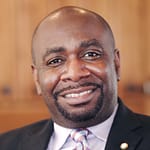
Renea Brathwaite shares about his experience of “becoming a minority” on episode 323 of the Teaching in Higher Ed podcast.
Where you start is not where you will end up.
Renea Brathwaite
On episode 323 of Teaching in Higher Ed
Voices on this Episode

Show Notes + Resources
“Hope has two beautiful daughters: Anger at the way things are and courage to act so that things don’t stay the same”
Recommendations from this Episode



Transcript
[00:00:00] Bonni Stachowiak: Today on episode number 323, Dr. Renea Brathwaite shares his story of becoming a minority.
[music]
[00:00:10] Production Credit: Produced by Innovate Learning, maximizing human potential.
[music]
[00:00:21] Bonni: Hello and welcome to this episode of Teaching in Higher Ed. I’m Bonni Stachowiak and this is the space where we explore the art and science of being more effective at facilitating learning. We also share ways to improve our productivity approaches so we can have more peace in our lives and be even more present for our students. Joining me today is my friend and colleague, Dr. Renea Brathwaite. He is here to talk about growing up in Barbados and then moving to the United States and some of the cultural experiences he had as he became a minority and that’ll make a little bit more sense when you listen to the episode.
Renea, as I mentioned, is my colleague where he works with me at Vanguard University of Southern California. He is our Dean for professional studies and prior to that, he was at North Central University as a Dean and also as a director of graduate and creative education. Renea, welcome to Teaching in Higher Ed.
[00:01:33] Renea Brathwaite: Thank you.
[00:01:34] Bonni: I’m so glad to be having this conversation with you. It feels a little bit weird since we work so closely together so we’re both going to have to work at not having a bunch of inside baseball conversation. Let’s start actually with a place I know very little about, tell me where you were born.
[00:01:52] Renea: Yes, I was born in Barbados. It is a very tiny little Island, the most easterly Island of the Caribbean nations. It’s about 166 square miles. At the longest, it is 21 miles and at the widest, it is 14 miles. It was first visited by the Spanish in 1511, but the Spanish never established a permanent settlement. At 1625, it was visited again by the Portuguese they too did not establish a permanent settlement.
In 1627, the British arrived and they stayed there and we were British colony from 1627 all the way to 1966 when we gained independence. It’s known for tourism but it is actually– The story about Barbados is much deeper than that and its connections to the slave trade and connections to its influence in North America, South America is very profound.
[00:02:50] Bonni: What were you like as a little boy?
[00:02:52] Renea: What was I like? I was talkative, but stammered a lot. I had a lot of confidence issues but I was curious about the world and being the last of 10 children, I learned how to get along with a lot of different types of people, but my earliest memories are being a wanderer. I would just leave home and just walk around and just pick all kinds of strange grasses, collect all kinds of strange insects. I had a wonder and a curiosity about the world and a sense of freedom and a sense of place that still is profound to me.
It’s interesting, I grew up really, really poor, but I didn’t know I was poor. That’s one of the profound things about the way I grew up and the way my parents raised me, especially my mother. She always raised us with a sense of dignity of ourselves and a sense of our place in the world and imbued in us this confidence that we where we start is not where we will end.
[00:03:58] Bonni: I think that’s interesting as little kids, those moments when we start to discover something about our socioeconomic status. What do you remember in terms of other aspects of your life or other times in your life where you started to notice a real difference around money, socioeconomic status, et cetera?
[00:04:17] Renea: Yes, what’s interesting is that I didn’t get this revelation of being poor until I hit high school. Why that’s interesting, at least in terms of my own identity formation was that everyone was like me. I was surrounded by people who behaved like me, spoke like me, ate the same kinds of foods. I did not see the disparity.
Now, we knew there were always people who were desperately poor, who were poor but there was some were desperate, desperate poor, but I had not lost significant contact with people who were exceedingly wealthy either. It was actually transformative for me when I went to high school. I went to high school in Barbados, which is one of the oldest high schools in the country, it was founded in 1733.
Now, I joke sometimes that I went to high school that’s older than America, that’s not strictly true, but going to that school, it was considered a very prestigious school. Being there, we saw lots of people who- some of the students drove cars to school. I was like, “Wow, students have cars. Unimaginable.” They would speak about going to riding and they would have horses and they would speak about going sailing on their sailboats and I had no such experience up until that point, but I never felt threatened by that at all.
They have their life. I have my life. Again, they’ll go back to what my mother instilled in me that where you start is not where you’ll end up and that the great equalizer will be your education. I pursued education and it is something though that is instilled. I know now that this is something that is instilled to every child in Barbados. Our literacy rate currently stands at 99%. People 15 years are older, you compare that with the literacy state of the US, which is 86%. You understand?
There’s a great, great emphasis in Barbados from very early on. A lot of that has to do with history. Post slavery. The only way that many blacks in Barbados would actually be able to rise through the socioeconomic ranks was becoming educated and the great dream, at least when I was in Barbados back then, the great dream was to have a son who was a doctor or a lawyer, but education, and then was that way and that great equalizer to get to beyond where you started.
[00:06:45] Bonni: What were some of your early memories around race?
[00:06:49] Renea: What? What’s that? Early memories, I don’t really have a lot of really early memories around race. Remembering that I grew up in a very homogenous society by large, vast majority of the population was either black or mixed. Now, by looking at me, you wouldn’t tell that I’m mixed, but my ancestry is all mixed and in fact, that is true about a good percentage of all Barbadians.
Growing up, I saw people that looked just like me all around. Now, there was some tension in Barbados between the black community and the white community. The tension was historical because though blacks retained we’re the vast majority, white still held because of the historical advantage, still held great economic power and sway over the country.
What is interesting to me as I look back and I analyze is that because the cultural power rested with the black majority, because by the time I was growing up, the political power rested with the black majority, I had a sense that the world was just like me. When I asked questions, like, what is it beautiful? I know that we had the barbie dolls and the can dolls and stuff.
Well, if you asked me really in my heart of hearts, what is a beautiful, the first image that came to me was someone that looked like my sisters or someone that looked like my mother. When you asked me who was intelligent, who was really brilliant, again, the answers to those questions was not someone outside of my sphere. There are people who look just like me. When you asked, well, who are the great athletes? It was people that looked like me. I grew up and I’ve described it this way and I want to be careful and sensitive because it can be misunderstood.
I grew up with a sense of what I would call black privilege. It’s not as expensive as some of the other definitions of privilege but privilege in the sense that my core identity was formed and reinforced with value systems that valued me and that is a fundamental difference in my experience and it’s a transformative one at that.
I lived in a sense of this world is a world I can conquer because in this world, the answers to the question, what is right, what is good, what is beautiful, what is logical, what is just, those basic foundational worldview questions were asked in a way that I would ask them and were also answered in a way that valued me and valued my perspective. That is something that has actually informed me very deeply up until this day. It is also the cause of great consternation and a great shame for me because when I was in Barbados and I’ve started to develop a global consciousness, an awareness of Barbados is not the world. I know it’s funny. It’s sort of a tiny spot on the map, but when I grew up and understood that, okay, Barbados is not the world. What is around? Of course, the natural place at that time in Barbadian history was not to look at a Britain, which had been the historical motherland, as it were. Increasingly, it became the United States when I was kind of age.
When I looked around and looked at United States, I have early memories of watching speeches by Martin Luther King, Jr. and by others and as seeing the plate of African-Americans but I did not understand it. In fact, I’ll be so bold as to say I could not understand it. I could not understand living the country where I was a second class citizen, where the value system did not value me.
From that perspective, I used to say to myself, and if someone is along to the TV yelling sometimes. When I heard African-American speak, “Why don’t you get over white America? Live your whole life, do your own thing. Don’t be defined by a structure that does not appreciate or value you.” Of course, looking back on it, it was a bit of shame because I was expressing a version of black privilege. Really not understanding what it was like to be living in a world that defined you as other.
[00:11:30] Bonni: When we fast forward to you moving to the United States. I just know, I say sarcastically, for those of you reading the transcript right now that it all ended up rosy. You came over here, people valued you, no real differences in terms of feeling celebrated with all that you brought to the world. That’s how this story is going to go or perhaps not. [laughs] Tell us about coming to the United States
[00:11:55] Renea: [chuckles] Perhaps not. No, I describe it this way. I describe coming to United States as a second adolescence, a second experience of identity formation. I first noticed it when I would go into stores and realized the stereotypes were true. I’m going to stores in New York and be followed, and go into elevators, and women would clutch their purses and maintain social distance from me. [laughs]
I noticed that when I would go and try to get a cab and they wouldn’t stop for me. I noticed that when police officers would come into our neighborhoods and that feeling of panic. These are not like us. They don’t even understand us. They’re not here for any good. That sounds strange I know.
Many people when they see police show up, they automatically feel safe. Well, no, in African-American communities all over America, that was not the case. In Barbados, well, my cousin was a police officer. In Barbados, we knew lots of police officers, and they were friends of our families. When I walk, I didn’t have to interpret anything to them. They knew who I was. They could look at me and tell the difference between me and the person next to me, whereas that was not true.
I had that sense greatly of being deeply second class. I also have this sense, even as I rose through the socioeconomic ladder and I started to get better and better jobs, I realized a very sad truth and sickling truth that I had to be half as good to get half as far as my white counterpart. That I had to be doubly prepared for the meetings because I knew if I showed up just like my white counterparts with their two long hands. That’s the Barbadian expression. With the two long hands, with no preparation, they get a pass, but I knew I would not get a pass.
It was frightening at first, but the two other things that really were frightening to me that I learned that I could stand outside of school and know if that school was going to be predominantly white or predominantly black. That was fundamentally terrifying to me. Why? Because I knew the value of education in my life and how it was transforming me, and I knew it was a key to the future.
Knowing that these schools look more like jails and more like places of torture and incarceration rather than places that would free the main. It was terrifying to me because I knew that after having started out of socioeconomic disadvantage, when you combine that with an educational disadvantage, there’s very little hope for progress. That was terrifying to me, but what was actually more terrifying was when I started to raise my kids in America.
I can regale you with stories of the stuff that I have endured and experienced through my kids. I’ll just say you know, Bonni, that it was not easy. It was not easy. Basic assumptions about their gifts and abilities, outright racist statements against them completely being ignored and underserved. I said to myself because by then, we had been raising up through the socioeconomic ladder. I thought to myself, if they would do this to someone who has doctor in front of their name with resources, what must be happening for the rest of our black communities? That transition really was a second adolescence for me. It was really learned how to be a minority.
[00:15:37] Bonni: You talked about this, not anger, but this– The best I could do in terms of words, is this pride that you felt around, what’s wrong with you? Why can’t you get over this and stop being defined by the structure? Then now you’re starting to be defined by the structure. I would love to have you talk a little bit about anger. Specifically, I just see us and by us, I mean those in the majority. In my case, I’m speaking of white people in the United States. Don’t hold other people’s anger very well at all. I guess I could even go so far as to say, white men. I feel like any way out of any of this mess that we’re in around gender, race,
the only way out is to learn to hold each other’s anger because we can’t as you said. Your young mind thought if you just get over it. Talk about anger, whether it’s anger about your kids, whether it’s anger for you and just that wrestling with other people, not holding your anger well or did you experience that at all?
[00:16:46] Renea: Oh, let me fast forward to just a couple of years ago and a quote that is variously attributed to different authors. I think inappropriately as a same to St. Augustan. It just that I’ve read St. Augustan, it doesn’t sound like him, but it goes like this. “Hope has two beautiful daughters. Anger at the way things are and courage to act so that things don’t remain the same.” I think you must be able to be angry about issues, but it goes deeper than just anger. I was in Minneapolis when George Floyd was murdered when I saw that image of a human being killed on the street in such a blasé kind of away.
The officer who had his knee on the man’s neck looked as though he were sitting on his couch. The thought occurred to me that the wheel just can’t be anger. Anger is important, but anger burns itself out. What we need really is something more than anger. I describe it this way. When you see something like that, maybe your first reaction is, well, look, what happened to that guy? Isn’t that sad? Or you could be angry. Well, what happened to that guy? That doesn’t really motivate change as far as I’m concerned. The next level where a lot of people stop at is that, well, that guy could be me. We moved from maybe anger and we moved to a more empathetic kind of stuff.
That could be me. That’s okay, but still quite hypothetical. The only way that real sustained change happens is when we start to say not that guy or that could be me. We then have to say, this is me. That knee is on my neck. This is my experience of coming really to America. I know what it’s like not to have a knee on my neck, and I know what it’s like to feel that knee and my neck and being too afraid to push back too hard. I know if I pushed back too hard, that knee is going to kill me. This is not hypothetical. Not, and it could be me. No, no, no, this is me. This is my son. This is my daughter. This is my wife.
Until that anger gets deeply seated in a common humanity, it’ll just be anger. It becomes misplaced, it becomes forgotten because the hypotheticals don’t have that force. Living in America took the hypothetical of being a black person in a majority country. It took that hypothetical and it made it abundantly real. Now, I have these dual identities that are powerful and deep. I am both a man from the Caribbean, but Barbados specifically, but I am also a black American. Let me say it to you though, Bonni, how difficult it is for me to say that I am a black American. It took me a very, very long time. I lived in this country for many, many, many years before I even contemplated applying for citizenship. There were other reasons, but the core deep gut reason was this, I did not want to become a citizen of a country where simply because of the color of my skin, I was automatically going to be cast as a second class citizen. To say that I am black American and to confess that is a big deal for me personally.
[00:20:26] Bonni: Take us forward to when you started to teach, and what was it like to take that man from the Caribbean, that black American into the college classroom?
[00:20:37] Renea: That was actually very exciting. I had taught a lot in various venues and different kinds of places, but my formal introduction to being in charge of a classroom in the United States occurred really as part of my teaching practicum for the seminary that I attended. A common practice for me when I would enter classrooms was that I would go and sit in the back. I have to wait after the class began and there was this like, this questioning here in the classroom, what’s going on? Where’s the professor? I’d hear them chat. I’d hear them talk.
I just enjoyed listening to them because back then, I guess they can tell all there was. They just thought of me of been as an older student in the class myself. Then after this tumult would erupt about where’s the professor, I would walk up to the front, and I kid you not, it was a class room of predominantly Midwestern white students, lovely, lovely students. You could hear the air being sucked out of the room when I stood at the podium to teach. They were so shocked. At first it took me about– I was there just observe in the beginning. The first time it happened, I was a bit startled by it and then I got accustomed to it later on, but I was startled.
Then I realized this was the first time for many of them to ever have a black man teaching them. It was a shock to them. It was not anything personal. It was just unusual. I learned early on, though, not to leave my Caribbean self behind, because it was important for my students to know, the filter through which they were receiving this knowledge and this teaching. I would ask them a question, because I learned that you have to name the elephant in the room. You just can’t pretend that it’s not there.
I would ask them a question, “What language am I speaking?” They’d all saying in chorus, “English.” I would say, “No, I am not speaking English, at least not any kind of English that you understand or you know about.” They’d look at me strange and I’d say, “No. I am from the Caribbean.” I would describe what it was like to be Caribbean. I would show pictures of Caribbean scenes. I said, “See that beach? That’s where I spent most of my life. You see that place? That’s where I grew up.” I felt the responsibility of broadening their minds. Really, what I was trying to do, ultimately, was problematize their concept of black and white.
I was trying to problematize their concept of race, and try to help them to see that the world is not made up of black Americans and white Americans. There are people from different countries with different experiences. Ultimately, I would say to them, and I’ve kept on saying it for many, many years now. I say to them, “Half of your learning in this class is to learn me.” Maybe that’s an overstatement, but I don’t think it is.
I think in order to teach students effectively, you need to bring your whole self to the classroom environment, because that is part of the richness that allows them to engage their ideas from different points of view without feeling as though there have to submit to this orthodoxy that here it is, your professor does not fit in either of these cultures neatly. Yet, this professor cares. This professor is knowledgeable. This professor is pushing me and guiding me. Yet, he brings a completely different perspective to the classroom.
When he gets excited, he speaks in this Belgium accent that I can hardly understand. By the end of the class, I know exactly what he’s saying, this too because part of this wonderful, rich learning experience. I’ve learned that that Caribbean person, rather than being a hindrance to my students understanding the material, helps my students process this material and gives them a way to be themselves. In our classes, if they’re stuck in this dichotomy between the black and white America, and the neat boxes that function in between those categories, they don’t always find themselves.
There are all these invisible ethnicities or invisible identities is probably a better word, that these students are bringing to the classroom. That me being myself, and my quirky sense of humor and my weird idioms, provides a space for them to likewise be idiosyncratic. In so doing, I get to meet them, not as a archetype or stereotype, but I get to meet them for who they are. Then at that point, that’s where the training begins. I really don’t believe you can teach someone until they first deeply connect with you, as a teacher.
You can lecture to them, that’s one thing. You can spell information, but to do the kind of fundamental teaching that I want to do that changes worldviews and inspires and sets people on fire and gives people wings, in order to do that, my heart must touch their heart, and their heart must touch my heart. There has to be what Reuven Feuerstein calls this intentionality which meets the reciprocity. The intentionality of the teacher, I am going to teach you something, the reciprocity is I want to be taught by you. That’s what the student says.
In that connection, then we can evoke or induce these transcendent principles that allow them to take that learning from that classroom to wherever they go. That’s what I want to do. I think, my Caribbean self and it’s not a stereotype. I don’t come into class, saying, “Yes, man [foreign language]” I don’t come to the classroom like that. In fact, Barbadian culture is not like that at all. Most of us are surprised that most of us don’t smoke marijuana. Most of us don’t spend all our lives at the beach. We do that as a teenager but you grow out of it. We don’t show up to work in shorts. Very few of us actually have Hawaiian shirt or flowered shirts. That’s a stupid stereotype.
We are actually a very conservative culture. When it comes to the class though, I’m not bringing stereotypes I’m bringing the real Barbadian. That real Barbadian I’ve found over the years, has great resonance. I think I’m able to talk to them as a young man who grew up as part of the majority culture, on how to transition to becoming part of a minority culture, and have to having to learn then how to code-switch, not just in words, but in behavior as well. Knowing how to do that successfully, without losing my primary identity. I think that’s a gift that I’m able to give to my students.
[00:27:29] Bonni: The teacher and author Stephen Brookfield has written over 30 books about teaching. I’ve had the opportunity to interview him a number of times, and I love that my nerves can calm down a little bit because of his writing, about becoming. He writes in very authentic ways, mostly about challenges that he’s experienced mostly about failures, mostly about his struggle to do the very thing you just described. Wanting that transformative kind of connection, both between him and between his students. Would you share how you are still becoming as a teacher?
[00:28:08] Renea: I’ll respond by saying something attributed incorrectly, because I don’t remember gentleman’s name. It was in a live session where I was asked as a panelist to talk about responses to George Floyd’s murder and responses to the riots in Minneapolis and so on. He was a white man and he said, one of the things he wants and he prays for is that his heart would not stop breaking, a strange thing to say. I think for me, this is the key part of me becoming, that my heart would not stop breaking for my students.
Whenever I look at my students, I’m not just looking at people to whom I dispense information. I am looking at a valuable human being and depending on your theology, perhaps this human being is an eternal being. That what I’m doing contributing to that human beings life, maybe eternally. I can help them but look at the world, not from my perspective, but from theirs. I don’t see myself as a teacher in the ordinary sense of the word of dispensing information. I see myself as a teacher in the sense of setting people on fire, giving them wings, supporting them. I can’t do that if my heart doesn’t break for them and for the things that break their hearts.
It’s just a constant, constant evolution because every year those students are different. They’re pesky, aren’t they? You think you’ve got them. All right, I got this group, I know them, and then they go change on you. [chuckles] Part of the breaking of my heart is really constantly becoming a student of my students. Ever so often, I go back to pop culture again. The older I get, the harder it is. [chuckles] I go back and I listen to all the popular songs again. I put my play your music on all the popular stations. I watched the popular movies again because I want to refresh my cultural vocabulary. It’s getting harder, I must admit because some of the stuff as I get older seems more and more inane. It seems as though we’re circling around the same wagons. The truth is, for this new set of students, this is brand new. This is a new world for them. They don’t have a memory of all this stuff happening before. I have to take it for what it is and learn their idioms, learn their language. That’s part of me becoming.
The becoming for me is leaning into them. I’ve had practice for this though because when you move to different countries as adult, you have to go through that second adolescence, that transformation. Of course, having moved quite a bit across the country, I’ve gone through many transformations all the time because America is so huge. There is no one American culture. Every place I’ve moved to, I’ve had to adapt to a new culture. It’s become a habit of mine now to ask the question of what does it mean to express who I am? Not in ways that I can be understood, but in ways that I can understand.
I don’t think I could do that as effectively as I think I am without having grown up in a country that valued me for who I was not who I would become. Or did not judge me by a standard that I could never live up to. That fundamental security about who I am allows me to code-switch. Sometimes in ways that frankly other minority groups don’t understand me. “Why are you bending so far? What are you doing?” They would say. My answer is, “I know who I am, and my job here is not to be understood. My job here is to understand.” When I’m engaged in that process, and this is interesting part, at least to me.
When I engage like that, people around find that to be winsome. I’m able to engage in very deep conversations with others and I’m able to be a bridge. Then when I open up and tell my own personal stories, my journey, they say, “Well, this happened to you?” I’m not seen as a distant foreigner. I’m seen as someone who was a friend of theirs and who was an ally who first saw and understand. That actually has given me a longer voice in many spheres.
[00:32:22] Bonni: This is the point in the show where we each get to give our recommendations. Despite the fact that I know that when people listen to this episode, this very sad event, more time will have passed between it. Representative John Lewis, a stalwart of the civil rights era died. As of this recording this past Friday, we take a look at his life, lessons, and legacy. I am reading from an introduction of a podcast episode I would recommend that you all go listen to. It’s from the New York Times, it’s their daily podcast. I’ll have a link to it in the show notes. For those of you who may be listening, not familiar with who he was.
Mr. Lewis, a son of sharecroppers and an apostle of nonviolence who was bloodied at Selma, Alabama and across the Jim Crow South, and the historic struggle for racial equality. Who then carried a mantle of moral authority into Congress died on Friday. He was 80. Bipartisan praise poured in for the civil rights leader as friends, colleagues, and admirers reached for the appropriate superlatives to sum up an extraordinary life. Mr. Lewis risked his life for justice. What I loved about this episode and I, of course, it’s so wonderful to see so many stories of the incredible ways he has transformed this country both with his life, but also with his incredible influence.
It wasn’t just about him. It was about the ways in which he showed people a picture that they could carry with them. What I liked about this episode specifically that there was a lot of footage because it’s easy to– Something like this happens, a wonderful incredible person dies, and so we think about the recency of that. This episode was able for me encapsulate so many recordings.
Podcasting is such an intimate medium that I just left being able to be transformed away from the sorrows about his death to really the impact of his life over decades and decades and decades. I’d encourage everyone to go listen to that episode. I’d love to hear from you if you do, and let me know if it moved you in the same way that it did me. Renea, I’m going to pass it over to you for your recommendations.
[00:34:41] Renea: Excellent. I do have a few general recommendations and I have a book that I really want everyone to engage if you have not already. Here are some of my general recommendations. The first and most important as we are teachers, is that we need to check our basic assumptions about what is good, what is right, what is beautiful? These things affect our assessment of student’s work.
If we’re not careful, our bias shows through profoundly. I’ll give you an example. I was teaching preachers in a seminary and the method of evaluation was writing papers. That’s the basic assumption that you write papers. What’s amazing to me that the people who could write papers couldn’t preach. We asked the question, well, why is it that you are assessing something that is not really an outcome, a true outcome for a program like this?
Our outcome is not people who can write academic papers. Our outcome is for people who are going to preach. Why wouldn’t you do something oral? What I found was that there’s a lot of implicit bias in how we assess. I said, check our assumptions, basic assumptions. I think the second thing I would suggest is there’s a phrase that I hear people say all the time. Well meaning people say that they want to give voice to the voiceless.
No, no, no, let’s reverse that. We need to give ears to the earless. People have voices. You’re just not listening. Let’s be listening, listening to our students, listening to those around us. That pastoralism of listening is going to transform our students. Here’s an exercise that I think would be very useful. I’ve used it many times over the years. I got it from a mentor of mine in Pedagogy, Dr. Ruth Burgess. She gave a lesson and she told us all to bring a heritage box to class, a small box with things that represented your culture.
Now, the first pushback I got and I was surprised about was white students who said, “I don’t have a culture, I’m just white.” Oh, so we had some really important conversations about culture and about how white is not a culture. White doesn’t exist, neither is black by the way. These are categories that we have or fixtures that we’ve created as the support and the categories, but they really don’t fundamentally exist.
It is really culture that drives us. This exercise allows us to see what students are bringing to the table. It’s interesting. One of the students was a southerner. He brought a picture of a shotgun and the confederate flag. We had some really good discussion, and it was about that and his grandfather’s Bible.
It was great discussions. That is his culture. That is his heritage. We have to listen and do business, but sometimes the things that we might consider to be controversial so that we can come up the other side where students could actually listen to one another and see how they themselves are situated. Also, be able to recognize how another person is situated.
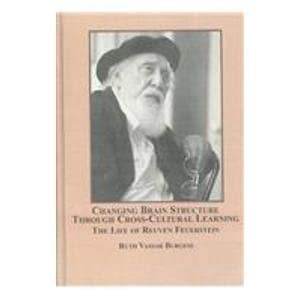
My last recommendation is a book. I mentioned his name before. It’s a book by Reuven Feuerstein. Well, actually a book about Reuven Feuerstein. Reuven Feuerstein was a very important cognitive psychologist who moves us away from this chronological behaviorism and the stage theory. Similar understanding that people don’t grow simply because of time, people grow because they have been mediated.
We can accelerate that growth in people because they have mediators who stand between the organism and the stimulus to generate a response that leads to growth. Most learning systems, you just put the organism and the stimulus, and you hope things work out. His method is very focused on mediated– It’s called mediated learning. A great book that describes his work is called Changing Brain Structure Through Cross-Cultural Learning is written by the first I mentioned Dr. Ruth Burgess. It’s a fascinating take.
He was one of the very earliest that argued that learning actually does in fact change the structure of the brain and that intelligence or what we call intelligence is not something that’s fixed, but that with right mediation can actually improve vastly over time. A very important resource. Again, when I talk about what we do as educators is not just simply disseminating information, it’s about changing these lives forever. I think that we can do this. In the end of the context of America’s day, what we need are educators who can shorten that gap, who can do for me what people like my uncle did for me and early educators in my life did for me.
Though, I was born very poor and last of 10 with a very tough circumstances. Yet they saw something in me. They mediated me. They called out something from me that I wasn’t sure existed at all. This is the great opportunity we have as educators, and I hope that we raise to that call because America’s future, blacks and people of color in America, they’re counting on us.
[00:39:56] Bonni: Thank you so much for joining me for today’s conversation on Teaching in Higher Ed. It’s been fun to take some of our work conversations and bring them into this community because they’re seeking so many the same things we’ve talked about today.
[00:40:09] Renea: Thank you so much, Bonni. My pleasure and please feel free to invite me any other time.
[music]
[00:40:17] Bonni: I so enjoyed getting to know Renea even better than I did when we started and I hope that you did as well. If you would like to learn more about Renea and see some of the links to the recommendations and other things from the episode, head on over to teachinginhighered.com/323. You also may want to head over to teachinginhighered.com the homepage, there you can find out more information about my book about productivity and teaching.
Then down a little lower on the homepage, teachinghighered.com is the subscription where you can get sometimes weekly emails with an article about teaching or productivity written by me. Head on over to teachinginhighered.com. Thank you so much for listening and we’ll see you next time on Teaching in Higher Ed.
[music]
[00:41:11] [END OF AUDIO]
The transcript of this episode has been made possible through a financial contribution by the Association of College and University Educators (ACUE). ACUE is on a mission to ensure student success through quality instruction. In partnership with institutions of higher education nationwide, ACUE supports and credentials faculty members in the use of evidence-based teaching practices that drive student engagement, retention, and learning.
Teaching in Higher Ed transcripts are created using a combination of an automated transcription service and human beings. This text likely will not represent the precise, word-for-word conversation that was had. The accuracy of the transcripts will vary. The authoritative record of the Teaching in Higher Ed podcasts is contained in the audio file.