Follow the Teaching in Higher Ed Podcast
About this Episode
Bonni Stachowiak celebrates a curious milestone on episode 300 of the Teaching in Higher Ed podcast.
Curiosity is an essential part of the way human beings learn and it always has been.
Josh Eyler
On episode 300 of Teaching in Higher Ed
Voices on this Episode

Show Notes + Resources
- Digital Pedagogy Lab
- Resources Page for Tarleton State University Keynote
- The Productive Online and Offline Professor
- Dave Stachowiak’s High School Chemistry Teacher
- Joe Hoyle’s Accounting Mysteries and Puzzles
- Meeting Owl Pro
- Zoom
- The spark of learning energizing the college classroom with the science of emotion, by Sarah Rose Cavanagh for West Virginia University Press*
- How Humans Learn: The Science and Stories behind Effective College Teaching , by Josh Eyler for West Virginia University Press*
- Small Teaching: Everyday Lessons from the Science of Learning, by James Lang for Jossey-Bass*
- Solar Warriors: Cal State East Bay Solar Suitcase Program Partners with Native American Tribes, Organizations Nationwide, by Natalie Fuelner for EastBayToday
- Lighting up the night one solar suitcase at a time, by Darin Moriki for The Mercury News
- Episode 135: The Spark of Learning with Sarah Rose Cavanagh
- Episode 204: The Spark of Learning Reprise with Sarah Rose Cavanagh
- Episode 16: Biology, the Brain, and Learning with Josh Eyler
- Episode 231: How Humans Learn with Josh Eyler
- Episode 164: Setting Up Students for Success from the Start with Joe Hoyle
- Episode 66: Making Challenging Subjects Fun with Ainissa Ramirez
- Episode 42: Mixing It Up in Our Teaching with Bonni Stachowiak
- Episode 246: Teaching STEM for Social Impact with Karina Garbesi and Erik Helgren
- How Teddy Svornous Uses MindNode to Plan Classes
Recommendations from this Episode
Transcript
[00:00:00] Bonni Stachowiak: Today on episode number 300 of the Teaching in Higher Ed podcast, I celebrate a curious milestone.
[00:00:09] Voice-over: Produced by Innovate Learning, maximizing human potential.
[00:00:18] Bonni: Hello, and welcome to this episode of Teaching in Higher Ed. I’m Bonni Stachowiak and this is the space where we explore the art and science of being more effective at facilitating learning. We also share ways to improve our productivity approaches so we can have more peace in our lives and be even more present for our students. I had plans, big plans for episode 300. I envisioned maybe inviting people to maybe hop on a group live recording or something. I’m trying still to think about what it’s going to be like at the Digital Pedagogy Lab over the summer, so I thought maybe we’d get tested out for episode 300 and see if we knew what we were doing.
That seemed really hard. Then I thought, well, maybe I’ll just have people leave voicemails. Candidly, I started to really feel pretty overwhelmed and it wasn’t really how I wanted to celebrate episode 300. We started this podcast back in June of 2014. I’ve worked really hard, but I certainly didn’t think that episode 300 had to be completely different than the normal episodes are. The other thing is some of you might know that I recently came out with a book called the Productive Online and Offline Professor. It doesn’t promise that we can get all this stuff done, all the stuff that we want to.
It does promise that if we take some time out to reflect and prioritize and use other approaches that we can have more peace in our lives, but also that we’re going to need to set goals and sometimes they’re going to conflict with one another. I went through and took my own medicine and started to really think through stuff. I was really overwhelmed and have been for some time. I think that people may remember I was recently, in the last six months, promoted to dean. There’s been all kinds of good learning and hard challenges. I certainly am still excited about the opportunity but there’s a lot going on at our institution.
There’s a lot of organizational change. It doesn’t just involve me. It’s pretty massive. Then just feeling overloaded but again, excited as of when I’m recording this, this moment, I leave tomorrow to go to Tarleton State University. I’m so honored that they invited me out to give a talk on Heightening Students’ Curiosity but there were lots of to-dos for that. Finalizing the keynote and creating a resources page, which I always do for talks that I give. Of course, a big thing whenever I give a talk, it’s something that I think is underemphasized is to make sure I leave time to practice.
I had practiced a little bit already but felt like I needed some work on some of the transitions because every time I was going through the slide deck I was moving things around because I was realizing that some of the transitions weren’t working the way I wanted them to. Then I’d have to practice again. I had that on my to-do list. I needed to go through it a couple of more times. Then I really came across this gap in the podcast production schedule. I actually got a lot of episodes that are coming out that I’m pre-recording for months to come. So I’m really working ahead. I guess all of the time working ahead means that more gets plunked on the task list for now.
It suddenly hit me though, I could still celebrate episode 300 and also get an opportunity to practice talking through some of the stories and the examples I’d like to give at that Heightening Students’ Curiosity keynote kind of give a little bit of a preview of it, although this will release well after that event has concluded, but it’ll give me an opportunity to practice and give you an idea to get a sneak peek at what we’ll be talking about or when you listen, what we will have talked about at Tarleton State University. I’ve decided I’m going to practice the keynote and record that in an episode.
I’ll tell you, this is definitely a topic that I have been excited about for quite some time, not just with the invitation but it’s come up so much. I’m also going to have an opportunity to highlight some prior episodes and prior podcast guests. It’s a little bit of a look back at some of the past episodes. Here we go. Here’s a look at Heightening Students’ Curiosity Toward Deeper Learning. The bad news for some of you at least that really clear, crisp definitions is that there is no such thing when it comes to curiosity. Sarah Rose Cavanagh in her book The Spark of Learning writes, “When you burn to know what comes next, you are feeling curious.”
I think back to my own educational attainment and one of the broad areas that really I feel like was a lost opportunity for me comes in the areas of the STEM disciplines. I am fortunate though that I’m married to someone who didn’t have that and who had a high school chemistry teacher who really sparked a fire in him for those fields. I’m going to actually pass it over to Dave momentarily to share about his high school chemistry teacher.
[00:05:35] Dave: It’s the first day of my high school chemistry class and the teacher goes through the normal things that you’d expect in a high school class, which is reviews the books, talks about the assignments, goes through the syllabus, and toward the end of our 45 or 50-minute class, he lights a candle on his desk right up at the front of the classroom and he’s still talking and going through the logistics of the course. Then he gets to the end and he says, “The one thing I really want you to learn this year in this course is that you’re going to learn a lot about different properties and chemical forms, but I really want you to remember that chemistry and the world around you isn’t always what it seems.”
He reaches back and he grabs the candle, still lit, picks it up, tosses the whole thing in his mouth, starts chewing and then he says, “See you tomorrow,” walks out of the room. I remember sitting there watching this in the front row of the class and I turned to my friend Christie and we said to each other, “This is going to be a great class.” It was a really good class because once in a while he would do those things. The interesting thing looking back now is he actually wasn’t the most dynamic teacher most of the time, but because he started so strong, he didn’t need to be because we were always at the edge of our seat wondering what he’d do next.
[00:07:09] Bonni: William Arthur Ward described curiosity as the wick in the candle of learning. When I think about all of the ways in which curiosity can really ignite our learning. I think about our two kids, Luke and Hannah. They just had birthdays. They are now eight and six. I just think about their curiosity and their love for learning. Susan Engel wrote in The Hungry Mind that curiosity is nearly universal in babies and continues to propel children throughout early childhood. She shares though that beyond early childhood, however, its fate rests in a great part on the people and the experiences that surround and shape a child’s early life.
There’s a clear link between the hungry mind and the educated mind. Joshua Eyle talks about curiosity in his book, How Humans Learn. He states that curiosity is an essential part of the way human beings learn and it always has been. One of the things that Josh emphasizes is all the complex and nuanced research around curiosity and yet we don’t have a defined definition for it. He writes as a biological response or even as an intellectual construct, curiosity is so complex and nuanced that the only thing that scholars can agree on is its importance. Many of us entered into our disciplines with so many questions in our head, and in fact, hopefully most of us still have those.
Our curiosity is inherent with our love for our discipline. Sometimes we can be hindered in our effectiveness as educators though, assuming that that curiosity will as naturally be sparked by our students as it was with us. We think of our astonishment at the mysteries and the magnitude of our disciplines and we forget that coming in, that beginner’s mind doesn’t always have that same experience. I recently had the opportunity to listen to an episode of the On Being podcast with author Sandra Cisneros. She said, “I’ve never given up being astonished at life.” That’s how I think about my discipline. That’s also how I think about teaching.
I’m going to present to you, and it really comes from a lot of the past guests of the podcast and people that they’ve written about, four ways that we can heighten curiosity for our students. The first thing is to focus on attention first. We can marvel at the kind of transformation and deep learning that we see our students. experience in our classes, sometimes we forget how it all began. Josh Eyler writes in How Humans Learn, “In order to learn something, we first must wonder about it.” Sarah Rose Cavanagh in her book The spark of emotion, she’s, by the way, talked about that book two times now on the podcast.
I am now re-reading it for the third time. I feel like there’s still so much we could unravel. I probably need to have her back once again to share even more of what’s in that book. A second thing that we can do is to change it up. That can help gain the attention and also can help with igniting some of that curiosity. Sarah Rose Cavanagh in her book The spark of emotion shares about her friend Kimberly N. Russell who teaches at Rutgers. I’m going to admit that Kim teaches at an area that, back to my not necessarily being super curious about STEM growing up, that definitely fits that.
She studies invertebrates including bees and spiders and I’m probably missing some creepy crawly creatures that she studies. She shares with Sarah Rose Cavanagh in the book just about that those topics aren’t necessarily always fascinating to her students having to memorize the characteristics of these creatures and that one of the things that she does to try to break that up a little bit is to have each student in her class develop what she calls a beast profile. So she asks them to go find a beast and have it be a profile of themselves that somehow mirrors their own fears, things that disgust them or things that fascinate them.
I was chuckling to myself because the image that I used on the keynote slide for Tarleton is of a grasshopper. I’m trying to decide if I’ll be admitting to them that that is actually my beast profile because people think like, well, why would you be afraid of grasshoppers? One time when I was little, a grasshopper jumped on one of my parents’ dogs and the dog just completely freaked out. It’s taking its paws and trying to get it off and like trying to wipe its little head on the ground. It looked like that grasshopper had completely taken over the dog’s body and was somehow thrashing it about, even though, of course, the dog was doing the thrashing, but in my little child’s mind, it looked like that grasshopper had more power than any creature I’d ever seen.
I’ll just admit it, I do like to cross the street if I ever come across a grasshopper. They go their way and I go my way. If I were going to create a beast profile for Kimberly N. Russell’s Rutgers class, I would definitely have the grasshopper on there as mine. The other thing that Kim shared with Sarah Rose Cavanagh is that at the end of their class, in addition to everyone along the way getting to share their beast profiles, at the end of the class, they have what she calls a beast feast. Her teaching assistant and herself get together and cook up all of these delicacies and they serve them up to their students.
Some of them sounded okay to me, like a shrimp salad. I’m not going to back away from a shrimp salad, but I will say the ones involving insects, there were chocolate chirp cookies instead of chocolate chip cookies. You could imagine I’m probably going to stay far away from those. Another person who really has inspired me for quite some time around igniting curiosity with our students is Alan Levine. I think about his ability to change things up. He thinks so purposefully about the names for things and the purpose for things that he pretty much reinvents what things normally are.
Some of us may have had the opportunity to collaborate with different kinds of students, maybe they’re in different countries than we are and we’re learning about each other’s cultures or maybe they’re in a different discipline and we’re trying to think interdisciplinary. Instead of calling that web conference or a video conference, he calls it a virtual bus tour. One of the bus tours that he profiled was his connection with Maha Bali’s class out in Egypt. It’s such a great collaboration that they had. They used the technique, which they don’t call it this, but I am familiar with two truths and a lie.
This is a game that people will sometimes play, a party game of sorts, and each one of the students out in Egypt and each one of the students in Alan Levine’s class would make up two truths about their institution, their school and one lie about it and that was one of the ways that they’d got to know about what it’s like to go to college in each of their respective colleges. It is great fun to think about how he really changes it up. Another way he does that is through how he invites guest speakers in. I have shared before about my love of the Meeting Owl. The Meeting Owl is a 360-degree camera that allows the person who’s joining in virtually to see the entire room because the camera can just focus in on whoever’s talking.
It integrates perfectly with Zoom and you just plug it in and you’re often running. As a side note, the Meeting Owl recently came out with a Meeting Owl Pro and I cannot wait until next year’s budget starts up again so we can purchase one of these because now it’ll actually zoom in on the face. So if you have a long conference table, which so many of us often do, it will allow the people who are at the ends of the table to still be able to be seen as well as the ones who are right there in the middle. Then it also evens out the audio levels for those same purposes too. So, I’m excited about the Meeting Owl Pro.
Again, once our budget kicks off for the next fiscal year because we have already overspent ours for reasons I won’t go into now. Back to Alan Levine and his story because this is actually about him. I just had to go on that little tangent there. Again, instead of calling them web conferences, he calls them virtual bus tours but then there’s another thing that he does to bring in guest speakers. Bringing in guest speakers he doesn’t just say, join us and we’ll call it a webinar or we’ll call it a guest speaker slot, he calls them studio visits. He really takes that feeling–
Both the bus analogy as well as the studio visit, it feels like you’re getting outside of wherever it is you are and getting to go join these creative people, these experts in their own fields and being able to see them in their own habitat or be able to see them in the places in which they get their work done. I really appreciate that. I shared about this before in the show, but I can’t resist in case you haven’t been listening for a while or if you’ve forgotten about it, is on his website he has a hamburger menu. That’s the three lines that are going across horizontally to let you know, especially on a mobile device, that you can tap on that to see more things.
He has three words off to the right of that and they say, “Do not click.” Of course, we’re all going to want to click on that and see what mystery is waiting to be revealed when we do. I just love the way that he thinks about changing things up and getting us excited about learning and getting us more curious. The next example that I’d like to challenge us with that can really help heighten our students’ curiosity is to help them find something they care about within our discipline. When Ainissa Ramirez was on the podcast, she was such a great example of that. The topic of that episode was Making Challenging Subjects Fun.
She shared about when she was a little girl that she was very curious about this character that she saw on a television show and that that television show reflected herself. She said, “I was this young black girl and I’m getting to see this African American woman and she does something and I’m so curious about it and it turns out, that this is the thing that people called science.” Ainissa cares so deeply about making science accessible to a diverse group of people just like for her when she was young and that’s really helped her create a spark of curiosity in other people and recognizing the importance of helping people find ways to care about what science can do.
Another couple of STEM experts who really exemplify this for me are Erik Helgren and Karina Garbesi both from the Cal State University East Bay campus. They were on as a part of my partnership with the California State University. We did a couple of seasons profiling the amazing work that the California State University is doing. It started with Erik, and this seems so simple but to me, was just amazing. So many of us talk about the joy that we experience when we see the light bulb go on in our students’ minds. Well, Erik shares a story of using the power of science and having all of the students in his class as one of the first things that they do is getting together and holding hands and there’s a light bulb where the center of the circle connects.
As soon as all of those hands are all gathered together, that light bulb lights up and they’re able to show the power of teamwork. He really inspires them for the kinds of difference that they can make if they work together. That takes it into the part of the story that Karina Garbesi shared around how they use the solar suitcase to really get students to recognize how science can make such a difference in communities. They go into energy-poor communities and they help them learn how to build these solar suitcases. She told this story of going to visit a hospital that in an energy-poor community where they did not have any lights during the nighttime.
Of course, there were all these deaths because they’re unable to be able to check on people and give them the care that they need. She talks about going through the hospital and how this nurse could just navigate the entire area even though she couldn’t see but there were some things that she wasn’t able to do that were really preventing them for caring for the patients the way that they wanted to. The students learn physics by learning how to build and construct these solar suitcases. Then to extend their learning even more, they take the solar suitcases into communities and teach other people how to build them as well.
I will never forget what Karina shared with us about a young woman who just said, I never realized I would be able to help people in this way. She spoke about specifically young women, how powerful it can be when they get curious and they are able to find something that they care about and they can see the way they can transform lives. This is a quote from that episode from Karina Garbesi. She says, “Everybody has this hidden desire to want to do something meaningful in the world.” The next way of heightening our students’ curiosity has to do with unraveling puzzles and mysteries. Many of us have, whether they’re case studies or problem sets, we use these techniques often in our teaching.
Sarah Rose Cavanagh asks us to distinguish puzzles from what she calls mysteries. A puzzle she compares that to the television show Law and Order. It has a nice tidy ending. If any of us were asked to think of the plot of the last Law and Order episode that we watched, we would be hard-pressed to give her that information. I definitely concur with that from my own experience. She says that Law and Order is like a puzzle. It has a definite right ending. You get done, you feel the sense of conclusion. You know that justice has been served and you go on until the next time that you watch Law and Order.
She contrasts that with any time that we’re asked to talk about the television series Lost. For those of you that were committed viewers as I was. She says Lost is representative of mysteries. You can really get people who were into that television show going in terms of what the ending meant and what all this symbolism was and that is– none of the answers are all there and in fact, in some of the great literature and some of the great science that’s being done, there isn’t a hard and fast answer. We’re still exploring and in some cases, there never will be just one right or wrong answer. That’s just not the nature of whatever it is.
She encourages us to use both puzzles and mysteries. Those of you that have been listening for a while know that we talk a lot about retrieval practice. Those are like little tiny puzzles going along the way. James Lang, when he’s been on the show before, has talked about the power of prediction and how that can get people curious. What’s the right answer or how good was I at predicting what’s going to happen next? I’d now like to bring Joe Hoyle back from the episode that he was on to talk about how he uses puzzles and mysteries in his teaching of accounting.
[00:24:11] Joe Hoyle: I will set up a scenario and I will give it to the students one day ahead. It will be, a company has spent $3 million on research and development. A million on one project, a million on another project and a million on another project. One doesn’t look very good, one looks very, very good, and one kind of like Goldilocks in the middle there. I ask my students to tell me as many different ways as possible that you could report this in accounting. Now, they will automatically want to tell me the rule. Because the rule is in the book and I say, “I will count points off if you tell me the rule. I don’t want to know the rule, I want to know the possibilities and I want though as many possibilities as possible.”
When they come in, we’ll have been together about six weeks by that time. They will usually come up with five or six different possibilities. We’ll put them up on the board and say, okay, here’s six possibilities. Then I will say, “Okay, these are all the possibilities. If you’re going to be king or queen of accounting rules, which one of these makes the most sense to you?” Sure enough, somebody will say this one and somebody will say that one. What I’m trying to do is to get them to come up with their own ideas. To take that puzzle and come up with their own ideas. Then eventually I’ll say, “Okay, somebody tell me what the real official rule is.”
They all know the official rule. They all pointed this one rule that has gotten no votes because that’s the official rule. I go, I say, “Okay, that’s right. That’s the official rule but none of you picked it because it doesn’t make any sense.” They go, “Yes, it doesn’t make any sense.” Then I’ll say, “Okay, do the people who make these rules, are they dumber than we are?” They go, “No, no, no, no, we’re a bunch of freshman in college. We’re not smarter than they are.” “There must’ve been somewhat reason why they picked that rule because we didn’t pick it and they did. I need for somebody to explain to me why they picked that approach.”
Then we have a fascinating conversation about why would they have done it that way and at the end, we come up with some pretty good answers. To me, that’s about a 30-minute conversation and in that 30 minutes I teach more about accounting that I could teach if I just talked nonstop for days.
[00:26:50] Bonni: There’s so much in that example from Joe Hoyle of all of the ways that he creates these mysteries, these puzzles for his students to unravel. It’s so subtle because he’s not asking them– Sometimes this is the criticism where we’re just what is our role if they’re going to just teach themselves? That’s not what he’s doing. He’s trying to help them have these things make sense for themselves and not just accept a rule that doesn’t make any sense to them, but they just need to apply it. That’s not very meaningful and it’s not really a way of inspiring advances in our disciplines. I have suggested four ways that we might heighten curiosity for our students.
First, we want to think about getting their attention. Attention is so vital in the learning process. It can be hard to do sometimes when we’re in such a distracted culture, a distracted environment. So we want to be thinking about ways to do that. One closely related way of gaining attention is to change things up. I suggested a few different ways we can change things up. Of course, we’ve talked about that a lot on the last 300 episodes. It’s been a key theme. We also want to find ways that we can show our students how they can care about our disciplines.
That often is an aspect of service-learning where, yes, if we’re going to learn this, it’s actually going to mean we can do something that will be transformative for our community, for people we care about, for people we’ve never met before. Finally, we want to help our students have these mysteries, these puzzles that they get to wrestle with and unravel. Some of them will be things that they memorize and there’s approaches that we use to help them memorize things like retrieval practice, like prediction. In other times, we’re helping them explore the depths of a discipline and it’s a mystery and it’s something that they get to engage in, questions that have been asked over the ages or ways in which our disciplines are being stretched beyond their borders.
I’d like to close on one more quote from Joe Hoyle, “What I would hope my students write on my tombstone is he cared enough about us that he pushed us to be great.” That’s really my hope for all of us, that we can challenge our students and combine that challenge with high levels of support, helping them see that we really do believe that they can do this, and in fact, take even the things that we’ve learned beyond areas we even could have predicted ourselves. Thanks for joining me today in celebrating 300 episodes from me. I’d love to hear from you if you get a chance on Twitter or send me an email or leave a message on the website and just let me know what Teaching in Higher Ed has meant to you.
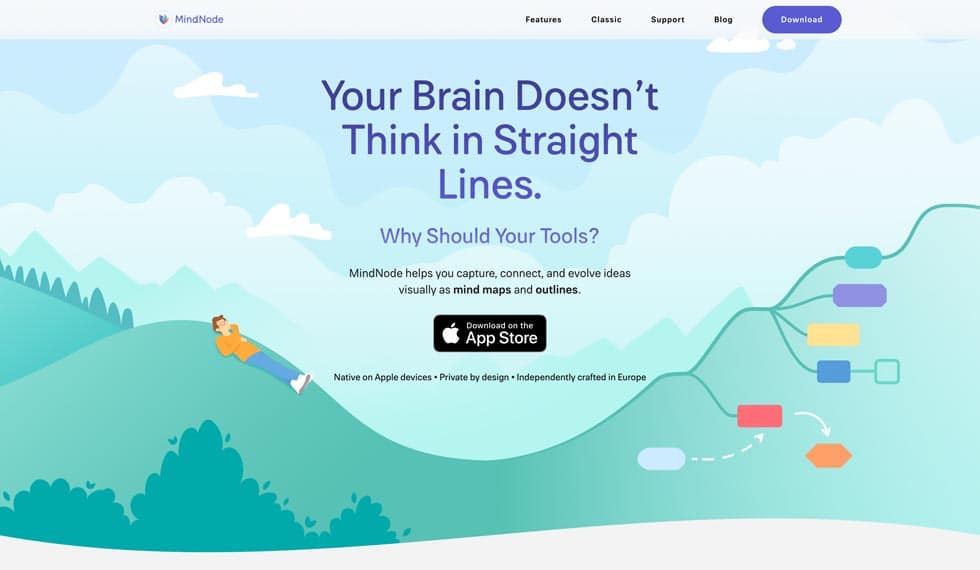
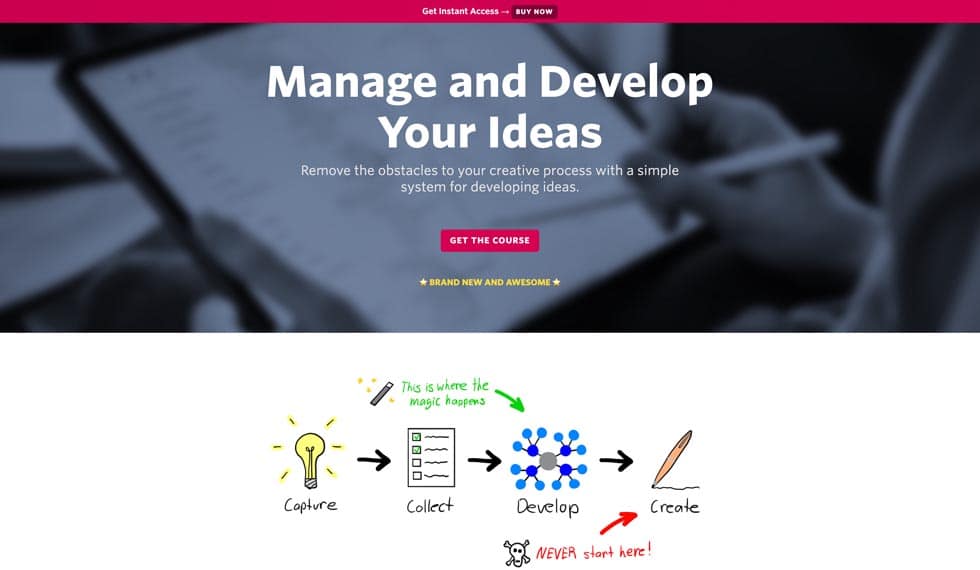
I cannot express enough the joy that I get for all the people that have said yes to my invitations to come on and be guests. I only got to profile a very few of them in today’s episode. It gets overwhelming to think about because I just feel so much joy in all the contributions that people have made. This is the point in the show where I get to give some recommendations. Speaking of curiosity, I mentioned being overwhelmed, but I also took some time off of work and allowed myself to perhaps do a little productive procrastination. I don’t know. I got really excited about some of the things I was learning, including I took a class from The Sweet Setup about Mastering Mind Maps.
In fact, when I took it I thought at first that I really hadn’t learned that much because I already knew what mind maps were. I knew a few different ways that you could use them, but I discovered after I watched it and started to use the app myself that I use for mind maps that I really had learned way more than I realized. It was like taking on an entire new level for using mind maps. I can’t say enough how much I now realize I learned after getting a chance to experiment a little bit. The Mastering Mind Maps course really has three components to it. The first one is just mind maps in general, how to use them, some approaches broadly speaking.
The middle section is on a specific app, it’s called MindNode. It is only available on the Mac. If you’re not in a Mac you’d want to consider whether the course would still be worth it to you. The third one is specific looks at how people use MindNode or mind maps in general. That was probably the most valuable part of the course for me. I’m seeing all of these different ways I might be able to make use of a mind map. I really do think it’s different when you can see topics all spread out and how easy it is then to drag them out. One of the things I discovered was the ability to put pictures right there in the mind map.
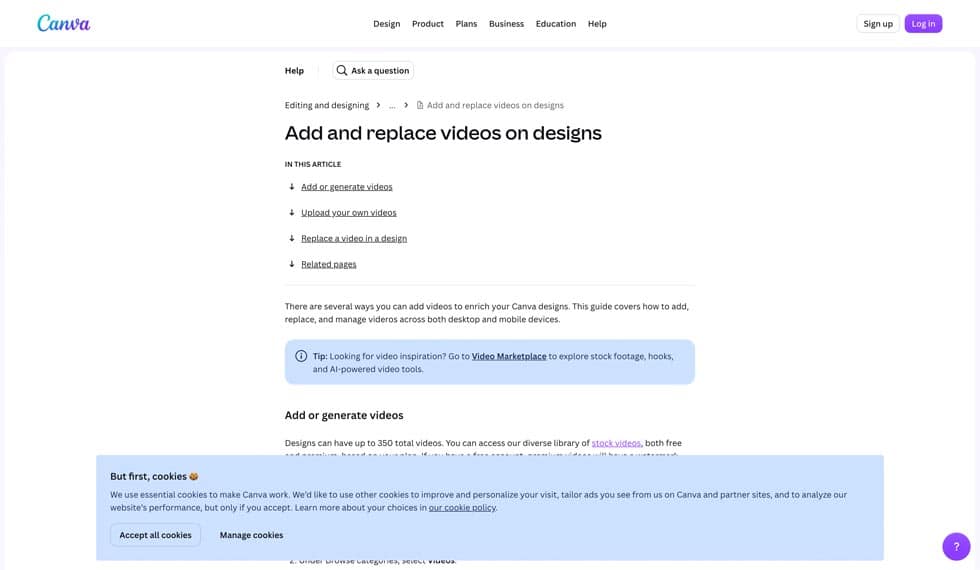
As I’ve been planning out various presentations, I could just grab a quick screenshot and then copy and paste that screenshot and drag around all the ideas. I kept revising and revising the flow of various things that I was working on and just how easy and smooth it is to be able to do that. Then the last thing I wanted to share about today is that I’ve recommended prior on the show, the website called Canva. It’s amazing for creating graphics. I use it quite a bit. In fact, Sierra, also the person who is the second half of the podcast production after I pass it off. We have Andrew who does the podcast production and then Sierra who does a lot of everything else from there, their show notes and the recommendations, graphics and all that.
She uses Canva for all those recommendations, graphics and the quote graphics. At any rate, so I already mentioned I had recommended Canva on a previous episode, but they now have added the ability to place stock videos into your slides. I just thought it was so cool. I found a stock video of a cat that was looking all around and having a real curious expression on its face. I put the word curiosity off to the left. I’m just so excited to show that at the Tarleton talk this week because it’s very subtle. I wouldn’t want something that– you don’t want slides. You don’t want bells and whistles and firecrackers going off.
If you do want that we should talk because there’s a whole concept of cognitive load and you don’t want to stress it too much. So it’s very, very, very subtle. I really like what it does to combine some of the static images with ones that have some movement in them. Again, I haven’t overloaded it at all. I’m just having a little bit of fun experimenting and seeing what that’s like. This has really been quite a week for being curious about things and getting to experiment. Thank you for joining me on today’s episode and for celebrating episode 300 with me. Even though I didn’t do quite the show I had thought that I would do, I’m still glad for this opportunity to look back and think about all the people that have come on Teaching in Higher Ed and all the ways that you as listeners have contributed to our community.
If you feel like you haven’t contributed, this could be your chance. You could buy my new book, The Productive Online and Off Professor. You could follow me on Twitter at Bonni, B-O-N-N-I, 208 you could write a review or give a rating to the podcast on whatever service it is that you use to listen to the show. All the ways to engage with the community, all the ways to keep this community growing. Join me in celebrating episode 300. Thanks so much for listening and I’ll see you next time on Teaching in Higher Ed.
[00:34:47] [END OF AUDIO]
The transcript of this episode has been made possible through a financial contribution by the Association of College and University Educators (ACUE). ACUE is on a mission to ensure student success through quality instruction. In partnership with institutions of higher education nationwide, ACUE supports and credentials faculty members in the use of evidence-based teaching practices that drive student engagement, retention, and learning.
Teaching in Higher Ed transcripts are created using a combination of an automated transcription service and human beings. This text likely will not represent the precise, word-for-word conversation that was had. The accuracy of the transcripts will vary. The authoritative record of the Teaching in Higher Ed podcasts is contained in the audio file.